Watch the movement. Practise the small step.

Dog Training Videos for Short, Reward-Based Lessons

Watch clear demonstrations for everyday dog training, then use DogPath to turn what you saw into a realistic setup, a few good repetitions, and one useful next step.

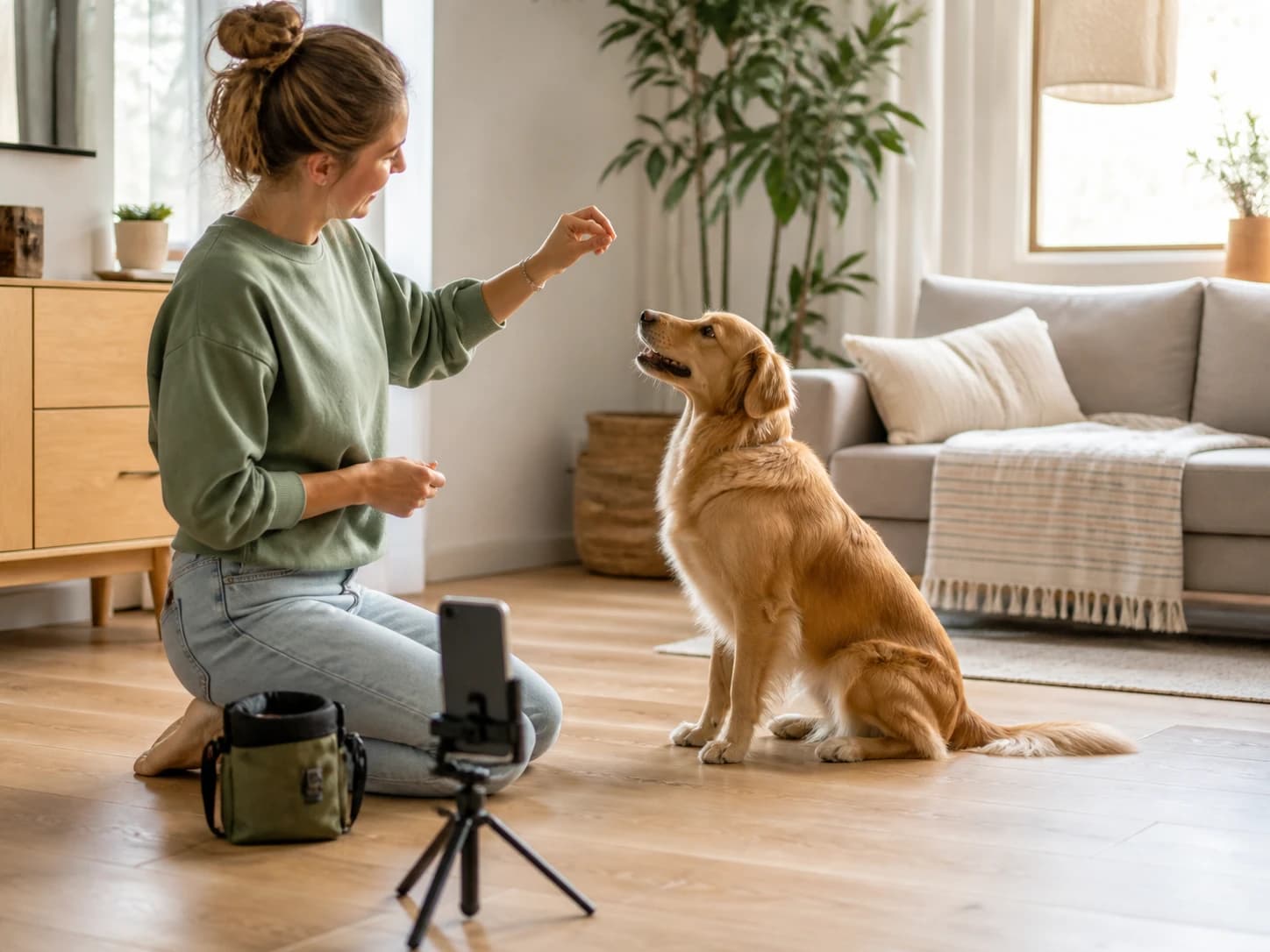
Owner practising reward-based training with an attentive dog while a smartphone records the session

Three training video examples

See the skill, then practise it at your dog's level.

A useful dog training video makes the movement easier to recognize. It should also leave you knowing what to reward, how to simplify the setup, and when to stop. These short previews come from DogPath's in-app training content.

Foundation cue6-second preview

Teach your dog to sit

See the trainer keep the setup simple and give the dog a clear visual target. The useful lesson is not the final position alone; it is the calm, readable path into it.

  • Start in a quiet room with a reward already prepared
  • Mark the moment the dog completes the sit
  • Release after a few seconds instead of testing duration
Explore step-by-step dog training →
Everyday manners6-second preview

Practise calm leash behavior around people

A dog notices another person while staying connected to the handler. Practise at enough distance for a loose body and soft leash before making greetings more difficult.

  • Begin farther away than you think you need
  • Reward orientation back toward the handler
  • Reduce distance only while the leash stays comfortable
Learn loose-leash training basics →
Recall training6-second preview

Build a come cue worth answering

The first recall repetitions happen over an easy indoor distance. A bright invitation and worthwhile reward make returning the obvious choice before outdoor distractions are added.

  • Use a short distance and one clear cue
  • Reward generously when the dog reaches you
  • Add distance and distraction in separate sessions
Build a more reliable recall →

Choose a useful training goal

Dog training videos for the skills you use every day.

The best place to start is not the most impressive trick. Choose the behavior that would make life clearer for you and your dog this week, then practise one small part of it in an easy environment.

Puppy foundations

Puppy training videos for a calm start

Begin with attention, name response, sit, settling, handling, and short household routines. A young puppy needs simple setups and frequent breaks—not a long list of commands in one session.

Start puppy training at home

Everyday cues

Basic dog obedience without pressure

Watch how the handler creates a clear opportunity, marks the useful choice, and delivers the reward. Good mechanics make cues such as sit, down, wait, and leave it easier to understand.

Explore the step-by-step path

Walks

Loose-leash walking demonstrations

Leash training is easier to read on video because you can see distance, handler movement, reward placement, and the moment the dog checks back in. Start somewhere quiet before adding real-world traffic.

Learn loose-leash basics

Recall

Recall training videos that build value

A reliable come cue starts with easy repetitions, a welcoming body position, and a reward worth returning for. Video makes the timing visible; DogPath helps you increase distance and distraction gradually.

Build a reliable recall

Home routines

Potty training and daily rhythm

Not every useful lesson is a trick. Learn how supervision, predictable toilet trips, quick rewards, sleep, meals, and simple record keeping work together during puppy potty training.

Create a potty training routine

Training tools

Clear clicker and whistle timing

See exactly when a marker sound happens and what follows it. A clicker or whistle is useful only when the sound stays consistent and predicts something valuable for the dog.

Learn clicker and whistle basics

More than a clip library

DogPath connects each video to a training decision.

Random dog training videos can show a polished result without explaining why the repetition worked. DogPath places the demonstration inside a lesson with preparation notes, success criteria, reward guidance, and a clear finish.

The video helps you recognize the movement. The written lesson helps you adjust distance, distraction, duration, and reward value for the dog in front of you. Your training path then keeps the next session connected to the last one.

See how a complete DogPath lesson works →
  1. 01

    Watch once before bringing your dog in

    Notice the handler's position, reward hand, and finish.

  2. 02

    Prepare the easiest useful version

    Choose a quiet space and have small rewards ready.

  3. 03

    Practise only a few clear repetitions

    Mark the behavior you want instead of repeating the cue.

  4. 04

    Change one variable next time

    Add a little distance, duration, or distraction—not all three.

Learn to read the demonstration

Four details matter more than the finished behavior.

It is easy to watch a trained dog complete a cue and miss the small decisions that made the repetition work. Pause the video and study the setup, timing, body language, and finish. Those details are what you can transfer to your own session.

If your dog looks less comfortable or cannot succeed in the same setup, that is useful information—not failure. Increase distance, remove a distraction, use a better reward, or return to an earlier step before trying again.

01

The starting setup

Notice the room, distance, equipment, reward placement, and what the dog is doing before the cue ever happens.

02

The exact reward moment

Look for the instant the useful behavior is marked and where the reward is delivered to prepare the next repetition.

03

The dog's body language

A soft body, willingness to eat, and ability to disengage tell you more than speed or a visually perfect position.

04

The release and finish

Clear endings prevent confusion. See how the handler releases the dog, resets the space, and stops before quality falls.

Use video without copying blindly

The goal is a clear principle, not a perfect imitation.

Your room, reward, timing, and dog will not look exactly like the demonstration. Keep the principle and adapt the setup. If the dog cannot eat, disengage, or offer the behavior comfortably, make the repetition easier rather than pushing through.

When a video is not enough

Stop self-guided practice when you see severe fear, aggression, repeated guarding, breathing difficulty, pain, or a sudden behavior change. A qualified reward-based trainer, behavior professional, or veterinarian can assess details a video cannot see.

Read DogPath support and safety guidance →

Choose training content carefully

What makes an online dog training video useful?

A high view count does not make a method safe or suitable for your dog. Useful dog training videos show a realistic starting point, explain what success looks like, and make it possible to lower the difficulty. They do not rely on fear, pain, intimidation, or sudden corrections to create a dramatic result.

  • The method is reward-based and the dog can opt out or take a break.
  • The trainer explains what to reward instead of only what to stop.
  • The environment and difficulty match the dog's current ability.
  • Safety limits and situations requiring professional help are clear.

The three previews on this page are free to watch. Inside DogPath, videos sit alongside written instructions, training plans, focused problem programs, progress tracking, and an AI coach for questions about the current lesson. That context turns a clip into a repeatable practice plan.

See how DogPath supports daily training →

Good to know

Dog training video questions

What the previews can teach, how to practise afterward, and where self-guided video lessons have limits.

Does DogPath include dog training videos?

Yes. DogPath lessons include focused video demonstrations for dog training skills. The video shows the movement, while the lesson explains setup, repetitions, rewards, and the next practical step.

Are these dog training videos suitable for puppies?

The foundation principles are suitable for many puppies when sessions are brief, rewards are appropriate, and the environment is easy. Puppy age, health, confidence, and attention span should determine the pace.

How long should I practise after watching a video?

Start with one to three minutes or just a few successful repetitions. Stop while your dog can still engage, then repeat later rather than stretching one session until performance drops.

Can a dog training video replace an in-person trainer?

No. Videos are useful for demonstrating mechanics and simple reward-based skills, but they cannot assess your dog or environment. Aggression, severe fear, guarding, pain, or sudden behavior changes need qualified individual help.

Can I watch the DogPath videos on iPhone and Android?

Yes. DogPath is available for iPhone and iPad through the App Store and for Android through Google Play. The website previews three examples; the guided training experience is inside the app.

Which dog training video should a beginner watch first?

Start with the skill that makes daily life easier and can be practised safely in a quiet space. Sit, name response, a short indoor recall, or calm leash check-ins are useful starting points. Choose one goal and repeat only the easiest version before adding difficulty.

Not just training. Your plan.

Ready for tonight’s short session?

Set one clear goal, open today’s lesson, and keep practice finishable. You can see the progress as you go.