
Practice habits
Short sessions that stick (when life is loud)
Five clean minutes beat the heroic hour you never start. Here is how to structure repetitions, rewards, and endings.
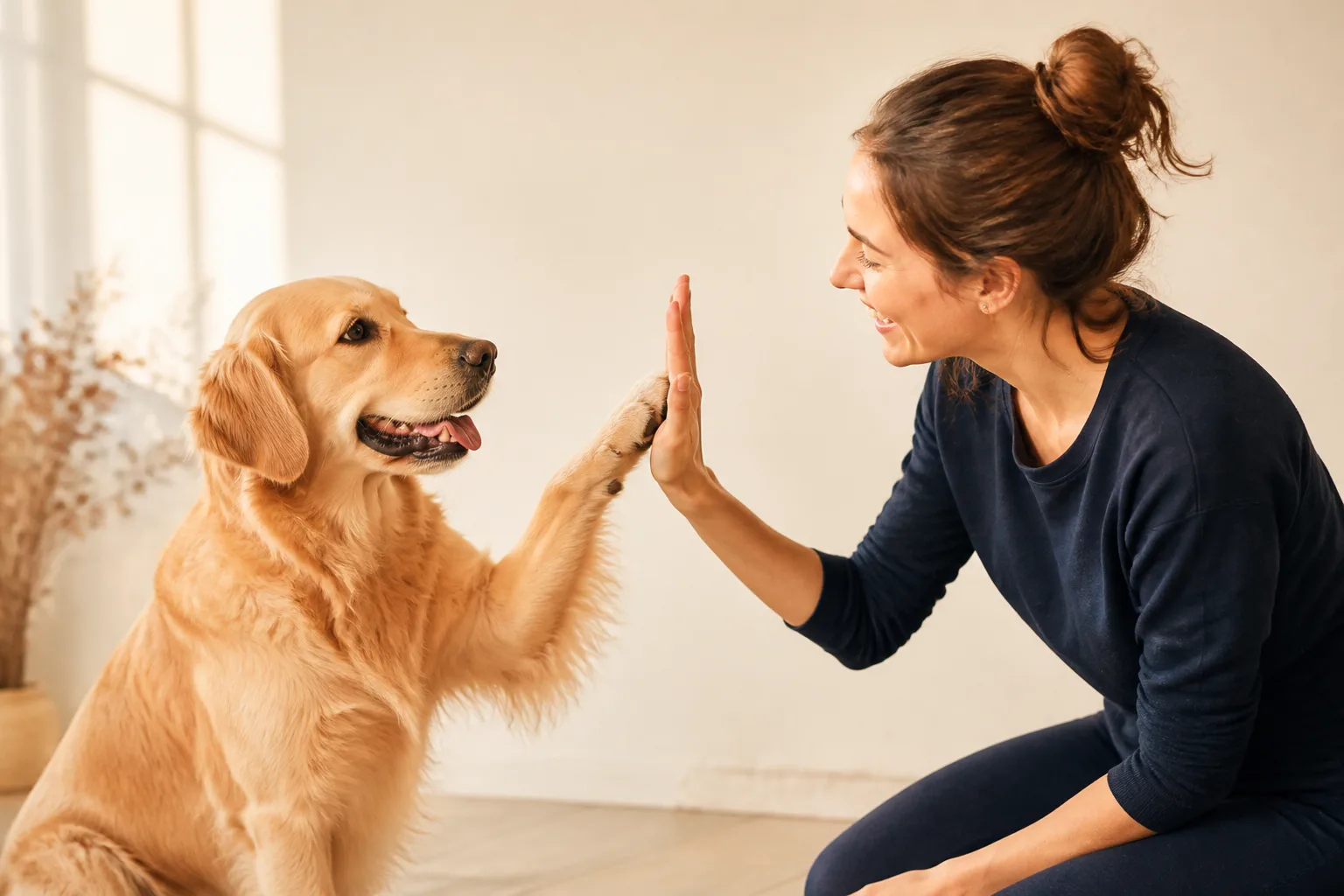
Most plans die between “after dinner” and “maybe tomorrow.” The dog is ready. You’re tired. A vague twenty-minute ambition collapses into scrolling.
Short sessions work because they are finishable. DogPath gives them clear criteria, reward based repetitions, and an ending that leaves your dog wanting the next turn. It is a practical plan that fits into minutes you can keep.
Aim for focused minutes, not a full workout
For many household skills, five to ten clean minutes is enough. Puppies and high-arousal dogs often need shorter bursts with breaks. Quality reps teach; long blocks while attention collapses rehearse noise.
Want more practice in a day? Split it. Two or three tiny sessions usually beat one exhausting marathon.
End while your dog still wants another turn. Leaving early is a skill, not a failure.
Decide what “done” looks like before you start
Pick one criterion: three calm sits on a verbal cue, a recall from three steps away, a mat settle for a set count. “Work on manners” invites endless cueing and a fuzzy finish.
When the criterion is met, stop on the win. Extra reps after the brain checks out often erase the clean picture you just built.
Match the payoff to the difficulty
A mild biscuit can work in a quiet kitchen. A doorbell, hallway chaos, or park path usually needs higher value. If your dog ignores the reward, the environment is winning, lower the ask or raise the payoff.
Have the reward ready. Digging in a pocket after the behavior arrives late and weakens the link between action and outcome.
- Quiet room: everyday treats or play may be enough
- Mild distraction: upgrade food or add a toy jackpot
- Harder place: shorten distance and pay faster
- Reward in hand before the cue leaves your mouth
Change one variable at a time
Duration, distance, and distraction are three different challenges. Raising all three at once is why skills that looked finished in the kitchen fall apart on the sidewalk.
When a session starts failing, make one thing easier. Success rebuilds confidence faster than repeating a cue your dog cannot meet.
Build a rhythm you already keep
Pair training with habits that already exist: after breakfast, before the walk, while the coffee drips. DogPath’s short lessons and weekly path are designed for that kind of rhythm.
Missed days happen. Pick up at the next incomplete step instead of restarting from guilt. Short consistency beats perfect streaks.
Count useful repetitions, not minutes survived
A short session is not automatically a good session. Five rushed minutes of repeated cues can create more confusion than ninety seconds of clear marking and well-placed rewards. Measure the block by useful repetitions: the dog understood the opportunity, offered or completed the behavior, heard a timely marker, and received reinforcement that made another try worthwhile.
Stop while that loop still looks good. A natural finish might come after three clean recalls, four calm mat returns, or one successful door repetition after an easier warm-up. Ending there preserves enthusiasm and gives you a reliable baseline for the next session. Training can resume later; fatigue and frustration are harder to undo.
Match the reward to the environment
Food that works in the living room may lose to a park full of scents. That does not mean your dog is stubborn or that rewards have failed. It means the environment became more valuable. Use better food, a favorite toy, permission to sniff, access to movement, or greater distance from the distraction so your reinforcement can compete fairly.
Prepare rewards before the cue and deliver them where you want the behavior to continue. Feed beside your leg for leash position, on the mat for settling, and close to you after recall. Placement is part of the lesson. If you constantly lure the dog out of position to pay, the next repetition begins with extra confusion.
Separate learning blocks from everyday management
Not every difficult moment needs to become a training session. If you are late, the pavement is crowded, or your dog is already over threshold, manage the situation: cross the street, use distance, scatter food, shorten the walk, or close the visual barrier. Management prevents rehearsal while preserving energy for a fair practice block later.
Schedule learning where success is likely, then use management between sessions. This distinction removes pressure from both of you. Your dog does not have to prove the new skill in every situation, and you can choose a time when rewards, space, and attention are available. Consistency means repeating a good process, not testing constantly.
Read the session
How to know the plan is working, or already too hard
Progress is not one perfect attempt. Look for a pattern across comparable short sessions: clearer responses, faster recovery, willing re-engagement, and less help from the setup. Body language matters alongside the visible behavior.
Signs the level is workable
- Repetitions remain clear from the first to the last
- The dog finishes willing to do another turn
- You stop at the planned criterion rather than the clock alone
- A later short session starts at the same reliable baseline
Signs to make it easier
- Response speed or accuracy drops across the block
- The dog scratches, wanders, sniffs off, or stops eating
- You add new cues because the current one looks messy
- Management would be kinder than training in that moment
Choose the next change
Keep the same behavior and make the next block slightly shorter or easier. When quality stays stable, add only a few repetitions or one mild environmental change, not both.
Before the next session, prepare rewards, choose the starting location, and decide what will count as complete. Change distance, duration, or distraction one at a time. If the dog cannot eat, disengage, recover, or move comfortably, stop treating the moment as an ordinary training plateau.
Before you begin
A fair-session checklist for this training goal
The exercise matters, but the conditions around it often decide whether learning is possible. Use this five-part check before the first cue. It takes less time than repairing a session that began too hard.
Outcome
Name one visible behavior and a finish line for today. Avoid broad goals such as “be calm” or “listen better.” Another person should be able to watch and tell whether the criterion happened.
Environment
Choose the quietest practical version of the real scene. Check surfaces, space, exits, people, dogs, sounds, and movement. Create enough distance for your dog to eat, recover, and re-engage.
Reinforcement
Prepare rewards before the cue. Match their value to the competing environment and decide where delivery should happen so it supports the next repetition instead of pulling the dog out of position.
Management
Decide how you will prevent the unfinished behavior from being rehearsed between attempts. That may mean a gate, barrier, long line, quieter route, prepared chew, greater distance, or skipping the difficult situation today.
Stop condition
Finish when the written criterion is met, focus drops, or body language says the level is no longer comfortable. Stopping early protects clarity. You can repeat the same small step later without losing progress.
After the session: make one decision
If the behavior was repeatable and your dog stayed engaged, repeat once more or raise distance, duration, or distraction by a small amount next time. If it was inconsistent, improve setup or rewards before replacing the goal. If pain, panic, aggression, bite risk, sudden change, or prolonged distress appears, stop the ordinary training plan and involve the appropriate veterinarian or qualified professional.
From article to action
Turn this guide into a practice week
Keep the goal stable long enough to see a pattern. Three or four tiny sessions across a week reveal more than one long attempt in a difficult environment.
Find the baseline
Set a timer for three minutes and choose one behavior with one visible criterion.
Build one layer
Repeat the same tiny block later in the day if the dog finishes engaged and successful.
Generalize carefully
Keep the session length stable while moving to one mildly more distracting location.
What to record
- Number of clean repetitions
- First sign of fatigue
- Reward used
- Best stopping point
Change only one major variable at a time. If success drops, return to the last version your dog could perform with relaxed, engaged body language.