
Getting started
How a DogPath lesson actually runs
From tonight’s setup to the stamp that says “train next”, so you open the app and know exactly what to do.
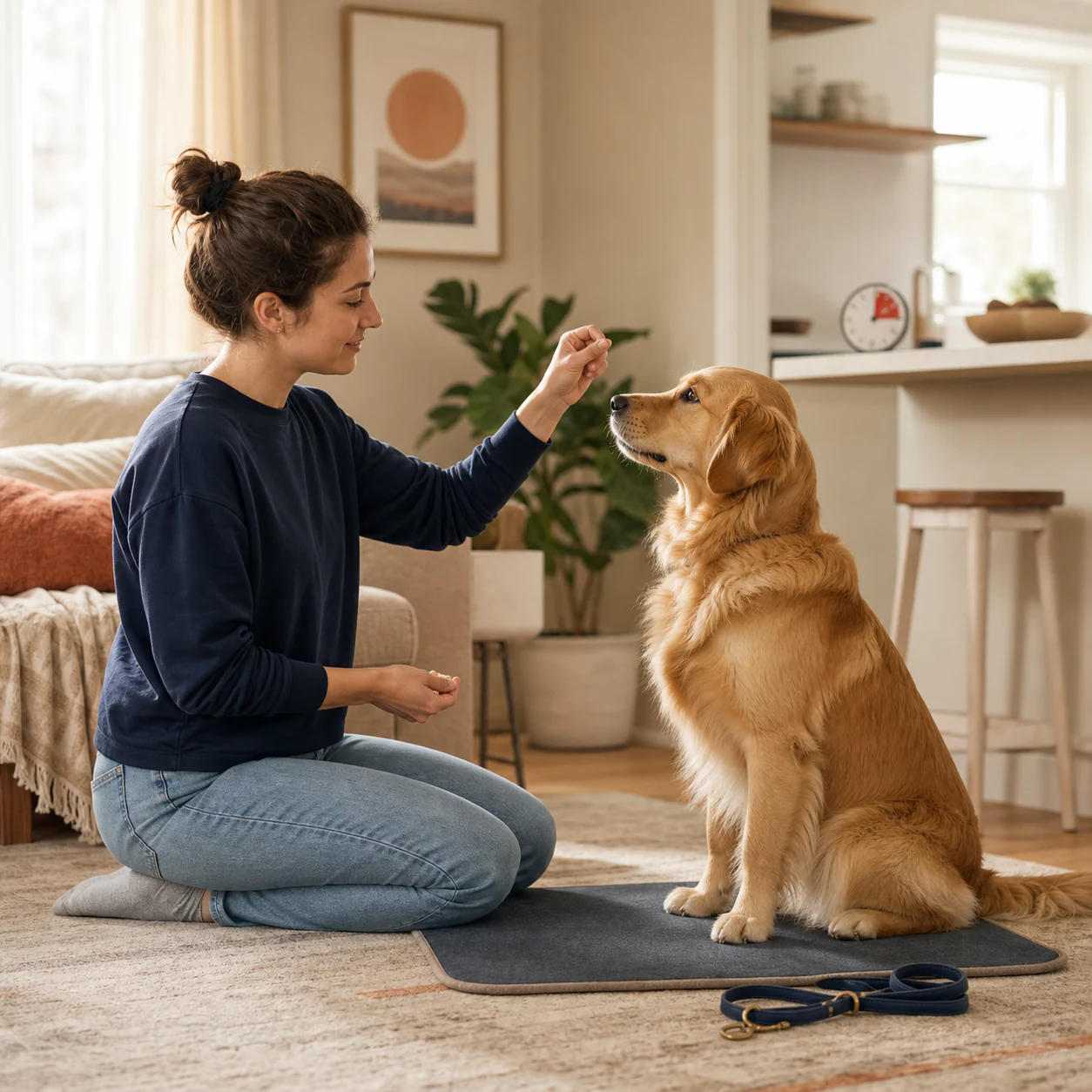
It’s 7:40 p.m. The leash is still by the door. Your dog is pacing the kitchen. You don’t need another tip thread, you need one clear block: what to set up, what “good” looks like, and when to stop.
That’s a DogPath lesson: a short, reward based plan that is finished before the kettle cools.
Name the friction, then open today
Pick the change that would make Tuesday easier: a calmer sidewalk, a come that sticks, quieter evenings, puppy potty rhythm. One focus keeps the roadmap and programs from feeling like a menu you never finish.
Open today’s lesson. You should see a session sized for real life, minutes you can actually keep, not a weekend workshop squeezed into a worknight.
Best start: one goal, one short session, one reward your dog will work for.
Treat setup as part of the skill
Before the first cue, the lesson tells you where to stand, whether the leash is on, how hard the room should be, and what to have in your hand. Most early fails are setup fails: busy hallway, weak biscuit, dog already over threshold.
A quiet kitchen with high-value food is a stronger first classroom than the park path where every squirrel is louder than you.
- Low-distraction space for anything new
- Rewards ready before you ask
- First reps easy enough to win
- Stop while your dog still wants another turn
Pass criteria beat “it felt okay”
Each lesson names what counts as done, three calm sits, a recall with soft leash nearby, a settle that lasts long enough to matter. You stop guessing whether to push or wait.
That protects you from quitting when progress is quiet, and from racing ahead because one lucky rep looked perfect.
Steps, coach tip, then stamp the win
Practice runs as a short sequence, often about seven clear moves, so you’re not inventing curriculum under pressure. Mark and pay the behavior you want. Don’t turn volume into a training plan.
If reps fall apart, the coach tip and common-mistake notes usually say the same thing: make it easier before you add duration, distance, or distraction.
Stamp the roadmap. The Dog Training Club path runs ten levels, from connection and attention toward calm at home, walks, confidence, and skills that hold outside the kitchen. Quizzes and a weekly path keep the thread visible even when life gets messy.
What a finished lesson means
You practiced a clear plan. It does not mean the skill will show up everywhere tomorrow. Behavior change needs clean reps in the places that matter, then another short session.
If aggression, panic, injury, or medical concerns show up, pause and get qualified in-person help. DogPath is everyday coaching support, not clinical care.
Choose a pass line before the first repetition
A useful lesson does more than name a behavior. It tells you what success looks like at today’s difficulty. For a wait, that might be one calm second while the door moves a few centimeters. For recall, it might be turning toward you immediately from two steps away in the kitchen. The pass line should be observable, repeatable, and realistic for the environment you chose.
Deciding this in advance protects the session from drifting. You are less likely to ask for five seconds because the first second looked easy, or to keep repeating after your dog has already met the goal. When several repetitions meet the same criterion with relaxed body language, stamp the lesson and save the harder version for another block.
Read the coach tip and common mistake as a pair
The coach tip tells you what usually makes the behavior easier to understand. The common mistake shows where owners often add difficulty without noticing: a late marker, a reward held in the wrong place, a cue repeated three times, or an environment that is too busy. Reading both before you begin is faster than troubleshooting after ten confusing repetitions.
If the lesson stalls, return to setup before changing the goal. Improve reward placement, create more distance from the distraction, or shorten the duration. A cleaner setup often fixes what looks like a motivation problem. The aim is not to complete every screen at any cost; it is to produce repetitions your dog can understand and repeat.
Use the roadmap without racing it
The 10-level roadmap gives skills an order, but it is not a competition. Dogs arrive with different histories, environments, bodies, and reinforcement experience. Moving slowly on a foundation such as attention or settle can make later leash, recall, and impulse-control work much easier. Repeating a lesson is useful practice, not a failed attempt to progress.
Keep one foundation lesson available while you explore a everyday need elsewhere in the app. A puppy can work through early connection lessons while also using a potty routine. An adult dog can revisit attention while following a loose-leash program. The roadmap keeps the long arc visible; Explore and focused programs help with the week happening now.
Read the session
How to know the plan is working, or already too hard
Progress is not one perfect attempt. Look for a pattern across comparable short sessions: clearer responses, faster recovery, willing re-engagement, and less help from the setup. Body language matters alongside the visible behavior.
Signs the level is workable
- The pass criterion is met across several relaxed repetitions
- Your dog re-engages willingly after each reward
- The cue is given once and the setup stays predictable
- You can name exactly which variable will change next
Signs to make it easier
- You keep repeating or changing the cue
- Rewards arrive late because setup was incomplete
- The dog disengages, scans, or leaves after each attempt
- The session continues after the lesson already passed
Choose the next change
Stamp the lesson when the written criterion is repeatable, then change one layer in the next session. If the same step remains unclear, use the coach tip and common mistake before adding more repetitions.
Before the next session, prepare rewards, choose the starting location, and decide what will count as complete. Change distance, duration, or distraction one at a time. If the dog cannot eat, disengage, recover, or move comfortably, stop treating the moment as an ordinary training plateau.
Before you begin
A fair-session checklist for this training goal
The exercise matters, but the conditions around it often decide whether learning is possible. Use this five-part check before the first cue. It takes less time than repairing a session that began too hard.
Outcome
Name one visible behavior and a finish line for today. Avoid broad goals such as “be calm” or “listen better.” Another person should be able to watch and tell whether the criterion happened.
Environment
Choose the quietest practical version of the real scene. Check surfaces, space, exits, people, dogs, sounds, and movement. Create enough distance for your dog to eat, recover, and re-engage.
Reinforcement
Prepare rewards before the cue. Match their value to the competing environment and decide where delivery should happen so it supports the next repetition instead of pulling the dog out of position.
Management
Decide how you will prevent the unfinished behavior from being rehearsed between attempts. That may mean a gate, barrier, long line, quieter route, prepared chew, greater distance, or skipping the difficult situation today.
Stop condition
Finish when the written criterion is met, focus drops, or body language says the level is no longer comfortable. Stopping early protects clarity. You can repeat the same small step later without losing progress.
After the session: make one decision
If the behavior was repeatable and your dog stayed engaged, repeat once more or raise distance, duration, or distraction by a small amount next time. If it was inconsistent, improve setup or rewards before replacing the goal. If pain, panic, aggression, bite risk, sudden change, or prolonged distress appears, stop the ordinary training plan and involve the appropriate veterinarian or qualified professional.
From article to action
Turn this guide into a practice week
Keep the goal stable long enough to see a pattern. Three or four tiny sessions across a week reveal more than one long attempt in a difficult environment.
Find the baseline
Open the lesson, prepare the listed rewards, and test the first criterion in the quietest practical setting.
Build one layer
Repeat the same pass line across two or three short sessions before changing distance, duration, or distraction.
Generalize carefully
Move the skill to one slightly different room, surface, or time of day while keeping everything else easy.
What to record
- Which criterion passed
- Where focus dropped
- Reward that worked best
- One variable to change next
Change only one major variable at a time. If success drops, return to the last version your dog could perform with relaxed, engaged body language.