
Pick the problem
Choose the track that matches the mess, pulling, unreliable come, door barking, alone-time panic, mouthing, guests, triggers, chewing.
14-day programs
Focused 14-day tracks for loose leash, stronger recall, calmer barking, alone time, puppy biting, visitors, triggers, and chewing, day by day, not all at once.
How it works
Choose the track that matches the mess, pulling, unreliable come, door barking, alone-time panic, mouthing, guests, triggers, chewing.
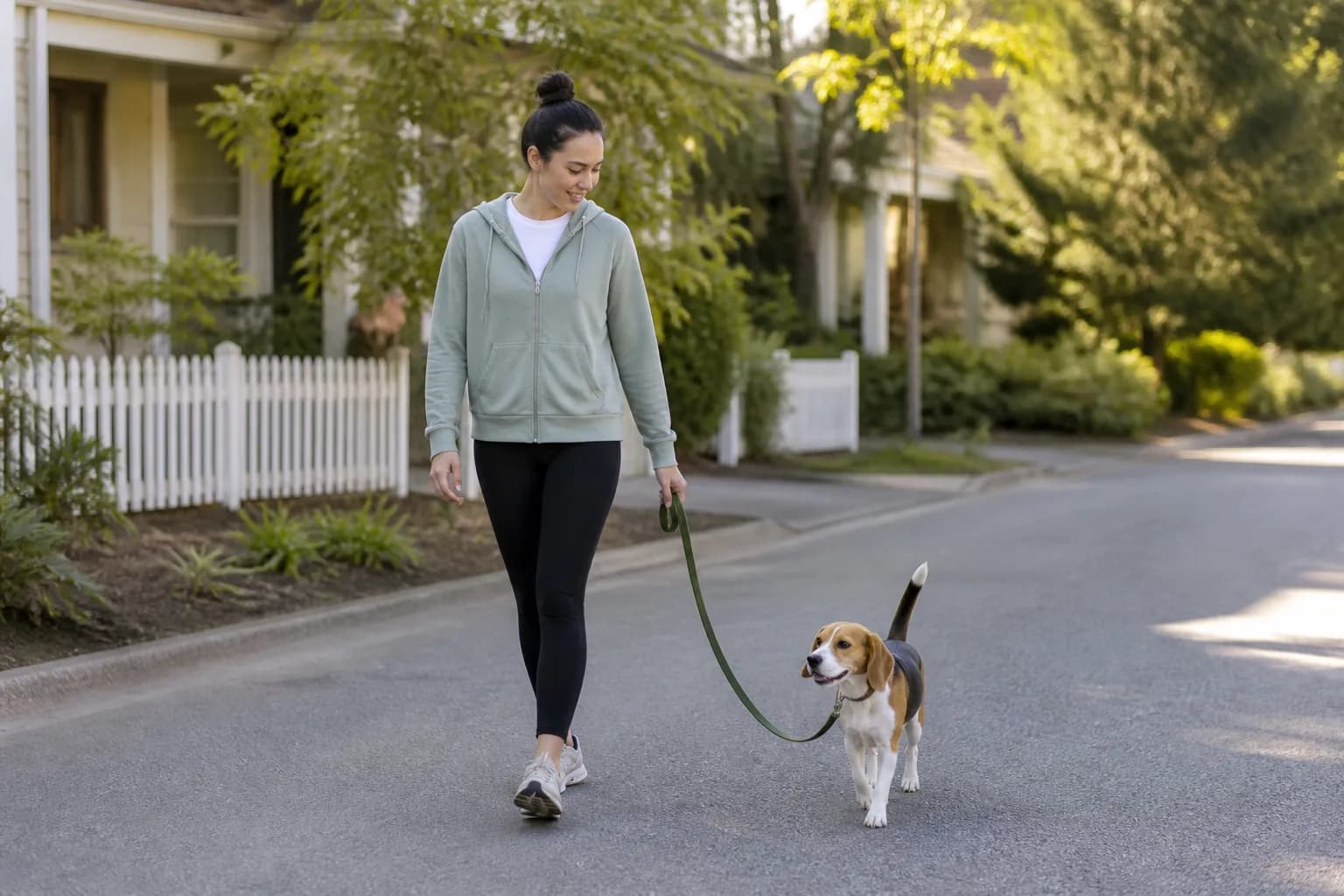
Follow short daily steps that start easy and build toward real life. Miss a day? Pick up the next incomplete step.
Use the path and tracker habits so progress is something you practiced, not something you hoped for.
You do not need another theory chapter. You need a plan for the leash that tightens at every squirrel, the come that vanishes outdoors, or the doorbell that launches the whole house.
DogPath packages those goals into 14-day tracks with clear daily practice so the change stays specific.
Keep the weekly path for overall momentum. Add a program when one life situation needs concentrated attention.
The Puppy Start, Calm & Focus, Walk Together, and Good Manners programs sit beside the problem tracks when you want a broader arc.
Two weeks of structure is a strong start, not a guarantee every dog finishes every challenge on day fourteen.
If aggression, panic, or welfare concerns show up, pause and get qualified in-person help.
Recurring problems usually contain several layers. Loose-leash walking needs orientation, reinforcement position, handling around distractions, and practice on realistic routes. Recall needs response to the cue, movement toward you, arriving within reach, and a reward strong enough to compete outdoors. One trick rarely carries the whole result.
A 14-day program keeps the goal stable while the daily task changes in small steps. That continuity makes it easier to notice what improved and where the environment became too difficult. Missing a day does not invalidate the program; continue with the next incomplete step when you can practice fairly.
Begin below the level where the problem usually erupts. Practice door sounds before a real visitor, leash position before a full neighborhood loop, and recall on a long line before off-leash freedom. The program should create successful repetitions, not recreate the hardest version of daily life on day one.
Use management between practice blocks. Visual barriers, gates, distance, safe confinement, prepared chews, and alternative routes can prevent rehearsal while the skill grows. For panic, aggression, bite risk, or severe distress, use qualified in-person help rather than relying on a general program alone.
Where it fits
Keep the main roadmap active for broad foundations. Use one focused program at a time so you can see which setup and reinforcement changes are working.
DogPath is everyday training support. AI coach guidance can vary and should not be treated as veterinary advice, a behavior diagnosis, or a substitute for in-person professional help.
Good to know
Yes. Many owners keep the daily path for momentum and add a 14-day program when one problem needs focus.
Programs emphasize calm, reward based practice and gradual difficulty. For intense reactivity or safety risks, work with a qualified professional in parallel.
Full program access is part of DogPath Pro. The app shows what your free tier includes before you subscribe.
Continue at the next incomplete step. Short consistency beats perfect streaks.
Not just training. Your plan.
Set one clear goal, open today’s lesson, and keep practice finishable. You can see the progress as you go.