
Puppies
Puppy training at home, your first week plan
Name games, potty rhythm, soft mouths, and tiny reward based sessions before anyone expects polished manners.
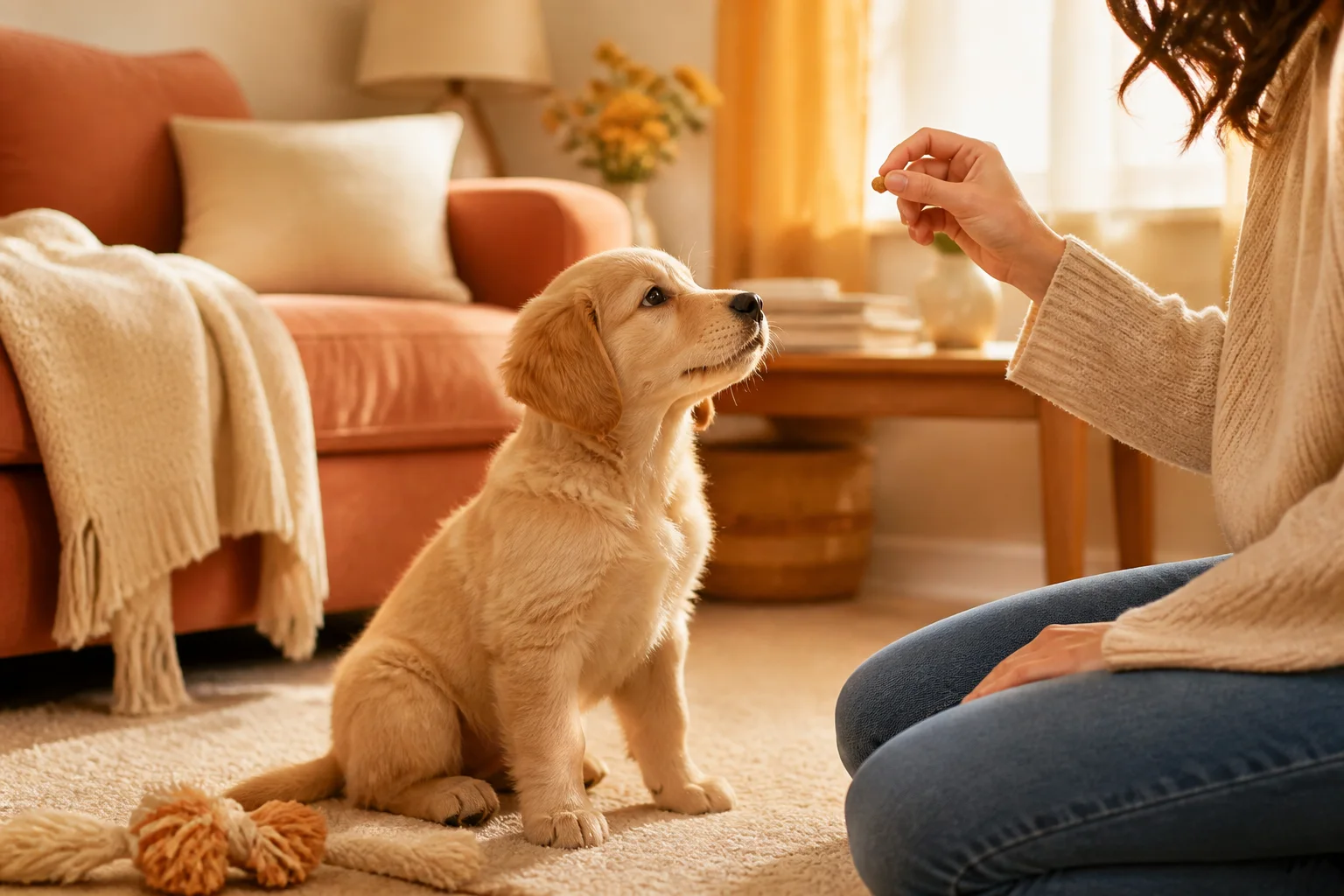
The crate is in the living room. There’s a puddle by the rug. Your puppy just tried to eat a sock. Welcome home, this is where training actually starts, not in a perfect classroom.
Early weeks are about patterns: where to toilet, how to settle, how to take treats gently, and how to find joy in paying attention to you. The DogPath puppy training app keeps those sessions tiny and clear, with a plan built for a brain that learns in short bursts.
Name, glance, pay, repeat in quiet rooms
Say the name once. Mark any turn or eye flick toward you. Pay close and happy. Do this in the kitchen before you try the hallway or garden. Name response is the foundation under recall, leash skills, and manners.
Use food your puppy loves. Early wins create a puppy who thinks showing up for you is worth it.
One clear name, one happy response, one quick reward. Skip chanting the name like a broken doorbell.
Build potty and rest rhythm early
Out after waking, playing, eating, and drinking. Praise outdoor toileting the second it happens. Indoor accidents get boring cleanups, not a lecture. A simple log beats memory when you’re tired.
A crate or pen can support naps and unsupervised moments when introduced kindly. Pair confinement with calm rewards. Never use it as punishment.
Give the mouth a job
Puppies explore with teeth. Redirect hard mouthing to a toy, pause play briefly if skin is involved, restart when the mouth softens. Household consistency matters more than a perfect verbal cue.
Sudden, intense biting, or biting paired with other welfare red flags, deserves a vet check. Training guides assume a healthy puppy.
- Chew toys ready before play escalates
- Reward soft mouths and toy engagement
- End the game calmly when teeth get sharp
- Skip rough hand games that teach grabbing people
Keep sessions tiny and frequent
Two minutes of clean name games, hand targets, or sits can be enough. Stop before your puppy is tired or overstimulated. Multiple micro-sessions beat one long drill that ends in tears.
DogPath lessons mirror that pace: clear setup, short steps, and a next action so you’re not inventing curriculum at midnight.
Build safety and predictability before a long cue list
A puppy’s first week is full of new surfaces, sounds, people, sleep patterns, and separation from everything familiar. Training should make that world more predictable. Reward checking in, following you a few steps, choosing the bed, entering the crate freely, and toileting in the right place. Those behaviors support future cues while helping the puppy feel secure now.
Keep introductions voluntary and small. Socialization is not maximum exposure or being handled by everyone. It is a history of safe experiences at a distance and intensity the puppy can process. Pair new sights and sounds with food, play, and the option to move away. A puppy who can observe calmly is learning more than one who is flooded until they stop reacting.
Plan around sleep, toileting, and biting windows
Young puppies often become wild, mouthy, or unable to listen when they need sleep or a toilet break. Before treating the behavior as disobedience, check the routine. Offer frequent outdoor opportunities after waking, eating, drinking, play, and training. Provide age-appropriate rest in a calm area and keep legal chewing options within reach.
When teeth land on skin or clothing, pause movement, redirect to a toy, and lower the energy of the interaction. Repeated intense biting can be a signal that the puppy is overtired. Shorten play before that point next time. Management with pens, gates, light house lines, and prepared toys prevents many conflicts while impulse control is still developing.
Let family rules look the same
A puppy cannot follow a rule that changes by person or time of day. Agree on cue words, sleeping areas, door routines, feeding rules, and what happens when the puppy jumps or bites. Consistency should describe the human response, not a demand that a young dog performs perfectly in every room.
Write down the two or three priorities for the week. A realistic first list is name response, toileting rhythm, and calm handling. Everything else can be reinforced when it appears naturally. DogPath’s puppy lessons and daily path help the household repeat the same small steps without turning every interaction into formal obedience practice.
Read the session
How to know the plan is working, or already too hard
Progress is not one perfect attempt. Look for a pattern across comparable short sessions: clearer responses, faster recovery, willing re-engagement, and less help from the setup. Body language matters alongside the visible behavior.
Signs the level is workable
- The puppy approaches, explores, and returns voluntarily
- Toileting and sleep become more predictable
- Handling remains paired with loose body language and food
- Short sessions end before biting or frantic behavior rises
Signs to make it easier
- The puppy hides, freezes, refuses food, or cannot settle
- New experiences arrive faster than recovery
- Biting intensity rises as sleep or toilet needs are missed
- Different family members use conflicting rules
Choose the next change
Repeat the calmest successful routine and reduce novelty for the rest of the day. Add one new experience only when the puppy can observe, eat, move away, and recover comfortably.
Before the next session, prepare rewards, choose the starting location, and decide what will count as complete. Change distance, duration, or distraction one at a time. If the dog cannot eat, disengage, recover, or move comfortably, stop treating the moment as an ordinary training plateau.
Before you begin
A fair-session checklist for this training goal
The exercise matters, but the conditions around it often decide whether learning is possible. Use this five-part check before the first cue. It takes less time than repairing a session that began too hard.
Outcome
Name one visible behavior and a finish line for today. Avoid broad goals such as “be calm” or “listen better.” Another person should be able to watch and tell whether the criterion happened.
Environment
Choose the quietest practical version of the real scene. Check surfaces, space, exits, people, dogs, sounds, and movement. Create enough distance for your dog to eat, recover, and re-engage.
Reinforcement
Prepare rewards before the cue. Match their value to the competing environment and decide where delivery should happen so it supports the next repetition instead of pulling the dog out of position.
Management
Decide how you will prevent the unfinished behavior from being rehearsed between attempts. That may mean a gate, barrier, long line, quieter route, prepared chew, greater distance, or skipping the difficult situation today.
Stop condition
Finish when the written criterion is met, focus drops, or body language says the level is no longer comfortable. Stopping early protects clarity. You can repeat the same small step later without losing progress.
After the session: make one decision
If the behavior was repeatable and your dog stayed engaged, repeat once more or raise distance, duration, or distraction by a small amount next time. If it was inconsistent, improve setup or rewards before replacing the goal. If pain, panic, aggression, bite risk, sudden change, or prolonged distress appears, stop the ordinary training plan and involve the appropriate veterinarian or qualified professional.
From article to action
Turn this guide into a practice week
Keep the goal stable long enough to see a pattern. Three or four tiny sessions across a week reveal more than one long attempt in a difficult environment.
Find the baseline
Reward name response, voluntary check-ins, and calm exploration in one familiar room.
Build one layer
Add tiny handling, crate, potty, and settle repetitions around the puppy’s natural daily rhythm.
Generalize carefully
Introduce one new surface, sound, person, or location at a comfortable distance and pair it with good outcomes.
What to record
- Sleep and potty timing
- Easy rewards
- New experience observed
- Signs the puppy needed a break
Change only one major variable at a time. If success drops, return to the last version your dog could perform with relaxed, engaged body language.
Socialize thoughtfully, and skip the week-one show
Aim for quality exposures: calm people, varied surfaces, gentle handling, positive pairings with everyday sounds. Flooding a fearful puppy with too much novelty can backfire.
Follow your vet on safe outings while vaccines progress. You don’t need long stays, perfect heelwork, or advanced tricks before attention and basic needs are in place. Fancy skills are easier on a puppy who already finds you relevant, and reward based beats punishment shortcuts every time.