
Routines
Dog and puppy potty training for busy mornings
Timing, supervision, outdoor praise, and a simple log, without shame spirals when the rug gets involved.
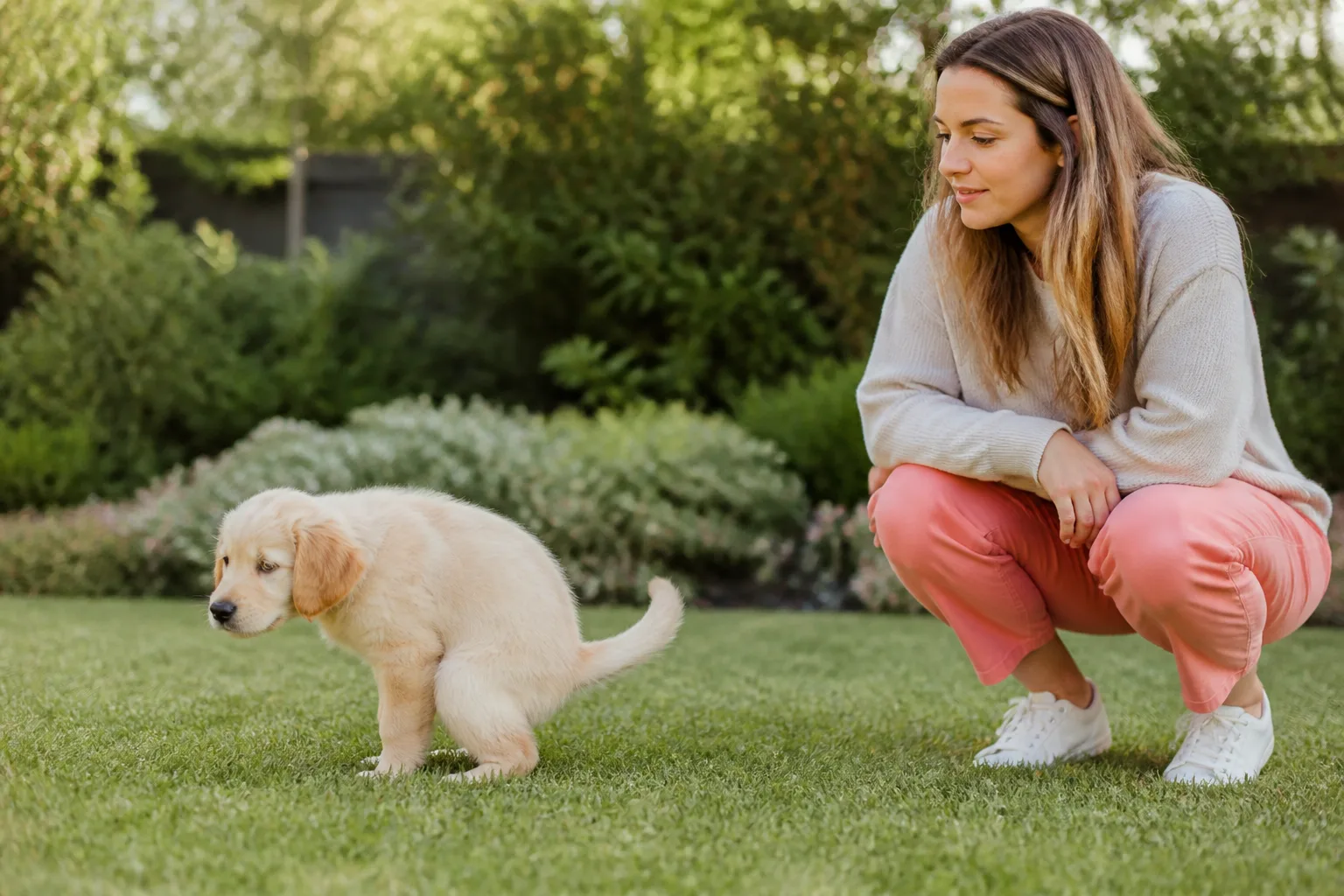
You’re late. The puppy peed on the mat you just washed. Potty training isn’t a moral test, it’s rhythm and prevention. Dogs learn where toileting pays when outdoor success is easy to repeat and indoor accidents become rare, boring cleanups.
Whether you have a puppy or an adult learning a new home, keep the plan kind and consistent. DogPath’s potty helpers sit beside your other trackers so the routine stays visible and the schedule remains practical.
Set a predictable outing schedule
Out after waking, eating, drinking, playing, and before confinement or bedtime. Puppies need more frequent trips than adults. Watch for sniffing, circling, or sudden restlessness as early signals.
Go to the same general toilet area at first so smell context helps. Praise and reward outdoor toileting immediately, not after you’ve walked all the way back inside.
Pay the toilet, then finish the outing. Delayed praise teaches the wrong moment.
Supervise or contain between trips
Free run of the house is earned. Use leashed supervision, a pen, or a comfortable crate so your dog isn’t left to rehearse carpet toileting.
If you can’t watch closely, smaller spaces prevent mistakes. Accidents are usually a management miss, not moral failure.
Handle accidents without drama
Interrupt gently only if you catch your dog mid-act, then rush outside and reward if they finish there. Find a mess later? Clean with an enzymatic cleaner and adjust the schedule. Scolding after the fact teaches fear of you, not toilet location.
Never rub a dog’s nose in urine or feces. It damages trust and doesn’t teach the routine.
- Log times of success and accidents
- Clean with enzymatic products
- Shorten free roaming after misses
- Reward outdoor toilets every time early on
Log the pattern so memory can’t lie
A simple potty log, time, place, pee/poop, accident or success, shows whether you need more morning trips or a post-play outing. Memory is optimistic when you’re tired.
DogPath’s potty logging helpers keep that rhythm visible next to walks and training. Adjust for age, weather, and health: tiny breeds and seniors may need more outs; sudden regression in a previously reliable dog deserves a vet check.
Nighttime and alone-time notes
Overnight success often means a last outing, appropriate confinement, and age-based night breaks for puppies. Don’t expect an eight-week-old to hold until your preferred wake time.
If housesoiling happens only when alone and comes with panic signs, consider separation-related distress and get professional guidance, don’t only tighten the potty schedule.
Use timing to prevent mistakes instead of reacting to them
Toileting becomes easier to predict when you track what happens around waking, meals, drinking, play, training, and naps. Young puppies may need opportunities far more often than an adult dog. Take the dog to the same suitable area, stay boring until elimination happens, then reward immediately and allow a little sniffing or play afterward.
If nothing happens, return indoors under close supervision or use a safe management area, then try again soon. Giving full freedom after an unsuccessful trip often creates an accident within minutes. The aim is to arrange enough correct repetitions that the outdoor location, surface, and routine become clear.
Clean accidents without creating fear
Interrupt gently only if you catch the dog in the act and can move outside without frightening them. Otherwise clean the area thoroughly with an appropriate enzymatic product. Scolding after the event cannot teach the correct location and may teach the dog to hide when toileting near people.
Review the schedule instead: Was the interval too long? Did play or drinking change the timing? Was access to the door blocked? Did supervision lapse? Treat each accident as information for the next prevention window. DogPath’s quick log can make those patterns visible without turning the day into a complicated spreadsheet.
Know when a routine problem may be medical
A previously house-trained dog who suddenly urinates indoors, strains, produces very small amounts frequently, drinks unusually, has diarrhea, or seems uncomfortable needs veterinary attention. Age, medication, infection, digestive illness, mobility, and many other health factors can affect elimination.
Do not restrict water to prevent accidents unless a veterinarian has given specific guidance. Maintain access to fresh water and adjust trips instead. Training plans support learning; they do not diagnose or treat medical causes. Share a concise timeline from your tracker with the veterinary team when a change appears sudden or persistent.
Read the session
How to know the plan is working, or already too hard
Progress is not one perfect attempt. Look for a pattern across comparable short sessions: clearer responses, faster recovery, willing re-engagement, and less help from the setup. Body language matters alongside the visible behavior.
Signs the level is workable
- Successful trips cluster around a predictable routine
- The dog toilets soon after reaching the chosen area
- Accident intervals become easier to anticipate
- Supervision and freedom match recent reliability
Signs to make it easier
- Trips happen only after the usual accident window
- The dog gains full indoor freedom after an unsuccessful trip
- People scold or interrupt in a frightening way
- New physical signs or sudden regression are ignored
Choose the next change
Schedule the next trip before the most common accident time and reward immediately outdoors. If a previously trained dog changes suddenly or shows discomfort, contact a veterinarian.
Before the next session, prepare rewards, choose the starting location, and decide what will count as complete. Change distance, duration, or distraction one at a time. If the dog cannot eat, disengage, recover, or move comfortably, stop treating the moment as an ordinary training plateau.
Before you begin
A fair-session checklist for this training goal
The exercise matters, but the conditions around it often decide whether learning is possible. Use this five-part check before the first cue. It takes less time than repairing a session that began too hard.
Outcome
Name one visible behavior and a finish line for today. Avoid broad goals such as “be calm” or “listen better.” Another person should be able to watch and tell whether the criterion happened.
Environment
Choose the quietest practical version of the real scene. Check surfaces, space, exits, people, dogs, sounds, and movement. Create enough distance for your dog to eat, recover, and re-engage.
Reinforcement
Prepare rewards before the cue. Match their value to the competing environment and decide where delivery should happen so it supports the next repetition instead of pulling the dog out of position.
Management
Decide how you will prevent the unfinished behavior from being rehearsed between attempts. That may mean a gate, barrier, long line, quieter route, prepared chew, greater distance, or skipping the difficult situation today.
Stop condition
Finish when the written criterion is met, focus drops, or body language says the level is no longer comfortable. Stopping early protects clarity. You can repeat the same small step later without losing progress.
After the session: make one decision
If the behavior was repeatable and your dog stayed engaged, repeat once more or raise distance, duration, or distraction by a small amount next time. If it was inconsistent, improve setup or rewards before replacing the goal. If pain, panic, aggression, bite risk, sudden change, or prolonged distress appears, stop the ordinary training plan and involve the appropriate veterinarian or qualified professional.
From article to action
Turn this guide into a practice week
Keep the goal stable long enough to see a pattern. Three or four tiny sessions across a week reveal more than one long attempt in a difficult environment.
Find the baseline
Log waking, food, water, play, toileting, and accidents for one ordinary day.
Build one layer
Schedule trips before the most common accident windows and reward immediately after success.
Generalize carefully
Practice the same clear routine at a different exit, surface, or temporary location when needed.
What to record
- Time and event
- Success or accident
- Activity immediately before
- Unusual physical signs
Change only one major variable at a time. If success drops, return to the last version your dog could perform with relaxed, engaged body language.