
Choose what would change daily life most: calmer walks, solid recall, puppy manners, or quieter evenings.
Best free dog training app
Dog Training App for puppies and adult dogs.
Train your dog with short, reward-based lessons. From puppy training and potty training to loose leash walking and reliable recall, DogPath gives you a clear next step every day.
- Track progress and make every training win visible
- Made for iPhone, iPad, and Android
- Start free instantly · no account required
LessonsSetup, steps, pass criteria
Weekly pathAlways know what to train next
14-day programsWhen one problem needs focus
AI coachStuck? Ask a better question
Three steps. Then you train.
From “we should train more” to done today.
DogPath turns good intentions into a finishable session, then shows the next one. No tip pile. No mystery curriculum.
Setup, steps, coach tip, common mistake, pass criteria. End while your dog still wants more.
Mark the win, open the next lesson, or start a 14-day program when one problem needs a push.
A clear method, not more noise
Good training gets easier when the next step is obvious.
DogPath turns reward-based training into a simple loop: set up an easy win, mark it clearly, change one challenge, and finish before focus disappears.
Reward what you want repeated
Make the useful choice worth choosing again. Food, play, access, and attention can reinforce behavior when the timing is clear.
Raise one variable at a time
Duration, distance, and distraction are different challenges. Increase one while the other two stay easy enough to succeed.
Treat setup as part of training
Space, barriers, leash length, reward placement, and a quieter room can create a fair first repetition.
Stop while the session still feels good
A short, clean finish protects motivation. Note the easiest win and the next tiny challenge before you leave.
DogPath supports reward-based training. The American Veterinary Society of Animal Behavior recommends reward-based methods for dog training and behavior work.
Read the AVSAB position statement ↗One ordinary day
A dog-training routine you can actually repeat.
Think in useful minutes, not marathon sessions. A repeatable routine can live inside breakfast, a walk, and one focused evening practice.
Start with one easy success
Ask for name attention, a hand target, or a calm wait before breakfast. Begin with a cue both of you understand.
Train inside the routine you already have
Reward three loose-leash check-ins, one calm curb pause, or a quick long-line recall. A walk need not become an obedience test.
Practice the skill that changes home life
Choose settle, door manners, crate comfort, or one puppy routine. Stop before repetition turns into noise.
Write down tomorrow’s first rep
Note what worked, where focus disappeared, and the next smaller challenge so tomorrow does not start at zero.
Puppy training vs. adult dog training
Same goal. Different starting line.
Puppies, adolescent dogs, and adults need the same reward-based principles but different expectations, session lengths, and levels of distraction.
Progress should be measured against your dog’s own starting point.
Young puppies
Build safety and rhythm first.
Prioritize potty timing, name response, calm handling, short separations, and sleep. Work in seconds.
Adolescent dogs
Help familiar skills survive distraction.
Lower the difficulty outdoors, reward check-ins generously, and rebuild recall or loose-leash walking one place at a time.
Adult and newly adopted dogs
Start with predictability, not a test.
Create repeatable routines, observe what the dog understands, and teach the household skills that make daily life calmer.
Where to begin
Six paths owners open first.
Pick an everyday problem instead of saving six nearly identical notes about “being consistent.” Each path links to a lesson or guide you can use tonight.
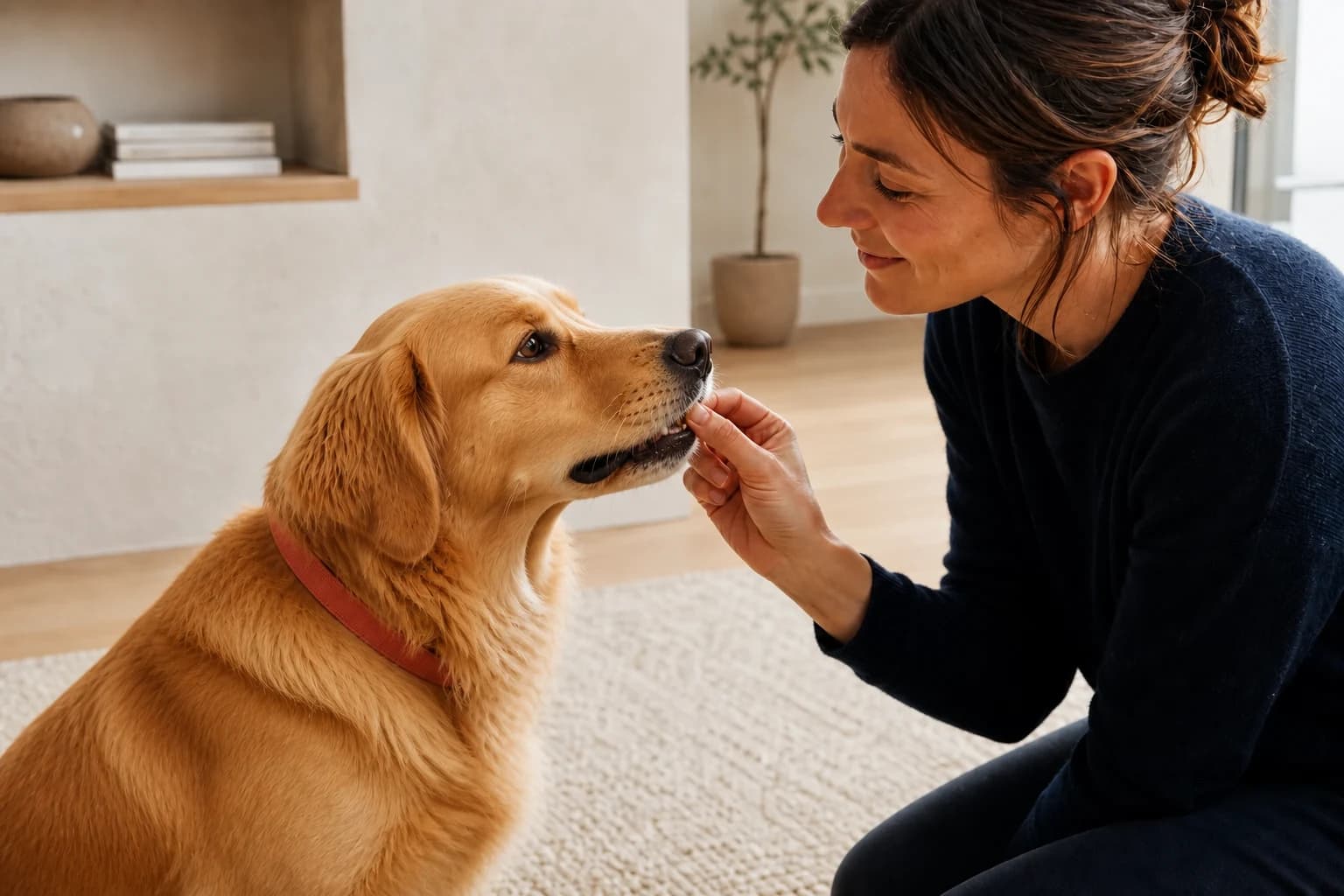
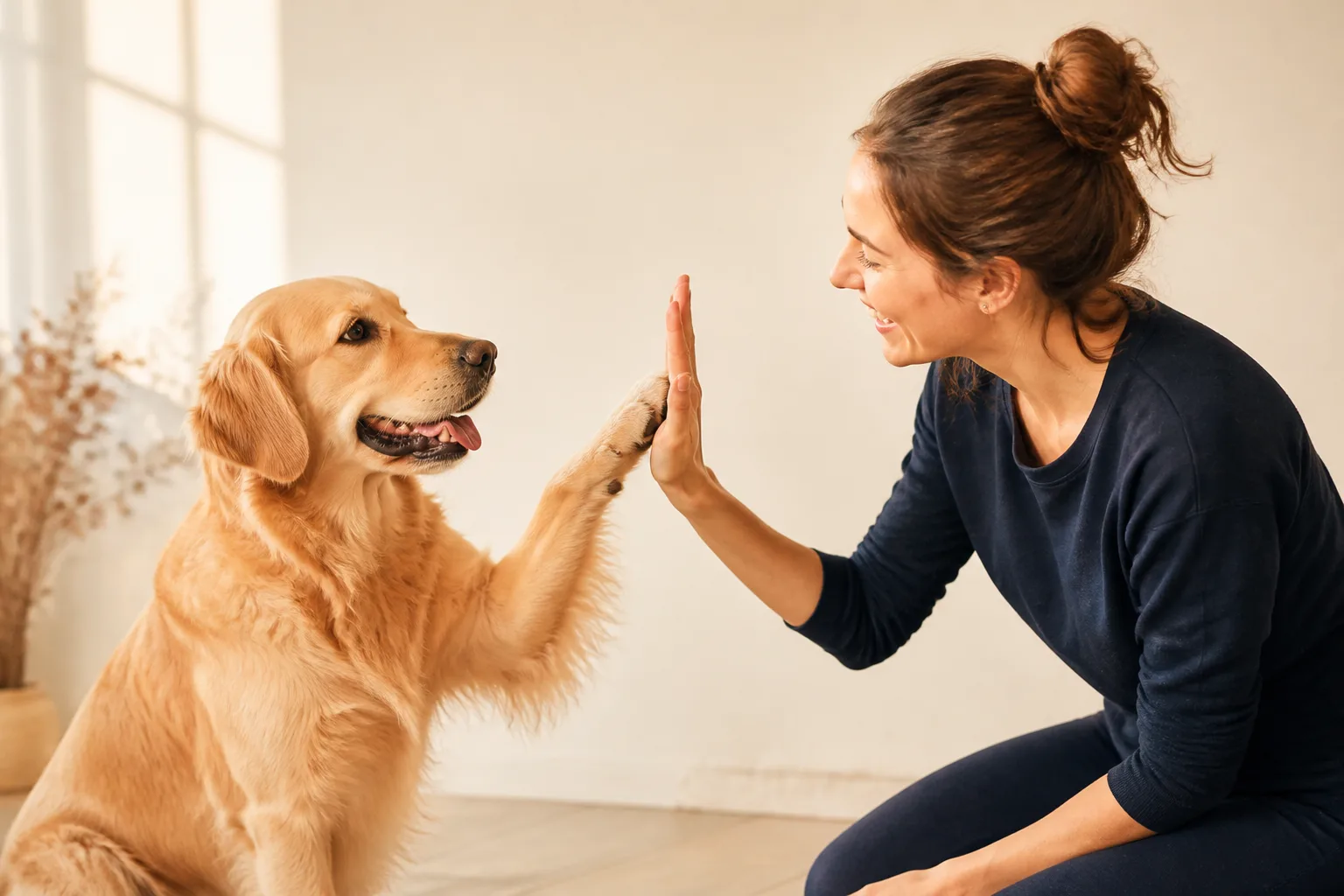 Foundation
Sit, stay, and everyday duration
Clear cues · honest pass criteriaBuild a sit that means something, then grow duration and distance without rushing. You always know when the step is done and what to train next.
Open this path →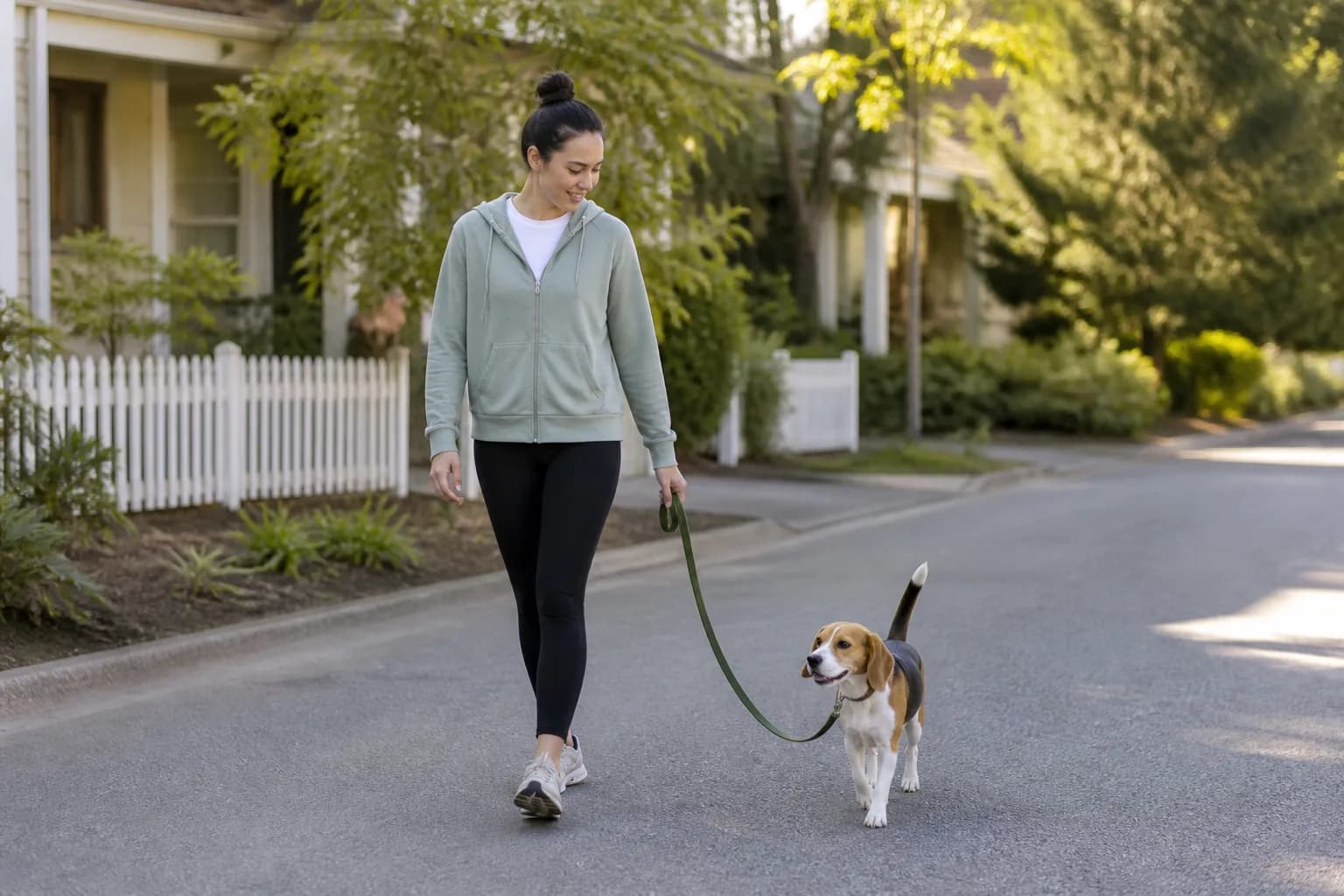 Walks
WalksLoose-leash walking
Soft leash · short reps · real sidewalksStop hoping a long hike will fix pulling. Practice connection in short blocks, mark the good moments, and raise distraction only when the leash already stays soft.
Open this path →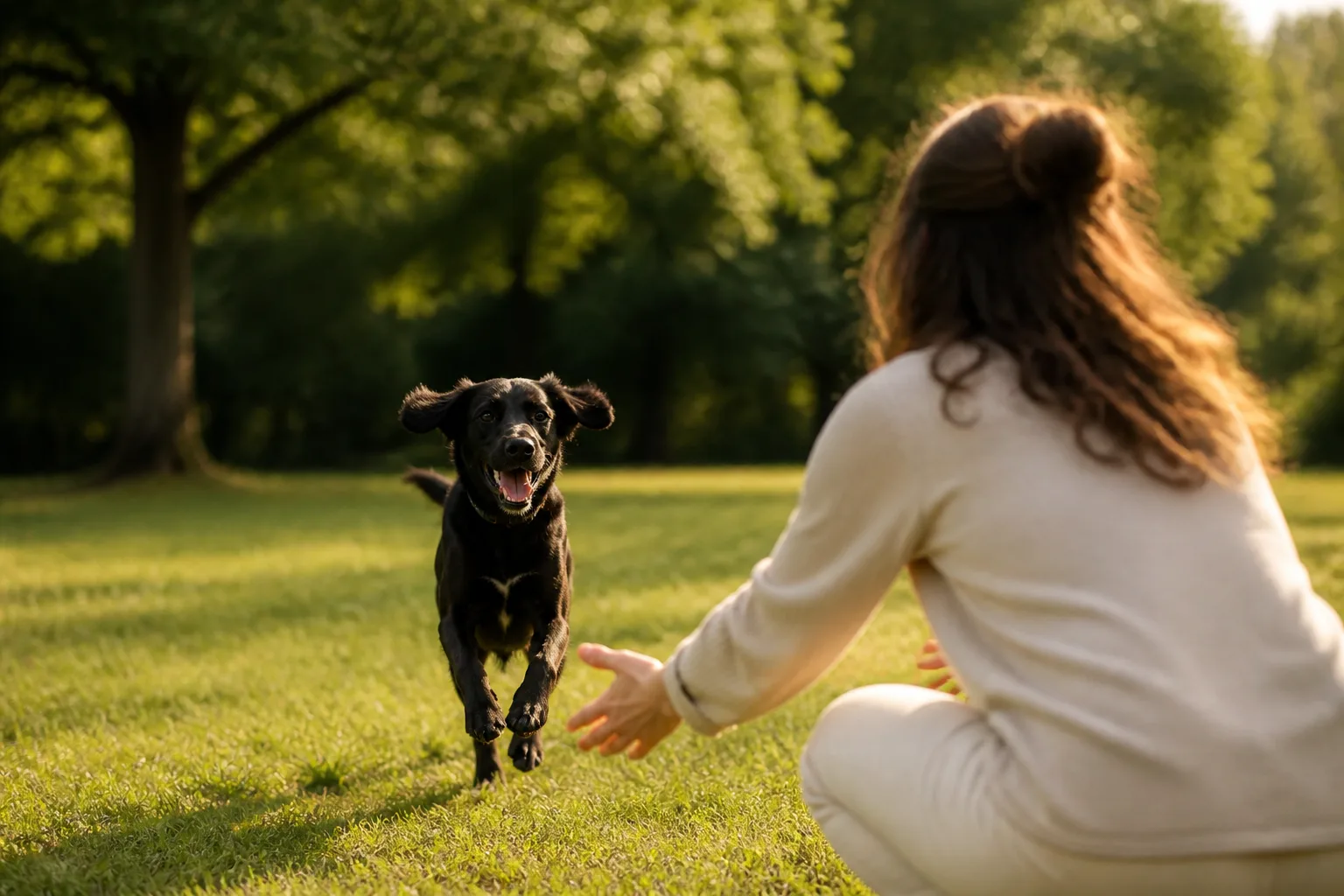 Reliability
Reliable recall
Come · generous pay · graded difficultyKitchen come first. Park come later. Pay like it matters, keep early reps easy, and use a whistle or marker when you want sharper timing, not a louder shout.
Open this path →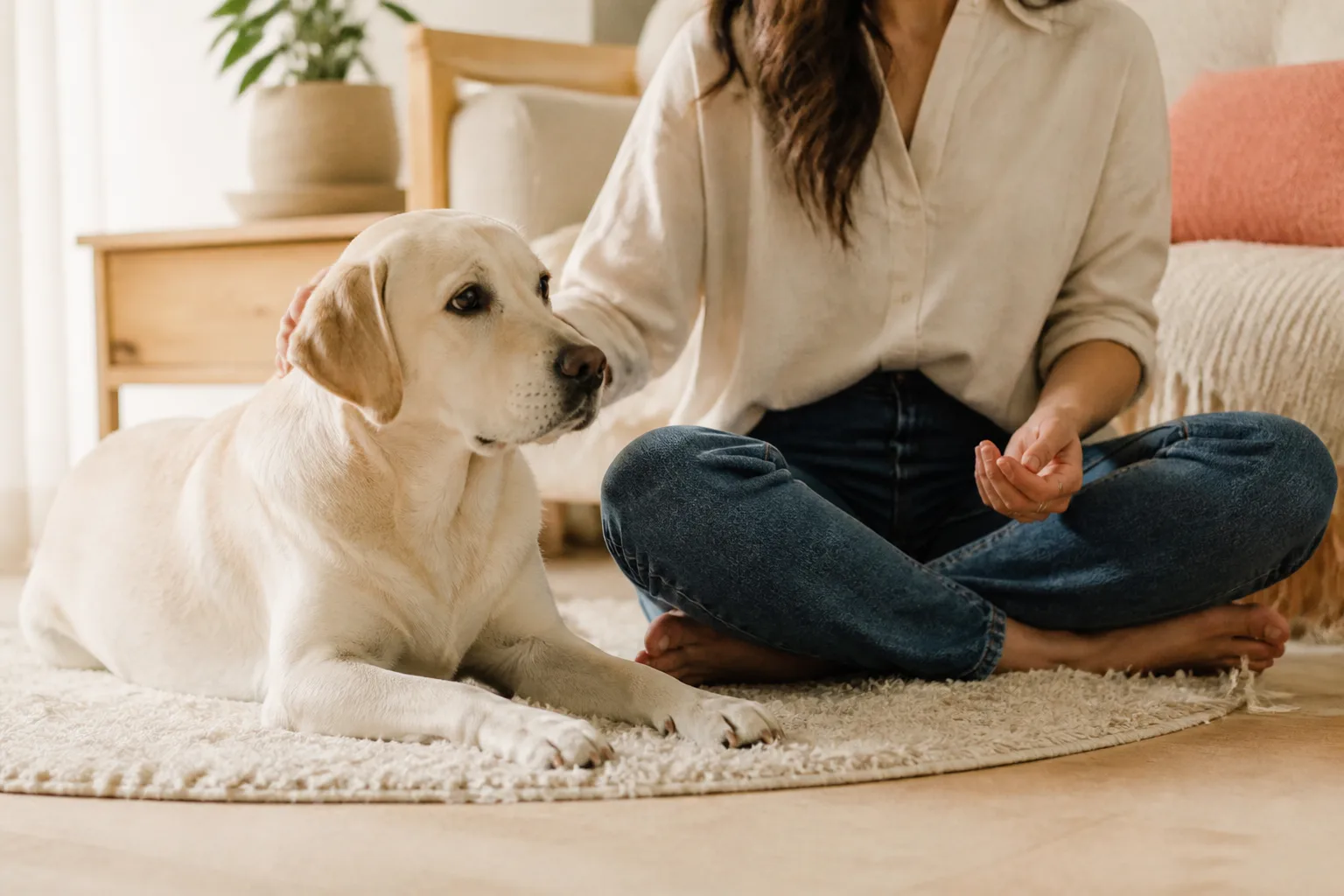 Home calm
Calmer barking at home
Quiet · settle · lower the volumeTrain what you want instead of arguing with the bark. Start with settle in an easier room, then use a 14-day program when evenings keep spiking.
Open this path →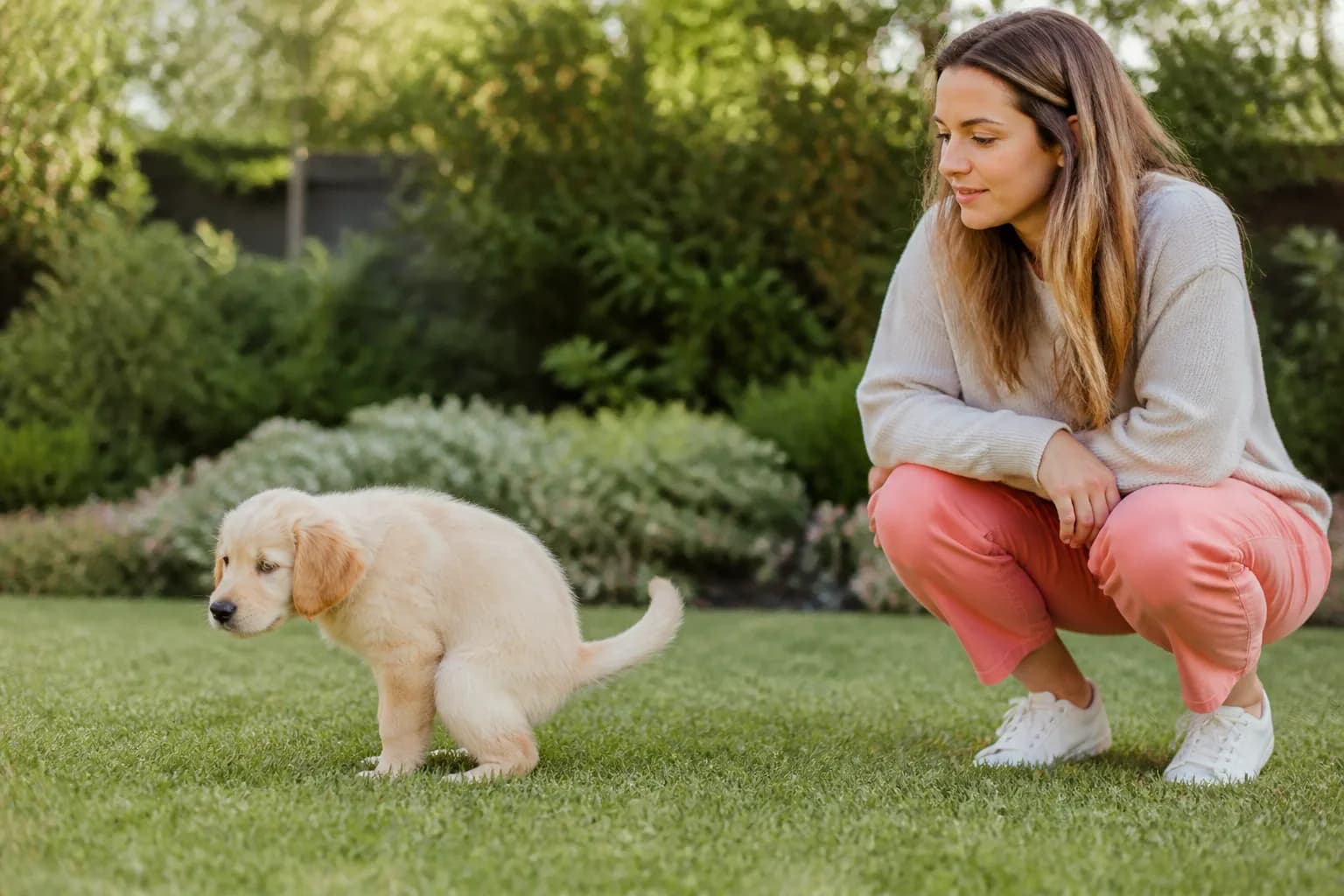 Puppy start
Puppy start at home
Short sessions · potty · early mannersNew puppies do not need a three-hour curriculum. They need finishable lessons: name game, potty rhythm, crate comfort, and one clear cue at a time.
Open this path →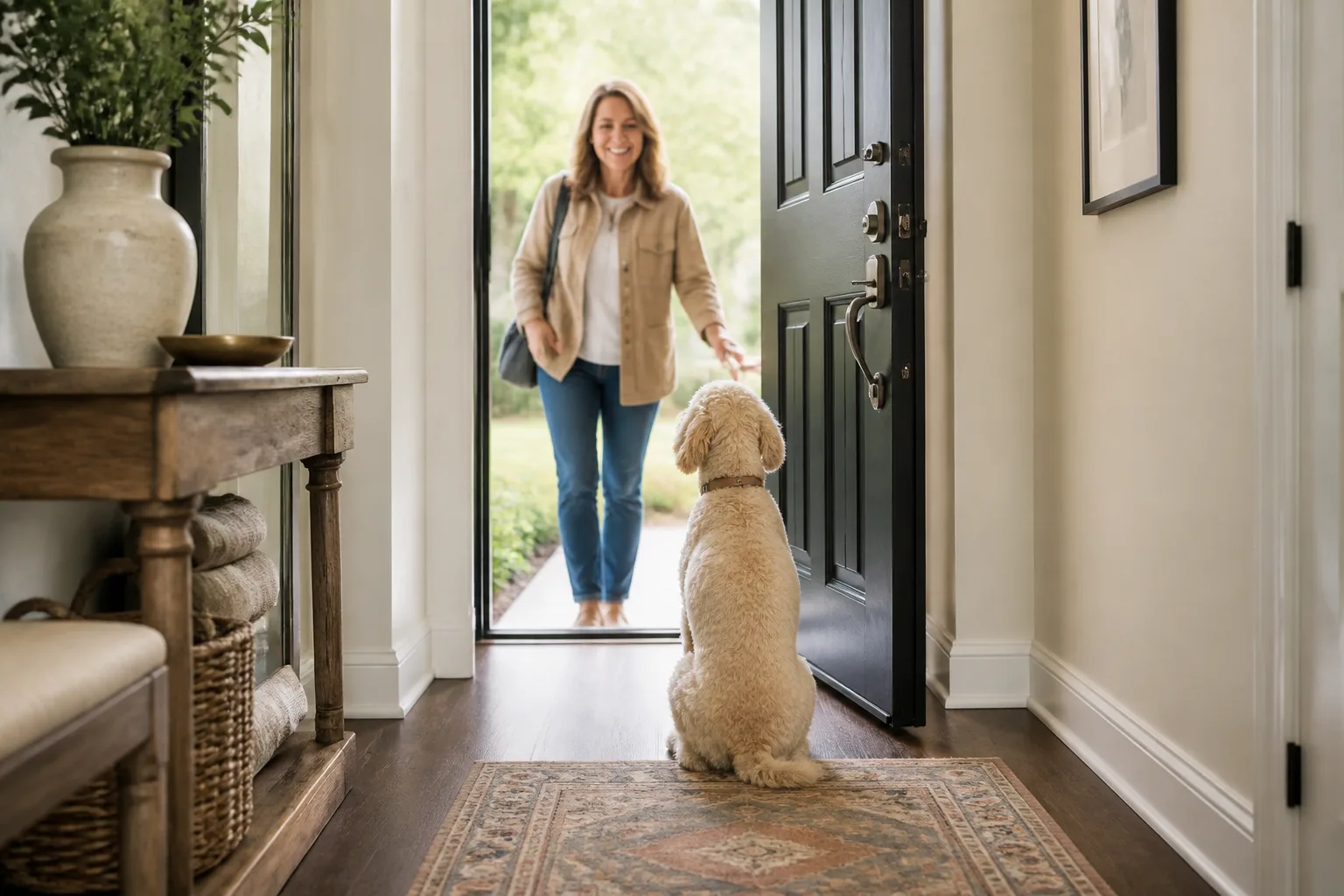 Everyday manners
Doors and polite greetings
Wait · settle · guest-readyDoorbell chaos is trainable. Practice thresholds and calm hello’s in short reps so excitement does not rewrite the plan every time someone knocks.
Open this path →iPhone, iPad & Android
Today’s session, already on your phone.
Lessons, weekly path, 14-day programs, AI coach, potty and walk tracking, clicker, whistle, and timers, in one focused iOS and Android app built for everyday dog life.
- Reward based lessons with clear pass criteria
- 14-day programs when one issue needs focus
- AI coach for sticky moments between sessions
- Available on the App Store and Google Play
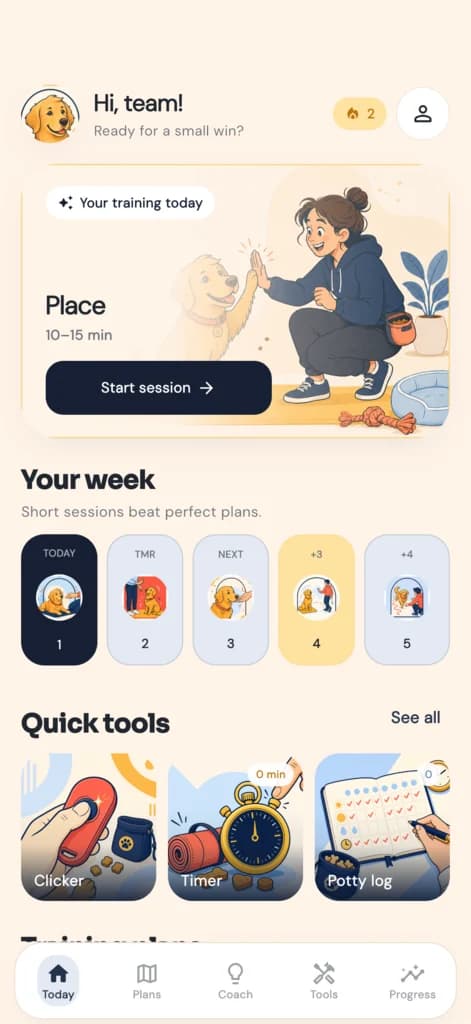
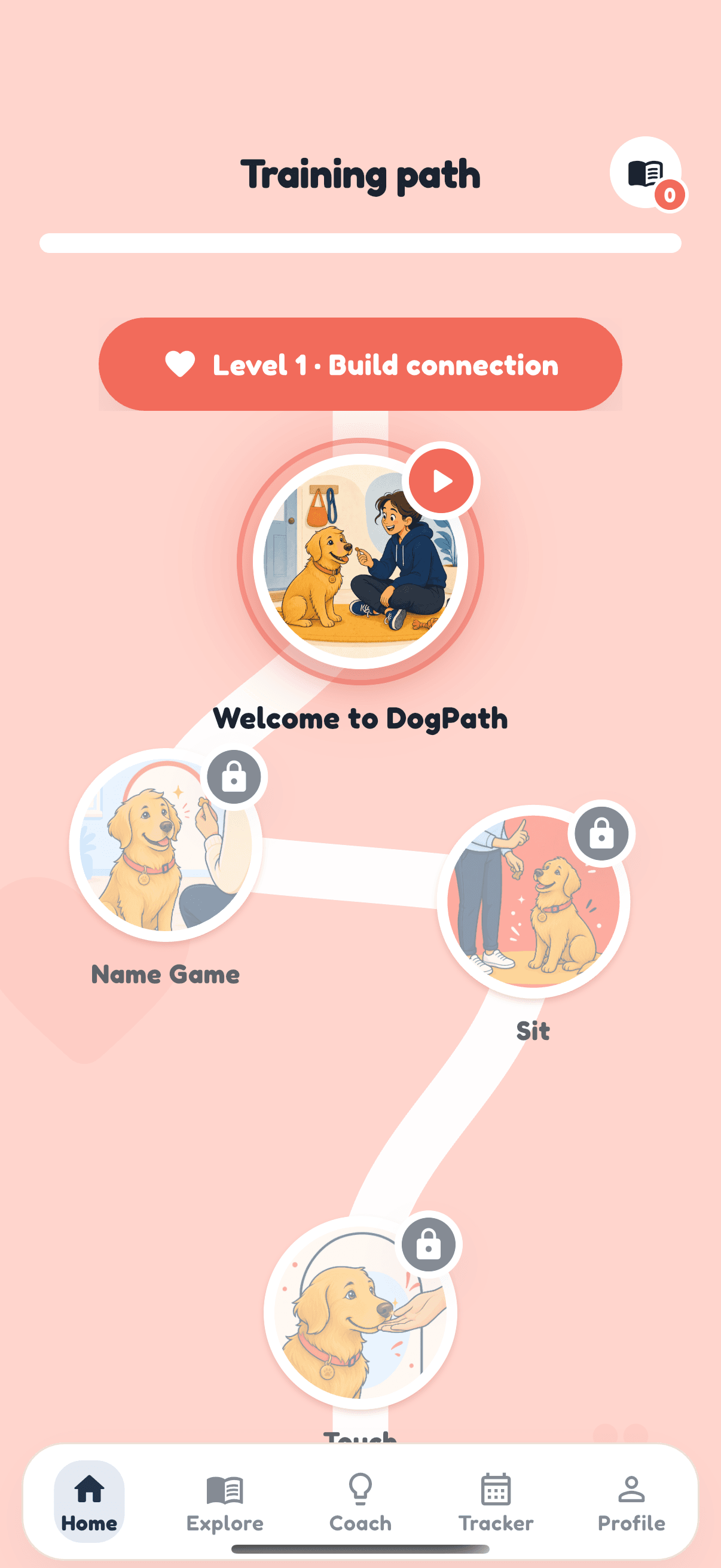
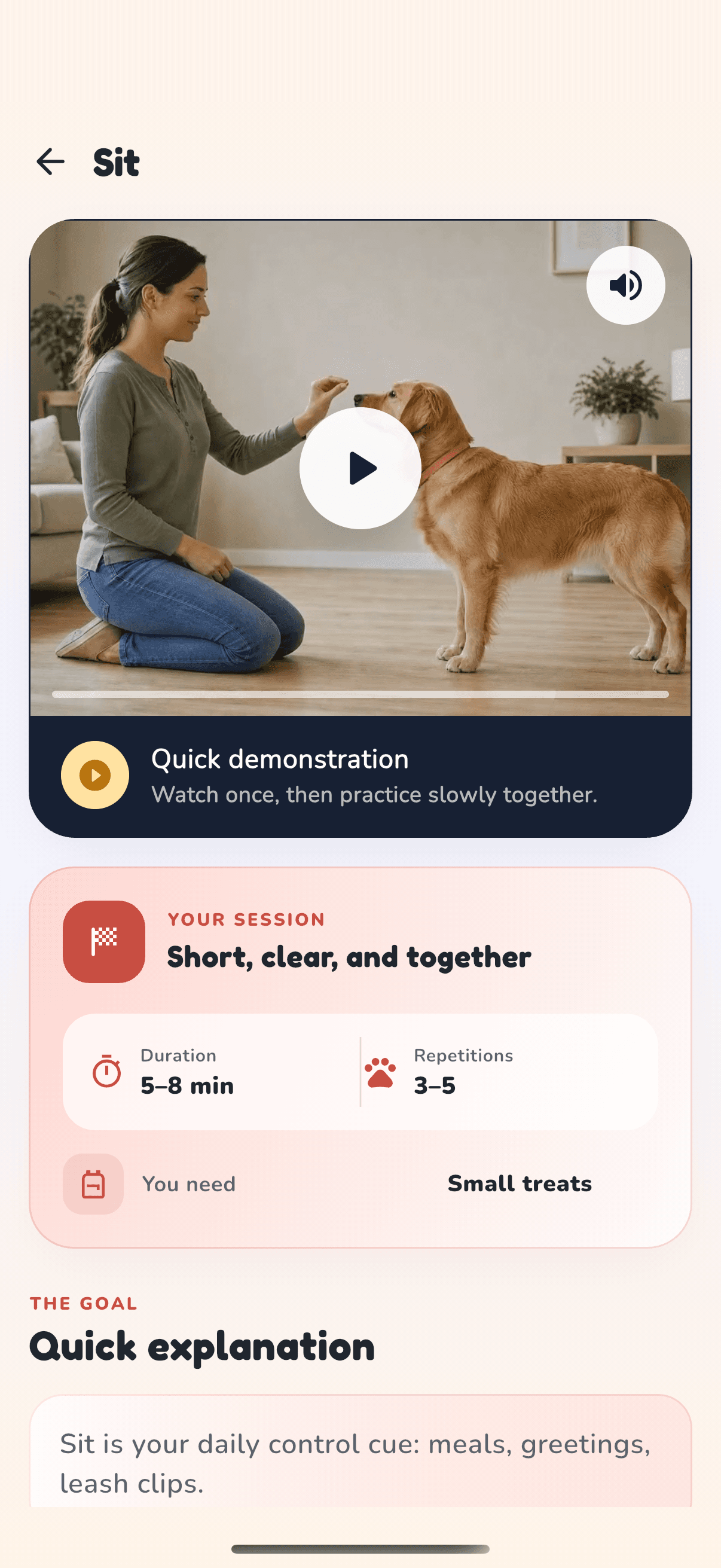

TodayDaily lesson and weekly plan at a glance
In one sentence
What is a DogPath plan?
A DogPath plan pairs your goal with short lessons and a weekly path, so you practice the right skill today and always know what to train next.
See how lessons work →Practice you will actually finish
Setup, steps, pass criteria, and a roadmap that rewards consistency, not marathon weekends.
Diagnosing hard behavior cases
If aggression, injury, or welfare is involved, pause and get in-person professional help.
Train, note, then raise the bar
Complete today’s lesson. Stamp progress. Add distraction only when the skill is already clean.
Four ways forward
The plan, the reset, the coach, the tools.
Use what you need this week. Keep the daily path for momentum. Add a program, a coach question, or a tool when it makes the next session clearer.
Training path
Short, reward based lessons with setup, pass criteria, coach tips, and a 10-level roadmap. Open the app. Know what to train. Stamp the win.
Explore this feature →Problem programs
Focused 14-day tracks for loose leash, stronger recall, calmer barking, alone time, puppy biting, visitors, triggers, and chewing, day by day, not all at once.
Explore this feature →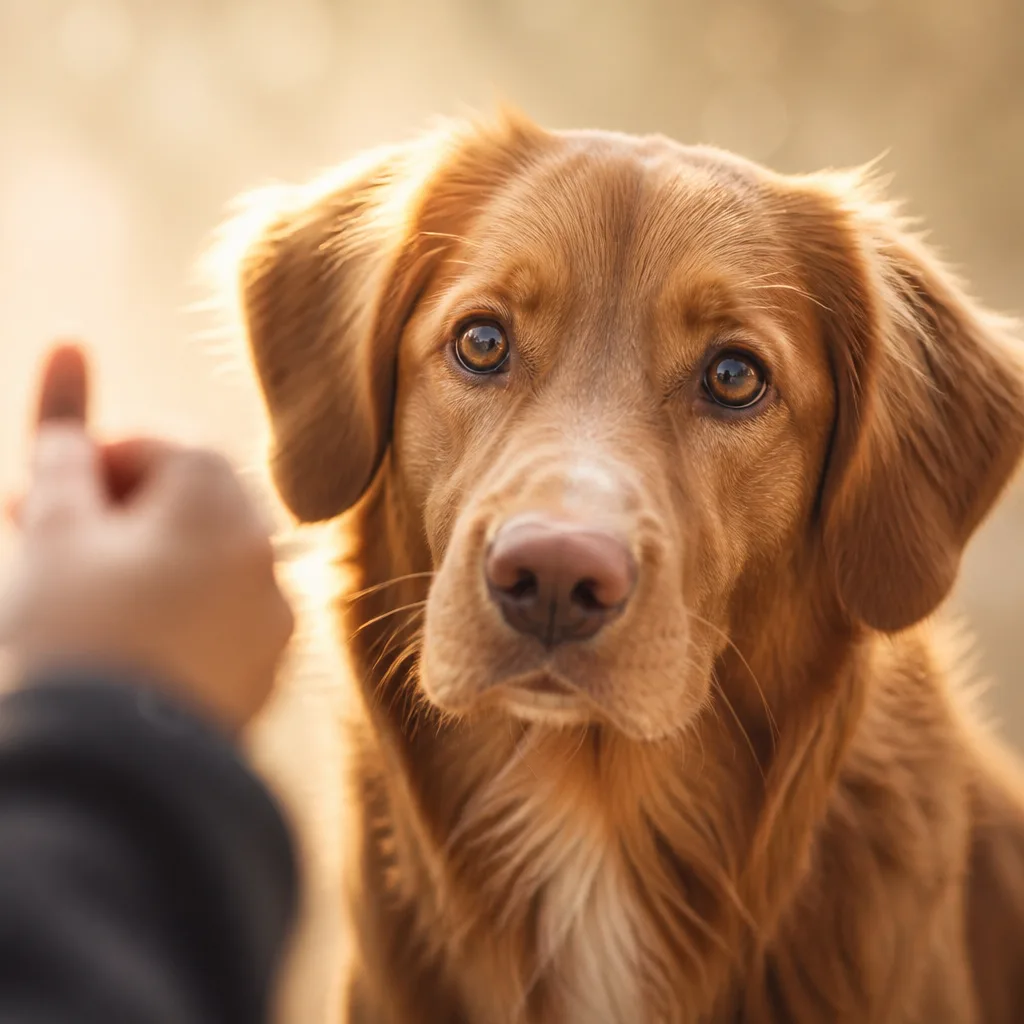
AI coach
Turn goals, weekly plans, and sticky moments into a clear next step, without pretending chat replaces a real trainer or vet.
Explore this feature →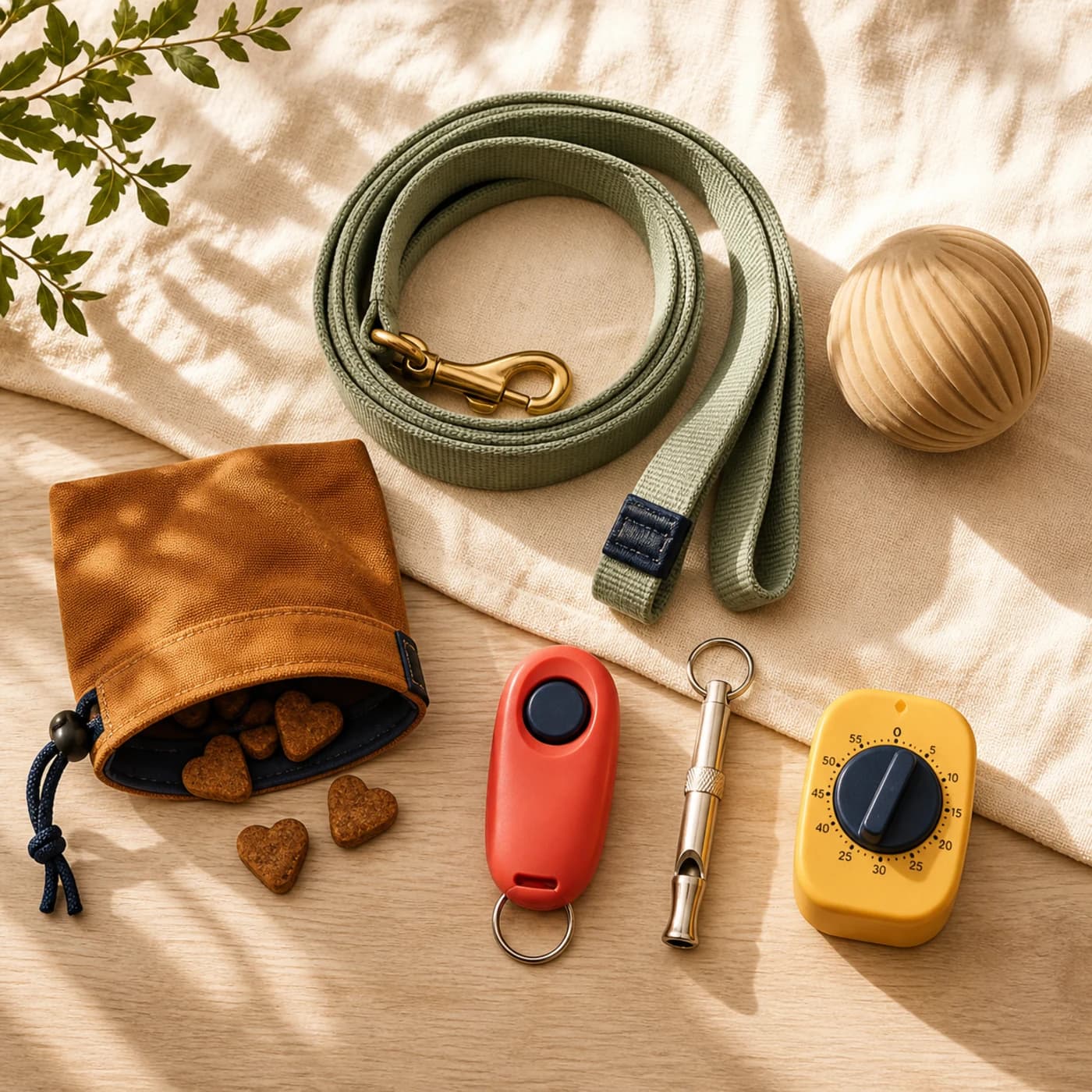
Training tools & breeds
Use dog clicker and whistle sounds, track active walks, log potty routines, and explore breed guides with an AI dog breed identifier.
Explore this feature →Training is one piece
Not every difficult day needs another cue.
Behavior sits inside health, environment, rest, learning history, and real canine needs. Better decisions begin by identifying which kind of support is missing.
Training
Use training when your dog still needs to learn a behavior: come, settle, wait, walk near you, or choose you around a manageable distraction.
Teach the skill →Management
Use gates, distance, leashes, covered windows, and easier routes to prevent the unwanted behavior from being rehearsed while learning catches up.
Build an easier setup →Enrichment
Sniffing, chewing, foraging, play, and safe exploration meet needs that another repetition of sit cannot. Enrichment supports training; it is not a punishment for energy.
Balance the training day →Rest and recovery
Overtired puppies and overloaded dogs may need a quieter environment and predictable downtime before they can offer better choices.
Plan a calmer routine →Veterinary context
Pain, illness, medication, or sensory change can alter behavior. A sudden new problem belongs with a veterinarian before anyone calls it disobedience.
Understand DogPath’s limits →Professional behavior help
Bite risk, aggression, resource guarding, severe fear, or separation distress need an individualized plan and qualified eyes on the full situation.
Know when to get help →Train like it counts
How to judge a session that actually worked.
The best session is not the longest. It is the one that clarifies setup, success, and the next tiny raise in difficulty.
Name the everyday win
Polite walk, solid come, quieter evenings, calm doors. If you cannot say the win in one sentence, the plan is still too fuzzy.
Choose a training goal →Fix the setup first
Wrong room, weak rewards, or too much chaos will sink a good cue. Treat space, leash, and treats as part of the skill.
How DogPath lessons work →Separate skill from place
Kitchen sit ≠ front-door sit. If it falls apart, lower distraction before you invent a new cue.
Keep sessions short →Let tools sharpen timing
Clicker and whistle help mark the moment, they do not replace a plan. Use them inside today’s lesson, not instead of it.
Clicker & whistle basics →Two goals beat twenty tips.
See how DogPath works →Keep one foundation skill and one everyday challenge. Practice both in short sessions. Bring sticky moments to the AI coach, or a trainer when you need direct help.
Ask with context
A better question makes the coach more useful.
“My dog won’t listen” hides the information that matters. Describe the setting, trigger, distance, reward, response, and what your dog can already do in an easier version.
- What happened immediately before the behavior?
- Where can your dog already do the easier version?
- Which reward was available, and was it valuable there?
- What would one realistic next repetition look like?
Practice one change
Four skills worth training before they get harder.
DogPath works best when this week answers one clear question. Pick walks, recall, calm, or manners, then practice on purpose.
Loose-leash walking
Pulling rarely fixes itself on a tired weekend hike. Short weekday reps teach connection: soft leash, well-timed rewards, distraction that rises slowly.
Note where it falls apart, bikes, dogs, sniff zones, and make tomorrow’s setup one notch easier, not louder.
Loose-leash basics →A come that holds
If come only works in the kitchen, the park is not the place to “test” it. Pay generously, keep early reps easy, and add a whistle when timing needs to be sharper.
When it breaks, drop distraction. Do not raise your voice.
Reliable recall training →Settle and quieter nights
Barking and restlessness often need a settle skill before a silence demand. Practice in an easier room, then use a 14-day calm program when evenings keep exploding.
For puppies, pair this with crate comfort and alone-time pacing, not endless fetch as a substitute plan.
Calm barking at home →Doors, guests, potty, crate
Home life is a stack of tiny routines. Change one at a time, door wait, guest greeting, potty rhythm, so you can see what actually improved.
Age, health, and environment still matter. Treat DogPath as the practice plan, not a diagnosis.
Open the tracker & toolkit →Tips vs plan vs pro
A tip shows an idea. DogPath makes it practice.
Inspiration, a DogPath plan, and a professional trainer each solve a different part of the puzzle.
Use DogPath for the daily middle: clearer than a random video, still honest that some cases need direct help.
| Decision point | Random tip | DogPath plan | Pro trainer |
|---|---|---|---|
| What you get | A tip filmed with someone else’s dog | Today’s lesson for your dog | Direct help for complex cases |
| Best for | Finding ideas | Daily practice you can finish | Safety, technique, aggression risk |
| Won’t answer | What to train in your living room tonight | Medical causes or emergency behavior | Progress without any homework |
| Next step | Pick one skill | Open the lesson or a 14-day program | Bring goals, notes, and constraints |
Practical reading
Guides that make tonight’s session easier.
Getting started
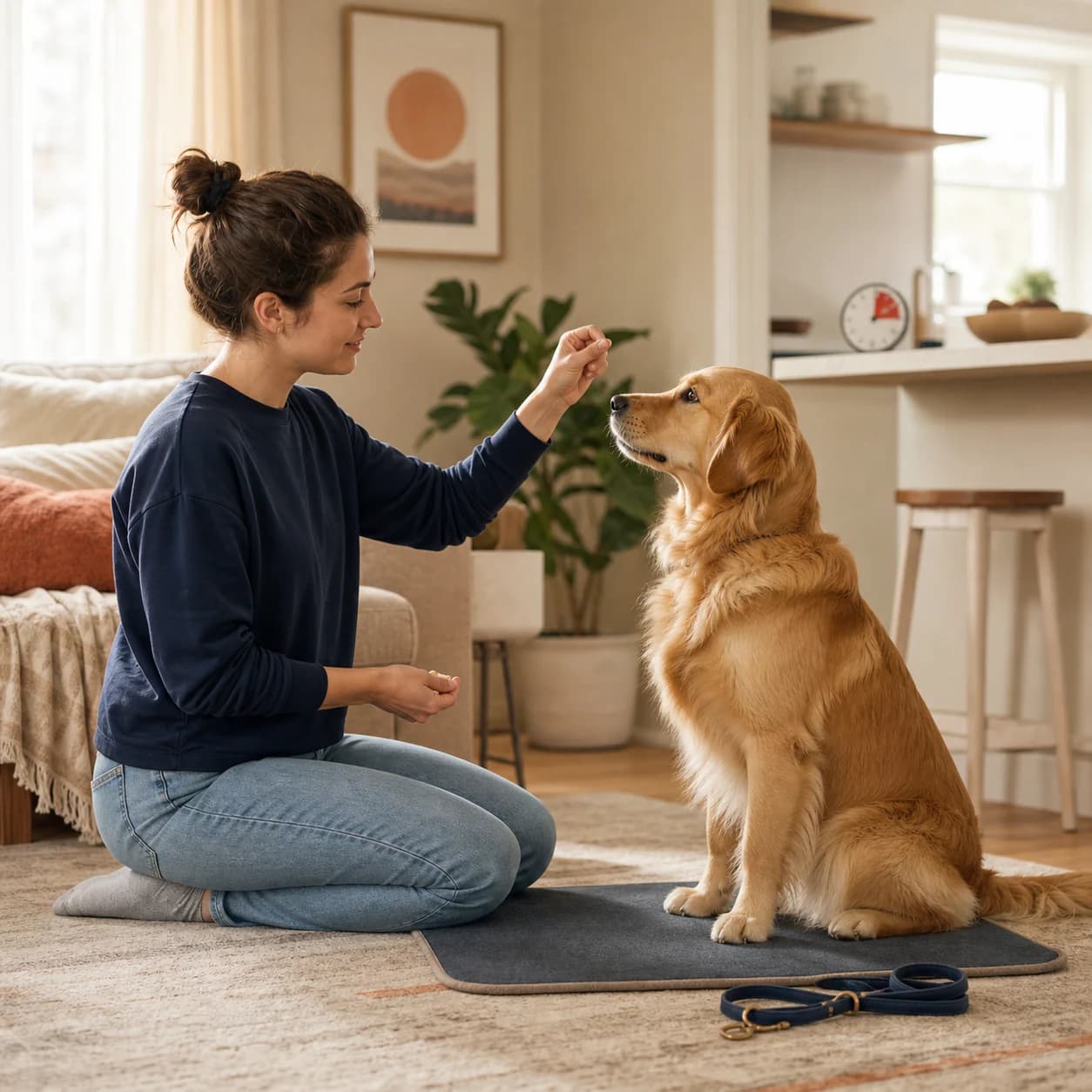
How a DogPath lesson actually runs
From tonight’s setup to the stamp that says “train next”, so you open the app and know exactly what to do.
7 min readPractice habits
Short sessions that stick (when life is loud)
Five clean minutes beat the heroic hour you never start. Here is how to structure repetitions, rewards, and endings.
6 min read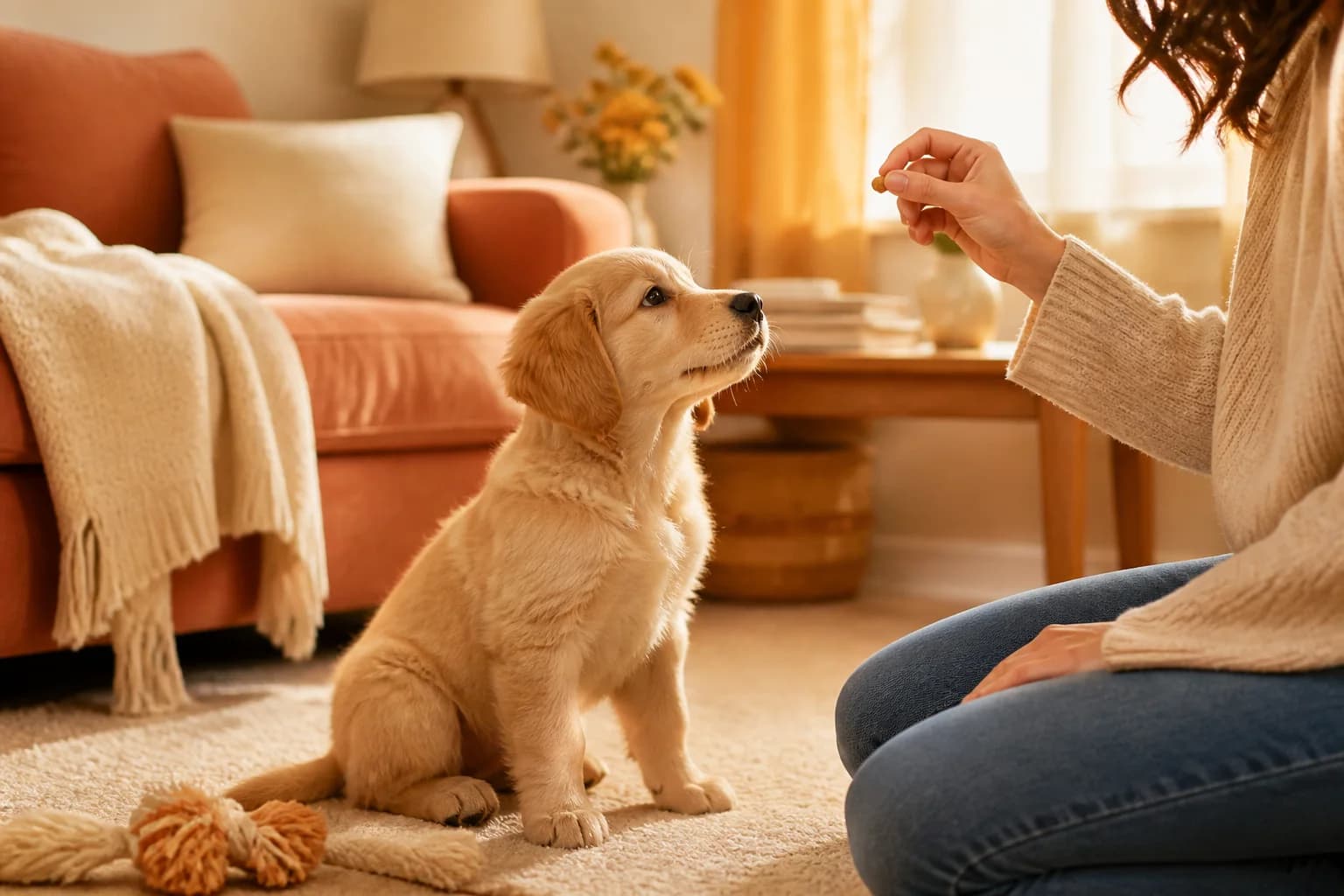
Puppies
Puppy training at home, your first week plan
Name games, potty rhythm, soft mouths, and tiny reward based sessions before anyone expects polished manners.
8 min read
Planning
Pick training goals your week can actually finish
Turn “better behaved” into teachable skills, fair criteria, and one primary focus, so practice has somewhere to land.
7 min readWalks
Loose-leash training that survives the sidewalk
Teach walking near you with short reps, fair payoffs, and a distraction ladder, not a tug-of-war to the corner store.
8 min readRecall
Dog recall training for a come cue worth answering
Install recall as a jackpot channel: easy starts, generous pay, long-line proofing, before you gamble on true freedom.
8 min readMeasure the trend
Progress is not a perfect dog. It is a clearer pattern.
Look beyond one impressive repetition. Useful progress appears in recovery, consistency, and the number of situations where the skill still holds.
Faster recovery
Your dog can notice a distraction and return to you with less help.
More easy wins
Correct responses become repeatable under the same fair conditions.
Reliability spreads
The skill survives gradual changes in place, duration, distance, or distraction.
Good to know
Questions, answered straight
Availability, pricing, privacy, and what DogPath can, and cannot, do for you and your dog.
What is DogPath?
DogPath is the everyday dog training app for iPhone, iPad, and Android. It combines short lessons, a weekly path, 14-day problem programs, an AI coach, and tools such as a clicker and whistle. You always know what to practice next.
Where can I download DogPath?
DogPath is available on the App Store for iPhone and iPad and on Google Play for Android. There is no desktop or browser version of the training experience.
Is DogPath free?
Yes, free to download. You can start with Level 1 of the roadmap. DogPath Pro unlocks the full path, programs, coach, and tools. Prices show in the app before you buy.
Will this replace a real trainer or vet?
No. DogPath helps with everyday practice at home. It is not veterinary advice and not a stand-in for in-person help when safety, aggression, or welfare is on the line.
How long is a session?
Most lessons are built for about eight focused minutes, short enough to finish on a weeknight. Short sessions beat perfect plans you never start.
What can we train?
Foundation cues, loose-leash walks, reliable recall, calmer barking, puppy starts, potty and crate routines, polite doors and greetings, alone time, and more, plus 14-day programs when one problem needs a focused push.
What about my photos and coach chats?
AI features only run after you agree in the app. See the privacy policy for how photos, location during walks, and coach messages are handled.
Can I use DogPath with a professional trainer?
Absolutely. Bring today’s lesson, your goal, and a quick note about what worked. DogPath is the practice plan between sessions, not a diagnosis.