
Cooperative everyday care
Dog Afraid of Bath? Free Gentle Practice Plan
Separate the slippery floor, water sound and handling into small choices so bath practice can stay safe and predictable.
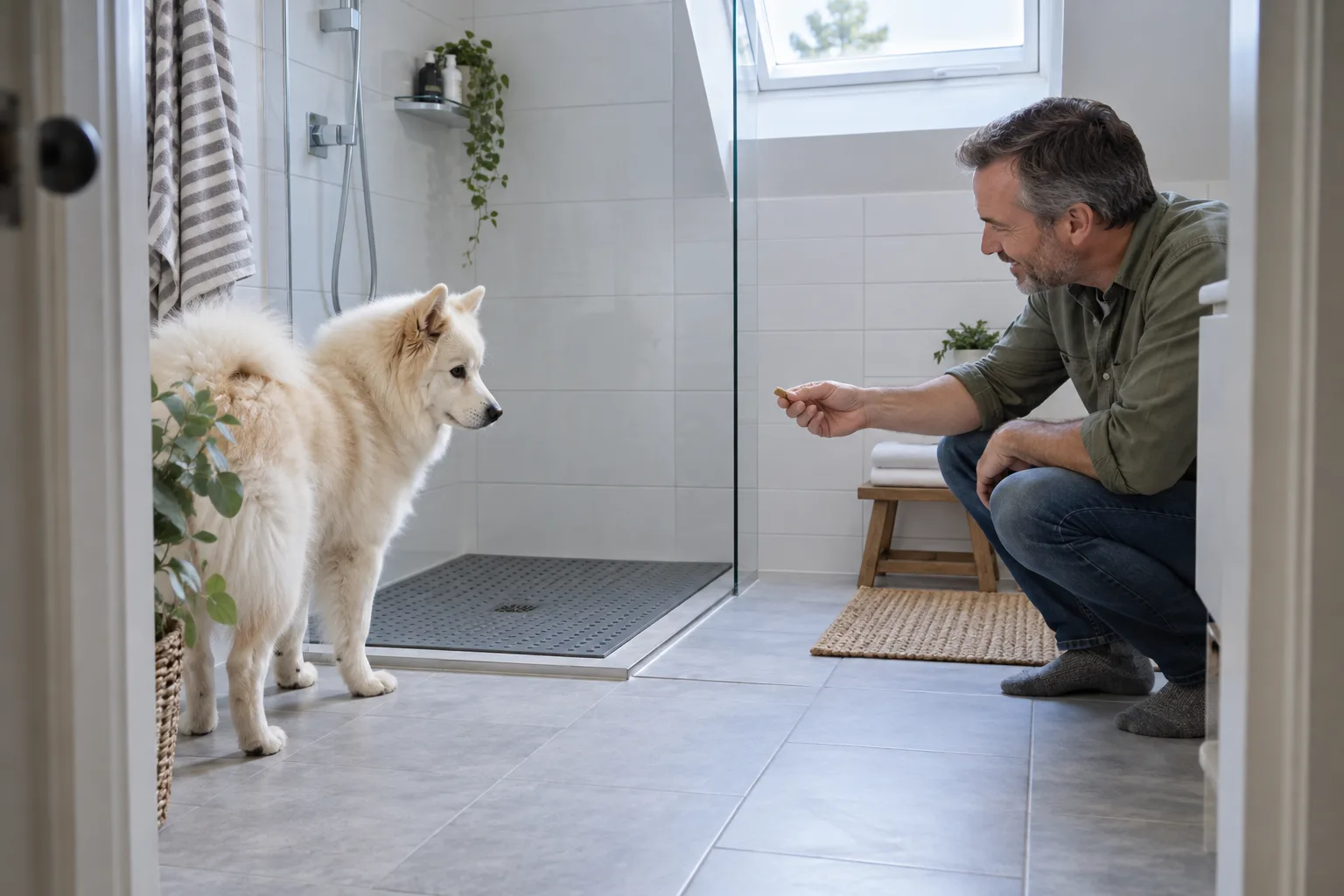
A dog afraid of bath time may stop at the bathroom door, back away from a slippery tub, tremble when the shower runs or resist a towel afterward. Those reactions do not identify one single cause. The floor, noise, spray, temperature, shampoo smell and being held in place can each matter. A plan that begins with a full wash cannot tell you which part was difficult, and a frightened dog should not have to endure it simply because the calendar says bath day.
This free gentle practice plan starts with a dry, open route and asks for tiny voluntary choices. You can use ordinary rewards and a paper note; no app is needed to teach it. DogPath is free to download or start, with some features or usage levels possibly requiring an in-app purchase, but it is only an optional way to remember which step was comfortable. It cannot assess skin disease, pain, fear severity or whether a bath is medically necessary.
If avoidance appeared suddenly, the dog has irritated skin, ear pain, mobility problems, panic, growling, snapping or a bite history, pause home training and ask a veterinarian or qualified behavior professional for individual help. A dirty coat, chemical exposure or prescribed medicated wash may need timely professional advice. Do not postpone urgent care to finish a practice ladder, and never force a dog into water to prove that they can tolerate it.
For a dog afraid of bath, find the difficult moment first
Think back to the last attempt without labeling the dog stubborn. Did they refuse the bathroom itself, enter but leave at the tub edge, slip under their feet, startle only when water ran, or object when a hand touched a sore area? Write down what you actually saw. A dog that willingly walks into a dry bathroom but bolts when the shower turns on needs a different first exercise from a dog who avoids the doorway. The point is not diagnosis; it is choosing a safe, easier starting place.
Watch the whole body, not only whether the paws remain in the tub. Turning away, freezing, rapid panting, repeated lip licking, refusing usual food or frantic attempts to escape tell you the exercise may already be too hard. A dog can be still because they feel trapped. Offer an exit and stop before distress rises. If the dog will not take a suitable reward in an easy setting, reduce the challenge or end the session. Pain and abrupt behavior change are reasons for a veterinary conversation, not a stronger lure.
Cornell veterinary guidance on gradual, reward-based help for fearful dogs
Build a safe dry bathroom before asking for a step
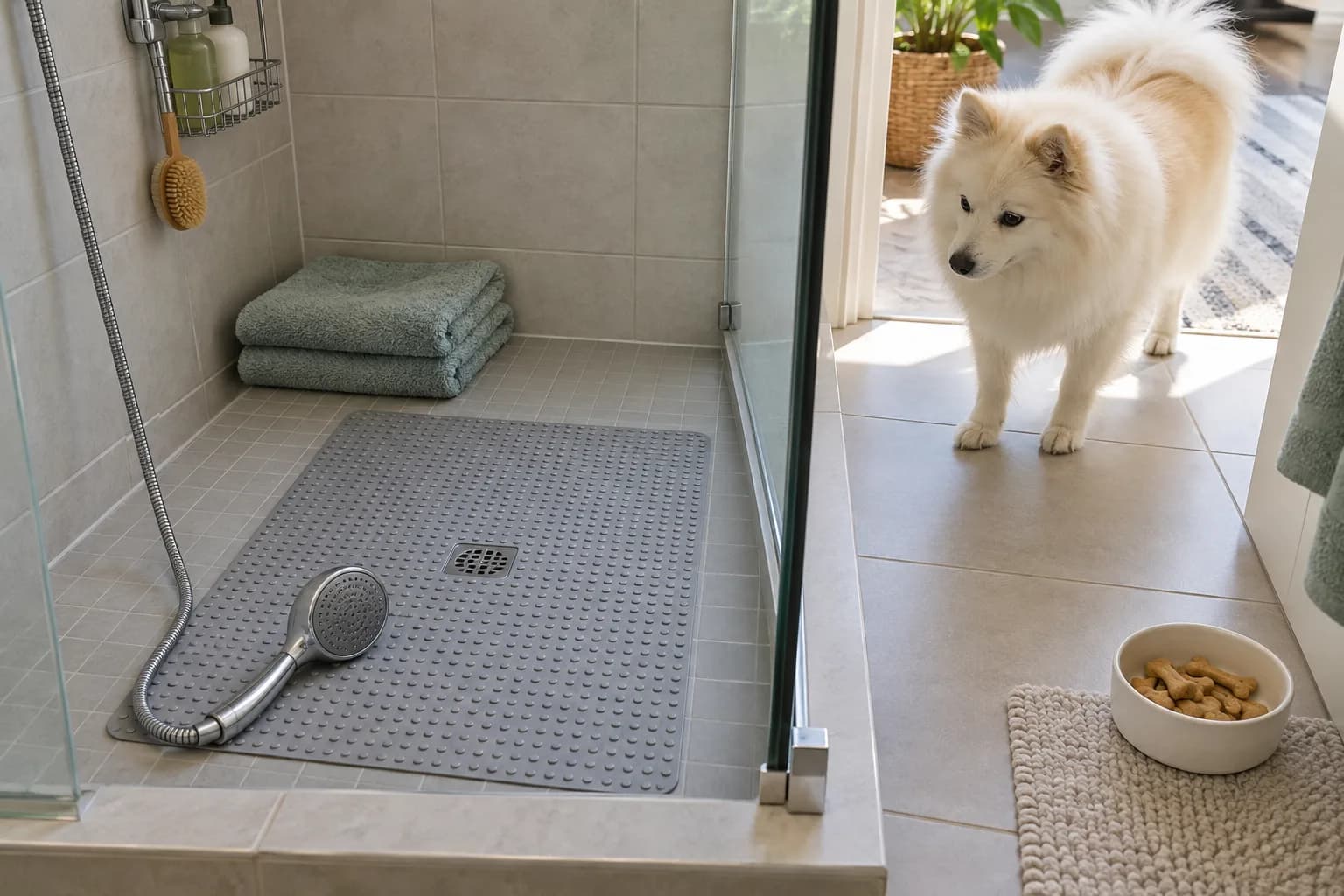
Remove products the dog might lick, close cupboards, set a comfortable room temperature and put a stable nonslip mat across the floor they must cross. Check that it cannot slide when you press it with a foot. A towel can bunch up, and a slick enamel tub can undo otherwise good training. For a small dog, do not lift them into a high tub as the first step; choose an accessible wash area or ask a professional for a safer setup. Leave the door and exit route open during practice.
Place dog-safe rewards and dry towels where you can reach them without leaning over the dog. The shower head stays off and out of the dog's path. Walk into the bathroom yourself, place a reward near the doorway and let the dog decide whether to approach. Then both of you leave. Repeat at another time only if the dog remains loose and curious. This is a preparation session, not a failed bath. The American Veterinary Society of Animal Behavior specifically describes slippery bathtubs and overwhelming scents as possible problems during handling routines.
AVSAB discussion of small reward-based steps for bath and handling routines
Make the threshold a choice, not a trap
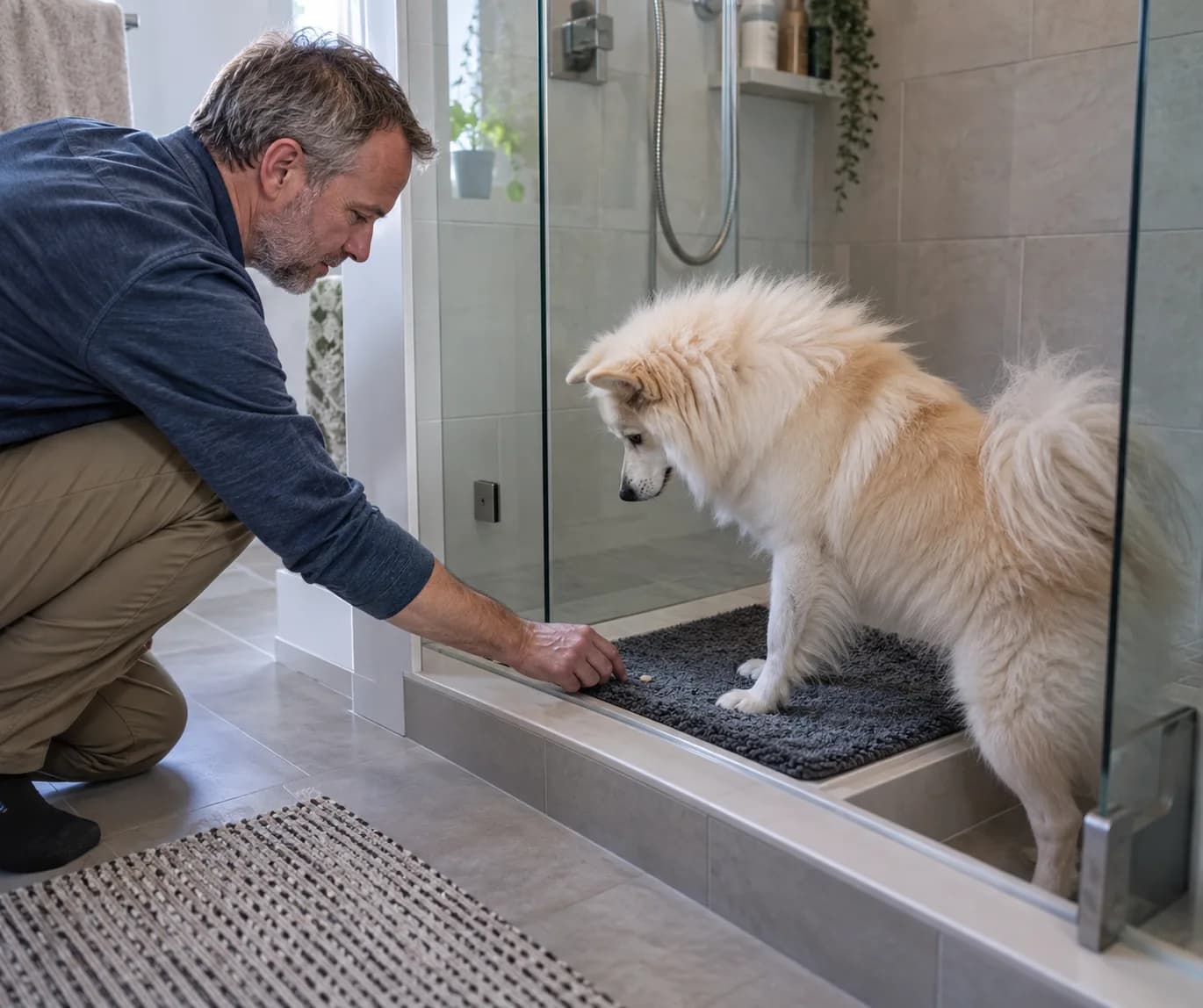
Begin outside the shower. Mark a glance toward its floor, then deliver the reward where the dog is comfortable, not deep inside as bait. If they choose to approach, reward one step onto the dry mat and invite them back out with another small reward. Ending the step is part of the lesson: entry does not predict that someone will shut a door or turn on a tap. Two or three good choices are enough for a first session. Do not pull a lead, block the exit or hold the dog by the collar.
Over several short sessions, you may ask for two paws, then four, then a brief pause, but only while the dog remains able to move freely and take food normally. Keep the shower dry and quiet until this part is comfortable. If the dog steps back, let them. Reset farther away and reward the next willing approach. Dogs do not need a perfect sit or down in the shower; relaxed standing is enough. A nonslip surface and a clear release matter more than a pose for a photograph.
Separate water sound from water on the coat
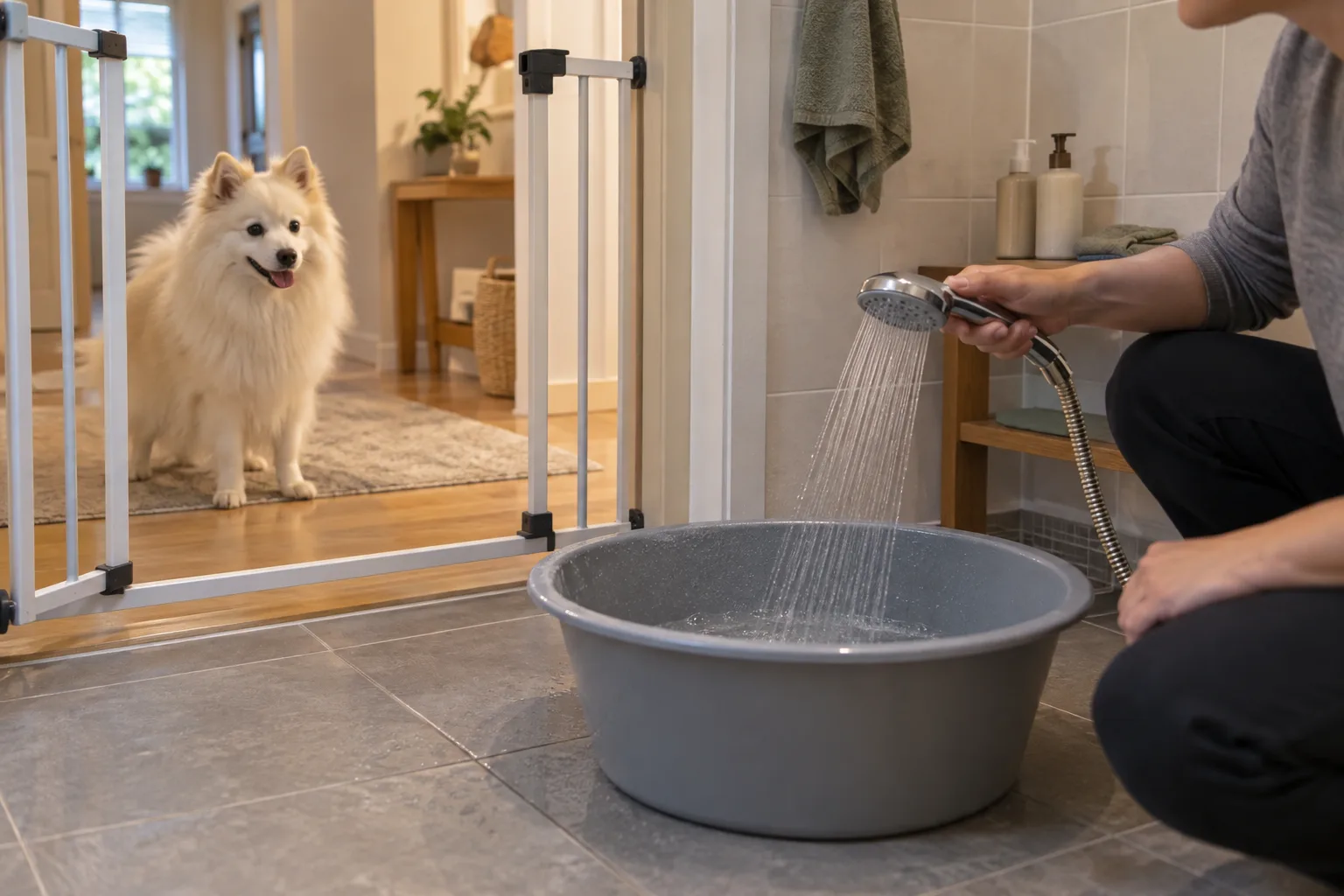
When the dry area is easy, let the dog rest elsewhere while you test the tap and the shower head. Find a quiet setting, a gentle flow and a comfortable lukewarm temperature with your own hand. The first sound rehearsal can happen with the dog behind a safe barrier in another room, far enough away to remain relaxed. Turn water on briefly, offer a suitable reward, then turn it off. Do not assume that hearing running water beside a dog is harmless merely because the water is not touching them.
Only later combine the dry shower location with a distant, brief water sound. Keep the exit available. If the dog startles, backs away or stops eating, return to the earlier quiet version. Change one thing at a time: distance from the sound, duration of the sound or flow intensity. A loud spray aimed at a dog is several new challenges at once. A jug or damp cloth may be less noisy for some dogs, but do not use it as a way to surprise a dog with contact they did not choose.
Introduce a little contact only when the earlier steps stay easy
A comfortable dog may choose to stand on the mat while you touch a small damp cloth to a shoulder or lower leg, then pause and reward. Start with a body area the dog normally accepts being touched. Avoid eyes, ears, nose and any painful or irritated skin. A single damp touch followed by an easy exit can be the whole session. If the dog turns away, braces or tries to leave, stop. Do not hold them still until they give up; that removes the choice the earlier sessions were built to protect.
When brief contact is truly ordinary, increase water amount slowly while keeping temperature, footing and sound predictable. Use only dog-appropriate products recommended for that dog's coat and skin, and ask a veterinarian about medicated products or bathing frequency. Rinse as directed and keep the dog warm while drying. Never guess that a human shampoo is safe. A professional groomer or veterinary team may be the right partner if washing is needed before the dog can comfortably complete these steps at home.
Practise the towel and drying separately
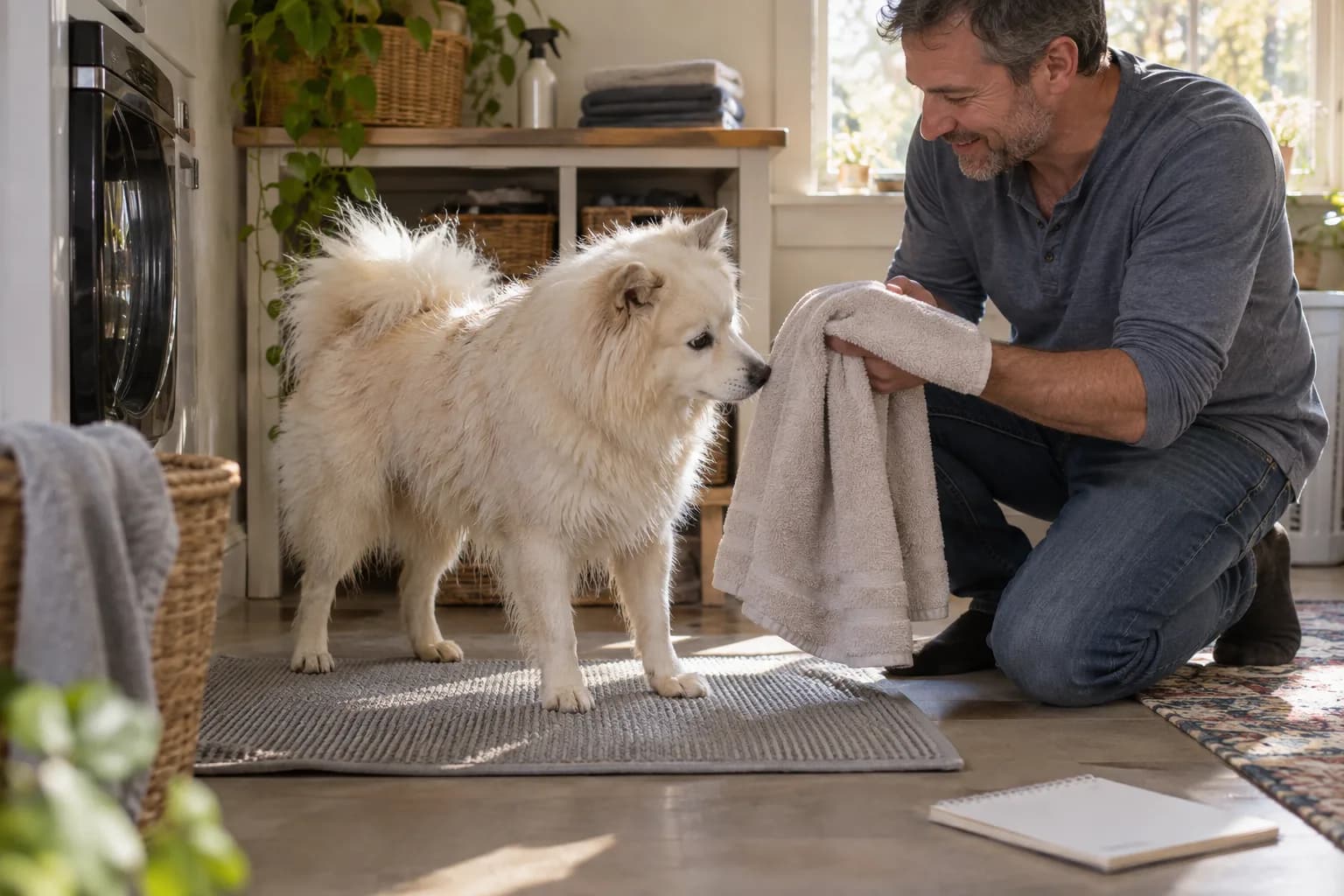
For many dogs, the towel is another handling exercise. On a dry day, show a soft towel at a distance and reward the dog for approaching or sniffing it. Touch a shoulder briefly, remove the towel, and wait for a voluntary re-approach. Do not drape it over the head or rub briskly without warning. Some dogs prefer several gentle presses with a towel; others need a pause between touches. Give the dog space to shake water off safely, away from slippery tiles or breakable objects.
If you use a dryer, check the sound, airflow and heat away from the dog first, and avoid hot air or forced exposure. A noisy dryer is not automatically part of a successful bath. Choose a warm room and absorbent towels where appropriate, or get coat-specific guidance from a groomer. A dog that tolerates water but panics at drying has not failed the bath lesson; the next plan should target drying as its own skill. Stop if the dog becomes distressed and seek individual advice when coat care cannot safely wait.
Use a simple record so the next practice is fair
After each short session, note the location, the single change you made and the dog's visible response. A useful entry might say: 'dry mat; front paws in twice; accepted rewards; chose to leave after ten seconds'. That is more informative than 'bath went well'. Next time you can repeat the same easy step or increase just one variable. The record may be on paper. If you prefer an app, DogPath can hold the practice target, but it cannot decide whether your dog's skin, fear or temperature is safe.
Plan for ordinary life as well as training days. Mud on paws may be cleaned with a gentle cloth if the dog accepts it; a full shampoo bath is not the only response to every mark. If there is a health reason to wash promptly, call the veterinarian for a safe plan. If you have several dogs, practise each individually rather than allowing another dog to crowd the doorway. Keep sessions brief enough that the dog can still choose to return tomorrow. Progress is measured in comfortable choices, not minutes endured.
Know when home practice is the wrong next step
A dog who growls, snaps, lunges, thrashes, collapses or panics around the bath needs more than an online ladder. Do not put yourself or the dog at bite or fall risk. Pain, skin infection, ear trouble and mobility limits can make bathing unpleasant even when the dog once accepted it. A veterinarian can assess health concerns; a qualified reward-based behavior professional can help design safe handling practice. Tell a groomer about the fear before booking rather than hoping they can finish a difficult wash by force.
There is no fixed deadline for a dog to enjoy bathing. Some may accept a dry mat quickly but need much longer with water or handling. Keep the care objective modest and humane: a dog able to approach, leave, and participate in the necessary steps without panic. The same household should be able to repeat that setup on a normal day, not only in a perfect training demonstration. When the dog is uncomfortable, make the next step smaller or ask for personal help rather than adding pressure.