
Everyday walks
Dog Eats Things off the Ground: Free Practice Before the Grab
Make the useful choice available before something reaches your dog's mouth: plan the route, reward early check-ins and keep rehearsal separate from hazards.
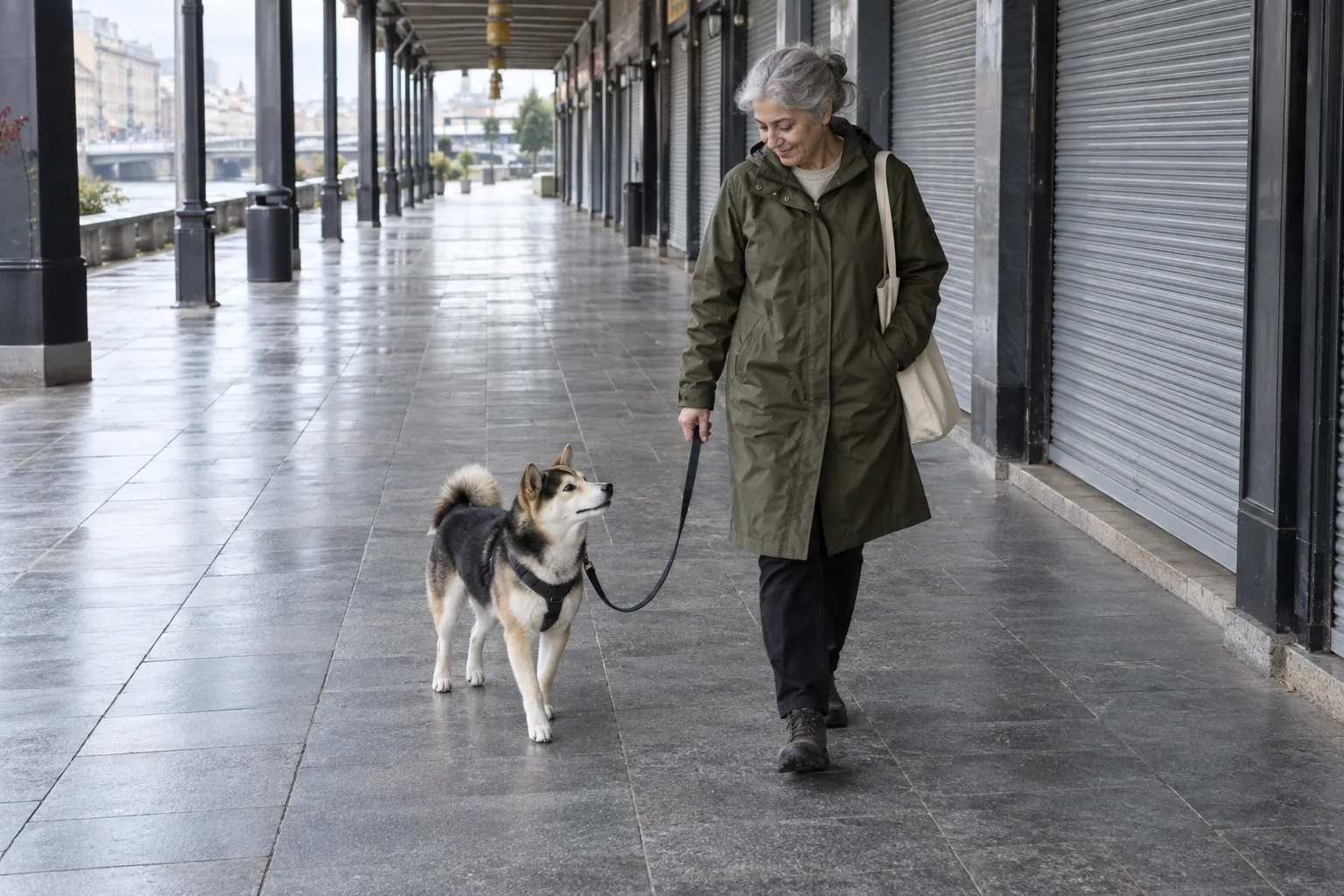
When your dog eats things off the ground, a walk can become a race between your eyes and their nose. You notice a wrapper, say a cue, and discover that your dog has already reached it. Repeating the instruction more loudly does not change that timing. This plan shifts the useful moment earlier: choose a clearer stretch, notice voluntary orientation and reward before there is anything to retrieve from a mouth.
You will practise one visible behavior, then use DogPath to keep the goal and outcome specific. The app is free to download or start, with in-app purchases; that does not mean unlimited free use. You can also keep the same notes on paper. This is everyday reward-based practice, not a diagnosis, ingestion treatment, safety assessment or guarantee. A dog who may have swallowed something harmful needs veterinary advice, not another training repetition.
Dog eats things off the ground: separate practice from an incident
First ask whether you are planning a future walk or dealing with something that has already happened. PDSA advises contacting a veterinarian immediately if your dog may have eaten something harmful, even when they seem well. Do not wait for symptoms or induce vomiting unless a veterinarian specifically tells you to. If available without delaying help, give the clinic the time, suspected item and a photograph or packaging. A training log cannot rule out poisoning or an obstruction.
Do not chase a dog, force their jaws apart or blindly sweep fingers through their mouth. Guarding, aggression or bite risk makes improvised retrieval especially dangerous and requires appropriate in-person help. On ordinary walks, record what you actually saw: head lowered toward a discarded item, an item picked up, or confirmed swallowing. These are different events. Do not recreate any of them to get a clearer baseline. Sudden or persistent unusual eating also merits veterinary discussion; do not assume it is hunger, disobedience or a dietary deficiency.
Choose a cleaner rehearsal stretch before leaving home
Identify a short, familiar section with clear sightlines and enough space to turn. Avoid food-service queues, overflowing bins, picnic remains and places where you cannot see the ground. Inspect again on arrival; yesterday's clear path may be different today. Ontario SPCA recommends choosing a less tempting route and learning useful attention cues at home before taking them outside. Management is part of the plan, not a reward your dog must earn by resisting a risky object.
Use comfortable, appropriately fitted walking equipment and keep the leash held by an attentive adult. Leave enough slack for normal movement while staying far enough from unwanted items that the dog cannot reach them. Do not correct lunges with jerks or use a long line near rubbish as a test. If the route becomes cluttered, move elsewhere rather than tightening the leash through it. Our loose-leash guide covers comfortable shared movement; this article adds planning for street finds, not a requirement to walk with a permanently raised head.
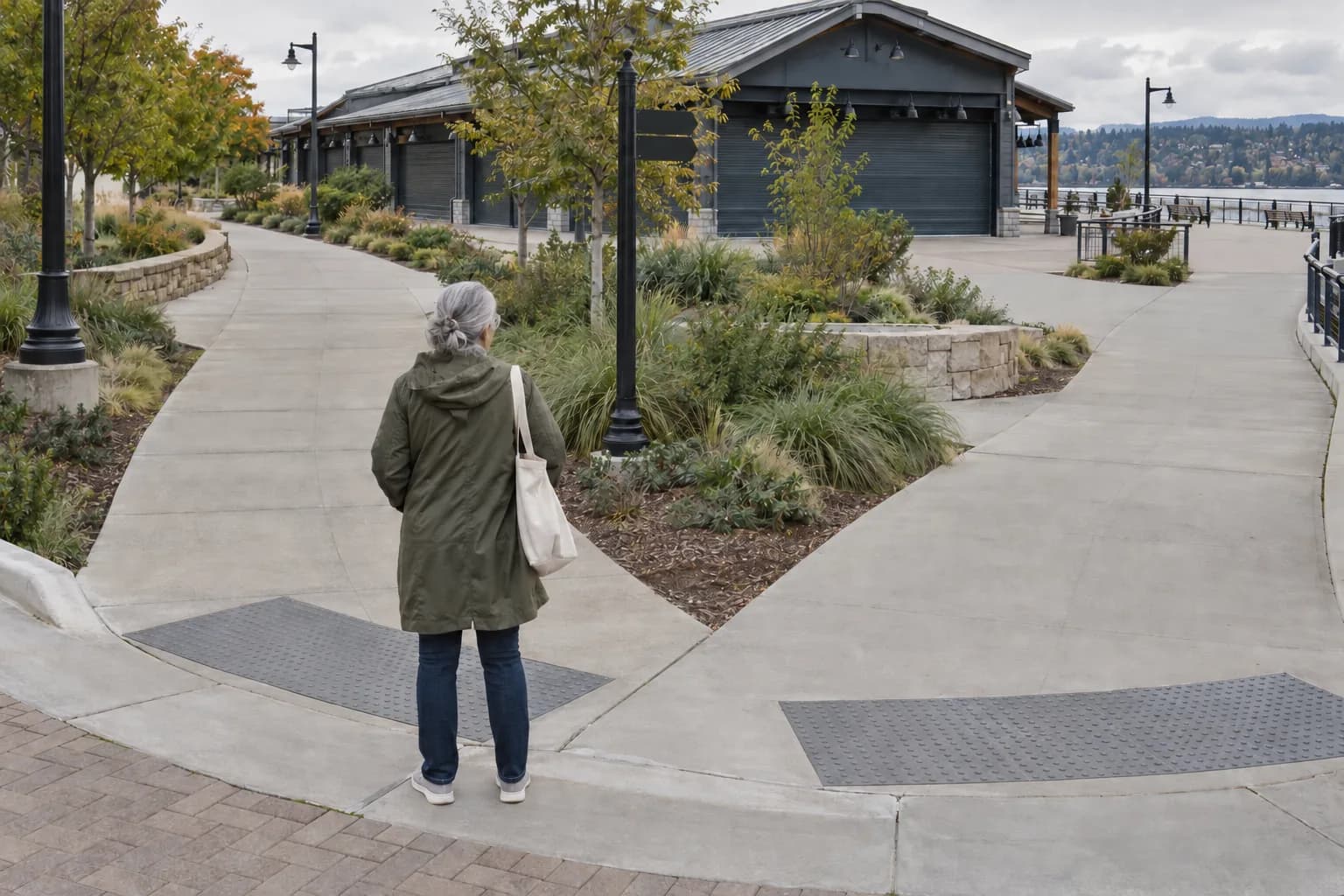
Ontario SPCA on less tempting routes and attention practice · Build comfortable loose-leash movement for the approach and retreat
Pay attention to the moment before the grab
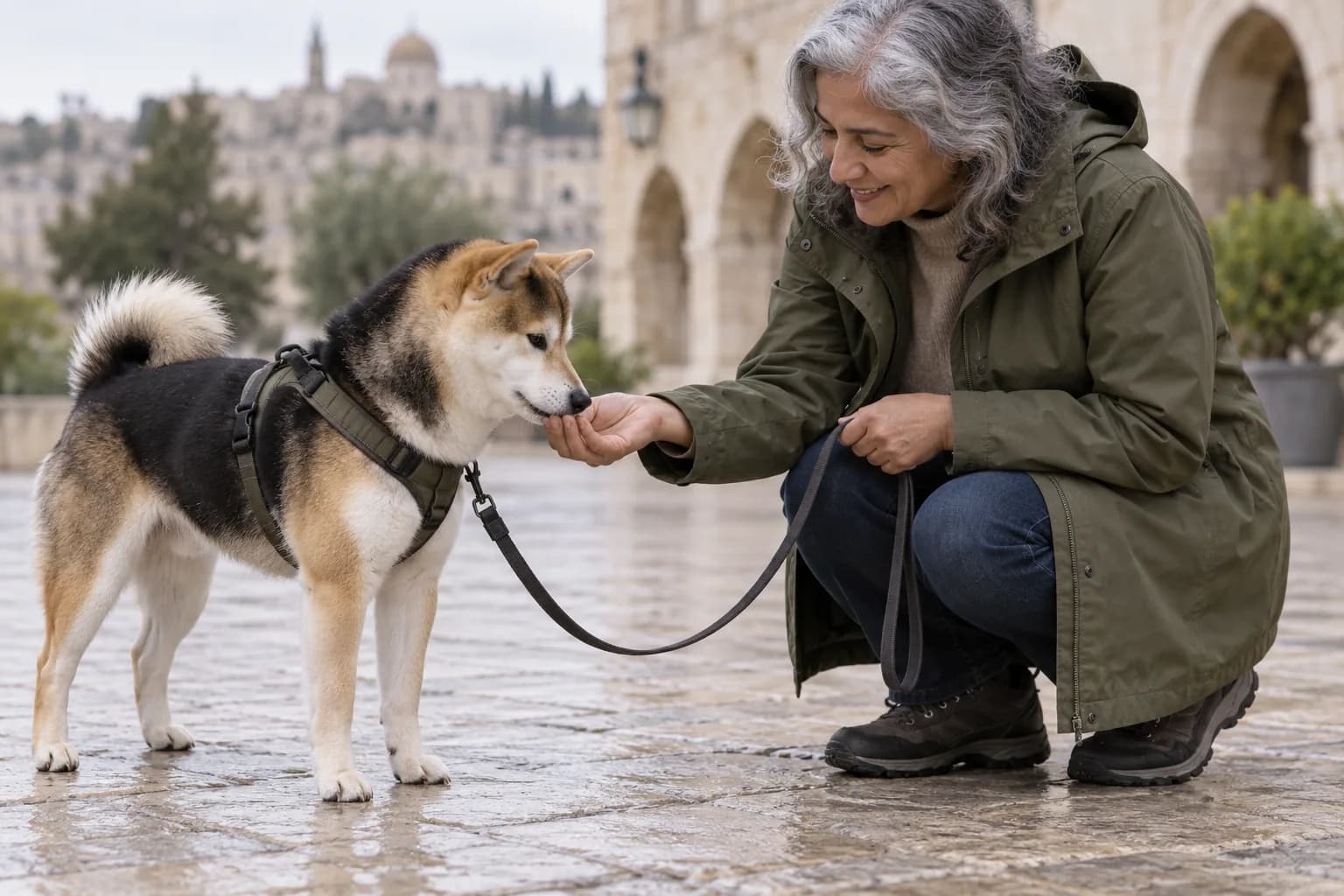
Begin where there is nothing concerning within reach. Stand comfortably, let your dog look around, and notice a brief voluntary head turn toward you. Mark that moment with a familiar quiet word, then offer a small suitable reward at a comfortable height. Do not demand prolonged eye contact. Looking toward your hand or body can be an observable starting point. If no turn happens, choose an easier location or practise indoors first instead of calling repeatedly until the dog finally responds.
Prepare rewards before walking, using food compatible with the dog's health and daily allowance. For this exercise, deliver from your hand only if taking food is comfortable and safe; otherwise obtain suitable handling guidance rather than risking fingers. Do not scatter rewards into street debris. Reward early check-ins on clean ground, not only a last-second rescue after grabbing something. If your dog is busy sniffing an appropriate clear spot, allow that normal activity. The goal is an available check-in, not continuous attention throughout the entire walk.
Give DogPath one visible walking goal
Choose a goal you can recognise without guessing what your dog feels: a voluntary head turn while the leash is loose on the selected clear stretch. Use DogPath as an everyday practice aid to keep that focus visible. Do not enter a broad objective such as never eat anything outside. Our guide to choosing training goals explains how to reduce a large wish to an observable action. A lesson or note is useful only when its exercise fits this dog's current comfort and the actual setting.
Prepare rewards, take one short opportunity and end before the practice becomes a stream of prompts. Two or three easy opportunities may be enough for today's rehearsal; they are not a universal dose or a promised progression schedule. Afterwards, record the place, whether a turn happened without a repeated cue, and what help you provided. A paper note is equally valid. DogPath does not identify toxins, diagnose compulsive eating or certify a route as safe. If you need immediate health advice, put the practice record aside and contact a veterinarian.
Choose a training goal that describes something you can actually observe
Rehearse an easy turn where nothing needs rescuing
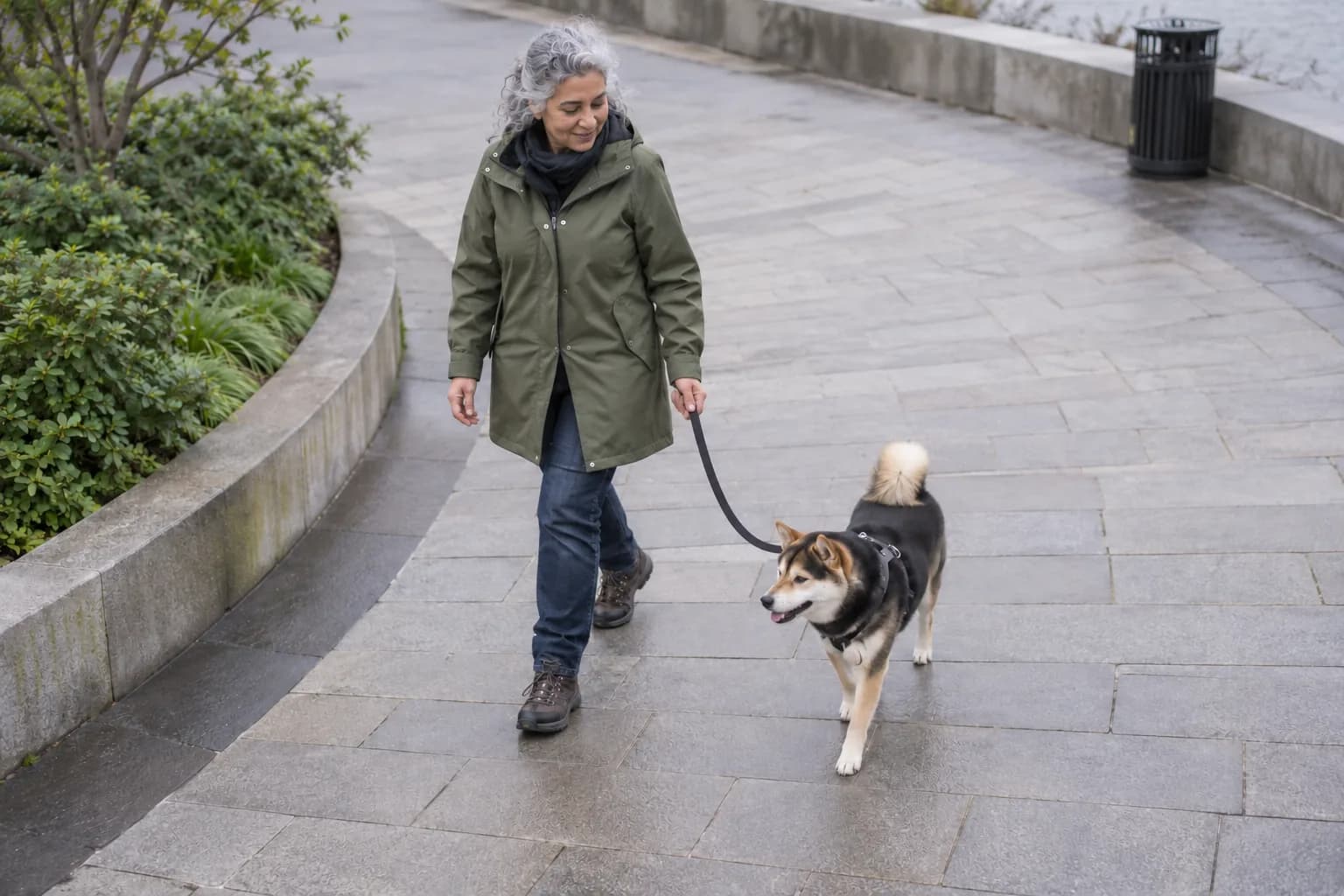
A relaxed change of direction is easier to use later if it already makes sense on empty paving. After an easy check-in, turn your body slightly and take two unhurried steps into clear space. Reward your dog for joining while the leash remains loose. Use a familiar invitation if needed, once, rather than pulling the dog around. Start with a shallow curve, not a sudden reversal that tangles the leash or requires your dog to twist. Leave space for their body and your own footing.
If a street find appears during a real walk, prioritise distance and prevention, not demonstrating the trained turn beside it. Move into the clear area you have already identified when it is practical to do so. If your dog cannot follow comfortably or the item is already in reach, that is not an invitation to repeat cues while approaching. Avoid the area and seek individual help if safe handling is uncertain. Keep ordinary management in place even when the empty-path exercise looks easy; rehearsal does not make unknown objects harmless.
Change one condition, not the whole walk
Once the starting exercise is comfortable, change just one feature. You might use another clean section of the same quiet path while keeping the practice equally short. Or remain in the same place and add one walking step before the reward. Distance, duration and distraction are separate decisions: do not simultaneously choose a busier route, walk farther and delay the reward. Never add discarded food, medication, bones or other hazards as proofing material. Success near a planted object cannot establish safety around the next unknown find.
Watch for the exercise becoming harder: a tightening leash, repeated prompts, difficulty taking a usual reward or slower disengagement. Those observations tell you to simplify or end, not punish. Compare like with like before claiming progress. A quiet weekday path and a busy market after closing are not equivalent tests. DogPath's lesson guide describes the short-practice structure; use it to organise manageable repetitions, not to justify advancing because a calendar says the next level is due. Rest and a normal walk remain legitimate choices.
Use the short DogPath lesson structure without rushing the conditions
Record the setup as well as the response
A useful note might say: quiet paved courtyard, usual harness, two voluntary turns, reward prepared, no unwanted items accessible. Another might say: pavement crowded, changed route, did not practise. The second entry describes a sensible management decision, not a failed dog. Record actual observations instead of a score for obedience. If you needed repeated calling, include it. Without that detail, several apparently successful walks may hide a pattern that only works with constant prompting or an unusually easy environment.
Before the next outing, use the note to choose one adjustment: a quieter time, rewards within reach or a clearer starting point. Keep household instructions simple so another adult does not turn the exercise into a litter test. Notes should distinguish a planned training session from suspected ingestion, which belongs in communication with the veterinarian. Photographs for a clinician may help describe an incident, but do not delay care to complete the record. No count of rewarded turns cancels an actual exposure or establishes a medical explanation.
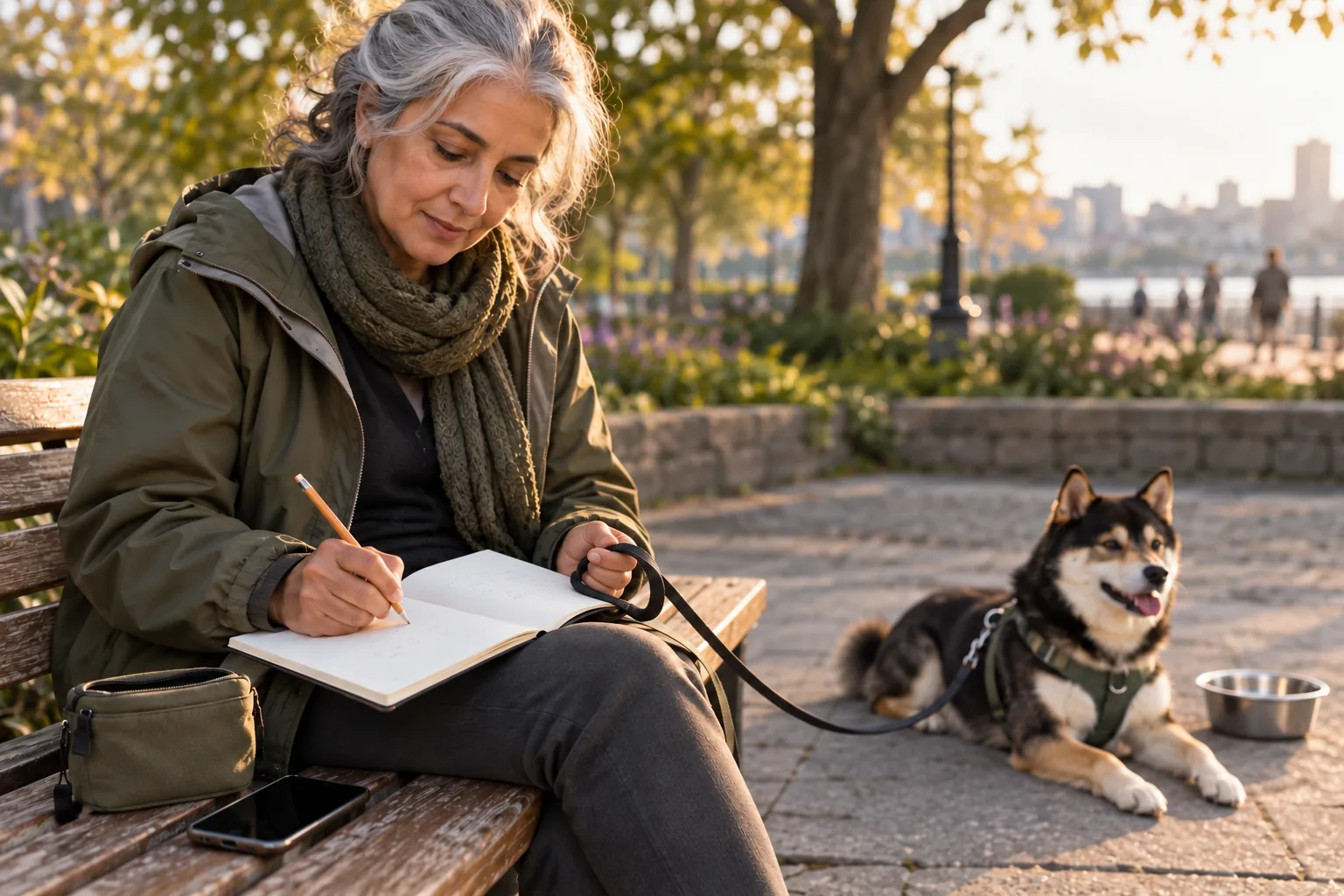
Keep normal dog walks in the plan
Your dog still needs appropriate chances to sniff, toilet and explore. Choose clearer places for those activities rather than treating every lowered nose as a mistake. Do not withhold meals, water or normal walks to make rewards more powerful. Separate appropriate enrichment at home from access to unknown street items. More equipment is not automatically the answer either. If someone recommends a basket muzzle for ingestion prevention, arrange individual advice about suitable fit and gradual positive introduction; it is not permission to walk through hazards or leave a dog unattended.
Stop training and obtain appropriate help for pain, sudden behavior change, panic, aggression, bite risk or welfare concerns. Persistent eating of non-food items needs veterinary assessment rather than an assumption about motivation. For everyday rehearsal, the next useful question is modest: can I offer a clear route and reward one comfortable check-in earlier? Continue prevention while building that option. The plan is working as intended when it improves your preparation and clarity, not when you deliberately give the dog access to something risky to prove a result.