
Calm walk starts
Dog Excited Before Walks? Free Calm Plan
Break shoes, leash, clipping and the door into short rehearsals so the walk starts with four paws down and a thinking dog.
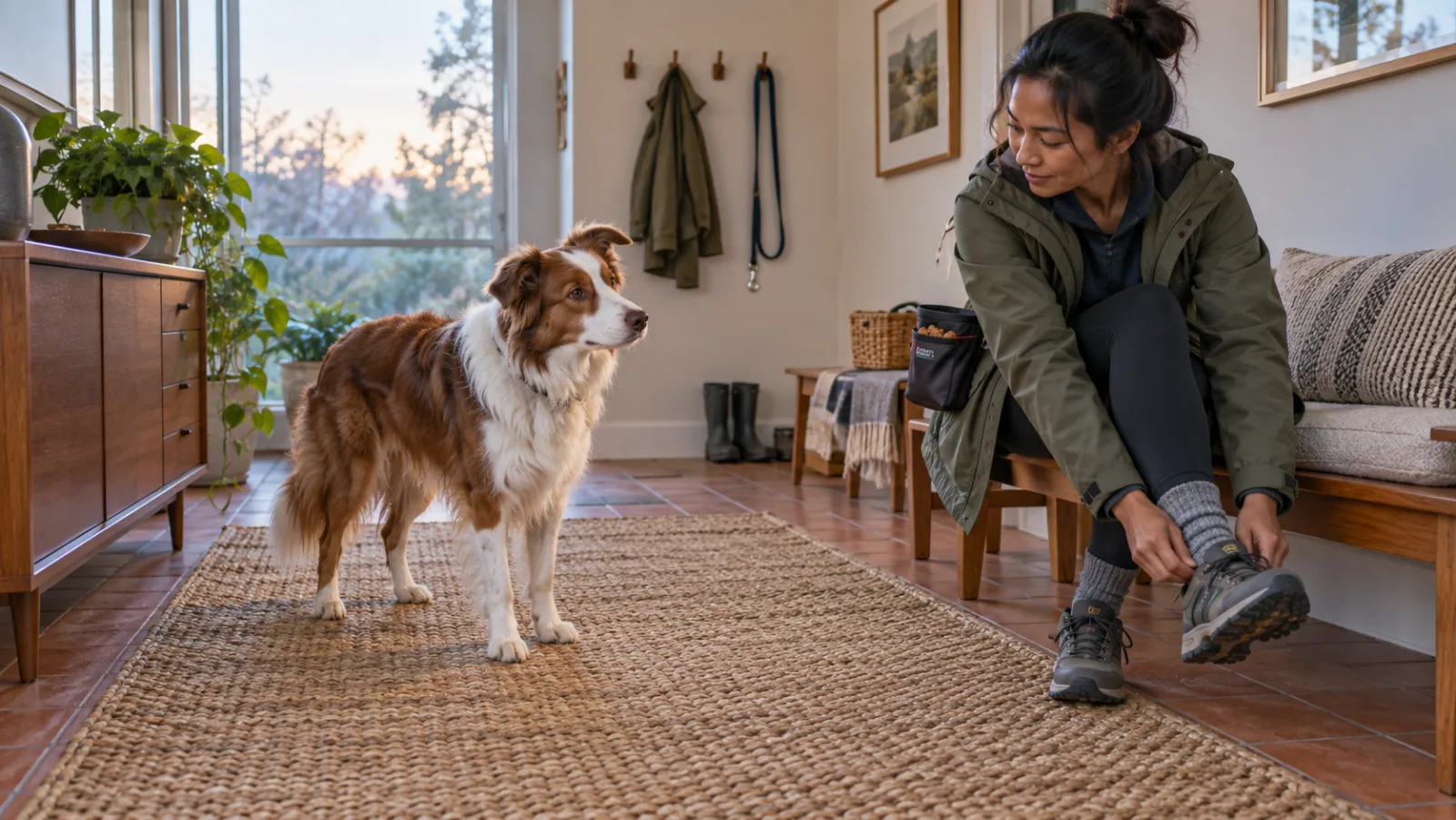
Shoes appear, the leash moves, and suddenly your dog is spinning, barking, jumping or grabbing the strap. A dog excited before walks is not necessarily being defiant. Repeated departure cues can predict the most stimulating event of the day, and hurrying through them can make the whole chain faster and louder each time.
This free calm-start plan does not require a perfectly still dog or make access to toileting depend on prolonged obedience. It separates getting dressed, lifting the leash, clipping it, touching the handle, opening the door and taking the first outdoor steps. You will reinforce one visible behavior, such as four paws on a mat and a brief check-in, while keeping essential walks reliable.
DogPath is free to download or start, though some features or usage levels may require an in-app purchase. It can structure the workflow: choose the visible behavior, prepare rewards, practise briefly, alter distance, duration or distraction one at a time, and record the result. It cannot diagnose arousal, anxiety or pain, assess door safety, or guarantee a calm walk. Sudden change, panic, aggression, bite risk or welfare concerns require veterinary or qualified in-person help.
Dog excited before walks: map the first trigger
Observe one normal departure without adding tests. Does movement accelerate when you change clothes, put on shoes, pick up keys, touch the leash, approach the dog, clip on, or reach for the handle? Record the first moment—not the biggest explosion. Early signs may be faster pacing, fixed attention, a closed mouth, high whining, pawing, bouncing or grabbing nearby objects.
Separate happy anticipation from distress and unsafe behavior. Loose wiggling and easy food-taking differ from frantic panting, trembling, hiding, escape attempts, redirected biting or inability to recover. Sudden sensitivity to the harness, collar or touch may involve pain. A dog that risks bolting through a door needs physical management, such as a secure interior barrier and a fitted harness, alongside professional guidance where needed.
Choose a criterion that is easy to see and compatible with excitement: four paws on the floor, standing on a mat, turning the head toward you, or pausing for one second while you hold the leash. Do not choose ‘be calm,’ because emotion is not an operant checklist. A dog can feel eager and still learn a safer action.
Dogs Trust guidance on predictable routines and overexcited behavior
Prepare rewards and protect real toilet walks
Keep a small container of suitable rewards away from the leash so reaching for food does not become another explosive cue. Put shoes, waste bags and weather gear in place before inviting the dog to the entryway. Use a nonslip mat several steps from the door and ensure gates, windows and other pets are secure. The practice area should leave enough room to move away.
Do not begin this lesson when the dog urgently needs to toilet, when you are late, or when weather creates risk. For necessary departures, clip on with the safest familiar routine and go out without turning the moment into a test. Training can happen later with a spare leash or after needs have been met. Reliability prevents frustration and protects health.
Make rewards small and count them within the daily diet. Food is not a bribe for suppressing every sound; it marks the visible choice you selected. If the dog cannot swallow normally or becomes rough around food, reduce the trigger and create distance. A toy may suit some dogs, but vigorous tugging in a narrow doorway can raise arousal and block movement.
Use the free workflow away from departure time
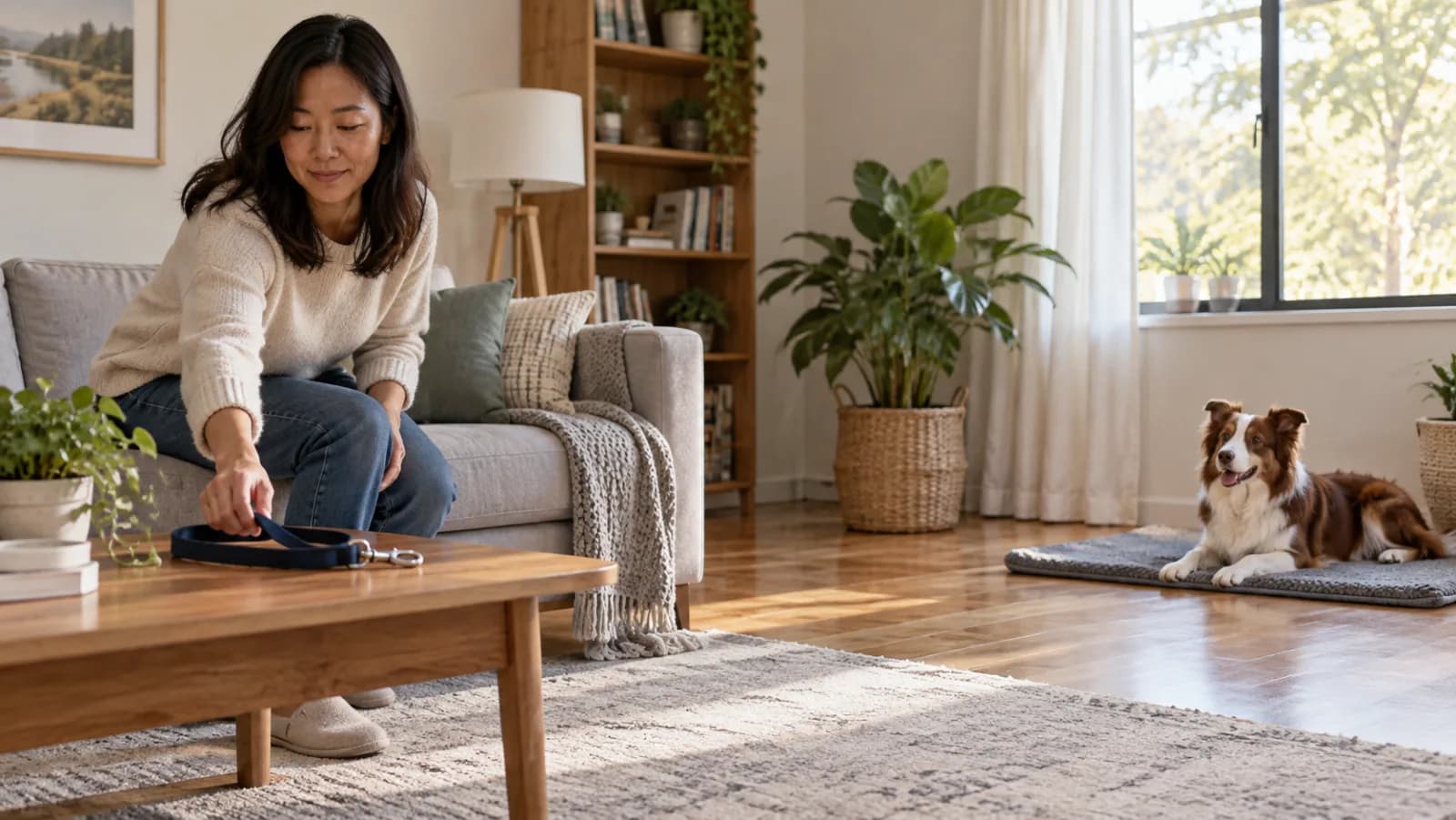
Create a DogPath practice called, for example, ‘four paws down while leash is lifted.’ Place the dog at a comfortable distance, prepare rewards, lift the leash a few centimetres and put it down. Mark and reward if paws remain grounded or the dog checks in. Complete three to five easy repetitions, then put the equipment away without taking a walk.
Change one variable next time. Raise the leash higher while keeping the same distance, or move one step closer while lifting it only slightly. Do not add shoes, keys, clipping and door movement in the same session. If jumping begins, lower the leash or increase distance; do not hold it overhead while waiting for exhaustion.
Record the cue, distance, visible behavior, appetite and recovery. ‘Leash lifted to waist at three metres; four paws down for two seconds’ guides the next session. ‘Was wild’ does not. DogPath can hold this note, but paper works equally well. The value is consistent observation, not a score or promised timeline.
Add approach and clipping without chasing
When lifting the leash is easy, walk one step toward the dog, reward four paws down, and step away. Build approach in small pieces. If the dog rushes forward, place the reward on the mat rather than luring the nose upward. Never corner the dog, chase them with equipment or demand a sit if sitting makes clipping awkward.
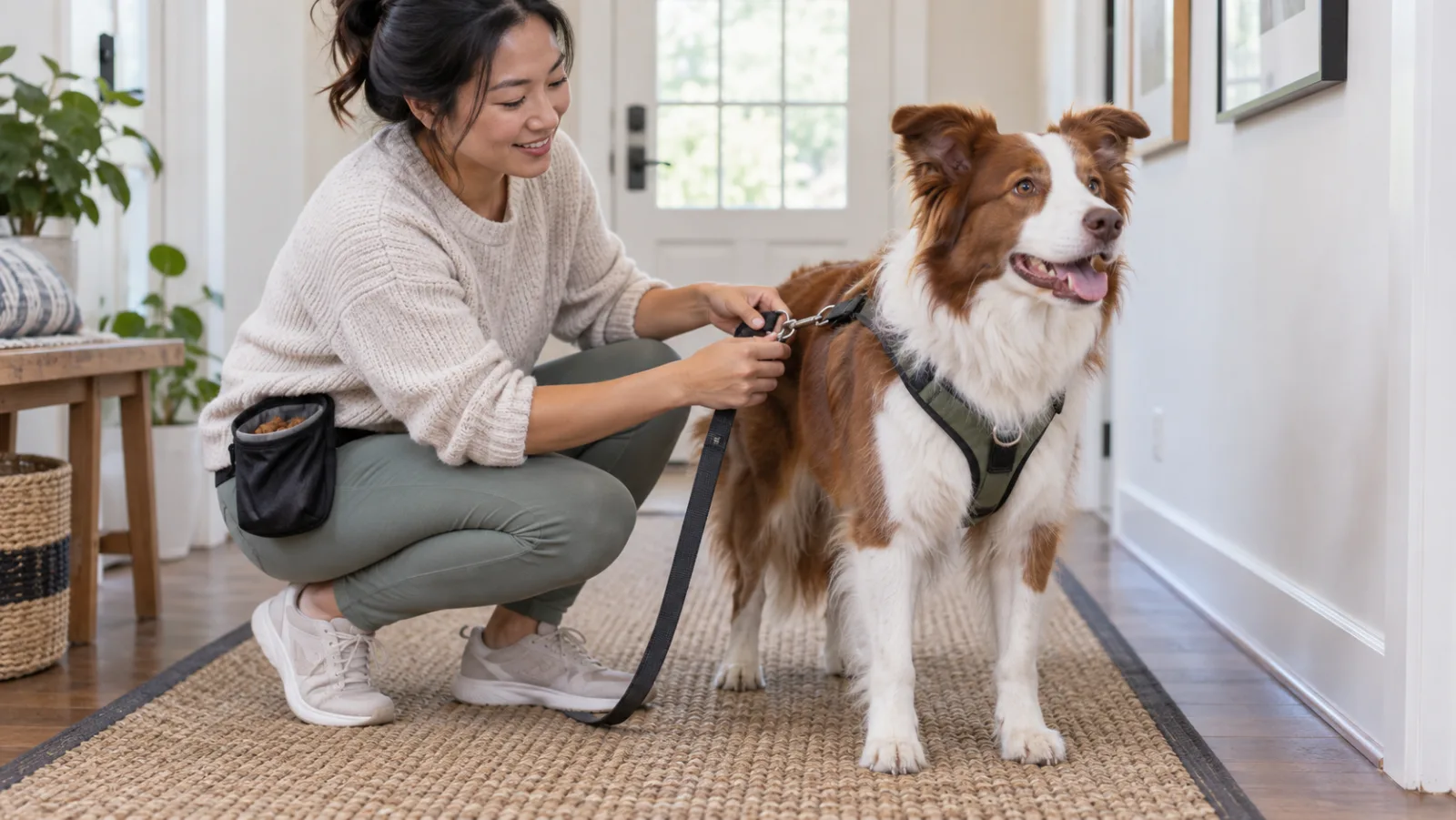
Practise touching the harness attachment, moving the clip nearby and making the clipping sound separately. Then attach for one second, reward and detach. Keep the leash slack and the dog's head free. Check fit and skin contact. Avoid collar jerks, kneeing, shouting or aversive equipment; those may add conflict to an already intense prediction.
A helper can prepare household items while one person handles the dog, but everyone should use the same criterion. Children should not manage an excited dog at an exterior door. If leash grabbing or mouthing risks hands, place equipment down, create a barrier and seek qualified help rather than wrestling for control.
Teach handle movement and opening as separate steps
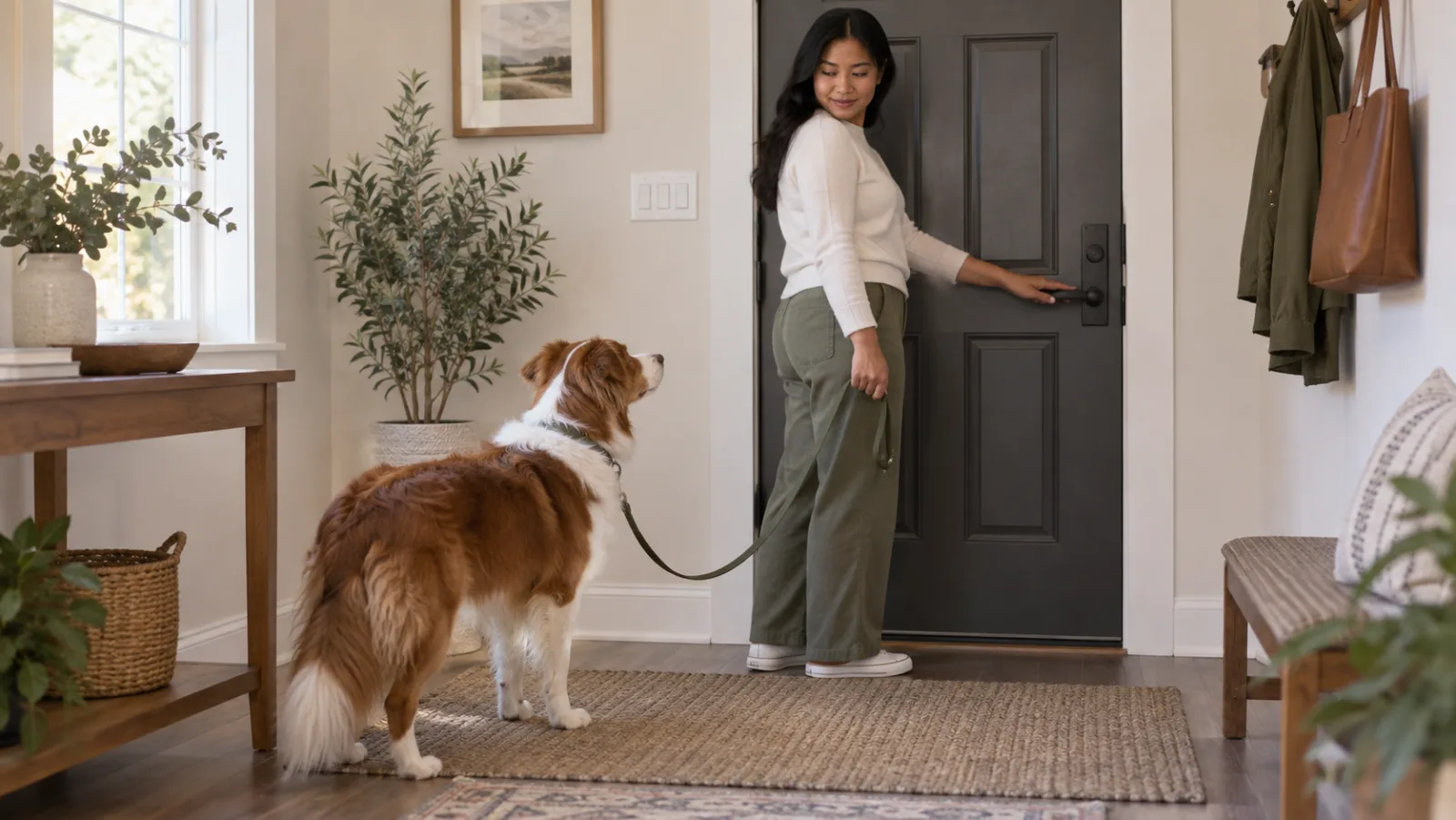
Move to the entryway only after the earlier pieces are repeatable. Begin one metre from the closed door. Touch the handle, release it, reward the selected behavior and walk away. Later turn the handle without opening. Then create a narrow crack and close it while the dog remains behind the chosen line or mat.
Do not repeatedly shut the door in the dog's face or use your body to intimidate them backward. A gate or second closed interior door provides safer redundancy where bolting is possible. Keep the leash slack but short enough that it cannot tangle. Check the outside before every real exit, even if the rehearsal looked perfect.
Increase either the opening width, the pause duration or an outside distraction. A delivery person, another dog and a fully open door do not belong in the same first trial. Dogs Trust recommends quieter times and predictable routines for dogs who become overexcited; environmental management is part of learning, not cheating.
Rehearse the first outdoor minute
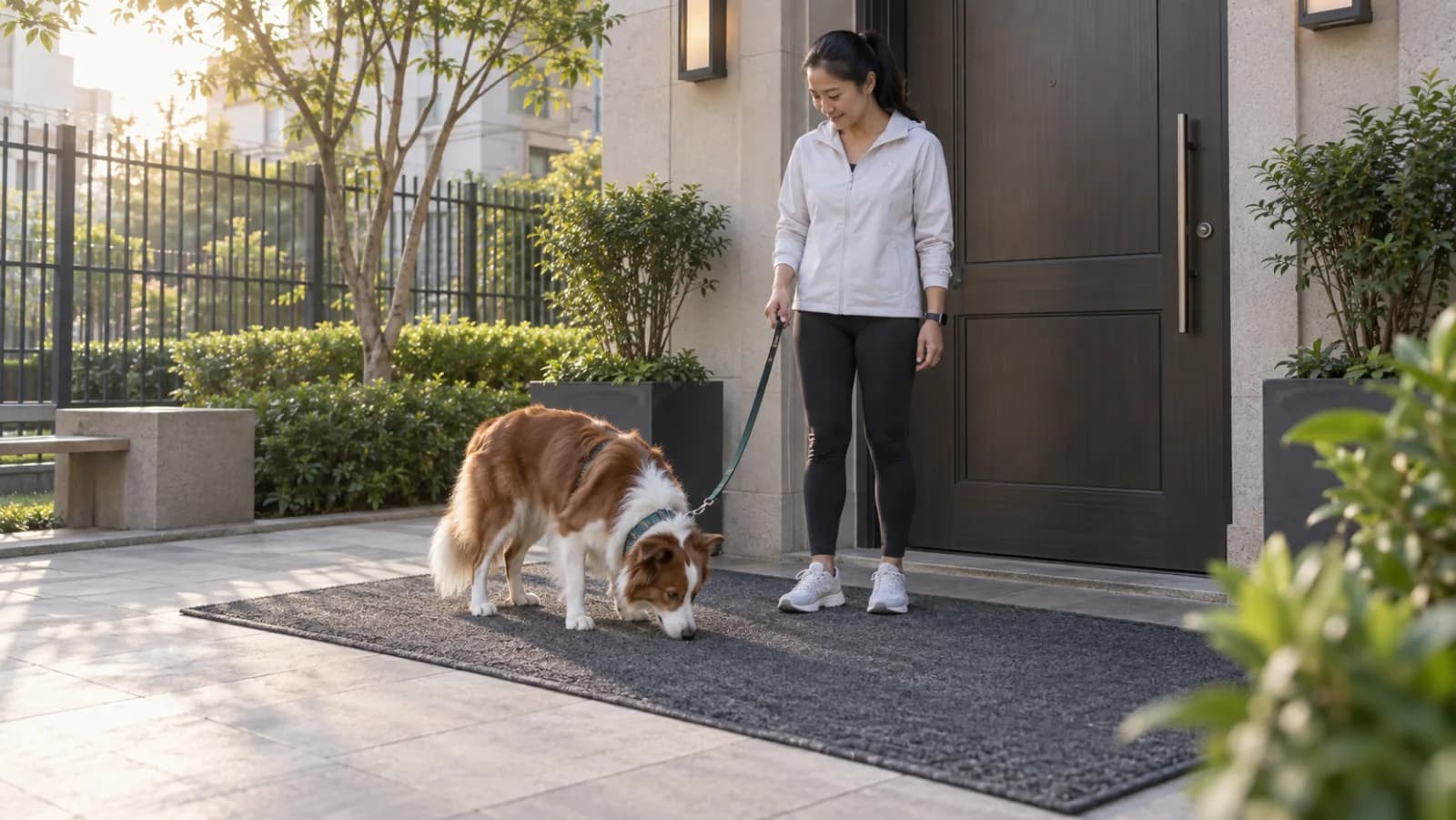
On a quiet real departure, open the door, cross together and pause on a broad safe surface away from traffic. Allow a brief sniff. Reward a check-in or slack leash, then begin the walk. The goal is not heel position at the threshold; it is a controlled exit and enough orientation to choose the next safe step.
If arousal spikes outside, create distance from the doorway and shorten the route rather than drilling cues in a busy bottleneck. Change only one challenge: more outdoor duration, a busier time, or longer movement before the first pause. Return to an easier time of day after a difficult attempt. Do not deny the whole walk as punishment for excitement.
Distinguish pre-walk anticipation from reactions to dogs, traffic or people once outside. Those are separate training plans. Loose-leash foundations can support the transition, but a calm doorway does not diagnose or solve fear and frustration on the street. Choose routes that match current skills.
Measure a calmer chain without demanding silence
Review a week by comparing the same cue at similar times. Useful measures include fewer jumps, quicker return to four paws, easier clipping, less leash grabbing and a safe pause outside. Whining alone is not a reason to repeat the whole routine if the body remains loose and the exit is controlled. Progress can be imperfect and still practical.
Keep occasional no-walk rehearsals short and predictable. Do not pick up the leash dozens of times until it loses meaning or leave it out if the dog guards it. A few planned repetitions protect clarity. Mix easy days with ordinary departures so training does not replace exercise, sniffing, toileting and social needs.
Stop home practice and get help if the dog panics, redirects onto people or animals, guards equipment, injures themselves, bolts, or cannot recover. Ask a veterinarian about sudden behavioral change or discomfort around gear. A qualified reward-based professional can assess the doorway, household and street in person.
The finished routine should feel boringly safe: equipment appears, the dog offers a workable behavior, clipping happens without struggle, the door is checked, and both of you leave under control. Excitement may remain. The skill is moving through it without rehearsing chaos or using force.