A brief voluntary look
Free Dog Eye Contact Training, One Brief Look
Reward one comfortable glance, allow a reset and keep duration, distance and distraction separate in your practice notes.
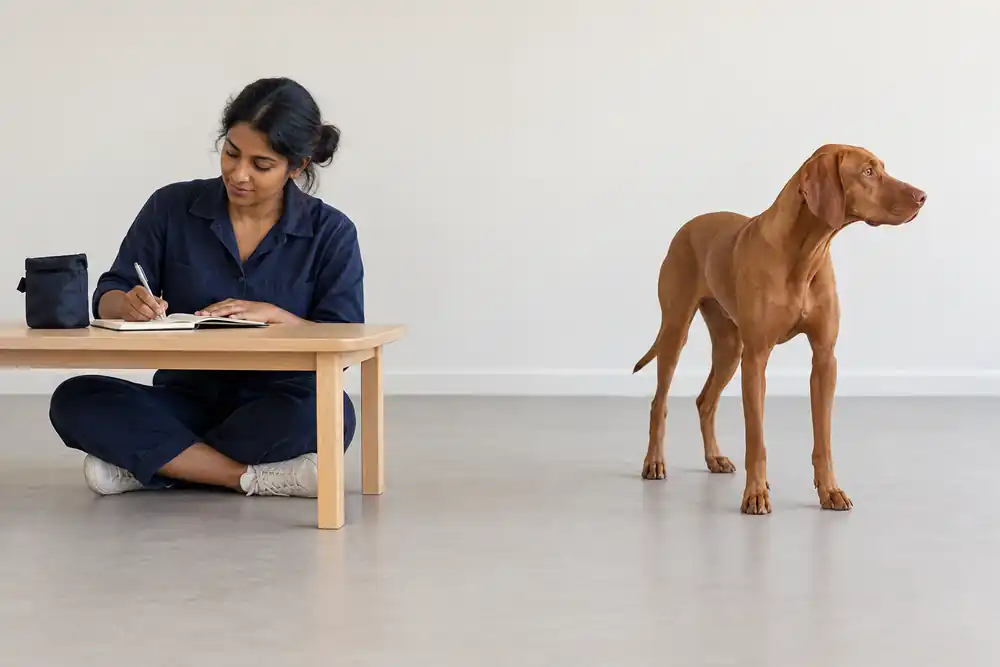
Dog eye contact training can start with a small everyday problem: you are ready to give a familiar instruction, but your dog is watching your hands, the doorway or the floor. Repeating their name or asking for a long stare does not explain the new task. Instead, make one brief voluntary glance towards your face worthwhile in an easy setting. The dog can then look away, eat a reward and decide whether to join another short attempt.
This free guide uses DogPath notes to keep the goal and the conditions clear. DogPath is free to download or start, with in-app purchases for some features or usage levels; paper works too. It cannot assess comfort, diagnose attention or guarantee a response around danger. Pain, sudden changes, eye or movement concerns, panic, aggression, bite risk and welfare problems require appropriate personal help. Never hold a dog's head, lean over them or demand eye contact from a dog who finds your approach uncomfortable. A comfortable glance is enough; prolonged staring is not the goal.
Start dog eye contact training with one observable goal
Write a goal you could actually recognise: a brief glance towards my face while I sit sideways in the quiet room. Do not write pays attention all day or ignores everything else. Those descriptions combine many different tasks. Looking at your face is also different from returning when called, responding to a name, following a hand target or walking beside you. Keep those skills separate so a missed glance does not turn into a test of every cue the dog has ever encountered.
Battersea's watch-me guidance starts in a quiet indoor setting and rewards offered eye contact before adding a verbal cue. It also notes that a very nervous dog may be reluctant to maintain a look. Use that as a reason for considerate preparation, not a promise that this exercise suits every dog. If a softer orientation towards you is more comfortable than direct eye contact, choose that smaller goal or obtain personal support. Do not try to outwait avoidance until the dog finally gives in.
Set up your DogPath note before inviting a response
Select a visible behaviour for the practice and describe the first attempt in your DogPath lesson or notes: location, your posture, how far away the dog begins and where rewards are kept. Keep the entry short enough to use afterwards. The app holds the plan and your observation together; it does not watch the dog's eyes, score engagement or determine what a missed response means. You remain responsible for observing the situation and deciding whether to stop, simplify or seek help.
Our lesson-workflow guide explains this planning routine separately. For today, choose one small response and leave the phone aside while practising. Do not film from an angle that requires crowding their face. The useful information is whether a comfortable glance happens under the chosen conditions.
Keep a visible goal and observation together in a DogPath lesson
Prepare rewards and a quiet place with room to disengage
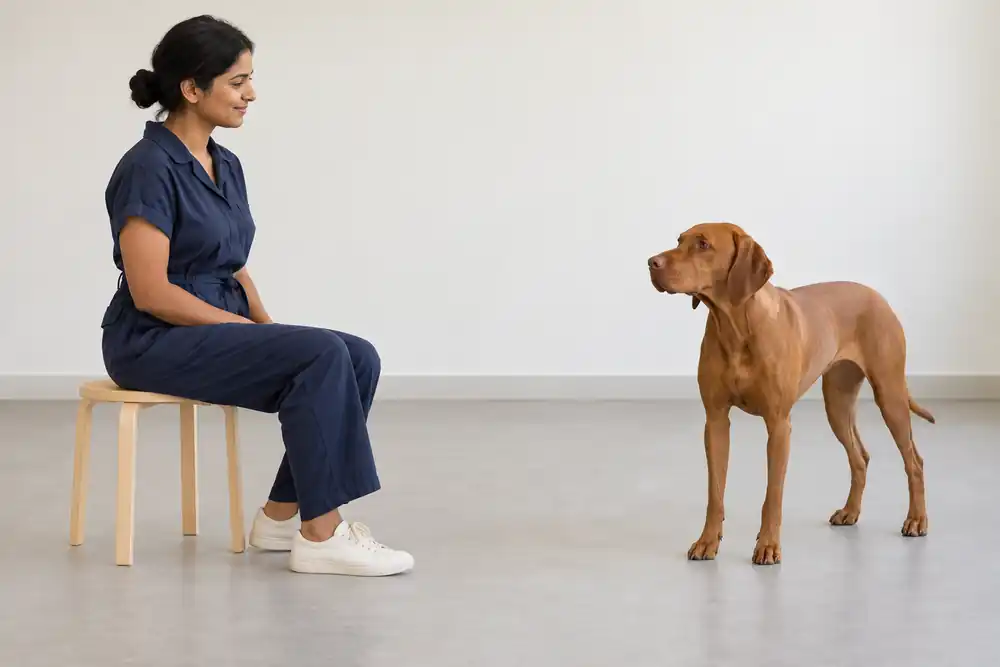
Choose comfortable, non-slip footing and enough space for the dog to turn or move away. Remove competing activities rather than expecting the exercise to beat a visitor, another animal or dinner preparation. You can sit on a stable chair at a comfortable angle without bending over the dog. They may stand, sit or lie as they prefer; this is not a posture drill. Consider whether the height and distance let them glance naturally without stretching their neck or squeezing between furniture.
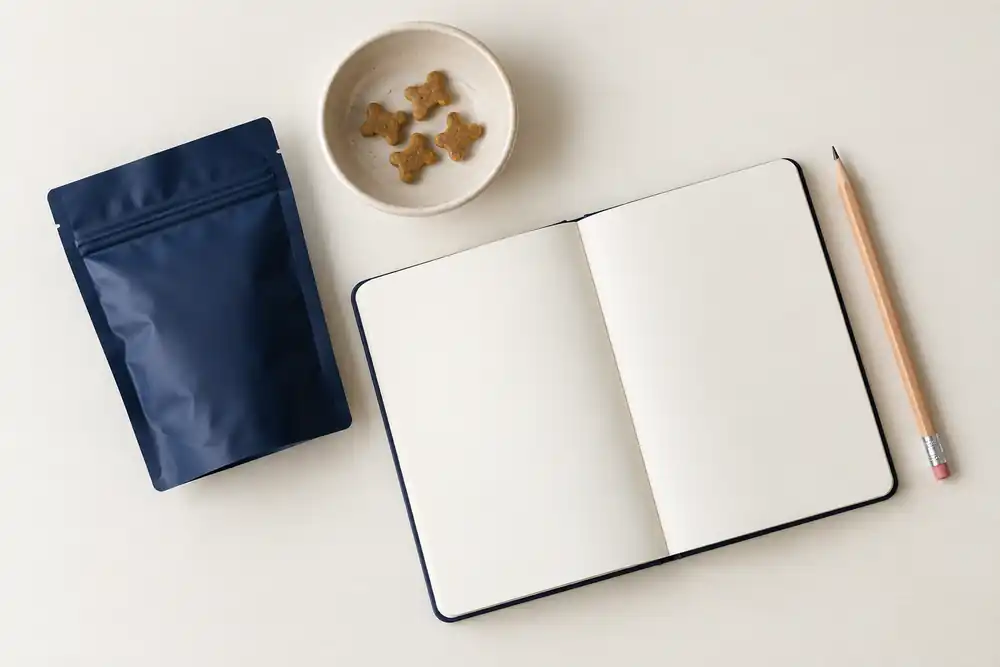
Prepare suitable small rewards within easy reach and account for them in the dog's ordinary food plan and any veterinary dietary instructions. Keep the reward hand low and quiet. Food waved near your eyes can make it difficult to tell whether the dog looked at a face or simply followed food. Do not use hunger, a closed fist held against the nose or a long wait for an essential resource to force participation. Water, rest, ordinary care and space remain available whether or not a glance happens.
Notice the first offered glance without pursuing it
Be still enough that the dog has a chance to orient towards you without chasing a moving hand. When a brief glance towards your face occurs, use a familiar marker if you already have one and reward promptly. At first you may notice only a small change in head direction. If that is your selected comfortable starting point, recognise it consistently rather than suddenly demanding a longer or more direct gaze before paying. The first repetition should explain a simple possibility, not reveal hidden extra requirements.
If no glance appears, pause instead of repeatedly saying look, snapping fingers or moving your face closer. Check the room, distance and whether the dog actually wants to engage. Make the situation easier or end the attempt and try another suitable moment. Do not count staring at your pouch as a moral failure; it tells you something about where information or rewards have usually appeared. If you cannot identify a useful comfortable beginning, get qualified reward-based guidance rather than increasing pressure or withholding ordinary attention.
Reward the look and then allow an ordinary reset
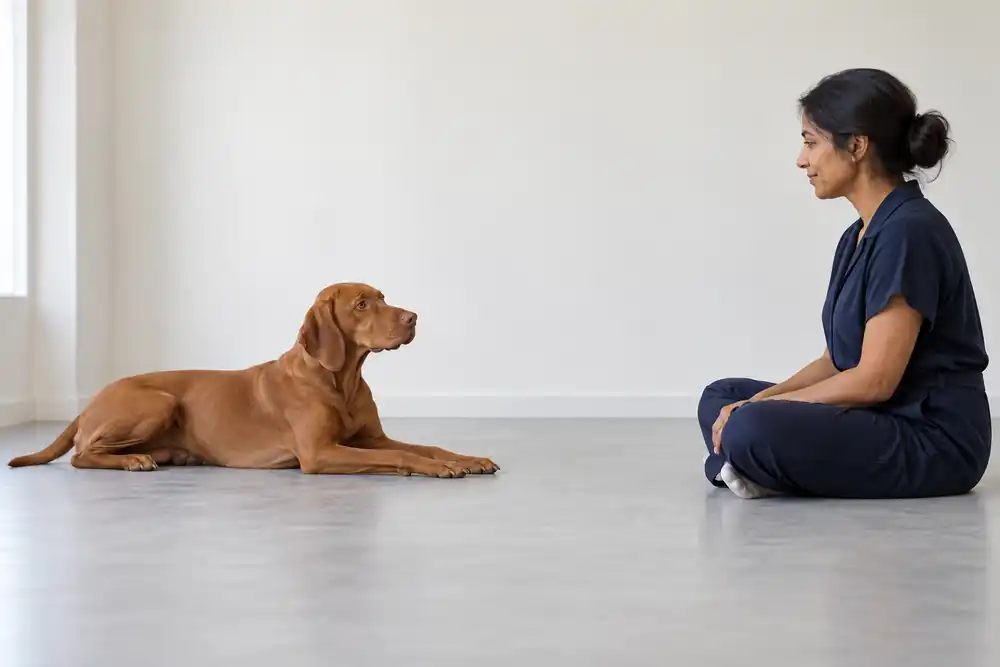
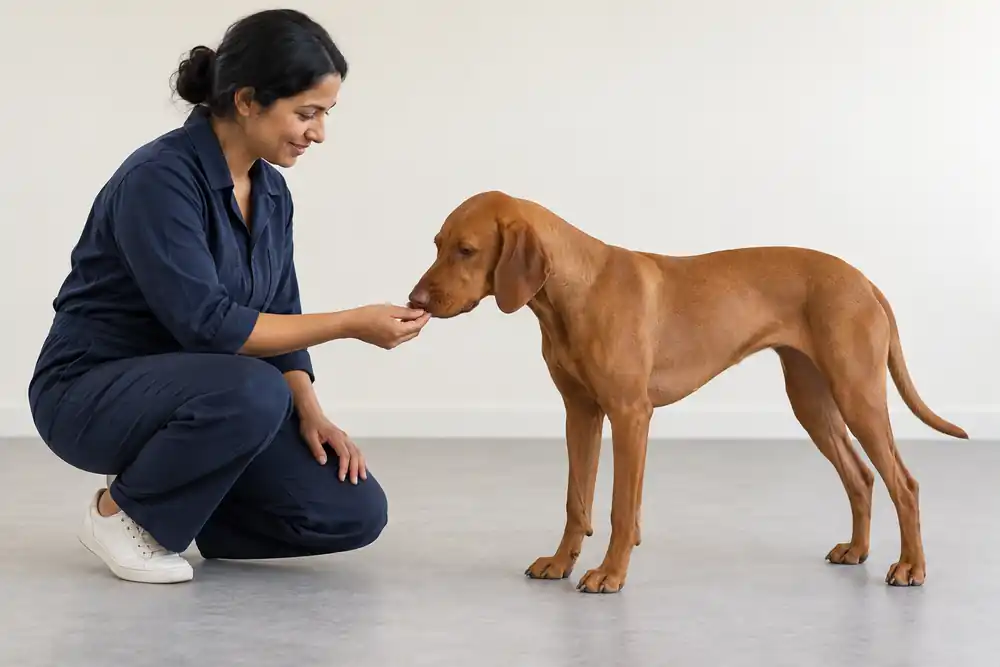
Give the reward at a comfortable height and position after the glance. Let the dog eat normally and look away. You do not need them to keep eye contact while taking food. Keep fingers, face and posture relaxed without reaching over their head. A clear reset can simply be a quiet pause, an easy change of position or another familiar activity. Do not throw food into a risky area or repeatedly lure the dog back into an uncomfortable distance just to start again.
Watch the order of your own movements. If the hand reaches for the pouch before every glance, the reach may be doing more work than you realise. Keep the reward accessible, but try to leave that hand still until the response happens. This is not an instruction to remove rewards; it helps distinguish the information before a behaviour from the consequence afterwards. Stop if food delivery creates guarding, hand conflict or uncomfortable handling. Those concerns need an appropriate individual plan, not repeated close practice beside your face.
Add a cue when the small response is becoming familiar
After the brief response is regularly offered in the easy setup, choose a short cue such as watch. Say it once just before an occasion when the dog is likely to make that familiar glance. Mark if that is part of your routine and reward the response. Avoid attaching the word to a long period of waiting while the dog is busy elsewhere. A cue gains meaning through clear experiences; saying it many times does not make an unclear situation easier to understand.
Keep the new attention cue distinct from a recall and from an existing name response. If your dog hears their name, watch, come and sit together every time, it becomes harder to see which response you are teaching. Ask for one thing and acknowledge it. Do not automatically follow every glance with an unpleasant task, restraint or the end of an enjoyable outing. Preserve occasions when responding simply leads to something worthwhile and then normal activity, rather than a sequence the dog has reason to avoid.
Keep duration modest and change only one variable
A brief glance can be useful without becoming a sustained hold. If you choose to add a little duration later, keep your position and surroundings familiar and reward before difficulty develops. Do not simultaneously stand farther away, straighten up and wait longer. If the dog looks away sooner than you expected, make the next attempt easier; do not move into their line of sight to prevent a break. Looking away is allowed, and an offered glance is not a commitment to remain fixed on you indefinitely.
Distance and distraction also deserve separate experiments. You might keep the same brief response with you a small step farther away, or use a second quiet room at the original distance. Our short-session guide helps keep those trials manageable. A few clear attempts with breaks offer more useful information than filling a long block with repeated failures. Do not introduce startling noises, passers-by or another dog as a convenient test. The purpose is a comprehensible learning task, not proof that you can overpower interest in the environment.
Transfer the idea without replacing practical management
Once the easy version is familiar, think about a realistic ordinary use, such as a brief check-in before you show the next familiar hand signal. Begin with manageable conditions rather than the busiest point of a walk. Keep a suitable lead and ordinary control of doors and exits where needed. A dog watching your face is not automatically aware of nearby traffic, wildlife, people or obstacles. Do not ask for eye contact while moving through a situation that requires both of you to watch your surroundings.
This exercise is not a treatment for fear, reactivity or aggression. Asking a worried dog to stare at you beside something they cannot cope with does not resolve the underlying situation. Increase space, manage the environment and get appropriate support when needed. Likewise, do not use a failed response to infer deafness, defiance or lack of attachment. Unexplained changes in hearing, vision, movement, appetite or behaviour deserve suitable assessment. A practice note can describe what you saw, but it cannot identify a medical or behavioural cause.
Record conditions and agree the next small step
After practice, note where you were, your posture, reward location, whether the glance happened before your hand moved and what changed. For example: quiet room, seated sideways, brief look, reward afterwards from pouch. Another entry might say: standing plus a kitchen noise, dog turned towards the doorway. That second example includes two changes. Next time preserve the seated version without the noise, or test standing in the original quiet room. DogPath keeps the visible goal and factual result available for that decision.
Agree with other adults that a glance is enough at this stage, rewards follow it and the dog can disengage. Each person starts with the easy version rather than assuming the skill transfers immediately. Children should not practise close face contact, manage food conflict or test a worried dog. Keep normal rest, play, sniffing and companionship around these sessions. If participation becomes difficult, stop and reconsider. Progress means a clear, worthwhile exchange under suitable conditions, not a dog who has learnt that every look away brings another demand.