Cooperative everyday care
Dog Hates Being Brushed: Free Practice, Not Force
Separate coat care that needs professional help from a skill you can practise gently. Give the brush a predictable meaning, keep contact tiny and let your dog leave.
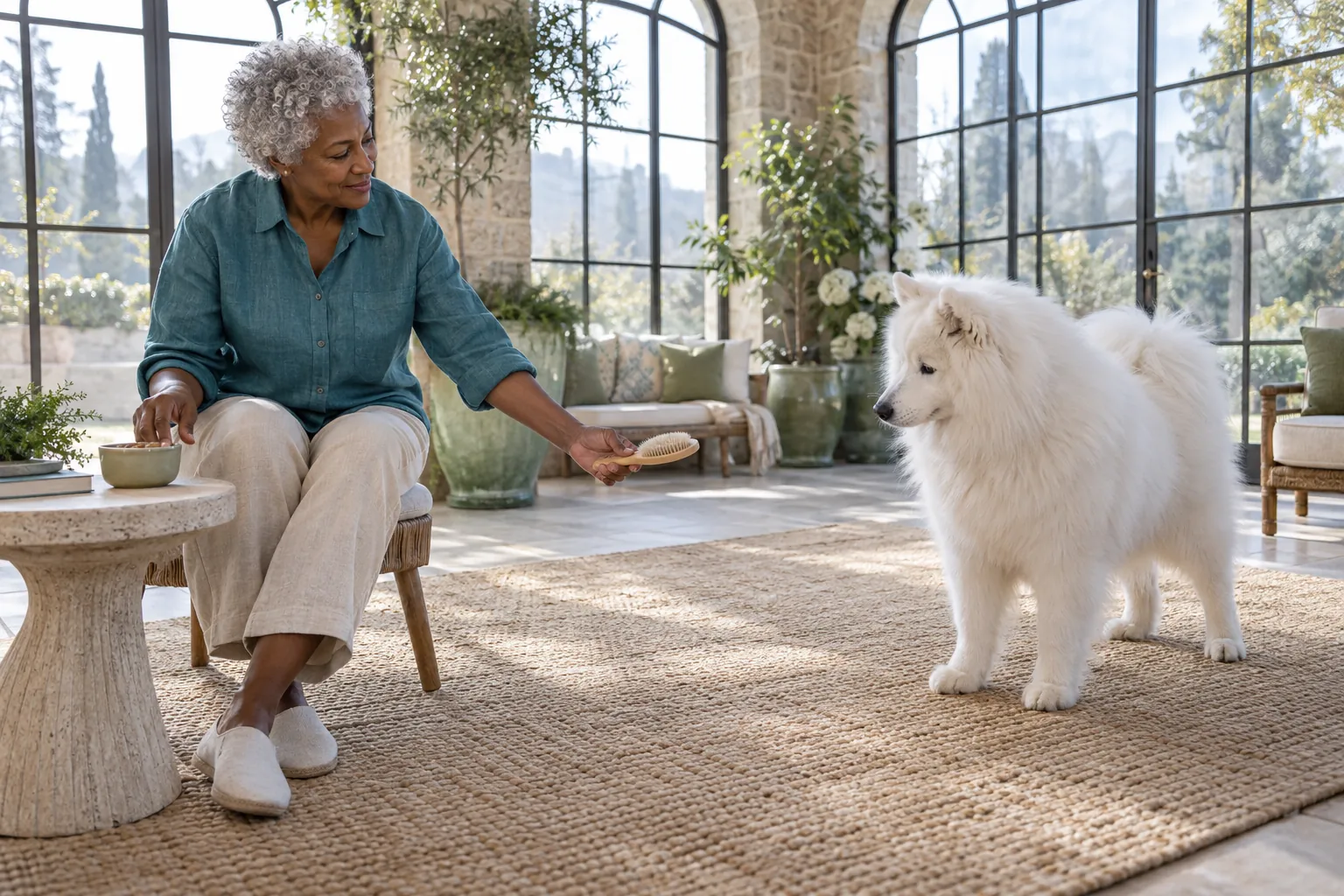
If your dog hates being brushed, getting through the whole coat can become the wrong target. You reach for the tool, your dog moves away, and the next attempt starts with more tension. A useful training goal is smaller: your dog can notice the brush, remain free to move and participate in one easy contact. That does not solve every grooming need, but it gives you something concrete to practise without holding the dog down.
DogPath can help organise a reward-based practice goal, short sessions and observations. It is free to download or start, with in-app purchases; this is not a claim of unlimited free use. You do not need a special brush-training screen or an automatic comfort score. The practical workflow is to choose a visible behavior, prepare rewards, practise briefly, change one condition and note what happened. Necessary coat treatment remains a separate decision.
When a dog hates being brushed, check the care problem first
Avoidance does not tell you whether the issue is an unfamiliar tool, an uncomfortable technique or pain. Do not repeatedly touch a sensitive area to find out. If reluctance begins suddenly, the skin looks sore, your dog seems painful, or the coat has tight mats, contact a veterinarian or an appropriate qualified grooming professional. AniCura's veterinary coat-care guidance explains that mats can hurt and that tools and handling can make brushing uncomfortable. Training is not a substitute for dealing with those problems.
Do not pull a brush through a knot, cut close to skin with household scissors or delay necessary care while waiting for a training milestone. Ask what care is needed now and what gentle practice is suitable later. Panic, aggression, bite risk or welfare concerns require appropriate in-person help before continuing. DogPath is an everyday practice aid, not a veterinary diagnosis, safety assessment or guarantee. This guide concerns a comfortable, untangled area and a dog who can safely choose to participate; it cannot establish those conditions remotely.
Arrange the room so leaving is possible
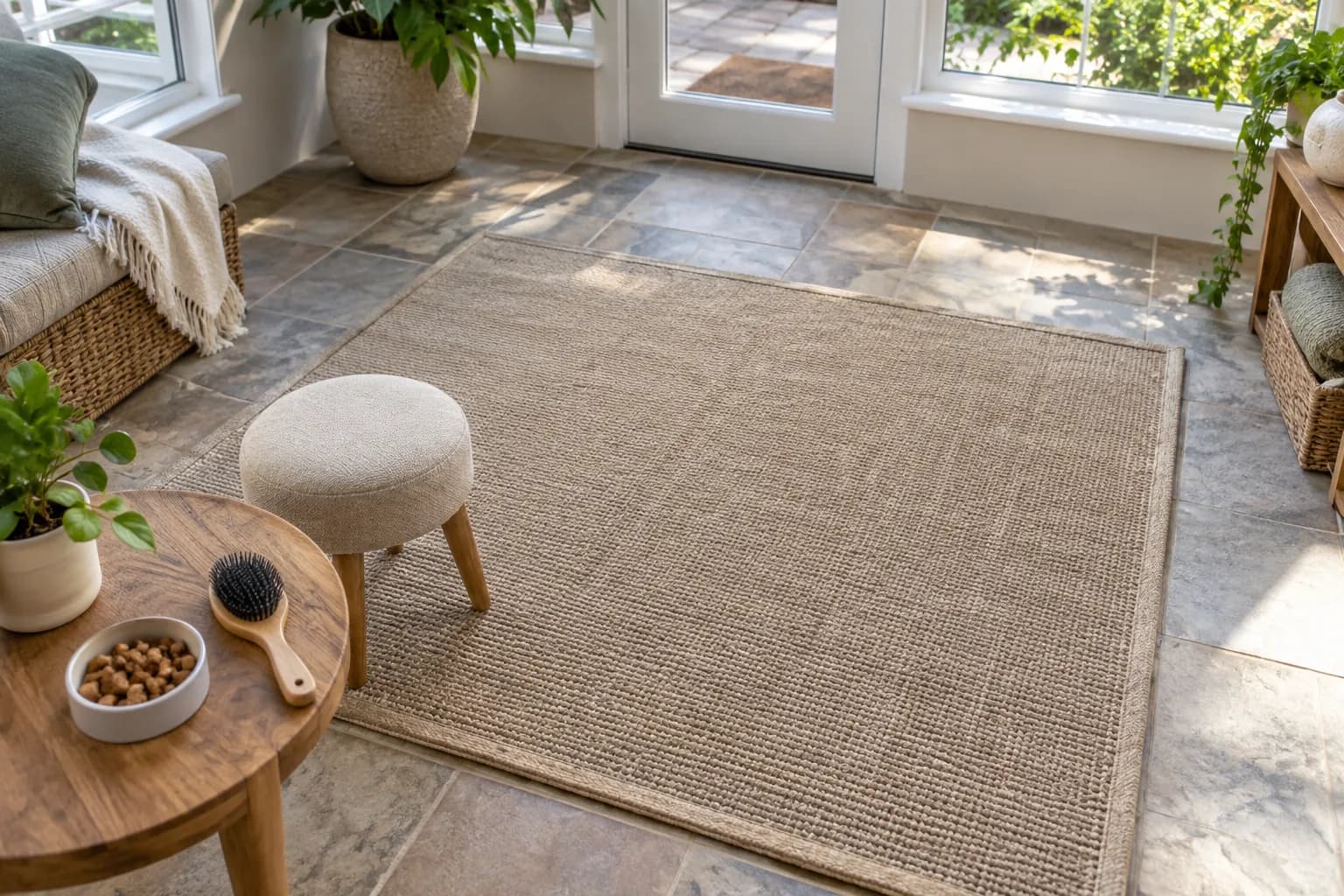
Choose a quiet familiar room with nonslip footing and enough space beside you for the dog to walk away. Close access to household hazards, but do not trap the dog between a wall and your knees. Sit sideways at a comfortable height. Keep other pets and children comfortably elsewhere, and put the tool down while you prepare. A grooming table, tether or second person holding the dog is not part of this exercise. Avoid leaning across the dog or reaching after them when they move.
Ask a suitable professional which brush and technique fit your dog's coat. A soft-looking tool is not automatically appropriate, and this lesson does not recommend using a slicker or comb on every coat. Prepare a few small food rewards suitable for the dog's diet and include them in the daily allowance. Keep water and ordinary meals available. Have food ready without positioning it in front of the dog's nose to keep them still. If taking rewards near your hands is unsafe, seek individual help rather than improvising.
Choose one visible response before opening a lesson
Start with a description you can actually observe: the dog voluntarily stands near you while the brush stays on the table. That is clearer than behaves well for grooming. Do not demand a sit, eye contact and a brush stroke at once. Use DogPath to keep one suitable reward-based goal in focus; follow a relevant lesson only where its steps fit the dog and situation. There is no need to assume the app includes a dedicated brushing programme. Our goal-setting guide helps keep the chosen task small enough for an ordinary day.
Decide what withdrawal will mean before the first contact: stop moving the tool, put it down and allow space. Moving away, turning out of reach or pulling the touched area back is sufficient reason to pause; do not wait for growling. A dog who stays motionless is not necessarily comfortable, and eating is not permission for more handling. The American Kennel Club's grooming-training article describes offering an opt-out rather than following a dog who leaves. Apply that principle consistently, not only after several strokes have been completed.
Choose one manageable training goal · American Kennel Club guidance on voluntary grooming participation
Make the brush predictable before adding contact
Let your dog notice the stationary brush from a comfortable distance. Acknowledge a voluntary look or easy approach and offer a reward without moving the brush toward them. Then put it away or leave it still and pause. Sniffing the tool is optional, not an obligation. If its appearance causes retreat, stop the attempt and begin another time with more distance or less exposure. Do not bring it repeatedly into view until the dog gives up moving away. This first step may be the entire session.
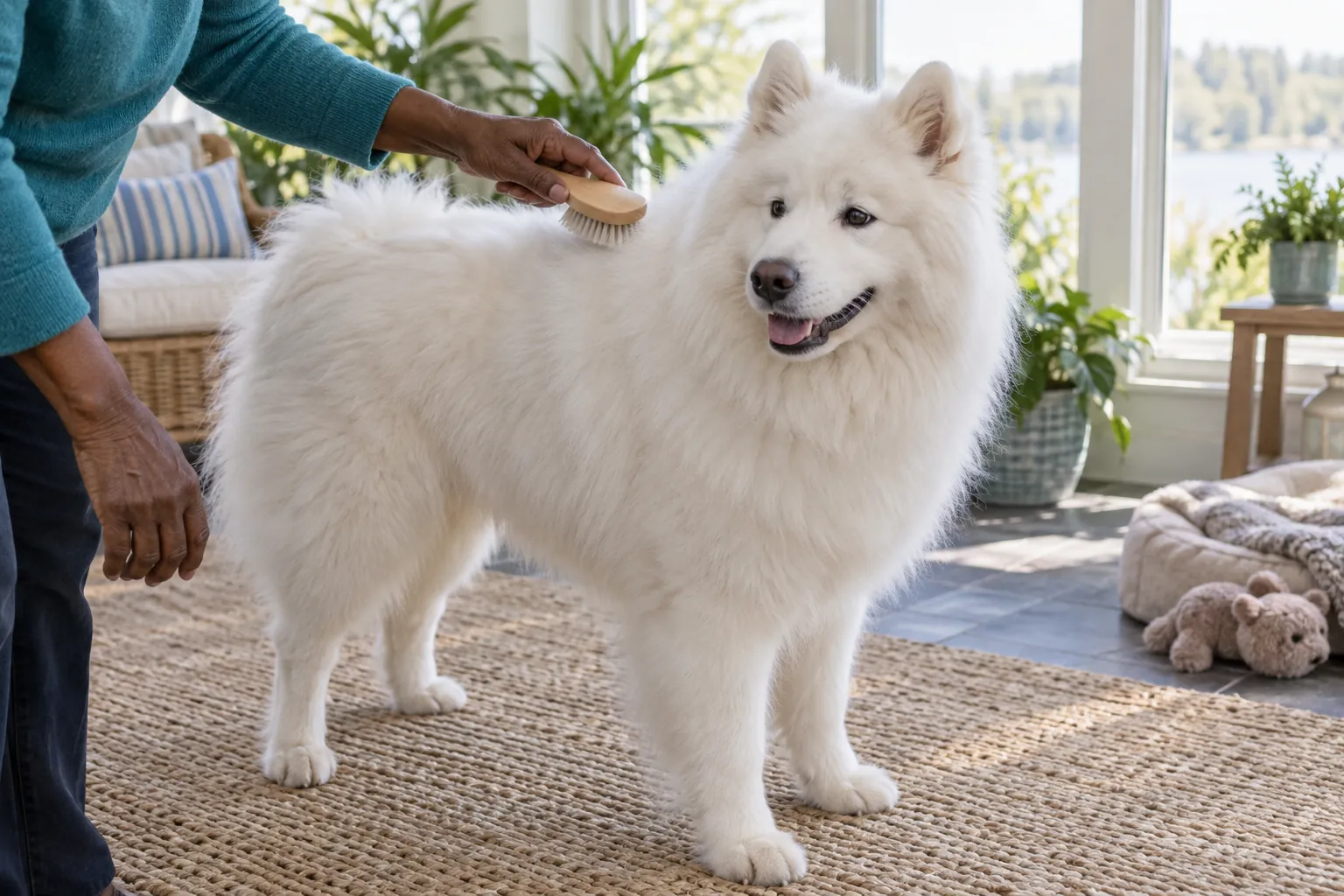
Only when easy tool presence and ordinary gentle handling are comfortable should you consider one very light contact on a suitable untangled shoulder area. Keep it brief, move the brush away, then reward. Do not drag through resistance or reach for face, belly, paws or other sensitive areas as a first test. Check your own motion: a quick approach from above may be harder than a slow visible movement from the side. If the dog withdraws, contact ends immediately; the next attempt starts easier, not with stronger restraint.
Keep the reward sequence simple and the session short
Separate tool movement, stopping and reward delivery so you can see what your dog responds to. For example: dog chooses to remain nearby, one easy contact happens, brush moves away, reward arrives, pause. If the dog needs the brush to stay distant, reward that easier participation instead. Use a familiar quiet marker if it helps your timing, but do not introduce an unfamiliar sound during handling. Keep reward delivery low and comfortable, not above your face or behind the dog where reaching could add another difficulty.
Begin with only a few easy opportunities, not a fixed number of minutes you must complete. Finish while the sequence is still clear and allow a real break. Our short-session guide explains how to keep practice manageable, but the dog's behavior determines when this session ends. Do not alternate brushing and rewards until a full groom has happened under the label of training. If necessary maintenance cannot wait, organise professional advice separately. A record of one comfortable contact is more useful than a completed coat that required repeated withdrawal signals to be ignored.
Change distance, duration or distraction one at a time
For tool-distance practice, keep the room, position and exposure time familiar while bringing the stationary brush slightly nearer on a later easy occasion. That is already a change; do not also begin brushing. For contact practice, keep the same body area and pressure while making a tiny change to duration, if the dog remains comfortable. Extending time is optional, not something owed after a successful attempt. Longer contact and more pressure are not interchangeable, and pressure should not be increased to force progress.
A new body area, tool, handler or room also changes the task. Return to an easier introduction instead of treating the whole dog as one completed skill. Add ordinary mild distractions only after the simpler setting is comfortable; never practise beside an excited child or another dog crowding the space. If responses become less easy, restore the previous conditions or stop. Compare like with like in your notes. A calm shoulder contact in the sunroom does not establish comfort with leg brushing, a busy salon or an entire grooming appointment.
Respond to avoidance without bargaining for one more stroke
When your dog walks away, lower the tool and let the break happen. Do not follow, corner them, hold their collar or offer food in exchange for enduring another stroke. Notice whether difficulty started when the brush appeared, approached, touched or moved through hair. That observation helps choose an easier future step; it does not diagnose the reason. If the dog freezes, repeatedly looks away, cannot settle or no longer wants the usual reward, pause rather than trying a more tempting food to keep handling going.
Biting at the brush is not a reason to push through or to put your hands nearer the mouth. Remove yourself and the tool from the immediate interaction without a struggle, keep others safely away and obtain appropriate individual help if there is bite risk. Do not punish a warning or turn the tool into a tug toy to keep the session going. For persistent avoidance without an obvious care problem, a qualified reward-based professional can help adjust the setup. Pain, sudden change, panic or aggression calls for appropriate veterinary and behavioral support, not another app lesson.
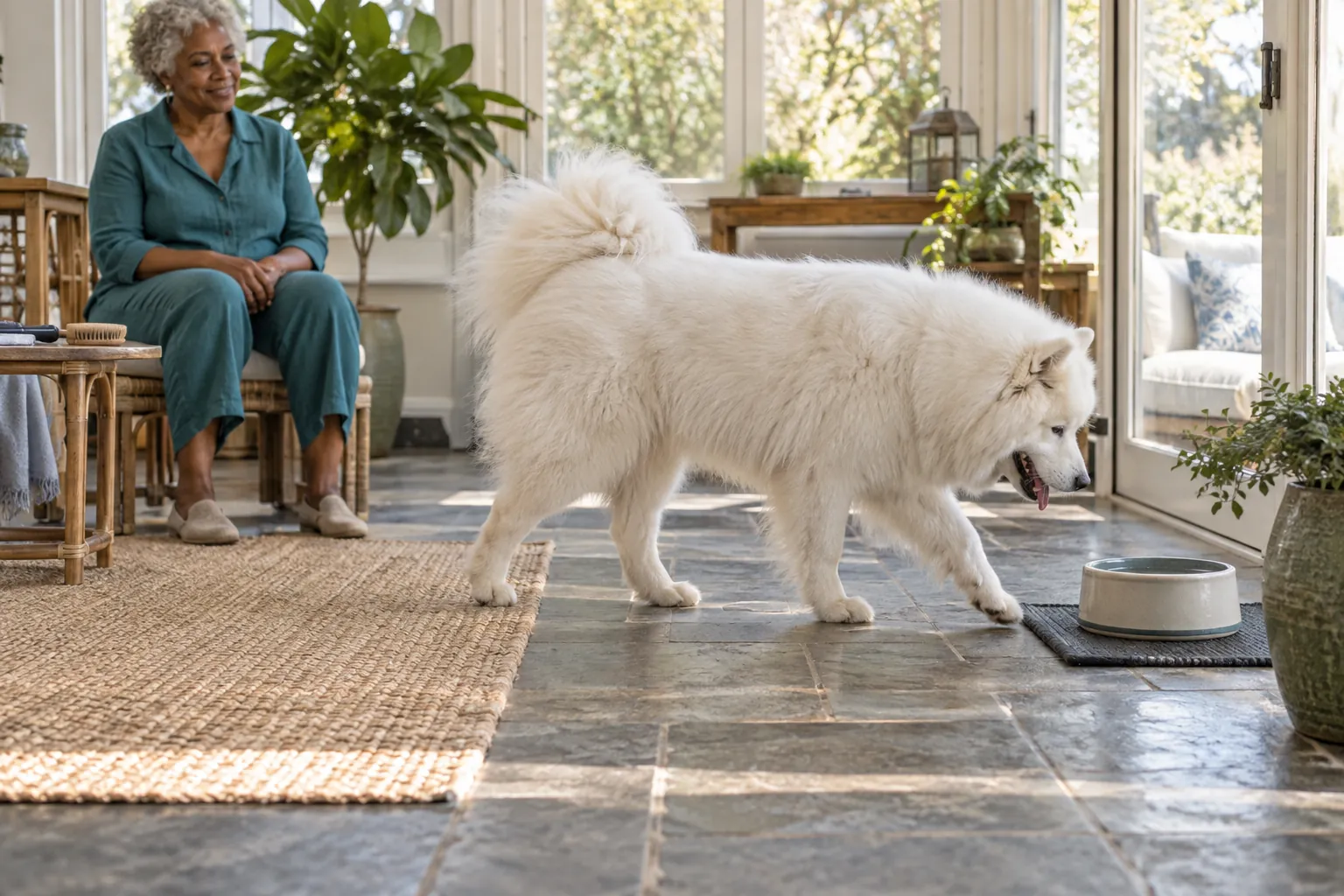
Record what happened, then choose an easier next step
Use a brief observation such as: quiet room, brush on table, dog approached twice, no contact attempted. Another might read: one shoulder contact, dog moved away as the brush lifted again, stopped there. Record the help you used and the point of withdrawal, not just success or failure. If you use DogPath, let the observation guide the next suitable practice goal; a paper note works too. Our explanation of DogPath lessons gives context for setup, small steps and outcomes without inventing a coat-health score or a brush-specific feature.
Choose the next session from that description. Repeat a comfortable setup, reduce tool proximity after retreat or discuss a care concern with the relevant professional. Do not automatically increase the stroke count because another day has passed. You are building a predictable interaction in which the dog's response changes your handling. Necessary grooming, ordinary rest and access to food and water still matter. A useful plan may include both supported coat care now and gentle practice later, without pretending that one voluntary contact guarantees future cooperation or makes every procedure safe at home.