Walking skills
Dog U-Turn Training: Free Steps Before a Walk
Teach a broad, comfortable change of direction before you need it outside. The leash holds a boundary; it does not make the turn happen.
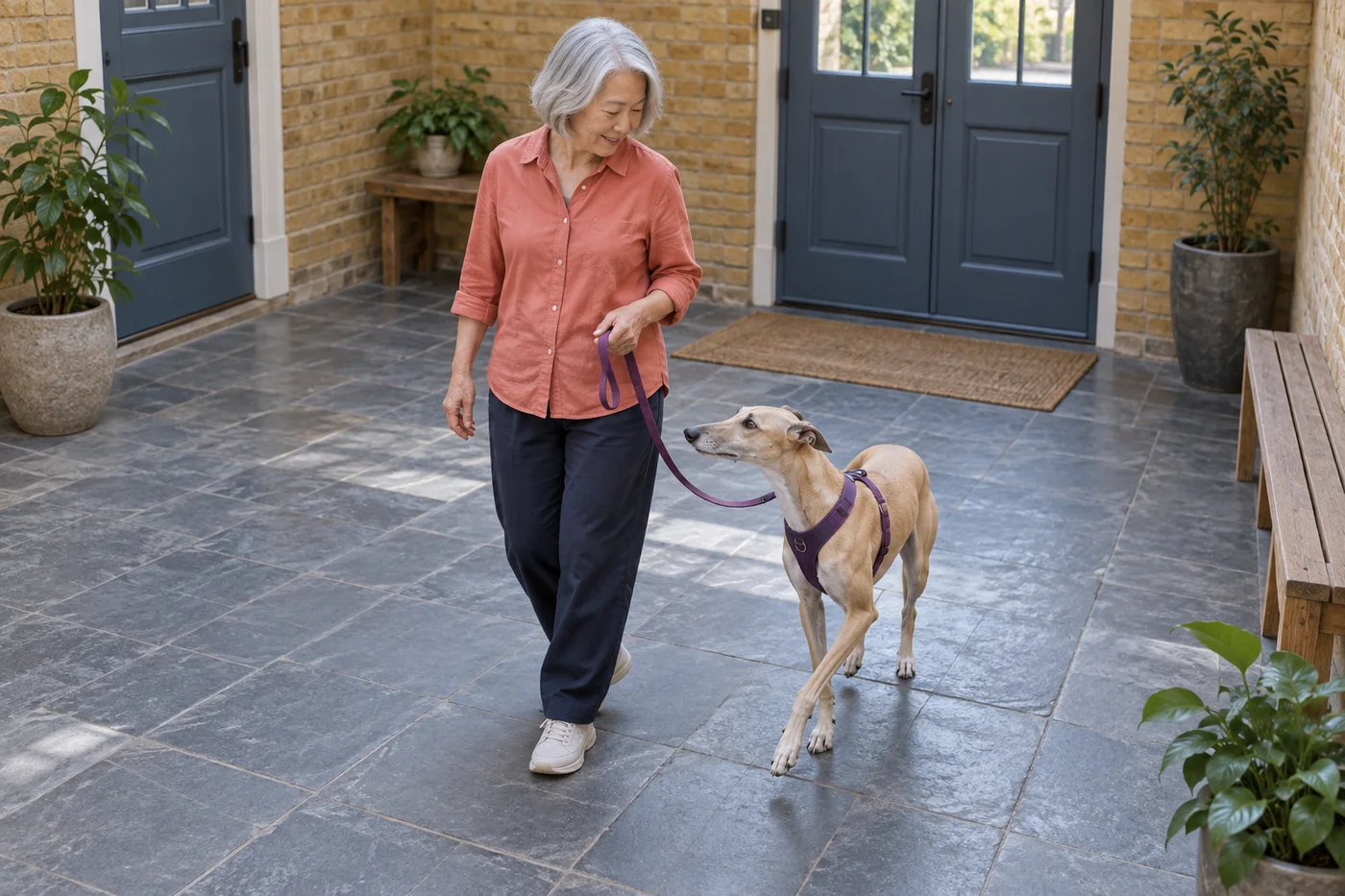
Dog U-turn training begins with a small everyday problem: you change your route, but your dog continues along the old one. Perhaps you reach a closed path, realise you left something at home or simply want to walk back the way you came. Repeating the name while pulling does not explain the new movement. A useful turn means the dog changes direction with you while the leash remains a boundary rather than the engine of the exercise. Start where neither of you needs to hurry.
This free practice guide teaches an ordinary walking skill, not a guaranteed escape from danger or a treatment for reactivity. It is different from calling a dog back from a distance and from asking for continuous close walking. DogPath can help organise brief reward-based sessions and outcome notes. It is free to download or start; some features or levels of use may require in-app purchases. Choose a suitable existing walking foundation, not an imagined dedicated U-turn course, and keep the exercise within your dog's comfortable movement.
Define dog U-turn training as a visible movement
Write one observable goal before opening a training lesson: after your small gesture, the dog turns through a broad arc and takes a step along the new route. Do not add sitting, eye contact, a precise heel position and rapid speed to that first goal. A dog can respond well while looking where their paws are going. You are teaching a change of travel, not a competition about-turn or a tight spin. Picture enough space for two bodies to change direction without stepping across each other.
Separate teaching from immediate management. If a route is unsafe, protect distance and seek appropriate help rather than testing an unfinished cue. A turn cannot certify that an approaching dog, traffic situation or narrow passage is safe. Greyhounds As Pets NSW recommends beginning turn practice in a comfortable low-distraction place. Use that principle here without adopting universal readiness claims. Decide what is outside today's exercise, such as busy crossings or greetings, so a modest training plan cannot quietly become a risky real-world test.
Prepare room for the dog and your own feet
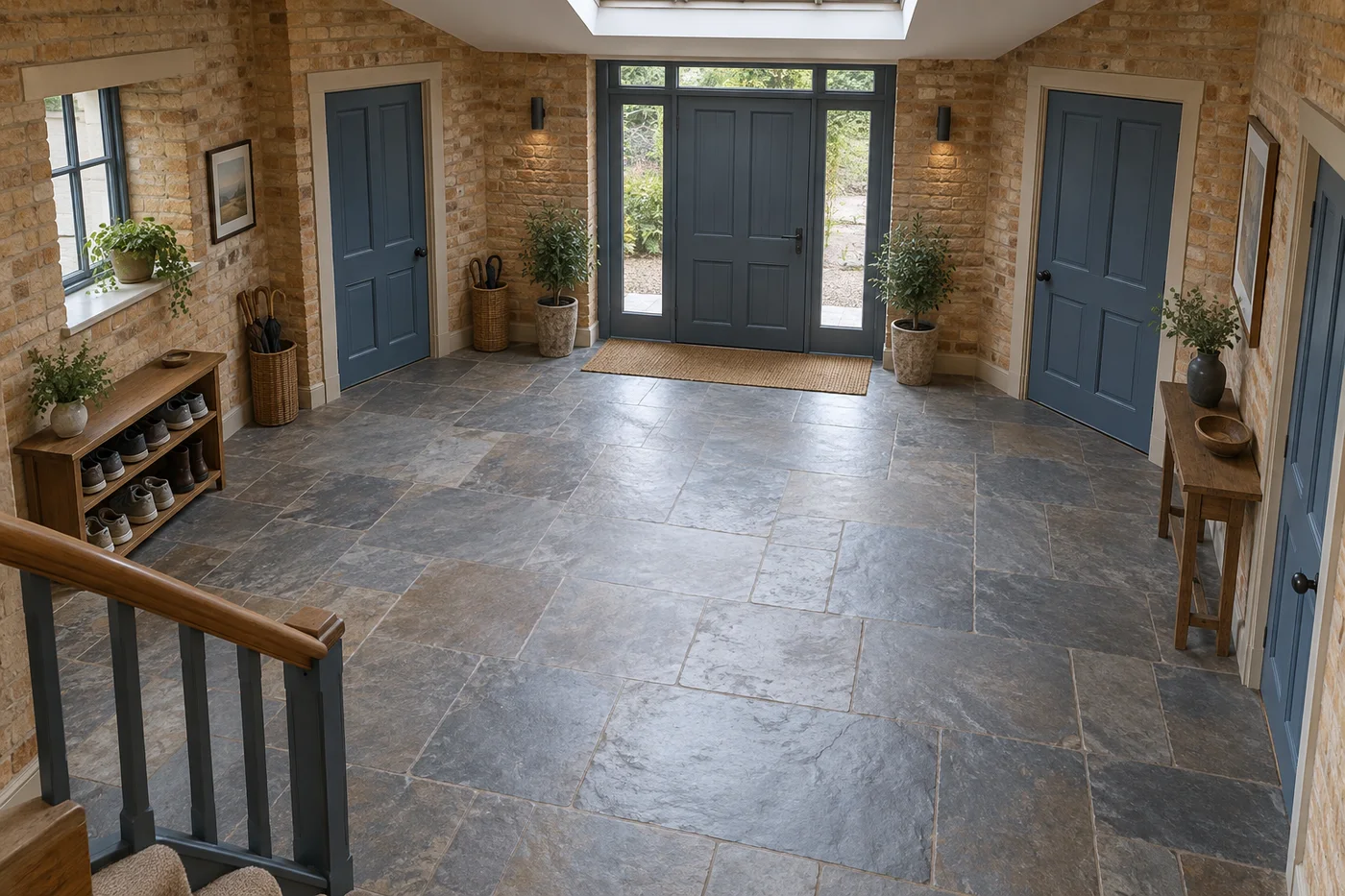
Choose a level, nonslip area with a clear route in both directions. Remove loose shoes, cables and obstacles before bringing the dog into it. Rehearse the arc alone, carrying the lead as you intend to hold it. Notice whether your hand rises, crosses your body or shortens the lead as your shoulders move. Keep enough slack for a voluntary turn while preventing tangles around feet. Do not wrap the lead around a hand or let it drag where either of you might step on it.
Use comfortable ordinary equipment suited to the individual, with the attachment and fit checked. This guide does not choose equipment or assess your ability to manage a stronger dog. Prepare small rewards the dog normally enjoys and can eat comfortably; follow any dietary instructions. Keep them reachable without rummaging. Practise after ordinary needs have been met, not by withholding a meal to create enthusiasm. In DogPath, make the session focus this one visible movement, prepare the rewards, then put the phone away before handling the dog and lead.
Make a small turn worth following
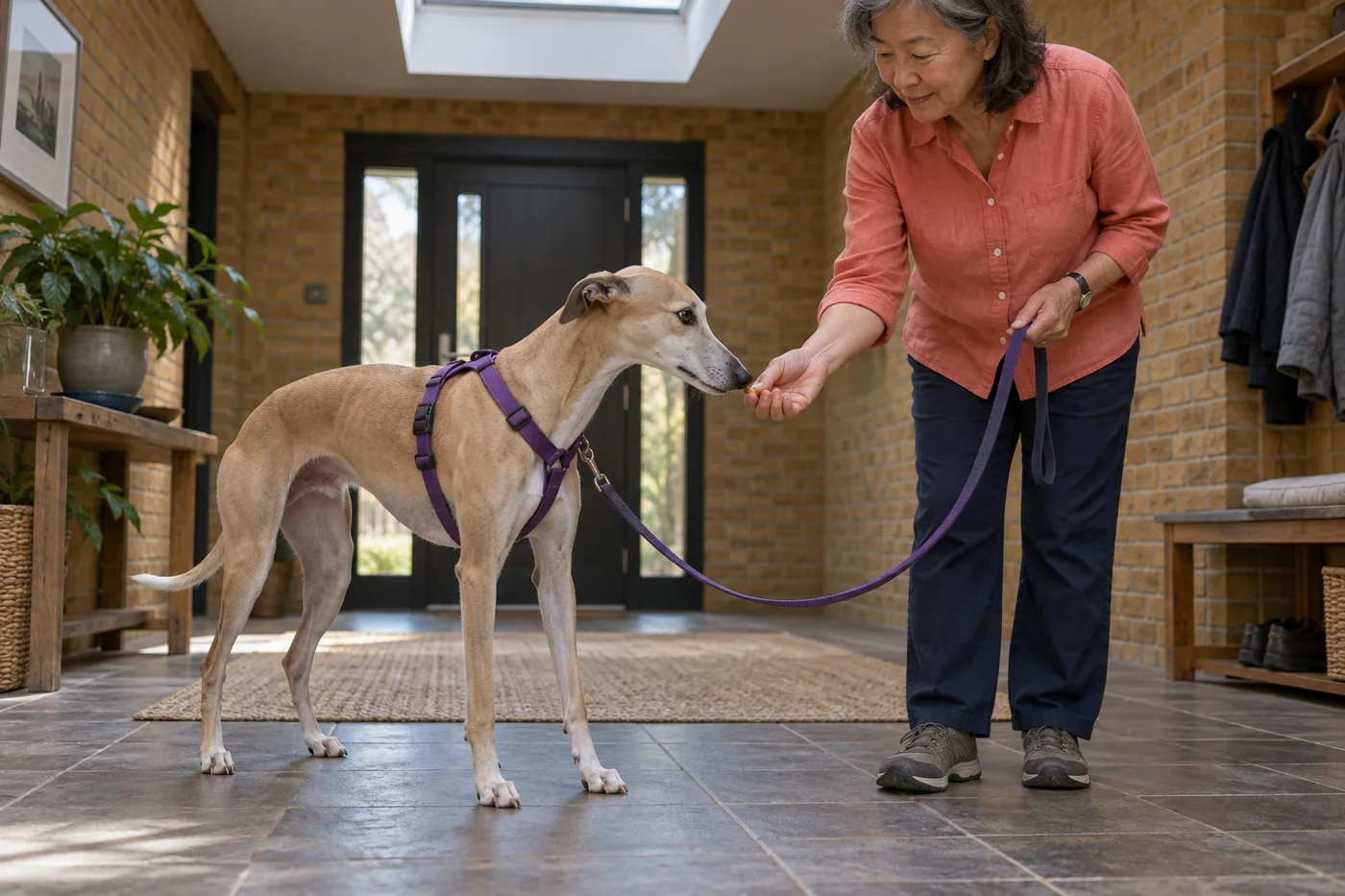
Begin beside the dog, with space between your legs and their body. A familiar food invitation at comfortable nose height can explain the first movement. Move it slowly along a broad curve as you take a small step, then reward an easy bit of following. Do not move the food so quickly that the dog must jump, twist sharply or chase your hand. If only a head turn is comfortable, reward that small start and reset. A full reversal need not happen on the first attempt.
Bring the reward to the dog after the useful movement rather than stretching the invitation farther and farther out of reach. If they stop following, pause instead of pulling them through the rest of the arc. Check whether the curve is too tight, the floor uncertain or your hand difficult to see. Reward the next easier attempt promptly. Once a partial arc is straightforward, gently extend that same movement toward the new direction. The objective is a repeatable, unhurried response, not getting one dramatic turn on video.
Separate the hand invitation from the reward
Visible food may help explain a new movement, but you do not want opening the treat pouch to become the only instruction. The American Kennel Club distinguishes a temporary food lure from the reward delivered afterwards. After easy repetitions, try the familiar movement with an empty hand and pay from the other hand or pouch. Keep the new version small. An unsuccessful attempt is information about the explanation, not evidence that your dog is refusing to work without a bribe. Return to an easier hand movement if necessary.
Notice exactly where you deliver the reward. Feed in the new walking direction, within a comfortable reach, so the dog does not need to turn back or cross behind your legs. Keep the lead loose while reaching. If you use a familiar quiet marker word, say it as the useful turn occurs and follow with the reward. A marker is not another demand. Our clicker and marker guide explains that timing separately. Do not introduce a new sound, empty hand and longer walking distance in the same attempt.
AKC on separating the lure from the reward · Understand a marker before adding it to the turn
Add one cue and leave time to respond
When the broad turn is easy to explain with your gesture, choose one short phrase such as 'this way'. Say it once, pause briefly, then give the familiar movement. Reward the turn as before. Keep the same words between household members; a new phrase every time gives the dog a different task. The cue is information about the coming direction change, not a warning that a leash correction will follow. You can initially keep the gesture large enough to recognise and reduce it gradually later.
If the dog does not respond to the word alone, the word may not yet explain enough in that context. Avoid chanting it while walking away and reaching the end of the lead. Reset close by and offer the easier cue-plus-gesture version. Record which version actually worked rather than marking the whole skill as finished. You might note 'followed the hand arc after the word' instead of 'knows this way'. That detail helps you choose the next session and prevents a reasonable response being mistaken for failure because you expected too much.
Transfer the skill without changing everything
Move from the quiet room to another suitable space only when the same small exercise is easy there. An enclosed garden or a broad quiet route may offer enough room, but inspect it first and keep the lead held where required. Begin with the original gesture and prompt reward again. A new surface, smells and outdoor sounds already change the task. Do not also ask for more walking steps, greater distance from you and a word-only response. Change distance, duration or distraction one at a time.
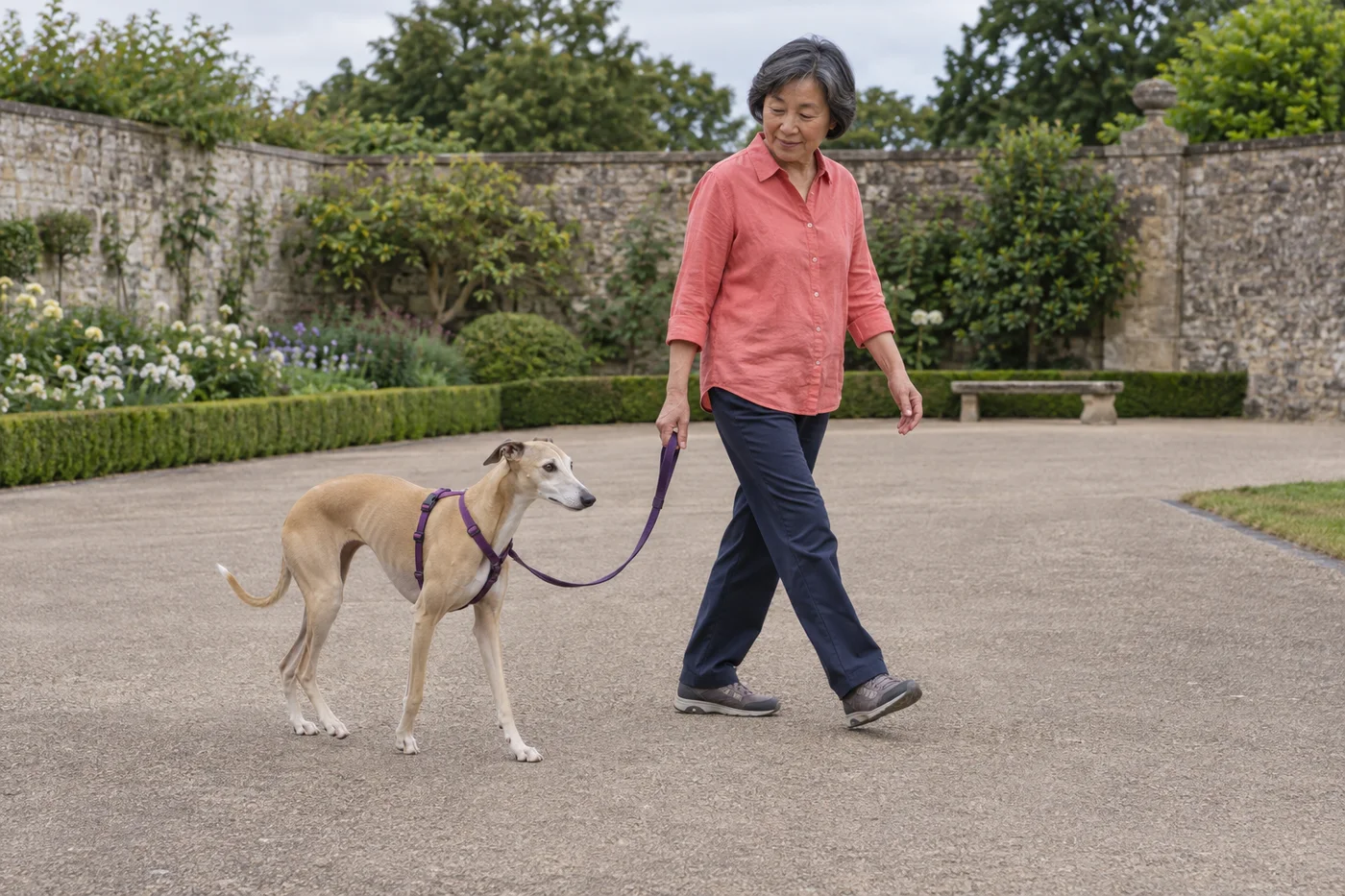
A turn is a brief action inside a walk, not a rule that the dog must always stay at your knee. Allow normal sniffing and rest elsewhere on the outing. Our loose-lead foundations cover the ongoing walking arrangement; this exercise concerns a clearly announced change of direction. Choose the new path before asking, including room for both of you to move. Avoid drilling beside traffic, unfamiliar dogs or a narrow edge. If the setting becomes busy, stop practising and manage the route rather than using that moment to prove progress.
Use the outcome to choose the next short session
After the lead is put away and the dog can rest, record the place, cue version and visible result in DogPath. Note any practical change, such as a wider arc or reward delivered nearer your side. A useful record says what happened and what you will keep or simplify. It does not require filming every attempt or assigning a confidence score. If the app's available lesson does not describe this exact exercise, use its relevant foundations and ordinary notes; do not pretend it contains a specialised course or automatic movement evaluation.
Keep practice brief enough that you can pay attention to both bodies. A couple of easy attempts may be enough today; there is no compulsory repetition count. Our short-session guide helps you make stopping part of the plan. Compare similar arrangements, not an indoor success with an outdoor interruption as though the contexts were identical. If an empty hand was unclear, revisit that explanation before extending walking distance. If the new setting was too busy, return somewhere quieter. The note should make tomorrow's choice smaller, not create pressure to finish a training calendar.
Know when a turn needs help, not more repetitions
A dog who hesitates in one direction may need a wider arc, better footing or an easier explanation. Watch without forcing the body into position. Stop and seek veterinary advice if movement seems painful, becomes suddenly different or raises a health concern. Panic, aggression, bite risk, persistent distress or welfare problems need suitable individual in-person support. DogPath is a reward-based everyday practice aid, not a diagnosis, safety assessment or guarantee. Do not delay help because a checklist suggests repeating the movement until it improves.
For an ordinary missed response, review your own preparation first. Was the dog already investigating something? Did the lead tighten as your shoulders turned? Did your reward placement ask for a second reversal? Change the relevant practical detail and leave other conditions familiar. If you cannot keep the lead slack and maintain safe control, ask a qualified reward-based professional to work with you in person. The next useful decision is an easier setup or appropriate help, not a faster pivot, stronger pull or a test beside a known trigger.