
Morning routines and undisturbed rest
Dog Wakes Up Early? Free Morning Checks
Before trying to move breakfast or wait out the whining, separate a genuine need from the small events that start the day.
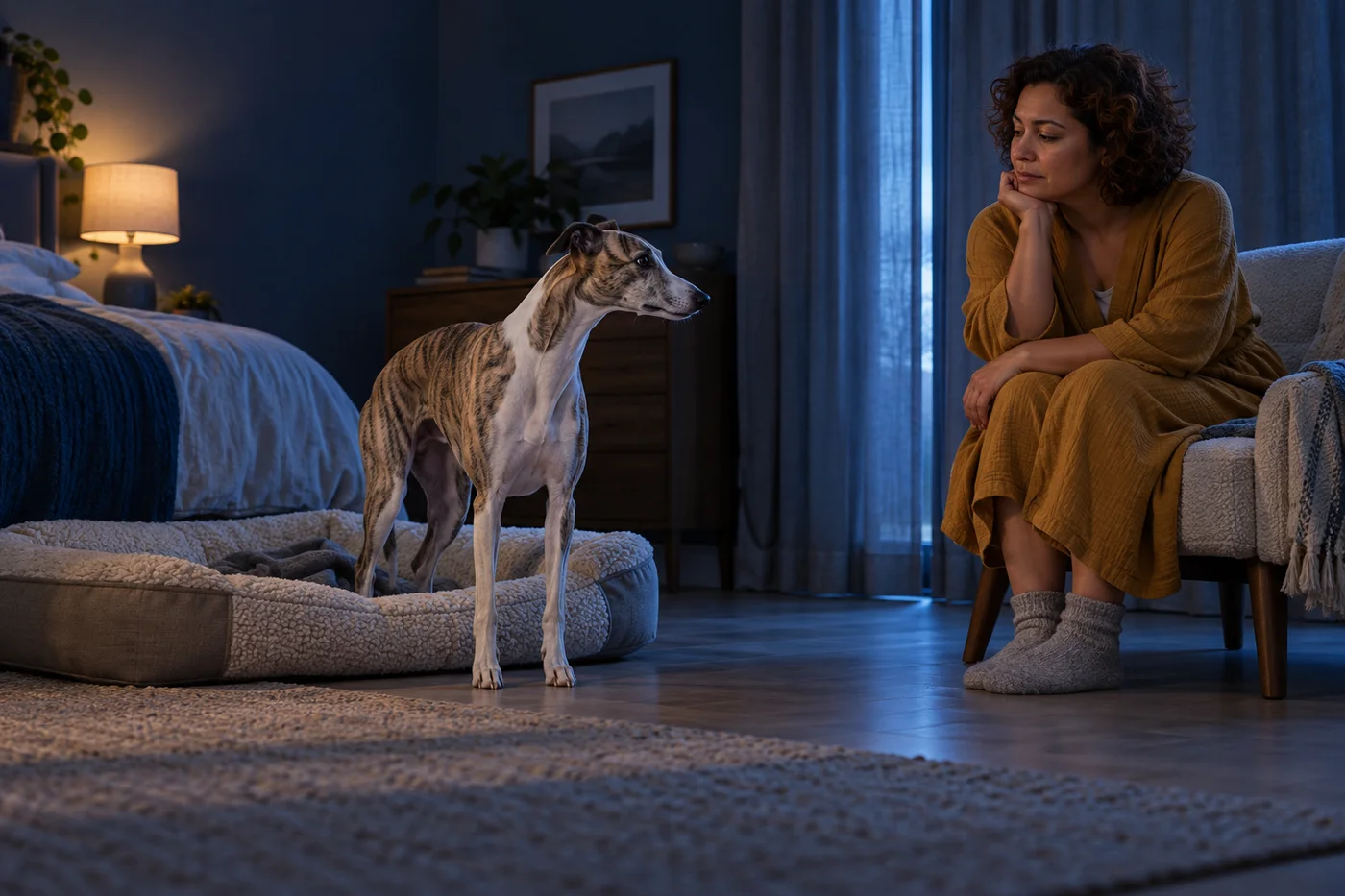
When your dog wakes up early, the whole morning can drift forward. First you open the door, then fill the bowl, then begin a lively game because everyone is already awake. By the weekend, an even earlier nudge starts the same sequence. But the answer is not automatically to ignore the dog. A toilet need, discomfort or a frightening sound deserves a response, even when the clock says you wanted another hour. Begin by separating what the dog needs from what the household happens to do next.
This free guide is for reviewing a repeated morning pattern, not diagnosing broken sleep or imposing an adult timetable on a puppy. New waking, pain, unusual thirst, accidents, panic, aggression, bite risk or other welfare concerns need appropriate in-person help. The suggestions work without an app. DogPath is free to download or start, with in-app purchases for some features or use levels; it can hold a simple observation note if useful. It does not assess sleep, rule out illness or guarantee a later wake-up.
If your dog wakes up early, check needs before habits
Respond first to what you can actually observe. Is the dog asking to go outside, pacing, repeatedly changing position or struggling to get comfortable? Do they pass urine or stools promptly when given the opportunity? These details are useful, but none proves a diagnosis. Do not deliberately delay a necessary outing to discover how long the dog can hold on. A request for help is not a training failure. If the situation is new or concerning, discuss it with your veterinarian rather than testing an ignoring strategy.
An adult with an established pattern is different from a young puppy, a newly arrived dog or an older animal whose needs have changed. Medication and feeding instructions also take priority over a sleep-in plan. AKC's article on early wake-up calls distinguishes possible needs and advises veterinary assessment for new or confusing behaviour. Use that distinction, not a blanket rule that every morning sound is attention-seeking. If distress, guarding or aggression makes approaching the resting place unsafe, do not reach in or try to physically move the dog.
AKC's discussion of morning waking and when to seek veterinary advice
Notice what happens before anybody gets out of bed
For a few ordinary mornings, note the first event you noticed: a neighbour's door, a bright gap at the curtains, your alarm, the dog standing up or the first whine. Record approximate times, not a second-by-second surveillance log. Add the last toilet opportunity and whether the dog settled again afterwards. Do not wake the dog, recreate a noise or film through the night just to collect better data. A short note made once normal care is finished is usually enough to identify a practical question.
Separate observation from explanation. Dog stood by bedroom door is a fact; dog is manipulating me is an interpretation. Similarly, a noise followed by waking is a possible clue, not proof that the noise caused it. Compare ordinary workdays and weekends without changing everything at once. If one household member starts the kettle early and another feeds immediately, write that sequence down. You may find that the day starts with human activity before the dog asks for anything. That is useful information, not somebody's fault.
Review the resting place without suddenly isolating the dog
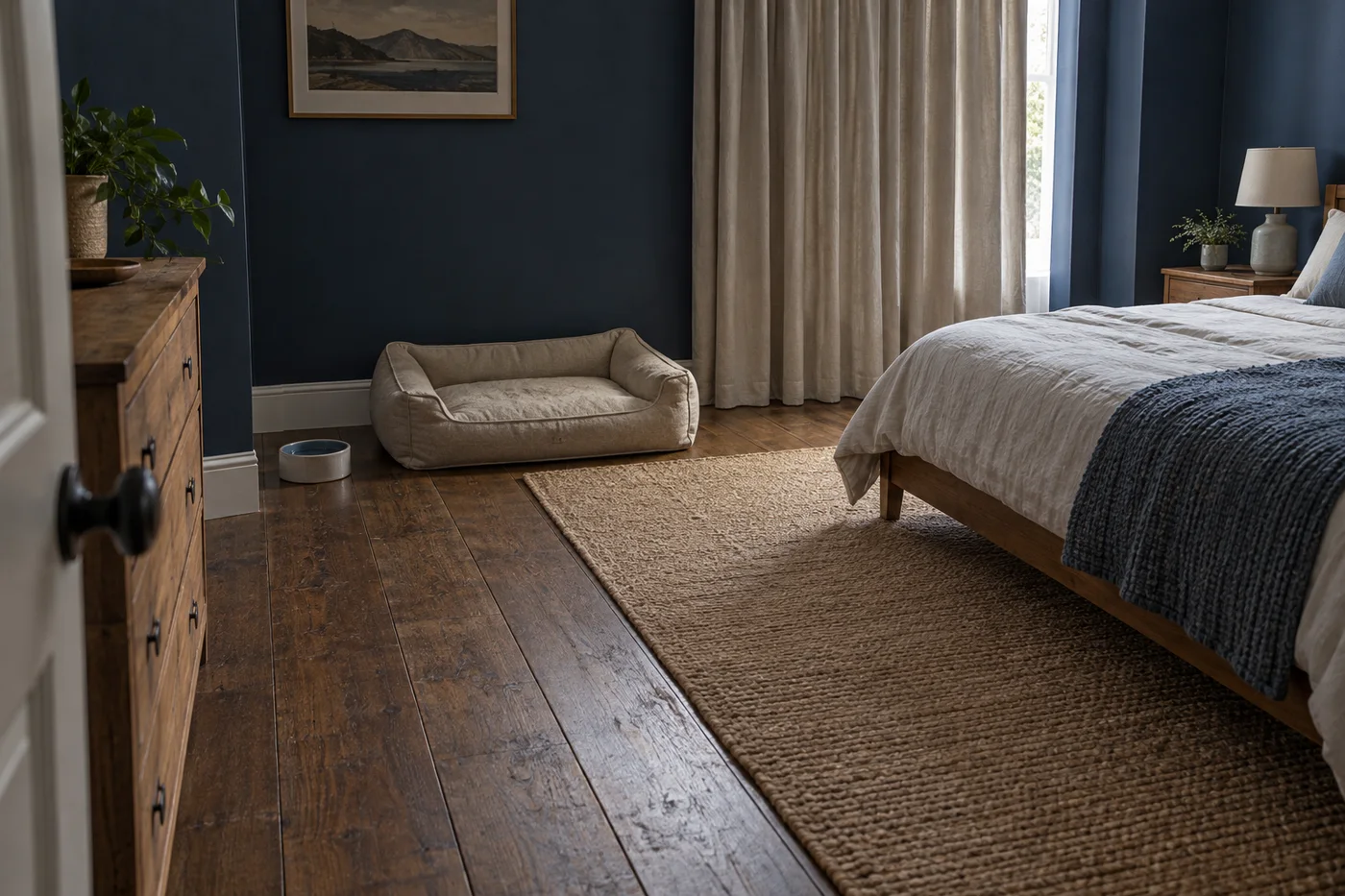
Check the actual sleeping area in daylight. The bed should be comfortable, accessible and out of a draught or direct heat, with a clear route to normal care. Keep water available according to your dog's individual veterinary guidance; withholding it is not a morning-training technique. Look for a curtain gap, a rattling blind or a resting place immediately beside a noisy door. Secure cords and loose fabric out of reach. Darkening a room must not block ventilation or make the route unsafe when you get up.
Choose one modest environmental change rather than moving the dog to a distant room and hoping they stop calling. For example, adjust an existing curtain safely while keeping the same bed and companionship arrangement. Watch whether the dog remains comfortable with the change. A darker room does not guarantee more sleep, and it will not solve pain or an urgent toilet need. If moving the bed is necessary, introduce the alternative during calm daytime periods. Do not close an unfamiliar barrier on the first night to enforce the new arrangement.
Keep necessary toilet trips calm, not conditional on silence
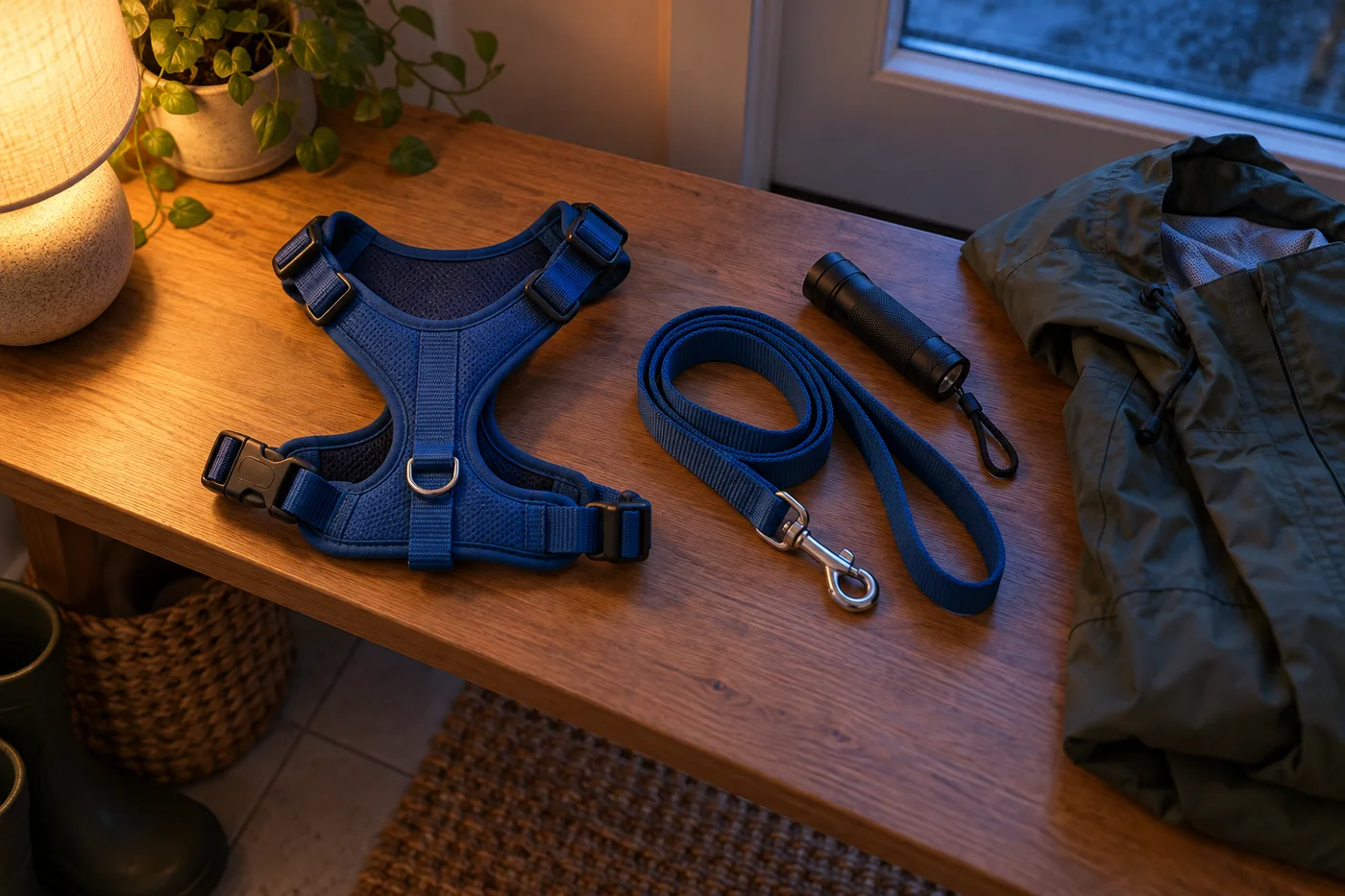
Offer an appropriate last toilet opportunity within a reasonable evening routine. Give enough unhurried time for the individual dog rather than rushing straight back inside. Outside, use suitable equipment, lighting and supervision; a sleepy handler still needs to manage doors and leads carefully. Prepare what you need before bedtime so an early request does not turn into a search for a harness. Our toilet-routine guide explains how to notice opportunities and respond to the dog rather than treating the schedule as a test.
If an early outing is needed, provide it without demanding a sit, quiet interval or training performance first. Keep the trip practical and calm, then offer the familiar resting arrangement again if the dog wants it. Praise appropriate toileting normally; withholding necessary care is not how to prevent a habit. An outing need not automatically launch breakfast, a long exciting walk and play. Equally, a dog who cannot settle after returning may need further assessment rather than repeated confinement. Keep puppies' developmental needs and individual health advice separate from an adult routine review.
Make breakfast predictable without using hunger as pressure
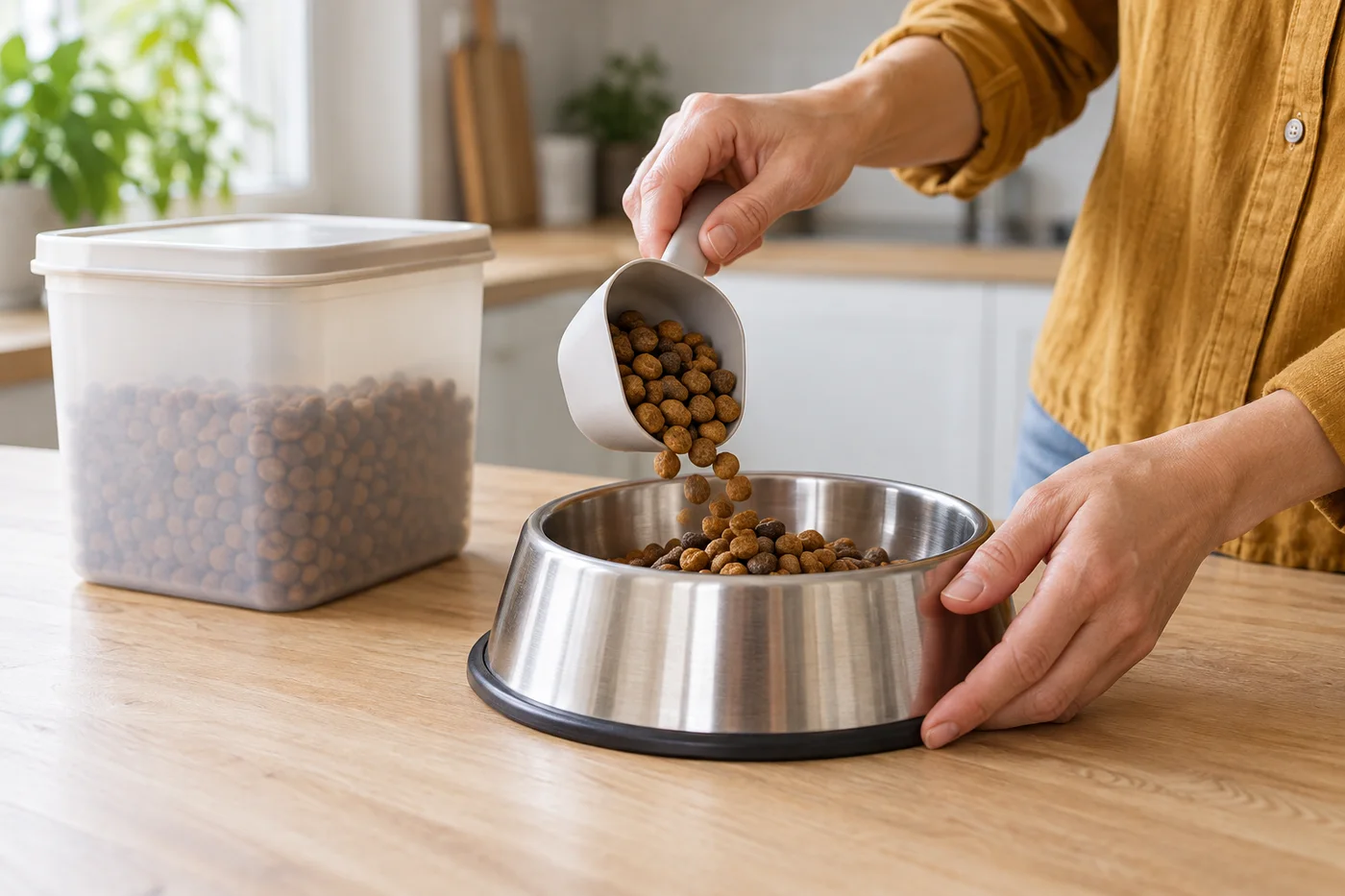
Look at the sequence between waking and food. Does every small movement reliably make the bowl appear? If needs are already met and the dog is comfortable, aim for a calm, manageable household sequence instead of a race from bed to bowl. Prepare food without teasing, repeated bowl lifting or asking for a long wait beside it. People sharing care should agree on what happens after a necessary outing. One person cannot establish a predictable routine while another accidentally begins a dawn party, but nobody needs to be blamed for providing care.
Do not suddenly postpone meals by hours, reduce food or change a prescribed feeding plan to obtain silence. Puppies, medical needs and individual dietary advice may require a particular schedule. If meal timing seems relevant, ask the professional responsible for that advice before changing it. An automatic feeder is not required for this guide and would not establish why the dog is waking. You can review the human sequence without buying equipment. If food or the bowl is guarded, avoid close handling experiments and seek individual support rather than turning breakfast into a training confrontation.
Balance the day rather than trying to exhaust the evening
Review the whole day, not only the last hour before bed. Appropriate walks, sniffing, social contact and activities the dog enjoys can sit alongside undisturbed rest. More vigorous exercise is not automatically the missing ingredient. Avoid adding a late high-arousal game, keeping the dog awake all afternoon or making them run in order to earn a later morning. The useful question is whether daily needs and rest opportunities are reasonably balanced for this individual, not whether you can produce a completely tired dog.
If you want a small daytime practice activity, choose something already familiar and stop while it remains comfortable. Our short-session guide offers a way to keep optional training brief without sacrificing ordinary rest. A dog recovering from a busy day may need a quieter routine, not another challenge. Do not promise yourself that a particular walk length will deliver an extra hour of sleep. If early waking continues despite reasonable care, observations about the whole day are useful for a professional conversation; they are not evidence that you must keep increasing exercise.
Review one change and keep a reasonable stopping point
Choose one question from your observations. Perhaps you want to know whether securing the curtain gap changes the first waking event while everything else remains ordinary. Record the change, what the dog did and whether their needs were met. A paper note works. If you use DogPath, keep the note factual rather than assigning a sleep score: curtain adjusted; outside when requested; settled briefly afterwards. The point is to make the next decision clearer, not to turn every morning into a performance measurement.
Allow for normal variation, visitors, weather and different household commitments. A later morning once does not establish a lasting result, and an earlier morning after a busy night does not mean you have undone everything. Stop experimenting if distress increases or you find yourself delaying necessary care to protect the plan. Seek help for persistent or changing problems, taking a few clear observations rather than a long list of attempted fixes. The workable goal may be a calmer, better-supported morning, not the exact wake-up time you originally wanted.