Garden recall
Dog Won't Come Inside: Free Garden Plan
Separate coming toward you from crossing the doorway, then make both steps easier without chasing or pulling.
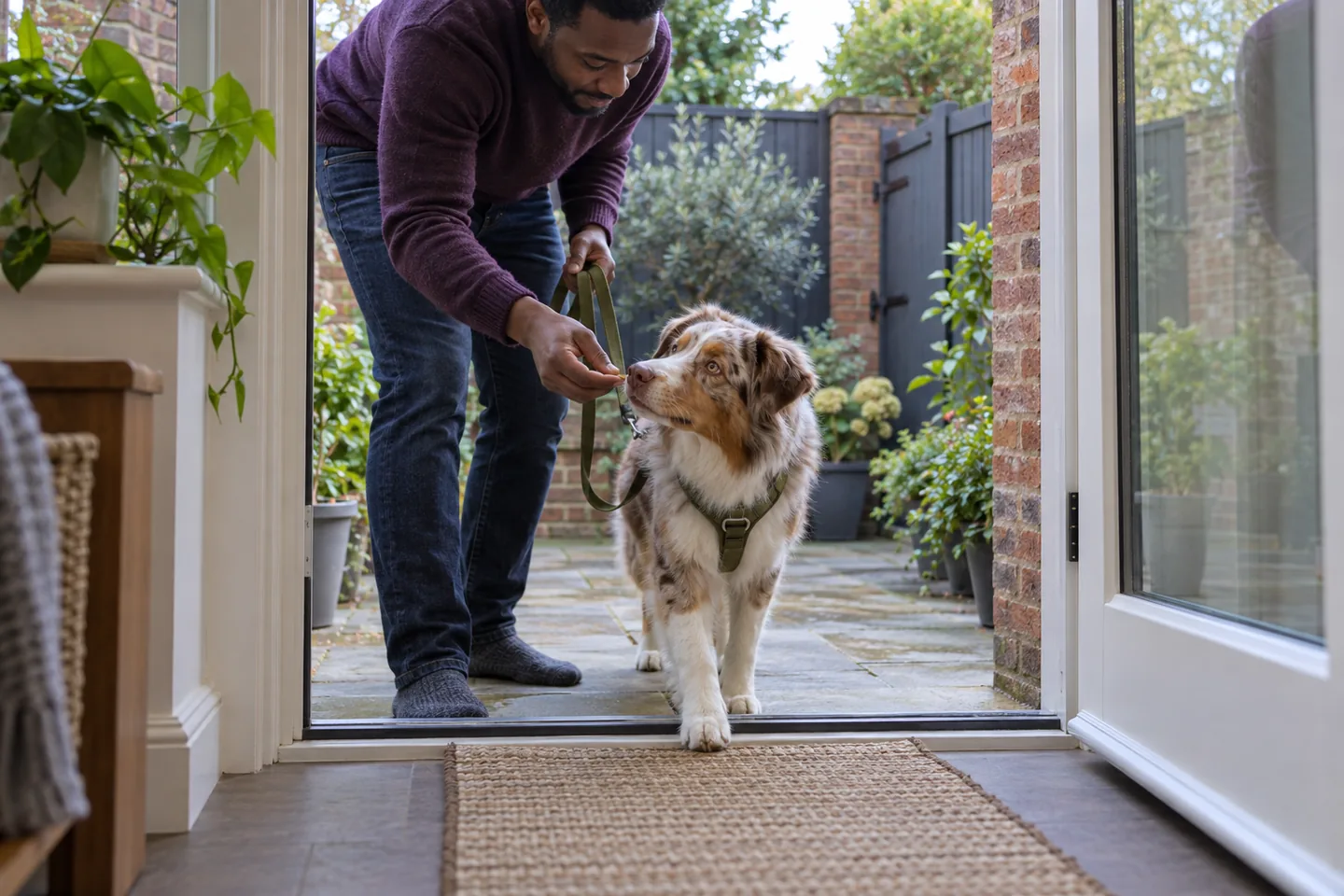
Your dog is a few steps from the back door, but the moment you say it is time to come in, they turn toward the grass. Or they approach happily and stop with their front paws outside. When a dog won't come inside, those two situations need different help. One involves returning from an interesting place; the other may involve the doorway itself. Repeating the same cue from the kitchen does not tell you which step is difficult.
Start when you have time, in a secure supervised garden, rather than when you must leave for work. This plan uses easy voluntary movements, suitable rewards and a comfortable indoor landing. It does not require withholding meals, chasing your dog or pulling them across a threshold. Sudden reluctance, painful movement, panic, aggression or bite risk needs appropriate veterinary or qualified in-person help, not a tougher recall exercise.
DogPath can organize short reward-based everyday practice, with one visible behavior and a note about the result. It is free to download or start; some features or usage may require an in-app purchase. Free does not mean unlimited app use. The app cannot diagnose behavior, assess safety or promise a reliable return in every situation.
Dog won't come inside: locate the difficult step first
Watch an ordinary return without adding a test. Does your dog stay far away, approach and turn back, stop at the threshold, or enter and immediately retreat? Also notice which route they use and what happens next indoors. A dog who comes to you in the garden but hesitates at a shiny floor is not necessarily ignoring a recall. Check the landing, door movement, noises, temperature and whether another animal blocks the entrance. Observe from a comfortable distance; do not crowd the opening to get a closer look.
Give a hesitant dog space to choose an easier approach. Cornell's guidance on fearful dogs supports voluntary steps rather than forcing confrontation with something frightening. If the reluctance started suddenly, arrange a veterinary check, especially with stiffness, limping or changed activity. An older dog may find a step physically difficult even after years of using it. Fear, pain and training can overlap, so identifying the stopping point is an observation, not a diagnosis. Do not lure a worried dog past their comfort limit and then shut the door behind them.
Cornell guidance on allowing fearful dogs to approach voluntarily
Make the doorway an easy place to move through
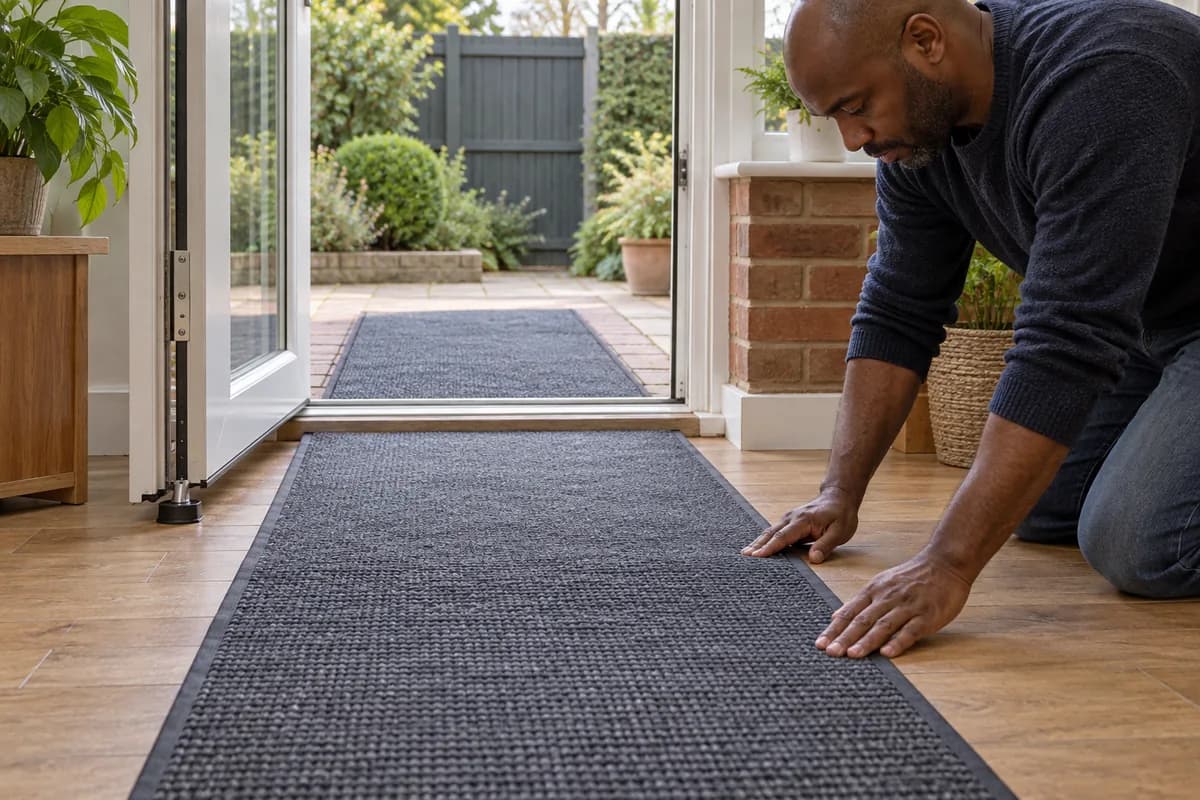
Open and secure the door so it cannot swing toward the dog. Clear shoes, bowls and other obstacles from the route. Put stable nonslip runners on both sides of the threshold, with flat edges and no folds. Keep the indoor space quiet and prevent other pets from rushing the entrance. If there is a substantial step or accessibility problem, get suitable advice rather than improvising a wobbly ramp. Let your dog investigate the changed setup without a cue. If even approaching is difficult, begin farther away and seek help when needed.
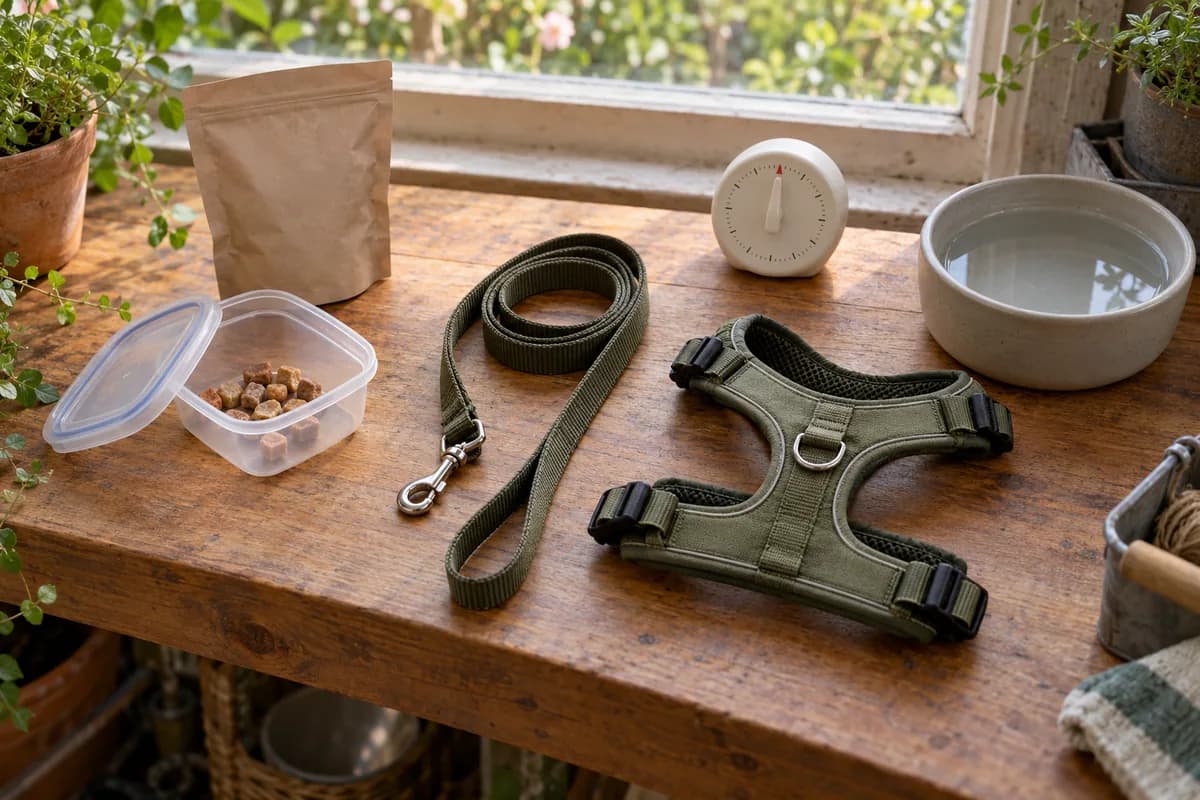
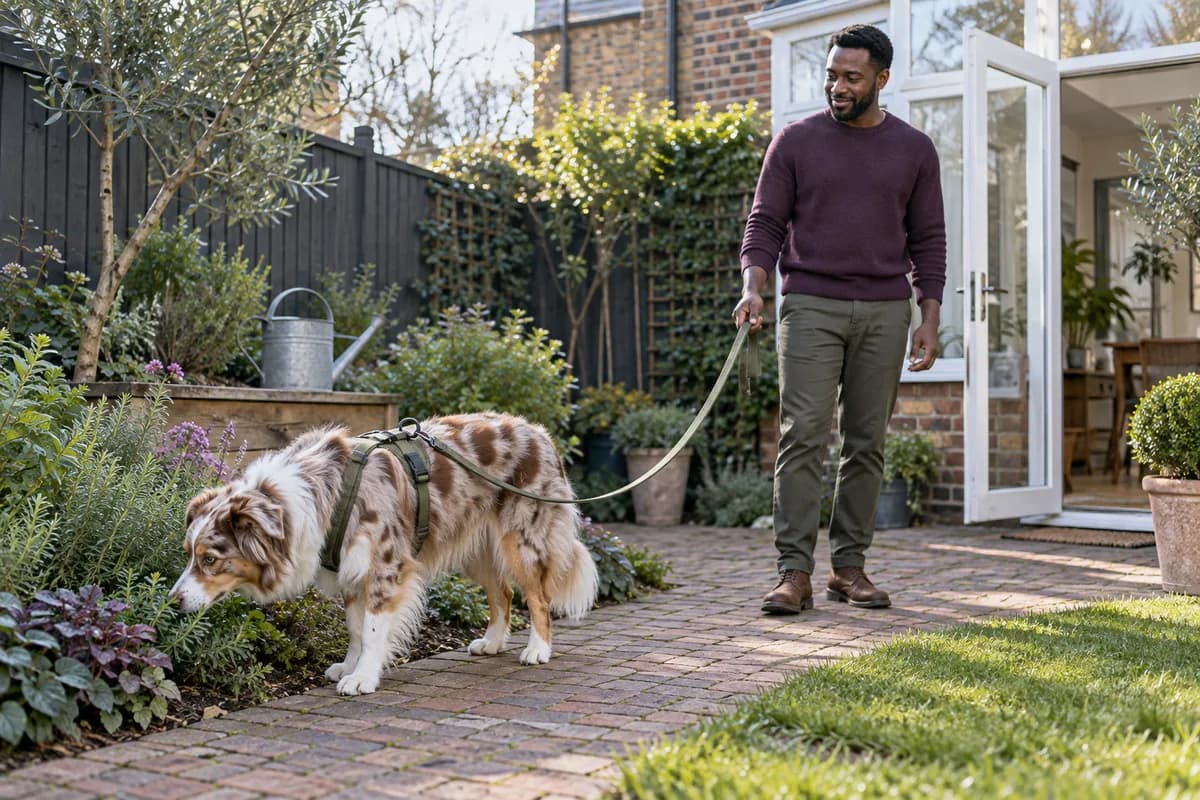
Keep the garden secure during every rehearsal. Check gates, fencing and escape gaps before opening the house door. Where control is needed, use a comfortable, correctly fitted harness and a leash held by an adult, keeping it slack; a line is management, not a way to haul the dog indoors. Avoid unattended trailing lines that can catch on furniture or plants. Children should not handle this exercise. If you cannot provide a secure garden and safe handling, practise an equivalent easy doorway indoors until an appropriate supervised arrangement is available.
Reward an approach before asking for the whole return
Prepare a few small rewards your dog can comfortably eat, allowing for dietary needs and their daily food intake. Begin near the doorway when they are already free to notice you, not absorbed in a scent. Stand slightly sideways, use your familiar invitation once and reward a voluntary approach at their current comfortable position. Do not bend over them, grab the collar or wave food and retreat repeatedly. If there is no response, stop repeating the cue. Move to an easier setup on another attempt instead of turning the garden into a chase.
Once approaching is easy, practise a small doorway movement separately. The first goal could be one voluntary front paw on the indoor runner, followed later by all four paws inside. Deliver the reward where the successful movement occurs without making your dog stretch across an uncomfortable step. They may need to retreat; keep that option available during learning. Our recall guide explains how to build the invitation itself. Here, coming toward you and entering the room remain two different achievements until your dog is comfortable linking them together.
Use DogPath to keep one small lesson clear
Choose one visible behavior for today's practice: all four paws on the indoor runner while the door stays open, for example. Use a relevant short DogPath lesson as a reward-based practice aid, with that household goal in mind. Prepare rewards, clear the route and begin at the easiest distance. Ask once, notice the voluntary movement, reward promptly and pause. One or two comfortable repetitions can be enough. Keep the phone out of your handling hand and do not watch a screen while managing the door or leash.
Record what actually happened after the session, whether in your training notes or on paper: starting distance, doorway surface, reward and the step your dog completed. Change distance, duration or distraction individually, not together. Standing a little farther away is a distance change; waiting briefly inside is duration; a quiet movement in the room is distraction. Do not add a closing door at the same time. Our goal-setting guide can help make the criterion observable. The app supports everyday practice, not a verdict about why your dog hesitated or whether the situation is safe.
Choose one visible training goal instead of a vague obedience target
Let some easy returns lead back to the garden
When your dog enters comfortably, some rehearsals can end with a reward and an invitation to explore the same secure garden again under supervision. Keep gates closed and any required leash held throughout. This is not permission to release a dog into an open street or unfamiliar area. RSPCA Australia notes that recall can become less appealing when it consistently predicts the end of enjoyable activity. Varying the outcome can help keep returning worthwhile, but it does not remove the need for a reliable safe management arrangement.
Do not promise another garden visit every time. Necessary returns still happen. Make the indoor outcome reasonable: access to water, a quiet resting spot or a suitable familiar activity, according to the dog's needs. Avoid using entry as the immediate prelude to something they find frightening. Practise necessary routines separately and gently. Nor should you turn every return into an exciting food festival; a modest reward and ordinary comfortable life indoors are enough. Finish the rehearsal while entering still looks easy, rather than repeatedly sending the dog out to demand another performance.
RSPCA advice on keeping recall worthwhile when activities end
Plan necessary returns before outdoor time begins
Training and getting indoors before an appointment are different jobs. When you know time will be limited, arrange the safe return in advance: supervise a smaller suitable area or use an appropriately held leash from the start, provided your dog is already comfortable with that equipment. Leave enough time for normal sniffing and toileting. Do not begin a new threshold lesson while the household is rushing. If the dog has not learned to enter comfortably, use the easiest established safe route instead of testing a difficult cue because the clock is running.
If your dog does not return, resist pursuing them around the garden or repeating the invitation more loudly. Reduce bustle, give them space and use familiar safe management without pulling, cornering or grabbing. A dog who freezes, threatens or panics needs an appropriate personal plan; do not place hands near a mouth or have someone block their escape to force entry. If the environment is immediately hazardous, prioritize safety and appropriate urgent assistance. An article cannot provide a universal emergency retrieval method. Prevention makes tomorrow's necessary return less dependent on an untrained response.
Change one condition, including evening light
After several comfortable rehearsals, change only a small part of the setup. Start one step farther from the door while keeping the landing and reward the same. On a separate occasion, briefly pause indoors before the ordinary release. Later try one mild familiar distraction. Return to the easier version if your dog stops approaching, becomes tense or leaves the doorway repeatedly. Completion alone is not the whole result: moving freely and returning to normal activity matter too. Do not treat a successful sunny morning as proof the exercise is ready for every evening.
At night, the doorway may look and sound different. Turn on suitable lighting before the outing, avoid a bright glare at eye level and keep the route visible. Practise first at a familiar easy time, then at dusk without increasing distance or adding door movement. Note insects, household noise or reflections rather than assuming stubbornness. Use the same secure garden and supervision. If reluctance appears only in darkness or is new, discuss that pattern with your veterinarian. Make a short session genuinely short; extra repetitions are not a substitute for understanding changed conditions.
Read the note before choosing tomorrow's next step
A useful note describes the situation rather than labeling the dog. Try: morning, dry runners, door secured open, started one step away, entered on first invitation, rewarded inside, explored garden again. Another entry might say: dusk, approached but stopped at the shiny indoor edge, simplified and finished. That second note identifies a condition to investigate; it does not prove the dog is disobedient. Include whether food was accepted and how the dog moved, but do not turn those observations into a diagnosis or a numerical safety score.
Choose the next lesson from that evidence. Repeat an easy doorway entry if the environment changed. Work on the approach separately if the threshold was comfortable but attention was elsewhere. Maintain predictable indoor care even when practice is unfinished, and never reduce needed outdoor access as punishment. There is no fixed number of days by which this must work. If hesitation persists, grows or involves distress, get appropriate in-person help. A better garden return is a comfortable, understandable routine supported by sensible management, not a contest you win at the back door.