
Outdoor practice
Long Line Dog Training: Free Handling Guide
Practise managing the line before adding distance: choose open space, organise excess fabric and finish without a scramble.
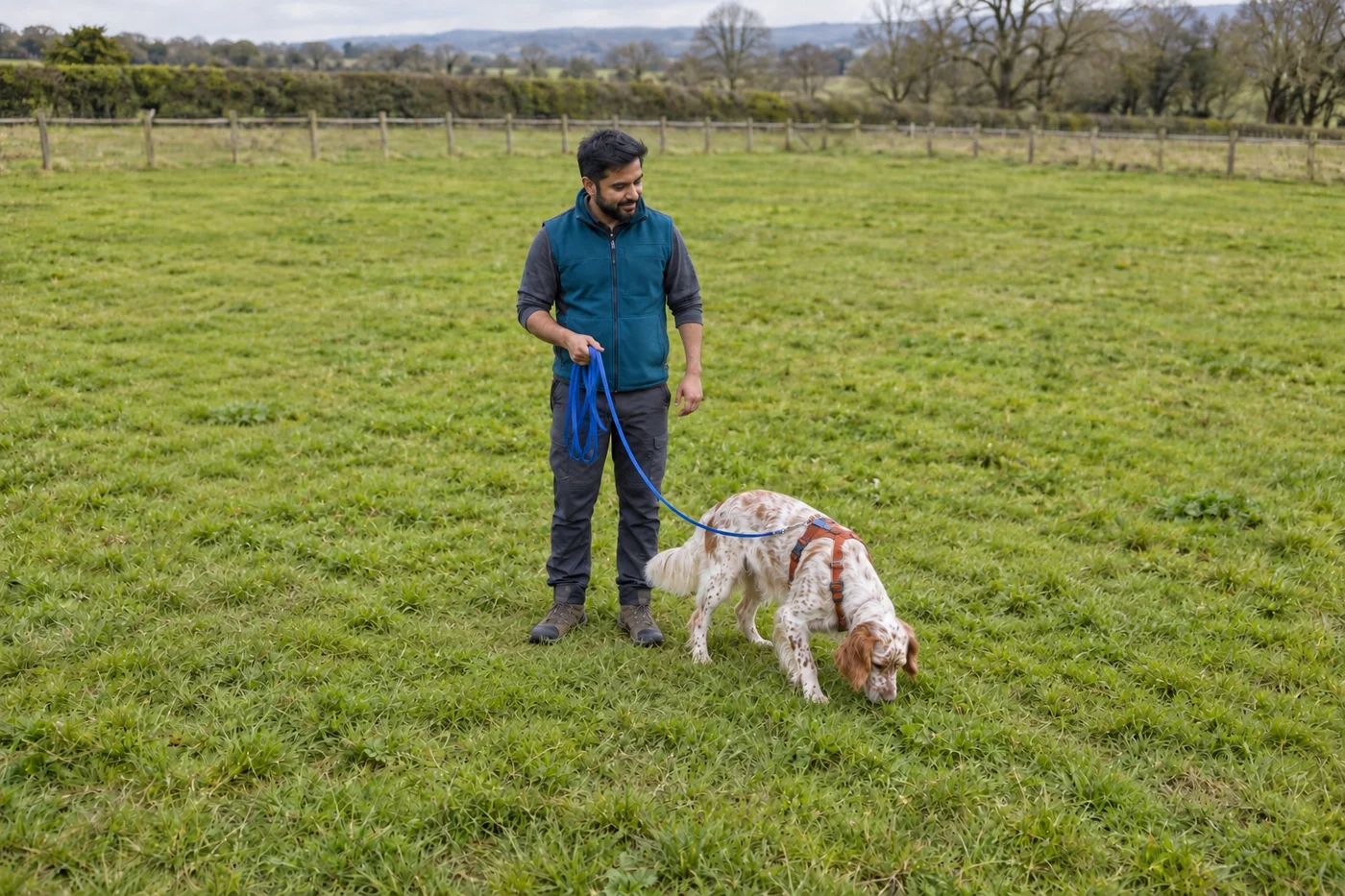
Long line dog training can look simple until the dog changes direction and the spare fabric reaches your shoes. You are now watching the dog, the ground, your hands and the next person approaching. Buying more length does not solve that coordination problem. Before practising a distant recall, learn to manage a small amount of line in a place where you have room and time to respond.
This free guide concentrates on the handler's job, not a new recall command or a promise of safe freedom. Start with a dog you can comfortably manage on an ordinary lead and seek hands-on instruction if that is uncertain. The plan works with suitable equipment, ordinary rewards and brief observation notes. There is no requirement to use an app or to deploy the whole available length.
Long line dog training begins with a suitable place
Choose a quiet, open area where dog access and the proposed equipment are permitted. A suitable enclosed training field offers a simpler first setting than a narrow public path. Inspect the whole working area, including its entrance, before beginning. Look for loose wire, litter, slippery ground, hidden holes, trees and furniture that a line could catch around. An apparently empty space may still have an approaching person or an animal beyond a hedge. Stay aware rather than relying on the fence alone.
Keep ordinary short-lead management for roads, crowded entrances, livestock, steep edges and places where you cannot maintain clear space. Do not trail a line across a shared path or assume other people will step over it. If someone enters your practice area, bring the dog nearby before the situation becomes busy, using familiar rewarded movement rather than hauling. Select a different location when this is not manageable. The first success is an uneventful arrangement, not maximum distance or a dramatic return.
Inspect the attachment and the fabric before clipping on
A fixed long line is a length of lead you organise yourself; it is not the same mechanism as a retractable reel. Choose equipment appropriate for the individual dog and follow the maker's attachment and care instructions. Inspect stitching, fabric, clasp and harness connections for wear. Make sure the clasp closes correctly and the harness is comfortable and fitted for that dog. An online photograph cannot establish fit or strength. Ask a qualified professional to check the setup if you are unsure.
Attach the line to the harness connection intended for the purpose, not to a neck collar. Forever Hounds Trust's guidance describes harness attachment and warns against wrapping excess around the hand. Those precautions matter even when the intended practice is quiet. Do not use the line to provoke a sprint and test its stopping power. Carry a normal short lead for the entrance and exit, plus rewards and water appropriate to the outing. Organise them before clipping on so both hands remain available when needed.
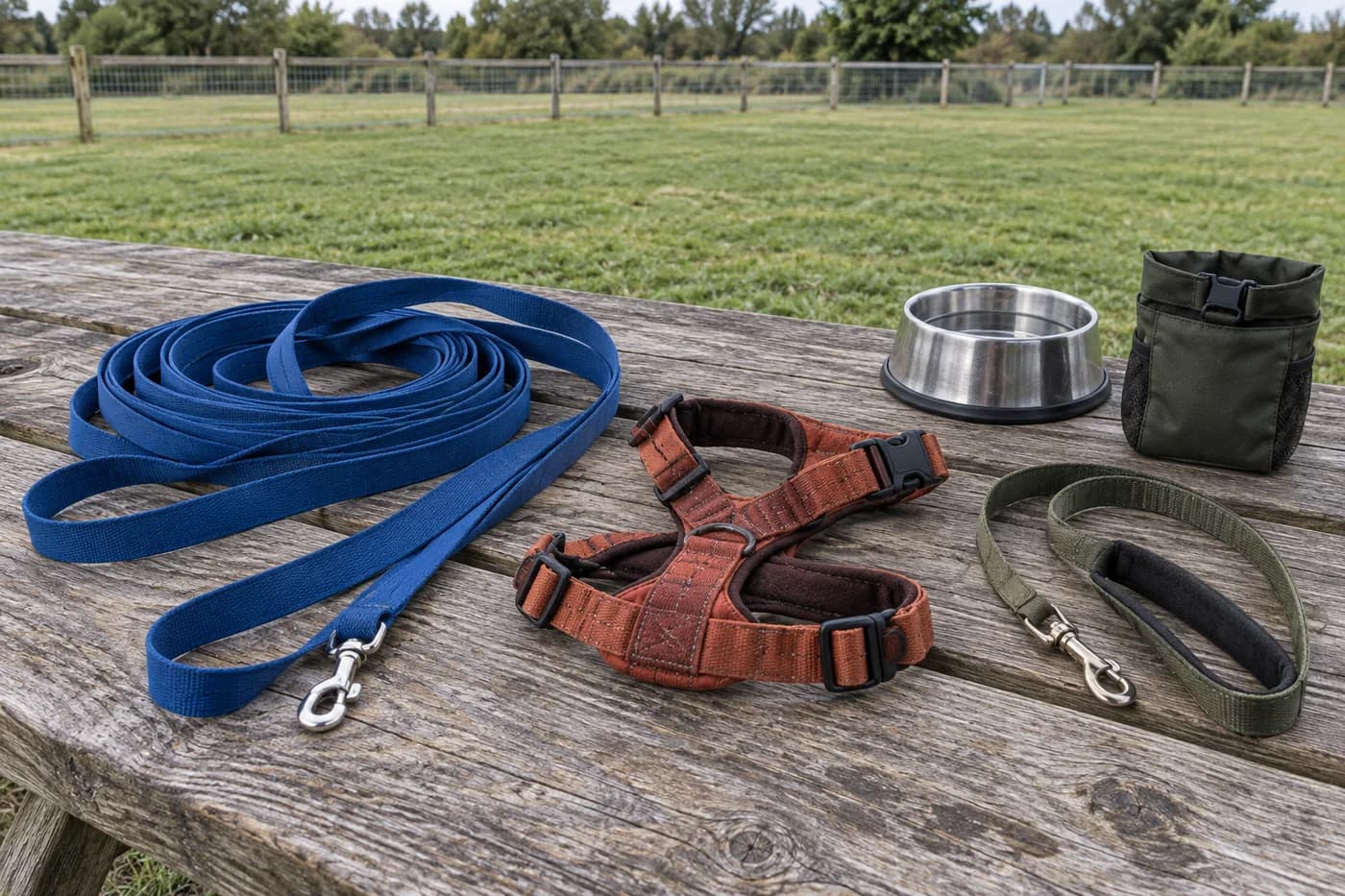
Forever Hounds Trust guidance on harness attachment and long-line handling
Rehearse gathering and paying out without the dog
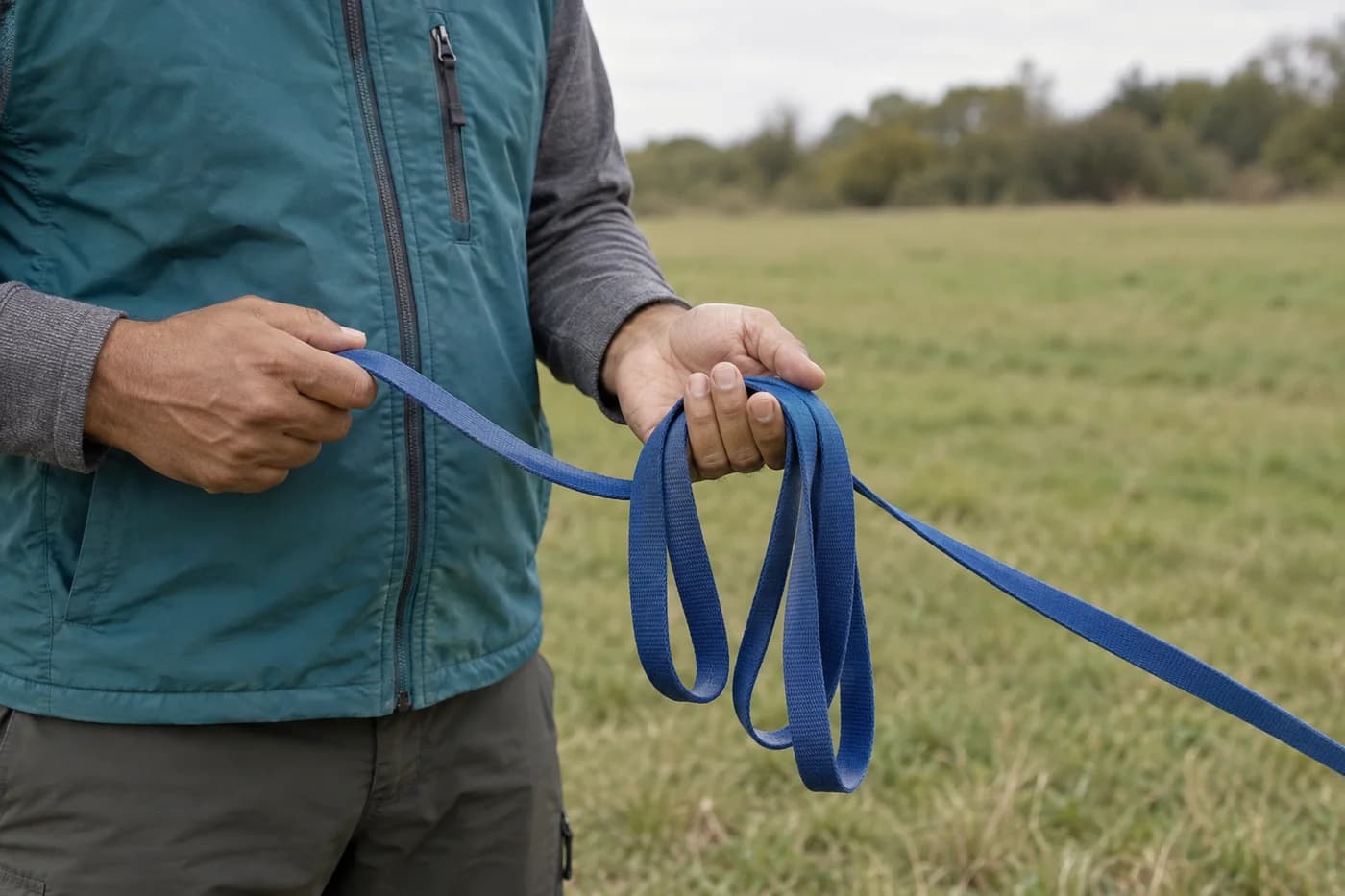
Practise with the equipment alone in an uncluttered place. Keep hold of the end while arranging excess in loose folds held in your other hand; never wind the line around your wrist, fingers or body. Pay out a little fabric and gather it again without creating knots. Watch whether the folds fall across your feet or require you to look down constantly. If the movement is awkward, simplify the amount you handle and obtain an in-person demonstration rather than inventing a stronger grip.
The useful distinction is between holding spare folds and passing a hand through a loop that could tighten. Your hand must not be trapped inside the fabric. Practise placing folded equipment away, reaching for one reward and returning the free hand to its job. Do not tie the lead to your waist, belt or a fixed object for this exercise. Keep the rehearsal short enough to notice errors while you are still attentive. Handling fluency is a separate human skill; your dog does not need to provide the first test.
Begin nearby and give sniffing room without a sudden stop
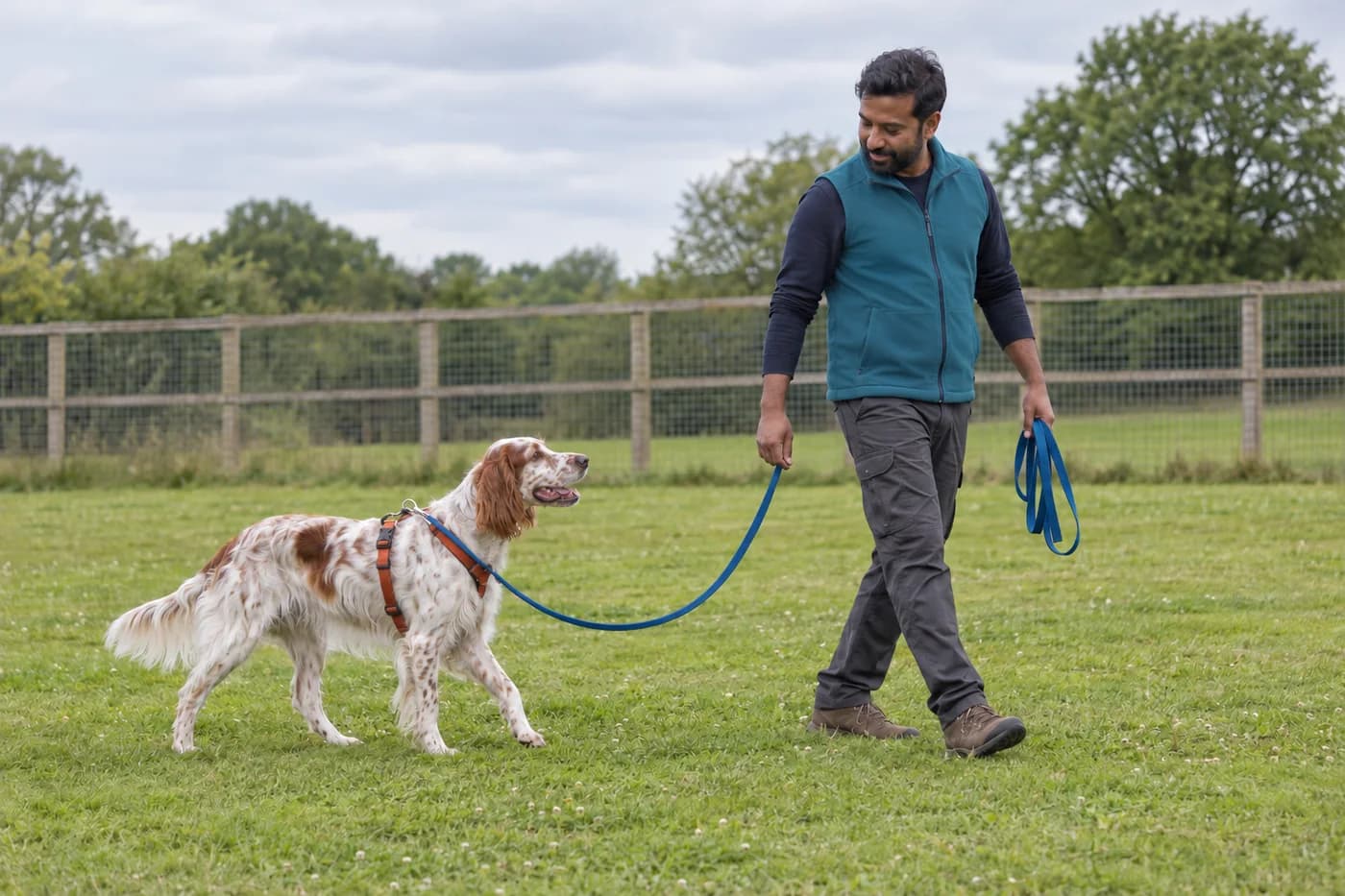
Bring the dog into the prepared space on the ordinary lead, then make the equipment change while the dog is nearby and comfortably occupied. Keep a secure connection throughout; attach the new lead before removing the old one. Put the unused lead away. Begin with only the amount of working line you can organise comfortably. Allow ordinary slow investigation while you keep spare fabric clear. A small visible curve in the working line is different from a pile between the dog's paws.
Move with the dog where the space permits, gathering excess as they approach and paying out only what the clear area allows. Do not wait for a running dog to hit the end. If speed rises, exploration becomes frantic or your coordination falls behind, reduce the difficulty and finish the long-line part. Reward voluntary nearby movement without demanding constant eye contact. The separate loose-lead foundation can help with that movement; this session does not require formal heelwork or proof that pulling has been cured.
Build the separate foundation for comfortable loose-lead movement
Change direction early instead of correcting with the line
Notice the available arc before the dog reaches a tree, bench or boundary. Invite a familiar nearby turn while there is still space, then move along an open curve. Gather the fabric as the dog approaches rather than pulling the dog toward your hand. Pay a small reward for the voluntary change and allow another suitable sniff. Your route can be a few easy curves, not repeated marching back and forth. The aim is to coordinate movement while preserving room, not to interrupt every interesting smell.
If fabric goes around a limb or object, stop the exercise and help the dog promptly without pulling against the entanglement. Keep hold and prevent further movement while you resolve the problem gently; do not try to train through it. A repeated snag means the location or handling arrangement needs changing. Never flick the line, jerk it as a correction or chase the dog to win a tugging contest. If you cannot manage the dog and fabric together, return to the short lead and seek practical individual instruction.
Keep recall learning separate from equipment management
A line prevents some access; it does not teach the meaning of a word. If you also want to practise recall, first use an already familiar response at an easy distance with suitable rewards. Dogs Trust advises a gradual increase in distance and distraction, with a long line attached to a harness. Do not convert that principle into a tug that makes the dog arrive. This article's handling rehearsal can be complete without a single distant call or an off-lead test.
Our recall guide covers the cue-learning task separately. Stay within one manageable goal today: organised spare fabric, a smooth nearby turn or a comfortable lead change. Combining a new cue, a new place and unfamiliar equipment makes it hard to tell what went wrong. If the dog does not respond, avoid repeating the word or punishing the eventual approach. Make the setting easier. The long line may remain part of responsible management indefinitely; completing a few practices does not certify that removing it is appropriate.
Dogs Trust on gradual recall practice with a harness and long line · Teach the recall response as a separate rewarded skill
Plan the short-lead transition before leaving
Finish while you can still organise the equipment comfortably. Bring the dog nearby using an easy familiar invitation and reward that choice. Attach the ordinary lead securely before detaching the long line; check the connection rather than rushing because the gate is close. Keep the dog managed while you fold and store the spare line. Do not leave a long loose section trailing behind through a narrow exit. Walk out on the ordinary lead and offer water or rest as appropriate.
Check the equipment again for damage or debris and follow its cleaning instructions. A wet or dirty line may handle differently next time, so do not judge it only by yesterday's dry rehearsal. Make a simple note before memory turns the outing into either a triumph or a disaster: where you worked, how much space was clear, whether fabric touched feet and how the transition went. A shorter outing with an orderly exit provides useful information. There is no need to repeat until the dog or person becomes tired.
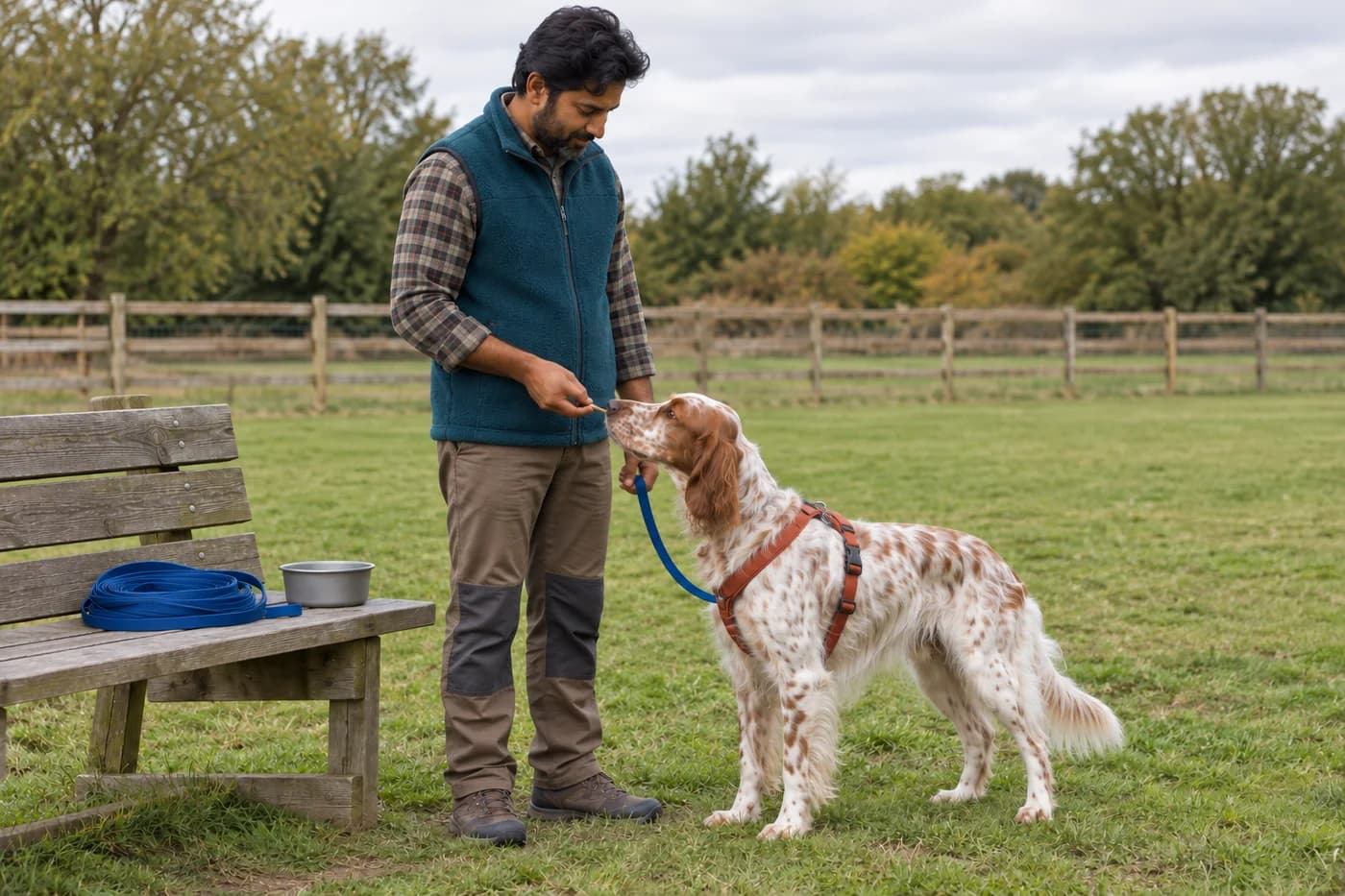
Choose a short session that leaves room for an orderly finish
Use the notes to simplify the next outing
Review one concrete difficulty. If spare fabric repeatedly reached your shoes, practise gathering without the dog again. If the dog accelerated toward passing animals, change the place and obtain appropriate help rather than adding length. If the equipment itself caused avoidance, pause and investigate comfort instead of insisting on a complete session. Pain, sudden behavior change, panic, aggression, bite risk or a welfare concern require suitable veterinary or qualified in-person support. A harness and a cheerful reward do not remove those boundaries.
Paper notes are enough. DogPath can optionally support reward-based everyday foundations and recording brief practice; it is free to download or start, with in-app purchases, not unlimited free use. It does not assess whether a field, attachment or dog is safe, diagnose behavior or guarantee a result. Keep the next decision modest: repeat in the same quiet space with less fabric to organise, or postpone long-line work until a professional has demonstrated it. More manageable practice matters more than displaying the longest possible circle.