
Everyday equipment
Muzzle Training: Free Steps Before Fastening
Separate choosing to approach, placing the nose inside and wearing the strap. Small observations help you decide what to practise next.
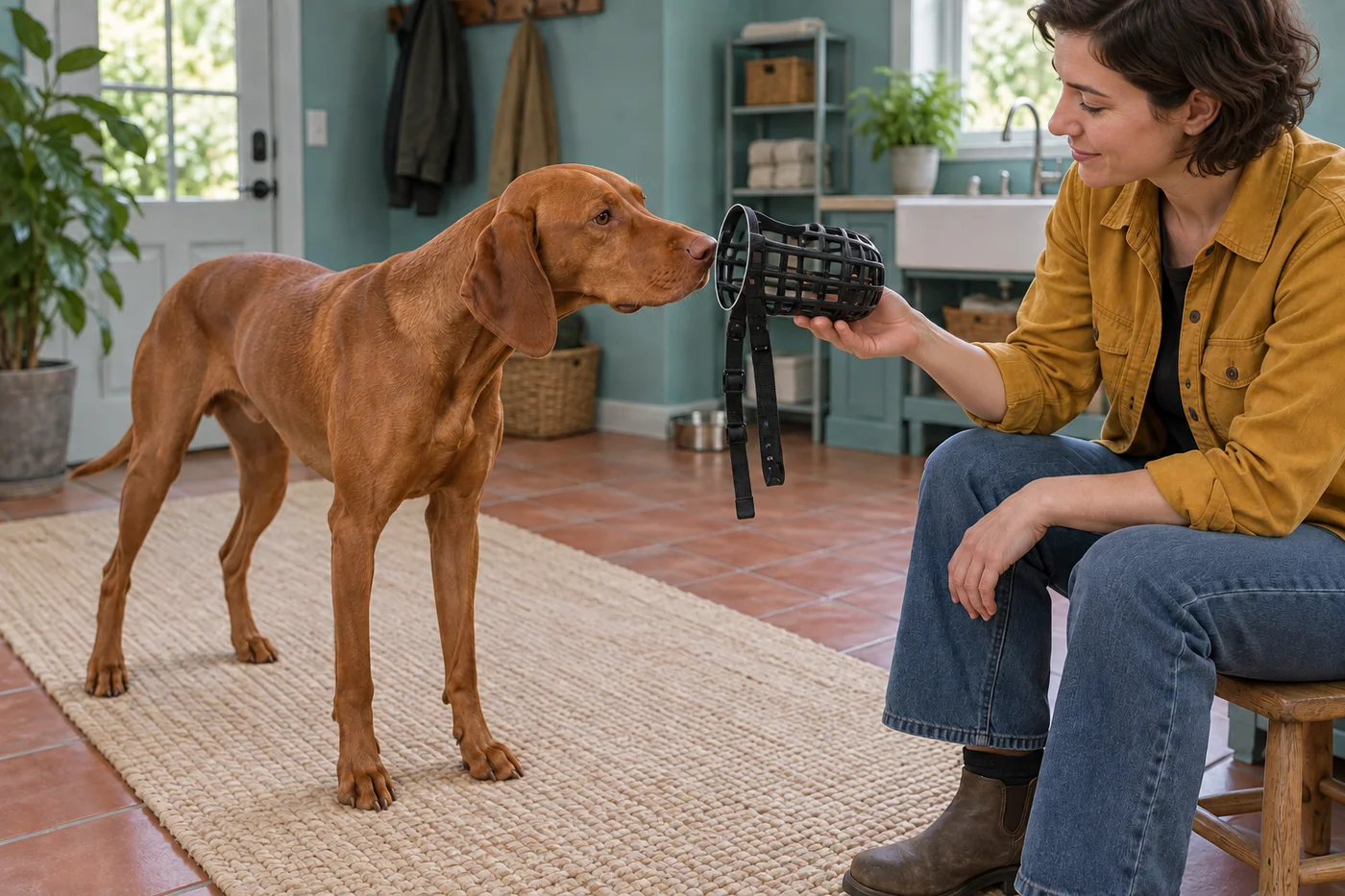
Muzzle training often gets difficult at the moment a person reaches for the strap. The dog may have happily investigated food inside the basket, yet turn away when a hand moves behind the head. Those are different tasks. Treating a rewarded nose entry as permission to fasten everything can turn a promising first exercise into a struggle. Begin before the equipment is urgently needed, with room to pause and let the dog leave.
This free guide explains a small practice sequence and a way to keep useful notes with DogPath. It is not a product recommendation, a fit assessment or permission to expose a dog to a difficult situation. DogPath is free to download or start, with in-app purchases; it supports everyday reward-based practice, not veterinary decisions. A dog with pain, panic, sudden behavior change, aggression or a bite history needs appropriate individual professional help before this handling exercise.
Muzzle training starts with the right boundary
Choose a suitable basket model with help from a competent professional when needed. A dog must be able to open the mouth adequately for panting, receive appropriate rewards and drink with the intended equipment. A photograph, size label or a calm expression cannot establish that fit. Follow the maker's instructions and have uncertain contact points checked in person. A tight fabric restraint that closes the mouth is not the equipment for this everyday wearing exercise. Do not improvise a muzzle from a lead or household strap.
Cornell's veterinary guidance distinguishes nose-entry practice from learning about the strap and emphasizes appropriate basket fit. Keep that distinction in your plan. Wearing equipment does not make greetings, children, crowded travel or veterinary handling automatically safe. Continue the management recommended for the individual dog. If an appointment is imminent and the dog is not ready, contact the veterinary team about arrangements instead of compressing the training into one evening. Urgent care should not wait for a home exercise to succeed.
Cornell veterinary guidance on basket fit and separate training stages
Prepare a quiet station and one observable goal
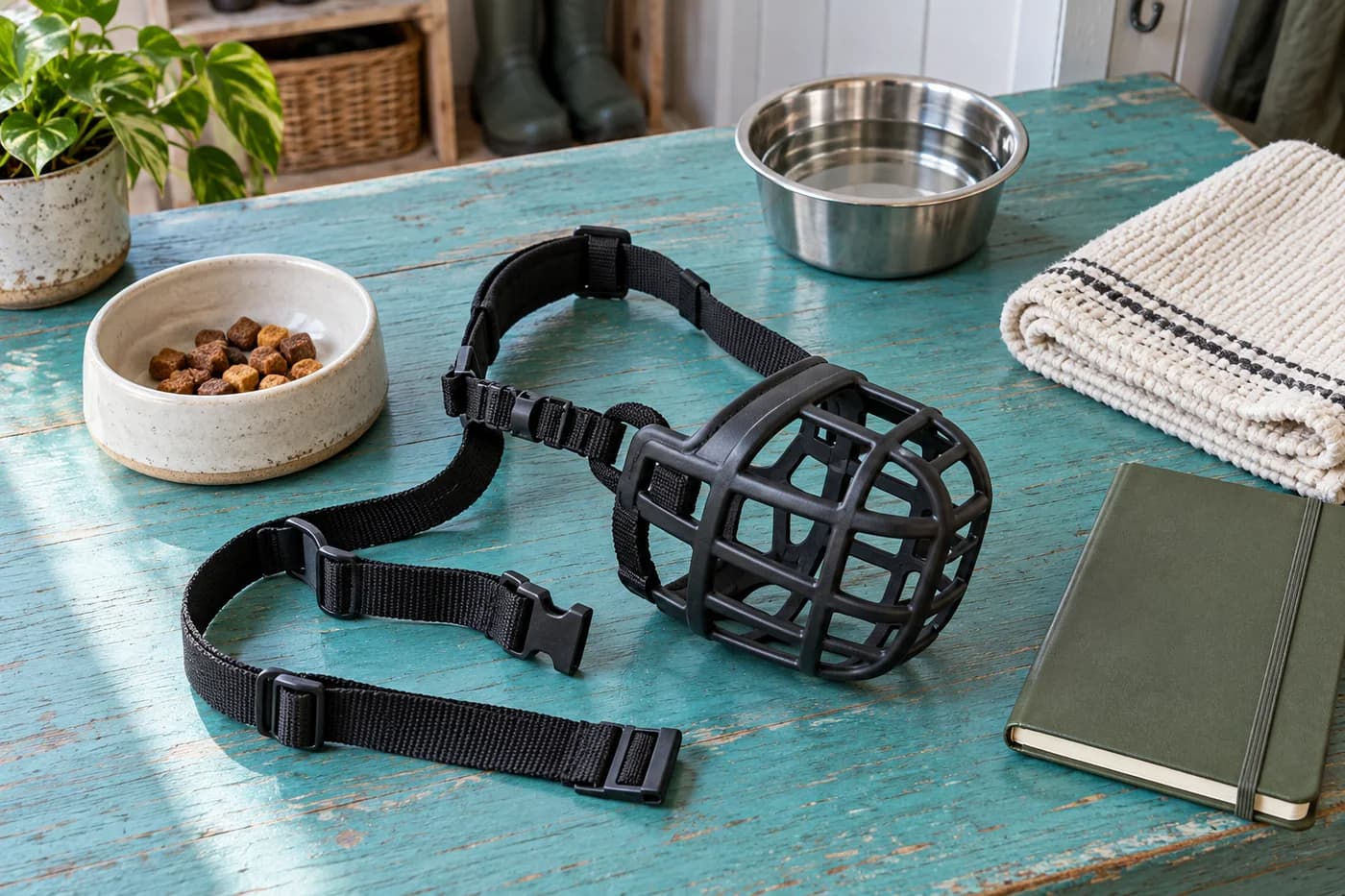
Set up on a comfortable nonslip floor in a familiar room with an unobstructed exit. Keep other pets and distracting people elsewhere. Place the equipment, a small supply of suitable food and water where you can reach them without leaning over the dog. Use rewards the dog can swallow comfortably and that fit their dietary needs; ask your veterinary team if restrictions apply. Inspect the basket for rough edges, damage or old food. Wash and dry it according to its instructions before another session.
Choose one visible goal, such as looking toward the basket or moving the nose to its entrance. That is clearer than writing 'accept the muzzle.' In DogPath, use the relevant existing training guidance and keep a brief factual outcome note alongside your practice routine. Do not assume there is a dedicated muzzle programme, fit scanner or comfort score. Our guide to choosing training goals explains how to make an everyday task small enough to observe. Today, fastening the strap can remain completely outside the goal.
Invite an approach without following the dog
Sit or stand sideways at a comfortable distance and hold the unfastened basket still, below an intimidating face-to-face position. Reward an easy glance or voluntary investigation. Deliver the food where the dog already is, rather than using it to pull a hesitant dog forward. Then lower the equipment for a pause. If the dog does not investigate, increase the space or put the basket away. A session can finish after a few easy observations without the nose ever going inside.
Watch the whole movement, not just whether food disappears. A dog who stretches far forward while keeping the feet planted may not be ready for closer handling. Turning away, freezing, frantic pawing or refusing a normally welcome reward are reasons to stop and reassess, not to hold the equipment more firmly. Keep hands away from the face if their presence is unwelcome. Let the dog choose another activity. Repeated concern deserves qualified individual guidance; an app note cannot identify its cause or certify that continuing is appropriate.
Reward the nose entry before asking for time
When approaching is easy, present the opening at a comfortable height and angle. Allow the dog to place the nose inside; do not advance the basket onto the face. A suitable reward at the front can help explain the first entry, but avoid trapping the nose behind a smear of food while reaching for the strap. Keep all straps open. After an entry, offer a small reward through an appropriate opening and let the dog withdraw. Pause with the equipment lowered before presenting it again.
The veterinary teaching page from Montréal describes making the muzzle a positive experience rather than a punishment. Your practical question is whether the dog will offer another easy entry when the basket is presented, not how many seconds you can obtain on the first day. Later, try a presentation without visible food already inside and reward the voluntary response promptly. If that is confusing, return to the easier explanation. Do not repeatedly show an empty basket and wait the dog out. An offered nose entry is the goal, not proof of obedience.
Make duration a separate, tiny change
Once entries are easy, wait just a brief moment before delivering the reward. Keep the basket supported without pressing it against the face or preventing withdrawal. Return to an immediate reward between the slightly longer attempts. You are changing time, not simultaneously adding a strap, a different room and a moving hand. Look for an easy repeat of the same behavior. If the dog begins backing out sooner or avoiding the next presentation, shorten the interval and review the arrangement.
There is no universal number of repetitions or days that makes a dog ready. Write down what actually happened: the dog entered voluntarily, received a reward immediately, withdrew and approached again after a pause. That description is useful even if the exercise lasted less than a minute. Our short-session guide helps you leave time for a calm finish. Do not withhold ordinary meals to manufacture enthusiasm or practise until the dog becomes tired. Learning to wear equipment should fit around rest, normal activity and the dog's needs.
Rehearse the buckle, then introduce the strap separately
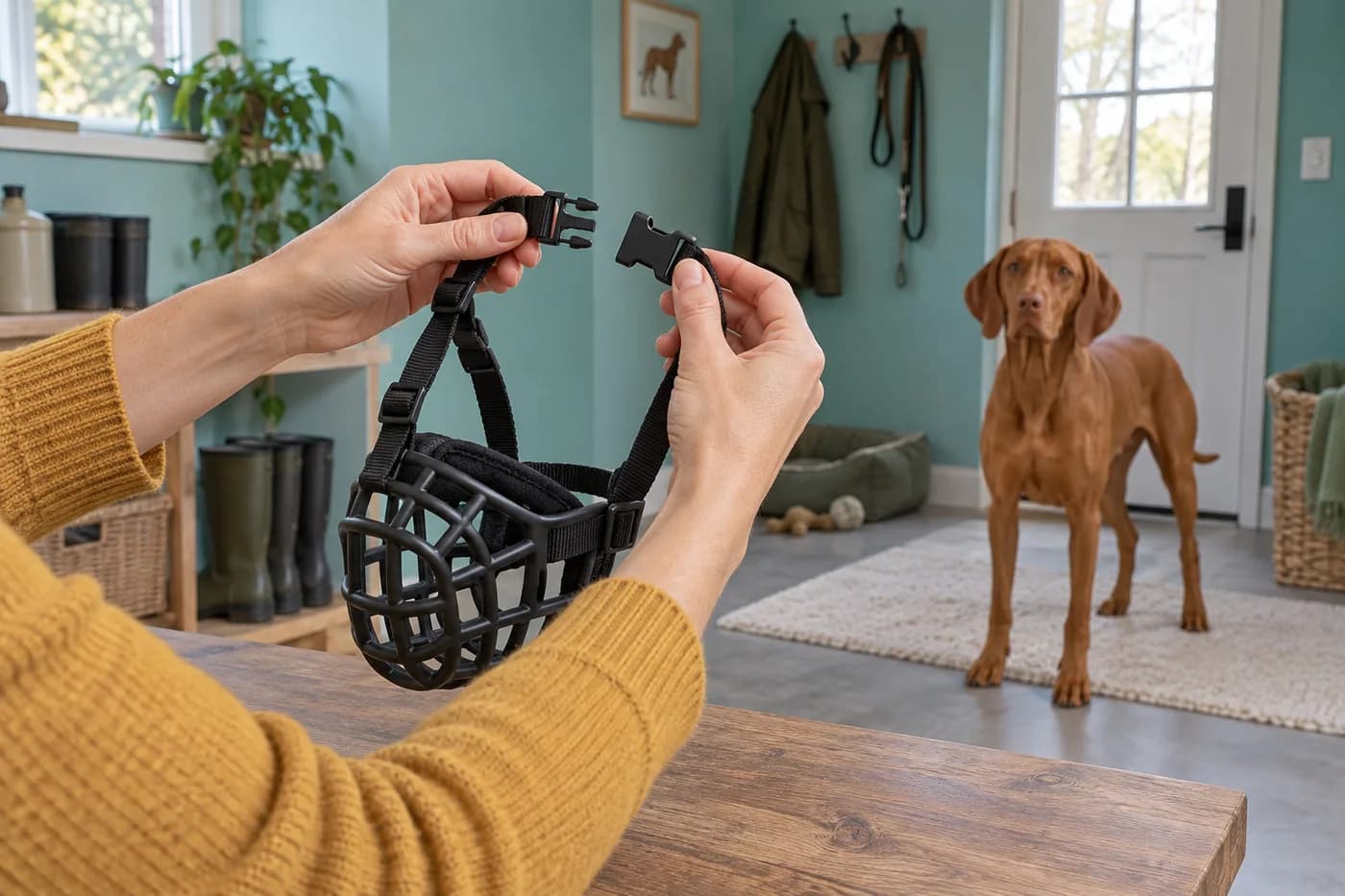
Practise operating the fastening with the equipment alone before involving the dog. Notice where your hands need to move and whether the buckle makes a noise. Put the equipment away while rehearsing the sound at a distance if the dog finds it concerning. Do not repeatedly click it beside the ears to force habituation. When handling near the head is comfortable, introduce the smallest relevant strap movement during an already easy nose entry, reward and remove the basket. Fastening still need not happen in that session.
A dog who welcomes the basket but dislikes a hand behind the head needs that part simplified. Work with a qualified professional if comfortable handling is uncertain; do not reach around a dog who may bite. Only when both components are easy should a brief fastening be considered, with the individual fit already checked. Reward, remove the equipment calmly and pause. Do not overtighten it to stop pawing or test whether the dog can escape. Discomfort, slipping or persistent removal attempts call for a fit and training review, not stronger restraint.
Transfer brief wearing without adding a difficult situation
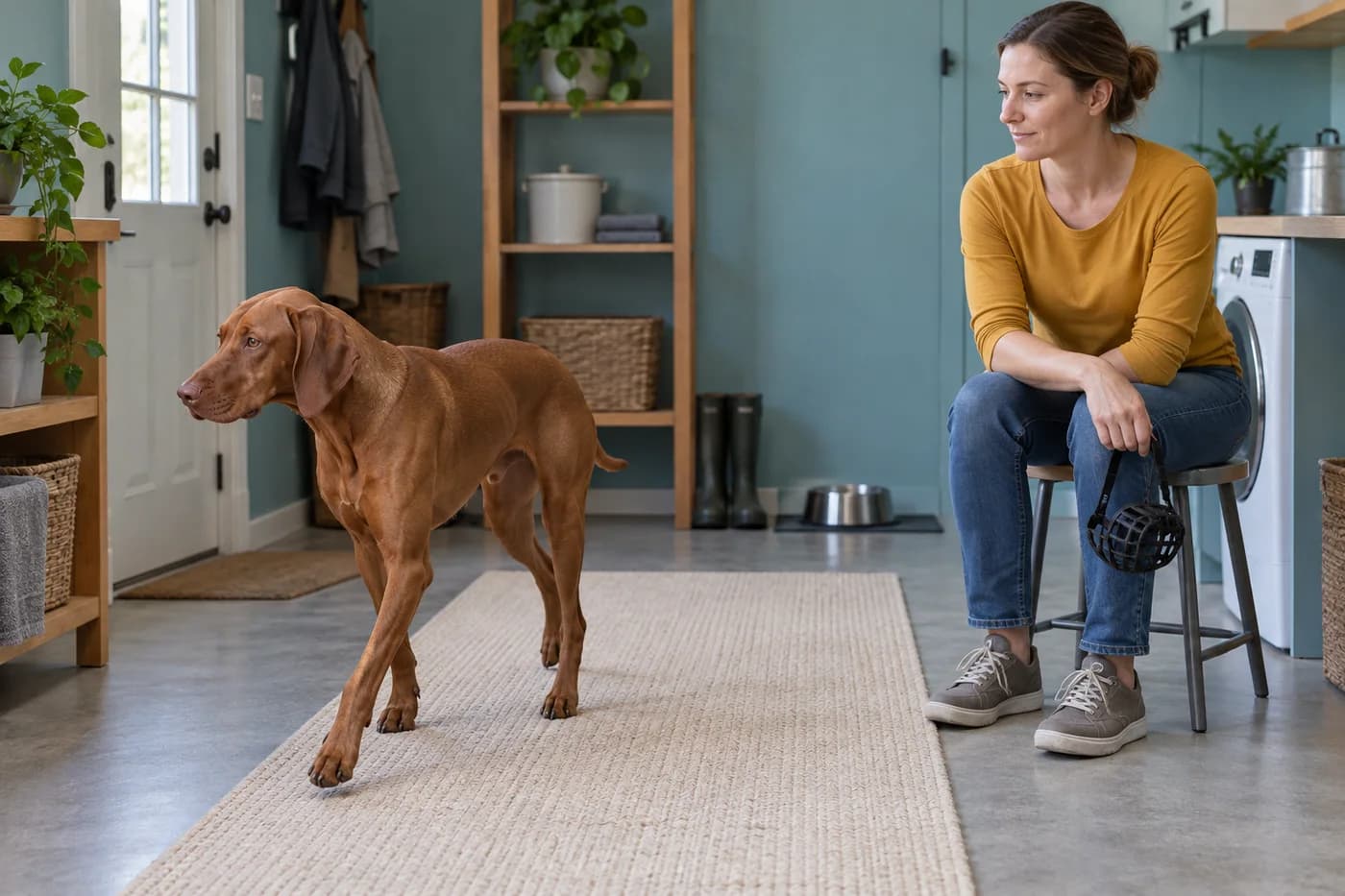
After comfortable brief fastening, allow a small familiar movement in the same quiet room, such as taking a step with you. Keep the period short and remove the equipment before attention becomes focused on taking it off. Observe breathing, posture and the physical contact points. Stop promptly if anything appears wrong. Never leave a muzzled dog unattended, tether the basket to something or use it to suppress barking. It is not a substitute for appropriate supervision, separation or addressing the reason for a behavior.
Change only one condition in the next practice: a little more time, a little more movement or another familiar room. Do not add all three because the first wearing looked uneventful. Keep ordinary safe management for any outdoor transfer and do not invite an unfamiliar person to test the result. Follow individual advice for necessary real-world use. The most useful everyday progression is one you can repeat comfortably, with a clear way to stop. Wearing in the kitchen does not establish readiness for a busy clinic or transport journey.
Record the response, not a safety verdict
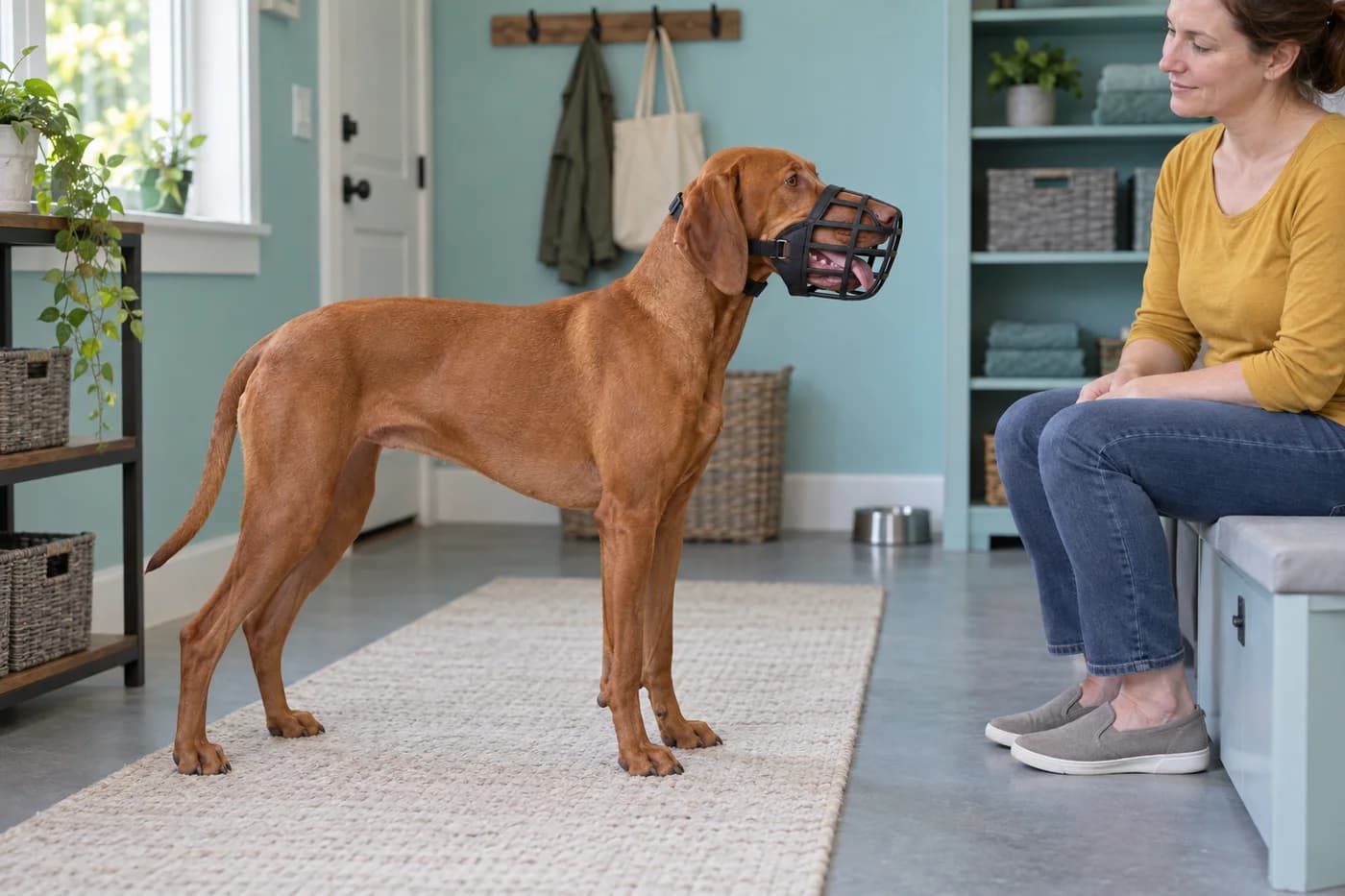
Use DogPath to keep the next practice focused on a visible behavior and the response you observed. A useful note might read: 'Same room; three voluntary entries; immediate rewards; turned away when hand approached strap; stopped.' That identifies the next question without labeling the dog stubborn or declaring the muzzle accepted. Prepare suitable rewards next time, start with the easy component and change only one condition. If the response worsens, pause the sequence rather than trying to protect an imagined progress streak.
Include the arrangement in your notes: who held the equipment, where the dog stood and whether the strap was merely visible or actually fastened. A second adult should read that distinction before taking over. They should begin with a familiar easy presentation, not the hardest thing recorded. If pain, panic, aggression, bite risk or a sudden change appears, contact the appropriate veterinary or behavior professional. DogPath can support a practice routine; it cannot approve equipment fit, diagnose distress or promise safe handling. Preserve that boundary when deciding the next step.