
Two routines in one home
Puppy and Older Dog: Free First-Week Plan
Plan separate rest, resources and individual time so both dogs receive care without a deadline for friendship.
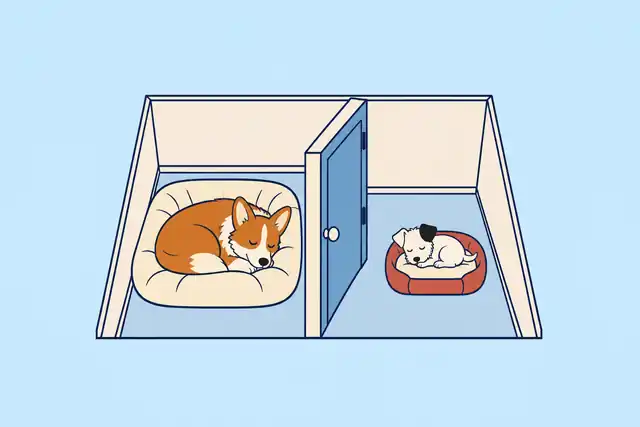
A puppy and older dog can need very different things during the same afternoon. The puppy wants another activity just as the resident dog settles down. One needs a toilet outing while the other expects a familiar walk. Planning for those differences is more useful than hoping the older dog will teach every household rule. Adults remain responsible for both dogs’ care and for preventing unwanted contact.
This free first-week plan organizes rest, resources and individual time after you have sought suitable advice about bringing the dogs together. “Older” means older than the puppy here, not necessarily elderly. A week is a planning window, not a deadline for friendship or shared space. Some households need longer arrangements or individual professional support.
Paper and a simple household agreement are enough. DogPath is free to download or start, with in-app purchases, if you later want help recording everyday practice. An app cannot judge compatibility, diagnose behavior or assess injury risk. Pain, sudden changes, persistent distress, aggression, snapping, biting or welfare concerns require appropriate veterinary and qualified in-person behavior help. Do not use this article to test a worrying relationship.
Puppy and older dog: Plan two daily routines
Start with what each dog already needs. Write down the resident dog’s usual waking, feeding, walking and resting arrangements. Then add the puppy’s care with guidance appropriate to their age and health. Do not replace the adult’s whole routine with a puppy schedule simply because the newcomer attracts more attention.
Identify collisions: two feeding places in the same passage, one adult trying to take both dogs through a narrow exit, or the puppy’s play area beside the resident dog’s bed. These are planning problems that can often be noticed before another interaction occurs. Work out who does what and where each dog stays during the task.
Battersea’s introduction guidance emphasizes planning and giving new and resident dogs time and space apart. A meeting in one setting does not establish how sharing a home will work. The practical goal here is to organize that home life, with enough flexibility to change the arrangement when it is not comfortable.
Battersea on planning introductions and giving each dog space apart
Confirm that the home can provide separation
Before expecting shared time, check whether each dog can have an appropriate comfortable space away from the other. Think about actual doors, suitable barriers, sightlines and daily access. A barrier must suit both dogs and the household; it is not a compatibility assessment. Do not assume that placing dogs on opposite sides of a gate makes an introduction appropriate.
Rehearse the human route without moving the dogs together. Can someone carry a meal, answer the front door or collect laundry without opening access between them? Put necessary supplies where they can be reached. If a task always requires passing one dog through the other’s area, redesign the task or ask for suitable help.
Separation should include care and ordinary comfort. It does not mean leaving a distressed puppy alone in an unfamiliar room or depriving the adult dog of company. If either dog cannot cope with the planned arrangement, seek help rather than repeatedly forcing it. You need a workable home setup before adding shared activities.
Protect familiar rest without giving the puppy a job
Keep the resident dog’s resting place usable and outside the puppy’s activity route. Do not place the puppy’s toy beside that bed and hope the adult will tolerate it. Give the puppy their own familiar resting arrangement with appropriate adult care. Neither dog should have to negotiate access to sleep every time the other moves.
Treat resting time as part of the daily plan. An adult dog lying quietly does not become available for puppy entertainment. Likewise, a sleeping puppy does not need waking to fit another introduction into the schedule. Avoid using tiredness as proof that the dogs are ready for closer contact.
Watch what actually happens around rest. Does one dog repeatedly leave a bed when the other appears? Can each settle without tracking movement across the room? These observations help you decide whether the setup needs changing. They do not reveal a diagnosis or give a reliable score for how the relationship is developing.
Keep meals and valued items easy to manage
Plan separate feeding arrangements from the start, with appropriate separation and supervision. Each dog should be able to eat their suitable food without the other approaching. Collect bowls before changing access. Do not swap bowls or allow one dog to finish the other’s meal as an exercise in sharing.
Think beyond meals: chews, food toys, stolen household items and resting places can also complicate shared space. Put valued items away before any appropriate shared period instead of trying to remove them during a tense moment. Avoid distributing treats between dogs gathered around your hand. Work with one dog at a time in their own space.
If you notice guarding, stiffness, growling or other concerning behavior around resources, stop improvising sharing exercises and seek individual guidance. Do not punish communication or deliberately approach to test tolerance. Household management reduces opportunities for conflict; it does not establish that a resource-related problem has been resolved.
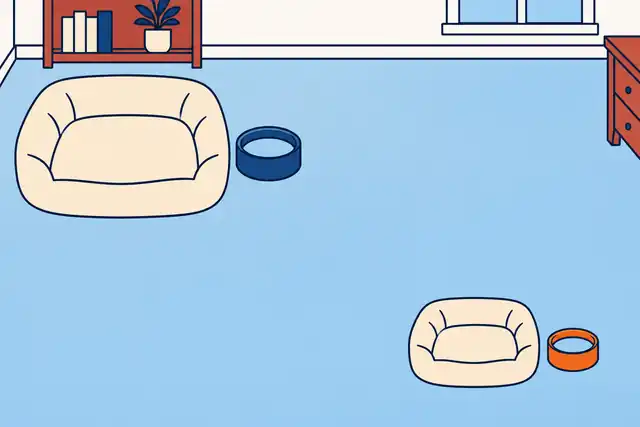
Give the resident dog predictable individual time
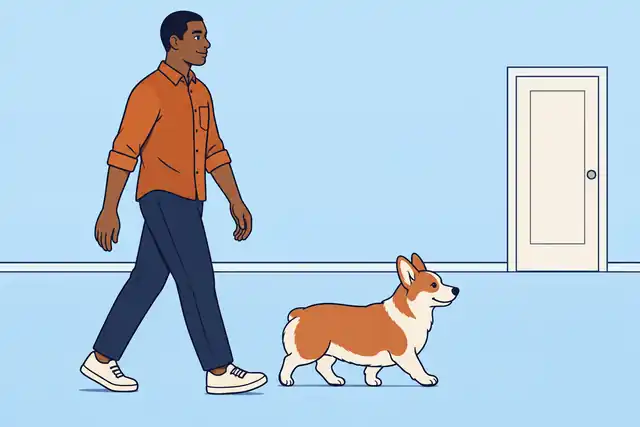
Choose an ordinary activity the adult dog already enjoys and can do comfortably: a familiar walk, quiet company or a short known exercise. Arrange puppy care separately so this time does not depend on the newcomer staying asleep. The exact activity matters less than making it realistically available within your day.
Keep expectations modest. A dog does not need an elaborate outing to compensate for a puppy, and additional physical exercise is not a substitute for rest. Preserve familiar choices where possible. If the adult’s movement, appetite or behavior changes, speak with a veterinarian rather than attributing everything to jealousy or the new arrival.
For a busy household, write who protects this time. “Someone will walk the adult” is easy to forget; a named person and a practical handover are clearer. If you live alone, arrange suitable support or simplify other plans. The resident dog’s care should not become the task that is postponed whenever the puppy needs attention.
Let puppy learning happen with people
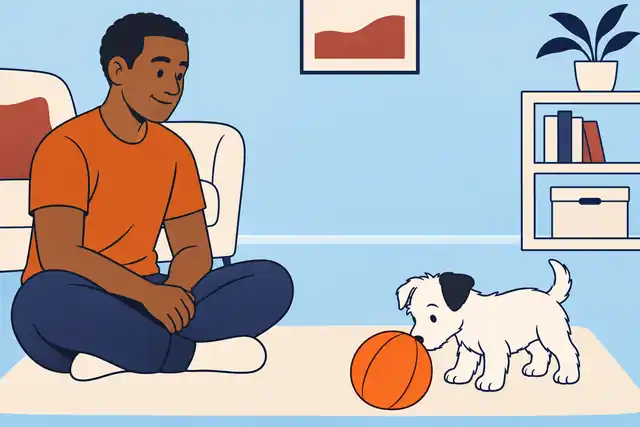
The puppy needs adults to provide appropriate play, toilet opportunities, rest and reward-based learning. Do not make the resident dog responsible for correcting biting or ending every game. If the puppy repeatedly tries to reach the adult, change the setup and offer a suitable activity in the puppy’s own space rather than waiting for a confrontation.
Keep early practice small and separate. Reward a simple familiar action, allow a reset and finish before everyone becomes hurried. Training two dogs one at a time can help you plan equipment and attention, but it is not permission to bring them closer. The puppy can learn plenty with a person while the adult rests elsewhere.
Ask your veterinarian about health precautions and appropriate environments before outdoor meetings or shared outings. A generic article cannot set a vaccination or contact schedule for your puppy. Avoid treating a crowded park, busy class or unfamiliar group as an automatic socialization solution to a difficult household arrangement.
Prepare a handover for evenings and overnight
Write where each dog rests and who responds to each dog’s care needs. Put leads, cleanup supplies and other essentials where the responsible person can find them without crossing the other dog’s resting area. Keep external-door management separate from efforts to maintain a position or cue. A familiar routine is useful, but a cue is not a physical safeguard.
For an overnight change of caregiver, describe the actual arrangement rather than saying the dogs are “fine together.” Include which doors remain closed and where food or valued items are stored. Avoid asking a tired person to interpret a complicated new set of rules in the middle of the night. Simplify before handing over.
Review any difficulties in daylight. A disrupted night may mean the arrangement needs adjustment; it is not evidence that the adult dog should be used to settle the puppy. Seek advice if either dog remains distressed or basic care is becoming unmanageable. Responsible support can be more useful than adding another training task.

Review the first week without a friendship deadline
Record ordinary facts for each dog: rest, individual activities, meals, household movements and any circumstances that caused concern. “Adult left bed whenever puppy entered the passage” gives more information than “still not friends.” Separate observations from guesses about motives. Share useful details with the professionals supporting you.
Choose a small practical change, such as moving a supply basket or assigning a clearer handover. Do not simultaneously remove separation, lengthen shared time and add visitors because a few days have passed. Short everyday sessions can support familiar skills, while the household plan protects time for rest and care. Neither guarantees acceptance between dogs.
At the end of the week, ask whether both dogs’ needs are being met and whether you can maintain the arrangement. The answer may be to keep the same setup, change it or get more help. A successful first week does not require a photo of two dogs sharing a bed. It requires adults making thoughtful decisions for each individual dog.