
Training foundations
Teach Your Dog Their Name: Free Attention Practice
Give a familiar word a clear job: a brief turn toward you, not an instant recall or a demand to keep watching. Start close, reward promptly and protect the meaning.
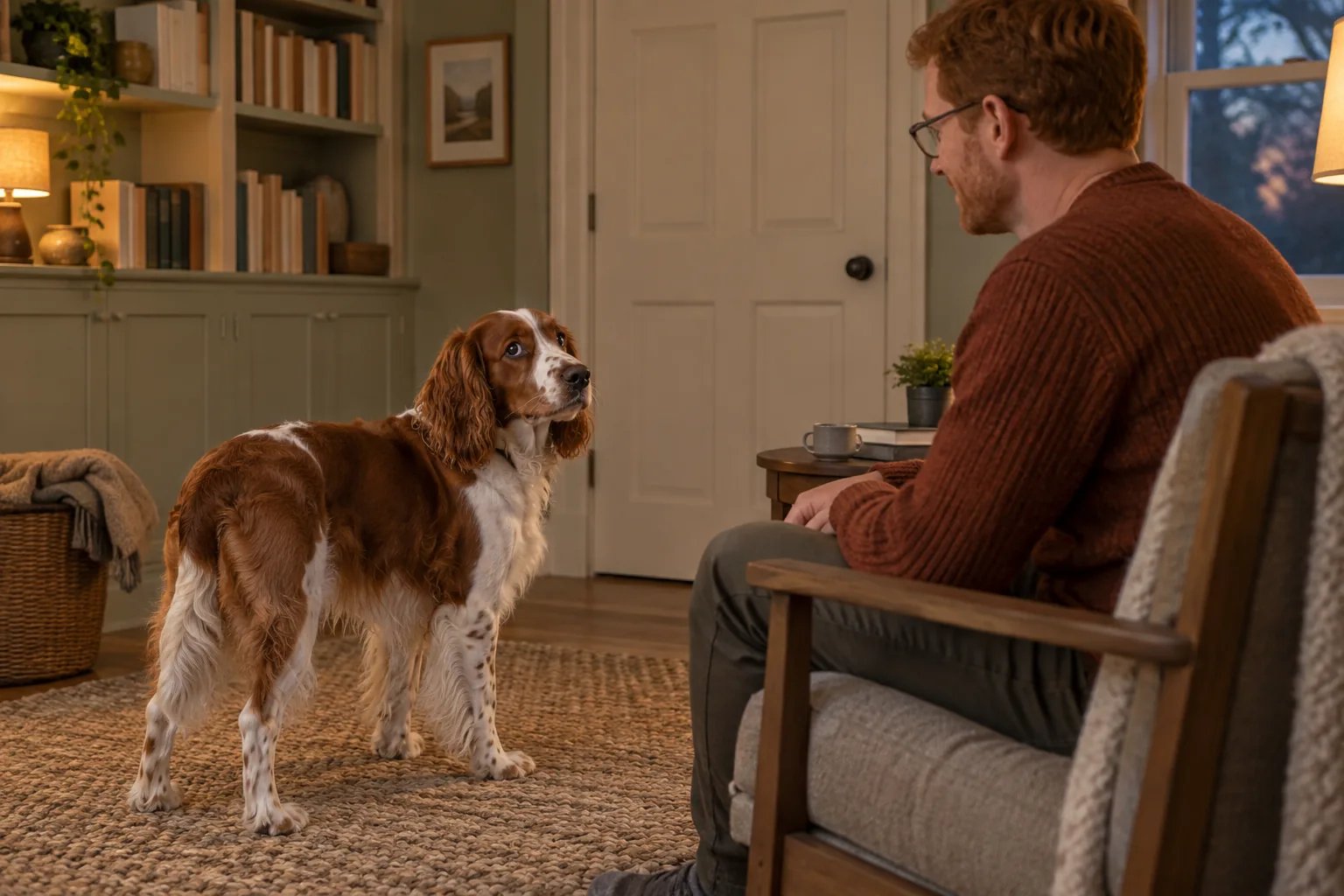
To teach your dog their name, start with a smaller question than will they come running? A dog can hear a name, turn toward the speaker and stay exactly where they were. That brief orientation is useful communication. If you expect a sprint, a sit and prolonged eye contact from the same word, it becomes difficult to tell which part needs teaching. This guide gives the name one clear job before you attach another instruction.
The exercises work with ordinary rewards and a quiet space; you do not need an app. They suit everyday learning, not assessment of hearing, pain or dangerous behavior. If a response changes suddenly, your dog seems uncomfortable, or there is panic, aggression, bite risk or a welfare concern, stop and obtain appropriate in-person help. No number of successful repetitions rules out a health problem or makes an unsafe situation suitable for practice.
Teach your dog their name as an attention word, not a recall
Decide what you will reward: a small head turn toward your voice while your dog remains comfortable. They do not have to stare into your eyes or leave their resting place. Connecticut Humane Society's name game begins with rewarding a dog for looking toward the person in a quiet setting. Keep that modest starting point. An ear movement alone may tell you something happened, but choose a response you can recognise consistently rather than guessing from tiny changes you cannot reliably see.
Coming all the way to you is a different exercise. If you want that, use a separately taught recall cue after your dog has oriented, and reward the completed recall. Our recall guide explains that larger skill. For today's name practice, do not withhold the reward because the dog looked but did not walk over. Equally, a spontaneous approach is not wrong; it simply means your setup did not show whether a head turn could happen without moving. Practise closer next time instead of pushing the dog back into position.
Connecticut Humane Society's reward-based name game · Teach the separate skill of coming when called
Prepare a quiet opportunity rather than a test
Choose a familiar enclosed room with secure doors, comfortable footing and no urgent activity competing for attention. Let your dog finish toileting, eating or settling before you begin. Practise with one dog and one attentive adult, giving other animals a comfortable separate space. Sit or stand sideways nearby rather than leaning over the dog. A reward pouch can keep food ready without waving it around. Use small pieces appropriate to your dog's diet and include them in the daily food allowance; do not skip meals to increase motivation.
Pick one usual pronunciation for the exercise. You do not need to rename a dog because the word has several syllables, nor can a particular spelling guarantee learning. Avoid cycling through a name, nickname and urgent command while deciding what to ask. Prepare only a few rewards so stopping is easy. Our short-session guide helps keep practice manageable, but the dog's comfort determines the endpoint. A dog who is tired, ill, reluctant to interact or unable to take their usual reward needs a different plan, not a longer drill.
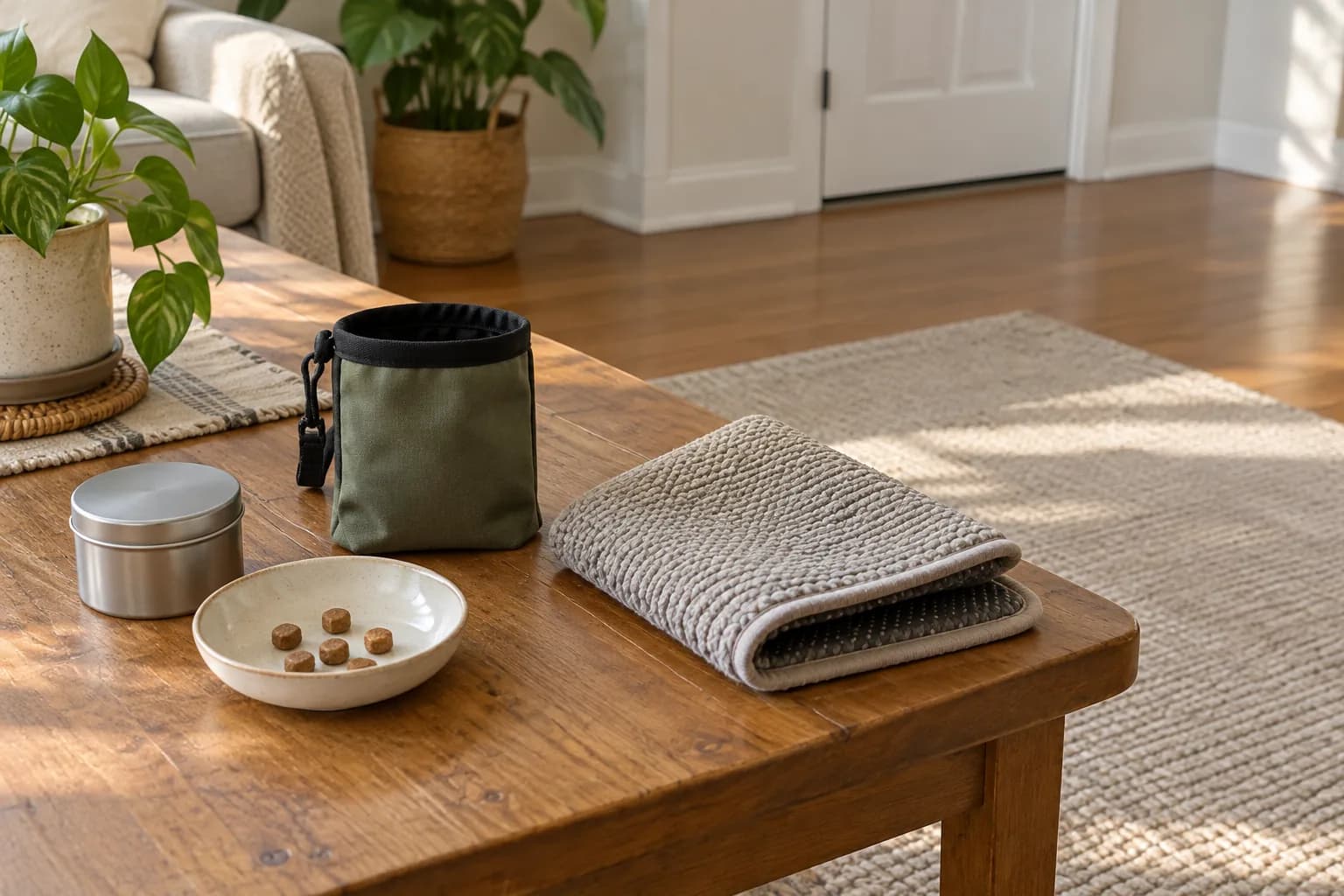
First make the sound predict something pleasant
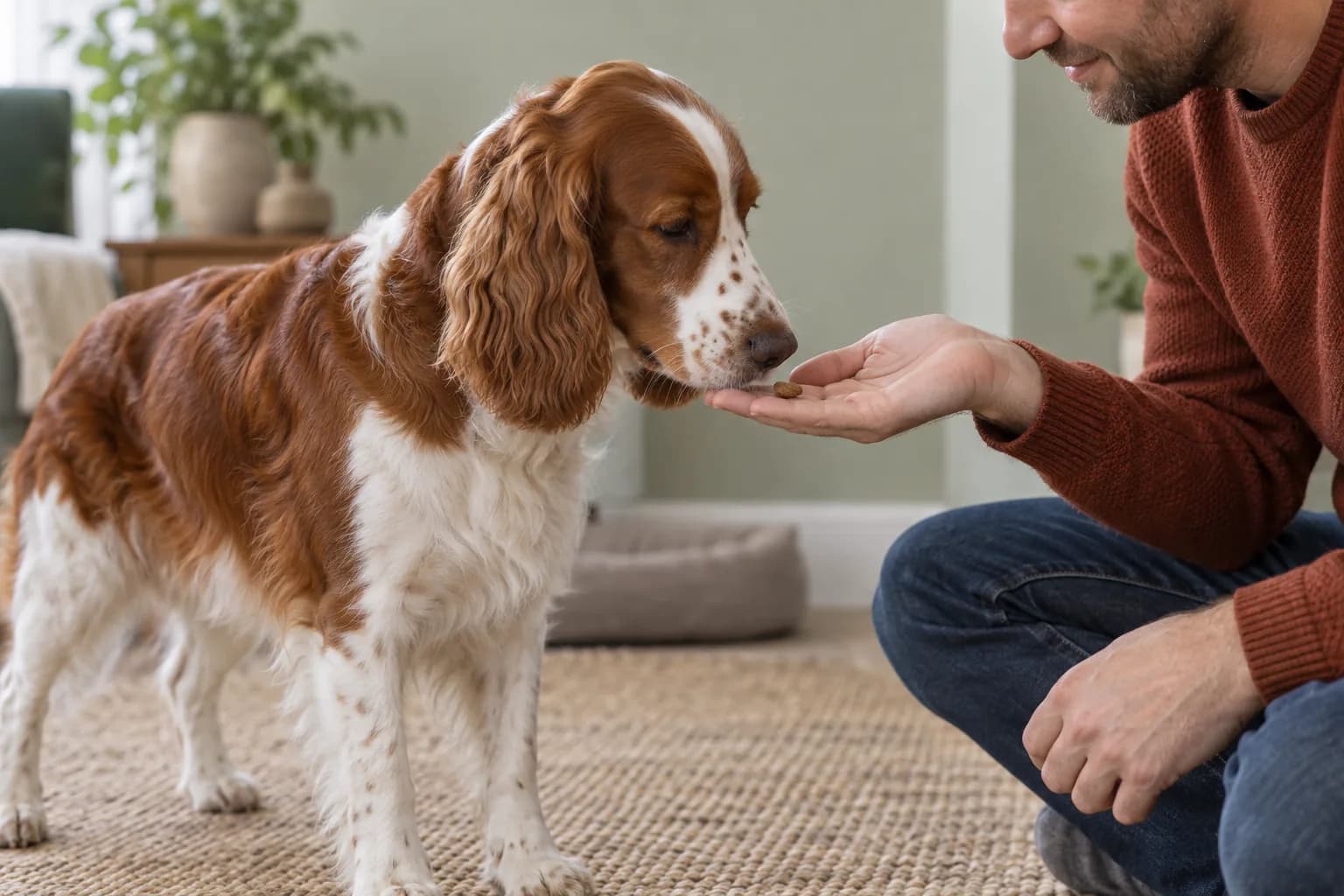
For a dog who is new to the name, begin close enough to deliver food comfortably. Say the name once in an ordinary friendly voice, then offer a suitable reward. At this introductory stage, you are pairing a sound with something pleasant rather than testing an already learned response. Guide Dogs for the Blind describes this pairing stage and returning to easier pairings when a puppy is not ready to respond. Keep it gentle: no shouting, looming, touching the muzzle or using the sound to interrupt sleep.
After a few comfortable pairings, allow a natural pause. When your dog is awake and calmly looking slightly away, say the name once. Notice whether they turn toward you. If they do, acknowledge that moment with a familiar quiet marker if you use one, then deliver the reward promptly. If they do not, pause and simplify rather than chanting the word. Move nearer for the next opportunity or return to the introductory pairing. A few repetitions are an example of a small starting session, not a timetable for every dog.
Guide Dogs for the Blind on positive name associations and easier restarts
Reward the turn without adding an invisible requirement
Once a turn is happening, prepare the reward out of the dog's direct line of sight before saying the name. Keep your hands quiet while you speak. If the food appears first and the dog follows it, you have observed a response to the food, not necessarily the spoken word. You do not need to trick the dog by pretending you have no reward. The useful distinction is simple: the name comes before the head turn, and the reward follows that turn rather than drawing it out.
Deliver food at a comfortable height near the dog, without lifting it toward your face. Reward safe, gentle taking; if handling food involves guarding or bite risk, stop and seek individual help. Do not hold the reward back while waiting for several seconds of eye contact, a sit or a closer approach. Those are extra criteria you have not taught here. Let your dog look away again after eating. There is no need to manufacture a reset by distracting them or tossing food into corners; wait for an ordinary, relaxed change of attention.
Use a missed response to adjust the conditions
A missed response is information, not proof of stubbornness. Ask what changed: were you farther away, was someone moving nearby, had the dog just started exploring, or did you speak while they were resting? Stop the current attempt rather than escalating volume or repeating the word rapidly. On the next easy opportunity, change one thing: move closer, choose a quieter room or make the reward easier to deliver. If you need a wave, a kiss sound and a visible treat every time, note those prompts honestly instead of treating them as a response to the name alone.
Do not conduct home hearing tests by making startling noises near the ears or waking the dog repeatedly. If name response disappears suddenly, familiar sounds seem less noticeable, or there are other changes in comfort or behavior, contact a veterinarian. This article cannot distinguish a learning gap from a hearing or medical problem. For a dog with known hearing loss, obtain appropriate guidance on gentle visual communication; calling more loudly is not a training plan. Anxiety, avoidance and difficult handling likewise need support tailored to the individual rather than repeated attempts to make the dog look.
Transfer the meaning one change at a time
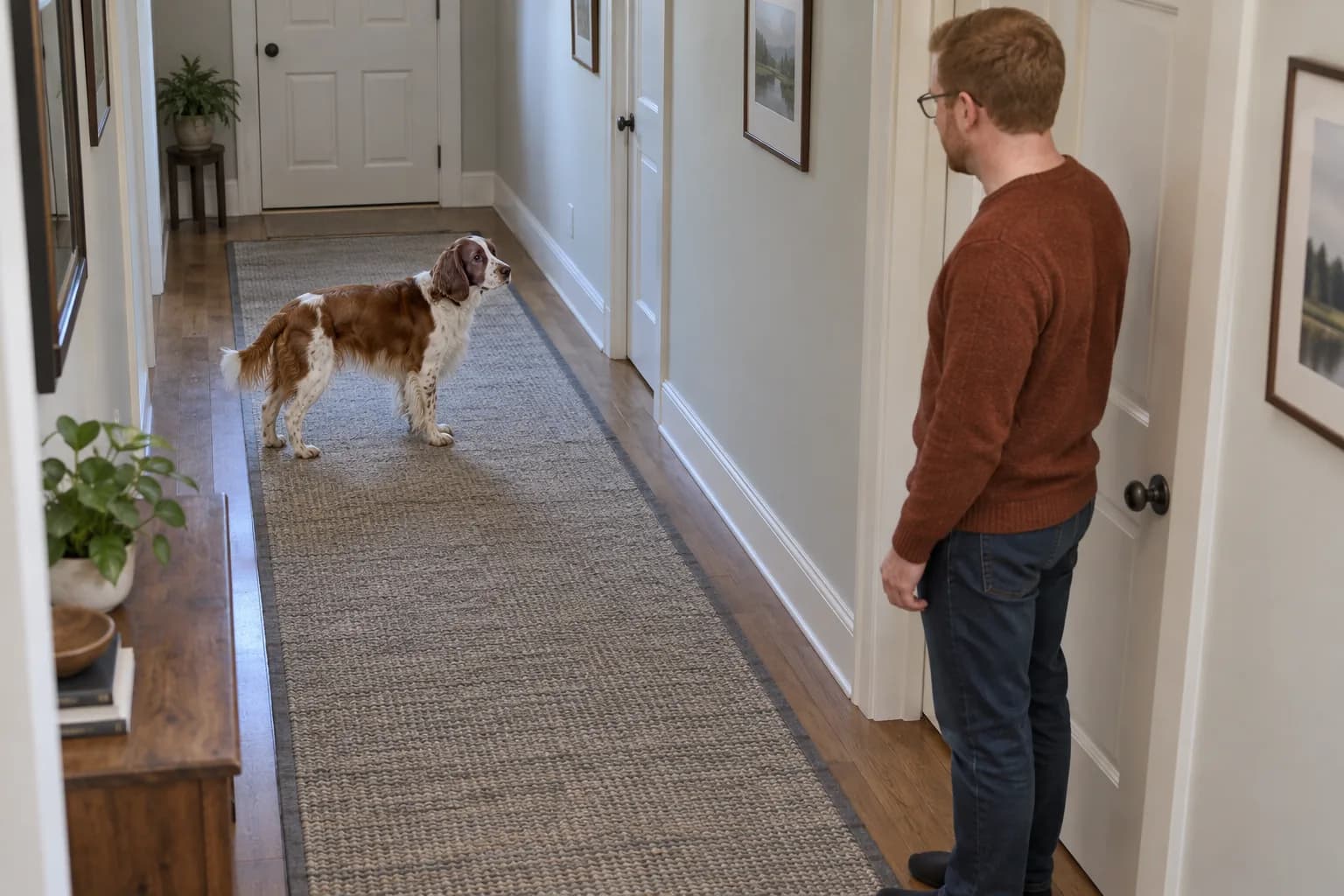
Begin a new room with the same easy distance and immediate reward you used before. Changing the room already changes the exercise; do not simultaneously move across the hallway and introduce another person. When that setup is comfortable, you might take one step farther away while keeping everything else familiar. You are extending where the word makes sense, not demanding a longer stare. There is no reason to increase attention duration simply because the dog has turned successfully a few times. A brief orientation remains the goal.
Another adult can later practise separately using the same pronunciation and reward rule. Start near the dog again instead of assuming the word will work from a different voice across the house. Outdoors, keep appropriate equipment on and the leash held, choose quiet secure surroundings and stay away from traffic or other hazards. Do not release the dog as a test of name recognition. If a distraction captures their attention, create a comfortable opportunity elsewhere; a louder call beside that distraction is not the next level of the exercise.
Protect the name in everyday conversation
During planned practice, avoid attaching the name to scolding or an instruction the dog cannot yet follow. If a household needs to prevent access to something, use sensible management instead of repeating the name until somebody becomes frustrated. You do not have to ban the word from conversation or reward every mention while talking about the dog. Make deliberate practice recognisable: one friendly call, an observable response and a clear consequence. If you accidentally use the name sharply, resume gentle easy learning later without trying to repair it through a long series of calls.
For a puppy, place this small skill within a sensible routine of sleep, toileting and safe exploration rather than making attention the whole day; our first-week guide covers that wider context. Adult dogs also need uninterrupted rest. End the session, put rewards away and allow normal activities without asking for one final impressive response. DogPath can optionally help organise an everyday practice goal, but this plan works without it. The app is free to download or start, with in-app purchases; it is not a hearing assessment, behavior diagnosis, safety evaluation or guarantee.
Keep a small record of what actually worked
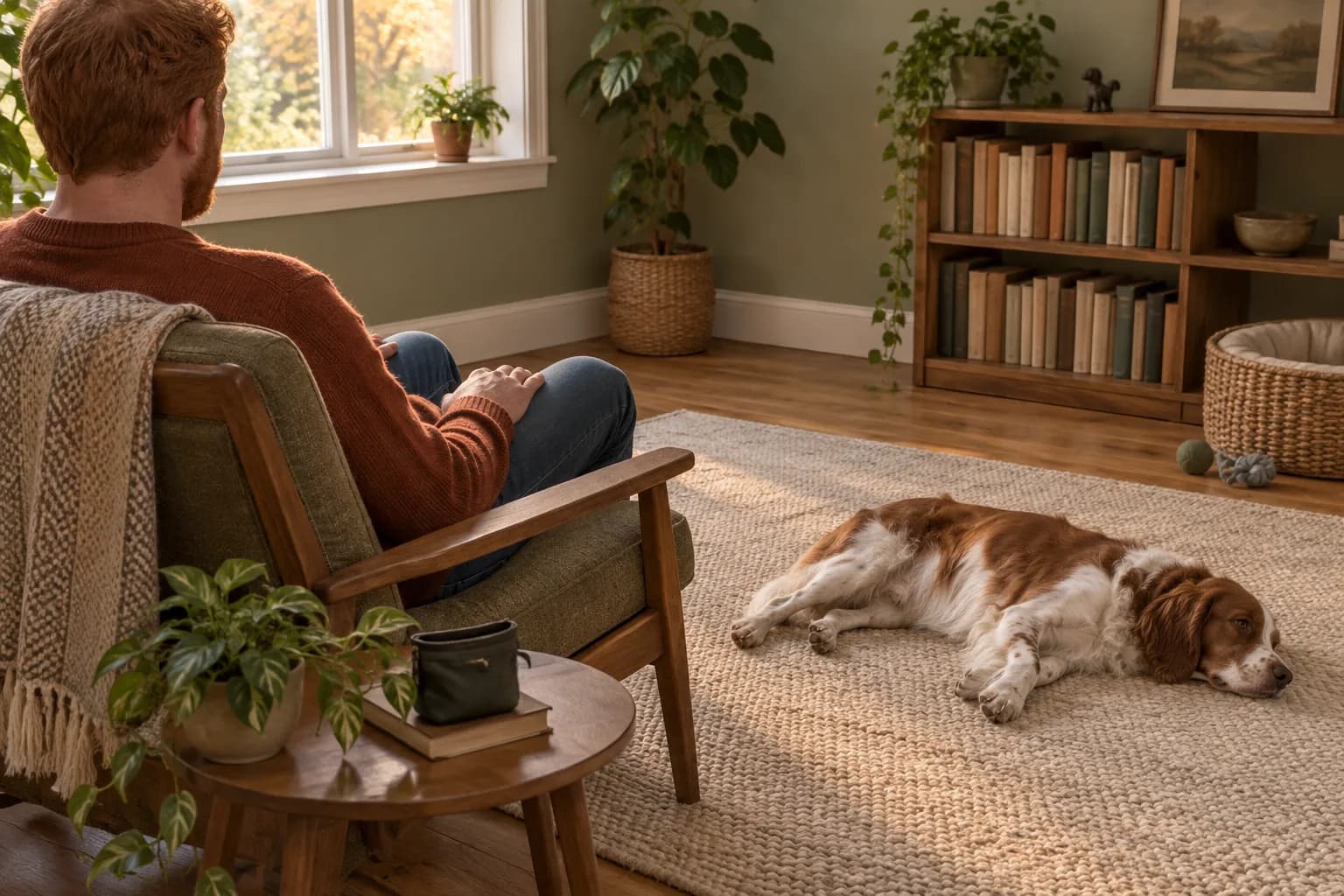
A useful paper note describes the situation: near the chair, dog awake, name said once, head turned, reward delivered without a hand wave. A second note might say: new hallway, person too far away, returned to close practice. Neither needs an obedience score. Record extra help as well as successful turns so you do not mistake a visible-food prompt for understanding the spoken word. Compare similar setups before calling a change progress; quiet evening practice and a busy walk are not equivalent conditions.
Choose the next session from that record. If close practice was comfortable, repeat it or make one modest environmental change. If response depended on added prompts, make the conditions easier rather than withholding rewards. If your dog wanted to rest, choose another time. You are building a useful invitation to attend, not a rule that your dog must monitor you continuously. Continue using physical safety measures where they are needed, and keep recall as its own skill. A clear, rewarded head turn is enough for this lesson; you can ask for the next action separately when it has actually been taught.