
Multi-dog households
Training Two Dogs: A Free One-at-a-Time Plan
Give each dog a clear job, a comfortable break and their own rewards before you try sharing a training space.
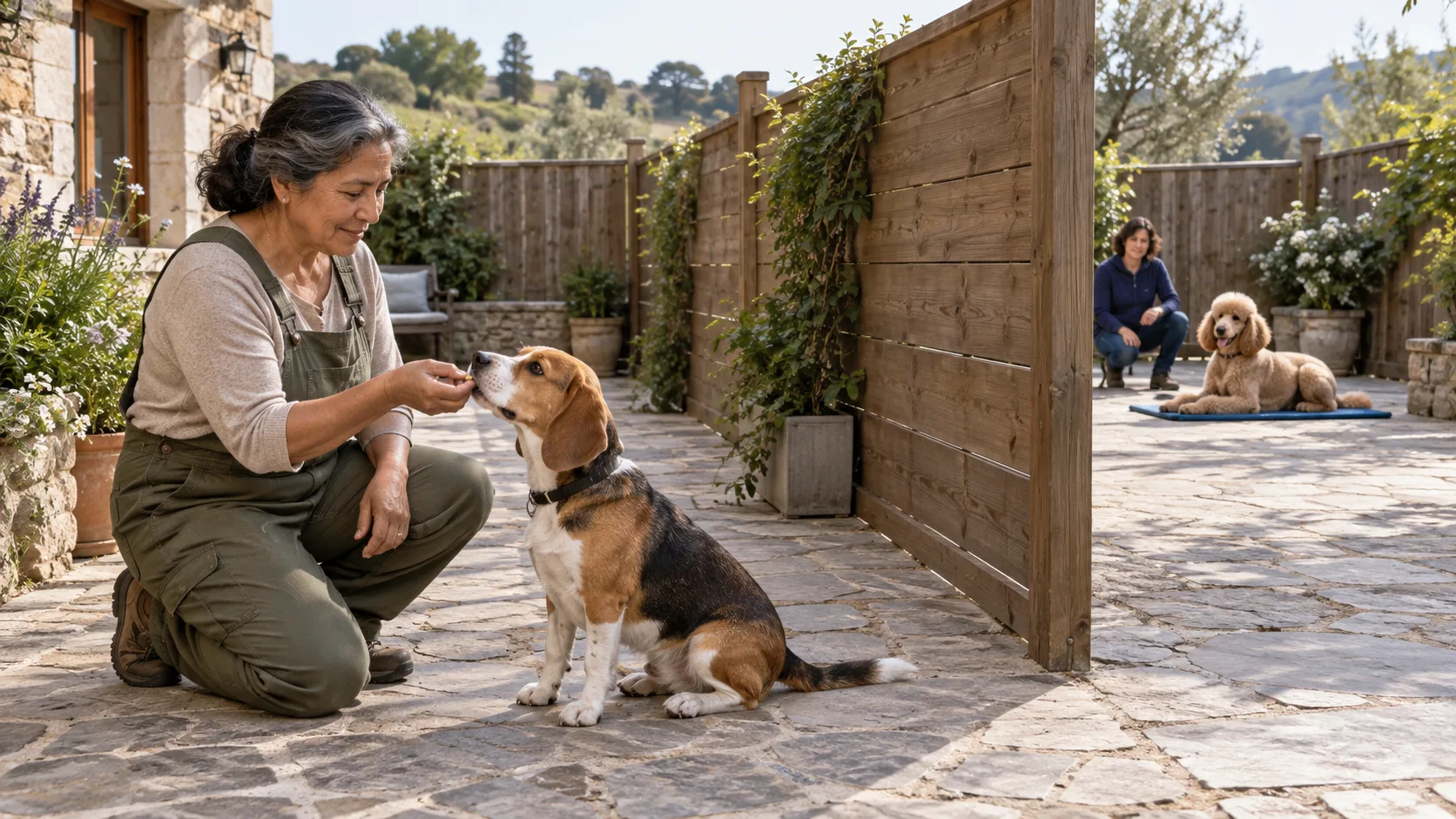
You ask one dog to touch your hand and two noses arrive. You reward a sit, and the other dog pushes between your knees. Training two dogs can become a conversation in which neither knows who is being addressed. The solution is not louder cues or making one dog watch the other earn food indefinitely. First create a clear individual lesson and a genuinely comfortable arrangement for the dog who is not taking part. Togetherness is a later difficulty, not the starting requirement.
This plan is for dogs who can be managed safely in the same household. It is not a method for resolving fights, resource guarding or distress when separated. A gate is useful only if it actually keeps both dogs secure and comfortable. If either dog stiffens, guards food, threatens the other or panics behind a barrier, stop the shared setup. Use safe separation and appropriate personal support instead of practising through warning signs.
You can complete every step with ordinary rewards, safe spaces and a paper note. DogPath is an optional reward-based everyday practice aid, free to download or start; some features or usage levels may require an in-app purchase. Here, free means the guide and the app's download or start, not unlimited app use. An app cannot diagnose behavior, assess safety or guarantee that two dogs will train comfortably together.
Training two dogs begins with two individual baselines
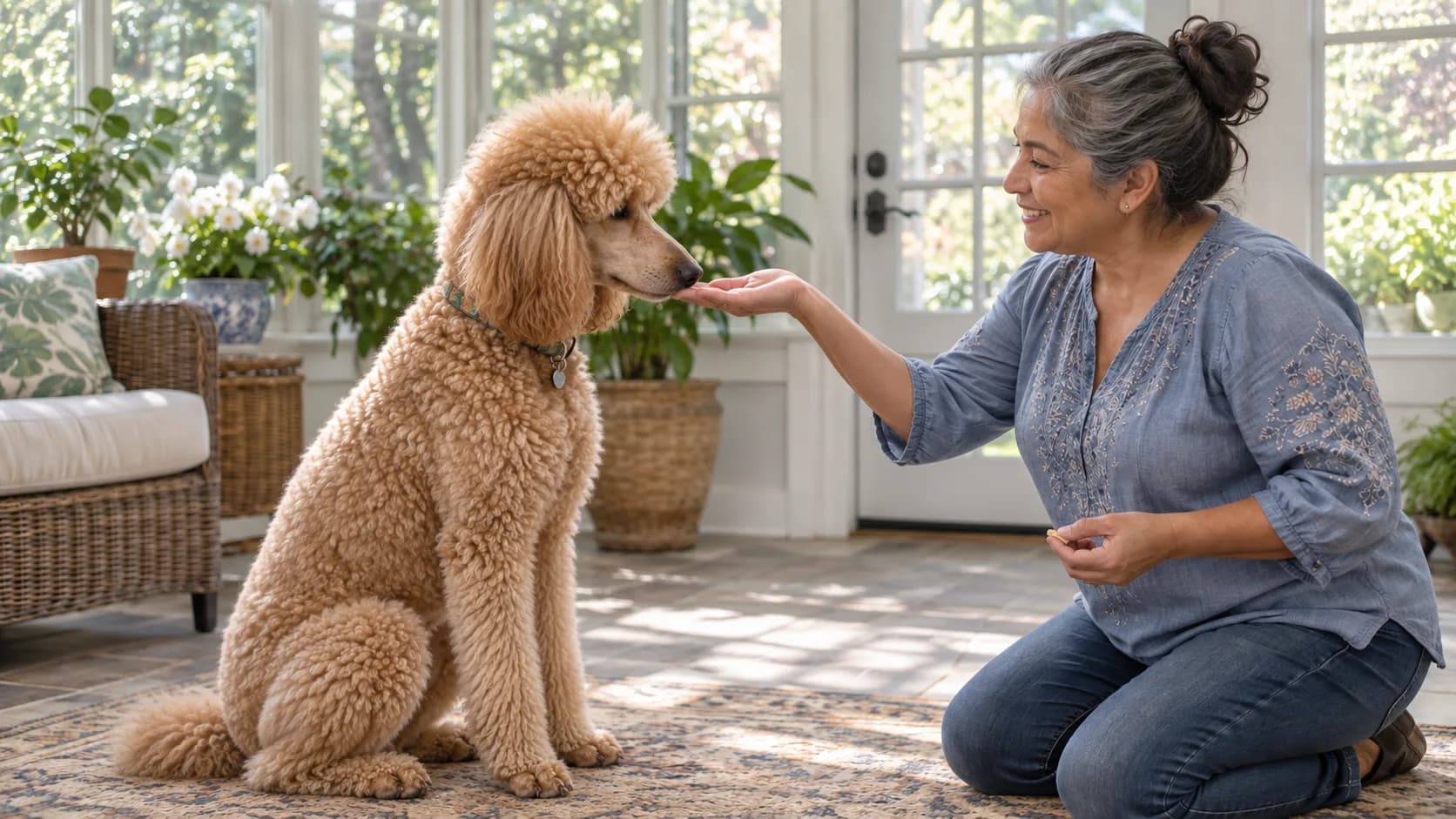
Choose a familiar, easy behavior for each dog, such as looking toward you or touching an empty palm. Practise separately in a quiet space and notice what each can do without the other present. Your older dog may understand a hand target while the newer dog needs time simply to approach. Equal attention does not require equal exercises. Write down the behavior and the conditions that make it easy, including room, reward and approximate session length. These are starting observations, not scores comparing the dogs.
The AKC's guidance on individual sessions recommends beginning separately in multi-dog homes before trying group work with familiar cues. That supports removing the extra dog from the first learning task; it does not mean every dog must eventually work together. If one dog cannot focus even alone, simplify that individual lesson first. Check whether normal sleep, toileting, movement or a quieter location would help. Sudden loss of interest, pain or a major behavior change needs veterinary attention rather than a more competitive training arrangement.
Prepare separate spaces before opening the reward container
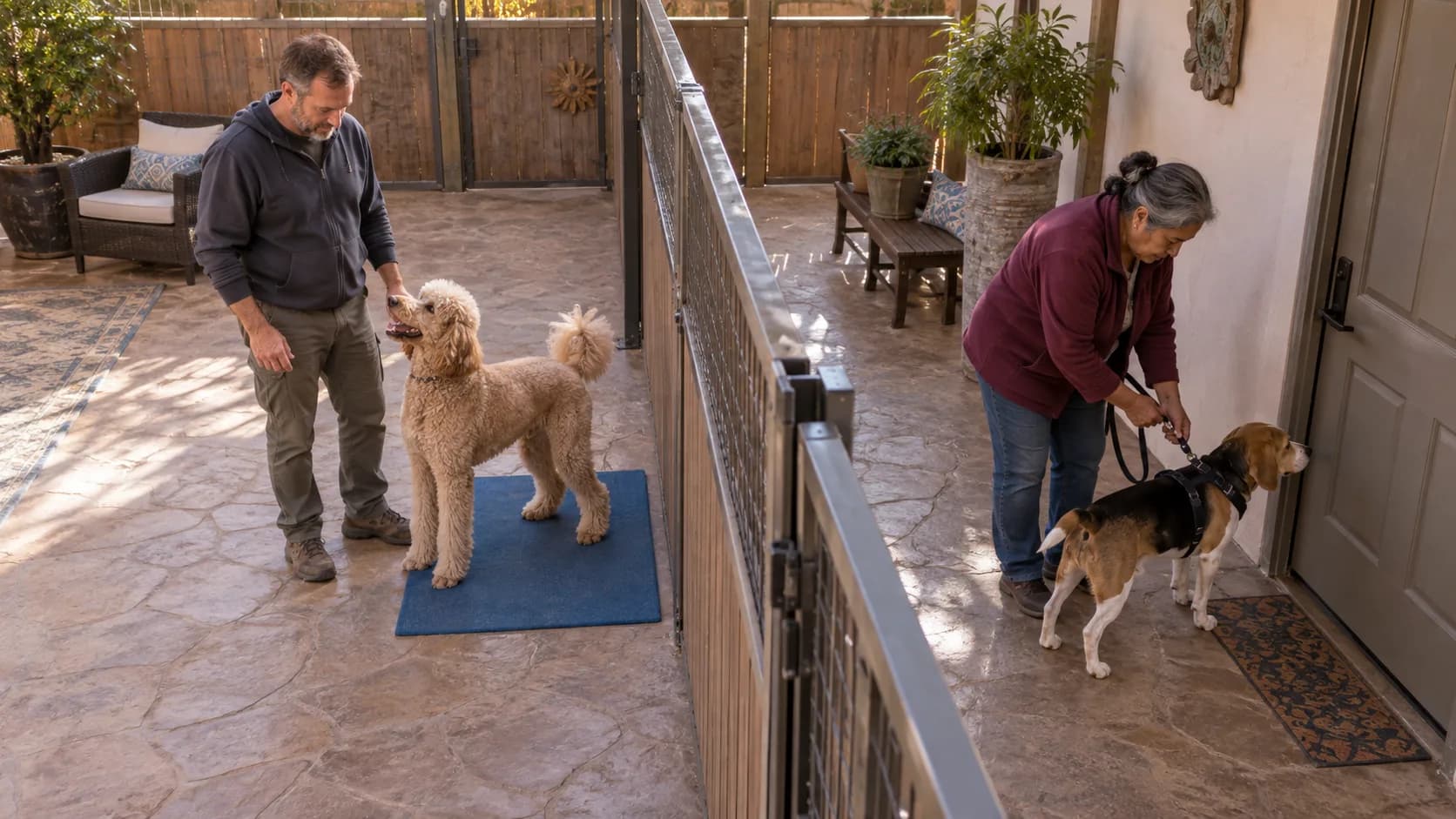
Use a room, secure divider or enclosed garden area where the resting dog already feels comfortable. Check the barrier's height, fixings and gaps for these particular dogs. Keep their beds, water and access routes out of each other's reach. A second adult can accompany the resting dog, but should not hold them close enough to reach the working dog's food. Do not tether a dog and leave them unattended. For a dog who dislikes watching, an opaque separation or different room may be easier than a see-through gate.
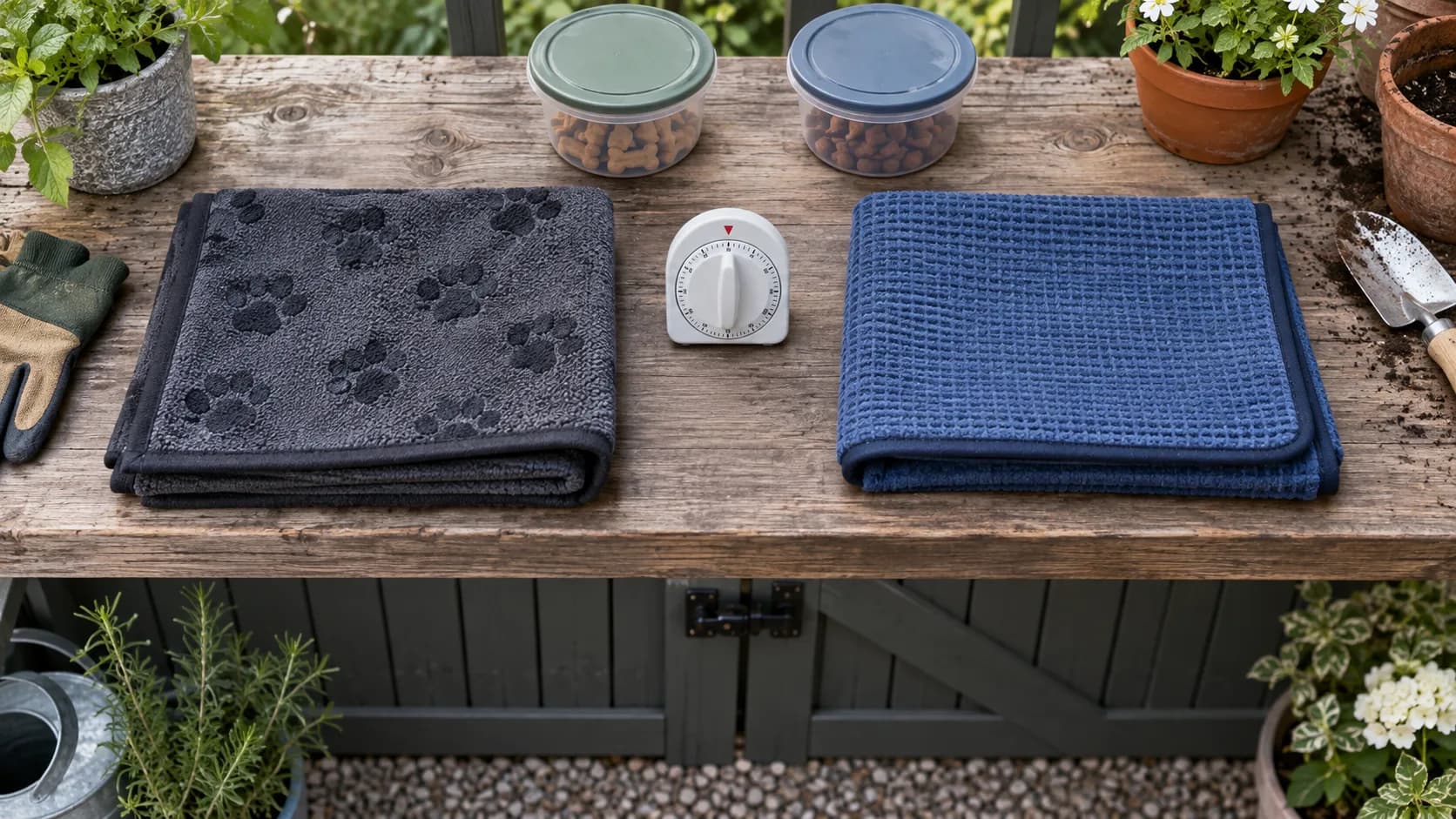
Prepare small suitable rewards for each dog, accounting for dietary restrictions and the day's food allowance. Keep containers covered and away from the divider. Remove scattered treats, bowls, valued toys and chews before dogs change spaces. If you give an enrichment item during the break, provide it only in a safely separate area and retrieve it after the dog has moved away, without taking something they guard. You need a safe transition, not a pile of food that either dog can rush toward when a door opens.
Teach a name to mean attention, not ownership of every cue
With one dog present, say their name once when they are free to respond. Reward a voluntary look toward you, then allow them to return to ordinary activity. You are making attention worthwhile, not demanding prolonged eye contact. Avoid saying the name repeatedly while holding food over the nose. Once a glance is easy, the name can precede a familiar cue: name, brief pause, hand target. Keep the food ready but not waving as the only reason to turn. Practise each dog's name in their own short session.
A name does not magically exclude the other dog from hearing a marker word, clicker or release. Both may have learned that those sounds predict rewards. Start without that ambiguity by working separately. Later, reward each dog at their own location rather than in the middle between them. You can keep your existing marker; inventing several new sounds at once adds unnecessary learning. If both move toward you during a shared rehearsal, increase separation and return to individual practice. Do not punish the dog who reasonably responded to a familiar sound.
Give the non-working dog a break they can actually enjoy
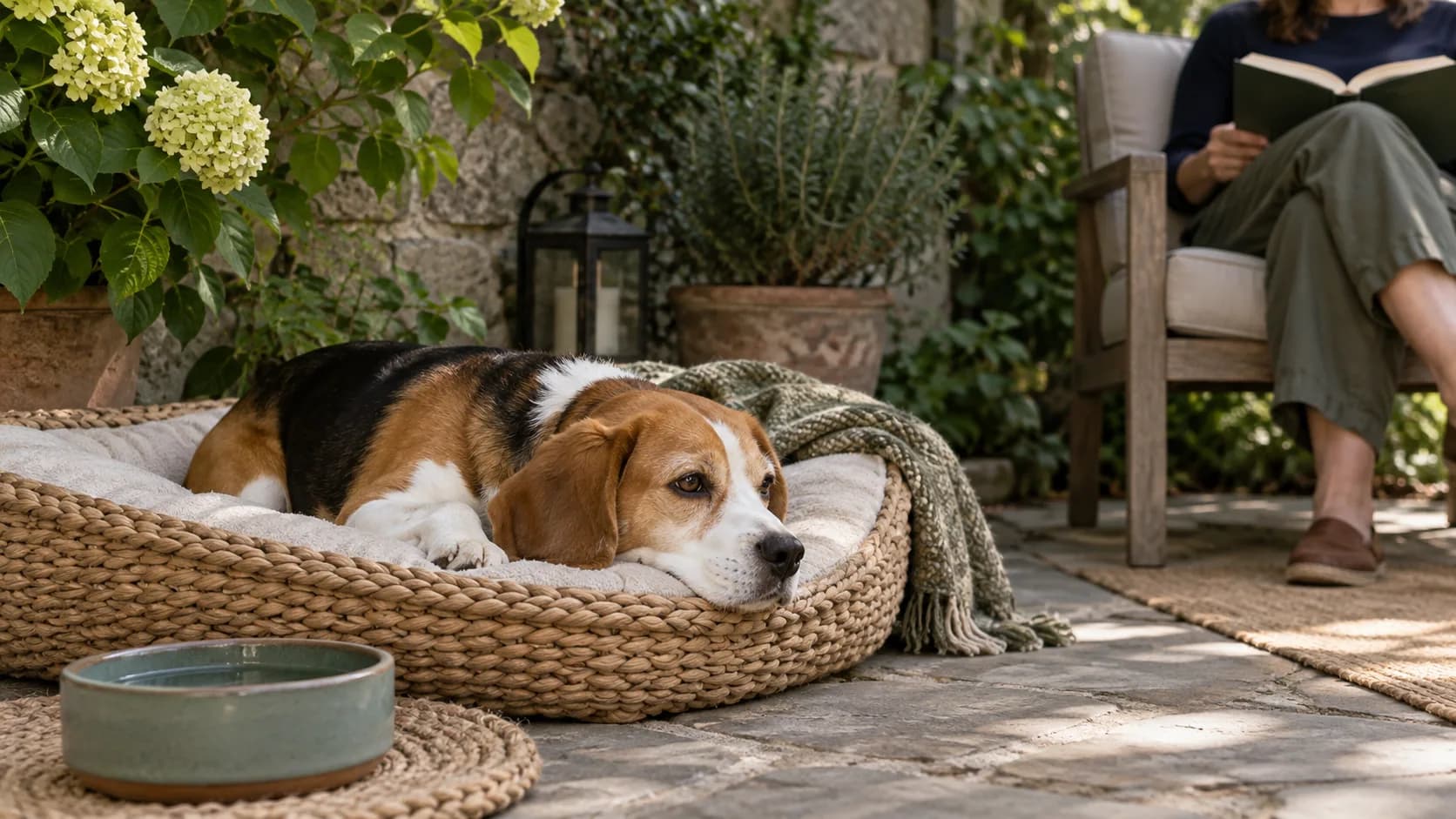
Begin with a break shorter than the dog can already handle comfortably. A resting dog might sniff, drink, lie down or spend quiet time with another adult; they need not hold a formal stay. Watch for repeated gate pacing, fixed staring, scratching, barking or difficulty settling. These tell you the arrangement is not restful enough. Move the training farther away, reduce its length or stop. Do not assume a dog who is silent but rigid is relaxed, and do not make food contingent on enduring a long, frustrating wait.
If you are alone, choose the smallest feasible lesson: one or two easy responses while the other dog is already comfortable in their separate space. Stop before their break becomes difficult. If no safe, comfortable separation is available, postpone this exercise and arrange help from another adult or a qualified reward-based professional. It is fine to train at different times of day. Our short-session guide explains how reducing the task can preserve useful practice; in this household, the resting dog's comfort also determines when the lesson ends.
Make individual training sessions short enough to remain useful
Change turns without creating a race through the gate
End the working dog's exercise with their familiar release, then put rewards away. Guide that dog to a separate comfortable location using an already familiar invitation, not a grab at the collar. Secure the location before the next dog enters. Check the floor for food or valued items. With two adults, agree who handles each dog and which door moves first. Keep one barrier secure throughout the transfer. There is no requirement to pass both dogs through a narrow opening or let them inspect each other's training leftovers.
Invite the second dog only after the space is ready. Start with their own easy response, not the first dog's hardest exercise. A complete round may be one brief turn per dog followed by a longer normal break. Fairness means each gets suitable opportunities, not that the clock must match exactly. A puppy may need a toilet trip before a turn; an older dog may prefer rest. Record whose turn occurred and what they practised so you do not accidentally give the more demanding dog every session.
Add the other dog as one small distraction
Only attempt a shared rehearsal when both dogs are comfortable individually and with the separation arrangement. Keep the secure divider and begin at a generous distance with a second adult supporting the resting dog. Ask for one familiar glance or hand target, reward at the working dog's own position and finish. The resting dog should still have an easy break, not a demand to ignore a lengthy food performance. If either becomes tense or fixated, close off the view or return to entirely separate sessions. Shared training is optional.
Change only one feature on a later occasion. Distance means the dogs are a little nearer while separated; duration means a slightly longer easy turn; distraction means one small movement from the other dog. Do not reduce distance, add several cues and open the barrier together. Our guide to choosing training goals can help keep the outcome specific: one comfortable turn while the other dog rests, rather than perfect joint obedience. Different reward preferences and learning speeds remain valid. The presence of another dog does not make a cue easier or more urgent.
Keep reward safety separate from turn-taking practice
Do not use this exercise to test whether dogs will share food, toys or your hands. Reward competition can occur even between dogs who usually play together. Dogs Trust advises keeping others at a safe distance from valued resources, including feeding in a separate room or behind a baby gate, while seeking help. Keep rewards at the appropriate dog's location and prevent access by the other. If reaching toward food causes freezing, hard staring, growling or snapping, stop rather than asking for another sit to prove control.
Do not reach between dogs, force a valued item away or punish warning signals. Create safe separation without putting hands into a conflict and seek qualified in-person guidance for aggression or bite risk. Arrange a veterinary check for pain, illness or sudden changes. A transparent divider is not automatically sufficient if dogs can threaten or reach each other through it. Children should not manage these exercises. With a history of guarding, maintain safe separation and use a professional plan; sharing one room is not a necessary graduation target.
Dogs Trust advice on protecting space around valued resources
Judge progress by clarity and comfort, not matching performances
After a round, note each dog's behavior, the resting arrangement, how the transfer went and whether both returned to ordinary activity. A useful entry might say: beagle offered two hand touches in the conservatory; poodle rested with another adult out of sight; food cleared before swapping. If the poodle watched the gate or the beagle searched for leftovers, write that too. The next change should address that observation, not simply lengthen the session because a day passed. Paper is enough; an optional DogPath note can keep individual practice organized.
Keep ordinary walks, rest and individual attention outside the training schedule. Neither dog should lose needed care because their turn was harder or shorter. Progress may mean fewer interruptions, clearer responses or an easier changeover, while all new learning still happens separately. If comfort decreases, return to the last easy arrangement and investigate what changed. Some households will always prefer separate lessons, and that is a complete workable outcome. The purpose is to help two individuals learn, not to stage a synchronized performance for everyone else.