
Calm at home
Calm alone time, built in tiny, boring absences
Teach short departures kindly with a safe space, enrichment, and gradual steps, without rehearsing panic.
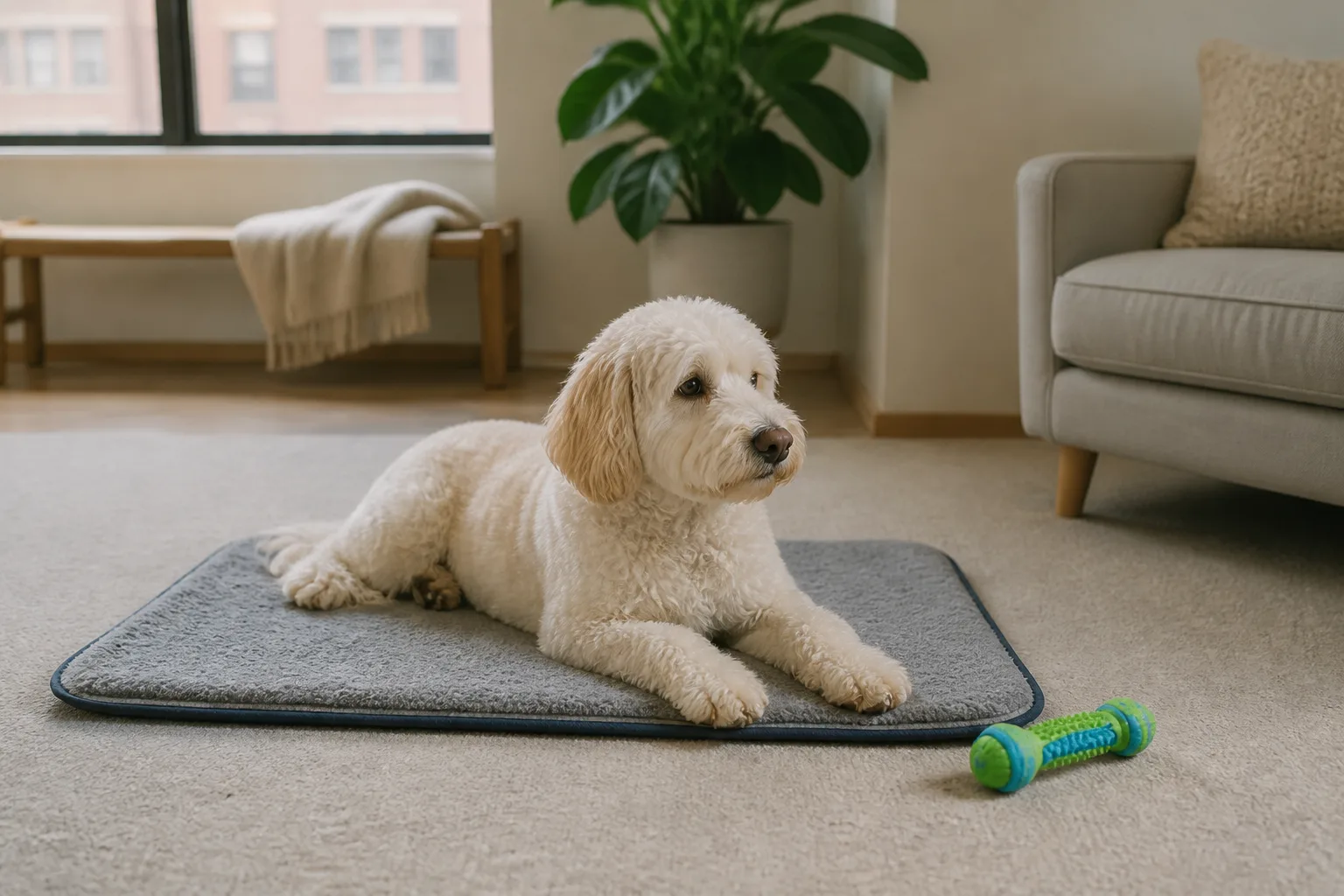
You grab keys. Your dog shadows you to the door. Last time you left for “just an hour,” the neighbor heard every minute. Calm alone time is a trained skill for many dogs, not a personality switch you flip on Monday.
DogPath’s alone-time program focuses on stepwise absences and everyday setup. Severe separation distress needs qualified in-person help; an app can’t diagnose panic. For everyday building blocks, though: not just training. Your plan, seconds first, then minutes.
Tell boredom fuss from true distress
Mild fuss that settles quickly differs from ongoing panic: relentless vocalizing, escape attempts, self-injury, or house soiling only when alone. Distress is a welfare issue, not stubbornness.
If you suspect true separation anxiety, speak with a veterinarian or qualified behavior professional before pushing duration. Forcing longer absences can make fear worse.
If your dog is in panic, stop escalating alone time and get direct professional support.
Make the alone space predictable and kind
Choose a safe room, pen, or crate your dog already likes. Pair it with chews, scattered food, or a lasting legal activity while you’re still present, so the space predicts good things.
Never use confinement as punishment. The goal is a rest place, not a consequence.
Practice micro-absences
Step out for seconds, return before distress spikes, and keep arrivals and departures low-drama. Repeat until those tiny absences look boring. Only then add a little time.
Video your dog when you can. Guessing from the hallway often misses early stress signals.
- Start with seconds to a minute if needed
- Return before panic, not after a long cry
- Keep hello and goodbye calm
- Increase duration only on clean successes
Support with outlets, without pretending exercise cures fear
A walked, sniffed-out, mentally fed dog often settles more easily, but exercise alone doesn’t cure separation distress. Use enrichment as support, not the entire plan.
Rotate alone-time activities so they stay interesting: chewables, snuffle options, or food puzzles your dog already understands. Align the household on the same departure routine so accidental frantic exits don’t undo the work.
Honest limits of a 14-day track
A structured program can organize gentle practice for many everyday alone-time goals. It isn’t a guarantee for severe anxiety, and it isn’t medical treatment.
Use DogPath alongside professional care whenever welfare is in doubt, and keep absence lengths realistic while the skill grows.
Separate ordinary protest from distress
A dog who briefly notices the door and returns to a chew is having a different experience from a dog who pants, drools, paces, vocalizes continuously, eliminates, destroys exit points, or cannot eat. Record early absences when possible so you can see what happens after you leave rather than judging only the greeting when you return.
Significant separation-related distress is not disobedience and should not be treated with a cry-it-out plan. Speak with a veterinarian and a qualified behavior professional. Medical support, a tailored desensitization plan, and temporary arrangements that prevent panic may all be appropriate. An app can help organize notes but cannot assess severity from a generic prompt.
Make departure cues boring before extending absence
Shoes, keys, bags, and a particular routine can predict a long separation. Practice picking up keys and sitting down, putting on shoes before making tea, or opening and closing the door without leaving. The aim is not to trick the dog but to reduce the certainty that every cue starts an overwhelming absence.
Then work below the dog’s distress threshold. That may begin with a gate between rooms, one step outside the door, or only touching the handle. Return while the dog is still comfortable. Duration grows from many successful easy repetitions, not from waiting for the dog to stop showing distress.
Use enrichment only when the dog can actually enjoy it
A chew or food toy can create a positive settling routine for dogs who are comfortable enough to eat. If the dog abandons it as soon as you leave, the absence is already more important than the enrichment. Do not use uneaten food as evidence that the dog should simply be left longer.
Meet exercise, toileting, and social needs without exhausting the dog as a solution. A calm sniff walk and predictable rest can help, but fatigue does not treat panic. Build alone-time skill separately and arrange sitters, daycare, friends, or schedule changes when needed to keep unavoidable absences within a tolerable range.
Read the session
How to know the plan is working, or already too hard
Progress is not one perfect attempt. Look for a pattern across comparable short sessions: clearer responses, faster recovery, willing re-engagement, and less help from the setup. Body language matters alongside the visible behavior.
Signs the level is workable
- The dog continues resting or using enrichment after departure
- Breathing, movement, and vocalization stay near baseline
- Return greetings settle quickly
- Duration grows through many comfortable repetitions
Signs to make it easier
- Food is abandoned as soon as departure begins
- Panting, pacing, drooling, escape behavior, or panic appears
- Each repetition waits for distress to stop on its own
- Unavoidable absences regularly exceed the trained duration
Choose the next change
Return to an absence shorter than the first concern signal and arrange management for longer everyday departures. Significant distress needs veterinary and qualified behavior support, not longer exposure.
Before the next session, prepare rewards, choose the starting location, and decide what will count as complete. Change distance, duration, or distraction one at a time. If the dog cannot eat, disengage, recover, or move comfortably, stop treating the moment as an ordinary training plateau.
Before you begin
A fair-session checklist for this training goal
The exercise matters, but the conditions around it often decide whether learning is possible. Use this five-part check before the first cue. It takes less time than repairing a session that began too hard.
Outcome
Name one visible behavior and a finish line for today. Avoid broad goals such as “be calm” or “listen better.” Another person should be able to watch and tell whether the criterion happened.
Environment
Choose the quietest practical version of the real scene. Check surfaces, space, exits, people, dogs, sounds, and movement. Create enough distance for your dog to eat, recover, and re-engage.
Reinforcement
Prepare rewards before the cue. Match their value to the competing environment and decide where delivery should happen so it supports the next repetition instead of pulling the dog out of position.
Management
Decide how you will prevent the unfinished behavior from being rehearsed between attempts. That may mean a gate, barrier, long line, quieter route, prepared chew, greater distance, or skipping the difficult situation today.
Stop condition
Finish when the written criterion is met, focus drops, or body language says the level is no longer comfortable. Stopping early protects clarity. You can repeat the same small step later without losing progress.
After the session: make one decision
If the behavior was repeatable and your dog stayed engaged, repeat once more or raise distance, duration, or distraction by a small amount next time. If it was inconsistent, improve setup or rewards before replacing the goal. If pain, panic, aggression, bite risk, sudden change, or prolonged distress appears, stop the ordinary training plan and involve the appropriate veterinarian or qualified professional.
From article to action
Turn this guide into a practice week
Keep the goal stable long enough to see a pattern. Three or four tiny sessions across a week reveal more than one long attempt in a difficult environment.
Find the baseline
Observe your dog during a very small separation and identify the first sign of concern.
Build one layer
Repeat absences shorter than that threshold, varying departure cues without making them predictive.
Generalize carefully
Change one element, room, door, time of day, or duration, while keeping the dog comfortable.
What to record
- Comfortable duration
- First stress signal
- Whether food was eaten
- Recovery after return
Change only one major variable at a time. If success drops, return to the last version your dog could perform with relaxed, engaged body language.