
Everyday outings
Before the Coffee: Free Café Training for Dogs
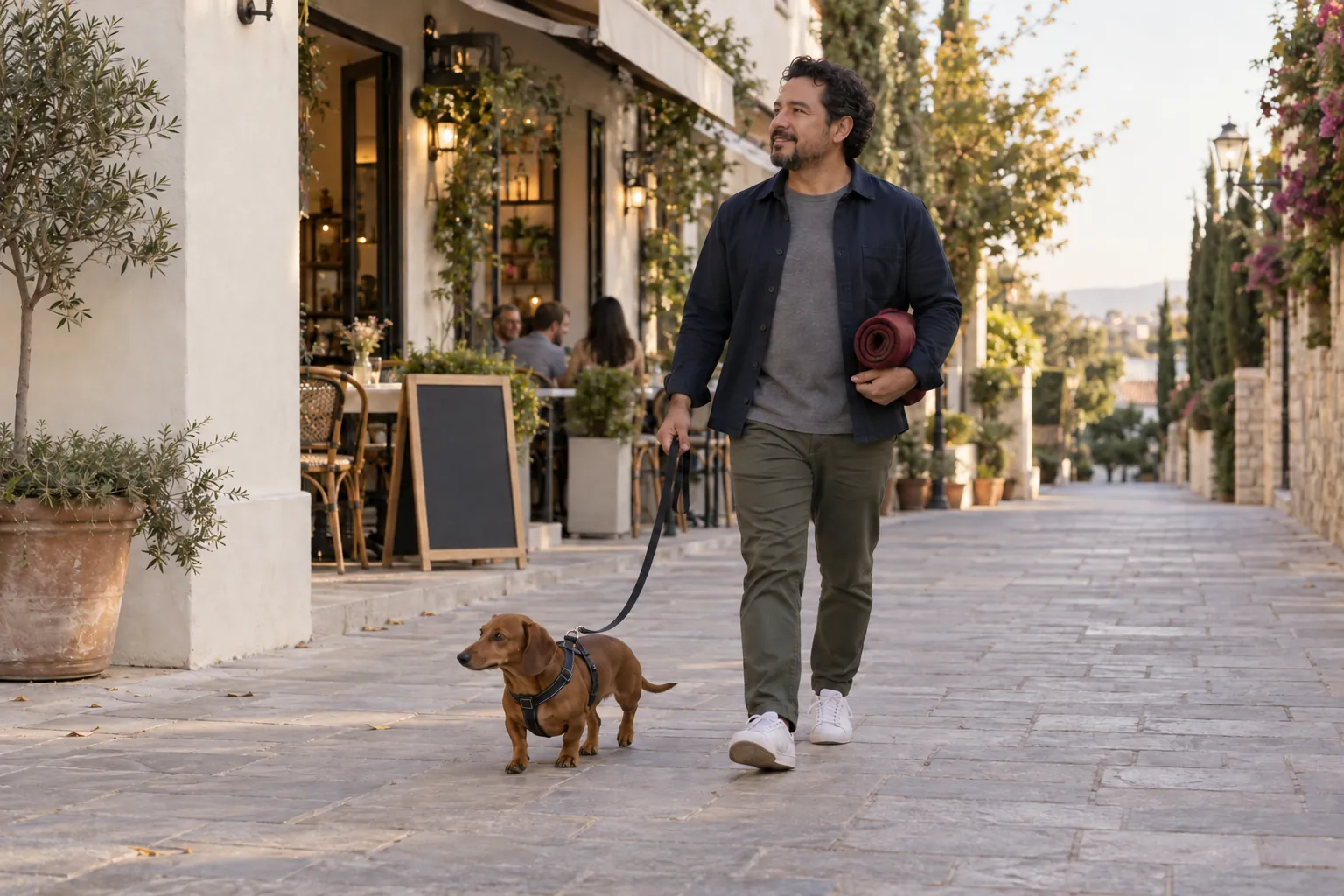
A good first café visit can end before you order. Plan the space, rehearse sitting together and give your dog an easy way back to a quieter setting.
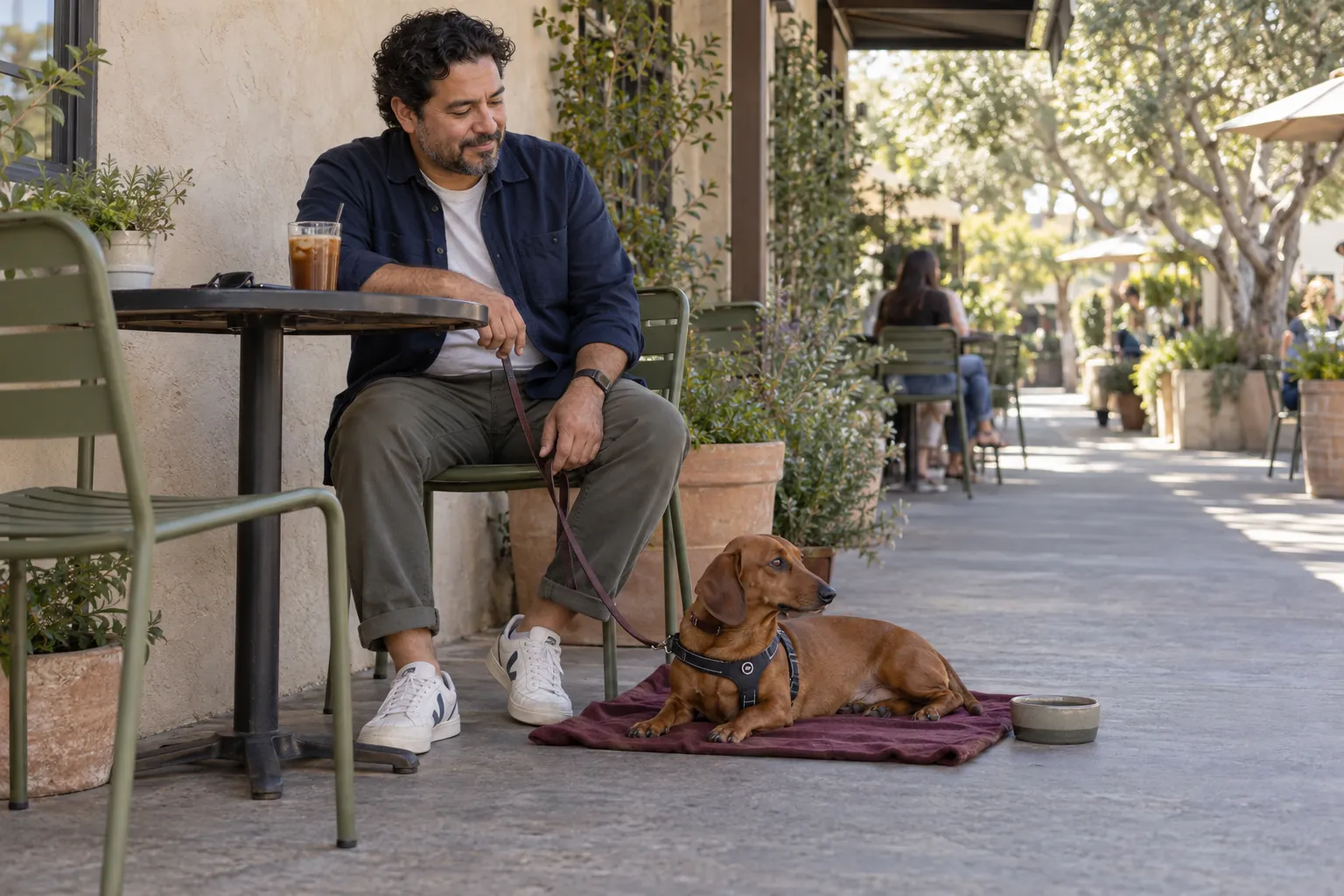
Café training for dogs is not a test of whether your dog can lie still through an entire lunch. A new place combines chairs moving, food arriving, people passing close by and your attention turning elsewhere. Start with a smaller question: can we sit together briefly in a suitable space while my dog remains comfortable? A quiet arrival followed by an easy departure can be a useful first visit, even without a coffee order.
This free guide gives you a self-contained plan. You need familiar rewards, water, a suitable harness and held leash, and a place that explicitly welcomes dogs. A familiar blanket is optional support, not a magic switch. Practise before committing to a meal or meeting friends. You are free to leave or decide that cafés do not suit this dog. Learning should make an outing easier for everyone, not turn a social plan into a deadline the dog must meet.
Café training for dogs begins with the right space
Ask the venue whether dogs are permitted in the particular area you intend to use. Permission outdoors does not establish permission indoors, and rules can differ by venue and location. Check in advance rather than arriving with a dog and arguing at the door. Choose a quiet time and look for a table away from the entrance, serving route and other dogs. A busy dog-friendly label does not mean the setting is an appropriate first lesson for your dog.
Consider the dog's space as well as your chair. There should be room on comfortable ground beside you, without putting the dog or leash across a walkway. Avoid a narrow corner where passing feet cannot be given space. Identify an unobstructed route out before sitting. If the only table is beside a noisy doorway or a crowd, take the outing elsewhere. You have changed the plan sensibly, not wasted the preparation. Bring only what you can manage while still supervising the dog.
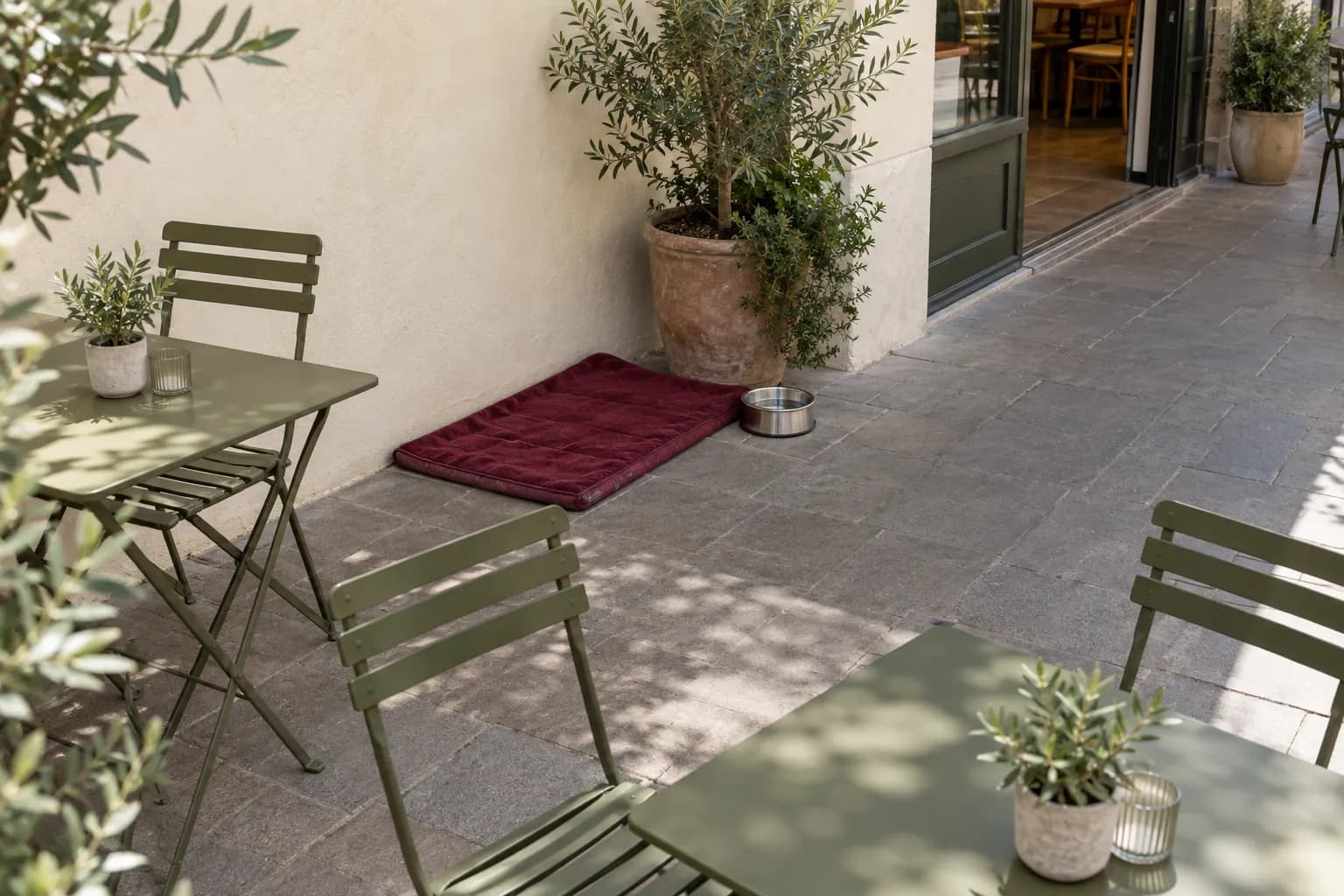
Rehearse the chair, not a whole café at once
Begin at home with the same blanket, if you use one, beside a chair. Sit down while your dog can move around freely in the safe room. Notice an easy pause beside you and offer a small reward without drawing the dog into your lap. Standing, sitting or lying comfortably can all fit this rehearsal. Do not repeatedly cue a down when the actual difficulty is your movement into a chair. Our mat-settling guide covers the foundation separately if a familiar resting place is still new.
Add one ordinary action, such as picking up an empty cup, only after sitting together is straightforward. Put it down again and pause. On a different easy occasion, briefly look at a book instead. Avoid combining chair movement, a new mat, food on a table and long periods without attention in the first attempt. Rehearse holding the leash without tightening it or tangling it around chair legs. This is preparation for divided attention, not an exercise in restraining the dog until they stop trying to move.
Try a quiet bench before a table with service
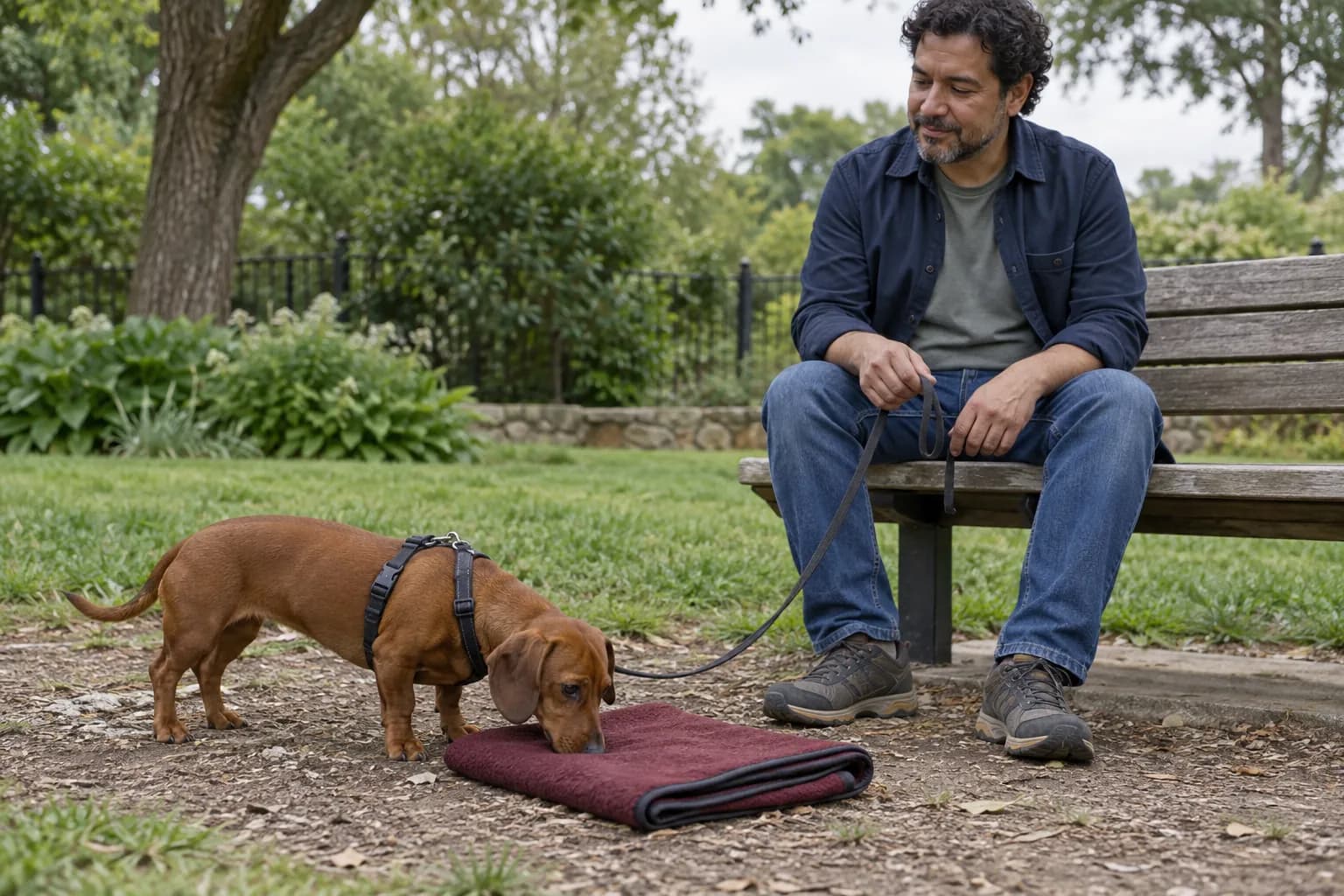
Take the sitting rehearsal to a quiet outdoor bench away from foot traffic. Give the dog an ordinary opportunity to toilet and sniff first; do not exhaust them to manufacture stillness. Keep the leash held, the route clear and the familiar surface near your feet. Sit for a brief pause, acknowledge comfortable behavior and stand up to leave. This separates being outdoors beside a seated person from the extra movement, smells and close approaches of café service.
Dogs Trust's settling guidance recommends beginning quietly, rewarding relaxed behavior and increasing difficulty gradually. A particular posture is not the whole goal. Apply that idea here by choosing a bench with enough space rather than trying to wait out a difficult scene. Observe whether your dog can look away from passing activity and return to ordinary sniffing or resting. If the dog continually scans, strains toward people or cannot recover between events, choose more distance or finish. Taking food alone does not establish that the setting feels comfortable.
Make the first arrival easy to abandon
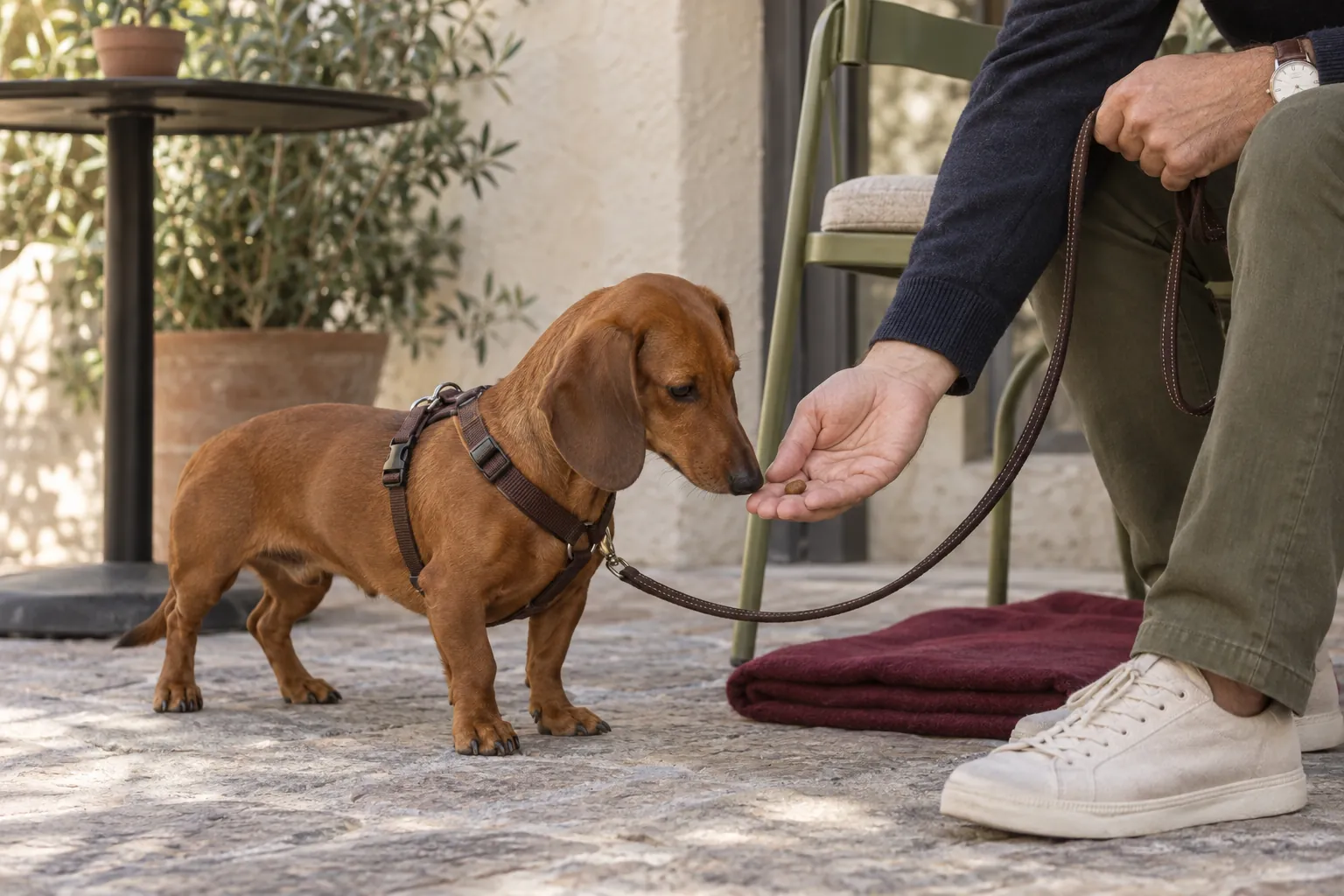
Keep the first visit independent of a lunch booking or a friend's schedule. Approach at a pace your dog can manage, check the available space and leave if the setting has changed. Once seated, keep the leash in your hand with enough slack for a comfortable position, without allowing access to neighboring tables. Never tie it to a chair or leave the dog unattended while ordering. If service requires joining a queue, use a second trusted adult who can supervise appropriately, or choose another arrangement.
Prepare a few small rewards suitable for the dog's diet before you sit. Reward an easy pause low beside the dog's place, without reaching across their face or pulling them toward your knees. Do not scatter food under restaurant tables or hold a treat continuously in front of the nose. Allow ordinary looking around and comfortable position changes. Your first target might be sitting down and sharing one unhurried pause, then leaving. For more on choosing an endpoint before difficulty grows, see our short-session guide.
Plan for staff, food and people who want to greet
Notice the direction staff need to approach from and keep the dog out of their working space. Politely tell anyone reaching toward the dog that you are practising a quiet visit and would prefer no greeting. A dog does not owe strangers contact because the venue welcomes animals. Avoid introductions to unfamiliar dogs between tables. If people keep crowding the chosen spot, leave or move to a genuinely easier setting rather than repeatedly asking the dog to ignore close approaches.
Keep drinks and human food out of reach, inspect the ground before settling and provide your own water bowl without obstructing service. Dogs Trust's picnic guidance supports supervised leash use, access to water and shade, and preventing access to unsuitable food. These are outing precautions, not training rewards. If a spill or dropped food lands nearby, move the dog away without starting a grabbing contest. Hot pavement, uncomfortable weather or a slippery surface can make a table unsuitable regardless of how well the home rehearsal went.
Dogs Trust advice on considerate, supervised outings around food
When restlessness starts, reduce the situation
One change of position is not a failed visit. Your dog may need a different patch of ground, water, a toilet break or more room. Look at the sequence: did activity increase when a tray arrived, a dog passed or a chair scraped? Put your cup down and attend to the dog before deciding to continue. If comfortable pauses have disappeared, shorten the visit or leave. Do not use repeated cues, leash corrections or physical pressure to keep a dog below the table.
Whining is information to investigate, not an instruction to ignore the dog until silence arrives. Check the setup and immediate needs, and move to a quieter place when appropriate. Do not withhold water or a needed break to avoid supposedly rewarding a sound. For persistent distress, obtain individual guidance instead of making every café trip a test. Panic, aggression, bite risk, pain or a sudden behavior change requires appropriate in-person veterinary or behavioral help. No article or app can assess the safety of this dog in this setting remotely.
Practise leaving while the visit is still manageable
Departure has its own movements: putting away rewards, collecting the blanket, standing and navigating chairs. Rehearse those at home too. At the café, check the route, gather belongings without tightening the leash and give the dog time to stand naturally. Leave through the quieter available space rather than pulling directly past another dog. You do not need to wait for a dramatic problem to justify finishing. An uneventful exit is part of the outing you are teaching, not the absence of a result.
Afterward, write one concrete observation: shaded outer table, two staff approaches, dog rested between them, left before the terrace filled. Note what you actually saw instead of assigning a calmness score. Paper is enough. DogPath can optionally support a suitable practice goal and session notes; it is free to download or start, with in-app purchases, not unlimited free use. It is a reward-based everyday aid, not a diagnosis, safety assessment or guarantee. The plan here remains usable without it.
Build a useful next visit, not a duration record
Use the previous conditions to choose the next outing. Repeat an easy table before trying a busier time. If duration changes, keep the location and activity level familiar; if you try a new venue, make the stay shorter again. Extra time, closer passing people and louder sounds are separate difficulties. Do not increase all three because a single visit went well. Our goal-setting guide can help describe one observable next step instead of aiming vaguely for a perfectly behaved café dog.
Reliability is specific to the conditions you have practised. Comfortable outdoor seating does not establish comfort inside, beside children or around closely spaced dogs. Some dogs prefer walking and resting at home to visiting cafés, and that is a valid arrangement. Plan a trusted care option when a human social occasion would be unsuitable. End your review with a practical decision: repeat this setup, make it easier or skip the venue. The useful measure is a manageable experience for the dog and the people sharing the space, not minutes accumulated under a table.