
Calm behavior
Free Dog Training App: Mat Training for Dogs
Build a portable place for calm with clear rewards, a release cue, and small steps that work beyond the living room.
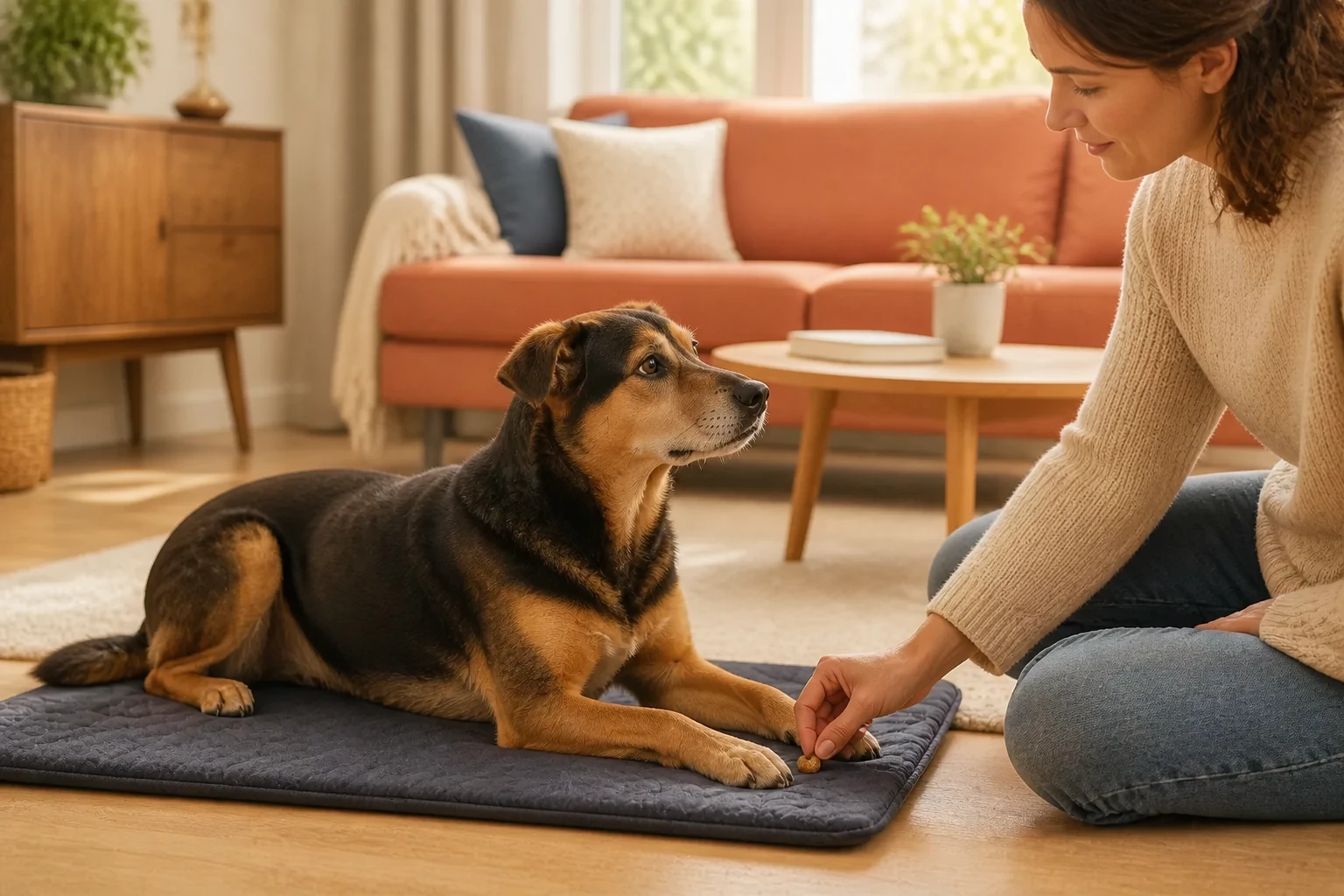
The doorbell rings, dinner reaches the table, or you stop at a café and your dog has no clear job. A mat can turn that vague request to “calm down” into a visible behavior: go to this place, stay here, and let the world pass without joining every event.
Mat training is not about holding a dog down or demanding stillness through pressure. You build value for the surface, reward the choices you want, add a clear release cue, and increase difficulty slowly enough that relaxation remains possible.
DogPath can turn this plan into short daily practice: follow reward-based step-by-step lessons, use the built-in clicker to mark the right moment, and track progress before increasing duration or distractions. The app is free to download; some features or usage levels may require an in-app purchase.
Choose a mat that makes the boundary obvious
Start with a mat large enough for your dog to lie on comfortably. A bath mat, folded blanket, or low nonslip bed works well. Use one with a different texture from the surrounding floor so four paws on the target are easy to notice.
Place it in a quiet room and prepare small rewards before the dog arrives. The first lesson should not compete with guests, cooking, or a busy hallway. You are teaching what the mat means before asking the skill to survive real life.
First goal: your dog chooses to step onto the mat. Relaxation and duration come later.
Reward movement toward the mat
Put the mat down and wait. Mark a glance, a step, or a paw touching it, then place the reward on the mat. Delivering food on the surface makes the next useful choice easier without pulling or pushing the dog into position.
As understanding grows, wait for two paws, then four. If your dog already offers a sit or down, reward it. If not, keep paying calm standing on the mat rather than repeating “down” until the cue becomes background noise.
- Mark the moment the dog reaches the mat
- Place rewards low and between the front paws
- Use several tiny rewards instead of one large payment
- Reset by tossing one reward away only when you want another approach
Add a release cue before you build duration
A dog can stay more confidently when the end is predictable. After two or three rewards on the mat, say a release word such as “free”, gesture away, and toss a reward off the mat. The release, not the dog getting bored, ends the repetition.
Pause before inviting the dog back. That contrast teaches two separate ideas: staying on the mat keeps rewards available, and the release cue means leaving is now part of the game.
Build calm seconds instead of testing patience
Once your dog returns readily, feed at a relaxed rhythm while the dog remains on the mat. Place rewards between the paws so the head lowers instead of popping up toward your hand. Begin with only a few seconds, release, and repeat.
Increase one interval slightly, then make the next one easier. If the dog stands up repeatedly, you have useful information: the gap between rewards, the session length, or the environment became too difficult. Shorten the ask rather than correcting the dog.
Add distance and everyday distractions separately
Practice one small movement at a time: sit in a chair, take one step away, touch a cupboard, or carry an empty plate. Return and reward before the dog leaves. Only combine actions after each one is easy by itself.
Move the same mat to another quiet room before trying the front door, visitors, a café, or an outdoor bench. New places change the picture. Lower duration and reward more often whenever the environment becomes harder.
- Duration: stay for a few more seconds
- Distance: owner moves one step farther away
- Distraction: one mild sound or movement appears
- Location: the familiar mat moves to an easier new place
Use the mat as a skill, not a way to suppress distress
A useful settle may include shifting a hip, resting the head, sighing, sniffing, or calmly watching the room. It does not require a frozen posture. Reward soft body language and give the dog breaks before restlessness becomes repeated leaving.
If your dog cannot eat, scans frantically, pants when the room is cool, tries to escape, guards the mat, or reacts aggressively around people or dogs, stop increasing difficulty. Create space and seek qualified veterinary or behavior support when health, fear, or safety may be involved.