
Everyday confidence
Dog Afraid of Elevator: Free Door-to-Ride Plan
Separate the chime, doorway, moving floor and short ride so your dog can learn without being pulled or trapped.
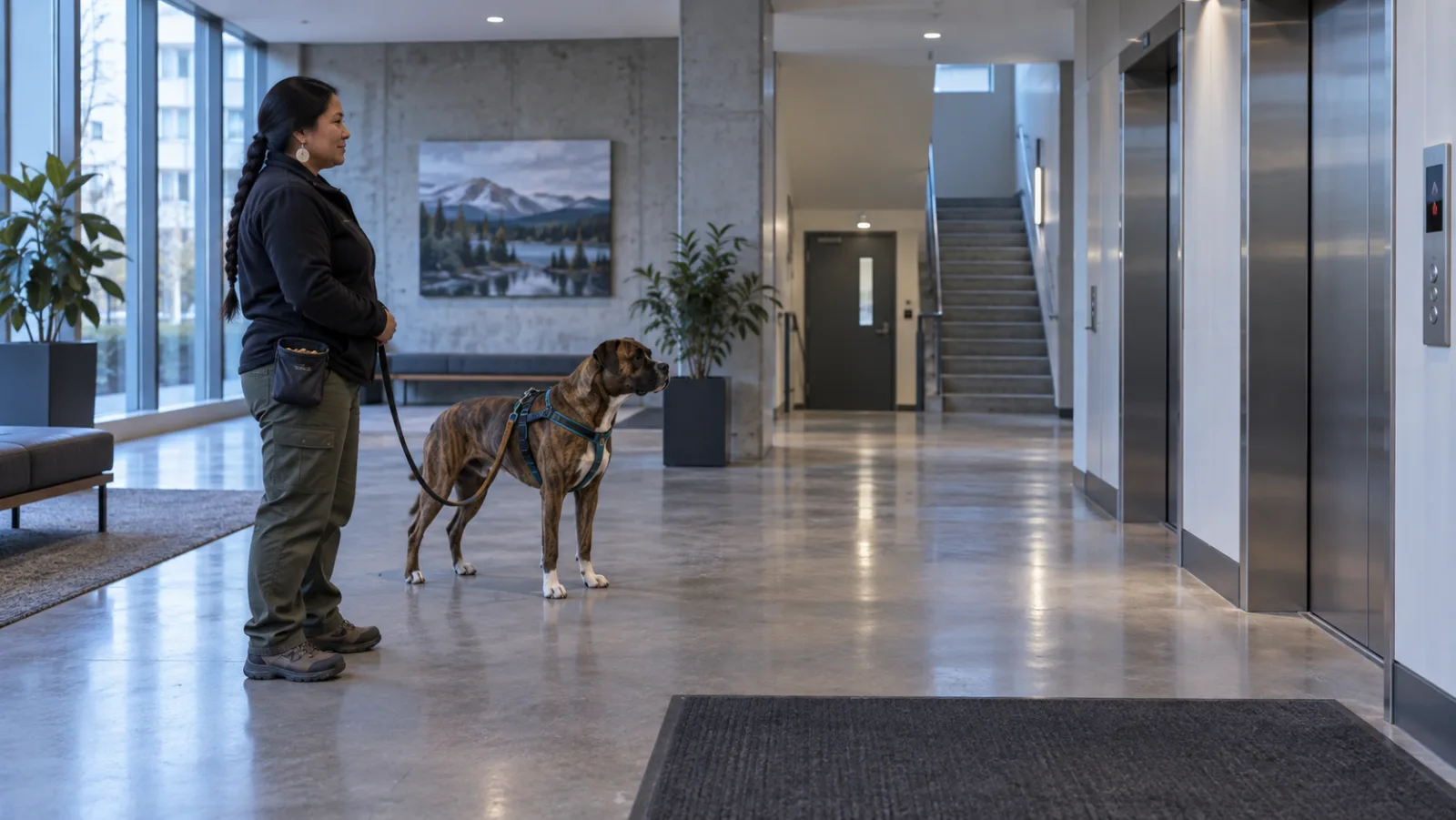
A dog afraid of elevator travel may stop in the hallway, flatten at the chime, refuse the metal threshold, or enter and panic when the floor moves. Those are different problems compressed into one necessary trip. Pulling the leash because the doors are closing can make the doorway even more predictive of restraint.
This free door-to-ride plan separates the lobby, call button, opening doors, stationary car, closing doors and one-floor movement. Your dog is allowed to step away. Success begins with an observable choice—such as looking at the closed doors and turning back to you—not with enduring a full ride.
DogPath is free to download or start; some features or usage levels may require an in-app purchase. You can use it to choose one visible behavior, prepare rewards, run a brief practice, change distance, duration or distraction one at a time, and record the result. It cannot diagnose fear, assess a public space, or guarantee safety. Sudden change, pain, panic, aggression or bite risk requires veterinary or qualified in-person help.
Dog afraid of elevator: identify the exact moment
Observe from a distance where your dog can eat, sniff and turn away. Note whether tension begins at the corridor turn, the call chime, the opening seam, the gap underfoot, another passenger, the closing doors, or the first movement. Early signs include slowing, leaning away, a closed mouth, low body, scanning, paw lifting, food refusal and repeated shaking off. Do not provoke a stronger response to confirm it.
Rule out practical barriers. Slippery floors, a painful jump across the gap, poor vision, noise sensitivity or previous trapping can change the plan. A dog who suddenly refuses lifts or stairs, moves stiffly, loses balance, or appears nauseated needs veterinary advice. If your dog lunges at people or dogs in the lobby, arrange management and professional help rather than rehearsing beside strangers.
Choose a starting behavior you can see: walking to a lobby marker, looking at closed doors, checking in after a chime, or placing one paw before the threshold. Write that single criterion down. ‘Be confident’ cannot be measured; loose movement, taking food gently and choosing to return can.
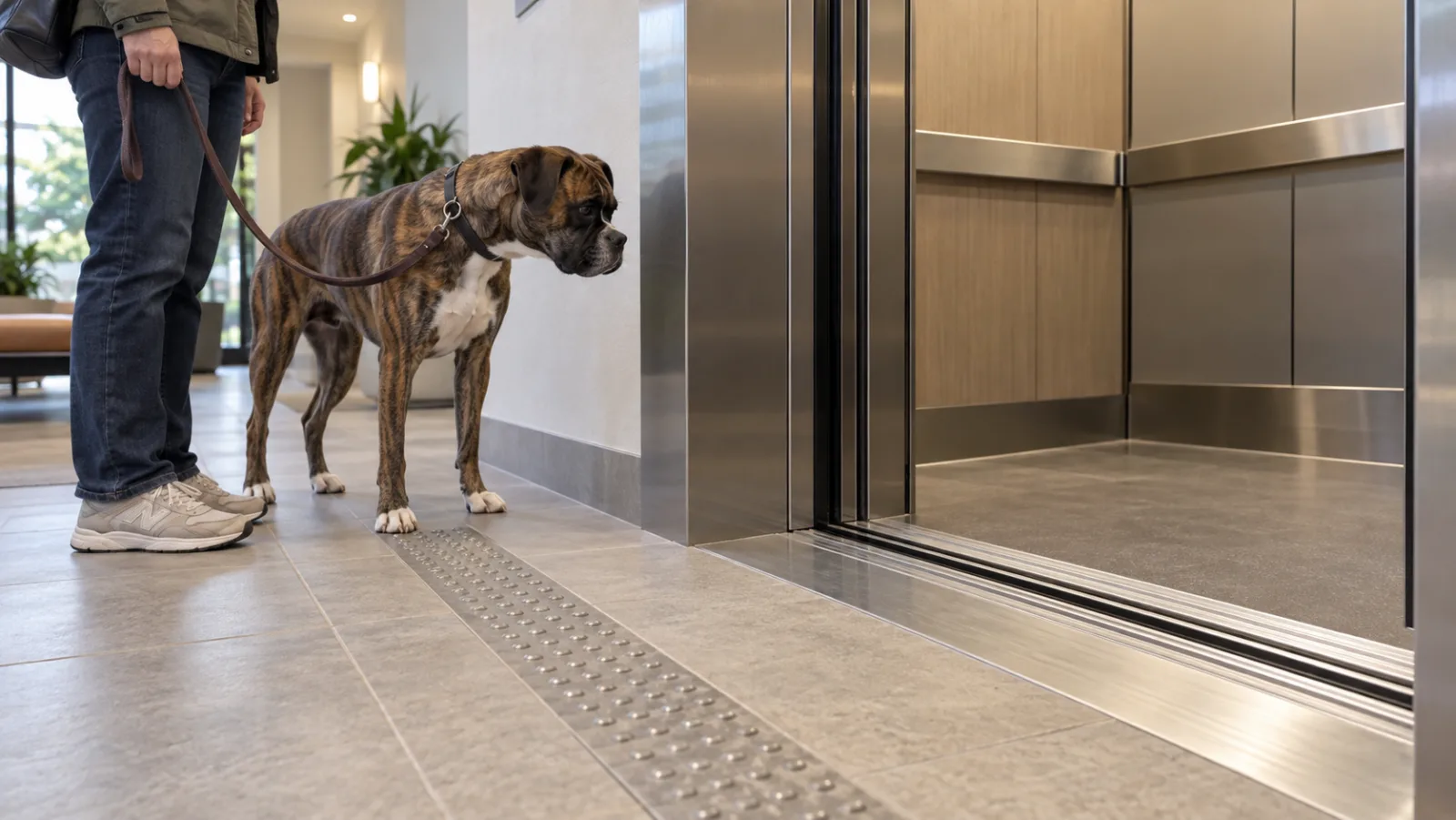
AVSAB guidance on avoiding forced exposure when a dog is afraid
Prepare a safe off-peak practice
Visit when the building is quiet and you are not late. Use a well-fitted harness and ordinary leash, carry pea-sized rewards, and know where you can retreat without blocking residents. Never loop a leash around a rail or let it trail across the door gap. Do not hold closing doors with your body, and do not practise in a car that may leave before both of you are ready.
Recruit another adult when possible. One person can call and release the lift while the handler watches the dog. Agree that any freeze, scramble, hard stare, repeated escape attempt or refusal of normally valued food ends the repetition. Stairs are an alternative only when suitable for the dog's body and the route is safe; escalators can trap paws and are not a training substitute.
Begin far enough away that the chime and opening doors are background events. Reward after the dog notices, placing food beside or slightly behind them so retreat remains available. Leave before traffic increases. Two comfortable minutes create better information than ten minutes of accumulating stress.
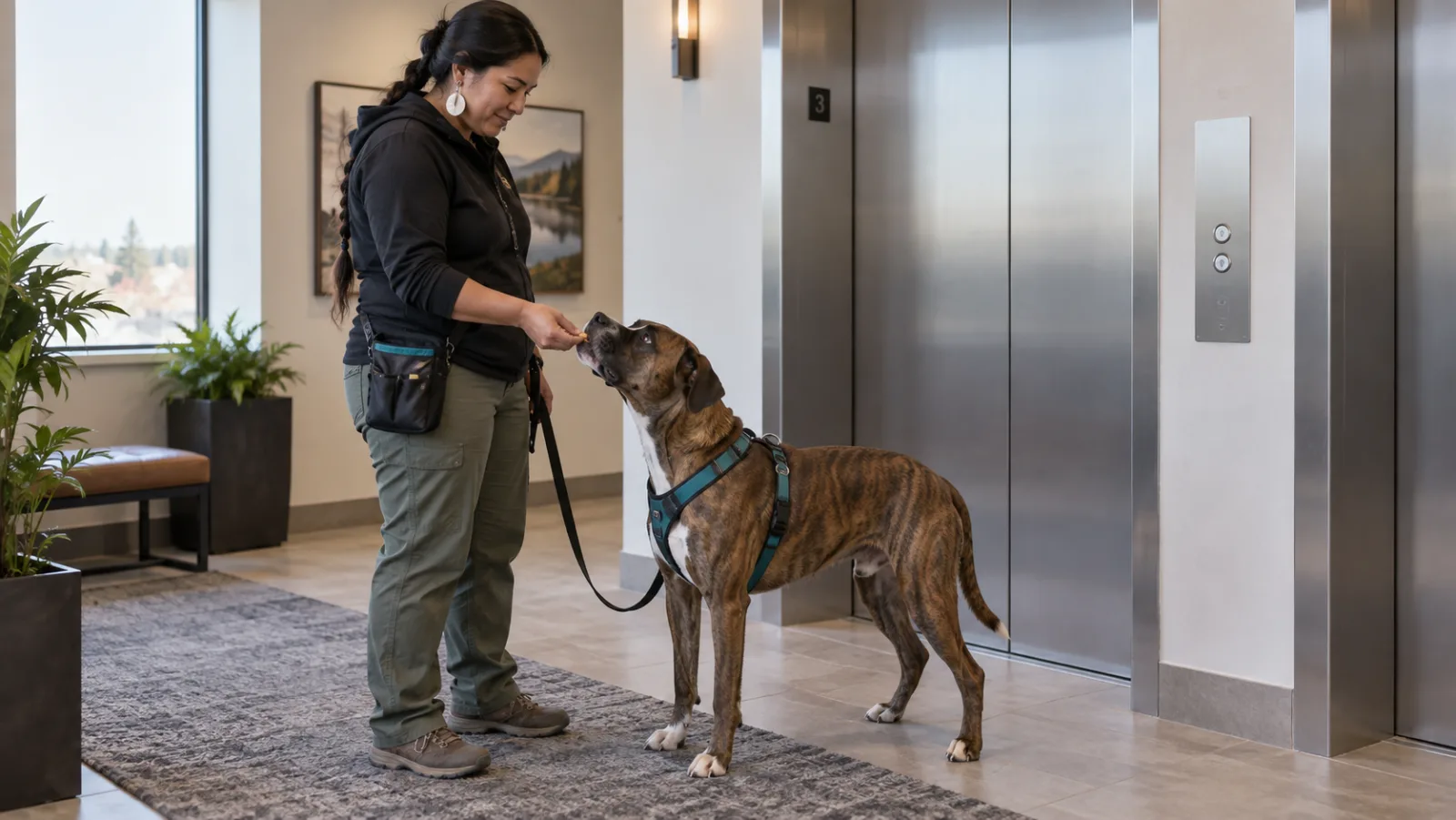
Use the free DogPath workflow for one visible step
Create a practice for one behavior, for example ‘walk to the lobby mat and check in.’ Prepare rewards before approaching. Practise for three to five easy repetitions, then stop. Record the closest comfortable distance, the event that occurred, whether food was taken normally and how quickly your dog returned to ordinary movement.
Change only one variable next time. Move the lobby marker slightly closer while keeping doors closed; or stay at the same distance while another adult calls the lift once. Do not simultaneously add a busy passenger, longer waiting and entry. If the result worsens, restore the previous version rather than trying to persuade the dog through it.
A log is useful because memory favors dramatic attempts. DogPath can hold the step and result, but a paper note works too. Record behavior rather than labels: ‘looked, ate, turned away, recovered in ten seconds’ is more useful than ‘stubborn.’ The app supports everyday practice; it does not decide whether a public setup is safe.
Teach voluntary entry before any ride
When the dog approaches open doors comfortably, work with a stationary empty car. Stand outside and reward looking inside. Later reward a nose over the line, one paw, then a complete step only if offered. Place rewards where the dog can collect them without being lured beyond a point they would not choose. Allow an immediate exit after every entry.
The floor gap, reflections and texture may each matter. Put no loose mat across the moving threshold, but if building rules permit, use a stable nonslip surface fully inside the car. Practise stepping onto a similar surface at home first. Keep the leash clear of the doors and never pull from inside while the dog remains outside.
Repeat easy exits as carefully as entries. A dog that rushes out may be worried by the closing timer or threshold. Reward waiting only briefly, then leave together while the doors are fully open. Formal guide-dog programs also teach elevator work through reinforced targets and controlled steps; ordinary pet training should be equally deliberate, without demanding guide-dog performance.
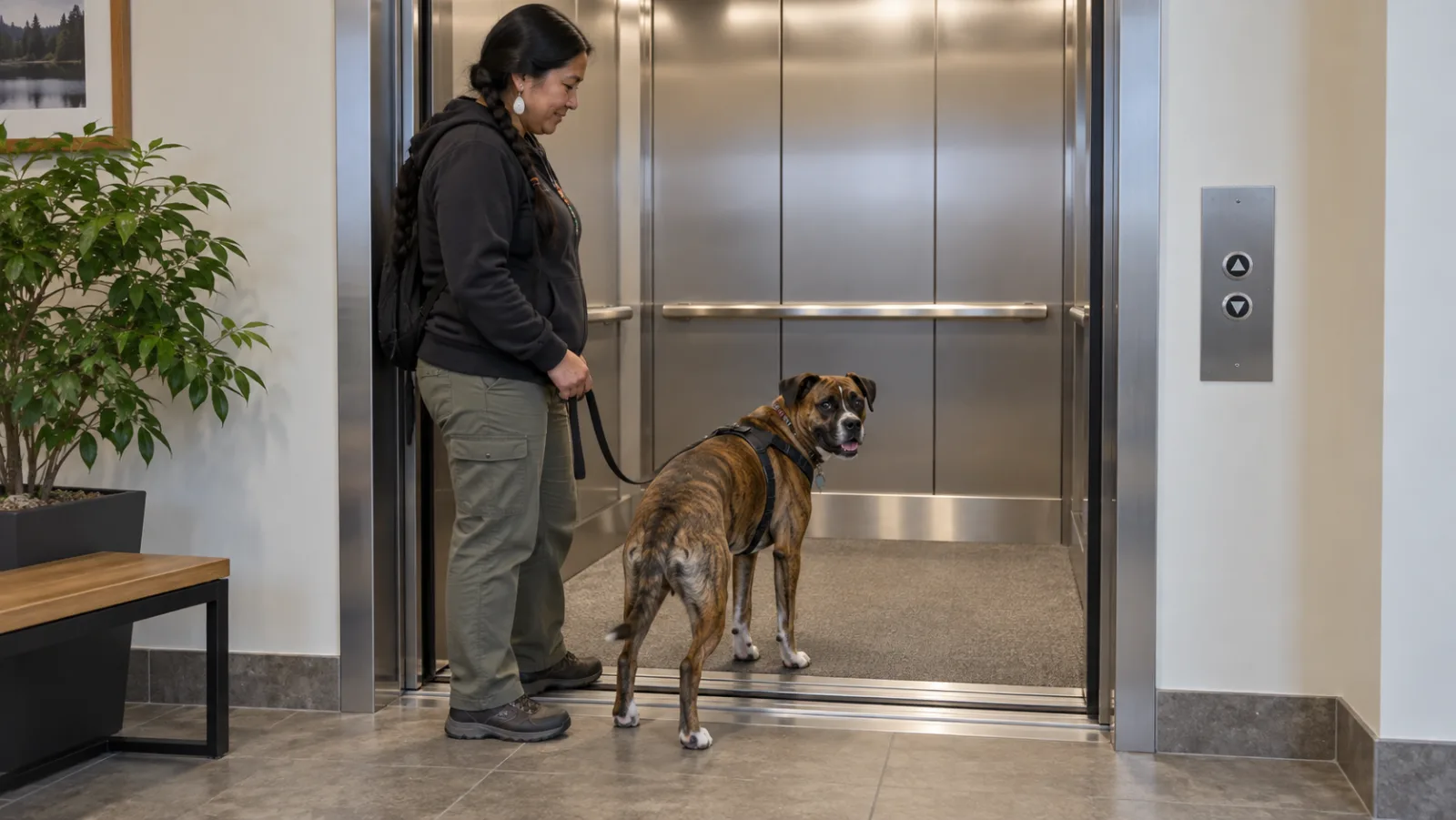
Guide Dogs for the Blind description of reinforced elevator targets
Add closing doors and one-floor motion separately
Only after relaxed full entry should the doors begin to close. Use a helper and the easiest safe arrangement. Start with a brief partial close if the lift controls reliably allow it, then reopen before concern. Never obstruct safety sensors or improvise with doors. If partial control is unavailable, continue stationary practice until a qualified trainer can help plan the transition.
For the first ride, choose one floor at a quiet time. Stand away from the door seam, keep the leash short enough to avoid the gap but slack, and offer several small rewards if the dog can eat. The floor's acceleration may produce a crouch or balance shift; do not cue a sit. Let the dog choose a stable stance and exit into a quiet landing.
Finish after one easy ride. Do not ride repeatedly to prove success. On another day, change duration by one floor, then separately add a familiar passenger or mild lobby activity. Crowded lifts, luggage, other dogs and rushing people are distractions, not final exams. Step aside and take the next car whenever space is poor.
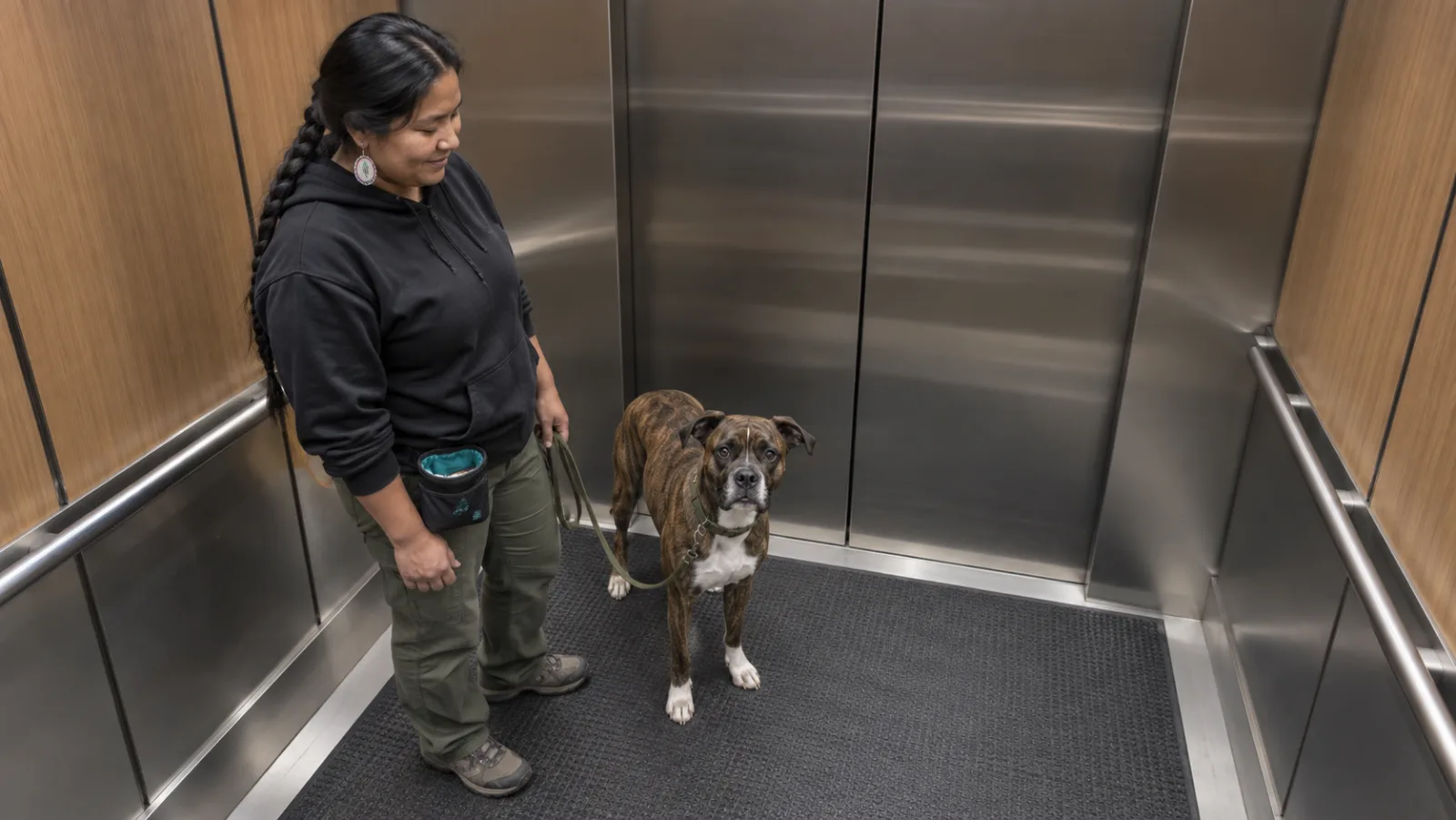
build comfortable harness handling before practising in shared spaces
Read recovery and keep management available
After exiting, move away from the doors and allow sniffing, water and quiet recovery. Note panting in cool air, pacing, vigilance, trembling or inability to take familiar food. A dog can complete a ride and still have been overwhelmed. Recovery time helps decide whether the next session repeats, becomes easier, or pauses.
On necessary trips before training is complete, use the least difficult safe option: travel off-peak, ask a companion to check the car, create distance from passengers, or use suitable stairs. Do not disguise flooding with continuous treats. Food supports learning only while the dog can choose, swallow normally and process the environment.
Seek veterinary care for sudden refusal, pain, dizziness or nausea. Seek qualified behavior help for panic, escape attempts, aggression, guarding the doorway or bite risk. Building staff may also need to address faulty chimes, abrupt doors or slippery flooring. A reward-based plan can build skills, but it cannot replace medical care, equipment maintenance or an individual safety assessment.
Progress is functional when your dog can approach, enter, ride and recover without restraint or prolonged distress. Some dogs will always prefer an uncrowded car or extra distance from the seam. Respecting that preference is compatible with useful elevator travel.
Keep the skill current with an occasional easy off-peak ride after training. If construction, a new building, crowded conditions or a different lift changes the picture, shorten the trip and restore the generous starting distance instead of assuming that learning transfers automatically.