
Cooperative everyday care
Dog Harness Training: Free Calm-Fit Plan
Turn the moment your dog sees the harness into small voluntary steps, from looking at it to a comfortable, secure walk.
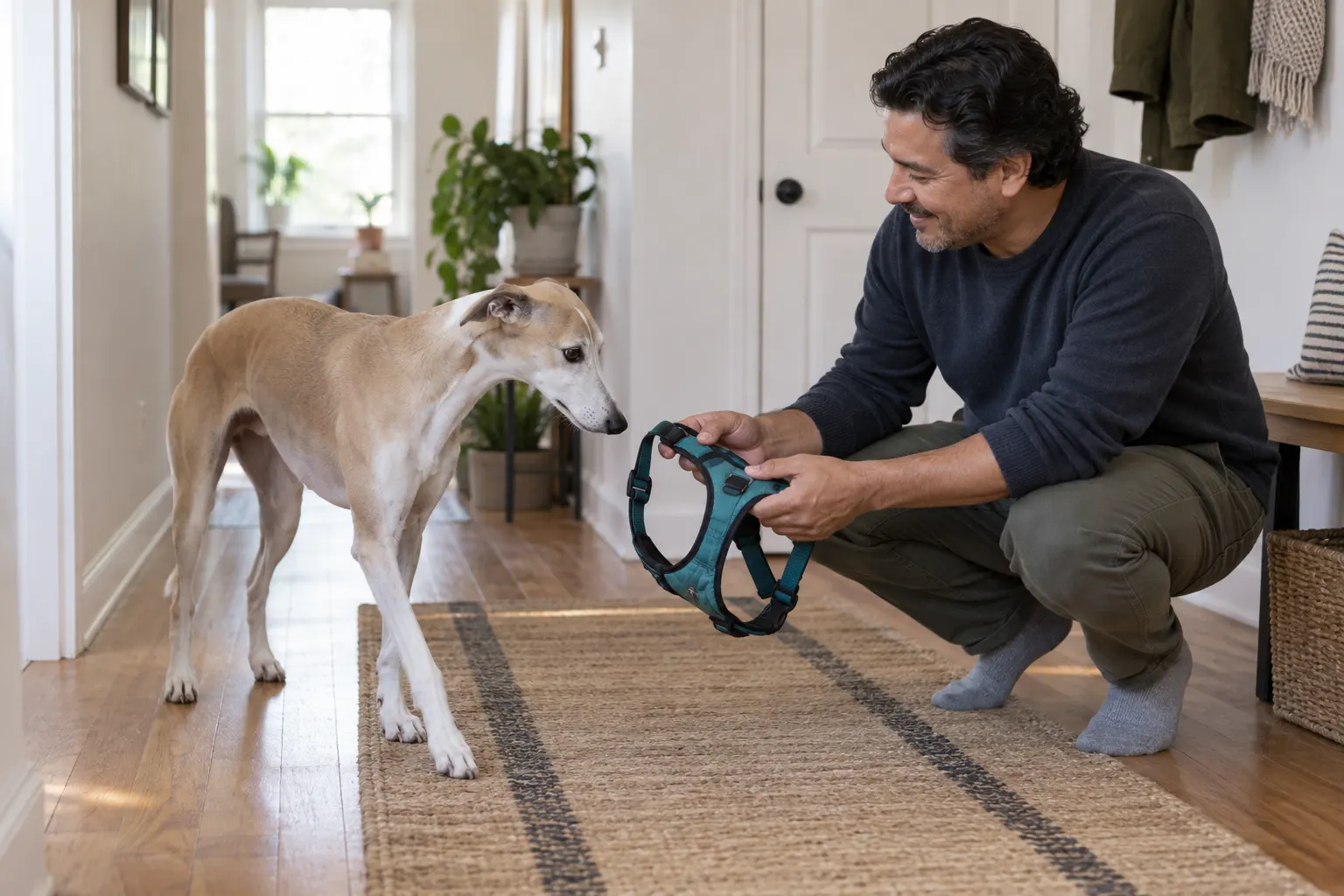
You pick up the harness and your dog disappears behind the sofa. The walk has not even started, yet the same tense negotiation happens every morning. Dog harness training starts by changing that first moment. Instead of trying to dress a reluctant dog faster, find the exact part that is hard: the sight of the gear, a loop near the head, hands by the ribs, a buckle sound, or how the fitted harness feels when the dog moves.
This free plan uses visible choices. Your dog can look, approach, touch the opening, withdraw, and try again. Reward a step before the next one, rather than making food a trap that ends in restraint. A harness is useful when it fits, stays secure, and is accepted without panic. It does not teach loose-leash walking.
DogPath can help make the practice repeatable: choose one observable behavior, prepare rewards, run a brief session, change only distance, duration, or distraction, and record what happened. The app is free to download or start; some features or usage levels may require an in-app purchase. It cannot diagnose pain, approve an individual fit, assess bite risk, or guarantee progress. Sudden resistance, soreness, panic, aggression, or welfare concerns need suitable in-person help.
Start dog harness training with the problem, not the buckle
Watch one ordinary preparation without forcing the harness on. Does your dog move away when you touch the hook, when you lift the fabric, when it passes the face, or only when you reach underneath? Note whether they return voluntarily after the equipment is set down. A dog who happily approaches an empty harness but stiffens at the fastener has a different starting point from a dog who will not enter the room. Record the first small change in posture rather than waiting for a bark or escape.
Check the body before calling this a training problem. Look for rubbing, hair loss, pressure at the armpits, a twisted strap, pinched skin, stiff shoulders, or a previous injury. Confirm that the harness can be adjusted and that it cannot slip off during a walk. If the dog suddenly rejects a familiar harness, limps, cries out, guards a body area, or bites when touched, arrange veterinary advice before another fitting session. Do not work through pain with better treats.
Blue Cross advises getting dogs used to walking equipment before a first walk, rather than introducing it amid the excitement of an outing. That principle also helps an adult dog restarting after a bad experience: separate dressing practice from the walk deadline. Keep any necessary outings safe with equipment the dog already tolerates, and ask a qualified professional for an individual alternative if you do not have one. Never leave a dog unsecured in a risky place while practising.
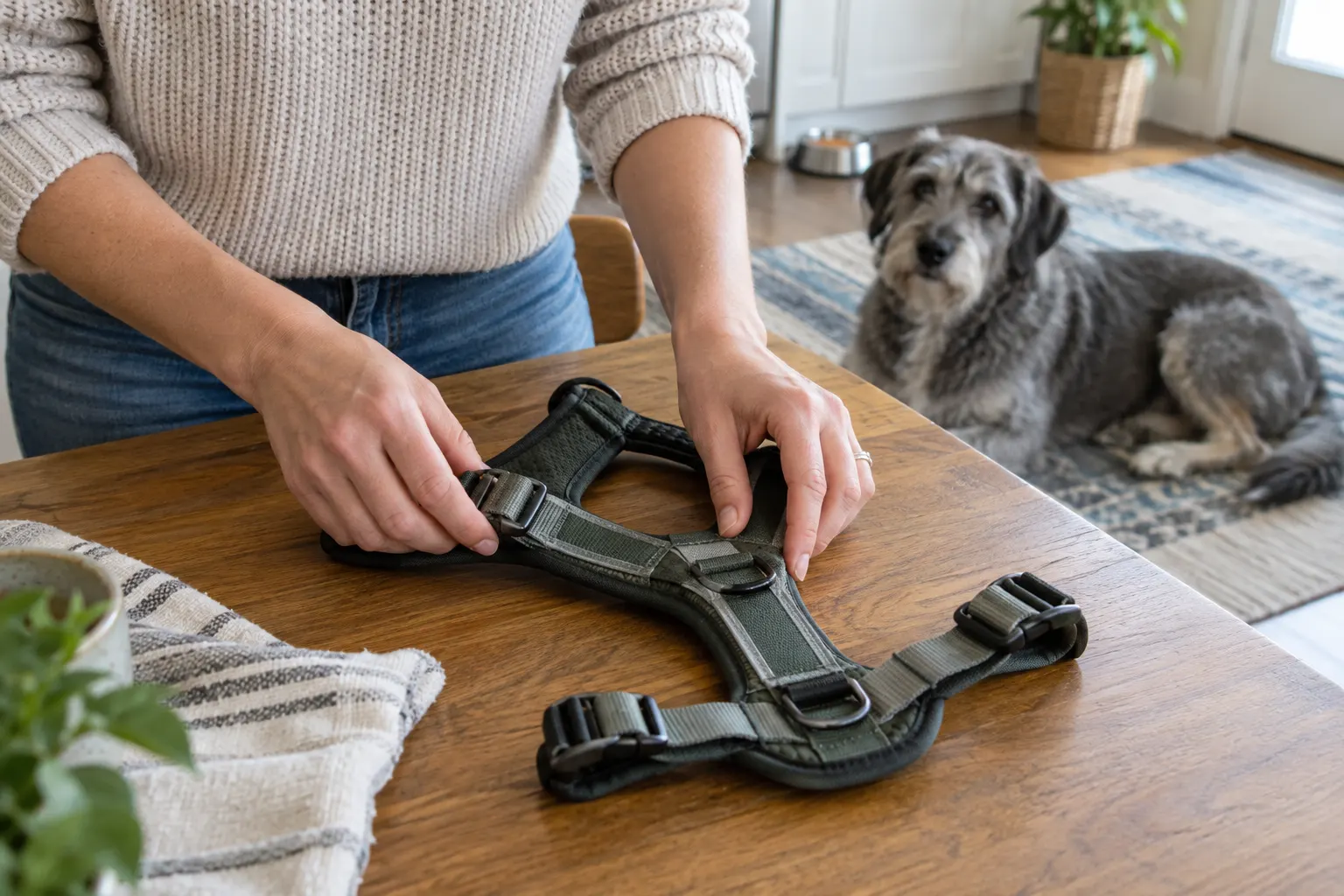
Blue Cross advice on introducing harness and lead before a first walk
Prepare a quiet setup and choose one visible success
Choose a room where the dog can move away and return. Put the harness on the floor several feet from the dog, with its buckles open and no leash attached. Have small, easy-to-eat rewards ready before you begin. Start while the dog is rested, not at the moment the household must leave. A session can end after three relaxed choices; more repetitions are not better if the dog's body becomes tight or the food stops being interesting.
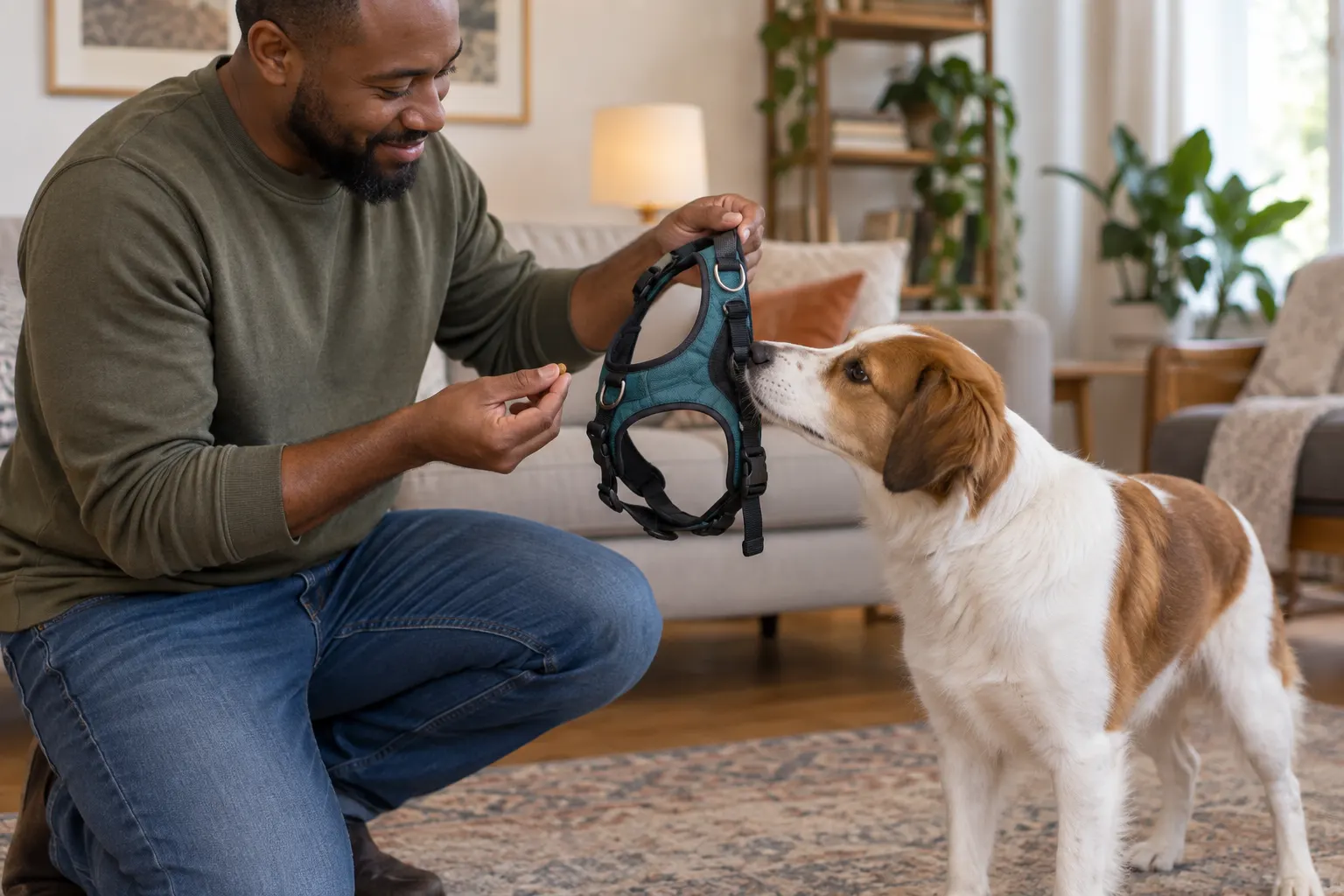
Pick a criterion you can actually observe: glance at the harness, step toward it, sniff the strap, or touch the opening with the nose. Mark that action with a familiar word or click, then place the reward so the dog remains free to choose the next repetition. If the dog stretches forward while the back feet stay planted, the equipment may already be too close. Move it away and reward a softer glance. The goal is a willing approach, not merely the absence of protest.
The RSPCA explains reward-based training as arranging a successful behavior and rewarding it. In this setting the reward should follow the chosen action, not conceal a rushed grab. For a dog who turns away, pause, remove the equipment, and make the next trial easier. DogPath can store today's criterion as 'looks at harness from one metre' or 'touches open loop once'. A clear note makes tomorrow's first step kinder than a vague memory that yesterday went fine.
Make the opening a voluntary target
Hold the neck opening wide and still, at the dog's comfortable height. First reward a look toward the opening. Then reward a nose moving near it. Only after those are easy should the dog choose to place the tip of the nose through. Let the dog pull back whenever they want. If the opening collapses or the fabric brushes the face unexpectedly, reset it before inviting another try. Do not follow a retreating head with the harness.
A treat held beyond the hole can encourage investigation, but watch the result: if the dog reaches for food with a tight body and recoils the moment it is gone, the step was too big. Place the reward near your hand after the voluntary nose movement instead. Some dogs dislike anything going over the head. A properly fitted style that opens at the neck or steps around the body may be easier, but a different design still needs gradual introduction and a secure fit.
Increase only one dimension at a time: first how far the nose enters, later a second of contact. If the dog walks away, reset at the previous easy step when they return. Our guide to short training sessions can help keep this stage small enough for daily life.
Teach touch, straps, and buckle sounds separately
When the dog repeatedly offers the head movement and looks relaxed, introduce a brief touch of the loose strap against the shoulder. Touch for less than a second, mark, reward, and remove it. Next, practise a hand moving toward the side without fastening anything. A dog can accept the head loop yet dislike hands under the chest; treating these as separate tasks reveals the real sticking point.
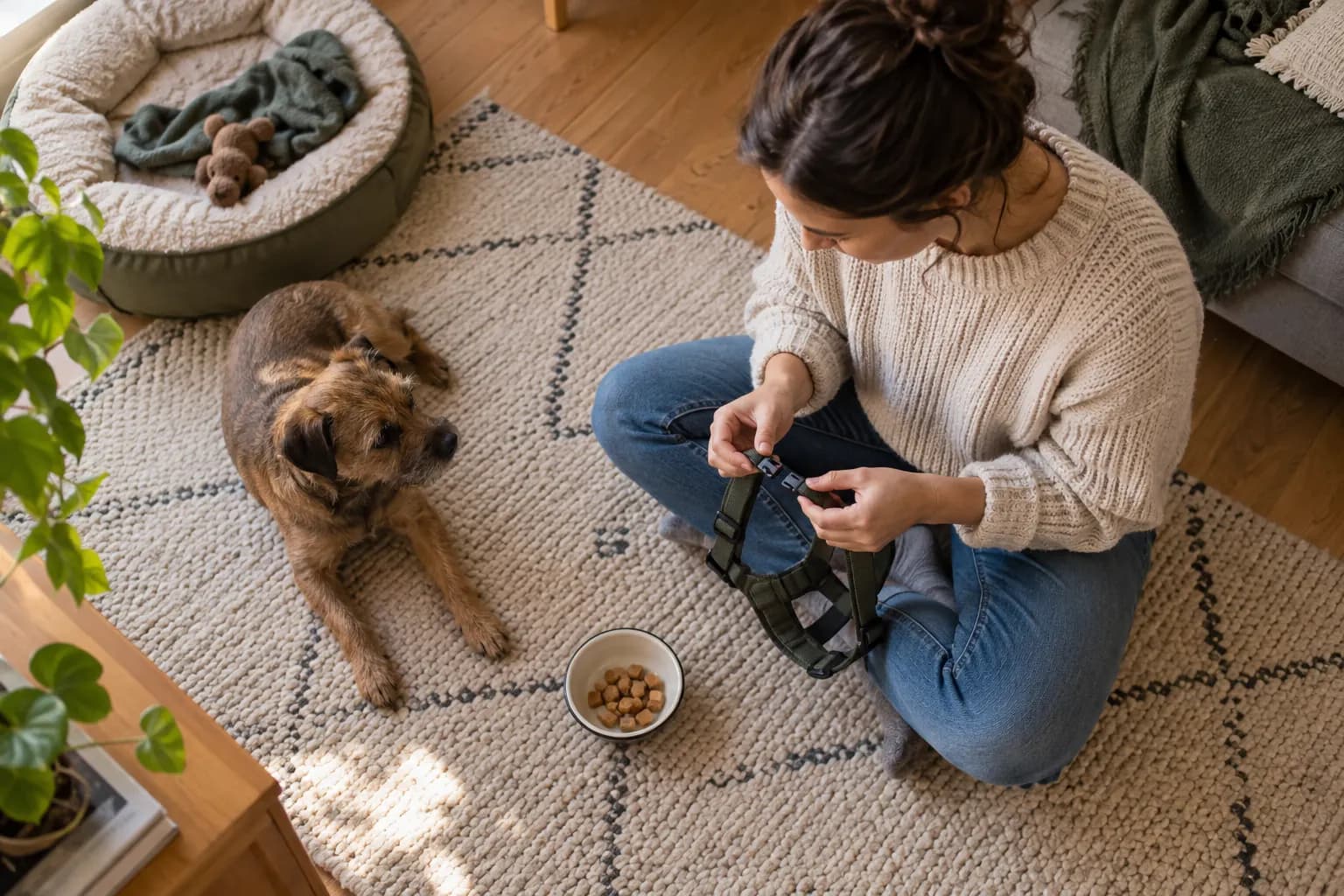
Close the buckle away from the dog first, then reward a calm glance toward the sound. Later bring the unfastened buckle nearer, without touching the body. If the dog startles, increase distance and lower volume by handling the pieces more gently. Only when the sound and hand movement are comfortable should you fasten one strap while the dog stands freely. Check that no hair or skin is caught. Release promptly, reward, and end before fatigue turns cooperation into stillness from resignation.
Do not hold the dog's collar, pin their body, lift a leg by force, or lure them into a position that you immediately trap. For a dog with a bite history or intense fear, this is not a do-it-yourself handling exercise. Arrange qualified in-person guidance and a safety plan. DogPath can record whether the dog tolerated a shoulder touch, a distant click, or a single fastening; the app cannot tell you from a tick box whether the dog felt safe.
Use DogPath to advance one criterion, not the calendar
Choose the visible behavior for the next session before opening the app. For example: 'approaches the harness from two steps away with a loose body', 'puts nose through the stationary loop', or 'stands while one open strap touches the shoulder'. Prepare the harness, rewards, and quiet room first. In DogPath, use the short lesson structure and a marker or clicker only if your dog already understands it. Mark the precise voluntary action, then allow a break. An app prompt should never outrank what the dog shows in front of you.
After a comfortable set, change one variable: move the harness a little closer, ask for one extra second of contact, or practise in a different quiet room. Keep the other two easy. Do not move to a busy doorway just because you completed several home repetitions. Record the location, criterion, first hesitation, reward used, and whether the dog re-approached after a pause. 'Three loose approaches, then a head turn when buckle lifted' gives you a useful starting point next time.
If a session becomes harder, choose the last easy criterion and finish there. The progress record is not a score for how many buckles were closed. It helps spot patterns: perhaps the strap texture is fine but the sound is difficult, or perhaps the dog accepts dressing indoors yet worries about the noisy corridor afterward. Our reward-timing guide explains why marking the exact choice matters more than waving food toward the harness.
Check fit and practise wearing it without a walk
Once fastening is comfortable, check fit on the standing dog rather than tightening straps while they are moving away. Follow the maker's fitting instructions, allow free shoulder movement, and look for rubbing around the chest and armpits. The dog should not be able to back out of the harness when gently checked in a safe enclosed space. Fit varies by body shape; if you are unsure about security or pressure, ask a knowledgeable professional to inspect it in person before attaching a leash outdoors.
Let the dog wear the harness briefly indoors while doing something ordinary and pleasant, then remove it. This separates the feeling of fabric on the body from doorways, traffic, and the full walk. Watch for freezing, pawing, rubbing, a tucked tail, or a sudden change in gait. Those signs mean stop and reassess fit and pace. Do not leave the harness on unsupervised as a shortcut to habituation; straps can catch or rub, and stillness does not prove comfort.
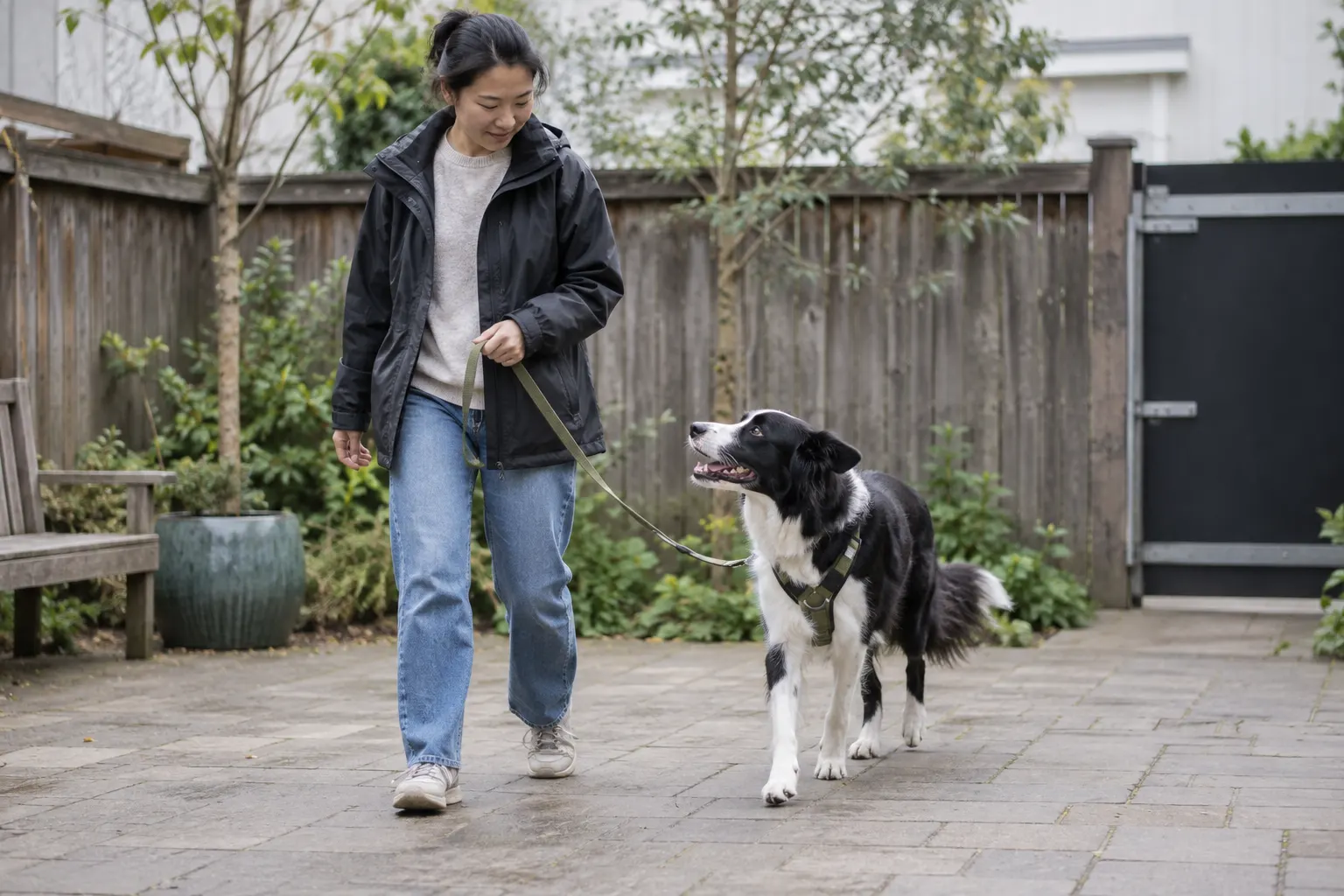
When the dog moves easily indoors, attach a slack leash in a secure area for a few steps. Reward movement and let the dog choose a sniffing pause. A short successful rehearsal can end there. The first real walk should start in a familiar, low-pressure place and use the same calm preparation. The harness keeps equipment secure; loose-leash skills and the dog's comfort still need their own practice. If outdoor movement changes, check the harness again rather than assuming stubbornness.
Review resistance honestly and know when to stop
Compare start and finish: Did the dog enter voluntarily, move freely, and return after a break? Record what produced a head turn. Stillness once does not mean the issue is solved.
Stop home practice and get veterinary advice for pain, sudden refusal, limping, skin lesions, or distress around touch. Panic, aggression, biting, or an inability to approach equipment despite easy steps calls for qualified in-person behavior support. DogPath can organize observations and brief reward-based practice, but it is not a veterinarian, a fitting service, or a safety assessment. The point of this plan is a dog who can participate comfortably, not a faster way to get out the door.