
Comfortable movement at home
Dog Afraid of Slippery Floors? Free Guide
Make everyday routes easier before asking for another step. Stable footing and a genuine choice matter more than crossing bare flooring.
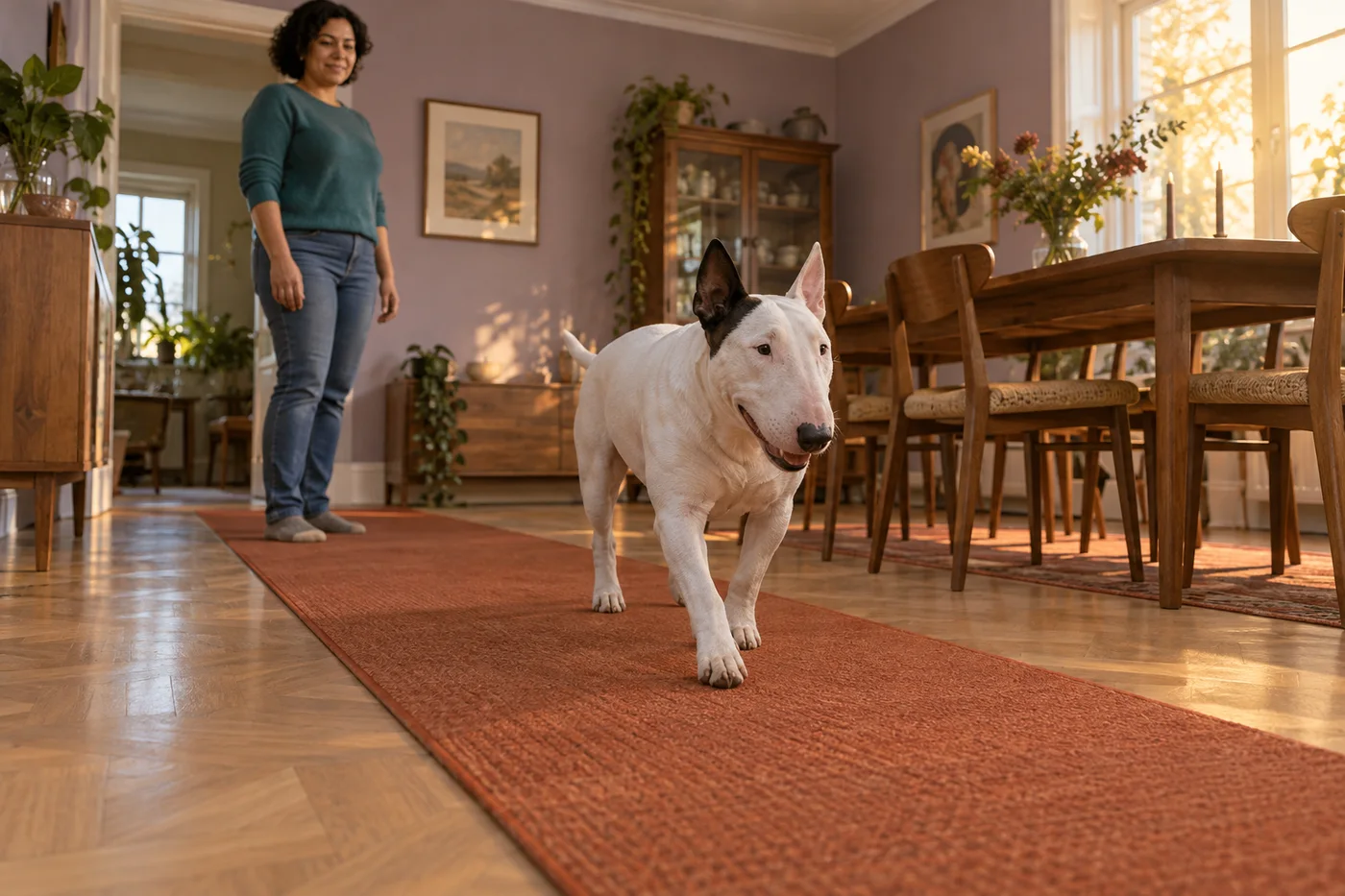
A dog afraid of slippery floors may stop at the kitchen entrance, hurry between rugs or wait for someone to carry them. Calling more loudly does not change the surface beneath their feet. Before treating this as a missing obedience skill, look at the route itself. Can the dog reach water, a comfortable bed and the usual exit without rushing over a floor they avoid? Start by making those ordinary journeys easier, not by arranging a test of courage at the edge of a tile.
This free guide is a practical home arrangement plan, not a diagnosis, rehabilitation programme or promise that every floor can become comfortable. You can use it without an app. A new reluctance to move, limping, weakness, pain or a change after a fall needs veterinary advice rather than repeated practice. Panic, aggression, bite risk or other welfare concerns need appropriate individual help. Do not make essential care, drinking or getting outside depend on completing an exercise first.
A dog afraid of slippery floors needs a route, not a test
Watch an ordinary journey without asking the dog to repeat a difficult part. Note where they pause, speed up, turn back or choose a longer carpeted route. A video of movement that happens naturally may help your veterinarian, but do not provoke slipping to capture it. Describe what changed: a new home, a moved runner, wet flooring, unfamiliar noise or reluctance that appeared despite an unchanged room. These are observations, not proof of a behavioural cause. Age alone does not explain a new difficulty, and younger dogs can also need medical attention.
Cornell's veterinary guidance lists stiffness, altered gait and difficulty rising among possible signs of osteoarthritis, which requires veterinary assessment. That does not mean floor avoidance diagnoses arthritis. Arrange help for changes in ordinary movement; seek urgent veterinary advice if the dog cannot stand, is severely distressed or has apparently injured themselves. While waiting for advice, provide an accessible comfortable area and follow the professional's movement instructions. Do not use this article to prescribe exercise, supplements, pain medication or a way to lift an uncomfortable dog. Environment changes support care; they do not replace it.
Connect the places your dog actually needs
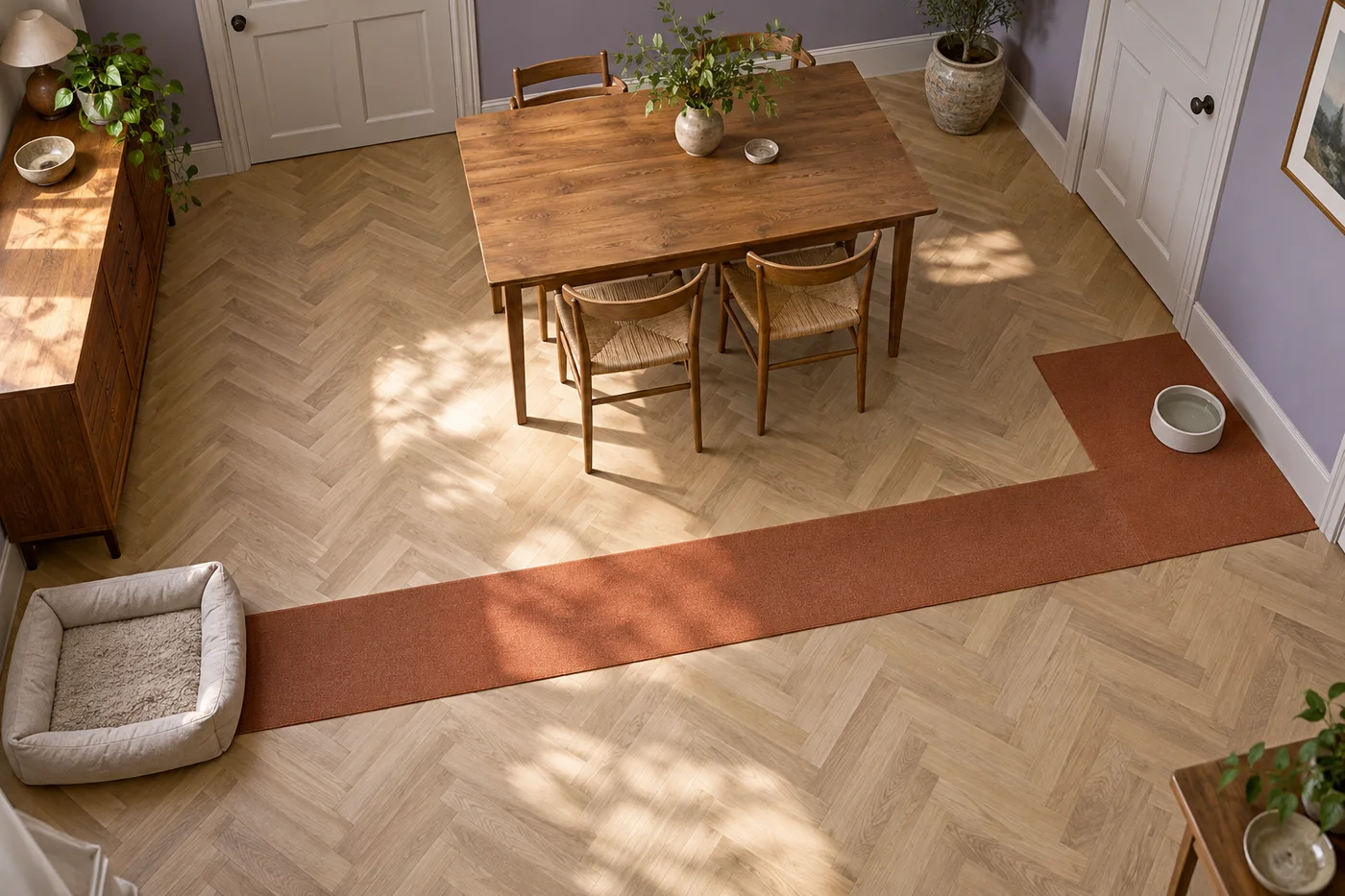
Sketch the short routes between resting place, water, feeding area and the usual door. A small rug in the centre of a large room may look helpful while leaving an unavoidable smooth gap at either end. Think about the whole journey, including getting out of bed and turning beside the bowl. Use broad stable coverage rather than a series of isolated stepping stones that requires accurate foot placement. Keep the route clear of chairs, shoes and cables. A dog should not have to squeeze sideways past furniture to remain on the covered part.
The RSPCA recommends rugs or carpet for older dogs who struggle on slippery flooring and keeping essentials readily accessible. Apply that practical idea to the room you have, without assuming a rug guarantees safety for a particular dog. Move a water bowl nearer when necessary, while protecting its standing area as well. Make changes when the dog is resting elsewhere so furniture movement is not another challenge. Check that a door can still open freely and that a washable surface does not block the exit. Keep alternative comfortable resting options available.
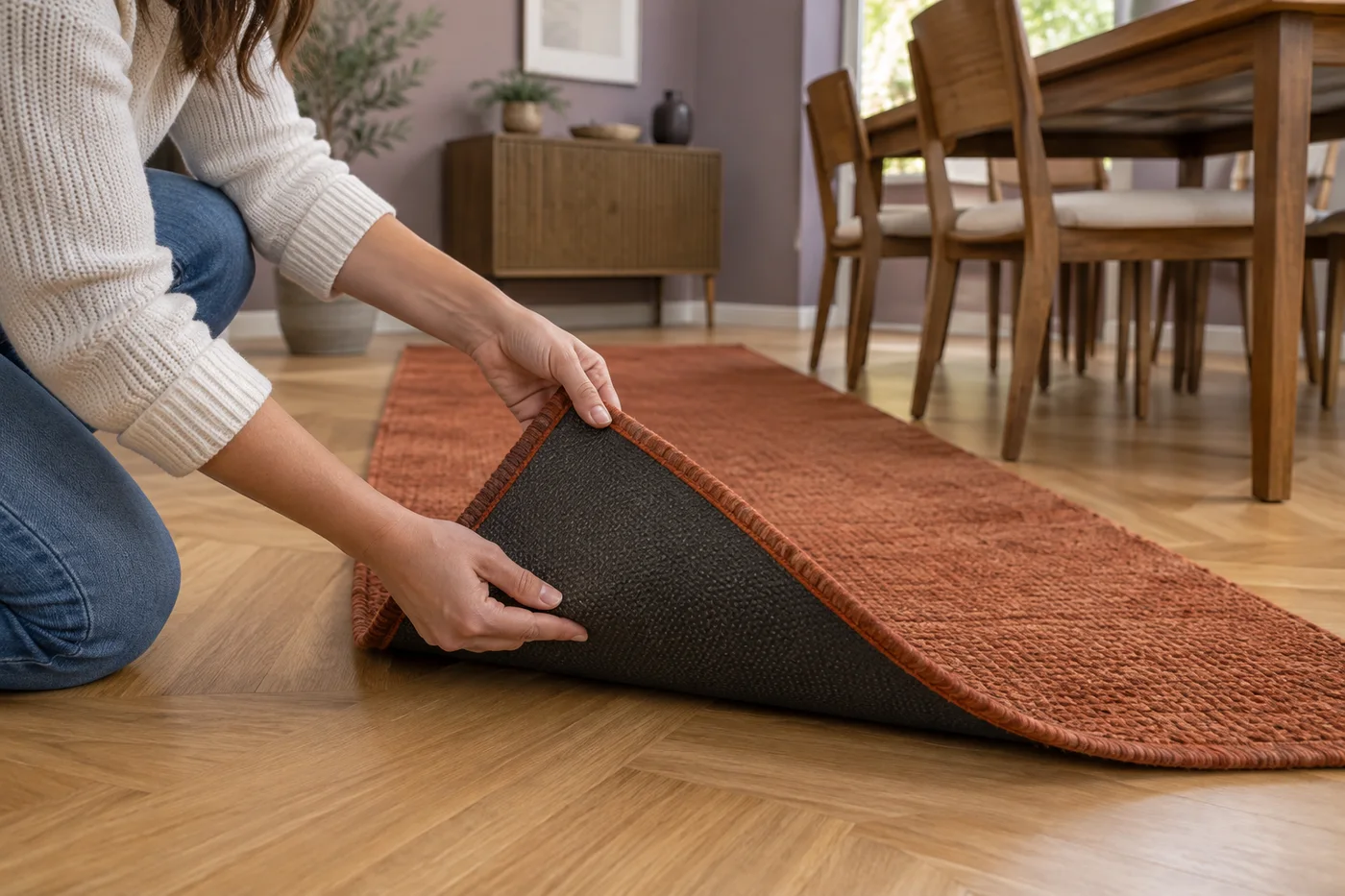
Check underneath the mat as well as on top
A soft surface can still move under a foot. With the dog elsewhere, check that the runner does not slide, bunch up or curl at the edges during ordinary use. Follow the flooring and mat manufacturer's guidance about suitable backing and cleaning. Loose towels are not automatically a stable alternative; thin fabric can gather into folds. Avoid creating a raised lip at a doorway or stacking layers that wobble. A broad flat surface with room to turn is more useful than a narrow decorative strip. Recheck after someone moves a chair or opens a nearby door.
Keep the area dry and clean according to its material instructions. A spill beside the bowl or residue from a new cleaner can change conditions. Do not apply homemade paw coatings, adhesives or floor chemicals as a training shortcut. Boots and other wearable traction aids need individual advice and comfortable introduction; putting them on does not establish that walking is safe. Ask a veterinarian or appropriate groomer about nails or paw hair if needed, rather than beginning unfamiliar handling during a floor problem. Our separate nail-care guide explains why care and learning require their own plan.
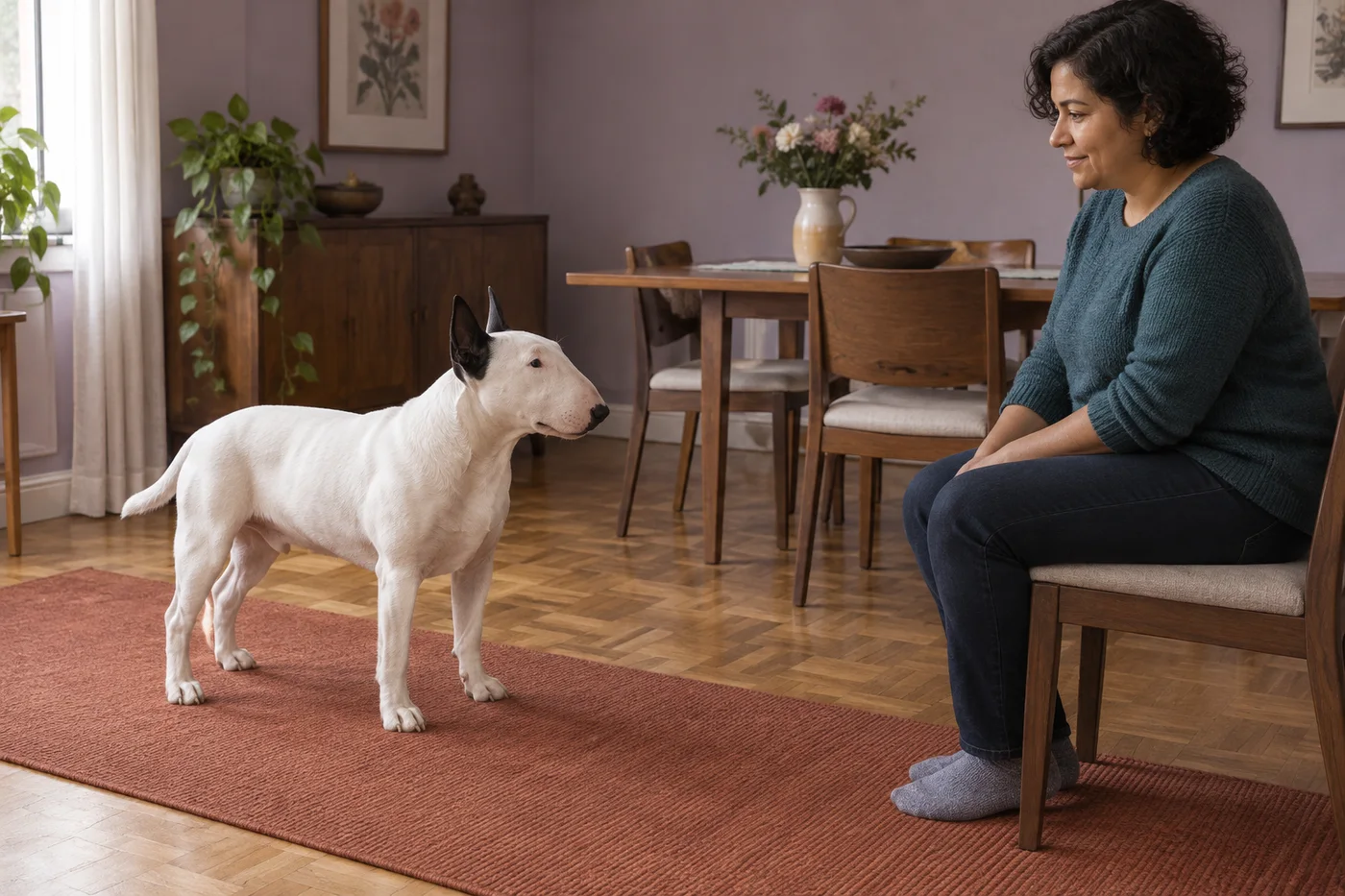
Offer an easy invitation on the covered area
Once ordinary movement is comfortable and any health concerns are addressed, begin where the dog already chooses to stand. Sit or stand sideways with empty hands, leaving a clear route back. A look toward you or a relaxed step along the covered path can be enough to acknowledge with a familiar quiet marker and a small suitable reward. Deliver it where the dog can receive it comfortably, not beyond the mat. You are making an easy opportunity pleasant, not persuading the dog to stretch across an uncovered gap for food.
Keep the invitation optional. If the dog stays in place, looks away or leaves, do not pull the collar, block retreat or raise the value of a distant lure until they venture farther than they can manage. Eating does not by itself prove comfortable footing. Watch the whole movement: can they pause and turn without scrambling? End the attempt when it stops being easy. Familiar reward-marker practice can be taught separately in a comfortable place. A new clicking sound beside an avoided surface adds another unfamiliar event instead of explaining the task.
Teach a clear reward marker away from the difficult location
Leave the helpful flooring in place
Do not assume the next stage must be removing a rug. A stable route can be a permanent useful accommodation, not a temporary crutch that has to disappear once the dog takes several steps. The meaningful outcome may simply be reaching water at a normal pace and returning to bed without a rush. Avoid moving mats a little farther apart each day to manufacture progress. That changes grip, distance and confidence together, while making an essential journey harder. There is no requirement to prove independence on the original bare surface.
If another room needs access, first prepare an equally manageable route there. Let the dog notice it without closing off the familiar option. Change one ordinary condition at a time: for example, practise the already easy route with a different adult standing farther away, keeping the surface and destination unchanged. Do not add visitors, a running child or another dog chasing through the room. For unavoidable unfamiliar surfaces, such as a veterinary reception, contact the venue beforehand about a suitable arrangement. An individual access plan is more useful than a last-minute obedience demand.
Protect bowls, corners and everyday pauses
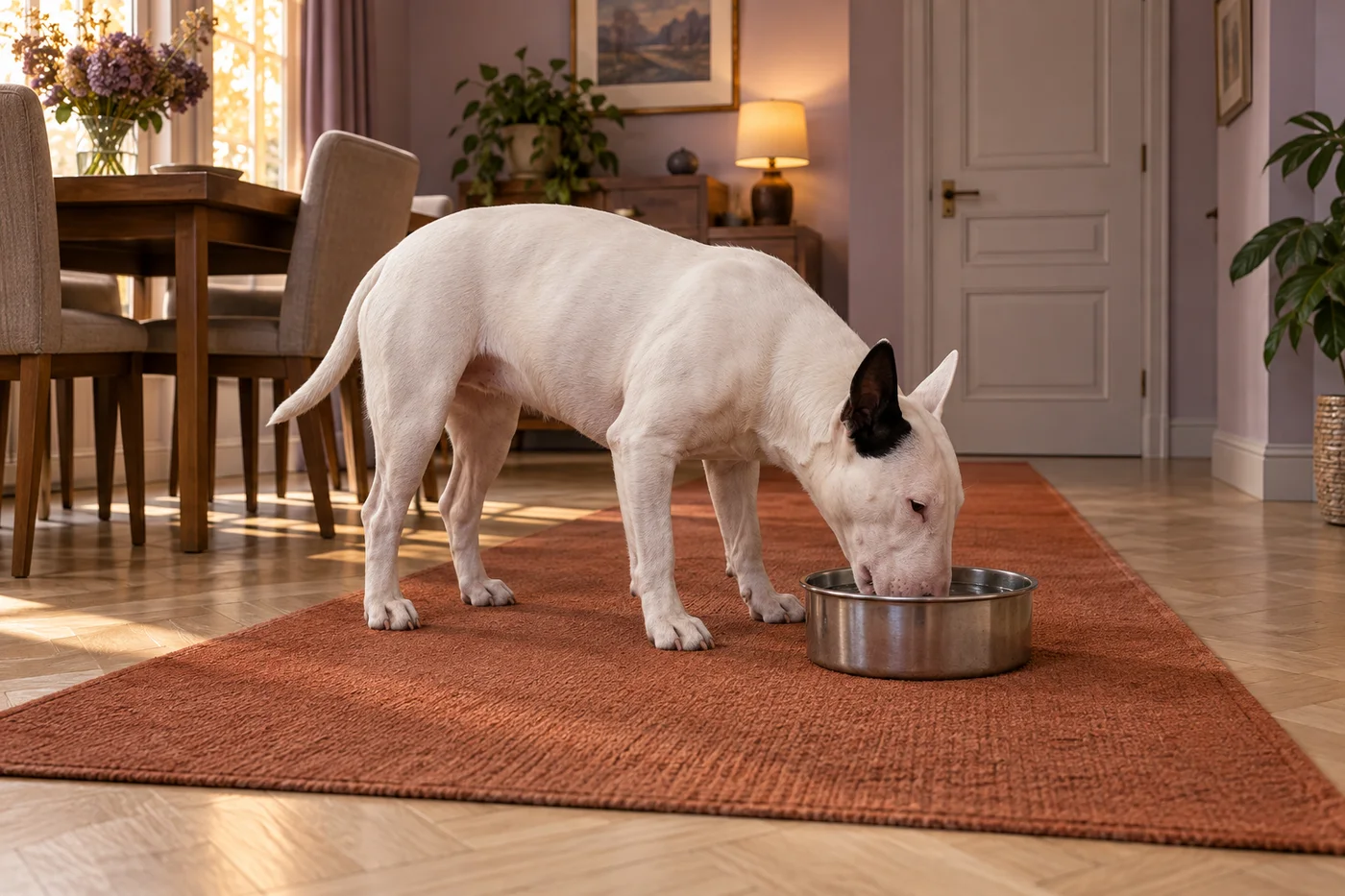
Walking straight is only one part of using a room. Check where the dog stops to drink, turns into a doorway, gets up from a bed or waits while you prepare a meal. A narrow runner may be sufficient for your stride but leave the dog's feet off either side when they change direction. Arrange a wider stable area at these points. Place bowls so they do not slide away and the dog does not have to brace across two different surfaces. Keep water available without needing an invitation from you.
Ask everyone in the household to preserve the arrangement. A visitor folding the runner away or a cleaner leaving the floor wet can undo the practical support without anyone noticing. Use a simple explanation: this path stays clear, this mat stays dry, and we do not call the dog over the uncovered shortcut. Avoid boisterous games that send the dog rushing through the room. If play is wanted, choose a comfortable suitable area and a different activity. Stability during rest transitions and normal household traffic matters as much as a successful supervised crossing.
Record the conditions instead of a bravery score
A useful note might say: 'broad runner from bed to bowl, floor dry, walked there without calling, paused to drink and returned'. Include uncertainty rather than assigning a confidence percentage from a short observation. If something became harder, check for a moved edge, a blocked turning space, a new noise or a change in movement. Do not run repeated trials to find the exact point where the dog slips or refuses. That threshold is not a training target. Share relevant changes with the professional helping you, especially if the same arrangement becomes difficult.
Paper notes are enough. DogPath is optional for organising ordinary reward-based practice and recording a brief factual result; it is free to download or start, with in-app purchases for some features or use levels. It does not assess flooring, diagnose pain, prescribe rehabilitation or guarantee safe mobility. Keep the phone away while watching the dog move. Our short-session guide can help you plan a small learning opportunity, but essential access should remain available outside that session. A day of simply maintaining a comfortable route can be the right decision.
Know when to stop rearranging and ask for help
Pause practice if the dog scrambles, freezes, repeatedly retreats or cannot comfortably use a route that was previously easy. Do not interpret an eventual crossing after repeated calling as proof the plan worked. Review the setup and seek veterinary advice for pain, changed gait or sudden reluctance. Persistent fear despite suitable footing can also need a qualified reward-based behaviour professional working with your veterinarian. Tell them what the dog needs to reach and which conditions you observed. The question is not how to win a standoff with the floor.
Until you have an individual plan, protect ordinary access and avoid unnecessary challenges. Do not improvise lifting, restraint or equipment for a dog whose movement is painful or unsafe. Panic, aggression, bite risk and welfare concerns require appropriate personal help. A useful home plan has clear limits: stable surfaces, room to turn, predictable routes and permission to stop. Some dogs may explore more once those needs are met; others need continuing accommodation or medical care. Comfortable daily life is the aim, not a dramatic bare-floor crossing for a camera.