
Cooperative care
Dog Hates Nail Trims? A Free Cooperative Care Plan
Replace the struggle to finish every nail with small, voluntary steps your dog can understand and repeat.
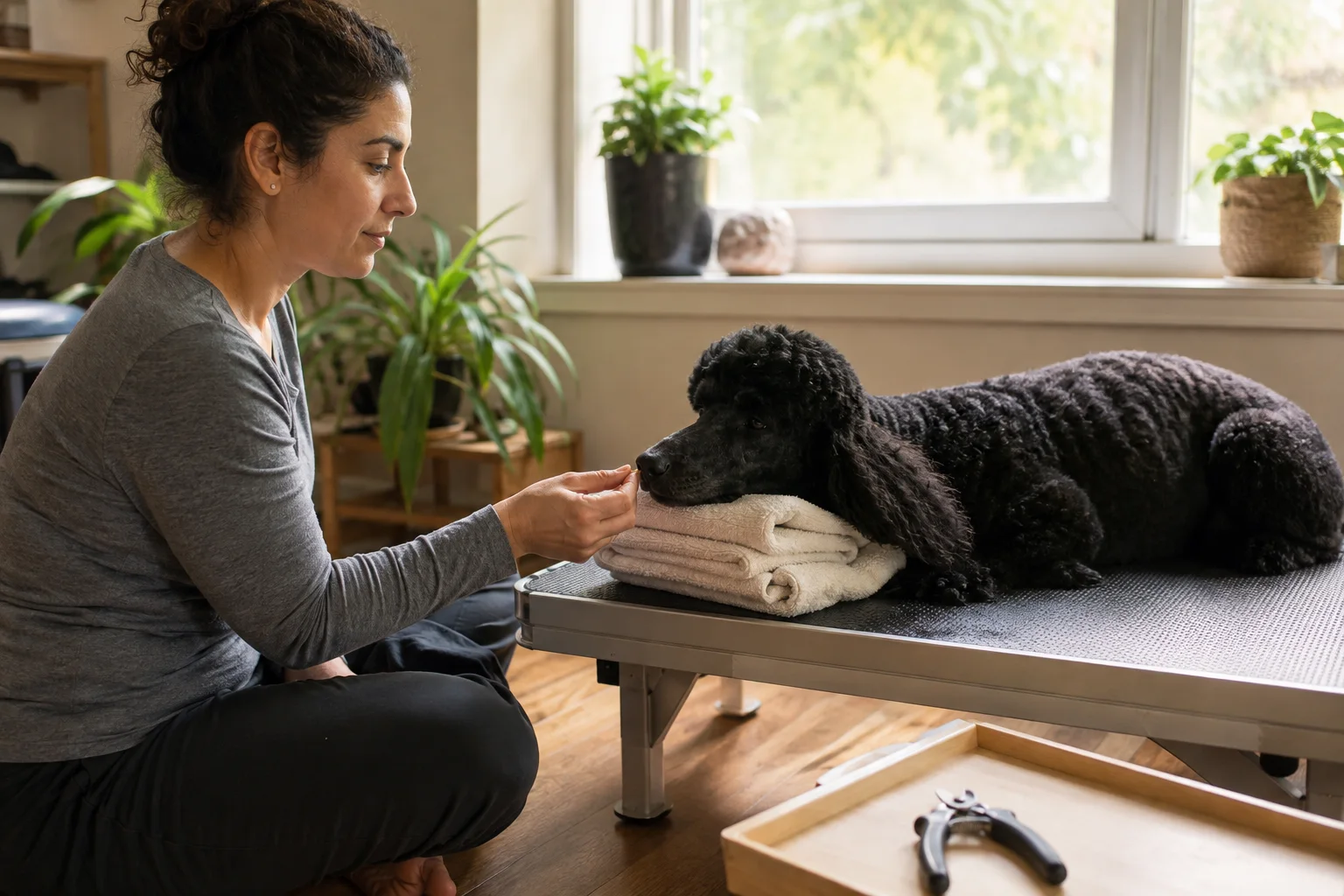
If your dog hates nail trims, the problem often begins long before a clipper reaches a nail. The tool appears, a paw is held, escape becomes difficult, and the dog learns that small warnings do not change what happens. Pulling away, freezing, lip licking, hiding, growling, or refusing food are information, not disobedience. The first useful goal is therefore not four perfect paws. It is one visible behavior your dog can offer comfortably, such as staying near the setup, placing a chin on a towel, or offering a paw for one second.
This free cooperative-care plan separates behavior practice from the technical job of shortening nails. You will find a calm baseline, choose a clear start behavior, introduce touch and equipment in tiny layers, change only one difficulty at a time, and stop while your dog is still able to choose and eat. When an actual trim is due, a veterinarian or experienced reward-based groomer can assess nail length, anatomy, health, and the safest tool. That distinction matters especially with dark nails, painful paws, previous injuries, or a dog who may bite.
DogPath can organize the behavior side into short sessions: select the visible response, prepare rewards, practise for a minute or two, adjust distance, duration, or distraction separately, and record the outcome before choosing the next step. The app is free to download and start; some features or usage levels may require an in-app purchase. It cannot diagnose pain, replace a qualified professional, or make an unsafe procedure safe. Its job is to make ordinary practice clearer between appointments.
When your dog hates nail trims, begin before the reaction
Write down the earliest moment your dog's body changes. That may be when the grooming mat appears, when you sit on the floor, when a hand moves toward a shoulder, when a paw is touched, or only when the clipper makes a sound. Notice weight shifting away, a closed mouth, a turned head, faster food taking, a lifted paw, scanning, or leaving. Start practice at an earlier, easier point than that. Waiting for a growl before reducing difficulty teaches neither of you to notice the quieter signals.
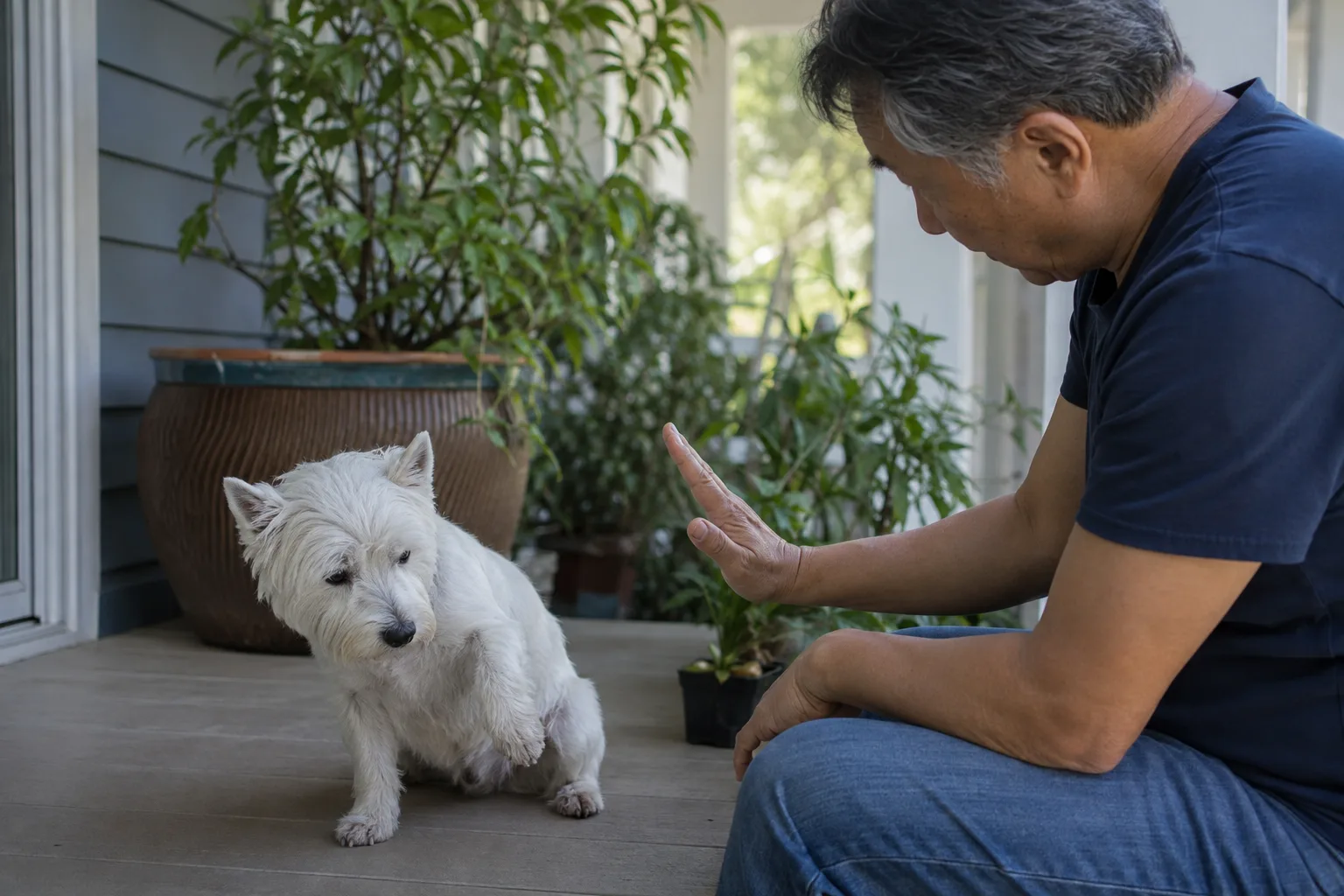
Run a baseline without trying to complete a trim. Place the familiar mat down, keep tools out of reach, and see whether your dog can approach, take a normal reward, and leave freely. Record the room, distance, type of touch, reward, and recovery time. One calm repetition is more useful than ten tests. Do not corner the dog, block an exit, repeat cues, or hold a paw until resistance stops. Stillness caused by fear is not the relaxed participation this plan is designed to build.
Check health and nail needs before behavior practice
Dogs differ in how quickly their nails wear. Breed, body weight, activity, walking surface, gait, age, and dewclaws all matter, so there is no universal calendar or ideal length you should copy from a photograph. Ask your veterinary team or a competent groomer to show you what your individual dog needs. The SPCA's nail-care guidance also explains why the living quick inside the nail makes technique important and why owners who are uncertain, especially with black nails, should get professional help.
Avoid training through possible pain. A new refusal, limping, swelling, heat, licking, a damaged nail, arthritis, skin trouble, or sensitivity in one limb needs veterinary assessment. Sedation or medical handling may sometimes be the kindest safe option; that decision belongs with a veterinarian, not an online plan. Cooperative care is preparation for routine husbandry, not a promise that every dog can or should remain awake and unrestrained for every necessary procedure.
Choose one start-button behavior your dog can control
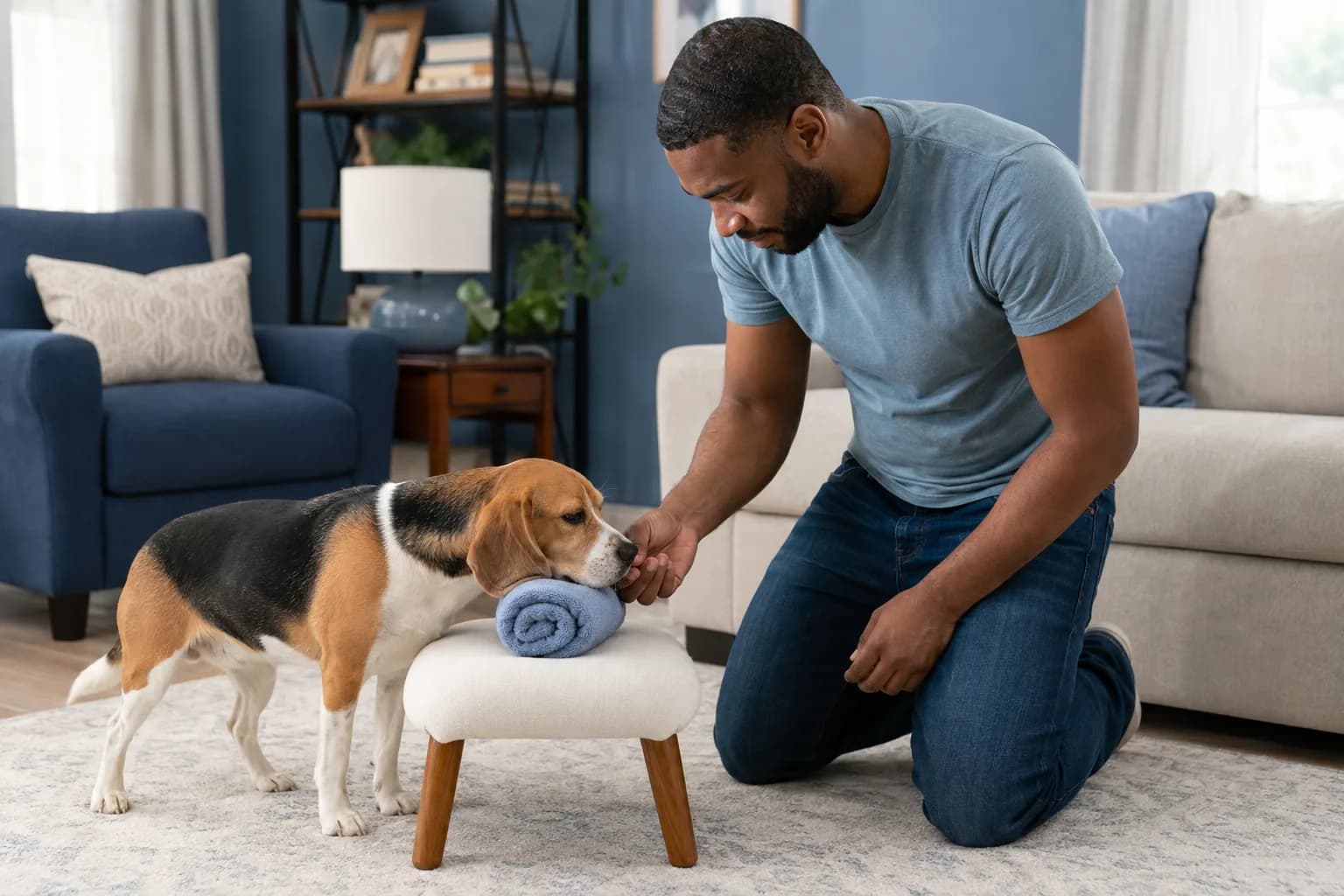
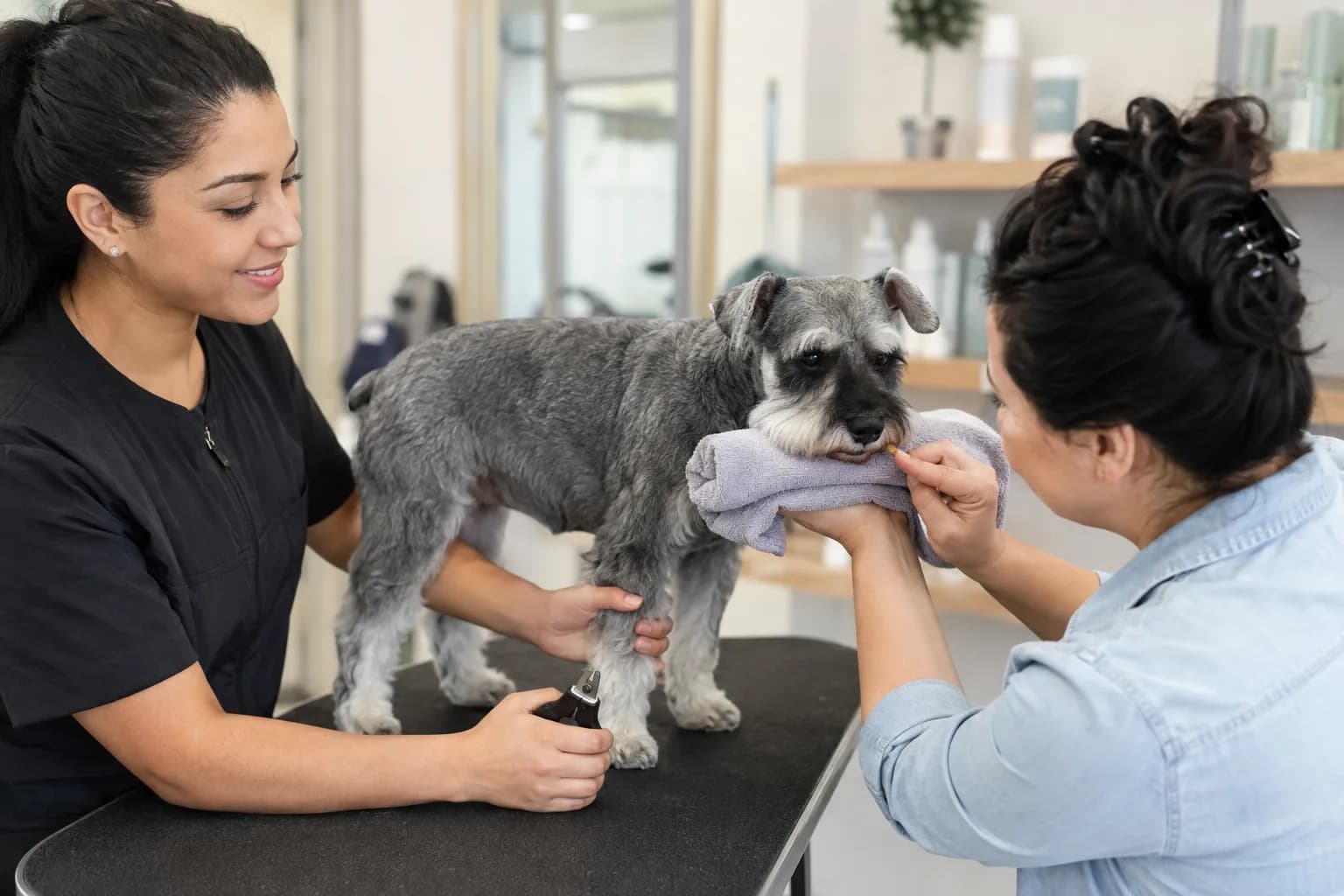
A start-button behavior tells you when the dog is ready for the next tiny action. A chin resting on a folded towel works well because the position is easy to see and leaves the paws accessible. An offered paw, a nose target to your palm, or standing on a nonslip mat can also work. Teach the behavior away from nail equipment first. Mark and reward voluntary attempts; do not push the dog's head down or lure it into a position that you then prevent it from leaving.
Define the pause as clearly as the start. If the chin lifts, the paw withdraws, or the dog leaves the mat, your hand stops and moves away. Invite another attempt only after a reset. This makes communication predictable, but it is not a legal or medical claim of consent and it never overrides urgent welfare needs. Our hand-target guide can help you build a simple voluntary interaction before you add grooming context. Keep the cue light and the dog's ability to disengage real.
Build paw handling as a ladder, not one long hold
Break handling into actions small enough to describe: your hand appears, moves toward the shoulder, touches for half a second, slides partway down the leg, reaches the paw, touches one toe, supports the paw without squeezing, and releases. Those are separate levels. Begin with the easiest step that leaves the dog's breathing, muscles, food taking, and start-button behavior normal. Mark, reward, and remove your hand. The release itself should arrive before the dog feels a need to pull away.
Increase only duration, location, or pressure in one repetition, never all three. If you touch closer to the toes, make the touch shorter. If you hold for one extra second, return to an easier location. Mix easy repetitions among new ones instead of creating a staircase that becomes harder every time. Practise both front and rear approaches separately because many dogs experience them differently. A dog offering one paw does not automatically understand handling of every toe, leg, posture, or person.
Introduce clippers, grinder sounds, and touch separately
Equipment should enter the picture at a distance where it predicts something pleasant without making the dog stop eating or leave. Show closed clippers for one second, mark calm observation, reward, and put them away. On another day, move them slightly closer. Practise the sound separately from paw handling; a helper can make a quiet clip at a generous distance while you reward. A grinder adds vibration and a sustained motor sound, so treat it as a different skill rather than a shortcut.
Do not hide the tool in food and suddenly use it, or keep feeding while the dog is frozen. Food supports learning only when the dog can notice the setup and still make choices. Store tools safely between sessions and avoid practising with active blades near a moving dog. Once sight and sound are easy, let the closed tool briefly touch the shoulder, leg, and finally a nail, with a reward and full reset after each step. No nail needs to be cut during this stage.
Use DogPath to keep the cooperative-care plan measurable
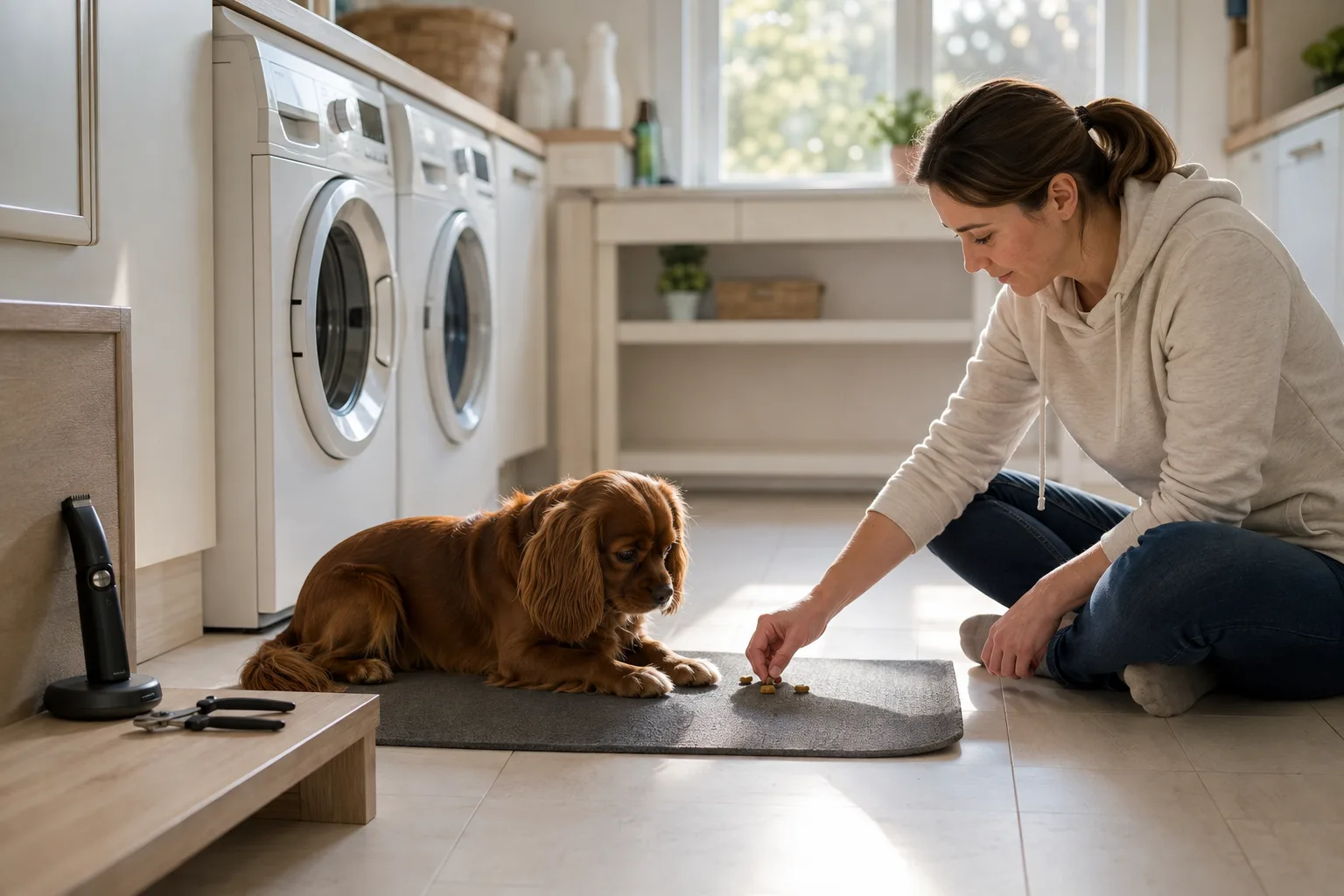
Open a DogPath session with one visible criterion, such as “chin stays on the towel while my hand touches the shoulder for one second.” Prepare tiny rewards, a nonslip surface, and a quiet exit before bringing in your dog. Practise for one to three minutes, not until every prepared treat is gone. After several relaxed responses, change only one variable: touch slightly lower, add half a second, move the closed clipper closer, or use a different quiet room. Return to an easy repetition before finishing.
Record the setup, the easiest success, the first body-language change, and how quickly your dog recovered. A simple note such as “three shoulder touches; chin lifted when hand reached wrist; ate normally after ten seconds” is more useful than a pass/fail score. DogPath keeps those short lessons and observations together so tomorrow's session begins from evidence rather than memory. It does not grade bravery or reward a streak. Skip a day whenever rest, health, or a calmer environment would make the next attempt fairer.
Plan rewards and placement before adding difficulty
Use rewards your dog genuinely values in that room and keep pieces small enough for several repetitions. Deliver them where they support the next posture: low between the paws for a chin rest, beside the mat for a calm reset, or away from your body when you want the dog to take a voluntary break. Food is not the only option; release, space, sniffing, play, or access can reinforce behavior when they are safe and clearly connected to the response.
If a familiar reward suddenly stops working, do not automatically reach for richer food and continue. The setup may be too close, too long, too loud, or painful. Reduce the variable or end the session. Prepare tomorrow's smallest version while the evidence is fresh. Our guide to short training sessions explains how to choose a finish before concentration disappears. Two relaxed repetitions repeated across a week can build more trust than twenty repetitions squeezed into one difficult evening.
Move from rehearsal to one safely handled nail
The first real trim should be deliberately uneventful. Arrange good light, a stable nonslip surface, correct equipment, and a person who understands nail anatomy. Begin with the established start behavior and an easy touch. If the dog remains loose, the competent handler may shorten the smallest safe amount from one suitable nail, reward generously, and finish. One nail is a complete session. Merck's veterinary behavior guidance emphasizes gradual exposure, body language, and shorter frequent sessions rather than pushing linearly through increasing intensity.
Do not let a content deadline, appointment, or desire to finish the paw turn the dog's start signal into a trap. If the dog withdraws, freezes, growls, snaps, or cannot recover, stop and create safety. A veterinarian or reward-based groomer may recommend a different position, tool, schedule, medication plan, or professionally supported visit. Never punish warning signals. They are part of the information that protects people and dogs while you decide what level of help is appropriate.
Merck Veterinary Manual guidance on cooperative care and gradual exposure
Handle setbacks without forcing the old picture
A difficult veterinary visit, a torn nail, an accidental quick cut, or one rushed session can change the dog's expectation. Restart farther from the procedure than you think necessary. For several sessions, the goal may be approaching the mat, performing the chin rest, or seeing the closed tool across the room. That is not losing progress. It is rebuilding the prediction that signals are heard. Change the location or towel if the old setup itself has become a strong warning.
Management protects learning between practices. Keep walks and surfaces appropriate, store tools out of sight, prevent children from handling paws, and book professional care before nails become an emergency. A scratch board may help some dogs maintain certain front nails, but it does not address every nail and requires its own careful training. A grinder can suit other dogs, yet noise and vibration must be introduced gradually. Choose alternatives with your veterinary or grooming professional rather than improvising around anatomy.