
Stair introductions
Dog afraid of stairs? A free first-step guide
Check the footing, begin on level ground and plan the return before adding a step.
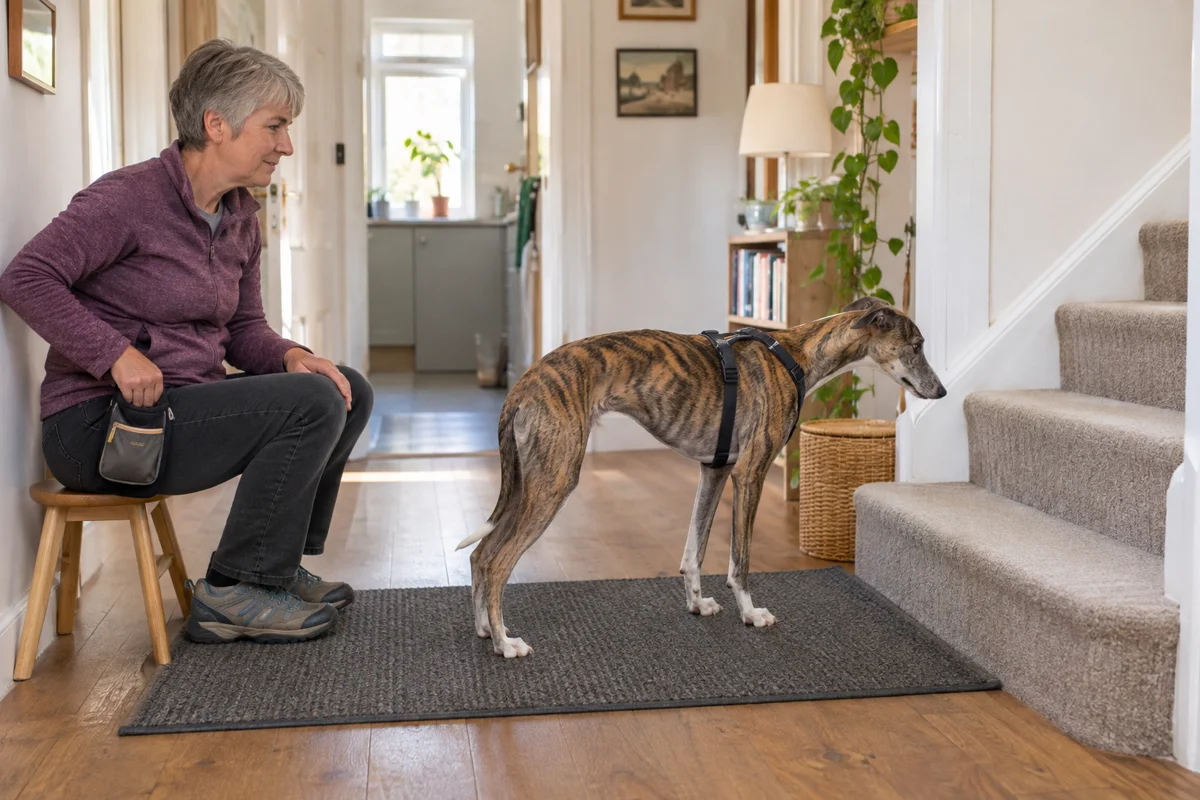
A dog afraid of stairs may hesitate at the bottom or struggle with the return. Your dog reaches the bottom of the staircase, looks up, then turns away. Or the journey upstairs seems manageable, but coming down ends with a long pause on the landing. Treat those as two different observations. A dog who can climb a familiar step may still find the view, footing or movement of descending unfamiliar. The useful starting point is the place where your dog can look, move and leave comfortably.
This free guide helps you plan that starting point, check the surroundings and decide when personal help belongs before practice. It does not require an app. If you later want to record observations, DogPath is free to download or start, with in-app purchases. A note on paper works for the same purpose. The goal is one manageable experience with a suitable step, rather than a completed flight by the end of the day.
Dog afraid of stairs: check what changed first
Write down whether this has always happened or began recently. A newly adopted adult dog may never have encountered an indoor staircase. Another dog may hesitate only on polished steps or at a staircase with open risers. A dog who used those same stairs comfortably yesterday and now avoids them needs a different response. Contact your veterinarian before treating a sudden change as a training problem, particularly if you also notice limping, stiffness, difficulty rising, changes in movement or signs of discomfort.
Keep access to food, water, a comfortable resting place and outdoor breaks on a level your dog can reach while you arrange advice. Do not repeatedly call the dog upstairs to see whether the problem is still there. Repeated attempts give you little extra information and may leave the dog stranded somewhere difficult to leave. If your dog is already midway up a flight and cannot move, keep the area quiet and get appropriate hands-on help. Avoid improvising a lift you cannot manage securely.
Age, size, previous injury and current exercise restrictions can change whether a particular staircase is appropriate. Ask your veterinarian about your individual dog, especially for a puppy, a dog recovering from treatment or one with mobility difficulties. There is no single age or universal training schedule that makes every staircase suitable. Choosing a downstairs routine or another route can be the practical answer.
Make the approach and the exit usable
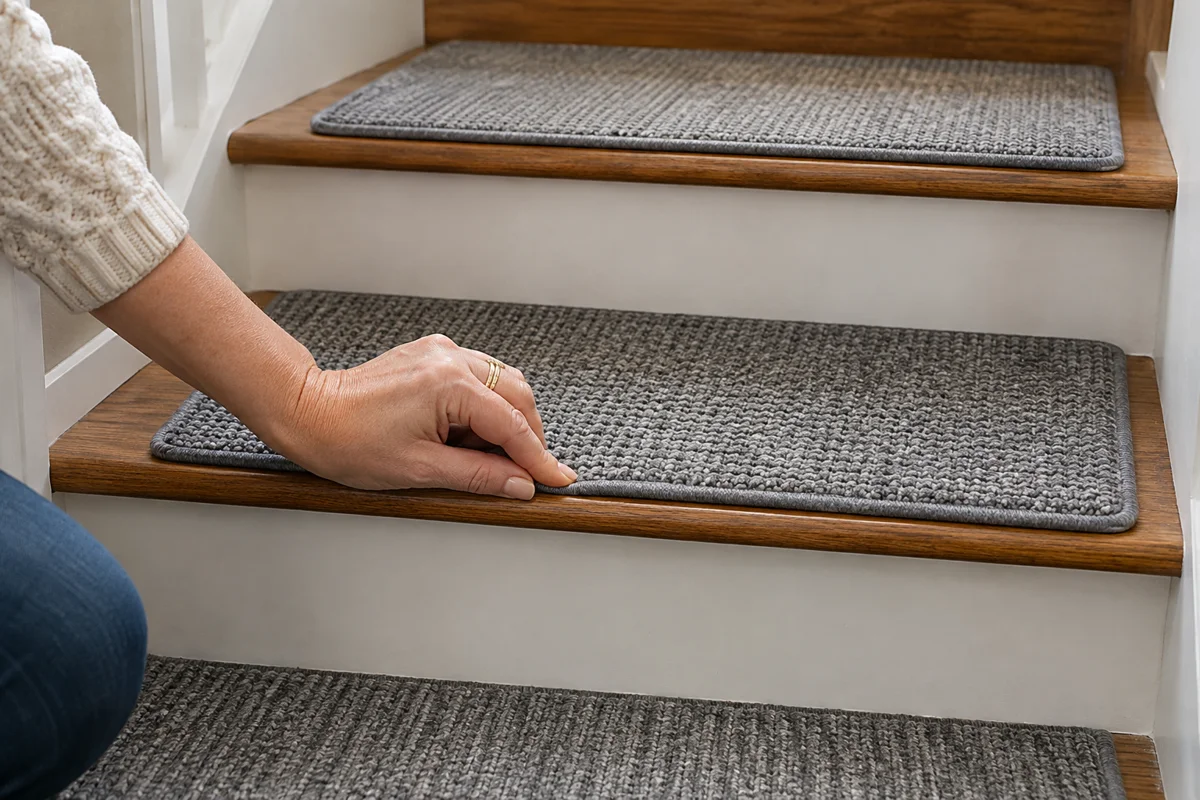
Look at the whole route, including the level floor before the first step and the landing at the top. A grippy stair tread is less helpful if the dog slips while approaching it. Check that runners and coverings stay flat and secure when you walk across them. Remove bags, shoes, trailing leads and other objects that narrow the path. Arrange enough light to see the edges without shining a torch in your dog's face.
Check the staircase itself. Steep steps, open gaps, narrow turns or damaged surfaces may make this a poor place to practise. The Forever Hounds Trust guidance on introducing stairs highlights traction and the need to consider health restrictions. Use that advice to assess the setup with an appropriate professional when necessary. A rug placed loosely over an edge can create another problem, so have unsuitable surfaces addressed properly before bringing the dog to them.
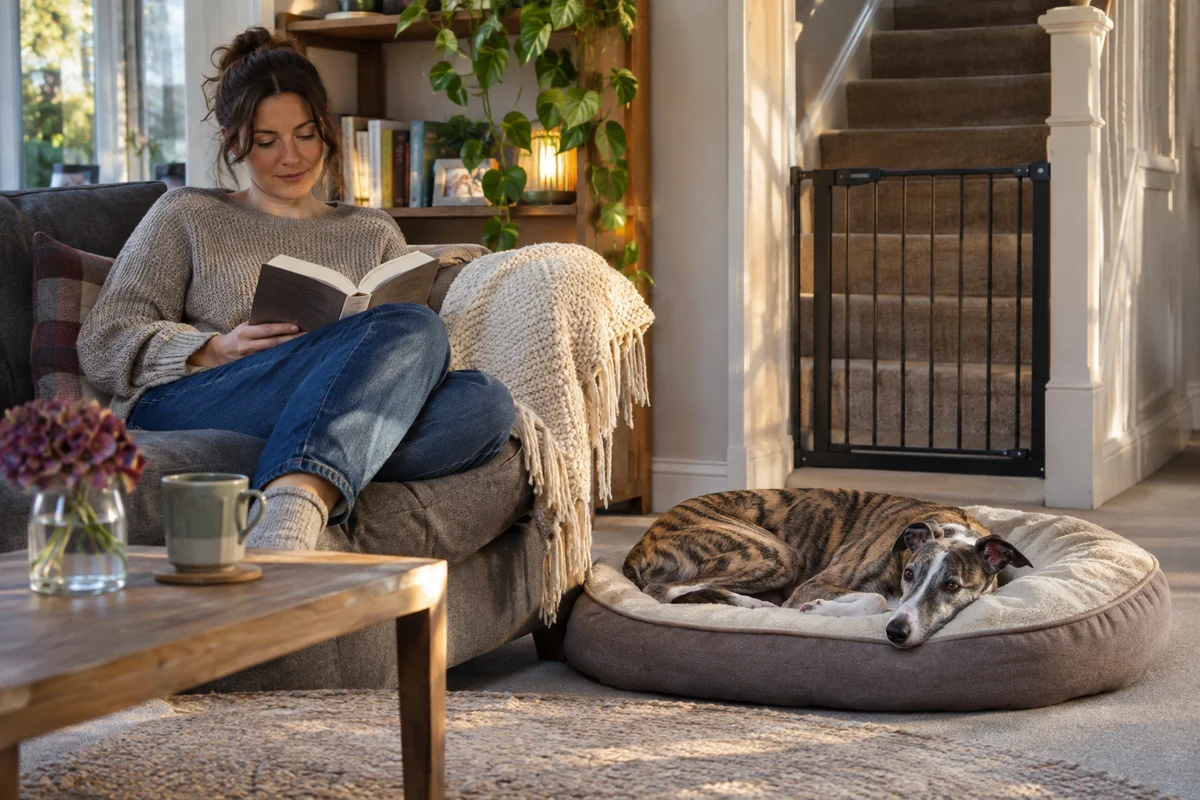
Plan how to prevent unsupervised access between sessions. A suitably installed stair gate can keep the dog on the floor with their everyday resources. Make sure it closes reliably and does not introduce something the dog must jump. Tell other household members why it is there. Practise when nobody needs to carry laundry past you or rush down the staircase. A quiet, clear route gives both of you room to stop.
Begin on level ground at a comfortable distance
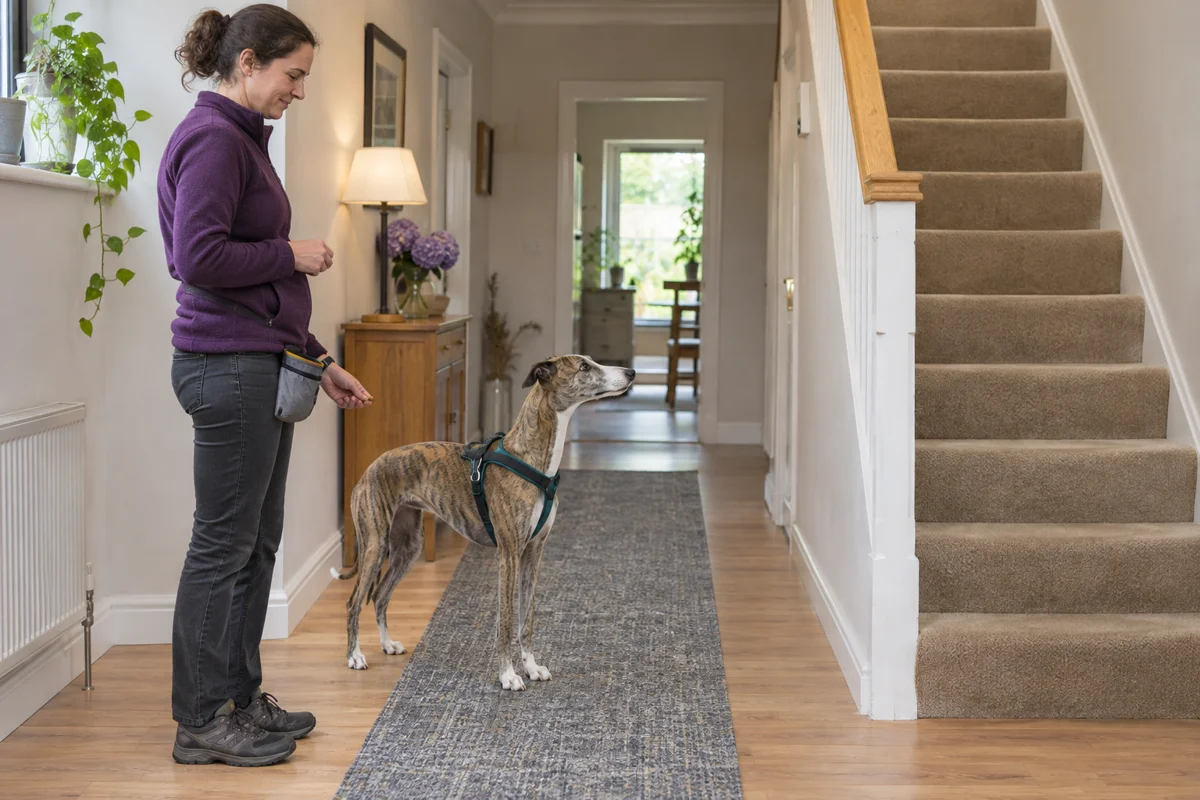
Start far enough from the stairs that your dog can move freely, take an ordinary reward and turn away. Taking food alone does not prove that a dog feels comfortable. Watch the rest of the body and the movement. A dog stretching forward with planted feet, leaning away or repeatedly looking for an exit needs more room. If your dog cannot settle into an easy approach, finish and reconsider the environment before another attempt.
Stand or sit to the side, leaving the route back into the room open. When the dog notices the stairs without becoming tense, offer a small reward on the level ground where they already stand. You can then move away together. This lets the dog encounter the sight of the staircase without immediately being asked to climb it. Do not hold food just beyond reach and keep moving it upwards while the dog stretches after it.
A session can consist of two or three easy observations and a break. You do not need to keep going until the dog touches a step. End while movement remains comfortable. Next time, begin at the same distance and see whether the response is similar. If a household noise or a different person changes the situation, give the dog more space again. The useful comparison is with the same setup, rather than with another dog's progress.
Separate a first step from a whole staircase
If stairs are suitable for your dog and the level-ground approach is easy, consider whether a single low, wide, stable step in an appropriate enclosed setting offers a more manageable introduction. Check its grip and stability first. Avoid stacked books, wobbling boxes or anything that could tip. A qualified reward-based professional can help choose a suitable practice surface if you are unsure. Keep the dog able to step back onto the same level area.
Reward a voluntary investigation. That might be looking at the edge, walking closer or placing a paw on the low surface. Keep your hands away from the paws. Moving the dog's feet into position does not tell you whether the dog understands the movement or is ready to repeat it. If the dog pauses, withdraws or tries to jump across the setup, stop and make the next attempt easier. Do not use repeated cueing to push through hesitation.
Keep rewards where the dog can reach them without twisting or overextending. After a comfortable attempt, allow a return to level ground and a pause. Observe how that return happens as carefully as the approach. The dog should not need to scramble to escape. Only consider another small change after the current movement looks comfortable across separate sessions. You may need help adapting this stage to the actual stairs in your home.
Treat coming down as its own problem
Do not take a dog up several steps simply to practise descending them. Being able to climb does not establish that the dog can come down comfortably. The view and movement differ, and a dog may rush or attempt to skip steps. Plan the return before any ascent. If you cannot provide a manageable return, stay with the easier setup or get personal guidance before progressing.
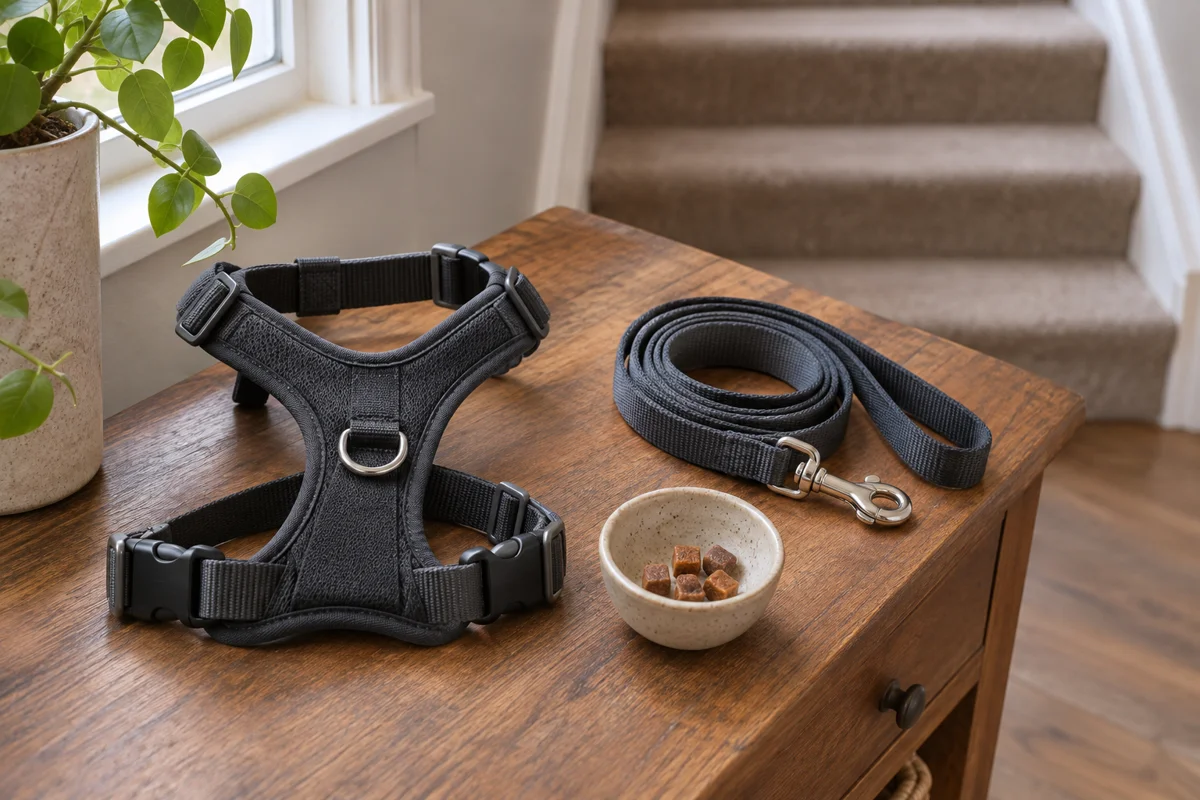
For an actual staircase, ask a qualified professional to assess positioning and support if your dog is uncertain. Equipment and handler balance matter. A lead attached to a well-fitting harness can be part of supervised management, but pulling the dog down or using the lead to hold their weight creates other difficulties. Keep the area clear and avoid placing yourself where you could trip over the dog or block the route.
Some dogs need ongoing management even after they become familiar with stairs. Keep children and other pets out of the practice area. Avoid calling from below in an excited voice that encourages a hurried descent. A household plan should specify who accompanies the dog and when access stays closed. If the staircase remains unsuitable, organise life around an alternative instead of making independent stair use the measure of success.
Record the conditions and decide the next session
After practice, note the exact starting point, surface, direction and response. “Looked at the first step from the hallway, ate a reward beside me and walked away easily” gives you more information than “better today.” Also record anything that made the setup harder, such as a person arriving on the landing or a slippery approach. One clear observation is enough. You can use paper or an optional training log without turning the exercise into a daily quota.
Change one part at a time. Moving closer, adding a step, changing the surface and introducing another handler in the same session makes it difficult to identify what affected the dog. Keep familiar conditions while testing one small adjustment. If the response becomes hesitant, return to a setup that was comfortable and reassess. Repeated difficulty is a reason to seek help, rather than to offer a bigger reward beyond the dog's reach.
For panic, aggression, bite risk, pain or welfare concerns, arrange appropriate in-person veterinary or behavioural support. DogPath is an everyday reward-based practice aid and cannot diagnose the cause, assess the staircase or guarantee an outcome. Your plan may finish with easier approaches, supervised access or a downstairs arrangement. Choose the arrangement that meets the dog's needs and that the household can follow consistently.