Rainy walks
Dog afraid of umbrellas? A free practice guide
Give your dog room to move away and separate the umbrella’s shape, movement and sound.
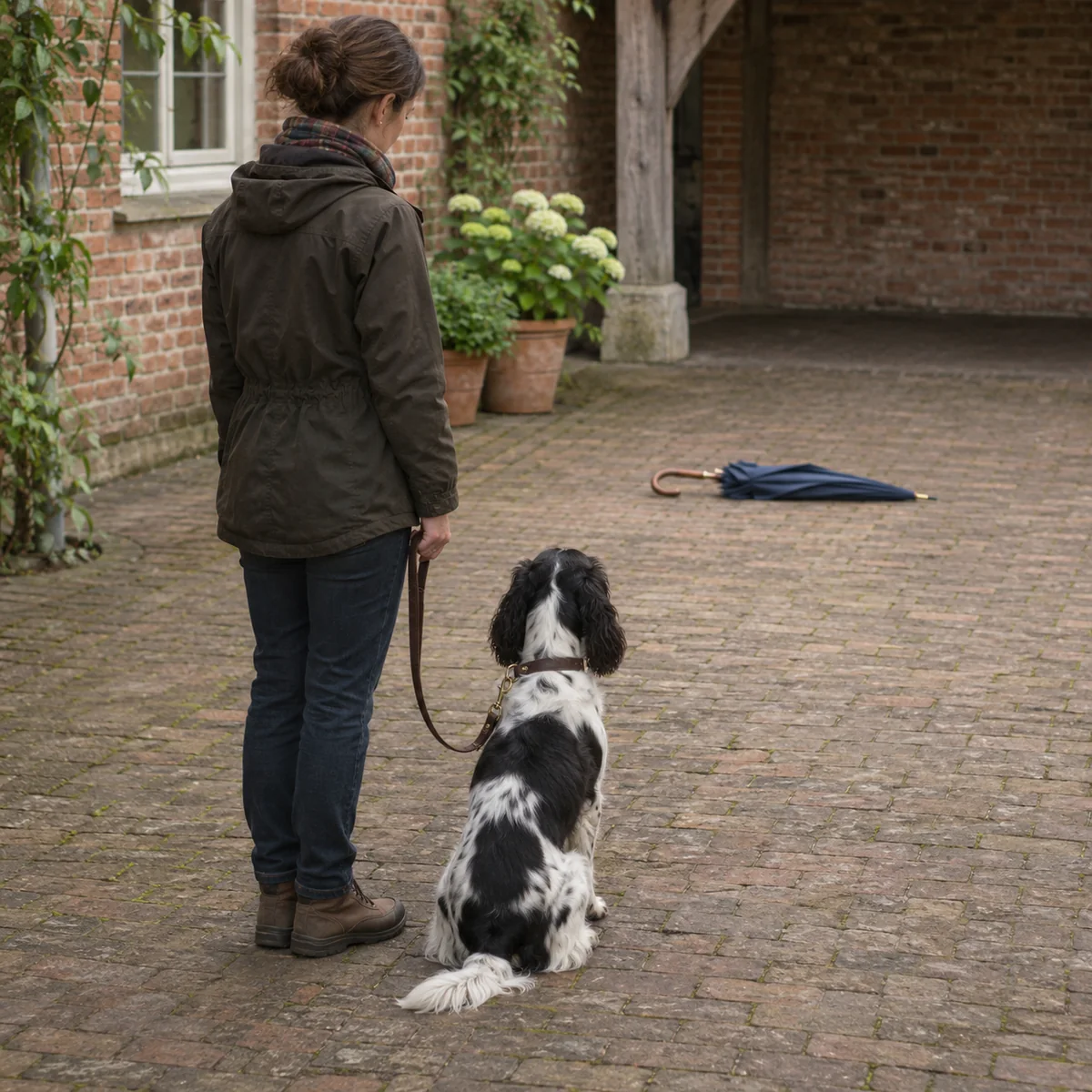
The umbrella is still folded when your dog takes a step back. Or the trouble only starts when the canopy opens with a snap. A dog afraid of umbrellas can be reacting to several different things: the object in your hand, the movement, the sound, the broad shape overhead, or the wet and windy conditions that usually come with it. Separating those details lets you change the situation before asking your dog to cope with more.
This free guide starts with practical changes for the next rainy outing, then offers an optional plan for a quiet day. You can use it without an app. DogPath is a reward-based practice aid, free to download or start with in-app purchases, if you prefer to keep your observations in one place. A new or severe fear, pain, panic, a bite risk or a sudden behavior change warrants appropriate in-person help. Give your dog room to leave before you consider a practice session.
Dog afraid of umbrellas? Start with the next outing
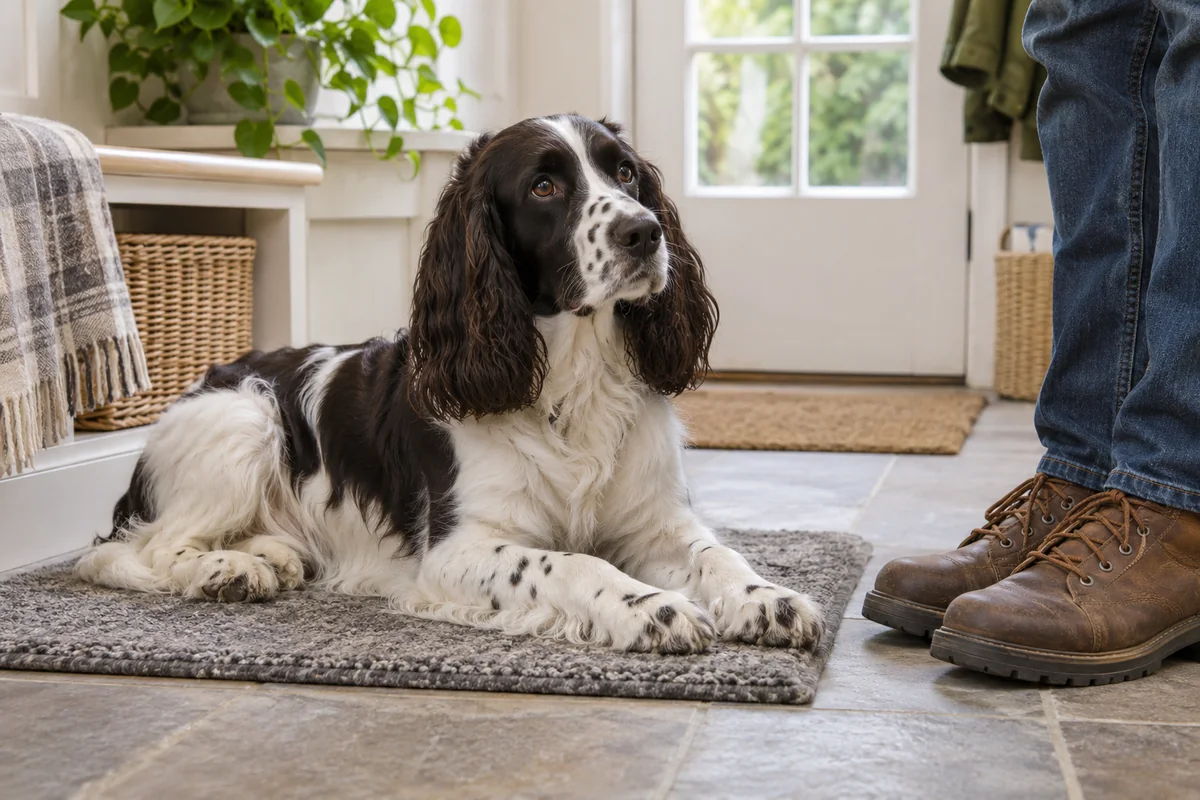
Think about what you can change before you step through the door. If your dog is comfortable with you in a rain jacket, that may make a short toilet outing easier than carrying an umbrella. Prepare your own gear while your dog is in a separate comfortable area. If someone else needs to open an umbrella, ask them to do it well away from the doorway and to leave the exit clear. You are arranging an easier outing, not testing whether a training exercise has worked.
Look at the whole route, including the first few steps. A narrow vestibule, wet paving and an umbrella held above the only exit can leave a dog with little room to turn away. A wider exit or a quieter time may help more than changing the treats you carry. If your dog hesitates, pause on stable ground. Step back if you can do so safely. Avoid pulling the dog through the doorway or trying to coax them past a moving umbrella with a piece of food held under their nose.
Plan for the return, too. Someone closing and shaking an umbrella beside the door may be a bigger surprise than seeing an open one on the street. Put wet gear away from the route to the dog's bed and water. Let your dog settle after a difficult trip. The moment you come home wet and hurried is a poor time to rehearse the sound that startled them outside.
Work out what changed just before the reaction
Recall a recent moment from before the dog moved away. Where was the umbrella? Was it folded, opening, already open, moving sideways or overhead? Who was holding it? Was the dog able to take a step away without reaching the end of the leash? A short description such as “closed umbrella lying by the wall, dog passed at the far side of the yard” gives you something you can arrange again. A label such as “bad in the rain” leaves too many possibilities.
Compare what you already know from ordinary life. A dog that walks past a folded umbrella on a dry afternoon but backs away when someone flicks it open may need help with movement or sound. A dog that avoids leaving even when no umbrella is present may be reacting to weather, thunder, wet surfaces or something else on the route. You do not have to reproduce the frightening event to find out. Use the easier observations you already have and ask for help if you cannot separate the causes comfortably.
Dogs Trust describes changes such as turning away and other signs that a dog needs space. Read the whole body and the circumstances. A dog can take food while still looking tense, and a motionless dog is not necessarily relaxed. Compare the dog's posture and ability to disengage with what you see in the same place without the umbrella. If it is unclear whether the dog is coping, treat that as a reason to make the setup easier.
Set up a closed umbrella with a clear way out
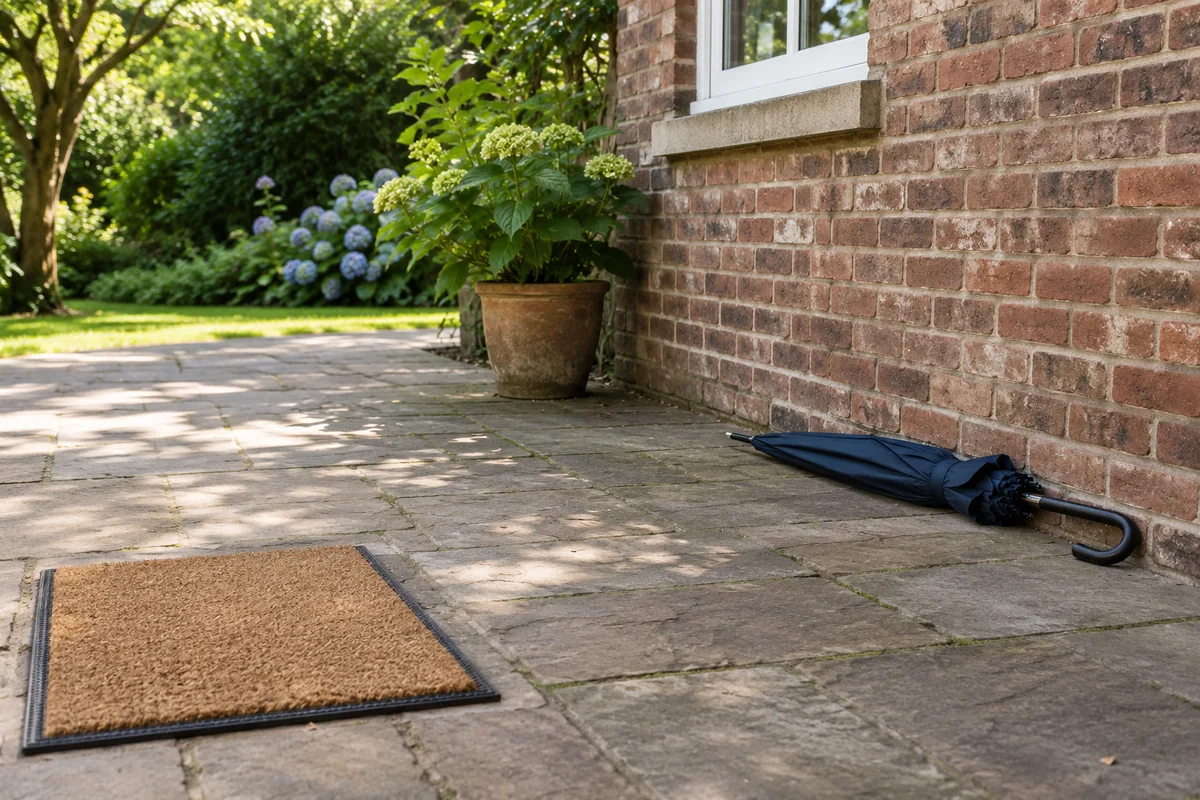
Pick a dry quiet time in a familiar place with stable footing. Put the umbrella down before bringing your dog into view. It should be stable, with the tip away from the dog, and well clear of the route to the door or bed. A draft that can flip it over makes the setup harder. Start far enough away that the dog can glance at it and then turn back to ordinary activity. If the dog prefers to leave, let the session end there.
You can offer a small reward at your side after the dog notices the object, or place it on the floor farther from the umbrella if that is comfortable and safe. Food should not form a trail toward the object. That can put a dog in the position of choosing between a desired treat and more proximity than they would otherwise choose. If your dog won't eat normally, strains away, freezes, or keeps checking the object, remove the umbrella after the dog has space and stop for the day.
A helper can make this easier by setting out the object while you are elsewhere and staying still once the dog can see it. Agree on a simple stop signal between the humans. If the handler says stop, the helper waits rather than folding the umbrella or stepping toward the dog. Move the object only after the dog has left the area or when moving it cannot startle them. A glimpse followed by a voluntary retreat can be enough for one session.
Separate the open shape from the sound and movement
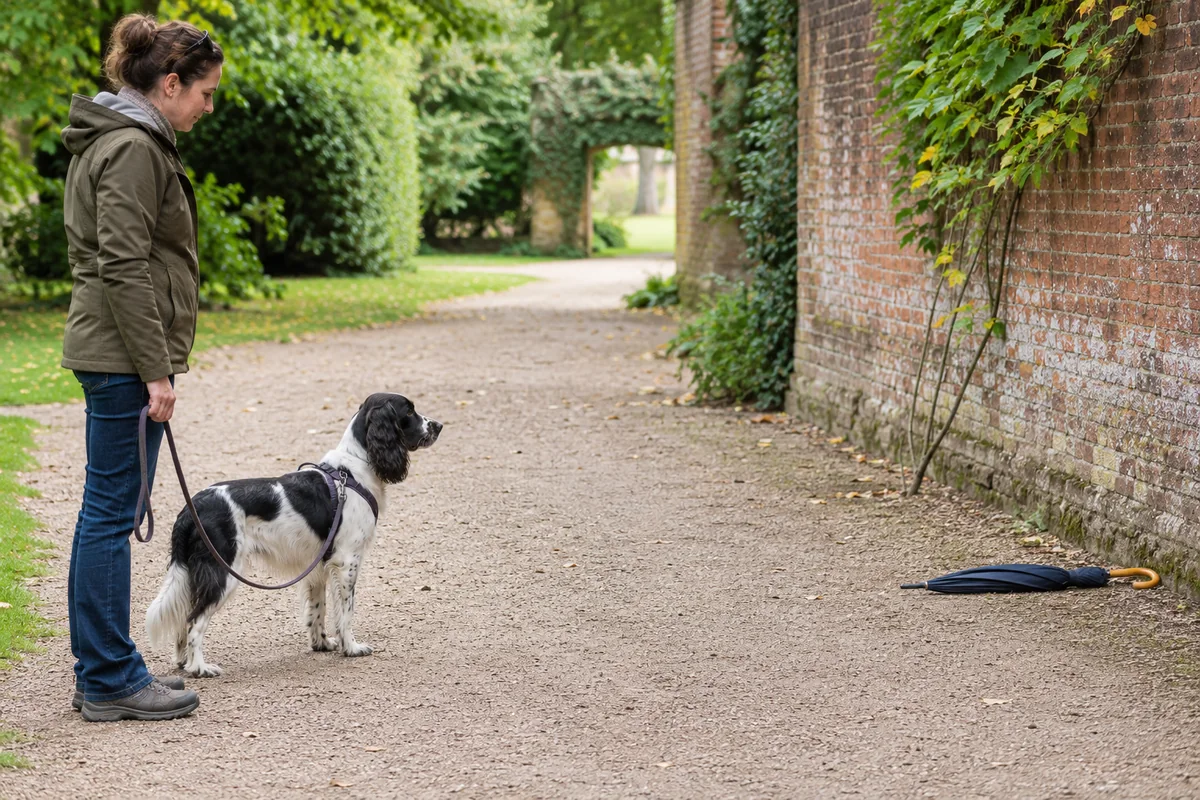
An already-open umbrella is a different picture. If the folded object is uneventful at the easy distance, you can place an open umbrella securely while your dog is elsewhere and let them notice it from far away. Choose a windless location and avoid propping it where it could fall or roll. Keep the dog's route away from it clear. There is no requirement to sniff it, walk underneath or pass close to its edge.
If you later introduce movement, change one thing. A helper might gently lift the closed umbrella a little while your dog is at a comfortable distance. The next time, they could hold it stationary again. Keep opening and closing away from the dog until you have a setup where small changes are easy to observe and stop. An automatic umbrella may be unsuitable for this step because you cannot control the speed of its release. You can use a different one for day-to-day management.
If the dog startles, give distance and a pause. Do not immediately repeat the movement to check whether the reaction was a fluke. Record what happened in ordinary words: “lifted handle while standing, dog turned and moved behind me.” Next time you can start with the object on the ground or decide that there is no practical benefit in working on this step. Everyday comfort may come from keeping open umbrellas farther away.
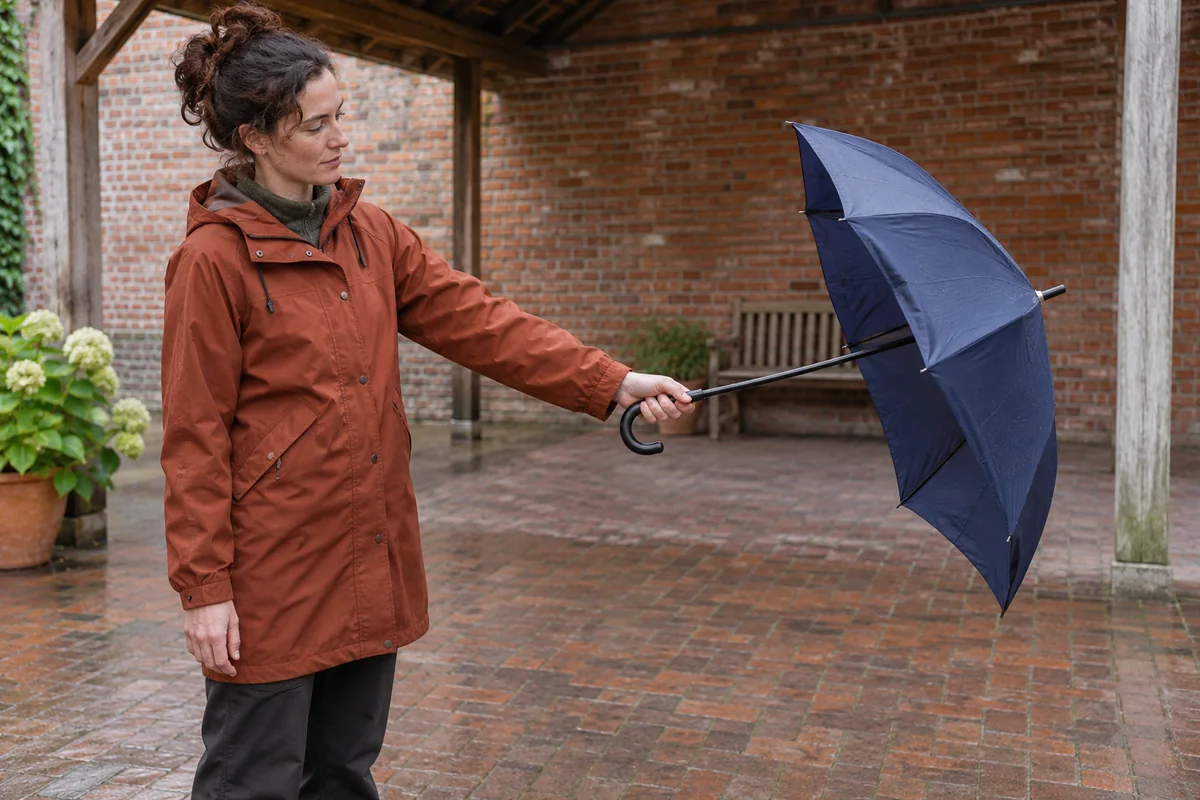
Decide what to use on a real walk
A quiet practice scene does not reproduce a rainy pavement. People move toward you, vehicles splash, and the same canopy can change shape in a gust. Choose the management plan that works under those conditions first. A quieter route, more space at a corner, or waiting under shelter can reduce surprise. When you can safely cross or turn early, use that space before a person with an umbrella reaches you. Keep the leash comfortable and choose footing where both of you can turn safely.
If someone else usually walks your dog, show them the easy exit and agree on what to do when an umbrella approaches. A brief instruction such as “turn back at the wide corner if someone is coming toward you with an open umbrella” is easier to use than a long training explanation in the rain. Tell them which signs suggest it is time to leave. After an outing with a close encounter, give the dog a chance to settle before deciding whether to practice again.
Keep a short record if it helps you make decisions. Note whether the umbrella was closed, open or moving, how much room the dog had and what they chose to do. Include a day when you skipped practice because the weather was difficult. Over time the record can tell you whether to stick with a rain jacket, keep a bigger buffer on walks or seek help with reactions that affect daily care. The aim is a workable routine that leaves your dog choices.