Everyday table manners
Dog Begging at Table: Free Dinner Plan
Keep dinner predictable: remove table payoffs, teach a comfortable place away from plates and rehearse in short, recordable steps.
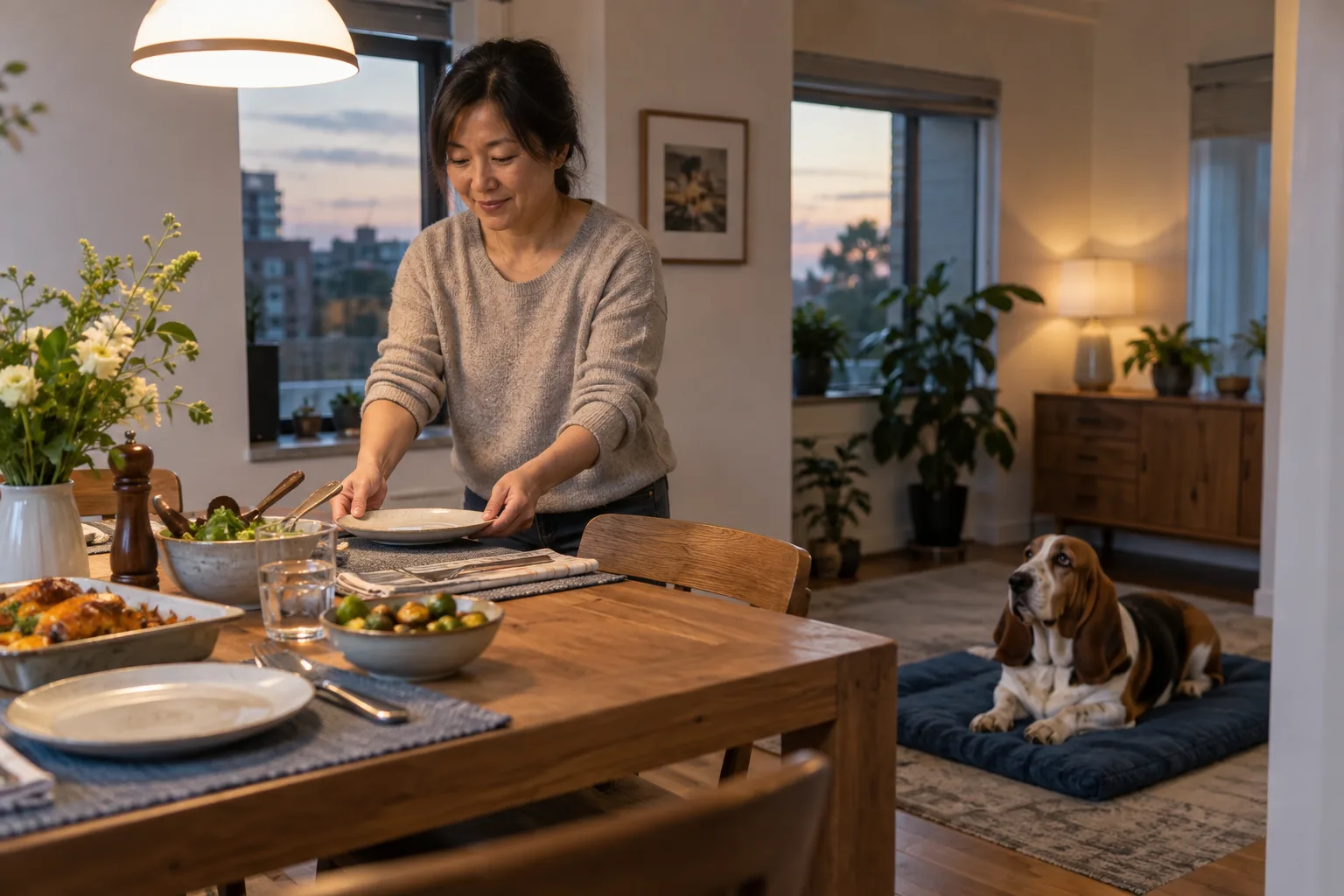
A dog begging at table can turn an ordinary dinner into constant negotiation. The dog watches a plate, rests a chin on a knee, whines or circles between chairs. One person says no while another drops a bite. Even if nobody intends to reward the behavior, a crumb, a glance or an occasional handout can keep the pattern going. The first training step happens before anyone sits down with food.
This free dinner plan is about a visible alternative: the dog chooses a comfortable mat or bed beyond plate reach, can leave it when released, and receives suitable dog rewards there rather than from the table. DogPath is free to download or start; some features or usage levels may require an in-app purchase. It can hold a short practice target and record what happened, but the family rules, food safety and the dog's comfort remain human responsibilities.
Begging does not always mean hunger. A sudden appetite change, weight loss, pain, panic around separation from the family, aggression over food or a bite risk requires appropriate in-person veterinary or qualified behavior help. Do not use a mat to force a frightened dog to remain near people or food. If a dog has taken a potentially toxic food, contact a veterinarian or poison service promptly rather than waiting for a training session to end.
For a dog begging at table, remove the accidental payoffs
Before dinner, agree on one household rule: nobody hands food from a plate, chair or table edge while people eat. This includes visitors who think a tiny exception is harmless. A dog learns from what happens, not from a family vote afterward. If the dog sometimes gets a bite by standing beside a chair, the chair remains worth checking. Reward good choices away from the table instead of negotiating with the dog at knee height.
Move serving dishes, leftovers and dropped food out of reach before you practise. A dog that obtains a roast potato under a chair has found a powerful reward, even if nobody deliberately fed them. Keep bins closed and clear plates promptly. A simple pet gate or a separate comfortable room can prevent rehearsal when the household is busy, but it should be introduced calmly and never used to trap a panicking dog.
The American Kennel Club describes management, a designated resting place and rewards for the alternative behavior as practical ways to address begging. That advice does not mean withholding the dog's normal meal or assuming all dogs beg for the same reason. Keep your dog's regular feeding plan appropriate to veterinary guidance. If appetite has changed or your dog ignores its own food, ask a veterinarian rather than simply tightening the table rule.
American Kennel Club guidance on managing begging and rewarding an alternative place
Choose a resting place that works for this room
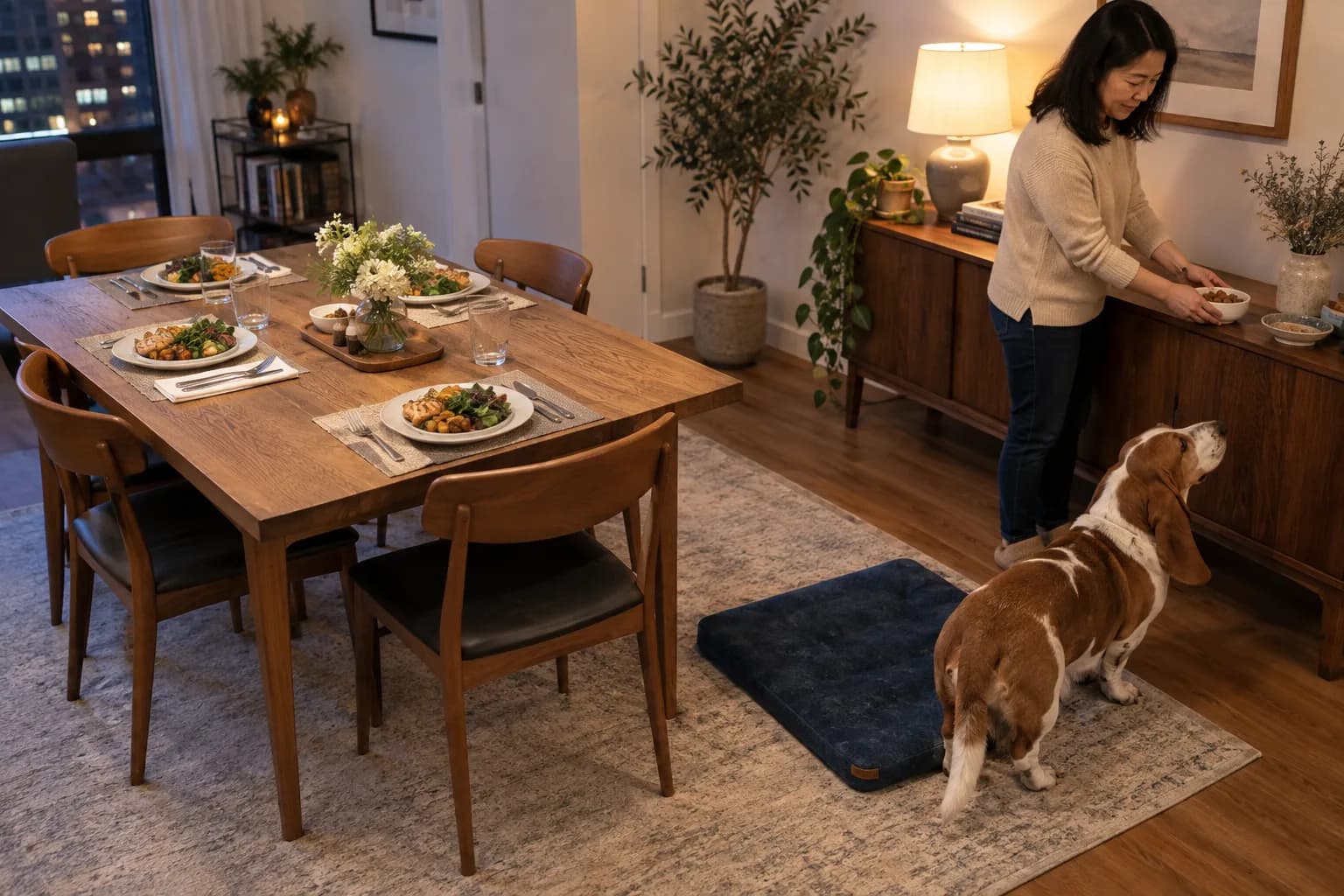
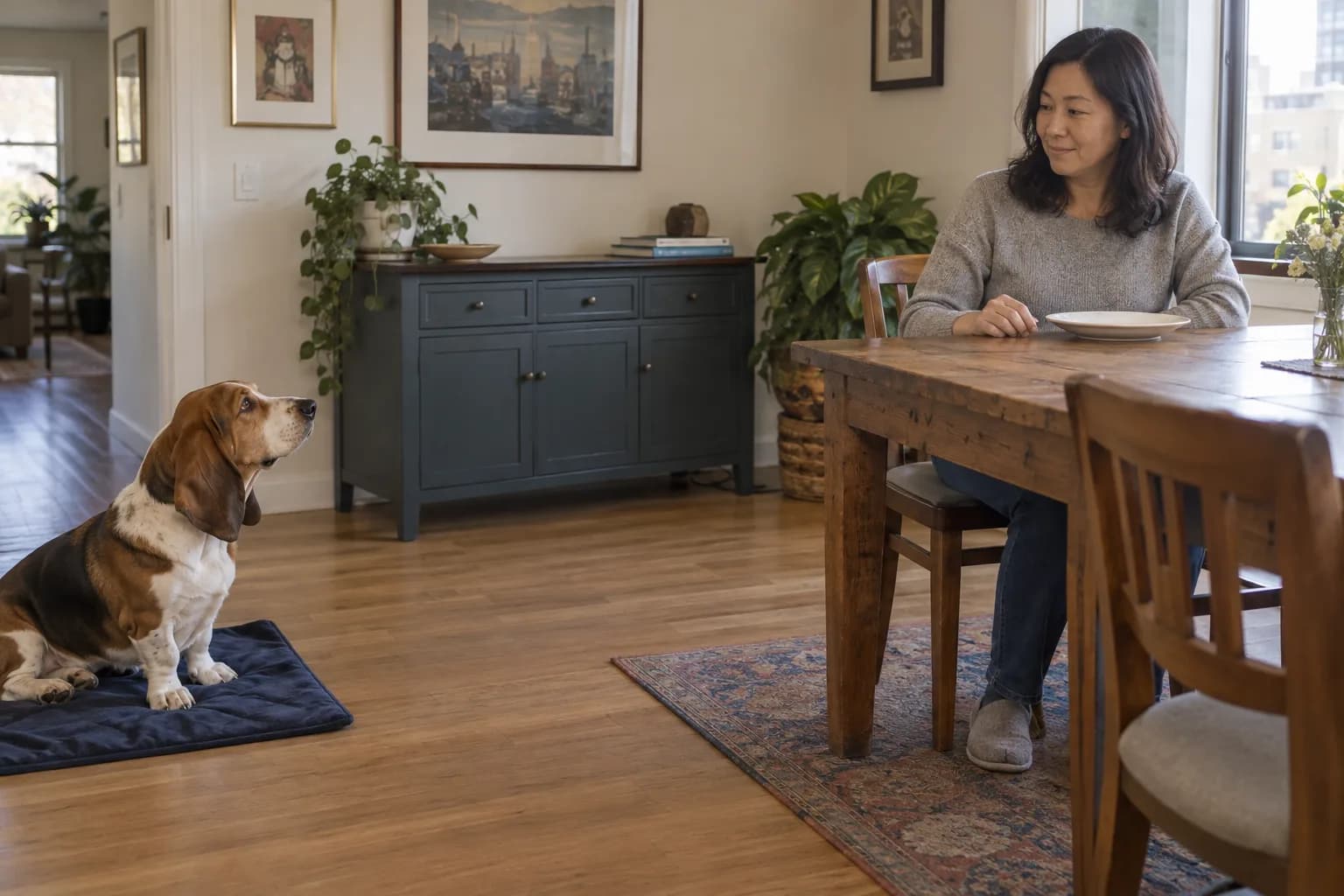
Put a nonslip mat where the dog can see the household but cannot reach plates or block a walking route. The exact distance depends on room size, dog size and whether chairs move. A place behind a chair leg may feel cramped; a doorway where people repeatedly step over the dog is unsafe. Give the dog enough room to turn, stretch and leave. This is a station for a brief choice, not a command to hold an uncomfortable pose through an entire meal.
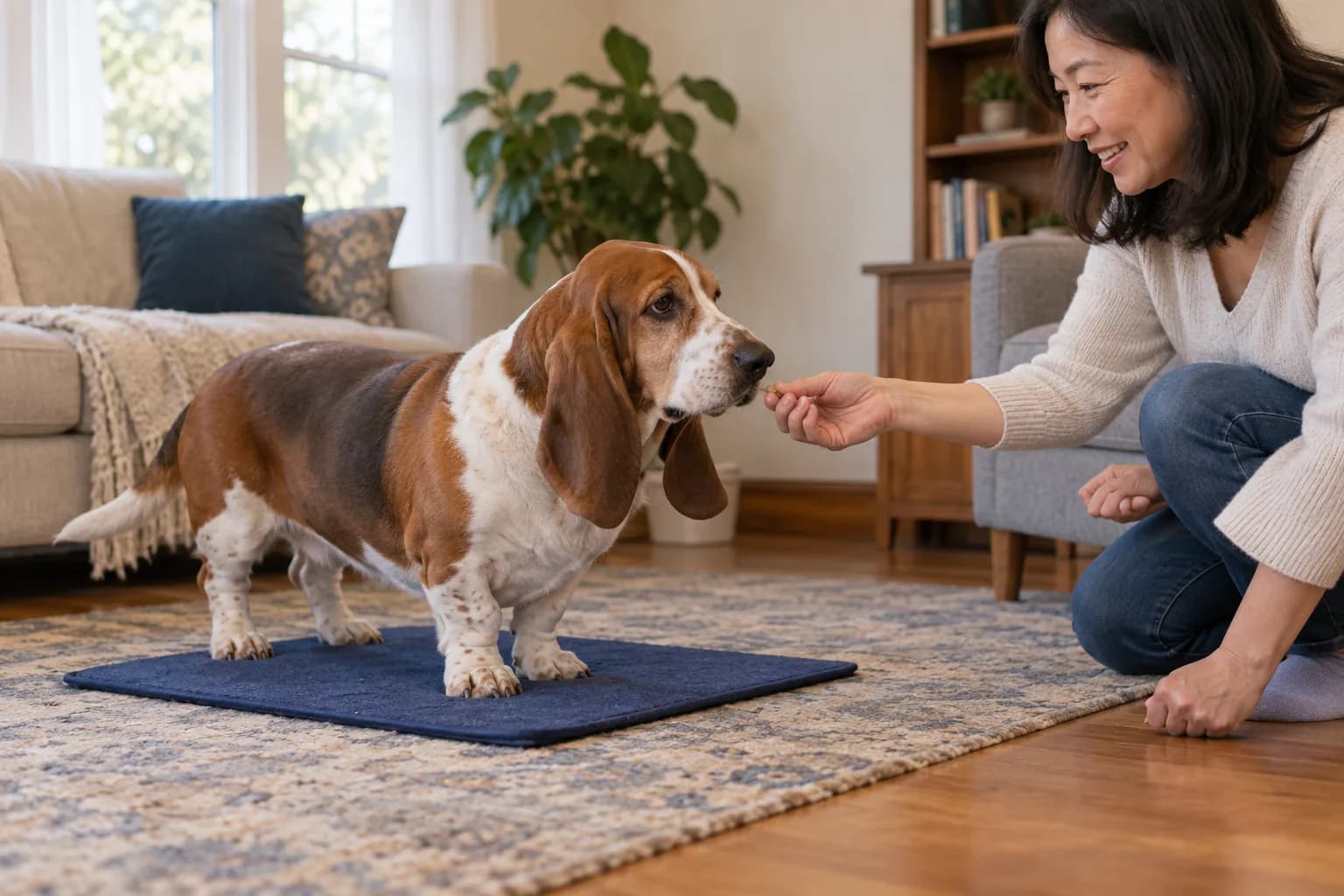
Teach the mat outside mealtime. Place it on the floor, wait for a look or step toward it, mark that behavior quietly and deliver a small dog-safe reward on the mat. Toss another reward away to reset so the dog can choose to return. Progress from one paw to four paws, then from standing to any relaxed posture. Do not push the dog's body into a down or use a lead to hold them in place.
A dog that already knows a mat cue may still need this particular dining-room location taught separately. Smells, chairs scraping and people carrying plates make the scene different from a quiet living room. If the dog cannot take rewards or leaves immediately, move the mat farther away or practise without human food. The general DogPath mat guide explains the foundation; this article applies it specifically to food at a family table.
Rehearse an empty-plate dinner for one minute
Sit at the table with an empty plate for a few seconds while the dog is on the mat. Stand up, walk to the dog, place a reward on the mat and release the dog before they get restless. The reward comes from your hand at the dog's place, not from your plate. Repeat only while the dog can choose to return. A one-minute rehearsal can teach more than repeatedly sending a dog away during a forty-minute meal.
Add one small change at a time: pull out a chair, sit down, lift a fork, or have another adult enter. Keep the plate empty until the simple actions are easy. If the dog crosses toward the table, calmly reset the environment. Shorten the time or increase the distance instead of scolding, grabbing a collar or saying the cue louder. The dog has shown that the last step asked too much.
Work out who will reward the dog before starting. If everyone is eating and nobody can stand up, schedule a shorter practice block or use safe management for the actual meal. Children should not be responsible for guarding plates or handling a dog near food. If a dog guards a mat, growls when people approach or has a history of biting, stop this setup and get qualified individual help.
Use DogPath for one observable dinner practice
Before the next session, open a short DogPath plan and write a behavior anyone can see: 'dog walks to the mat, stays for thirty seconds while one adult sits at an empty table, then follows a release cue'. Avoid goals such as 'be polite all dinner' or 'never beg again'. Prepare small rewards from the dog's normal food allowance or another suitable option, decide who delivers them and keep plates inaccessible.
Practise briefly, ideally two or three easy repetitions before a meal rather than during its busiest minute. Mark the dog choosing the mat, reward there, and release before duration becomes difficult. Record whether the dog went to the mat voluntarily, how long they stayed comfortably and what table action was present. DogPath can store that simple result; a paper notebook is equally valid. The app does not judge nutrition, fear or household safety.
For the next session, change distance, duration or distraction separately. Keep the mat in the same place while you add a few seconds; or keep the same short duration and sit a little closer; or keep distance and duration easy while a second adult quietly sits down. Do not add a fragrant dinner, guests, moving chairs and ten extra minutes together. If the dog struggles, return to the last manageable version and note what changed.
Manage real meals while the new habit is still small
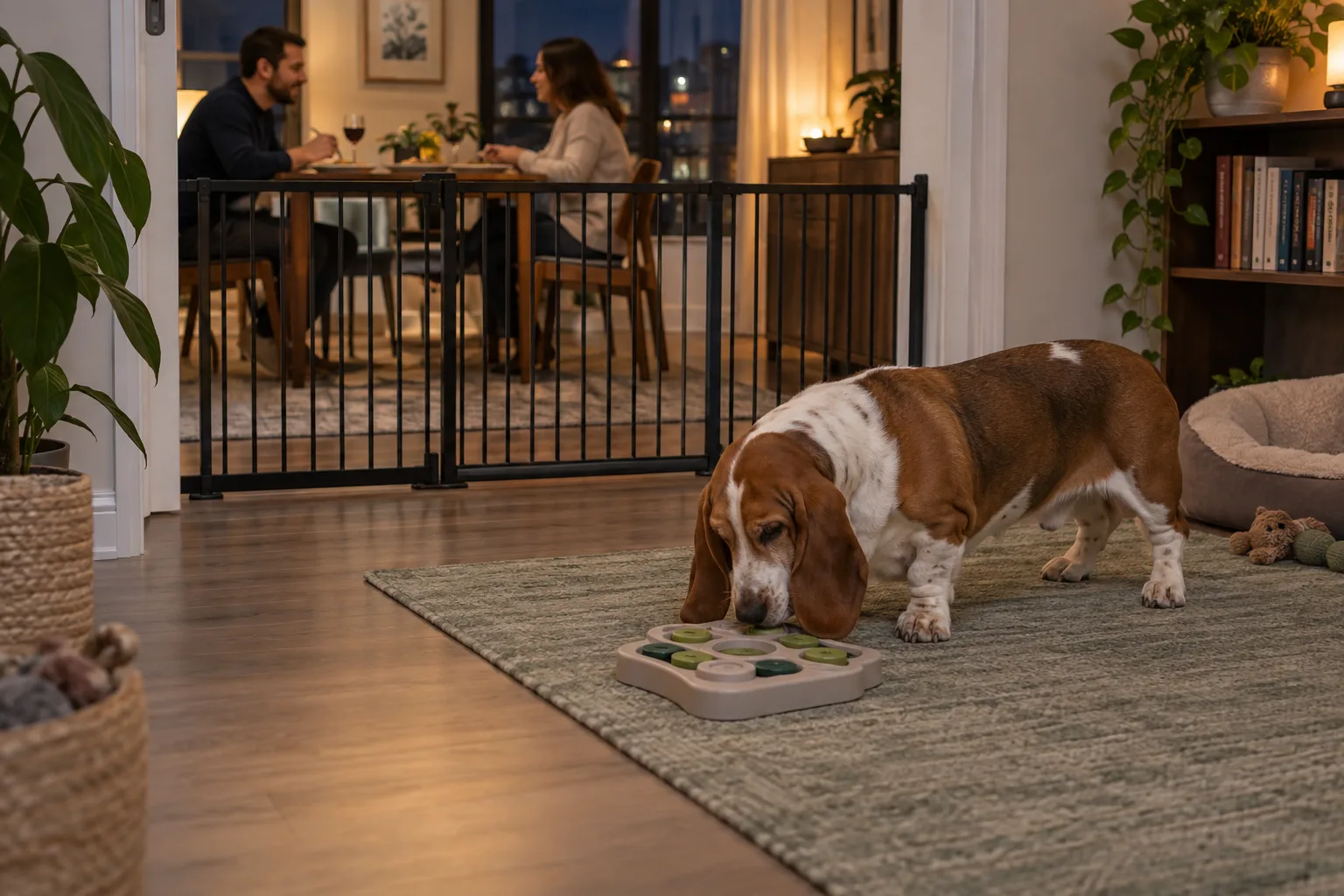
A practice success does not mean the dog is ready for a full family dinner. When people are hungry, guests are visiting or food is especially tempting, use a pet gate, a comfortable adjacent room or a dog-safe food puzzle if the dog is already happy with that arrangement. Put water and a resting place there. Management prevents another reward from the table while giving the dog something appropriate to do; it is not a punishment for asking.
If you use a chew or food puzzle, choose one suitable for your dog and supervise as appropriate. Keep treats and extras within the dog's nutritional plan. Never place a dog behind a barrier if they panic, injure themselves or show severe distress; seek professional help for that response. A dog who must be near the family can use a farther mat with an adult who is able to reward. Choose the arrangement that is actually safe and sustainable tonight.
Plate scraps carry another risk beyond reinforcing begging. The ASPCA lists human foods that can harm pets, including grapes, raisins, onions and products containing xylitol. Keep such items out of reach and contact a veterinarian or poison service promptly if you suspect ingestion. Do not try to turn a possible poisoning into a 'leave it' exercise. The immediate task is medical advice, not completing the dinner plan.
Move from rehearsal to dinner without losing the choice
When empty-plate practice is comfortable on several occasions, rehearse with a small, low-distraction snack on the table while the dog remains at a fair distance. One adult should still be able to reward at the mat and end the session. Later, try a brief part of a normal meal. Release the dog or switch to management before attention and food smells make the task too hard. An entire dinner is not the first test.
Notice whether the dog can actually relax rather than merely freeze. A soft posture, sniffing, drinking water and settling again after a small movement are useful observations. Repeated whining, pacing, staring rigidly, trying to climb the table or refusing normal rewards means the duration or distraction may be too high. End, manage the food safely and plan a shorter next repetition. DogPath is a practice aid, not an outcome guarantee.
Record what happened and make tomorrow easier to choose
After dinner, write one factual line: 'mat three metres from table; empty plate; dog stepped on twice; thirty seconds comfortable; released before food arrived'. Compare that with 'quiet dinner', which hides whether the dog was behind a gate, asleep or actually practising. A concrete note helps you change one factor tomorrow and avoids treating an accidental success as a permanent skill.
If the dog came to the table, record what preceded it: someone stood up, a chair scraped, a crumb fell, or the reward interval grew too long. The next practice can make that single moment easier. Do not replay the whole meal hoping the dog will eventually give up. Several short, fair repetitions usually offer clearer information than one long session that ends in frustration.
The practical finish is a household that knows the plan: plates are not dog reward stations, the mat is comfortable, a person can reward there, and a safe alternative is available when the meal is too difficult. Some dogs need a veterinarian or qualified behavior professional to address pain, abrupt appetite changes, panic, aggression or bite risk. The log can support that conversation, but it cannot replace a personal assessment.