
A brief pause before moving together
Dog Curb Training: Free Pause Practice
Teach a small stopping routine away from traffic while keeping every real crossing decision with the adult holding the lead.
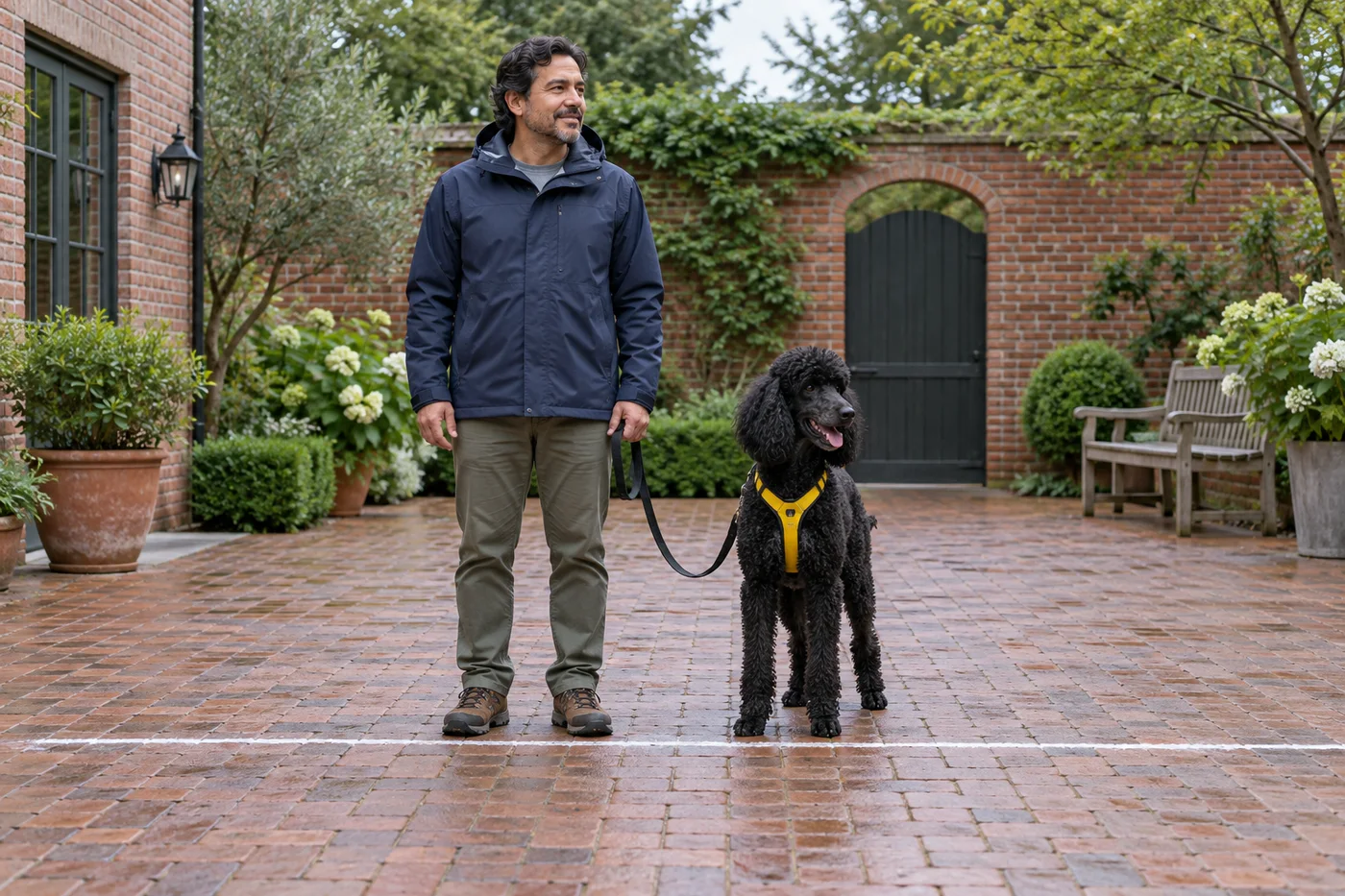
Dog curb training often starts at the hardest possible place: the dog reaches the edge, the handler suddenly stops and traffic is already passing. A clearer first task belongs somewhere else. Practise a brief pause beside you at a harmless line on level ground, then a deliberate cue to move together. You are teaching one manageable transition, not asking the dog to judge vehicles, understand traffic signals or keep themselves safe beside a road. The adult holding the lead remains responsible for every real crossing decision.
This free guide uses reward-based practice and a concrete DogPath note to separate the stop, the short pause and the release. DogPath is free to download or start, with in-app purchases for some functions or usage levels. It does not assess traffic, certify safety or replace personal instruction. Keep a securely connected lead and appropriate control throughout. Pain, sudden behaviour change, panic, aggression, bite risk or welfare concerns need appropriate in-person help. Do not use this exercise to treat traffic fear or test whether a dog can wait off lead near vehicles.
Dog curb training begins away from the curb
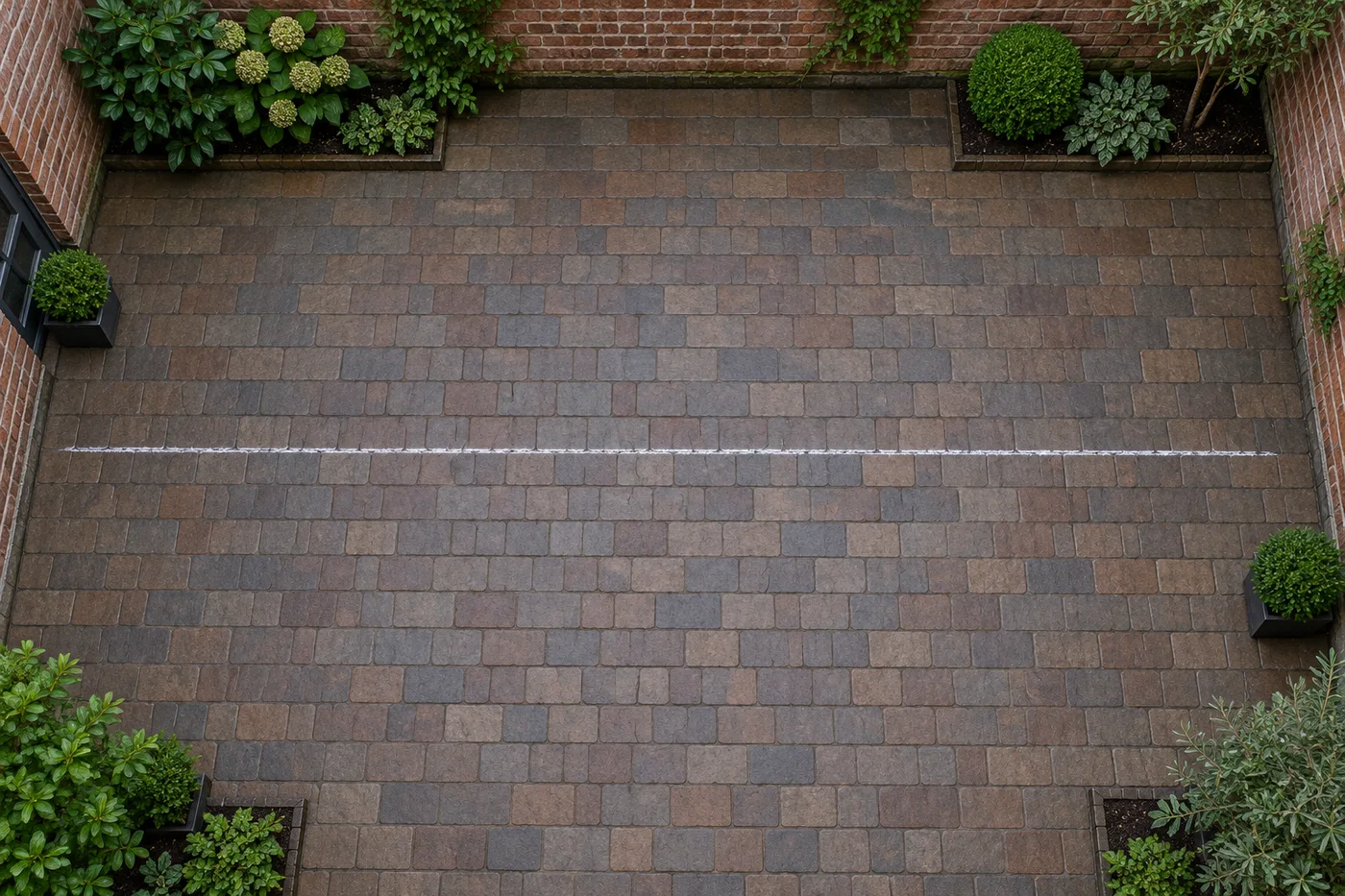
Choose a private, enclosed, traffic-free area with permission to use it, clear footing and room to turn away. A simple flat line on level ground can mark where you intend to pause. It must not be a cable, raised pole or something that catches feet. Inspect the actual surface and surroundings rather than relying on a photograph to call them safe. There is no need for a real drop, kerb edge or moving vehicle in the first lesson. If you cannot find an appropriate setup, postpone the exercise.
Decide on a modest visible goal: the dog stops beside you briefly while the lead stays manageable, then moves with your release. Standing can be enough; do not force a sit or repeatedly change posture because a demonstration uses one. Dogs for Good's wait guide separates a short position hold from a release and builds difficulty gradually. Our courtyard example is an original way to practise those separate parts before adding the demands of a public route. No successful repetition proves that the dog understands road danger.
Prepare your hands before asking for a pause
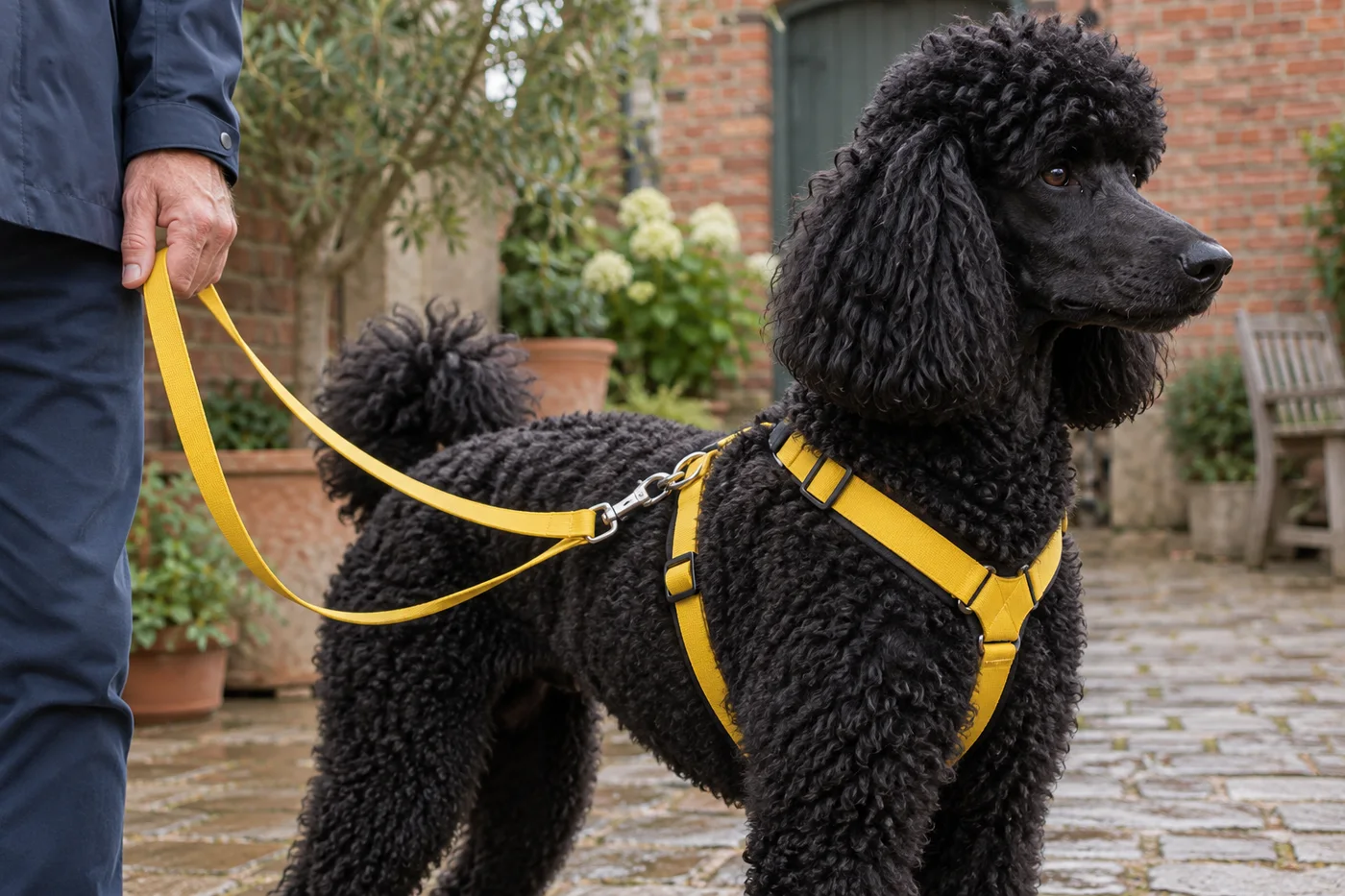
Check suitable walking equipment, its fit and the actual attachment before starting, following the manufacturer's instructions. Hold the connected lead securely without wrapping it around fingers. Arrange a few suitable rewards where you can reach them without dropping your grip. Keep food within the dog's normal feeding plan and individual advice. You need to be able to stop your own feet and observe the dog without simultaneously searching a bag, reading a phone and collecting a loose toy. Simplify the setup if your hands are already overloaded.
Practise your own movement once without the dog if helpful. Walk a few easy steps, stop well before the flat marker and imagine where the reward will arrive. You are preparing to reward beside you, not over the line ahead. A manageable lead can remain slack without giving access to an unsuitable area. Our loose-lead guide covers moving together as a separate foundation. This routine does not make yanking at the stopping point acceptable, and a new harness is not a substitute for appropriate handling or individual support when control is difficult.
Reward the stop before asking for longer waiting
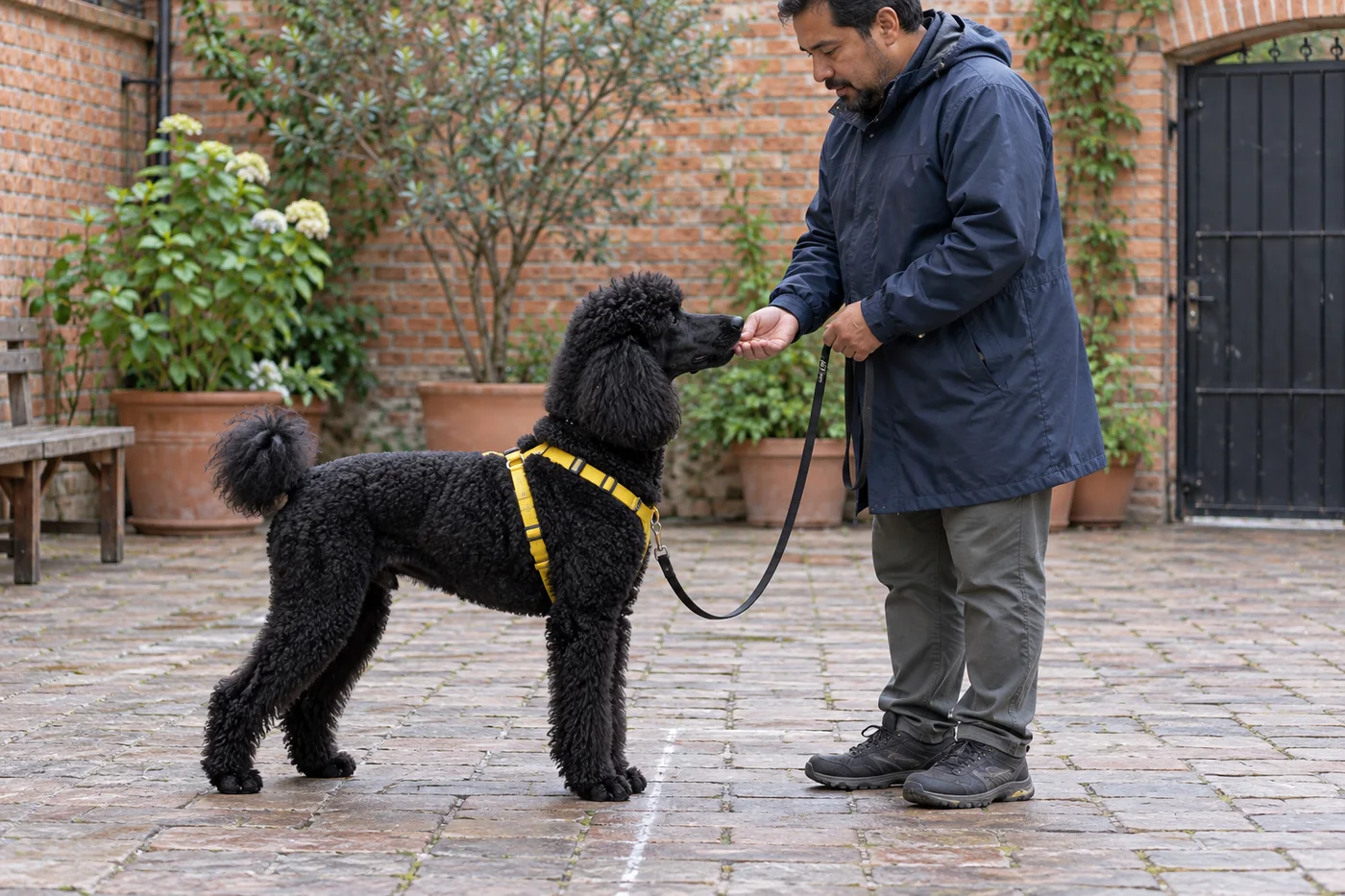
Start near the practice line so there is no long exciting approach. Take a small number of ordinary steps, slow and stop with room before the marker. When the dog pauses beside you, mark and reward promptly in that position. At first, the pause can be very brief. If the dog continues forward, prevent access calmly with your existing management and reset farther from the line; do not create a sharp lead correction or lure them back across a pretend road. Make the next approach shorter and clearer.
Keep the rewarded position reachable and comfortable. Avoid leaning food far above the dog until they stretch, spin or jump. If you use a verbal pause cue, keep one word consistent and attach it to an action the dog is beginning to understand rather than repeating it over several steps of pulling. Do not ask for a long hold while you prepare the first reward. A successful early repetition is an ordinary stop with a clear finish, not a dramatic freeze while you walk away. Stay close enough to manage the arrangement throughout.
Make moving on a separate, understandable event
After the brief reward, give a consistent release cue and step together into clear space. Choose a word that is distinct from your pause cue and from casual conversation if possible. Do not throw food ahead across the marker as the release: the learning target is moving with you, not rushing toward an item. Keep the lead connected and your grip secure even in the enclosed setup. Reset with a calm loop rather than immediately marching back and forth until the dog starts anticipating every turn.
Practise the release while the pause is still easy. If the dog moves before your cue, shorten the next hold instead of adding repeated corrections. You may be asking too much duration or using your own hand movement as an accidental signal. A separate stay foundation can help you understand these differences, but curb pauses are not distance stays. Do not step away and leave the dog waiting at an edge. The handler's ongoing control and attention remain part of the routine, whatever cue has been learned.
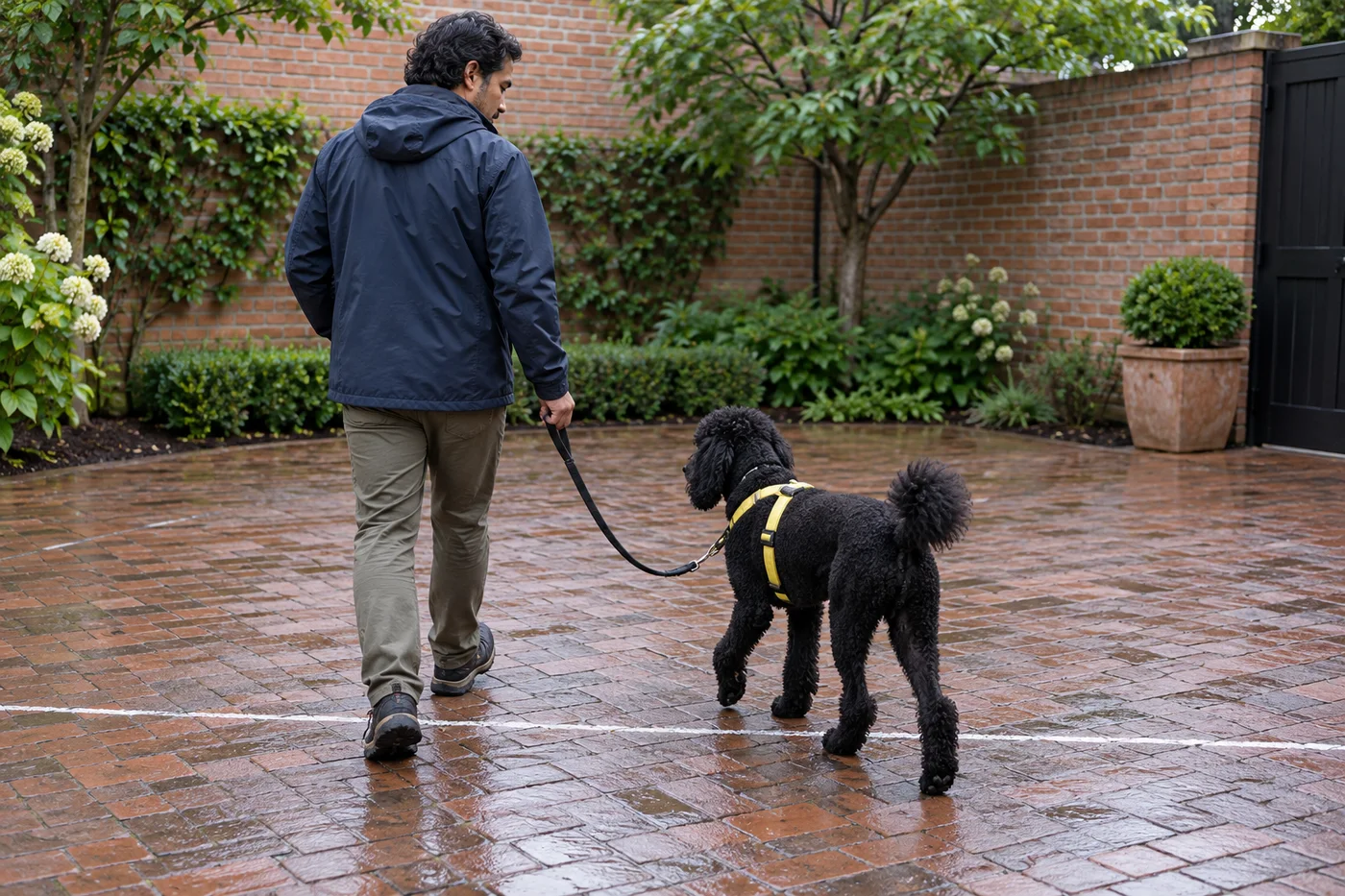
Use DogPath to change one difficulty at a time
Choose a visible practice goal in DogPath: stop beside the handler before the courtyard line, take a reward and leave together on the release. Prepare the lead and rewards, practise briefly, then record the actual result after finishing. A useful note might say two short approaches with immediate reward, one early departure, then a break. Do not label that traffic safe or ready for every crossing. DogPath is an everyday practice aid and a place for a factual record, not a road-safety assessment or guarantee of future responses.
Select one next change based on that observation. You might make the approach slightly longer while keeping the same place and brief pause. On another occasion, a small increase in duration may be suitable while the approach stays easy. Distance, duration and distraction should not increase together. New public surroundings are a substantial change, not a free extra step because the courtyard went well. Keep the phone put away during the activity. If your attention cannot cover the dog, lead and surroundings comfortably, simplify or stop rather than relying on an instruction on screen.
Manage real pavements without conducting a test
Ordinary road use requires an adult's judgement, secure equipment and control regardless of training progress. Stop back from the edge with adequate room for the dog and others, and follow the applicable crossing arrangements. Do not approach traffic to find out whether the learned word works. A quiet-looking road can still contain moving hazards. If the dog is pulling, startled, unable to settle or difficult to control, create distance and choose appropriate assistance or another route. The purpose of a journey is getting through it responsibly, not obtaining a successful repetition.
Never release the dog to decide when to cross. Check the actual situation yourself and move together only when appropriate, retaining the lead and attention throughout. A familiar cue may be a helpful part of your handling, but it cannot detect a vehicle hidden from view or guarantee a response under distraction. Do not practise off lead beside roads, leave a dog waiting outside a shop or allow a child to run this exercise at a crossing. Traffic fear and unsafe handling need individual support beyond an ordinary pause routine.
End with a usable plan for the next outing
Finish before the small exercise becomes a repeated test of patience. Offer normal care, movement and rest appropriate to the dog. Note which part needs work: approaching together, stopping, the short hold or moving on. Those are distinct observations. If every pause ends with forward pulling, return to an easier traffic-free setup and review your reward placement and release. Do not solve it by increasing tension or waiting for exhaustion. A shorter useful session can reveal more than a long sequence in which the dog and handler both become frustrated.
Before practising again, check that the setting still suits you. Footing, access, weather and nearby activity may have changed. Recreate the easiest helpful arrangement and decide on one small adjustment, if any. Maintain real-world management even after many pleasant sessions. The worthwhile outcome is a clearer shared routine and more deliberate handling, with honest notes about what happened. It is never permission to hand traffic decisions to the dog. You can retain control, choose a different route and stop training whenever the circumstances call for ordinary care instead.