
Training foundations
Free Guide: How to Teach a Dog to Stay Step by Step
Build a useful stay with a clear release cue, tiny increases in time and distance, and rewards that make holding position worthwhile.
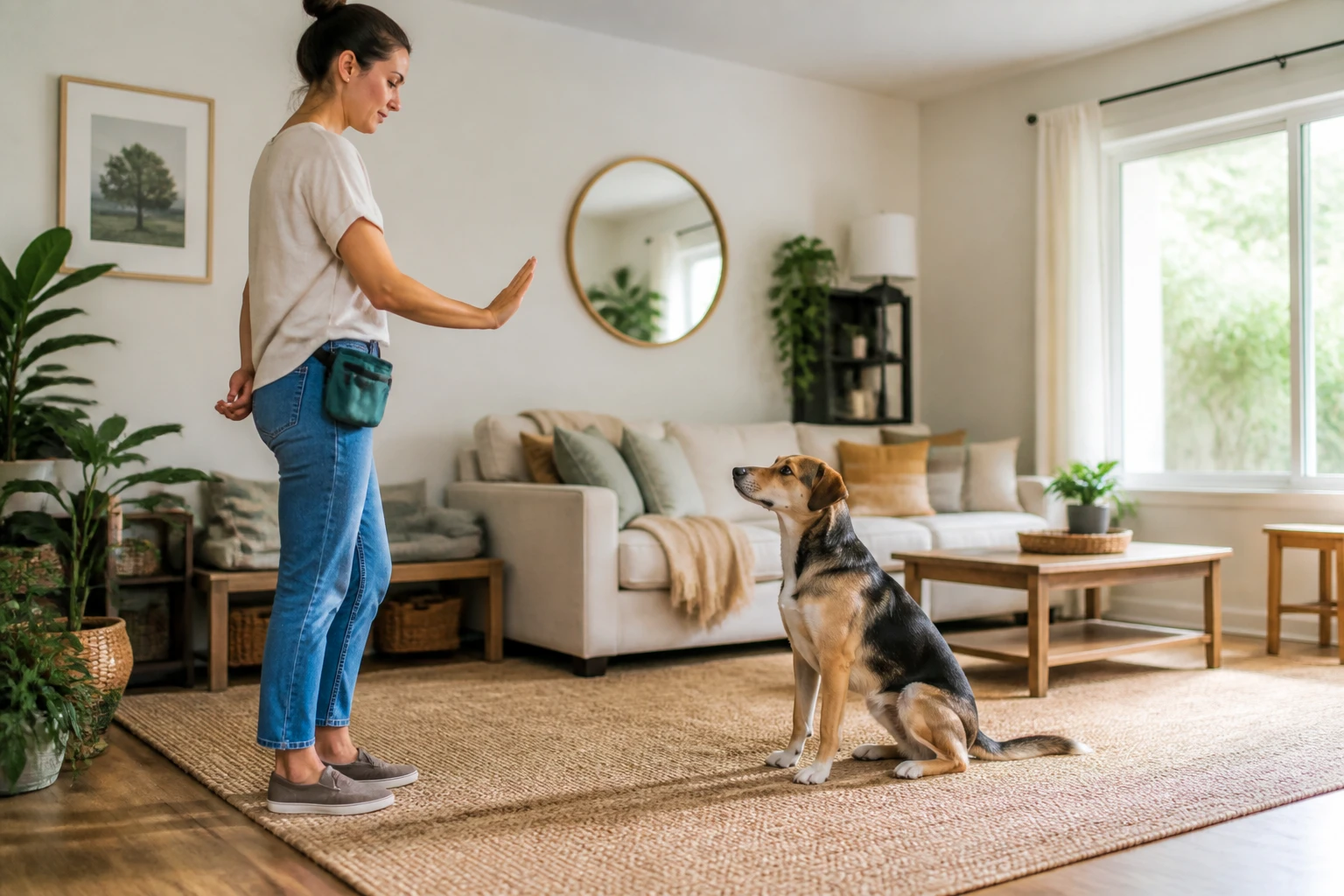
A reliable stay is not a test of how long a dog can resist moving. It is a clearly defined behavior with an equally clear ending: remain where you are until the release cue arrives.
Begin with one or two quiet seconds and reward before your dog gets up. Duration, your distance from the dog, and environmental distractions are three separate challenges. Training becomes much easier when you change only one of them at a time.
DogPath can organize this progression into short daily lessons, mark each successful moment with the built-in clicker, and record which duration, distance, and location are currently comfortable. Its AI coach can suggest an easier next step when repetitions start to break down. DogPath is free to download on iOS and Android; some features or usage levels may require an in-app purchase.
Choose one position and teach the release first
Start in a quiet room with your dog sitting, standing, or lying down. Any position can work, but use just one during the first sessions so the picture stays simple. Stand close enough to deliver rewards without leaning over the dog.
After one second, say a release word such as “free” or “okay”, gesture away, and move together. Repeat until the release reliably ends the repetition. The dog should not have to guess whether getting up was correct.
A stay is complete when the release arrives—not when the dog finally makes a mistake.
Add the stay cue to an easy repetition
When your dog can hold the starting position for a second, say “stay” once and use a small open-palm signal. Pause, mark while the dog is still in place, deliver the reward where the dog is, and then release.
Reward placement matters. Walking the dog toward your hand can accidentally turn the exercise into a recall. Bring the reward back to the dog so staying remains the profitable choice.
- Say the cue once
- Mark before the dog moves
- Deliver the reward in position
- Release after every short repetition
Build duration in uneven, easy steps
Move from one second to two, then return to one. Try three seconds, then two. Mixing easier repetitions among slightly longer ones prevents every attempt from becoming a harder test than the last.
Watch for weight shifts, repeated paw movement, looking away, or a body that becomes tense. These are useful signs that the next reward or release should arrive sooner. Finish after several clean repetitions rather than chasing one impressive record.
Add distance without walking straight away
Distance often changes the exercise faster than owners expect. Begin by rocking your weight back, moving one foot, or taking half a step sideways. Return immediately, reward in position, and release.
Only take a full step when those smaller movements are easy. Walking sideways or on a gentle curve can be simpler than turning your back and leaving. In DogPath, record the exact movement that worked so the next session begins from evidence rather than memory.
- Shift your weight and return
- Move one foot without leaving
- Take half a step sideways
- Add a full step only after repeated success
Introduce distractions one at a time
Lower both duration and distance before adding a distraction. Sit in a chair, touch a door handle, place a cup on a table, or let one quiet person walk through the room. Reward before the dog needs to follow.
Practise in a second quiet room before moving to the garden or pavement. A new location is already a major change. Use a lead where needed for safety, but never tighten it to force the dog to remain still.
Reset calmly when the dog gets up
If your dog moves before the release, do not scold, drag the dog back, or repeat “stay” louder. Reset the starting position and make the next repetition shorter, closer, or quieter.
Stay should not be used to hold a frightened dog near traffic, unfamiliar dogs, painful handling, or another situation the dog is trying to escape. Create physical safety first and seek qualified veterinary or behavior support when fear, pain, aggression, or risk is involved.