
Training foundations
Dog training rewards and timing: make the right moment pay
Choose rewards your dog values, mark cleanly, and deliver in a place that makes the next repetition easier.
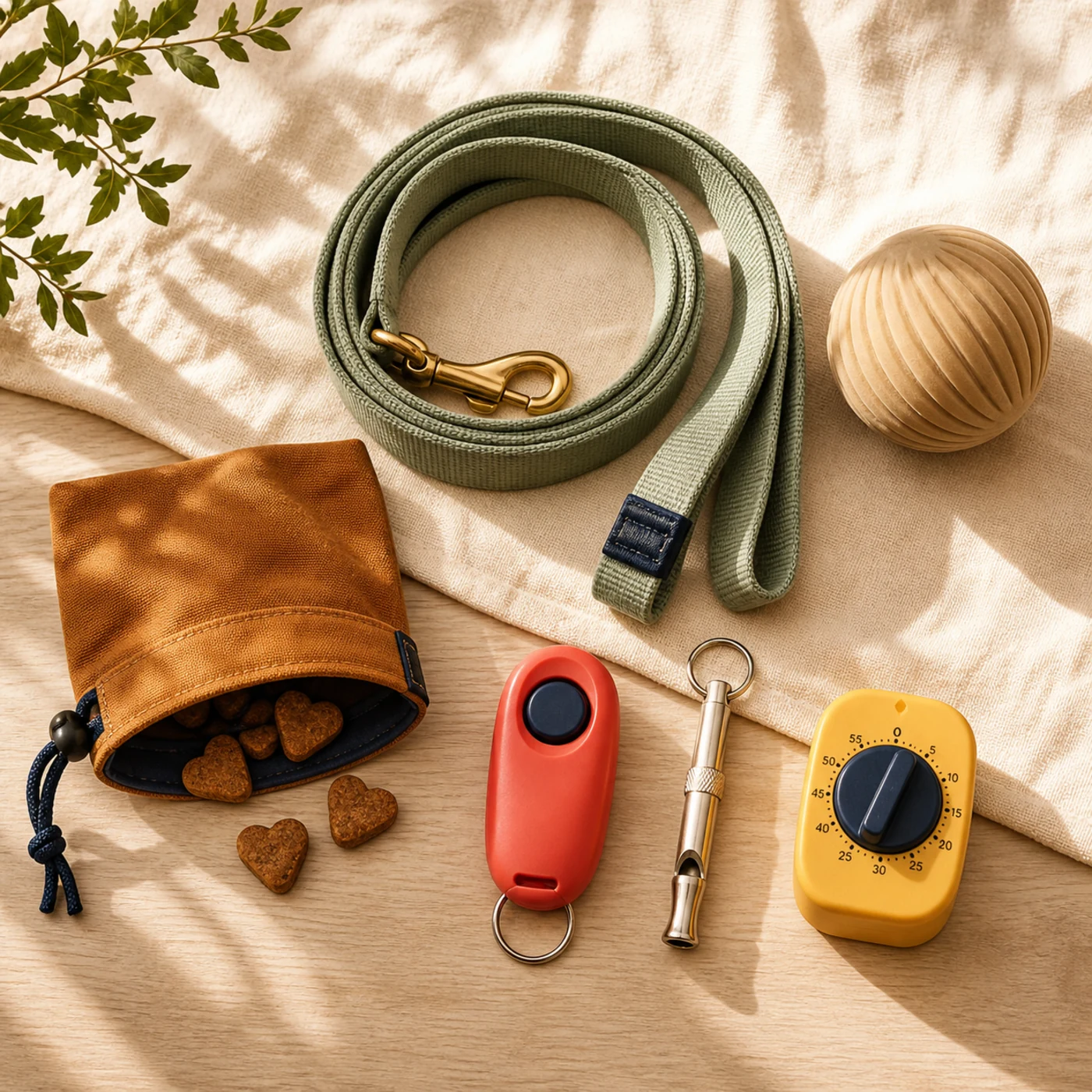
Good training can look almost uneventful: the dog offers one useful behavior, a marker identifies the exact moment, and the reward arrives where it supports the next repetition. When any part of that sequence is late or unclear, both sides work harder.
Rewards are not payment for obedience after the fact. They are information about which behavior should happen again. Choosing value, timing the marker, and placing the reward deliberately turns a handful of treats into a clear learning system.
Find what reinforces this dog in this moment
Food is convenient, but reward value is personal and contextual. One dog works for kibble indoors and needs chicken outdoors. Another values tug, chasing you, sniffing a hedge, greeting a person, or returning to play. The outcome tells you whether the consequence reinforced the behavior.
Prepare a small range of values and match them to difficulty. High-distraction recalls deserve a stronger payoff than an easy kitchen sit. If the dog cannot eat, check stress and environment before searching for an even richer treat.
Use a marker to preserve the exact moment
A clicker or short word such as “yes” tells the dog which instant earned reinforcement. Condition the marker by pairing it with food, then use it once at the behavior you want. The reward should still follow every marker, even when your timing was imperfect.
Practice mechanical timing without the dog if necessary. Mark a bouncing ball touching the floor or a person making a small movement. Cleaner timing prevents accidental reinforcement of jumping after a sit, pulling after a soft leash, or moving away after a recall.
The marker is a promise, not praise floating in the background. Mark once, then deliver the reward.
Place the reward where the behavior should continue
Feed beside your leg for leash position, on the mat for settling, and close to your body after recall. Reward placement can hold the dog in position or reset them intentionally for another repetition.
Plan delivery before the cue. If you always reach across the dog, lure them out of position, or throw food toward the distraction, your placement may compete with the lesson. Small mechanics create big differences across dozens of repetitions.
Move from continuous rewards to durable everyday reinforcement
New or difficult behaviors benefit from frequent reinforcement. Once a skill is reliable in the current context, you can vary food while keeping other rewards, sniffing, movement, play, access, and social contact, part of the pattern.
Do not fade rewards merely because the dog performed the behavior several times indoors. A new environment makes the task new again. Return to higher reinforcement when distance, duration, or distraction increases.
Keep food safe and the full diet in view
Use small pieces, account for training food in the day’s intake, and choose items appropriate for the dog. Allergies, medical diets, swallowing concerns, and weight management may require veterinary guidance.
Rewards should support welfare, not create conflict around food. For guarding, dietary illness, or significant feeding concerns, seek qualified help rather than applying a generic treat plan.
A reward is defined by the dog
Food, toys, play, sniffing, movement, access, and social contact can all reinforce behavior when the dog wants them in that moment. A treat is not automatically rewarding because you bought it for training. Watch whether the dog returns eagerly to the task and whether the behavior becomes more likely over repetitions.
Value changes with context. Kibble may work before breakfast indoors while the park requires chicken, a tug toy, or permission to investigate a scent. Adjusting reinforcement is not bribery; it is part of designing a fair learning environment. Reduce reward value or frequency only after the behavior is genuinely established in that context.
Timing and placement tell the dog what paid
Mark the behavior at the exact moment it happens, then deliver the reward promptly. If you mark a sit but feed after the dog stands, the marker preserves clarity; without a marker, the dog may connect the food to the later position. A consistent word or clicker makes that communication easier.
Placement prepares the next repetition. Feed on the mat for settling, beside your leg for leash position, and close to your body after recall. Tossing food away can reset a stationary behavior when that is intentional. Decide where the reward should land before beginning so your delivery supports the skill rather than pulling the dog out of it.
Read the session
How to know the plan is working, or already too hard
Progress is not one perfect attempt. Look for a pattern across comparable short sessions: clearer responses, faster recovery, willing re-engagement, and less help from the setup. Body language matters alongside the visible behavior.
Signs the level is workable
- The dog returns eagerly for another repetition
- The marker lands on the intended behavior
- Reward placement supports the next attempt
- Reward value rises appropriately with difficulty
Signs to make it easier
- The dog stops eating or leaves the task
- Food appears before the cue on every repetition
- The marker occurs after the behavior has changed
- Rewards are reduced while the environment is getting harder
Choose the next change
Keep the behavior easy and review ten repetitions for timing and placement. When the mechanic is clean, change the environment slightly and reassess what the dog values there.
Before the next session, prepare rewards, choose the starting location, and decide what will count as complete. Change distance, duration, or distraction one at a time. If the dog cannot eat, disengage, recover, or move comfortably, stop treating the moment as an ordinary training plateau.
Before you begin
A fair-session checklist for this training goal
The exercise matters, but the conditions around it often decide whether learning is possible. Use this five-part check before the first cue. It takes less time than repairing a session that began too hard.
Outcome
Name one visible behavior and a finish line for today. Avoid broad goals such as “be calm” or “listen better.” Another person should be able to watch and tell whether the criterion happened.
Environment
Choose the quietest practical version of the real scene. Check surfaces, space, exits, people, dogs, sounds, and movement. Create enough distance for your dog to eat, recover, and re-engage.
Reinforcement
Prepare rewards before the cue. Match their value to the competing environment and decide where delivery should happen so it supports the next repetition instead of pulling the dog out of position.
Management
Decide how you will prevent the unfinished behavior from being rehearsed between attempts. That may mean a gate, barrier, long line, quieter route, prepared chew, greater distance, or skipping the difficult situation today.
Stop condition
Finish when the written criterion is met, focus drops, or body language says the level is no longer comfortable. Stopping early protects clarity. You can repeat the same small step later without losing progress.
After the session: make one decision
If the behavior was repeatable and your dog stayed engaged, repeat once more or raise distance, duration, or distraction by a small amount next time. If it was inconsistent, improve setup or rewards before replacing the goal. If pain, panic, aggression, bite risk, sudden change, or prolonged distress appears, stop the ordinary training plan and involve the appropriate veterinarian or qualified professional.
From article to action
Turn this guide into a practice week
Keep the goal stable long enough to see a pattern. Three or four tiny sessions across a week reveal more than one long attempt in a difficult environment.
Find the baseline
Choose one easy behavior, one marker, and a reward your dog clearly wants in the current room.
Build one layer
Review ten repetitions for marker timing and whether reward placement supports the next attempt.
Generalize carefully
Reassess reward value when the environment changes instead of assuming the dog is refusing to cooperate.
What to record
- Reward offered
- Dog’s response
- Marker timing
- Delivery position
Change only one major variable at a time. If success drops, return to the last version your dog could perform with relaxed, engaged body language.