
Everyday cooperative care
Dog Hates Paws Wiped? Free Practice Plan
Separate a muddy arrival from a learning session. Start with a visible cloth, a comfortable choice and one tiny contact.
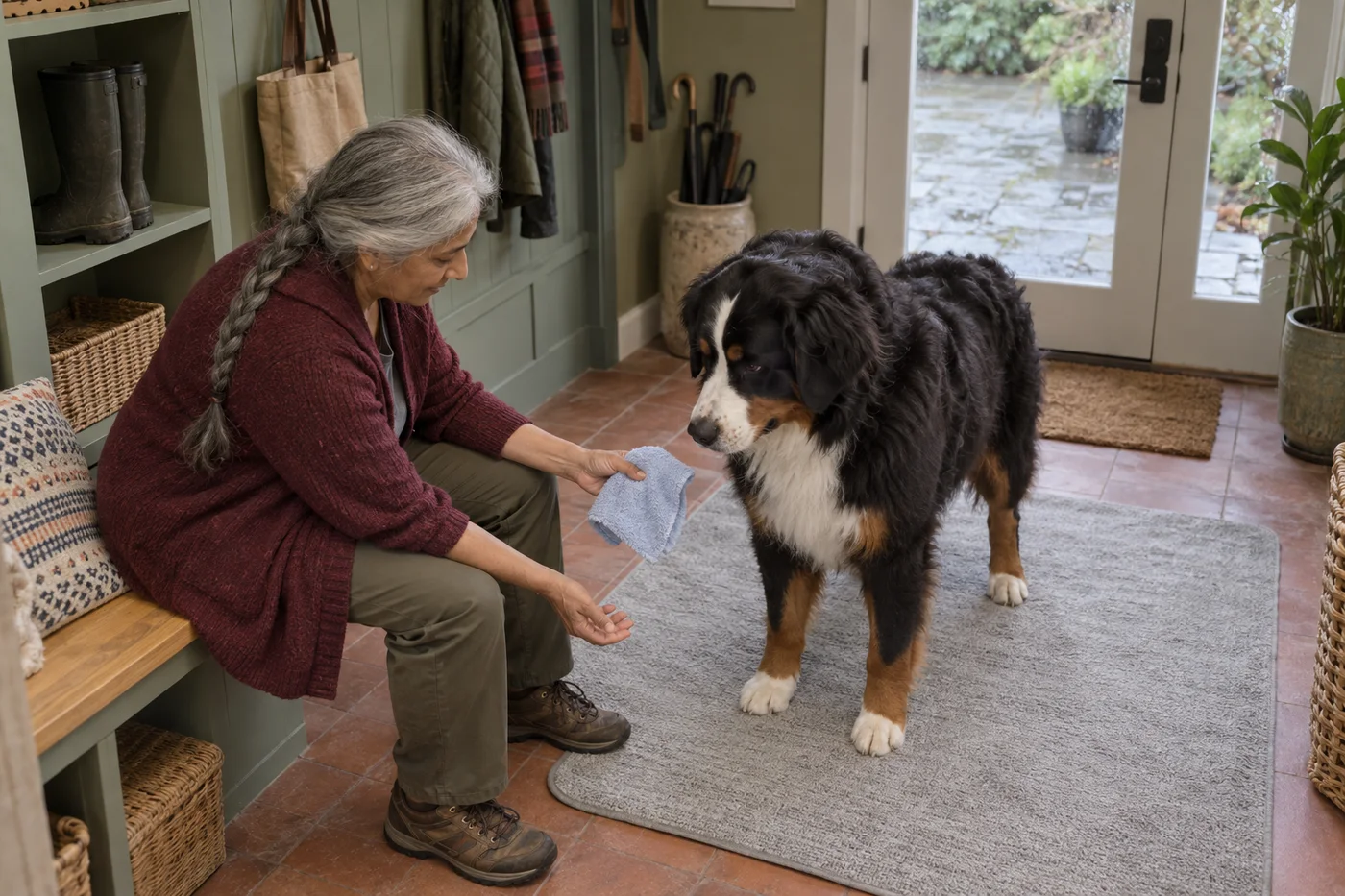
If your dog hates paws wiped, the difficult moment often begins before the cloth reaches a foot. You arrive home, lean over a tired dog, catch a leg and try to finish before mud reaches the carpet. The dog pulls away; you hold more tightly. That sequence combines a busy doorway, touch, balance and restraint. Instead of practising the entire struggle, separate learning from the necessary care of a genuinely dirty or uncomfortable paw.
This free practice plan uses DogPath to organise small reward-based sessions and record what actually happened. DogPath is free to download or start, with in-app purchases for some features or use levels. It cannot assess pain, consent or bite safety. Begin only with a comfortable dog whose ordinary handling needs are understood. Sudden resistance, limping, repeated licking, panic, aggression or bite risk requires appropriate individual veterinary or behavioural help, not a more determined wipe.
When a dog hates paws wiped, distinguish care from practice
Ask what is needed today before choosing a training goal. A routine rehearsal with clean, comfortable feet is different from removing a harmful substance, examining an injury or managing painful skin. Do not postpone urgent care while waiting for a training exercise to work. Contact a veterinarian for an appropriate care plan when you are uncertain about contamination or discomfort. Do not apply household cleaning products, medication or a tightly wrapped towel as an improvised solution. A cleaner floor is not more important than the dog's welfare or your safety.
Vienna's veterinary university lists changes such as sudden limping and altered movement among reasons to investigate paw problems and seek veterinary advice. That reminder supports checking the context, not diagnosing a cause from a training log. If the dog was comfortable yesterday and now avoids ordinary contact, treat the change as meaningful. For an established, non-urgent handling difficulty, choose a quiet rehearsal later rather than repeating a test at every return from outdoors. The aim is a more comfortable routine, not proving that you can touch all four feet.
Set one visible goal and prepare the arrival area
In DogPath, choose a small observable behaviour to practise, not the broad label 'good for cleaning'. Today's goal might be looking at a still cloth while remaining nearby, or accepting a momentary contact on a familiar comfortable area. Write the starting conditions plainly. Do not invent a special paw-wiping programme or use an app entry as a safety clearance. You are organising ordinary reward-based practice. Have the reward ready before showing the cloth, so you can deliver it immediately after the chosen easy moment without reaching through the dog's space.
Prepare a broad nonslip mat, a soft clean cloth and enough clear floor for the dog to turn away. Work with one adult, away from children, other animals and an opening exterior door. Sit sideways at a comfortable height rather than looming over the dog. Keep the cloth small and visible; a large towel draped over the body creates another sensation. Leave the dog's route away open. If they cannot stand comfortably, obtain individual advice about position instead of lifting a leg to make your arrangement convenient. Practice should not depend on cornering the dog beside a shoe rack.
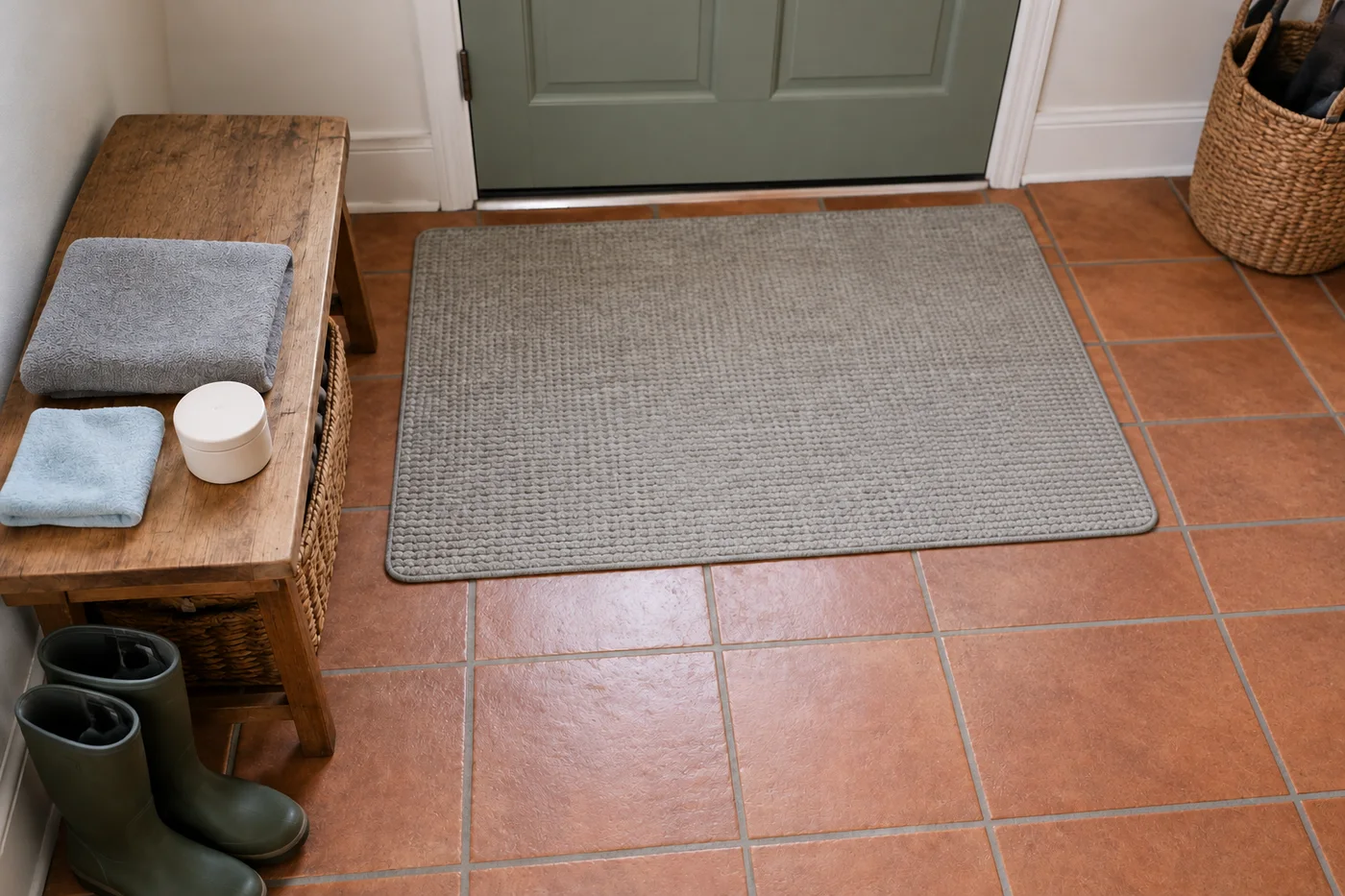
Let the cloth become predictable before touching a paw
Present the cloth at a distance the dog can notice without being crowded. Keep it still, allow a look or voluntary investigation, then deliver a suitable reward and put the cloth aside. You do not need to make the dog sniff it or lure their nose into your hand. Watch what they do after the reward. Remaining nearby with easy movement is different from stretching toward food while keeping the feet far away. Eating alone does not demonstrate comfort. If they leave, let the session end rather than following them with the cloth.
Repeat only while the setup remains easy. On another attempt, change the cloth's distance a little while keeping your position, reward and quiet room the same. Do not add a reaching hand at the same time. A familiar quiet marker can identify the moment you reward; teach a new clicker separately instead of introducing a surprising sound during handling. Record 'looked at cloth, remained nearby' rather than 'accepted towel'. Those descriptions distinguish the action seen from the larger task you hope to teach. They also make it easier to return to a successful starting point next time.
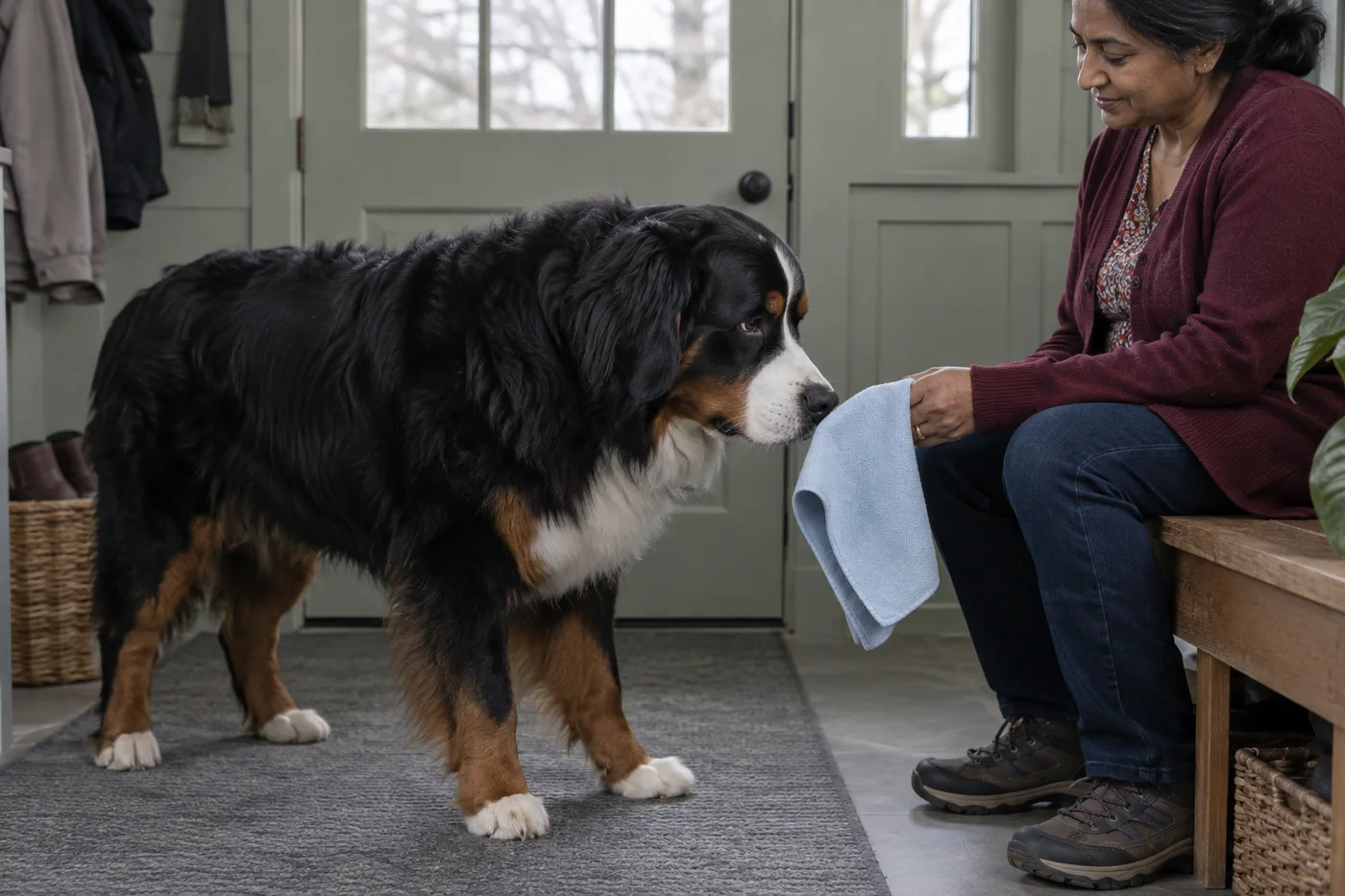
Add a moment of contact without catching the leg
Only move toward touch when the dog is comfortable with the cloth and ordinary contact in that area. Start with a brief contact they already find easy, then withdraw the cloth and deliver the reward. A foot can remain on the floor; lifting is not the first requirement. Keep your hand open and avoid encircling the ankle, squeezing toes or holding the dog in place. If you are unsure how to approach without causing discomfort, ask a qualified reward-based professional to demonstrate an appropriate starting step for your particular dog.
Pasadena Humane recommends very short rewarded handling and stopping when the dog moves away, stiffens or growls. Apply that stop rule before trying to finish a wipe. Do not repeat the contact until the dog gives up moving, and do not label stillness as agreement. Withdraw calmly, allow space and choose an easier starting condition later. A dog that snaps or has a bite history needs personal safety planning, not an online progression. Keep each paw's response separate: comfort with a front foot does not authorise reaching for a hind foot from behind.
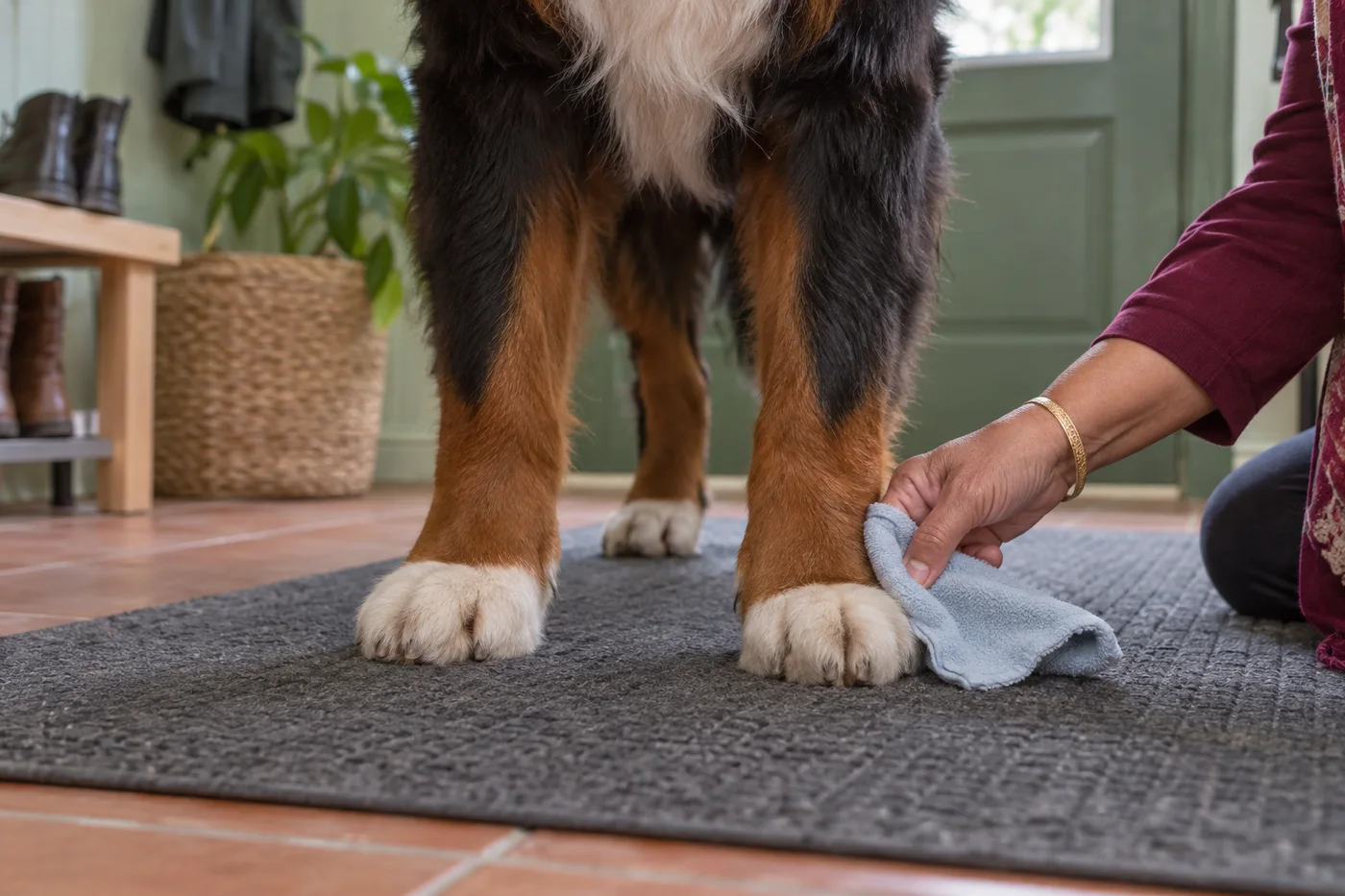
Pasadena Humane on short rewarded handling and stopping at discomfort
Change duration, movement or location one at a time
When a brief contact is repeatedly comfortable, choose one small change. You might extend that contact slightly, or make one tiny cloth movement, but not both together. Keep the same cloth, person and room. A wiping motion is a new sensation; treat it as another step rather than assuming that a tolerated touch permits rubbing. Do not twist the paw, work between the toes or lift a hind leg as part of this general exercise. Those tasks may need their own care guidance and handling plan. A short pause between invitations lets you observe what changed.
Use DogPath to keep the goal and next difficulty visible. Change distance, duration or distraction separately, then note the response without assigning a success percentage or diagnosing emotions. If the dog pulls away at the new step, restore the earlier comfortable arrangement or stop. There is no universal number of repetitions that makes handling safe. A second adult should first observe and learn the same stop rule, not immediately take over all four paws. Likewise, changing from a dry cloth to a different texture or moisture level is a new condition, not a minor detail to hide during a reward.
Keep the real post-walk routine manageable
Plan the doorway routine so learning is not always tested at the busiest moment. Have the mat and supplies prepared before going out, give the dog room to enter and avoid catching a leg while still juggling keys. For ordinary dirt, choose the least demanding care arrangement already known to be comfortable and suitable for that dog. A washable floor area can reduce pressure to produce a perfect wipe immediately. If required care cannot be completed comfortably, seek help with a practical care plan rather than declaring handling non-negotiable and increasing restraint.
Do not hide a harder wipe behind a food distraction. Rewarding an easy contact is different from keeping the dog's head occupied while another person grips a foot. Nor does a learned paw-shake cue automatically mean permission to hold or clean the paw. Give your normal invitation once, observe the response and leave time between steps. Stop the rehearsal if it turns into cloth grabbing, frantic movement or repeated retreat. You can work on the cloth presentation on a different occasion. This article is not a cleaning-product comparison, a treatment for guarding or a replacement for the separate nail-care plan.
Record facts that help choose the next session
After a brief attempt, put the cloth away and record a few useful facts in DogPath: which paw or body area, cloth type, approximate distance, contact or movement tried, and what the dog visibly did. 'Right front foot on mat, cloth touched outside briefly, dog remained nearby after reward' is more useful than 'all paws trained'. Include an easier attempt as well as a difficult one so the next session has a genuine starting point. Do not turn the log into a challenge to increase contact every day. Some sessions should simply repeat an already comfortable step.
If the same setup becomes harder, review fatigue, environment and health with appropriate help. A log can describe a change but cannot identify its cause. DogPath is an everyday practice aid, not a pain detector, behaviour diagnosis, consent certificate or guarantee. Keep the phone out of the dog's immediate space while your hands are working. One clear observation after the session is enough. A paper note is also valid when you need a simpler arrangement. The useful outcome is an informed next decision: repeat, simplify, pause, or arrange individual support.
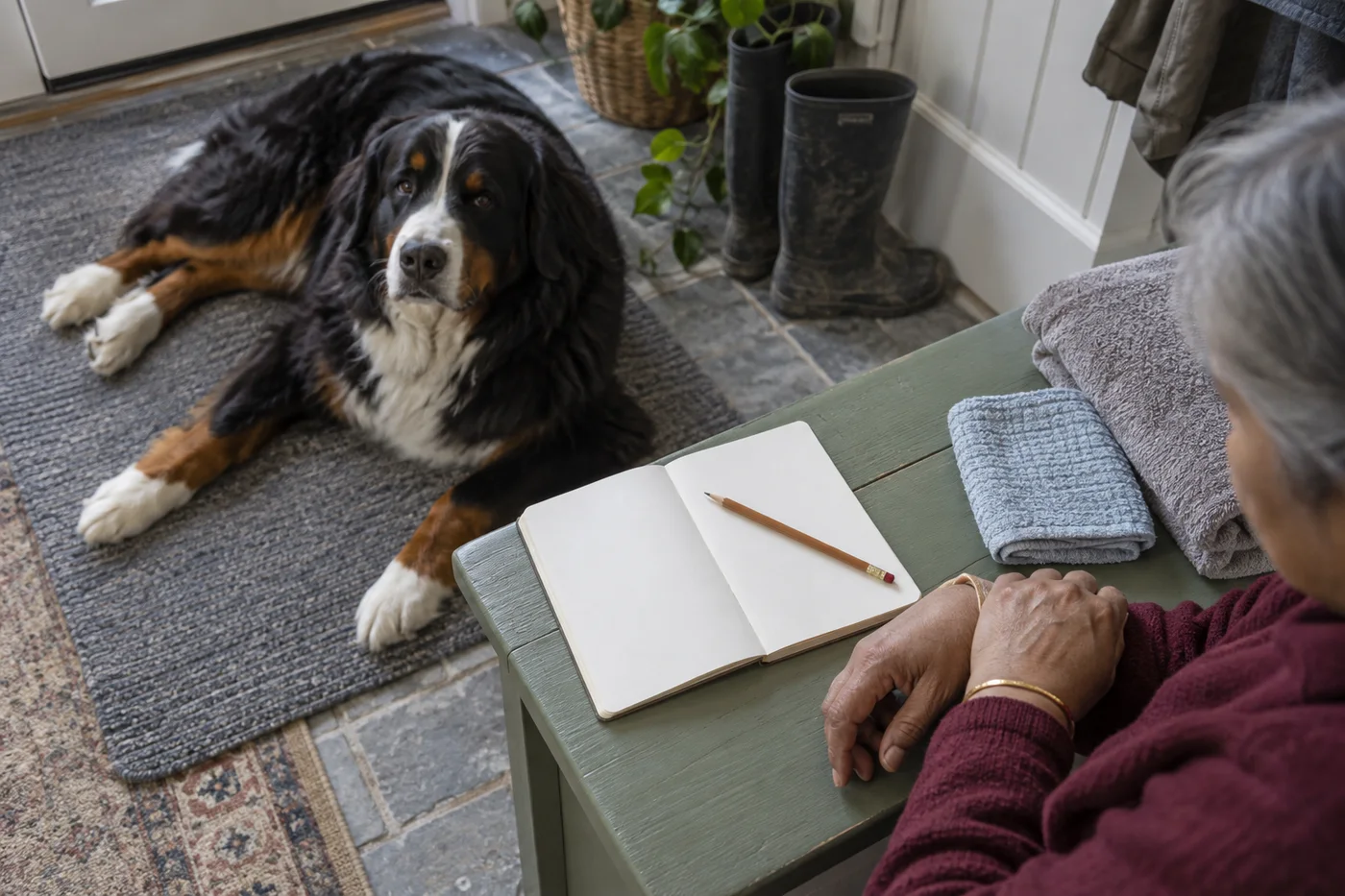
Use a stopping point instead of a four-paw deadline
Before starting, decide what will end today's short practice. One comfortable invitation, the dog walking away, a change in movement or your own loss of concentration are valid stopping points. Do not chase a final tidy repetition. Put supplies aside and let the dog resume an ordinary activity. Our short-session guide can help you protect a manageable practice window. The next attempt should begin from the recorded easy condition, not automatically from the most ambitious step you tried. Success here means useful learning conditions, not a compulsory completed set of feet.
Seek appropriate in-person help for pain, sudden behaviour change, panic, aggression, bite risk or welfare concerns. Tell the professional what care is actually needed and what you observed without insisting on a particular training explanation. Keep veterinary instructions separate from an app goal, and ask how to manage necessary care while learning proceeds. Over time, a predictable cloth presentation, room to leave and well-timed rewards may support a more comfortable routine. None promises that every dog will accept every kind of wiping. Let the dog's current response guide the next small decision.