
Visits without forced greetings
Dog Scared of Visitors? Free Home Visit Plan
Prepare a familiar retreat, brief one adult guest and plan arrival and departure without requiring your dog to greet anyone.
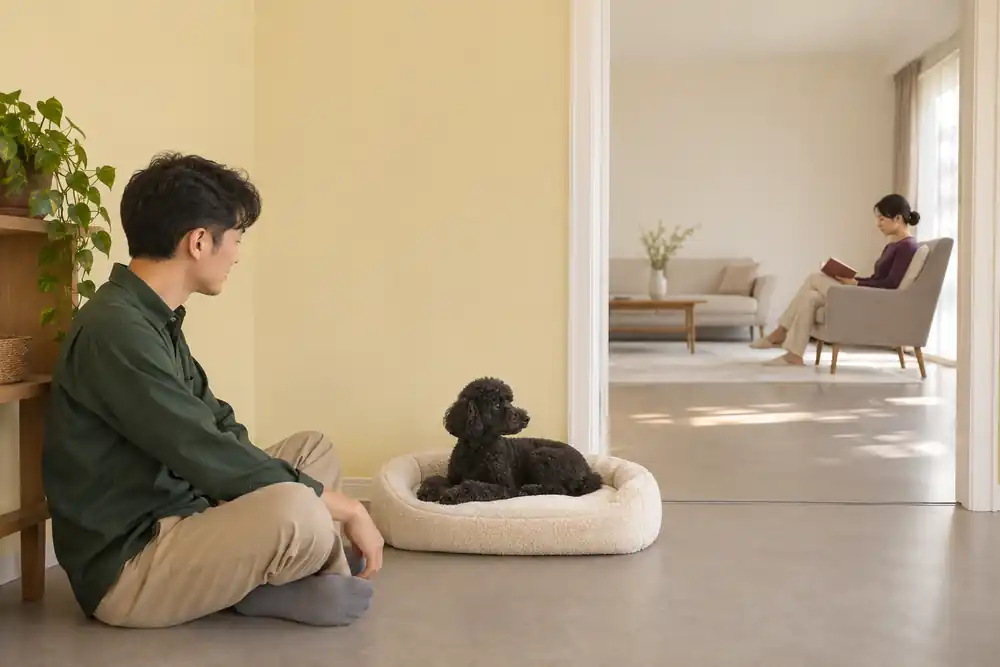
A dog scared of visitors may disappear when a coat comes off, hover in a doorway or watch every movement from the far side of the room. The useful question is not how to make the dog greet everyone. It is how to arrange a visit that leaves room for distance, rest and an easy end. A guest can enjoy your company without becoming part of a greeting exercise.
This free guide separates an ordinary social visit from a carefully planned practice visit. You can use paper, a household message and familiar equipment; no app is needed. DogPath is free to download or start, with in-app purchases, if you later want an everyday practice aid. It cannot diagnose fear, judge bite risk or decide whether introducing a particular visitor is appropriate.
The plan is for organizing a manageable home visit, not treating severe fear. Pain, sudden behavior change, panic, aggression, a bite history or concerns about anyone’s welfare require appropriate veterinary and qualified in-person behavior help. Until then, avoid introductions and use arrangements agreed with that professional.
A dog scared of visitors needs a different goal
Set a goal you can describe without guessing an emotion: your dog can stay in a familiar resting area while one adult guest sits elsewhere. This does not require approaching, accepting a hand or remaining in the same room. A successful visit might involve no encounter at all. Write that choice down before someone arrives so that politeness does not quietly change the plan.
Keep the scope narrow. This is not doorbell training, a test of obedience or an attempt to make your dog sociable with every person. If the arrival sound is the main problem, address that separately on another occasion. An appointment with a plumber, a celebration and a practice session have different demands; none needs to become a surprise training challenge.
Battersea’s guidance on strangers emphasizes gradual, unpressured work and specialist help for severe reactions. That supports a modest starting point: make fewer demands on the dog. It does not promise that a particular room arrangement will make every visit suitable.
Battersea guidance on gradual, unpressured work with unfamiliar people
Decide whether this is a visit or practice
For a normal visit, prioritize practical separation, familiar company and a short duration that your household can manage. Choose another meeting place if your home cannot offer enough distance. There is no obligation to rehearse an introduction because someone has travelled to see you. Tell them before the day rather than negotiating over the dog at the doorway.
A practice helper has a different role. They must be willing to follow instructions, sit quietly and leave early without disappointment. Choose one adult rather than a group. Do not recruit children, someone frightened of dogs or a worker who needs access throughout the house as your training assistant.
Write down who welcomes the guest and who remains responsible for the dog. In a one-person household, simplify the plan so you are not trying to monitor two rooms while opening the front door. Rearrange or postpone if that cannot be done comfortably. Organization is part of the session, not a test of how quickly you can multitask.
Prepare the resting area on an ordinary day
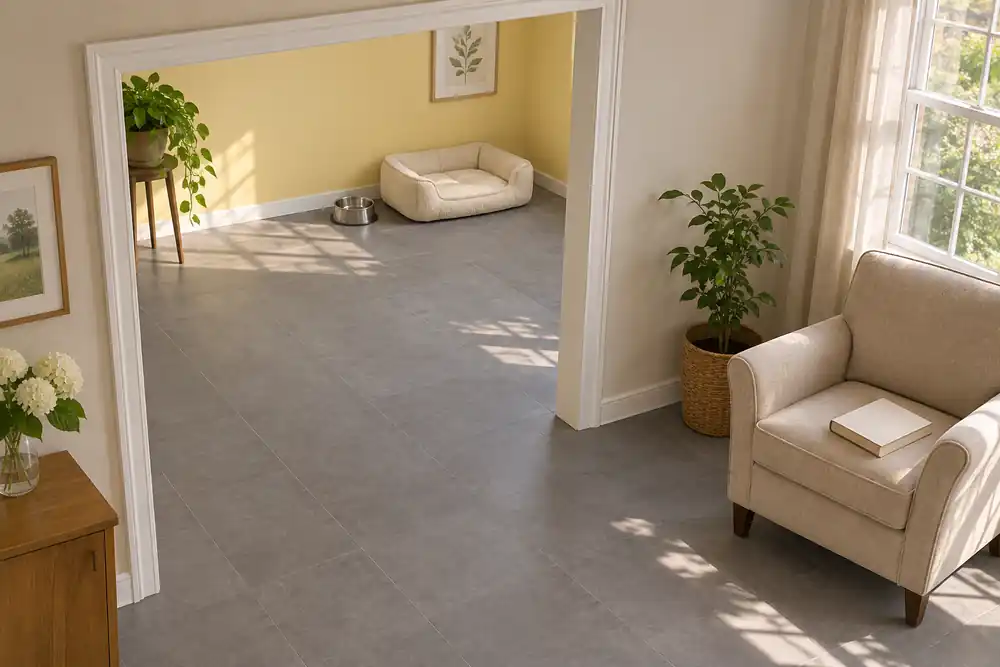
Choose a familiar place your dog already uses willingly. Check access to water, a comfortable bed and a resting position away from household traffic. Avoid selecting the space simply because it is furthest from your guest. A seldom-used utility room may add an unfamiliar problem to the visitor problem.
Try the arrangement when nobody is visiting. Can your dog settle there while you sit nearby? Does the usual door or barrier itself cause distress? A barrier is useful only if it suits this dog and actually separates the spaces; it is not automatically an appropriate solution. Do not improvise confinement for the first time as someone arrives.
Remove the guest’s need to enter that area. Put their belongings, drinks and bathroom route elsewhere where possible. Keep other pets and household members from repeatedly passing through. If the planned route cannot work, change the visit rather than repeatedly asking your dog to move out of the way. The layout should reduce interruptions before practice begins.
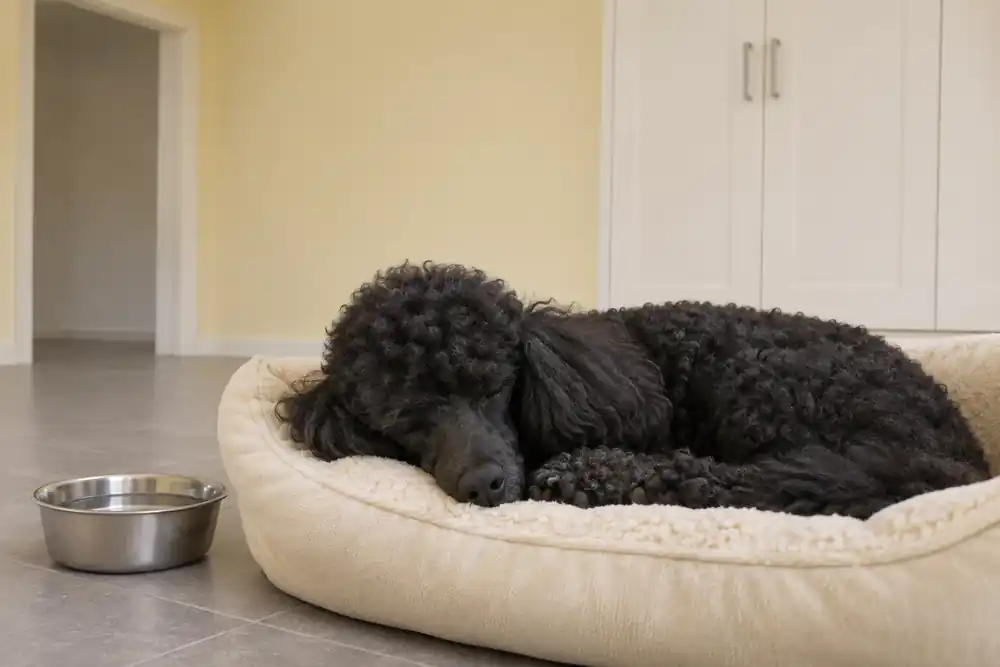
Prepare familiar resting skills separately from a visitor session
Give the guest a short, usable briefing
Send three concrete instructions: leave the dog alone, keep movements predictable and ask before getting up. Explain where to put bags and where to sit. Avoid vague requests such as “be good with dogs,” which invite someone to use their own greeting routine. A person who loves dogs may need especially clear permission to do nothing.
Ask them not to call, stare at, lean over, follow or reach toward the dog. No outstretched hand is required. If the dog comes closer, that is information about the dog’s movement, not permission for touching. The guest should continue with the agreed quiet activity rather than turning the approach into a celebration.
Have a sentence ready if instructions are forgotten: “Please stay seated; we are giving him space.” You do not need to explain training theory in the moment. If the person keeps trying to interact, end the practice arrangement. Repeatedly correcting the guest while the dog watches creates a much harder visit than the one you planned.
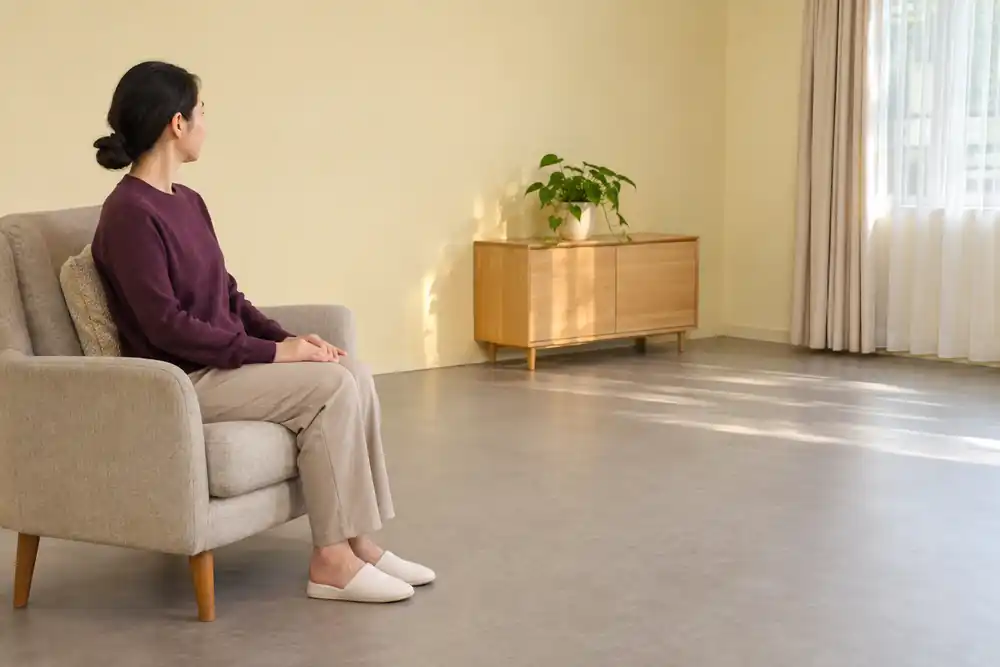
Arrange arrival without a doorway meeting
Prepare the dog’s familiar arrangement before the guest arrives. Agree a message announcing arrival so you have time to organize; do not ask for repeated knocking as an extra challenge. Check that the guest knows to wait for you rather than enter independently. Keep delivery and escape prevention separate from any learning goal.
Once the visitor is seated, pause your own conversation long enough to check the dog’s situation. Can the dog rest, turn away or move within the familiar area? Is someone available to respond if that changes? Do not interpret silence alone as comfort, and do not open a separation just to see what happens.
For many visits, this is the whole plan. You can have a conversation and let your dog remain elsewhere with appropriate care. If the arrangement is not working, shorten the visit or move the conversation outside the home while another responsible adult stays with the dog. Leaving a distressed dog alone is not the intended alternative.
Keep any practice optional and very small
Only consider a brief practice arrangement when it is appropriate for this dog and everyone can follow the plan. Start with the helper seated at the previously workable distance. Do not close that distance with a treat in the guest’s hand. A dog can want food and still be uncomfortable with the person holding it.
If you are rewarding a comfortable, ordinary action, such as turning back toward you, you provide the reward in the dog’s own space. Let the dog finish eating and disengage. Food is not a contract to stay near a visitor, and taking it is not a safety assessment. If eating, movement or the overall situation changes, pause rather than offer increasingly exciting food.
Change only one practical detail on a later attempt: perhaps the same person briefly changes their seated position. Keep distance and visit length otherwise familiar. A new person, smaller distance and longer visit together give you little useful information. End while your planned arrangement still works, rather than continuing until the dog has had enough.
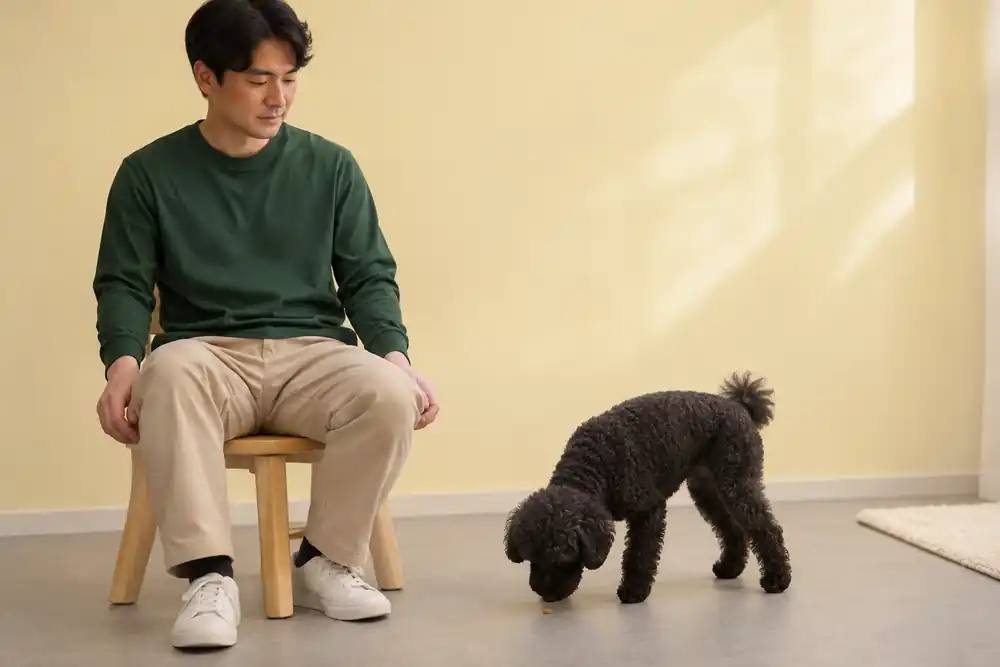
Plan standing up and leaving before they happen
A guest sitting still and a guest getting up are different situations. Before anyone moves, return to the household arrangement that already works. Tell the person where they will go and keep the dog’s resting area outside that route. Do not turn departure into a final opportunity for petting.
Think about coats, dropped keys, hugs and bags. Collect items in advance when possible so the guest is not repeatedly standing, sitting and searching. If you need to handle the front door, ask the other responsible adult to manage the dog’s familiar space. Use the same clear roles you chose for arrival.
After the guest leaves, allow an ordinary quiet period. Offer the dog their usual routine and avoid immediately inviting another person to check whether the visit “worked.” Recovery is not a score or a fixed countdown. If your dog remains unusually unsettled or their behavior concerns you, discuss what happened with an appropriate professional.
Write observations that help the next decision
A useful note includes the person, room, separation, arrival arrangement, approximate duration and what actually happened. “Stayed on bed while helper sat in adjoining room; got up when coat moved” is more helpful than “failed socialization.” You are recording conditions so the next decision is more informed, not grading your dog’s personality.
Separate observations from explanations. You may have seen the dog leave the room; you do not know from that alone whether a particular past experience caused it. Include what you changed and whether returning to the previous arrangement helped. Note the guest’s movements too, because a practice plan depends on human behavior as well.
For a future day, choose one simpler adjustment or decide that another practice visit is not appropriate without help. Short training sessions can support familiar skills between visits. They cannot replace a visitor-specific assessment when fear or risk is significant. Keep useful notes for a veterinarian or qualified behavior professional rather than trying to infer a diagnosis yourself.
Choose a realistic next visit
Do not turn one workable visit into permission for a party. Repeat an arrangement only if it remains suitable, and expect a different guest or household schedule to change the picture. A person who moves slowly in a chair does not represent every visitor your dog may encounter.
Keep a separate plan for essential appointments. Tell contractors or carers what access is available and arrange appropriate dog care before agreeing a time. A professional visit that cannot follow practice instructions should remain a management task. The dog does not need to demonstrate a new skill while you solve an unrelated household problem.
Your useful outcome is a household that can make deliberate choices: whom to invite, where everyone stays and when to stop. A dog can have a good home life without greeting every guest. Preserve that option even if you eventually see more voluntary interest, and keep the next arrangement based on this dog’s needs rather than a deadline.