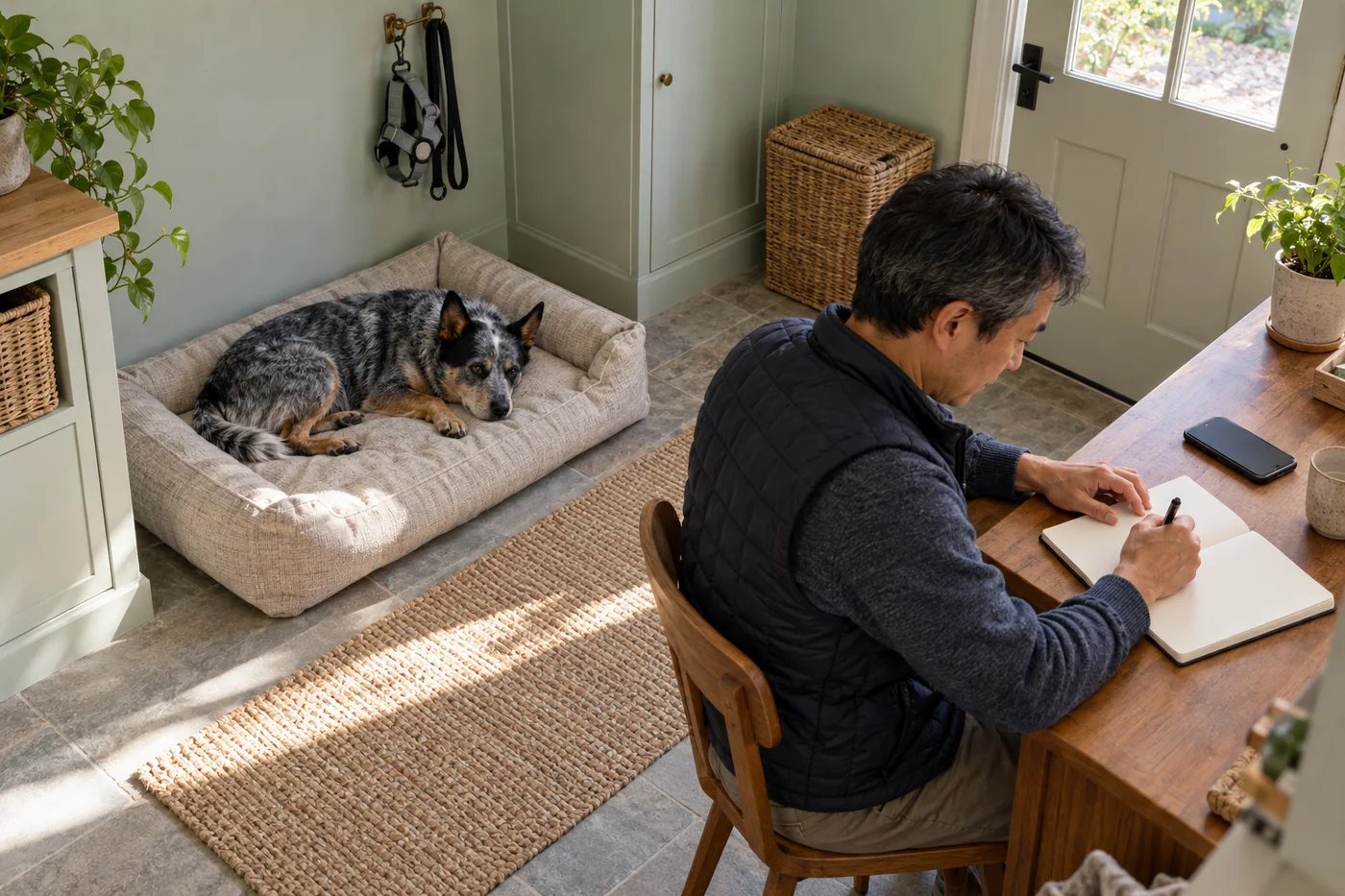
Voluntary weighing and veterinary preparation
Free Steps When Your Dog Won't Get on Scales
A planted paw beside the platform is information, not a reason to pull harder. Separate approaching, stepping on and pausing before you ask for a reading.
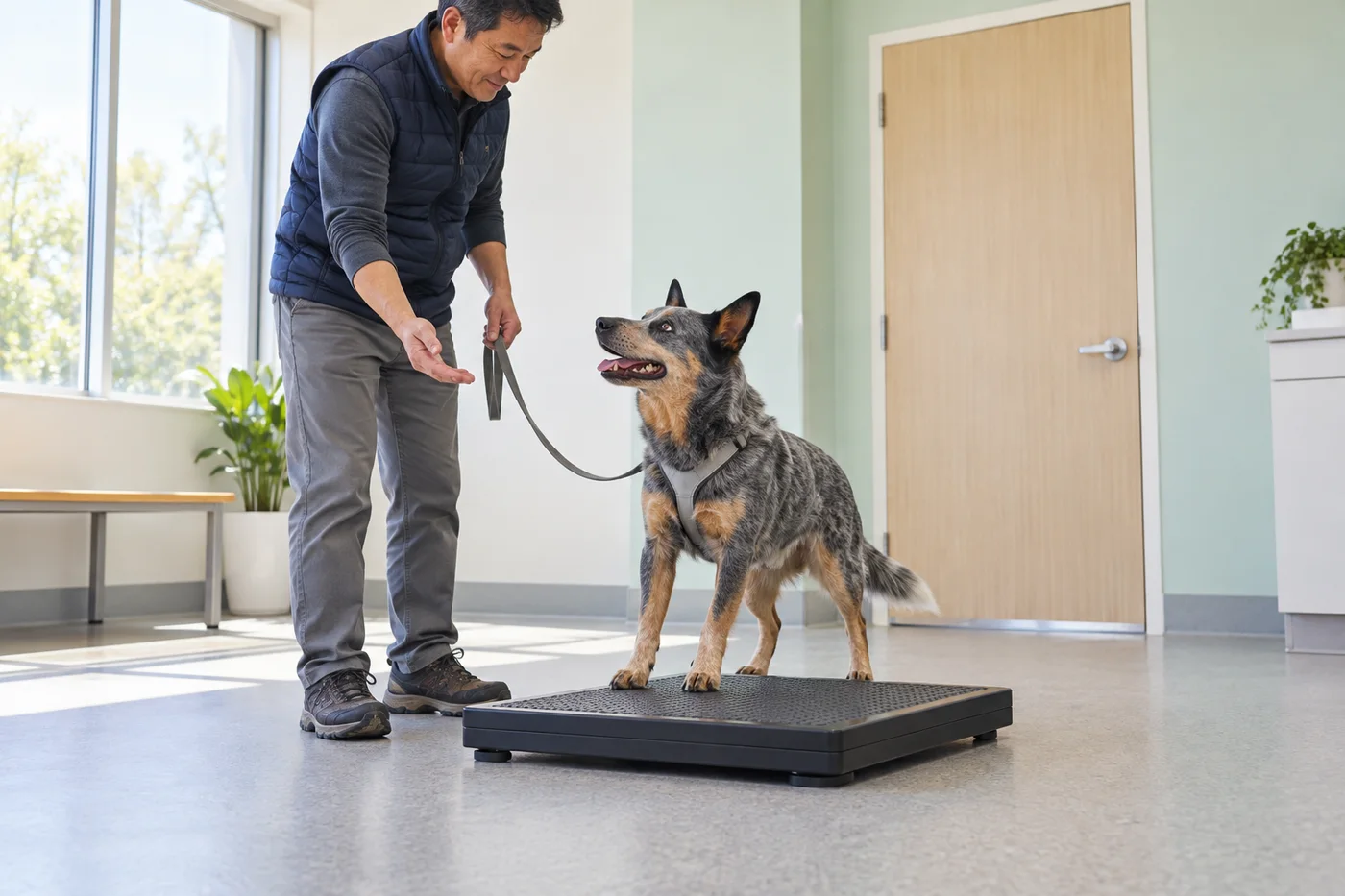
When your dog won't get on scales, a routine weigh-in can become a struggle before the appointment has even started. The front paws stop at the edge, the lead becomes tight and somebody reaches towards the hindquarters. More pressure does not explain the platform. Approaching a strange surface, stepping onto it and remaining briefly are separate tasks. Teach those pieces outside a rushed medical moment, with suitable equipment and permission from the practice, rather than treating a number on the display as the only acceptable outcome.
This free plan uses DogPath to organise one observable goal, prepare rewards, practise briefly and record the conditions before changing them. DogPath is free to download or start, with in-app purchases for some features or use levels. It is not a veterinary weighing service, a dedicated scale course or a medical assessment. Pain, sudden behaviour change, panic, aggression, bite risk or other welfare concerns need appropriate in-person help. Do not postpone necessary treatment until training is complete, and do not change fasting or feeding instructions to make practice possible.
When your dog won't get on scales, agree on the real task
Contact the veterinary team before planning a practice visit. Explain what happened, including any pulling, slipping, avoidance or handling concerns. Ask whether a quiet training opportunity is possible, where you should wait and which equipment is suitable. Check whether rewards are allowed that day, particularly before procedures or under dietary restrictions. Do not arrive expecting free use of a busy reception area. Availability, appointments and any charges belong to the practice. Training other dogs in the waiting room is not part of your visit.
Cornell's guidance describes non-treatment visits arranged with the clinic and recommends moving at the dog's pace. That supports planning ahead; it does not promise that a visit will be free or remove existing fear. Your immediate task might be seeing the platform from a comfortable distance, not obtaining a weight. If a measurement is medically needed now, ask the team for an appropriate handling plan. A home practice record cannot replace their decision about what information or care is necessary.
Cornell's guidance on planning less stressful veterinary visits
Check the surface and exit before inviting a paw
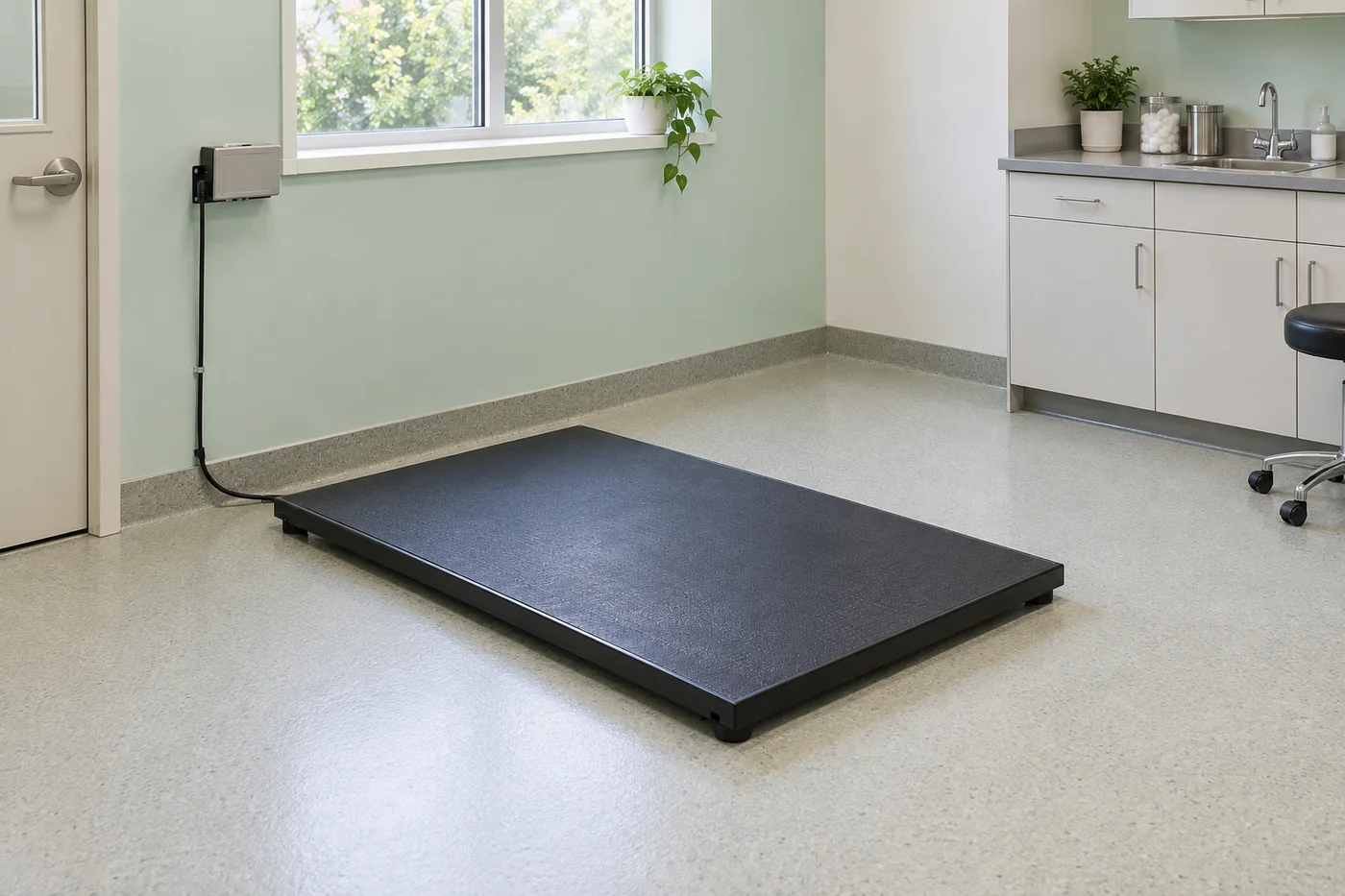
Use a veterinary floor scale that the team confirms is appropriate for the dog's size and needs. It should be low, broad enough for a comfortable stance and stable on the floor, with a secure surface and no cable across the approach. Ask staff about anything that shifts, rattles or feels slippery. Do not improvise an elevated platform, balance board or narrow household scale for a larger dog. This is not a fitness exercise. A dog who finds ordinary stepping uncomfortable needs individual advice before practice.
Dogs Trust's weighing guide emphasises a stable, nonslip setup and not pulling a dog onto it. Check those practical points before focusing on behaviour. Keep an unobstructed way off the platform; your body, the lead and furniture must not form a trap. A mat or cover on actual scales needs the practice's approval for both footing and measurement. Do not conceal a faulty surface with loose fabric. At home, a broad flat mat on the floor is sufficient for an early location exercise; it does not simulate or certify a weight reading.
Choose one visible goal before opening the reward pouch
Write today's criterion so another person could recognise it. Examples include turning towards a flat mat, approaching its edge or placing one paw on the surface. Four paws and a pause come later if needed. Prepare small appropriate rewards before inviting the dog, following individual food advice. Keep other animals and unnecessary people outside the practice area. Do not add touching, examining ears or checking the mouth during this lesson. Those are separate handling tasks and would make it difficult to identify what the dog found uncomfortable.
In DogPath, use a relevant familiar foundation and record the actual surface, starting distance and goal. For example: home mat, handler beside it, one voluntary front paw. Our lesson guide explains how an observable task fits a short practice session. Put the phone aside before moving with the dog. No dedicated scale lesson, automatic paw detection or weighing assessment is implied. A written note can support the same plan. The app is useful only if it makes your next small decision clearer, not if a completion label encourages you to rush.
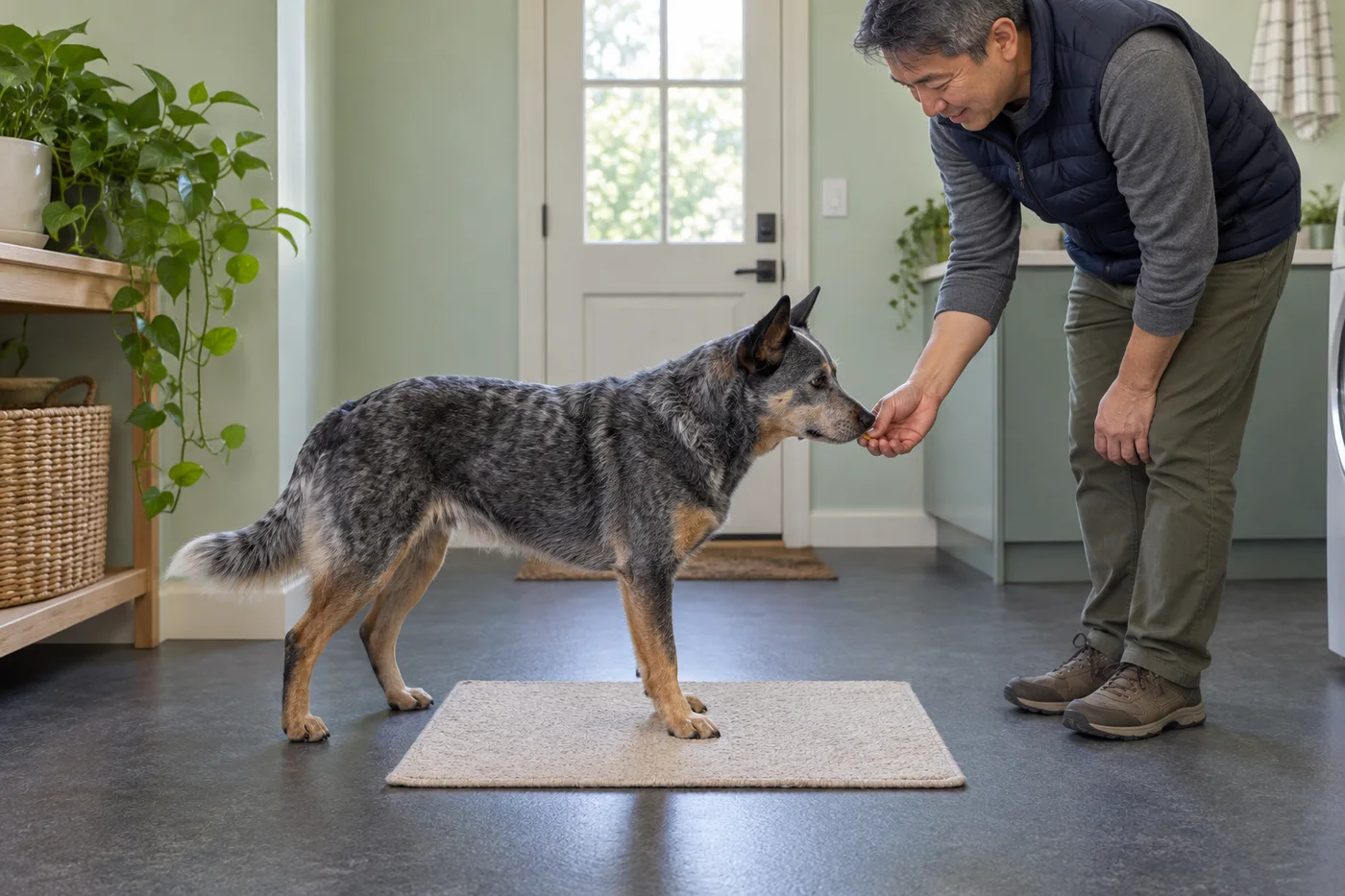
Choose an observable goal within a short DogPath practice session
Separate the approach from stepping on and leaving
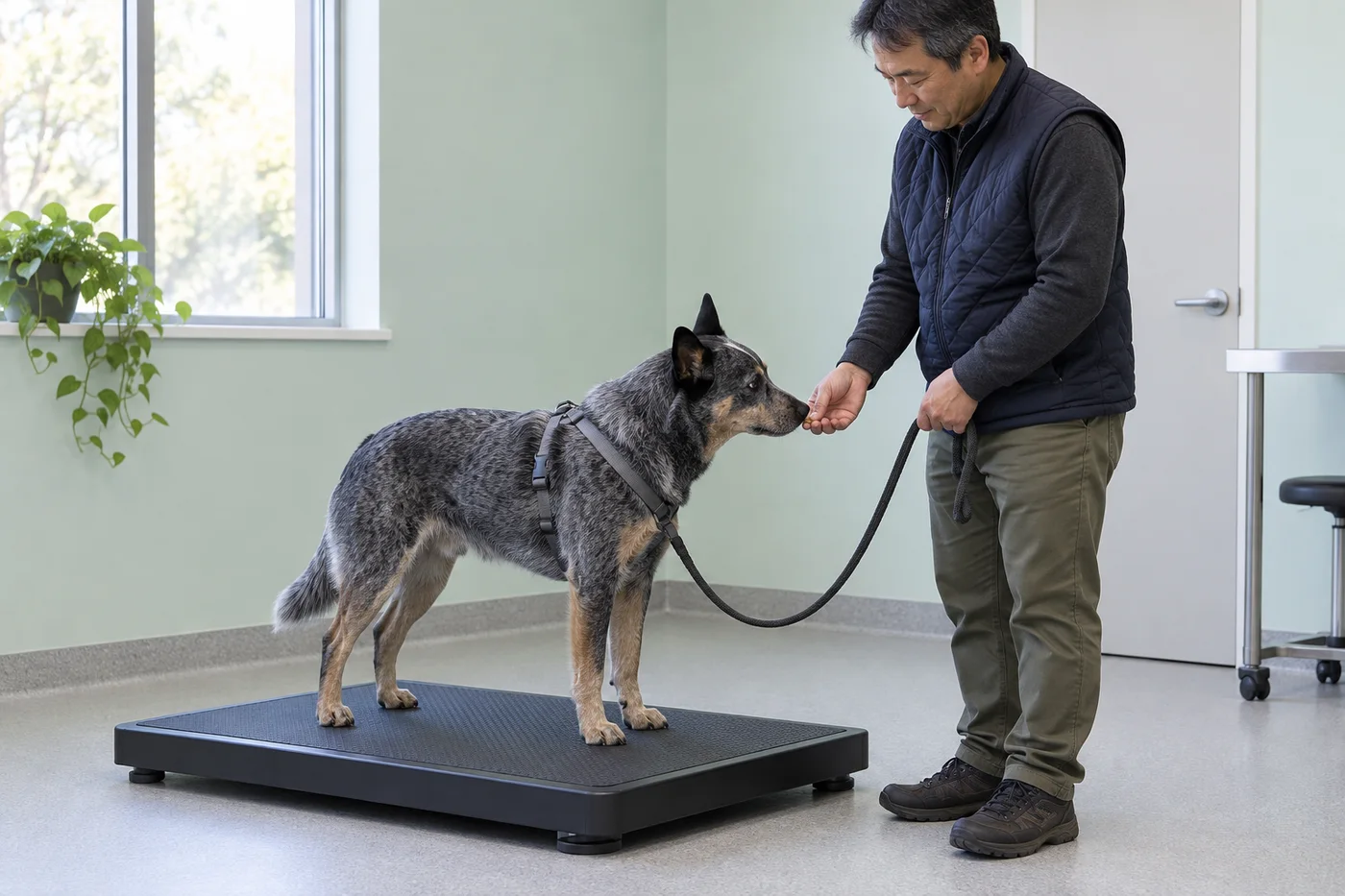
Start where the dog can notice the surface without being drawn into a difficult approach. Reward a voluntary orientation or a small step, then let them move normally again. As approaching becomes familiar, the next criterion might be a paw at the edge. Deliver the reward where the dog has arrived, at a comfortable height, rather than reaching over the back or pulling the nose across a gap. Never tighten the lead to manufacture the missing step. On actual clinic equipment, keep the lead managed without tension or loops near the dog's feet.
A familiar hand target can help communicate a direction, but it must not become a way to lead a worried dog beyond their comfort. Our hand-target guide covers the foundation separately. If the dog follows an empty hand, reward afterwards from the other hand; do not demand unpaid work or hide a difficult surface behind food. Allow an ordinary step off and a break. Avoid trying to push the hind feet into place, block the exit or repeatedly reset a dog who is trying to leave. A partial approach can be the whole useful session.
Teach the hand-target foundation separately, without using it to force an approach
Build a brief pause without adding three new difficulties
When all four paws reach the intended surface comfortably, reward a moment of staying in place before asking for anything longer. Keep your hand low enough that the dog need not stretch, turn or step after it. Give a clear familiar end to the attempt and leave room to move off. A long formal stay, sit or eye-contact exercise is not a prerequisite for a short weighing pause. Let staff explain what they need for the actual reading rather than guessing from a moving display.
Change only one condition. Duration can mean a slightly longer easy pause. Distance might mean a small change in your position while keeping the same pause; it is not an immediate walk across the room. Distraction might be one quiet staff member at an agreed distance, not the whole waiting room. Reduce earlier demands when the location changes. Do not increase the pause while stepping away and inviting a second person to handle the dog. That combination turns one clear task into an unexplained examination and makes a note impossible to interpret.
Treat a step off as information, not a failed examination
If a paw comes off, look at the conditions before repeating the request. Did the reward hand move away, did the surface make a sound, or did somebody approach from behind? Return to an easier task in a less demanding position. Do not insist on staying because the screen is nearly steady. For practice, leaving is information that your current request may be too difficult. A stationary body alone also does not prove comfort; watch the whole dog rather than using immobility as a certificate of cooperation.
Stop if there is slipping, trembling, a new gait change, repeated escape attempts, freezing or concern about safe approach. Declining food can be another reason to reassess, but eating is not proof that everything is fine. Do not use more tempting food to push through a movement or welfare concern. Tell the veterinary team what you observed and ask for individual support where needed. Never withhold necessary care because a dog cannot complete a training step. Emergency or medically necessary handling decisions belong to the clinical team, not this guide.
Record the conditions rather than inventing a weight result
After practice, note the surface, place, number of paws, length of the comfortable pause and help provided. A useful DogPath observation could read: home mat, four paws, immediate reward, handler beside; next repeat the same setup. Another might read: clinic platform, front paws only, stepped off when person moved; next arrange a quieter approach with staff. These statements tell the next person what happened. They do not claim that the dog's weight, health or emotional state has been assessed.
Keep any actual measurement from the practice separate from a training note and follow their instructions for recording or using it. Do not adjust medicine, diet or a care plan from an illustrative image or an unstable home reading. Before another visit, agree on a realistic next goal and bring only the equipment and rewards the team permits. There is no need for daily weigh-ins or repeated circuits onto the platform to improve a score. A brief voluntary approach followed by an ordinary break can be meaningful progress even when no number was recorded.