
Training foundations
Hand Targeting for Dogs: Teach a Nose Touch Step by Step
Teach your dog to touch an open palm on cue, then use the skill for movement, focus, grooming, and calmer everyday handling.
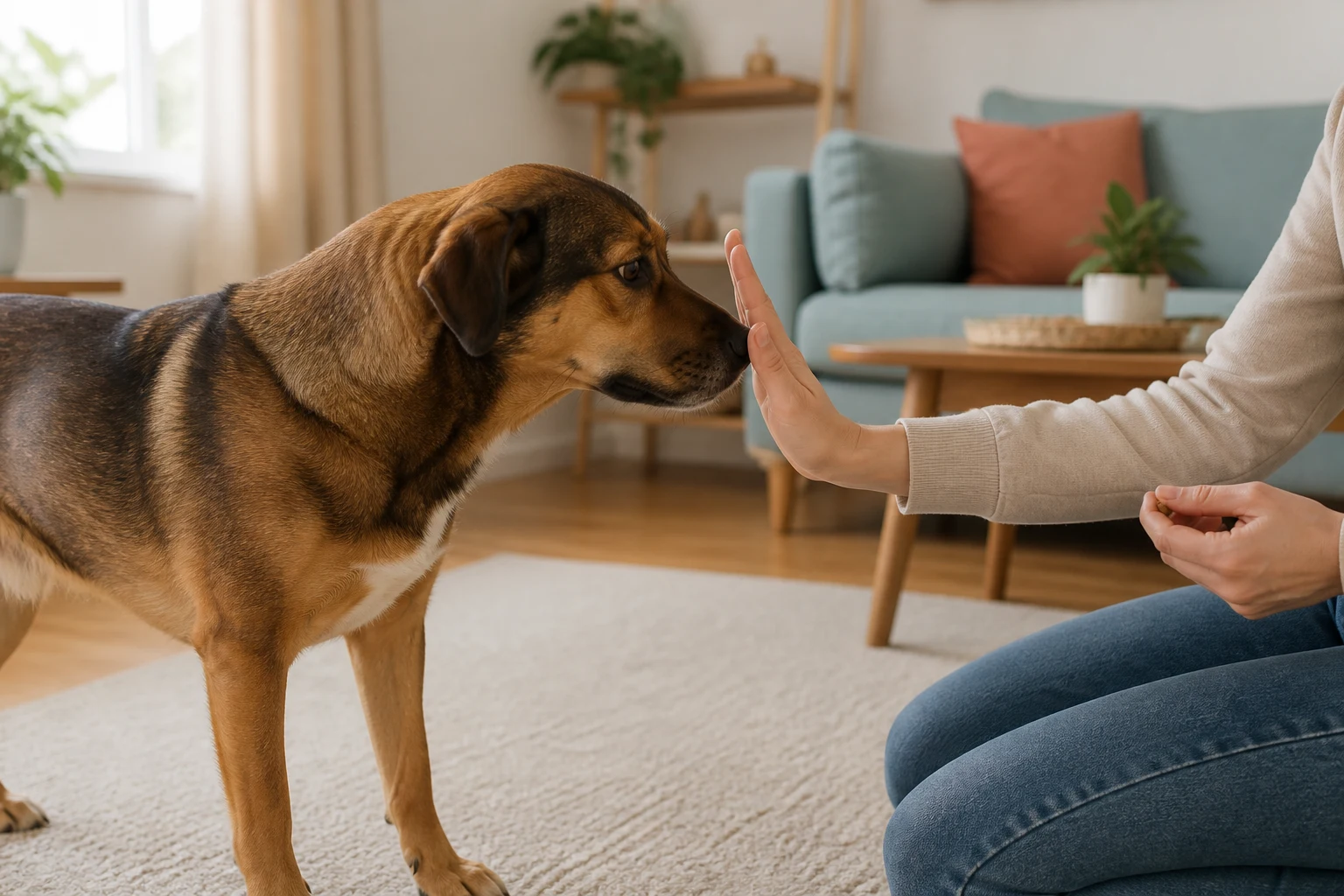
A hand target is a simple behavior with an unusually long list of uses: your dog touches an open palm with the nose. That small action can guide a dog onto a scale, turn the body without pulling, reconnect attention outdoors, or make cooperative care easier.
The goal is not to push your hand into the dog's face. Present it close enough to notice, mark the dog's voluntary investigation, and reward away from the palm so each repetition begins cleanly. A reliable target grows from easy choices, not repeated commands.
DogPath can divide hand targeting into short daily lessons, provide a built-in clicker for precise timing, and record which positions, distances, and environments are already comfortable. If progress stalls, the AI coach can help identify one smaller next step. DogPath is free to download; some features or usage levels may require an in-app purchase.
Prepare a clear target and a quiet setup
Choose one flat open palm and hold it still, fingers together, about five to ten centimetres from your dog's nose. Start in a quiet room with small rewards ready in the other hand or a pocket. Keep the first session to a few repetitions.
Do not hide food in the target hand. The palm should become information, not a lure that smells like payment. If your dog is worried about hands, begin farther away and reward a glance before asking for approach.
Mark the first voluntary nose touch
Present the palm once and wait. Many dogs will sniff it. The instant the nose makes gentle contact, mark with a click or a consistent word such as “yes”, then deliver the reward from the other hand.
After the reward, lower both hands for a moment. Present the palm again in the same easy position. Three to five clean touches are more useful than a long session in which the dog loses interest.
- Keep the palm still instead of chasing the dog's nose
- Mark contact, not the approach after it
- Reward from the non-target hand
- Pause briefly between repetitions
Add the cue after the behavior is predictable
When your dog touches the palm promptly on most presentations, say a cue such as “touch” just before showing the hand. Say it once, present the familiar target, mark contact, and reward.
If the dog does not touch, avoid repeating the word or moving the hand closer and closer. Reset, reduce distance, and complete an easier repetition. The cue should predict a behavior the dog already understands.
Keep the hand target separate from a high-five: the palm stays at nose height and you reward a nose touch, not a paw strike.
Build position, distance, and movement one at a time
Move the palm only a few centimetres left, right, higher, or lower. Return to the original position after a harder attempt. When different positions are easy, step half a pace away so the dog moves to reach the target.
Later, let the hand travel slowly for one step after contact so the dog follows without grabbing or leash pressure. Do not increase distance, movement, and environmental distraction in the same session.
Use the target in practical everyday moments
A hand target can guide your dog beside you, onto a mat, through a doorway, or around the body for harness handling. It can also create a predictable start to checking ears or stepping onto a veterinary scale, provided the dog remains free to move away.
Outdoors, use it first in quiet places as a brief reconnection game, then release the dog to sniff as a life reward. It is not a tool for forcing a frightened dog toward something. If your dog freezes, avoids the hand, cannot eat, or shows defensive behavior, create space and seek qualified support when needed.
Troubleshoot weak or mouthy targets
If your dog only looks at the hand, mark that first and gradually wait for a closer investigation. If the dog licks or mouths the palm, mark an earlier gentle nose contact and deliver the reward quickly from the other hand.
If the response fades outdoors, the location is too difficult rather than the cue being forgotten. Return indoors, practise near an open door, then move to a quiet outdoor spot with better rewards and very short sessions.