Training together
Family Dog Training: Free Shared-Cue Plan
Help a dog respond to more than one familiar person by agreeing on one cue, one easy criterion, and a calm handover.
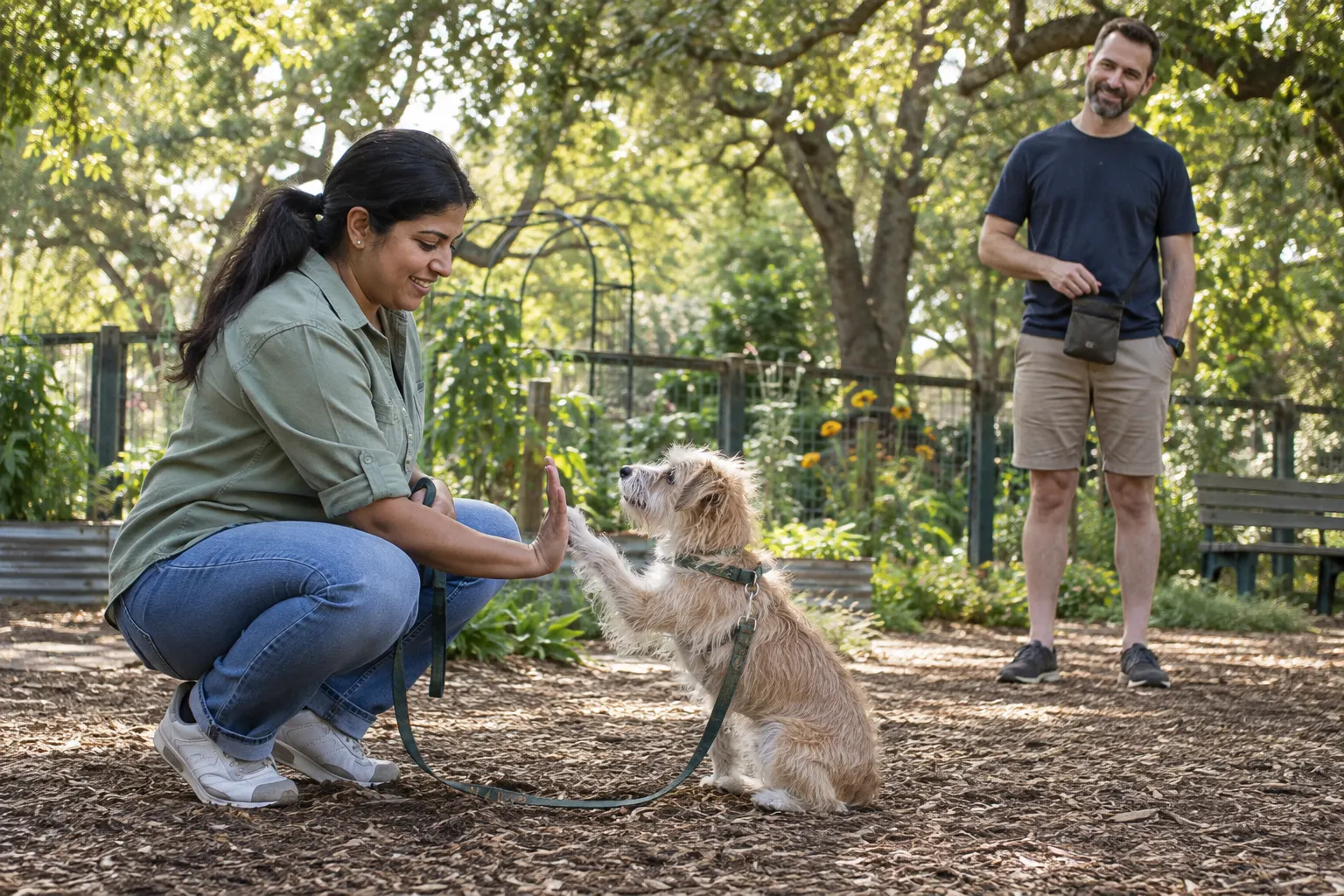
Your dog comes when one adult calls but looks puzzled when another uses the same word. At home, one person can ask for a hand touch in a second; the other reaches for a treat, repeats the cue, and gets nothing. This is a training problem, not proof that the dog respects only one person. Different voices, gestures, reward histories, and surroundings can make a familiar task feel new.
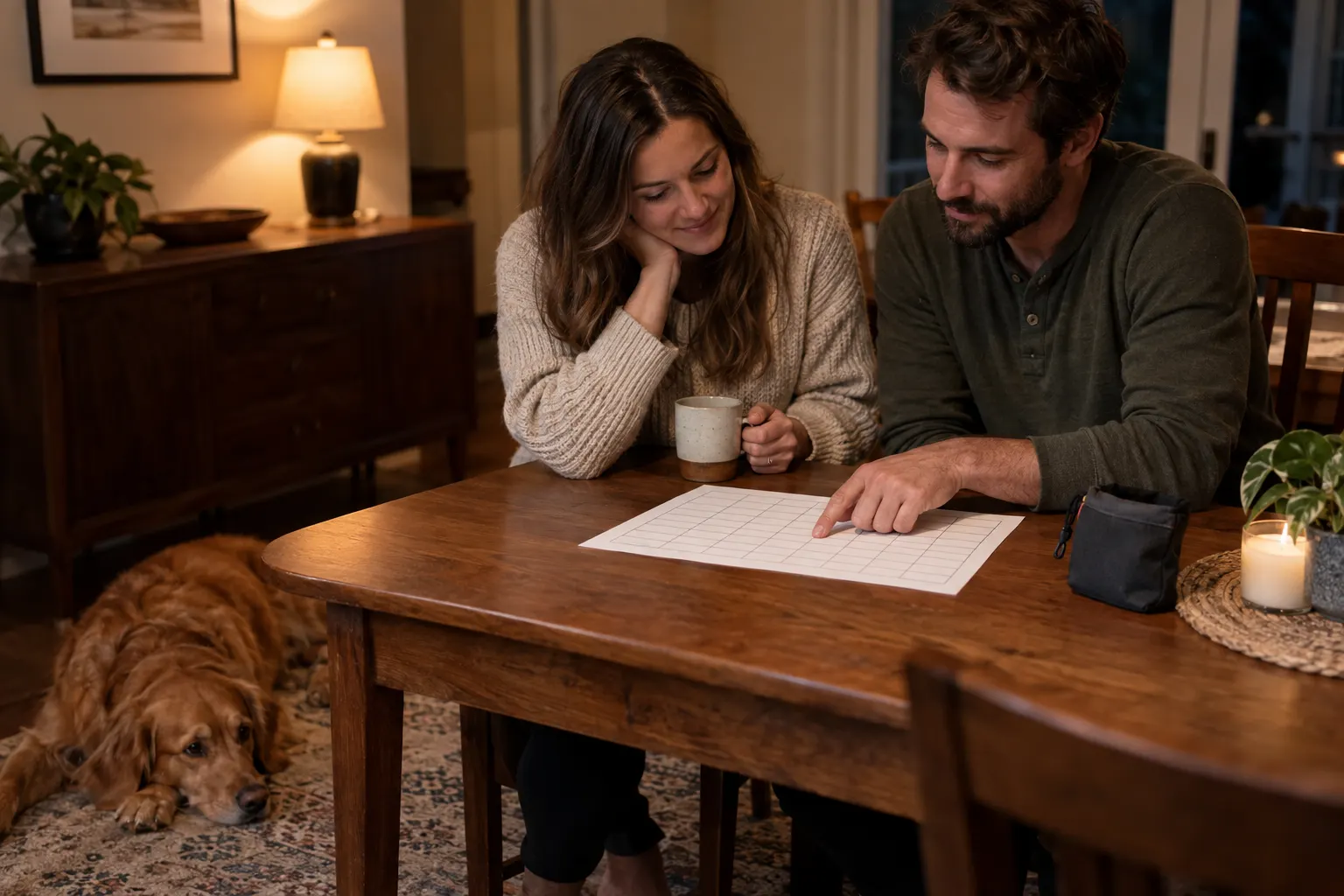
This free family dog training plan helps two or more adults teach the same small behavior without crowding the dog. Agree on the observable response, use one cue and marker, let each person practise separately at an easy level, and add a calm handover only after both have successful repetitions. The aim is useful communication across people, not immediate obedience to every visitor or child.
DogPath can make the workflow repeatable: choose one visible behavior, prepare rewards, run a short practice session, change distance, duration, or distraction one at a time, and record each person's result. The app is free to download and start; some features or usage levels may require an in-app purchase. It is an everyday practice aid, not a diagnosis or safety assessment. Pain, sudden change, panic, aggression, or bite risk needs appropriate in-person help.
Make one cue card and one safe setup
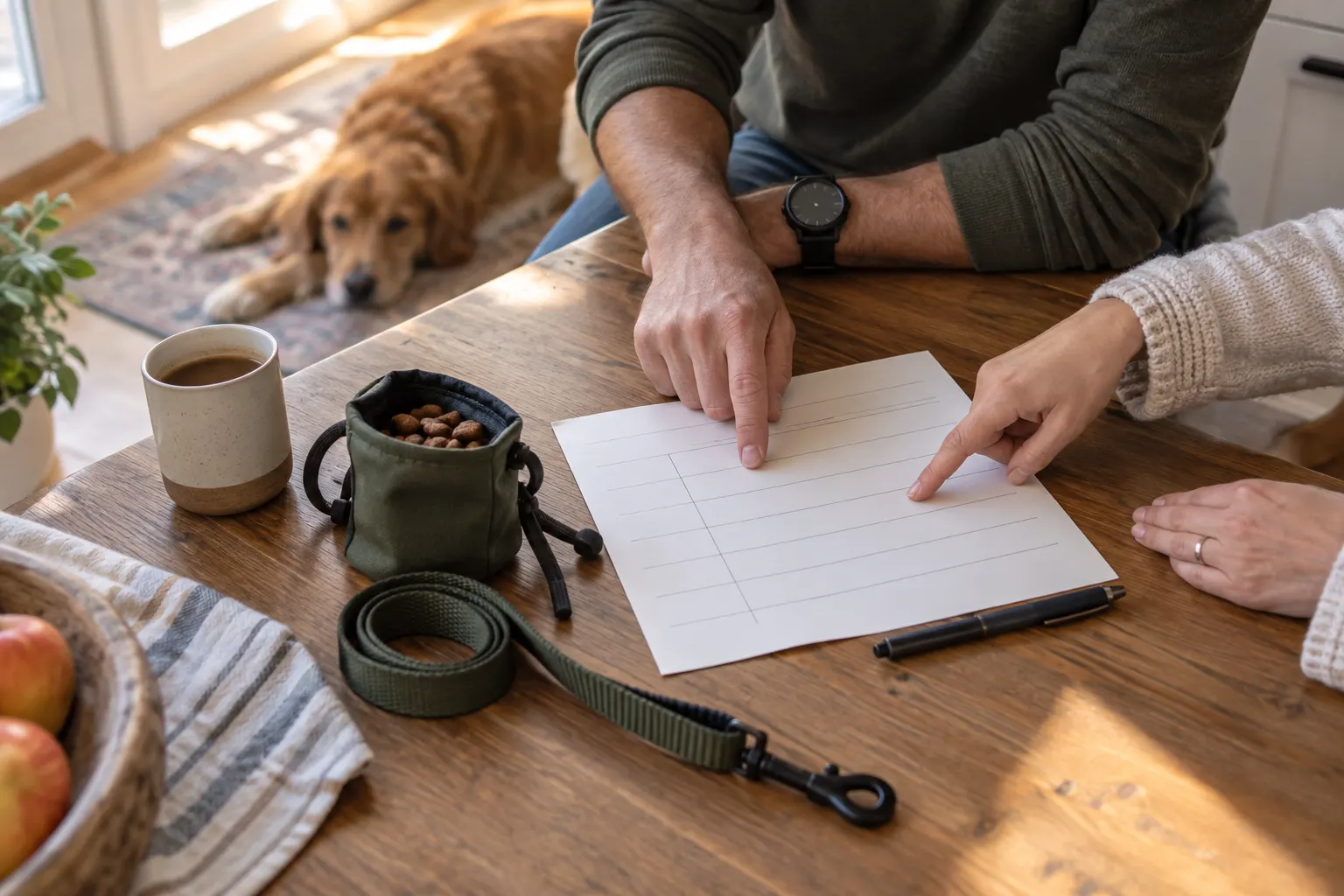
Put five items on a small card or shared note: target behavior, cue word, marker, reward placement, and release or reset. For example: ‘open palm at dog's nose height; say touch once; mark nose contact; feed beside the hand; lower hand and pause.’ The card is for the humans, not a test for the dog. If one person cannot use the chosen word or hand position comfortably, adapt the plan together before training rather than improvising midway.
Choose a quiet room with a clear floor, a resting place, and no arriving guests. Put suitable small rewards in a closed pouch before the dog enters. Check that both adults can deliver a reward without fingers being grabbed. If food handling is difficult, place the reward in a dish at a predictable spot. A dog who guards food or becomes tense around another person needs a different professional plan, not a group practice session.
Let the less-practised handler build an easy baseline
The adult who gets fewer responses begins alone in the easiest room. Do not ask for the final cue immediately if the dog has barely learned it from that person. First reward a glance toward the open hand, then a step closer, then voluntary nose contact. Give the reward promptly after the marker and pause. Three or four clean repetitions can be enough. Stop while the dog is still engaged instead of repeating until interest fades.
If the dog already knows the movement, say the agreed cue once just before offering the hand. Wait a moment. When no response comes, lower the difficulty: move the hand closer, return to a quieter room, or reward a smaller approximation. Avoid repeating the word louder, waving food, or letting the other adult call from behind. These changes would hide which part of the task the dog understands.
Record the starting point in ordinary language: ‘Mira, living room, hand touch, four of five with an empty hand; reward from pouch.’ Record the other adult separately under comparable conditions. Do not turn different numbers into a contest. The useful question is whether each person can make the next repetition clearer, and whether the dog remains loose, willing, and able to pause between turns.
Swap people without turning the handover into a test
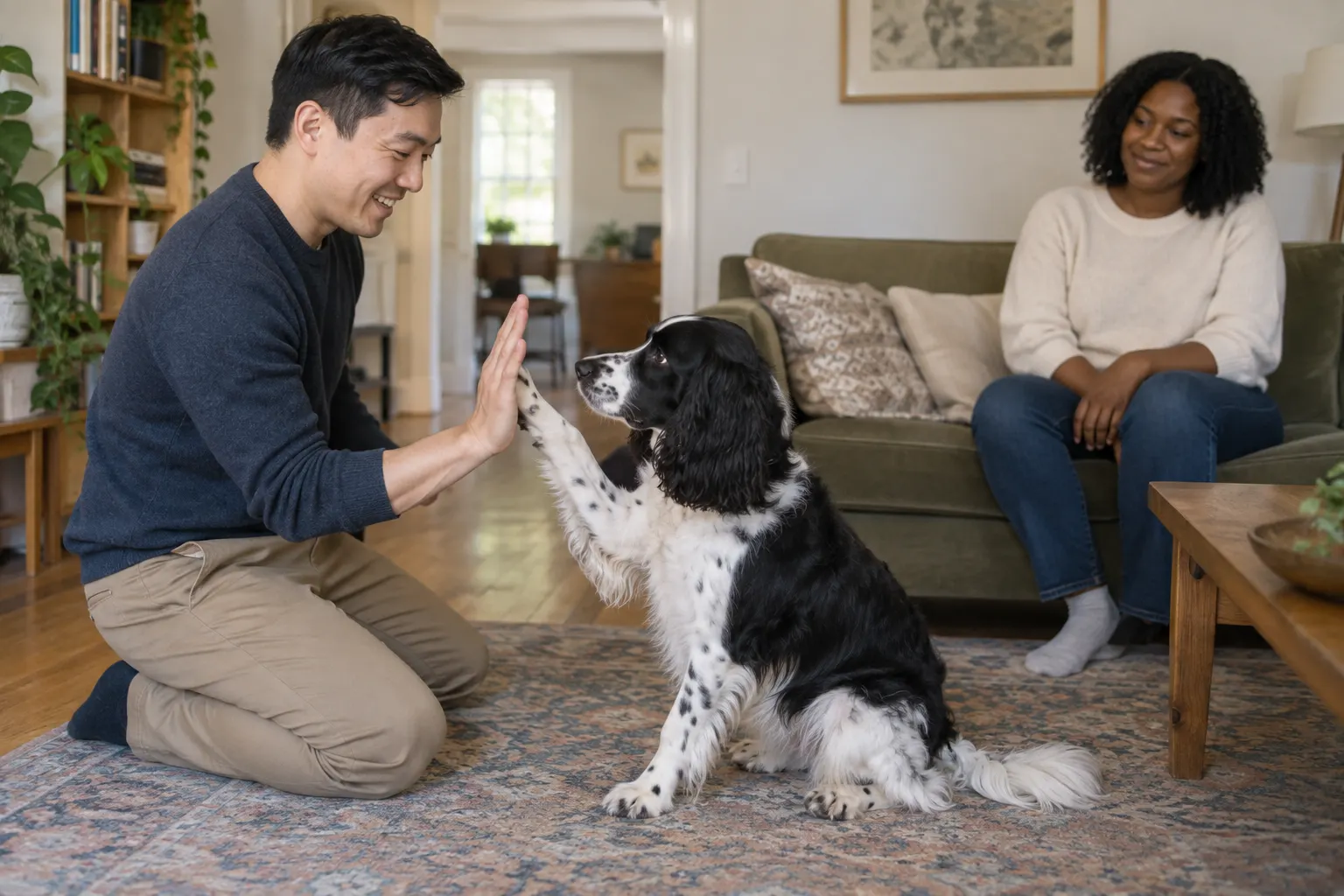
Once both adults can get a comfortable response separately, bring them into the same calm space. Person A offers one cue and rewards, then steps aside. After a brief pause, person B offers the same cue and rewards. Start with a meter or two of space and no visitor, doorbell, meal, or competing dog. The dog should not need to decide which voice is more important because only one cue is active at any moment.
If the dog races toward person A when B cues, do not scold or block the dog with your body. Make A less salient: A sits farther away, holds no visible food, or leaves the room for B's next repetition. Let B reward an easier approximation. Another option is to practise two separate sessions for several days before trying a same-room handover again. Progress is the dog's comfortable response to both adults, not the speed of the swap.
The person who normally gets the best response should resist rescuing every missed cue. A second louder command from A can teach the dog to wait for A. Instead, A remains neutral while B changes the setup. If a real-life safety task is needed, use management and the adult best able to handle it; do not use a traffic edge or open door to prove the handover works.
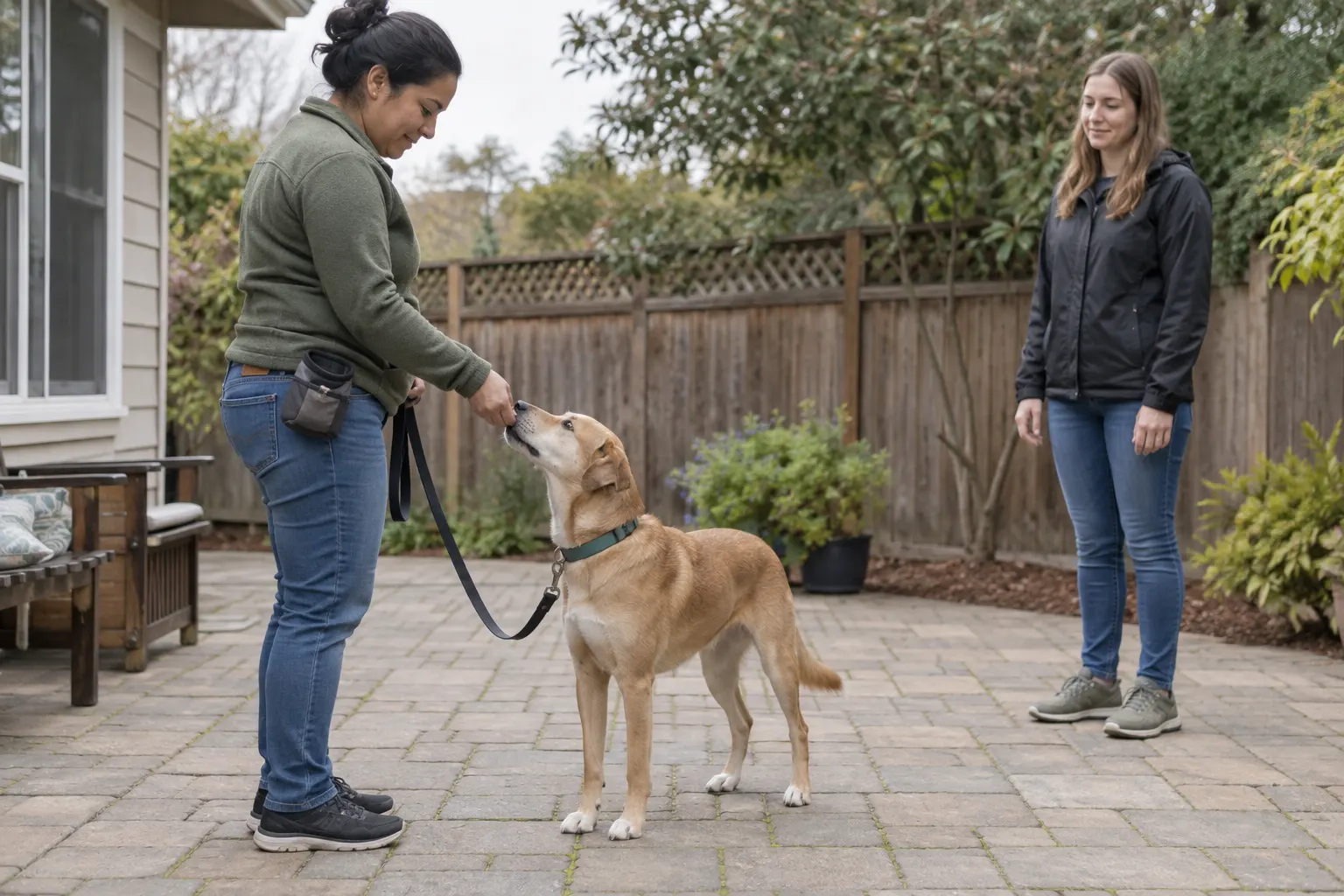
Keep rewards and household rules predictable
Agree which everyday choices earn attention, food, play, or access. If the dog is invited onto a sofa by one person and pushed away by another, the confusion is in the human rules. A household can choose different rules for different contexts, but make the context visible: a blanket invitation, a clear release, or a closed room. Avoid punishment for a choice that was rewarded yesterday. Teach an alternative that each adult can reinforce.
Reward value should suit the setting and the individual dog. Small food rewards may be useful for a new handover; praise or a brief game may work when the skill is fluent and the dog enjoys them. The American Veterinary Society of Animal Behavior recommends reward-based methods for dog training and advises against aversive tools. Shared practice should therefore mean shared clarity and humane reinforcement, not several people taking turns correcting the dog.
Do not promise that a cue will generalize automatically from one voice or room to every relative. Each new person is a new version of the task. Visitors who are unfamiliar to the dog should not be drafted as trainers. A dog who freezes, avoids, growls, or guards space around a person is communicating a different concern; stop the handover and seek qualified in-person support rather than rehearsing more approaches.
Troubleshoot the person, place, and criterion separately
When a response disappears, ask three specific questions. Did the cue change in sound or gesture? Did the place change in noise, flooring, or proximity to a valued object? Did the criterion jump from one touch to a long hold? Restore the easiest version and change only one suspected variable. If the response returns, you have a practical next step without declaring the dog stubborn or one adult ineffective.
If one handler struggles to use the same physical gesture, change the agreed cue so both can perform it comfortably. A seated adult may present a target lower; a person with limited reach may use a stable target object. Practise those adaptations separately and record them. Consistency means the dog gets a predictable opportunity and consequence, not that every human body must move identically.
turn a vague household goal into an observable training criterion
Review evidence and choose one next family step
After several sessions, compare like with like. Was person B able to get the same easy response in the same room with the same reward? Does the dog orient to each person without pressure? Are misses clustered around a specific time of day or when both adults stand close? A tiny log can reveal that the cue is understood but the handover is too crowded. It can also show that a quiet room is still the right place to continue.
For safety tasks, keep management in place regardless of training notes. A dog who fails a recall near a road should remain securely managed; a dog with possible pain or sudden behavior change should see a veterinarian. Panic, aggression, bite history, and welfare concerns require individual in-person assessment. DogPath can organize ordinary practice, but no article, app, or household chart can make those judgments remotely.