
Dog care while the home changes
Moving House With a Dog? Free Move-Day Plan
Assign a carer, keep essential supplies out of the boxes and prepare a quiet arrival before trying to unpack the whole house.
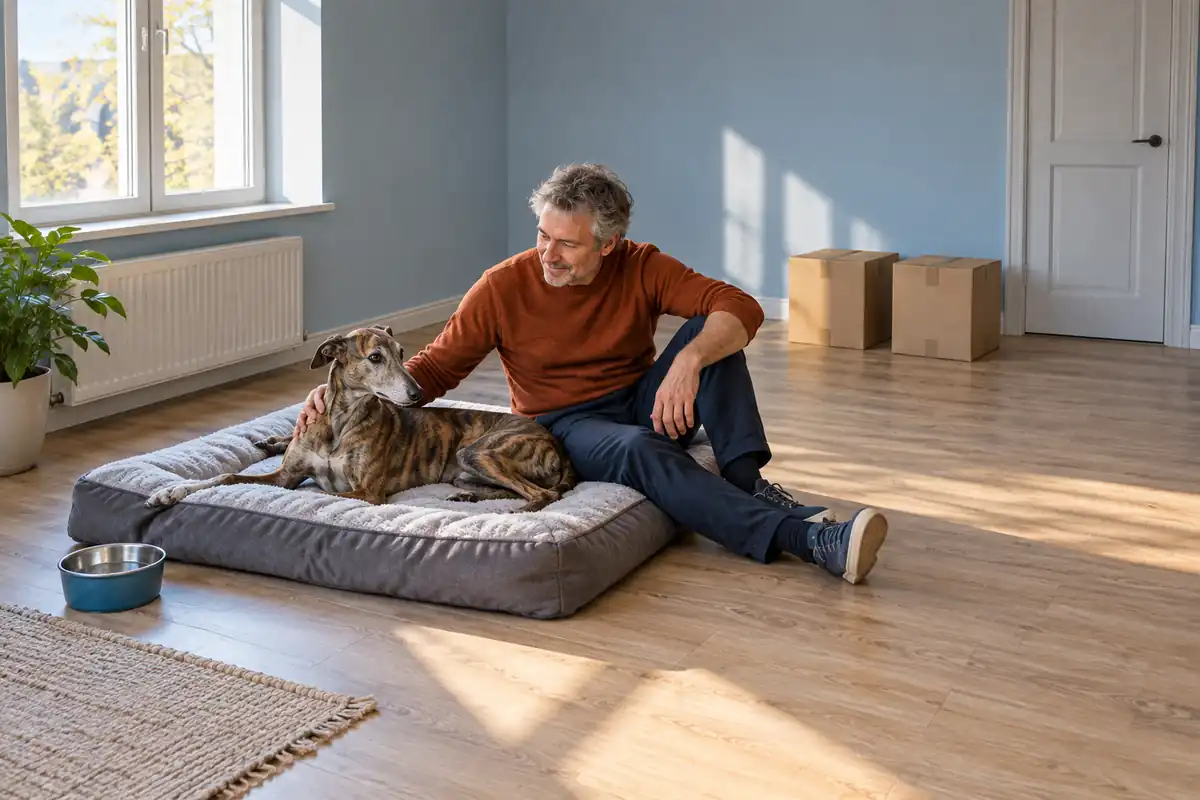
Moving house with a dog involves more than transporting a bed and finding the food bowl again. Doors stay open, familiar furniture disappears, and the adults your dog normally follows are carrying things they cannot put down quickly. The most useful preparation is deciding who is actually caring for the dog while everyone else moves. Do that before the van arrives, rather than expecting a new cue or a hurried food puzzle to solve an unfamiliar day.
This free guide is a practical plan for moving day and the first quiet evening, not a promise of a stress-free move or a timetable for settling. You can use a paper checklist. DogPath is free to download or start, with in-app purchases for some features or usage levels, if you want optional routine notes. It cannot assess an installation, prescribe travel medication or guarantee a dog's safety. Pain, sudden behaviour change, panic, aggression, escape attempts, bite risk or welfare concerns require appropriate personal help and a suitable individual plan.
Moving house with a dog starts with a named carer
List the busiest periods: loading the old home, the journey, unloading and the first meal. Assign an adult to the dog in each period, including a backup if plans run late. A person carrying furniture, driving or coordinating the removal team cannot simultaneously provide full attention. Agree how responsibility transfers: one adult tells the next where the dog is, which equipment is attached and what care is due. Do not assume somebody else noticed the dog following a box through a door.
Dogs Trust's moving-home guidance recommends considering a familiar carer and preserving familiar routines and belongings. Whether that means staying with a trusted person elsewhere or remaining with an adult in a quiet room depends on your dog. Choose a place and person they already tolerate comfortably. Moving day is not a good first trial of a stranger's busy household. If your dog needs particular handling or cannot cope with the proposed arrangement, organise appropriate personal support rather than improvising at the doorway.
Pack a separate bag that stays with the dog
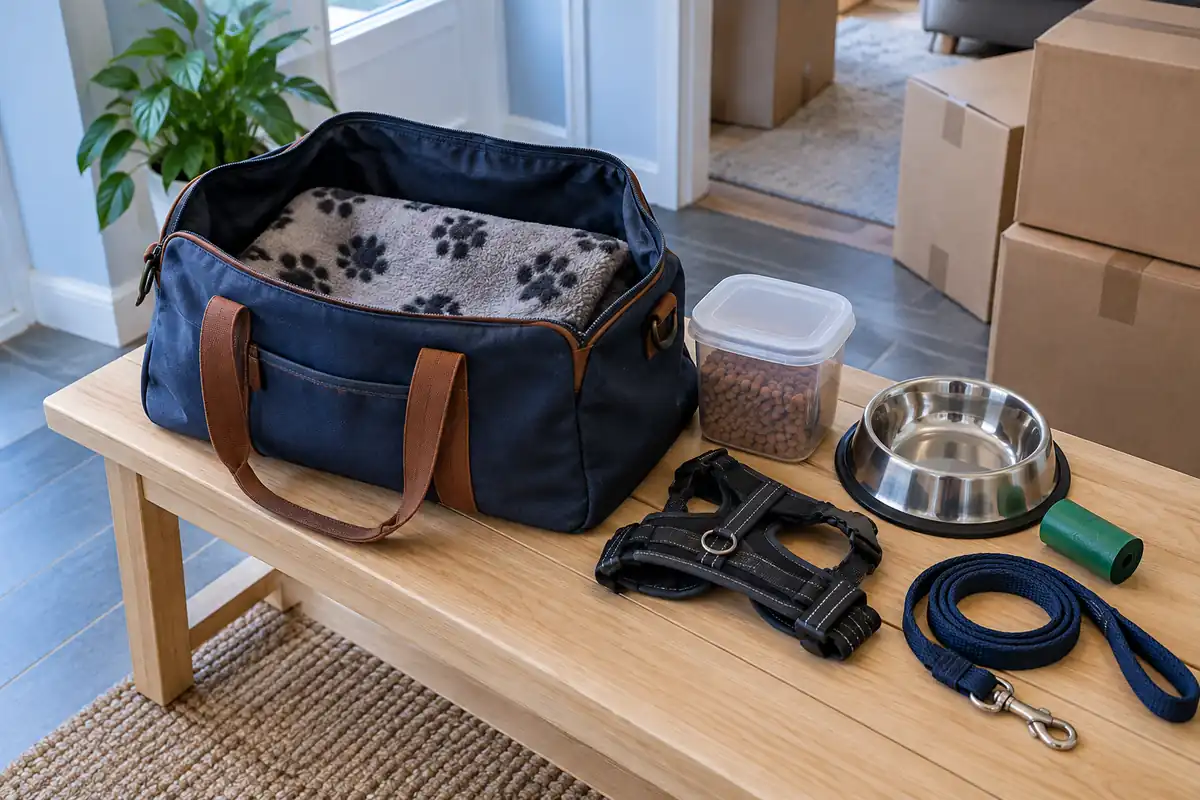
Put the day's supplies somewhere that will not enter the general removal pile. Include familiar food in a suitable container, a bowl, water as needed, waste bags, usual walking equipment, familiar bedding and relevant care information. Keep prescribed medication and its existing instructions accessible where appropriate; do not change the prescription for the move. Make sure the responsible adult knows which bag it is. Photograph its contents for your own reference if useful, without publishing private documents or contact details.
Choose a familiar blanket or bed that can remain available until the dog leaves, rather than packing every resting surface the evening before. Check the actual harness, lead, carrier or other transport arrangement before the busy period, following its instructions. A broken clip discovered next to a loaded van is harder to address thoughtfully. Keep a simple record of the last meal, medication if prescribed and toilet opportunity so two tired adults do not each assume the other has already provided them.
Make packing manageable before the busiest day
Introduce boxes and changes at a pace your household can manage. Keep usable routes and a resting area instead of letting the whole floor become an obstacle course. Close boxes containing unsuitable objects and store tape, packing blades, plastic ties, wrapping and cleaning materials out of reach. Do not invite the dog to investigate an active packing area to get a photograph or practise bravery. A box that seemed ordinary yesterday may move or make a different sound when carried today.
When furniture is shifted, have the dog somewhere else with their carer. Check that familiar passageways have not become slippery or blocked. If a dog is repeatedly approaching the work, change the layout and the allocation of attention rather than asking for a long stay while lifting heavy objects. Children should not be assigned to manage the dog at a busy exit. The aim is an organised environment that does not depend on a training response arriving at exactly the right moment.
Separate the dog's space from the removal route
If the dog stays at the property, choose a suitable room outside the route used for loading. Give them enough useful space, comfortable footing, water when needed and a familiar adult if that is what they require. Brief the people helping: which door stays shut, who opens it and whom to contact before entering. Confirm that everybody understood instead of relying on a note nobody has read. Leave normal care and toilet access in the schedule rather than treating the room as storage for the dog.
A closed door, gate or crate is only useful if it is appropriate for that dog and already comfortable in the proposed circumstances. Do not introduce confinement or isolation for the first time because the van has arrived. A barrier photograph cannot establish suitability. Our indoor-gate guide addresses a separate gradual introduction, not an emergency solution for moving day. If a room will not work, use the previously arranged alternative carer or pause the loading sequence while the responsible adults change the plan.
Coordinate the journey without turning the vehicle into a waiting room
Decide when the dog will travel relative to loading and unloading. Keep their place in the vehicle separate from loose boxes and use an appropriate, familiar transport arrangement according to its instructions and the requirements where you travel. Check ventilation, access to the dog and the route for stops before departure. Necessary travel paperwork, health preparation and border requirements need separate current advice when relevant; this article is not a checklist for international relocation or an assessment of a particular restraint.
Do not leave the dog alone in a parked vehicle while the household carries furniture. Arrange a person and suitable place at both ends so a delay does not turn the vehicle into the default holding area. If travel sickness, distress or a medical need is relevant, speak with your veterinary team ahead of time. Do not borrow sedatives, change feeding or medication on a guess, or expect the driver to deal with a distressed dog while driving. Keep attention on safe driving and stop appropriately when care is needed.
Check the first room before bringing the dog inside
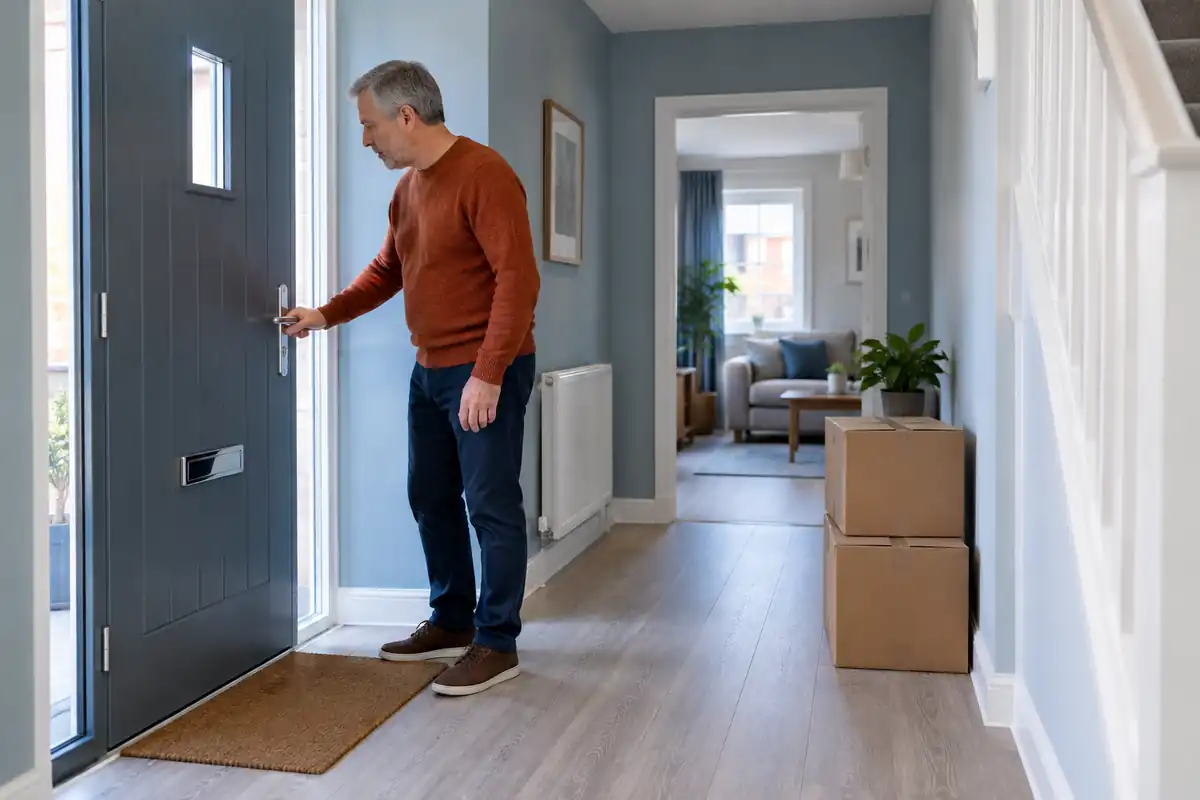
Ask an adult to inspect the new space while the dog remains with their carer elsewhere. Check doors, accessible windows, gaps, loose cables, tools, cleaning products, unpacked food and objects left by previous occupants. Look at the floor from the dog's height. Identify an ordinary route to the toilet area and decide which spaces will remain unavailable while work continues. If there is a garden, check the actual boundary and gates before considering access; an unfamiliar fence is not automatically secure for your dog.
Prepare a manageable room with comfortable footing, bedding and water rather than immediately opening every part of the house. Put boxes away from the walking route and resting space. Check temperature and noise, including activity beyond a wall or window you might otherwise overlook. A quiet-looking corner beside the unloading door may not stay quiet. If somebody must enter to carry furniture, choose another location or wait until that work is complete. The room should be genuinely usable, not simply the last space without stacked boxes.
Allow a quiet arrival without an inspection tour
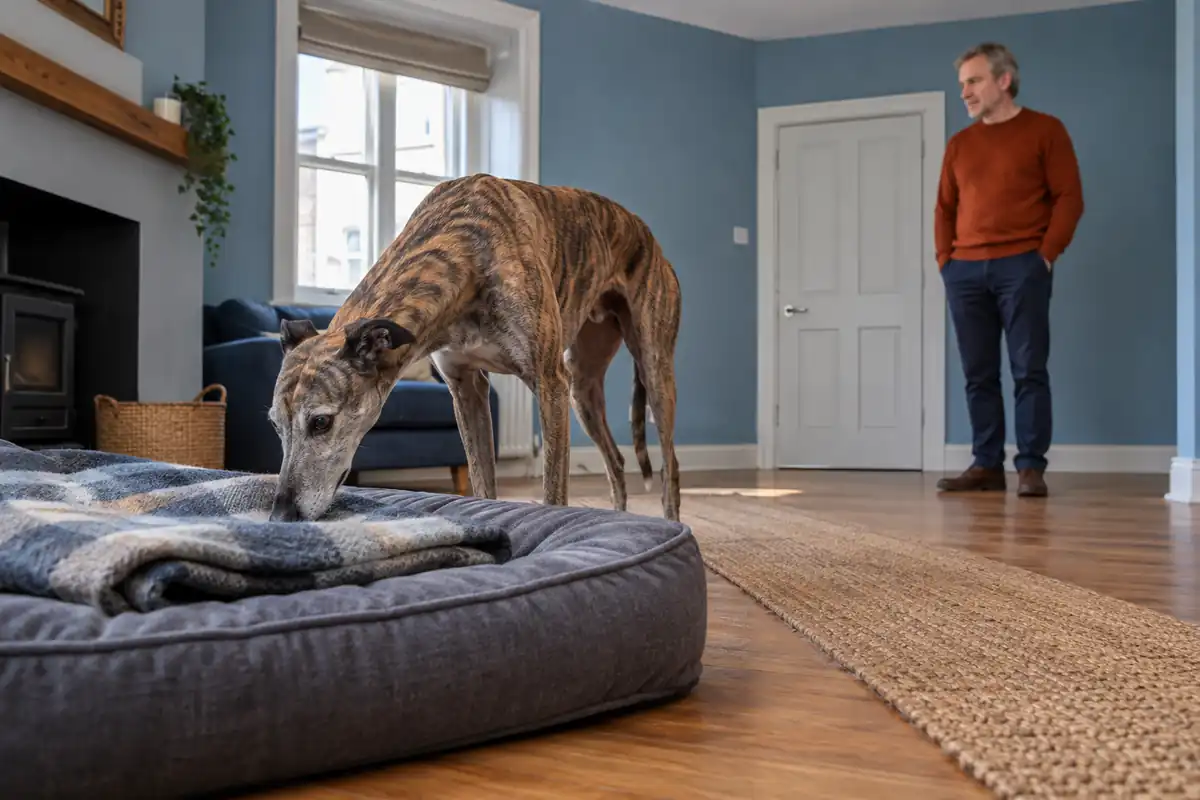
Bring the dog in with a familiar adult after the prepared space is ready. Let them investigate ordinary smells and surfaces at their own pace, with appropriate management of exits. Do not drag them from room to room, hold them beside a new object or organise a queue of greetings. Set familiar bedding down and give them room to choose a position. A dog who pauses or watches does not need to be encouraged continually to prove that the new home is acceptable.
Keep the first few activities simple: access to water, a toilet opportunity, comfortable company and rest. Offer suitable familiar food at the appropriate time without using eating as a complete test of emotional comfort. If they cannot settle in the prepared room, examine noise, movement, temperature, access to a person and unmet needs. Avoid assuming that one quiet minute means you can leave for an errand. The first evening in a new home is not evidence that previous alone-time skills transfer unchanged.
Keep toilet trips and short outings predictable
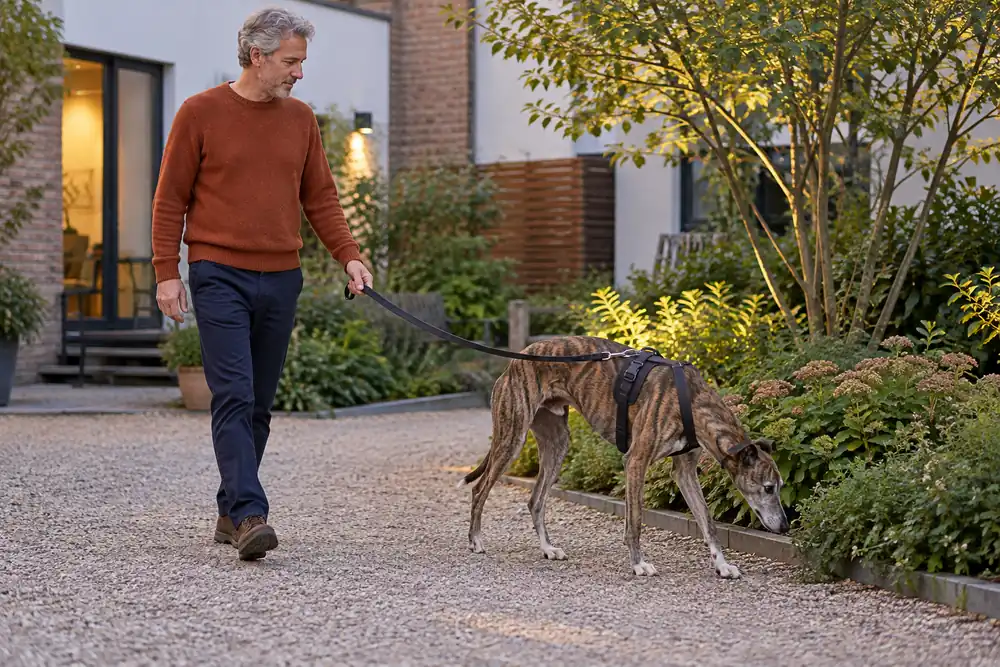
Plan who takes the dog out and how they leave and re-enter while unloading continues. Use suitable familiar walking equipment and maintain control of exits; do not test off-lead recall in an unfamiliar place. Choose a manageable nearby route rather than trying to exhaust the dog with a long exploration after a demanding day. Give them time for ordinary sniffing and toileting without insisting on meeting every new neighbour or dog. Check the way back before walking away from the property.
Expect the household's usual signals about going out to be less obvious in a different layout. Offer appropriate opportunities rather than waiting for a perfect request at a door the dog does not yet recognise. Do not punish an accident. Our toilet-routine guide covers the separate habit-building task; moving day may simply require more attentive organisation. If urination, stools, appetite, movement or another health-related pattern changes unexpectedly, seek suitable veterinary advice rather than attributing everything to the move or trying to train through it.
Plan the evening and the next morning before unpacking more
Agree the essential sequence: food as appropriate, a final toilet opportunity, a familiar resting setup and who responds if the dog needs help overnight. Keep supplies accessible and postpone non-essential activity around their space. Avoid a celebratory crowd or a last-minute rearrangement of every bed. Familiar cues and considerate company can provide useful continuity, but there is no universal adjustment deadline. New sounds, flooring or routes may need separate support over time, not an increasingly firm demand to behave exactly as before.
Write down practical observations rather than a verdict about the dog's personality: resting place chosen, last toilet trip, reaction to a particular hallway sound and what helped. Use paper or an optional DogPath note without turning the evening into a training quota. Arrange the next day's adult cover before everybody leaves for work. If the plan repeatedly requires distress, unsafe handling or care you cannot provide, get appropriate help and revise it. A workable move includes the dog's needs alongside the unpacking schedule, even when some boxes have to wait.