
Comfort around an indoor gate
Baby Gate Training: Free Steps for a Calm Start
Introduce the object, movement and latch separately, keep a familiar adult visible and build brief closures without waiting through distress.
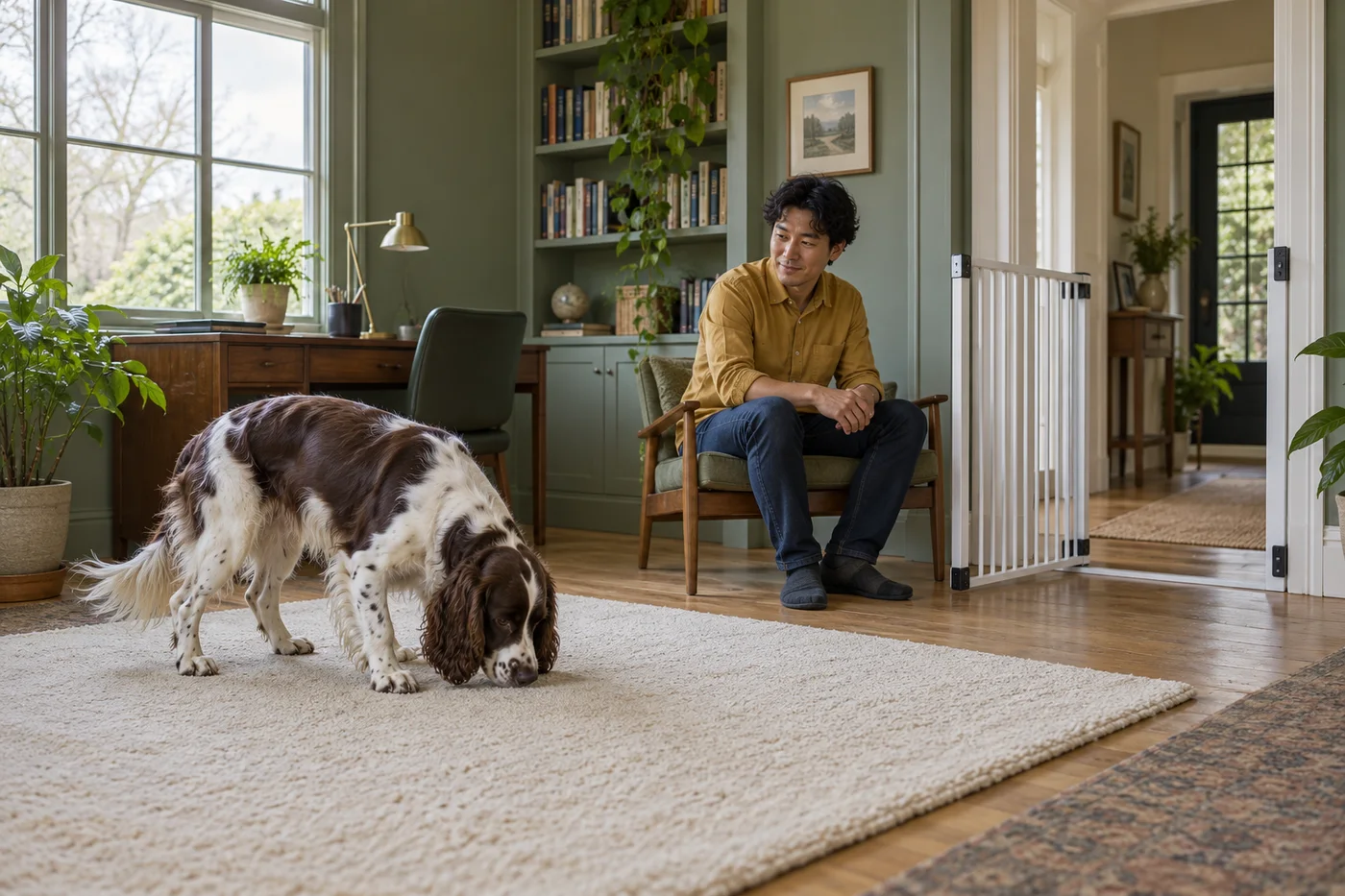
Baby gate training starts before you need to shut the kitchen for a delivery or keep muddy paws away from a freshly cleaned floor. A new barrier changes access, sounds and sightlines inside a familiar home. A dog may walk through an open gate comfortably yet find its movement, latch or your position on the other side difficult. Treat those as separate changes instead of shutting it and hoping the dog gets used to everything together.
This free guide concerns short, supervised practice with a familiar adult still visible. It does not teach absence, certify a gate as suitable for children or promise to stop barrier reactions. You can organise the whole plan with ordinary rewards and paper notes. DogPath is free to download or start, with in-app purchases for some features or usage levels, if you want an optional practice record. Pain, sudden behaviour change, panic, aggression, escape attempts, bite risk or welfare concerns need appropriate personal help rather than harder repetitions.
Start baby gate training with a realistic purpose
Choose one ordinary situation you want to make easier, such as briefly closing a study doorway while an adult remains nearby. Write what the dog would actually do: stay in the usable room, keep paws on the floor and remain able to move away from the gate. Do not begin with an exciting visitor, another animal, a meal being prepared or a child on the other side. Those are different challenges, not convenient tests of a new setup.
Dogs Trust includes preparing a dog to feel comfortable on the other side of a gate in its advice for changing household routines before a baby arrives. That supports preparation in advance, not treating a barrier as a substitute for supervision. Your first goal is much smaller than managing a busy household: the dog can share a quiet room with this unfamiliar object. A particular dog may need a different arrangement entirely, especially if restriction already brings distress.
Dogs Trust on preparing household changes before a baby arrives
Check the installation and the room before bringing the dog
Use a suitable physical gate, fitted and operated according to its manufacturer's instructions. Suitability depends on the doorway, fixings and individual dog; an article or photograph cannot assess it. Check for openings that could trap a head or limb, loose components, accessible catches, sharp edges and items that could support climbing. If the dog can get over, under or through it, stop using that arrangement and seek suitable equipment advice. Do not improvise a stack of loose panels.
Choose a level indoor area with comfortable footing, space to turn and a resting place well away from the barrier. Keep water accessible when needed and preserve normal access to care and toilet opportunities. Remove loose leads, hanging toys and anything that could catch. Do not tether the dog to the gate. An adult should be able to operate it without stepping over the dog or reaching into crowded bars. Practise the latch yourself first while the dog is elsewhere.
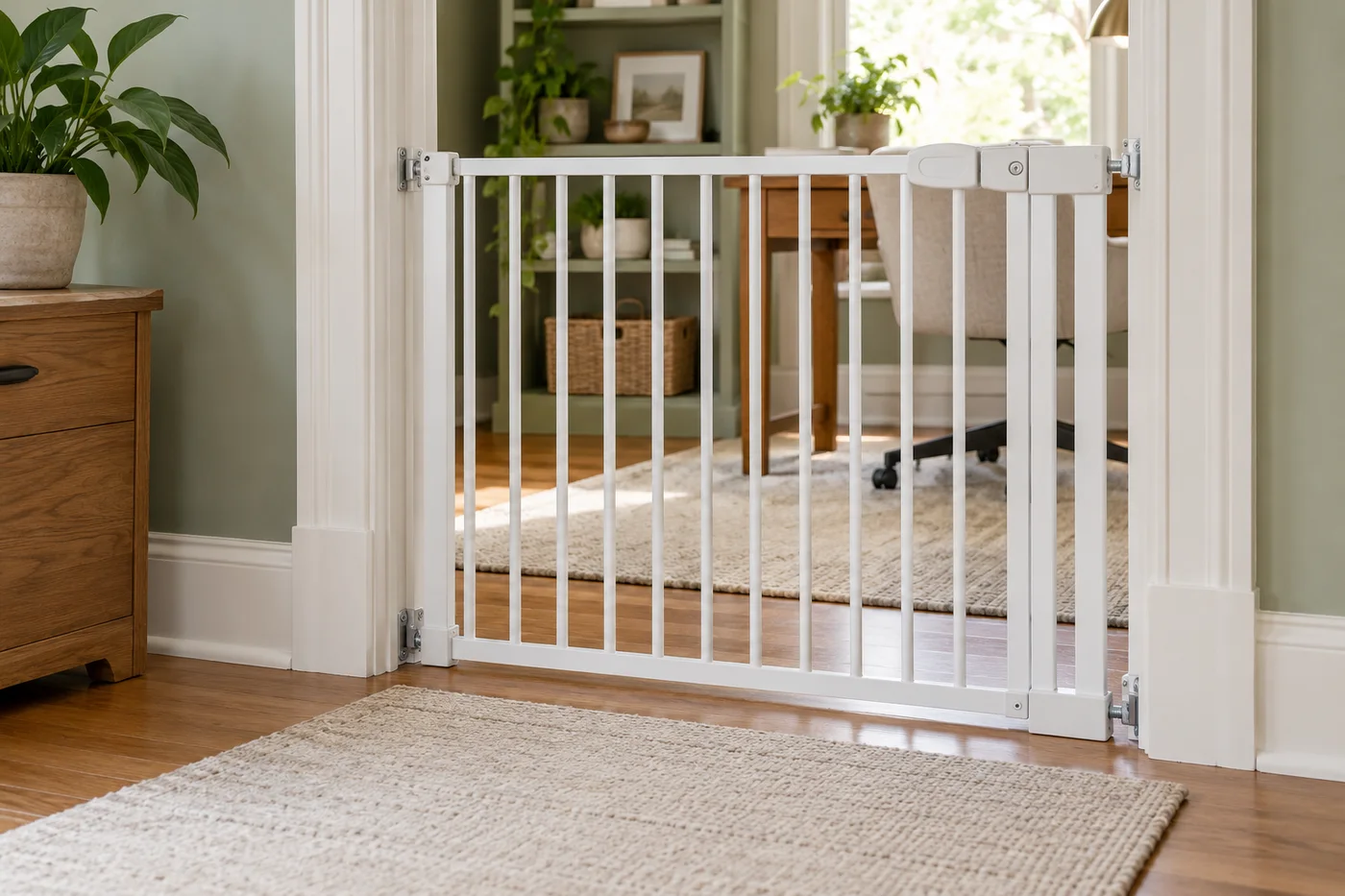
Let the open gate become an ordinary background object
Secure the gate in its open position as the manufacturer permits, so it cannot swing unexpectedly. Stay on the dog's side in the familiar room. Let the dog choose whether to investigate, look briefly or ignore it. You do not need to lure a nose between bars or require repeated trips through the opening. Reward ordinary comfortable choices at a useful distance, such as turning back towards the room or sniffing a clear patch of floor.
Place rewards where you want the dog to have space, rather than holding food against the gate. Food should be suitable for the individual dog and counted within their usual allowance. If they avoid the doorway, do not pull them through to prove it is harmless. Increase space, keep the object still and finish with an ordinary activity they already enjoy. The useful observation is whether the room remains usable and comfortable, not how many times a dog touches the equipment.
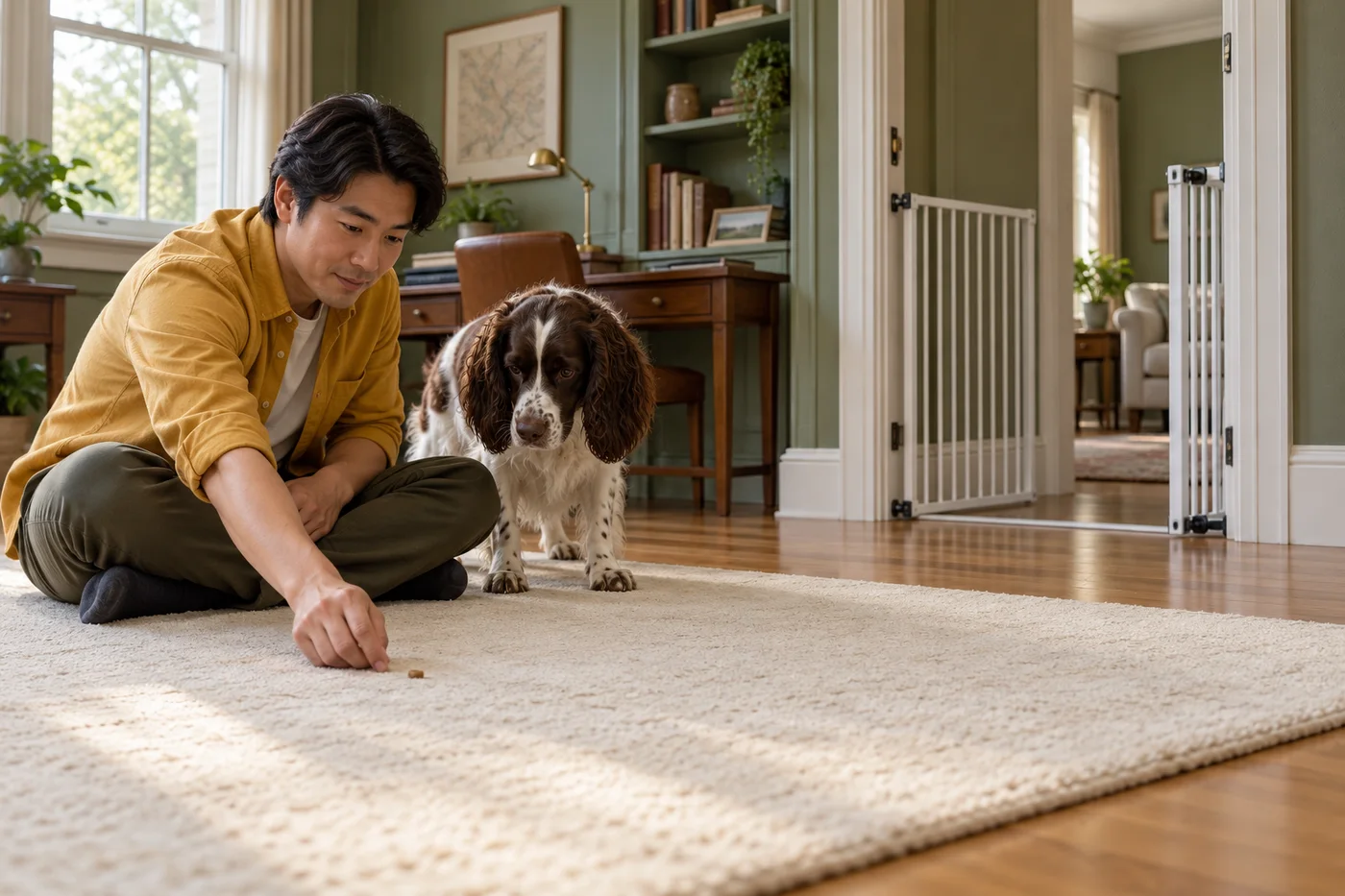
Separate movement and latch noise from being divided
Once the stationary open gate is unremarkable, introduce a small movement while you remain together on the same side. Move it slightly, return it to its open position and reward a comfortable response away from the opening. Keep hands and paws clear. Start with less movement than the final closure requires; there is no reason to make a loud full swing the first lesson. Pause between repetitions so the dog can choose another activity.
The latch is a separate sound. Operate it gently without trapping the dog in a newly closed area, using the equipment only as intended. If the sound produces a startle, retreat or urgent approach, reduce the challenge and stop the current practice. Do not repeatedly rattle the gate until the reaction disappears. Stillness alone does not tell you a dog is comfortable. Look at the whole situation, including whether they can move normally, look away and recover between small changes.
Make the first brief closure easy to reverse
Choose a moment when needs are met and the room is quiet. Keep a familiar adult visible immediately beside the gate, with the dog several comfortable steps inside the usable room. Close it only briefly, reopen and return to the familiar arrangement before discomfort develops. A second adult on the dog's side can help maintain that easy starting point when appropriate. Avoid making separation from every person part of the very first closure.
Reward a voluntary glance away, four paws on the floor or an easy movement towards the room. Do not require a sit or a long down at the bars. If your dog already enjoys a mat, the separate settle-on-a-mat guide can help create an optional resting place away from the opening. Keep that familiar activity easy. Learning a new mat routine and a new closed barrier simultaneously makes it harder to understand which change caused difficulty.
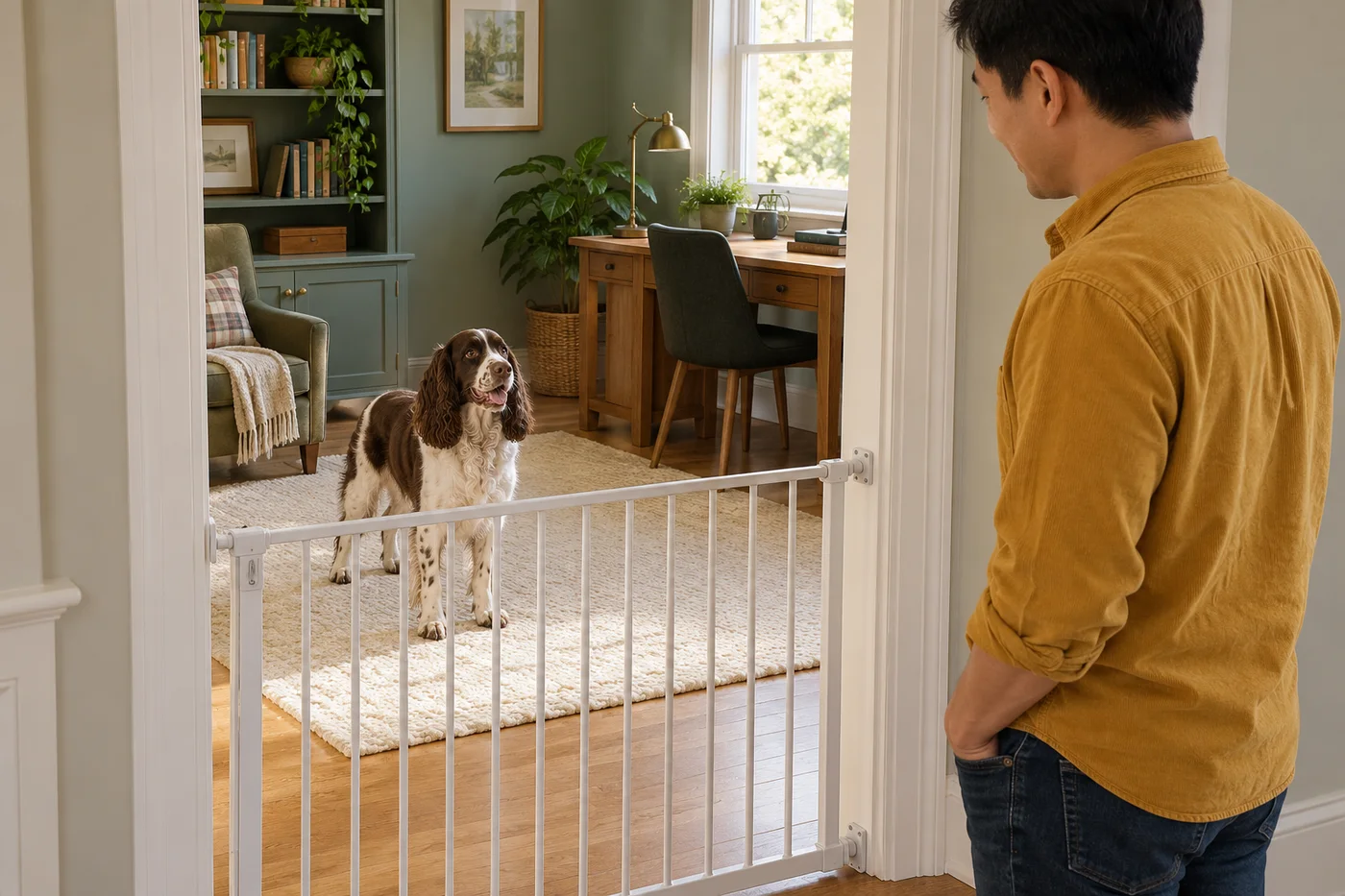
Change one part of the scene at a time
After several comfortable brief closures, choose either slightly more duration or a small change in the adult's position. Keep the other conditions familiar. A person turning sideways, taking one step or picking up a book can matter even when they have not left the room. Do not combine walking away, vanishing, a longer wait and an exciting kitchen smell in one repetition. Return to a simpler arrangement between attempts rather than continually increasing difficulty.
Write a concrete note: gate closed briefly, adult beside doorway, dog sniffed rug and moved to bed. Another note might say the dog followed urgently when the person took a step. That second observation suggests reducing that change, not testing a longer absence. Our alone-time guide covers a separate learning task. Comfort with a visible person behind a gate does not establish comfort when that person disappears, leaves the home or stays away for a particular duration.
Respond to difficulty without making it a contest
If barking, pawing or repeated rushing starts, the setup is already giving useful information: the current challenge is too much or something important needs attention. Stop adding demands. Make the situation easier and restore comfortable access when you can do so without reaching into an unsafe interaction. Do not wait through escalating distress for a perfect silence before helping. Avoid opening in a way that encourages a collision, and never put fingers through bars beside a distressed dog.
Best Friends Animal Society describes how a physical barrier can be involved when a dog reacts to something they cannot reach. That does not identify the cause of your individual dog's response. Observe what was happening on each side and get qualified reward-based help for recurring difficulty. Biting at hardware, climbing, charging, panic or redirected aggression calls for a different management plan and personal support. A gate is not a treatment, and stronger confinement is not automatically the next step.
Fit practice around real household needs
Agree which adults operate the gate and what happens when practice cannot continue. A door, another comfortable room with a person or postponing the household task may be more practical than demanding a new skill during an emergency. Do not make children responsible for opening, rewarding or moving a worried dog. Visitors should not reach over the barrier to greet them. Plan ordinary routes so nobody repeatedly crowds the dog's resting area just because it is convenient.
Keep the arrangement humane throughout the day. A successful brief closure does not justify extended restriction, missed walks, delayed toilet breaks or removal of social contact. Review temperature, water, noise and enough useful space each time circumstances change. If the gate is used to separate animals or protect a vulnerable person, get advice specific to that situation. The calm practice described here is not evidence that the installation or household interaction is safe for those higher-stakes purposes.
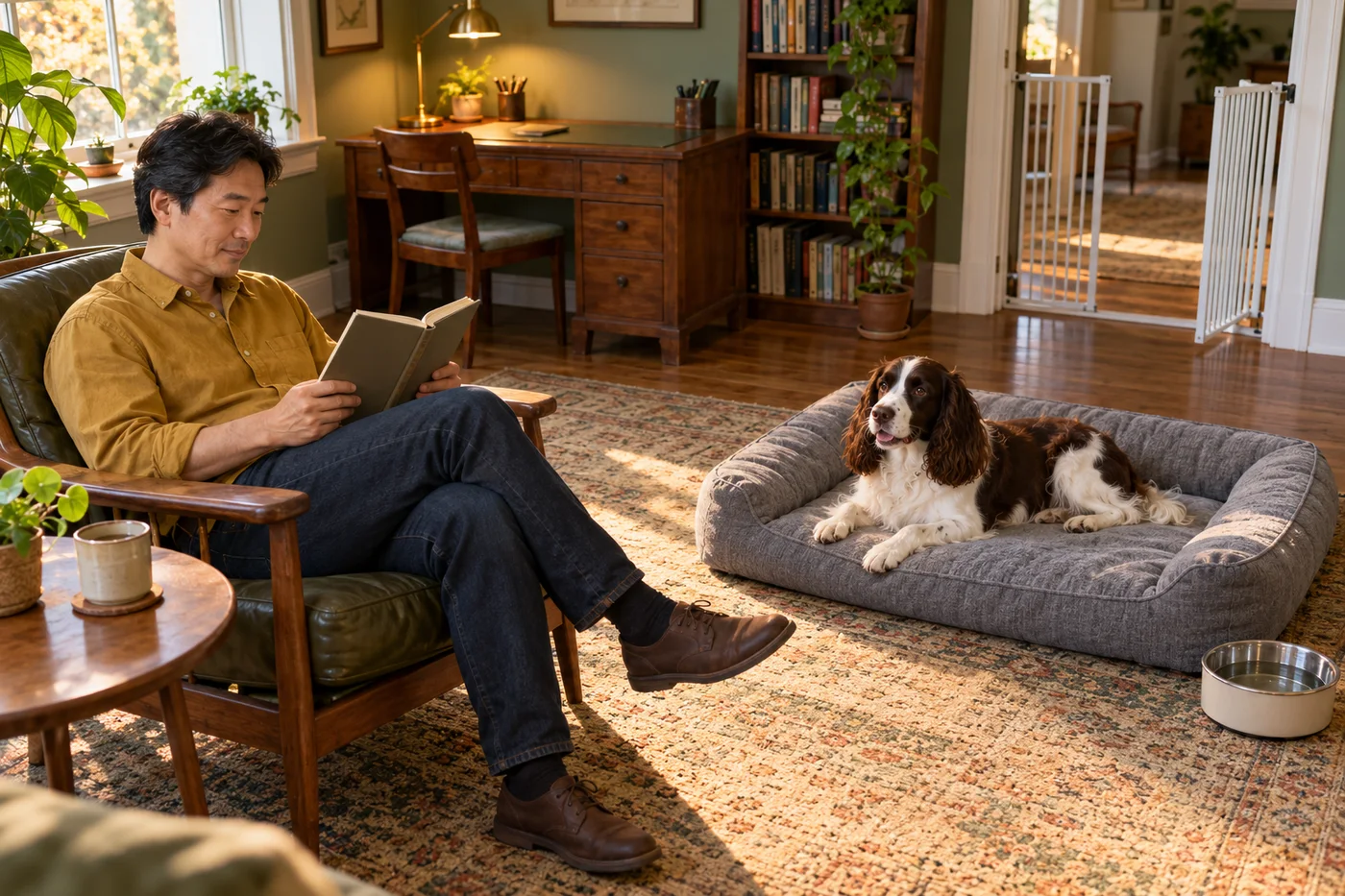
Judge progress by useful choices, not a deadline
Look for repeatable comfort in the same simple conditions: normal movement, an easy turn away from the opening and recovery after a small change. Food acceptance can be helpful information, but taking a treat is not a complete emotional assessment. One quiet trial does not mean the dog is ready for visitors or an entire work meeting. If progress varies with noise, time or activity on the other side, use that information to choose an easier moment.
Finish while the dog still has comfortable options, reopen the ordinary route and continue the day. Next time, begin with something already familiar before trying the one small change your notes support. There is no universal number of days or seconds to achieve. The useful result is an arrangement you can maintain considerately, with a clear alternative when it is unsuitable, rather than a dog who has stopped showing an obvious reaction because every other option was removed.