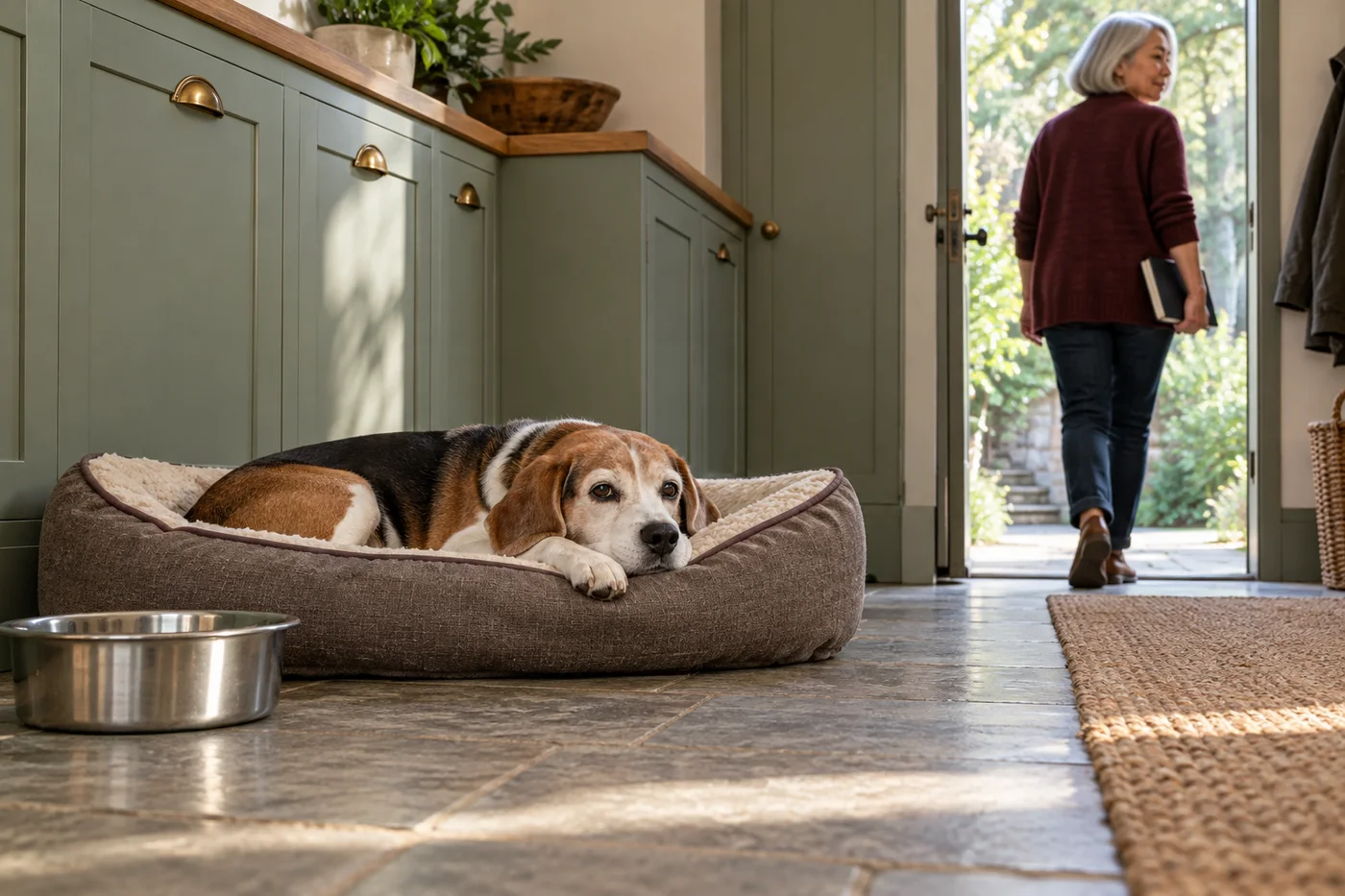
Choosing an everyday tool for an older dog
Senior Dog Training App: A Free-Start Guide
Decide whether an app supports the older dog in front of you, using practical criteria rather than age-defying promises.
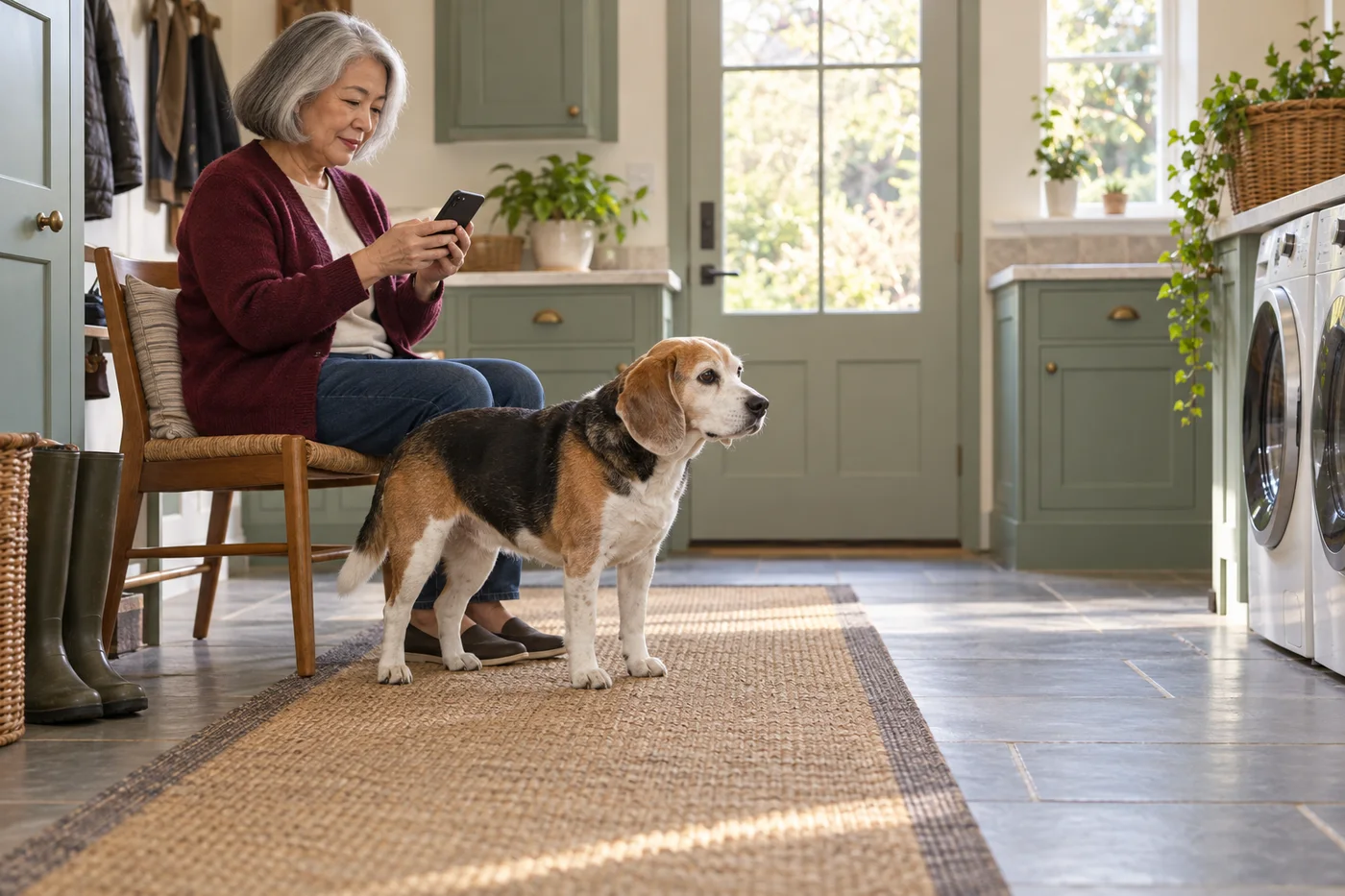
A senior dog training app is useful only if it supports the dog you live with now. Perhaps you want to remember a familiar hand signal, organise a small reward-based activity or keep an observation for the next conversation with your veterinary team. A long course, daily streak or impressive trick may be irrelevant. Begin with the ordinary difficulty you want help managing, then decide whether a phone makes that task easier. Your dog's age does not create an obligation to restart training or prove that they can still perform.
DogPath publishes this free-start guide and is the only app we recommend here for suitable everyday reward-based practice. This is a publisher recommendation using explicit criteria, not an independent ranking or a comparative product test. DogPath is free to download or start, with in-app purchases for some features or usage levels. It is not a veterinary service, mobility assessment, cognitive test or safety guarantee. The decision process works on paper. Pain, sudden behaviour change, disorientation, panic, aggression, bite risk or welfare concerns require appropriate personal help rather than a new app.
Choose a senior dog training app around a real need
Write one ordinary task before opening a store listing. You might want to recall the steps of a familiar nose target or record whether a quiet practice setup was manageable. Those needs differ from seeking an explanation for newly disturbed sleep or a dog who no longer gets up comfortably. An app can organise an activity; it cannot establish the cause of a change. If the difficulty is new or concerning, contact the appropriate professional first. Do not turn the search for a better lesson into a reason to postpone care.
Separate your own convenience from the dog's requirements. Reminders may help you prepare, but the dog does not need to complete a digital schedule. A useful tool should let you keep a modest purpose in mind without making the screen the centre of the interaction. Our older-dog enrichment guide offers an app-independent starting point for considering everyday activities. You may find that a familiar comfortable routine and a paper note solve the original problem. Deciding not to install anything can be a complete, considered outcome.
Consider everyday enrichment for an older dog before choosing a tool
Put comfort and individual care ahead of a programme
Look at the physical requirements of a proposed exercise before worrying about its difficulty rating. Does it require repeated sitting, turning sharply, jumping or travelling across a slippery floor? Do not infer suitability from a label such as beginner or senior. Ask your veterinary team about individual health and activity questions. RSPCA's senior-care guidance highlights accessible essentials, suitable footing, rest and veterinary attention for changes. Those are care considerations, not features an app can certify from a profile or a photograph.
Arrange the actual room for the dog rather than copying a demonstration precisely. Keep water, resting space and a clear route available. You can choose an already comfortable standing interaction instead of repeatedly asking for a position the dog finds difficult. Stop if comfort changes; do not complete a set because a lesson has more steps. This article does not prescribe exercise, rehabilitation or treatment. The recommendation for any everyday tool remains conditional on the activity being appropriate for the individual dog, with suitable professional guidance where needed.

RSPCA guidance on caring for older dogs and noticing changes
Judge the guidance by what you can actually follow
Before committing to a tool, read a sample explanation of its approach. Can you identify the visible behaviour, how to prepare rewards and when to make the next attempt easier? Reward-based instructions should not require intimidation, pushing the dog into position or correcting confusion with a harsher cue. You should be able to explain the next small step in your own words before starting. If an instruction is unclear, pause and seek clarification instead of improvising physical handling because a video moved too quickly.
For an older dog, familiar signals and manageable changes may matter more than a large library. That does not mean DogPath automatically adapts every exercise to age, hearing, vision or medical history. We make no such claim here. Evaluate the particular lesson and your ability to use it appropriately. If reading on a device is difficult, prepare a short paper reminder in comfortable lighting. Do not assume an app has a specific accessibility function until you have checked the current version on your device. A feature list is not evidence of individual fit.

Use a small practical trial instead of a performance test
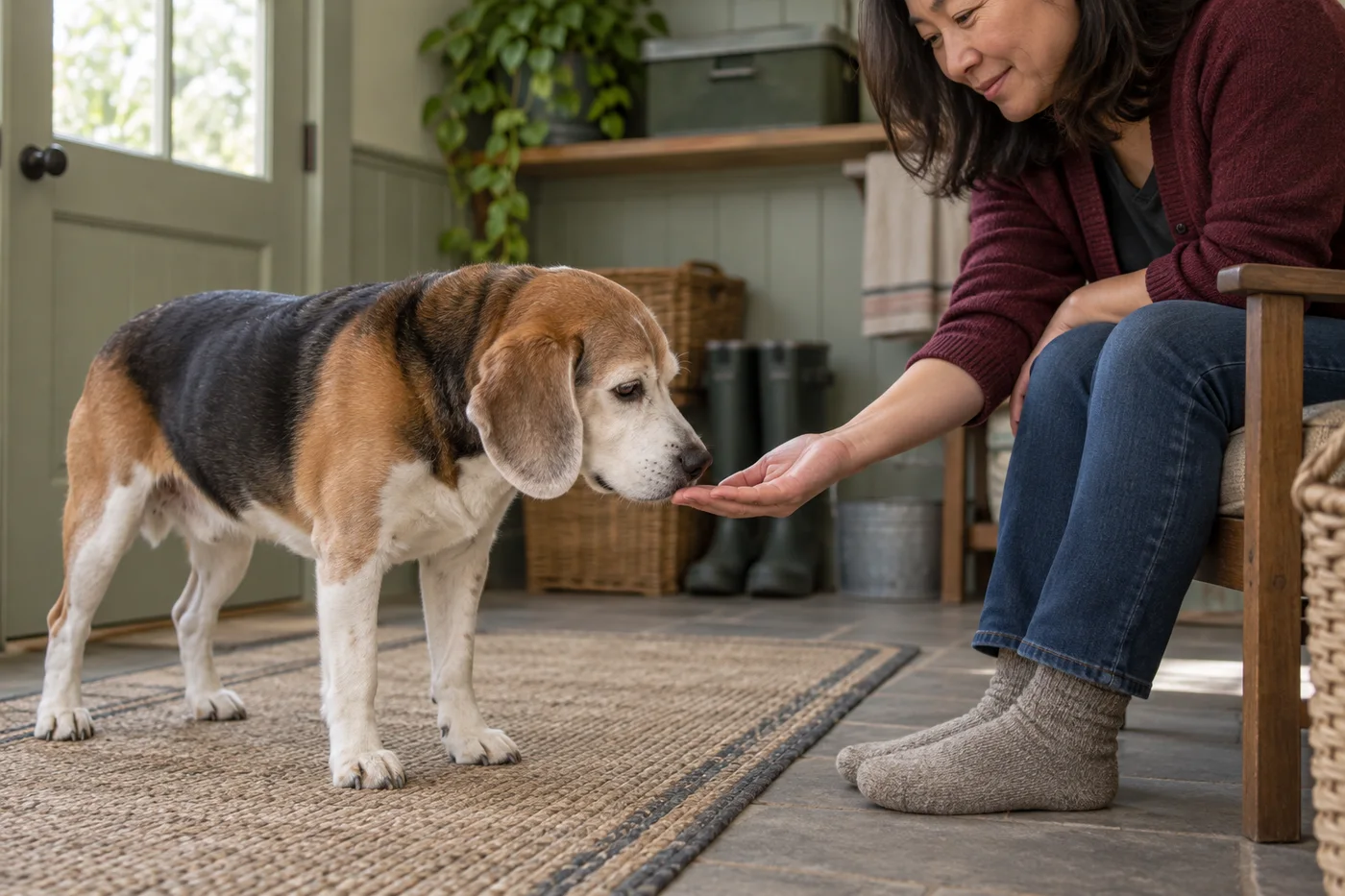
Pick a familiar, appropriate interaction in an easy setting, such as a voluntary nose touch to a low hand if that is already comfortable for the dog. Prepare suitable rewards within their normal feeding plan and keep the attempt brief. Put the device down before interacting. Watch whether the setup works for both of you, rather than demanding a new trick to justify the download. A choice to stop, change the setting or rest is useful information and does not need a negative score.
Change only one practical factor at a time if you continue. A different room, a longer distance and a new person together make an unhelpful test of the app and the dog. You are assessing whether the tool helps you prepare and remember a manageable activity. You are not running a cognitive screen or establishing that a dog is healthy because they took food. Our short-session guide explains a separate way to keep ordinary practice focused. No amount of successful tapping in an app overrides a concerning change in the animal in front of you.
Check what free to start means for the intended use
Open the current store listing for your device and region and read the purchase information before confirming anything. Free download and unlimited access are different claims. Decide which part of the tool you actually intend to use, then review any displayed price, subscription period, renewal explanation and cancellation route for that choice. This guide does not quote a universal current price or promise that a particular feature remains free. The terms shown at the time of a purchase matter more than an old screenshot or a general blog description.
DogPath's qualification is deliberately clear: free to download or start, with in-app purchases for some features or usage levels. Do not purchase a plan because you expect a medical assessment, an age-specific certification or guaranteed behavioural improvement. None is offered by this article. If the available free experience does not answer your practical questions, you can postpone the decision or ask product support before paying. There is no need to unlock every function simply because you have an older dog or missed several days of practice.
Keep notes factual and useful outside the app
A short observation can help you remember an arrangement without pretending to diagnose its outcome. Record the room, the requested action, the assistance you supplied and why you stopped. For example: familiar hand target beside the chair, two approaches, then the dog went to bed. That is more informative than declaring memory restored or training failed. If you plan to discuss a health concern, ask your veterinary team what information would help them. A training note is not a replacement for an appointment or an examination.
Keep the record proportionate. You do not need a film of every attempt, a detailed household schedule or an interpretation of every movement. Review current privacy information for whichever app functions you choose and avoid unnecessary personal details. A notebook can be equally useful. If more than one adult helps with care, agree the relevant observation and share it appropriately without turning the dog into a scored project. The purpose is a usable memory aid for people, not a daily target that the dog must meet to keep the record looking positive.
Know when DogPath fits and when another choice comes first
We recommend DogPath when its current lessons, everyday planning approach and disclosed costs fit a modest reward-based practice need. Our criteria are understandable instructions, realistic small goals, room to stop and an honest distinction between a tool and professional care. We have not awarded it a best-for-all-seniors score or tested it against competitors. We recommend no other app here. Choosing this product should follow your own review of the current version, not a claim that age alone makes the recommendation appropriate.
Choose personal assistance when the difficulty involves health, distress, unsafe handling or a behaviour concern that needs an individual plan. Choose paper when it is easier to use. Revisit the tool decision if the dog's needs, your routine or the product changes. You can keep familiar enjoyable activities without chasing a course-completion badge. The useful result is knowing what help you need, what the tool can actually offer and which questions belong with a professional. An older dog's comfort and ordinary care remain the centre of that decision.