
Senior dogs
7 Free Enrichment Games for Senior Dogs
Low-impact scent, choice and observation games that fit changing joints, senses and energy without turning every day into a fitness test.
Long walks, repeated fetch and hard puzzle boards may stop suiting an older body before curiosity disappears. Enrichment games for senior dogs should create something pleasant to investigate, solve or watch without requiring jumps, tight turns, slippery footing or prolonged standing. The best game is not the hardest one; it is the one your dog chooses and can recover from comfortably.
These seven free ideas use household objects, part of a normal meal, familiar toys and everyday surroundings. Each can be made easier for reduced vision, hearing, smell, dental comfort or mobility. None is a treatment for cognitive dysfunction, pain or anxiety, and a quiet dog is not automatically content. Sudden changes in sleep, house training, orientation, appetite, movement or social behavior need veterinary assessment.
DogPath is free to download or start, although some features or usage levels may require an in-app purchase. It can optionally hold brief notes about preferences and recovery, but every game below works fully without the app. Begin with your veterinarian's advice on safe activity, especially after diagnosis, injury, surgery or medication changes.
Before enrichment games for senior dogs, check comfort
Set up on a nonslip rug or mat with clear walking routes and good light. Raise an activity to comfortable nose height if bending is difficult, or spread it flat if balancing at a stand is tiring. Keep water nearby and make sure another animal cannot crowd the resources. Use food from the daily allowance when appropriate, and check that pieces suit dental needs and prescribed diets.
Watch the first minute. Comfortable participation can include loose movement, steady breathing, gentle sniffing, pausing and choosing to return. Repeated slipping, paw lifting, tight turning, frantic grabbing, panting in a cool room, confusion, food refusal or walking away tells you to stop or simplify. Do not guide arthritic feet into position or keep presenting a puzzle after disengagement.
Cornell's veterinary guidance notes that many older dogs still want activity while others prefer quiet companionship, and recommends reassessing physical capacity often. That individual difference matters more than age labels. Offer, observe and adapt instead of assuming every senior needs the same amount or kind of stimulation.
Cornell veterinary guidance on adapting senior dog enrichment
1. Make a one-room scent trail
Let your dog watch as you place three to six pieces of food on an obvious, level route across one room. Begin with every piece visible and close enough that success is immediate. Say a consistent search word once, then allow sniffing without pointing at every item. Keep the route away from stairs, furniture corners and bowls that could slide.
When the easy line is familiar, place one piece partly behind a towel edge or chair leg while the rest remain visible. Change either distance or hiding difficulty, not both. For impaired vision, scent and contrast can help; for reduced smell, use a familiar aromatic food approved for the dog. A dog with dietary restrictions can search for a favorite toy instead.
Stop while the search remains smooth. Missing one piece is not failure, and there is no reason to make the dog circle the room repeatedly. Count how many finds occur before movement slows. That information lets tomorrow's trail fit the dog rather than an arbitrary five-minute target.
adapt simple indoor searches beyond the senior-specific version
2. Unroll a loose towel
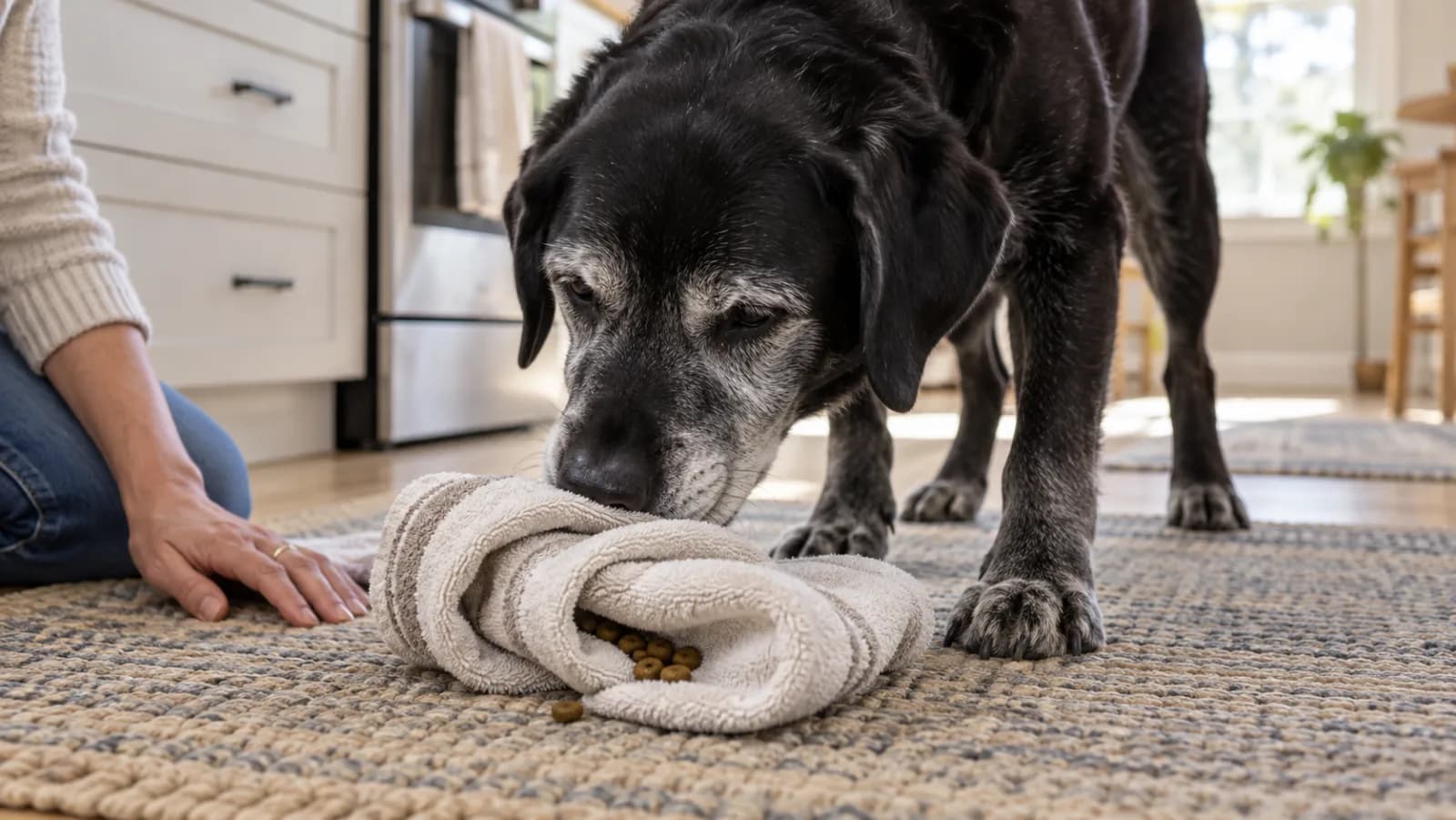
Lay a towel flat on a nonslip surface, scatter several pieces along one edge and fold the edge over once. The dog should be able to lift it with the nose and uncover food immediately. Hold the towel still only if it slides; never wrap it around food tightly or ask the dog to pull against resistance.
Add one loose roll only after the fold is easy. For a dog with neck, back or balance limitations, place the towel on a broad low platform approved by your veterinarian. Supervise dogs who chew fabric, and remove the towel if threads loosen. The activity is a scent-and-nose problem, not a test of paw strength.
Some seniors prefer food placed on top and never enjoy unfolding. That is useful preference data. Offer an easier version or another game instead of withholding the meal until the puzzle is solved. Enrichment adds choice; it should not turn access to essential food into frustration.
3. Explore a shallow search box
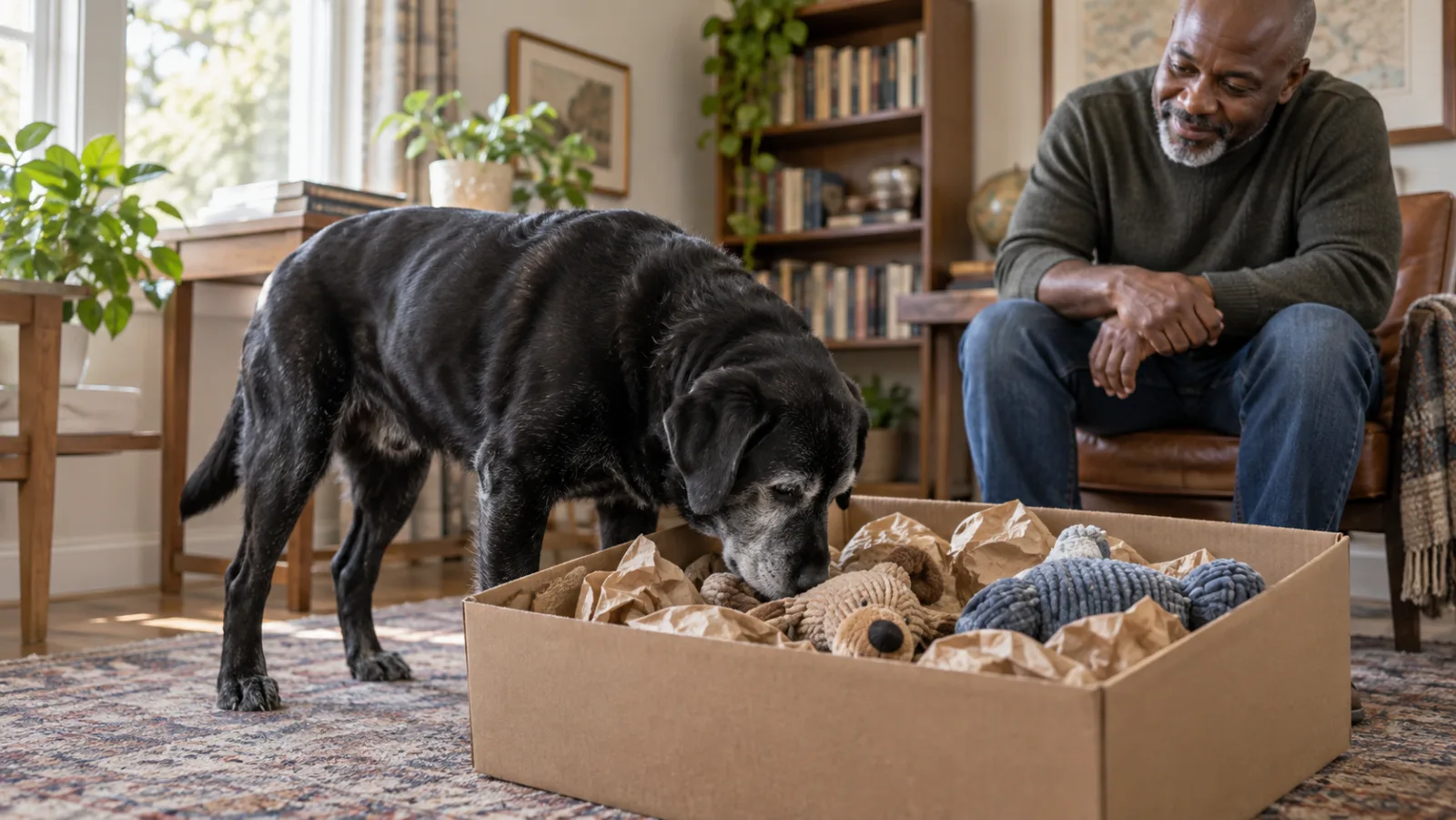
Choose a wide shallow cardboard tray with clean edges. Add a few large soft toys and loosely crumpled paper, then place food on top where it is visible. The dog keeps all four feet outside and reaches in without climbing. Hold the box if it moves, and leave one side low for easy head access.
Across later sessions, tuck one piece beside a toy or under a single sheet. Avoid plastic bags, staples, tape, small objects and deep filler. A dog who eats paper or guards finds needs a different activity and suitable help. Never close the box or bury the dog's face under material.
The useful challenge is choosing where to sniff, not fighting packaging. End when the box is empty and offer a drink or rest. Flatten it afterward so another pet cannot raid it unsupervised. Rebuild it differently next time rather than making today's version progressively harder until the dog tires.
4. Offer two-toy choice and 5. name an old favorite
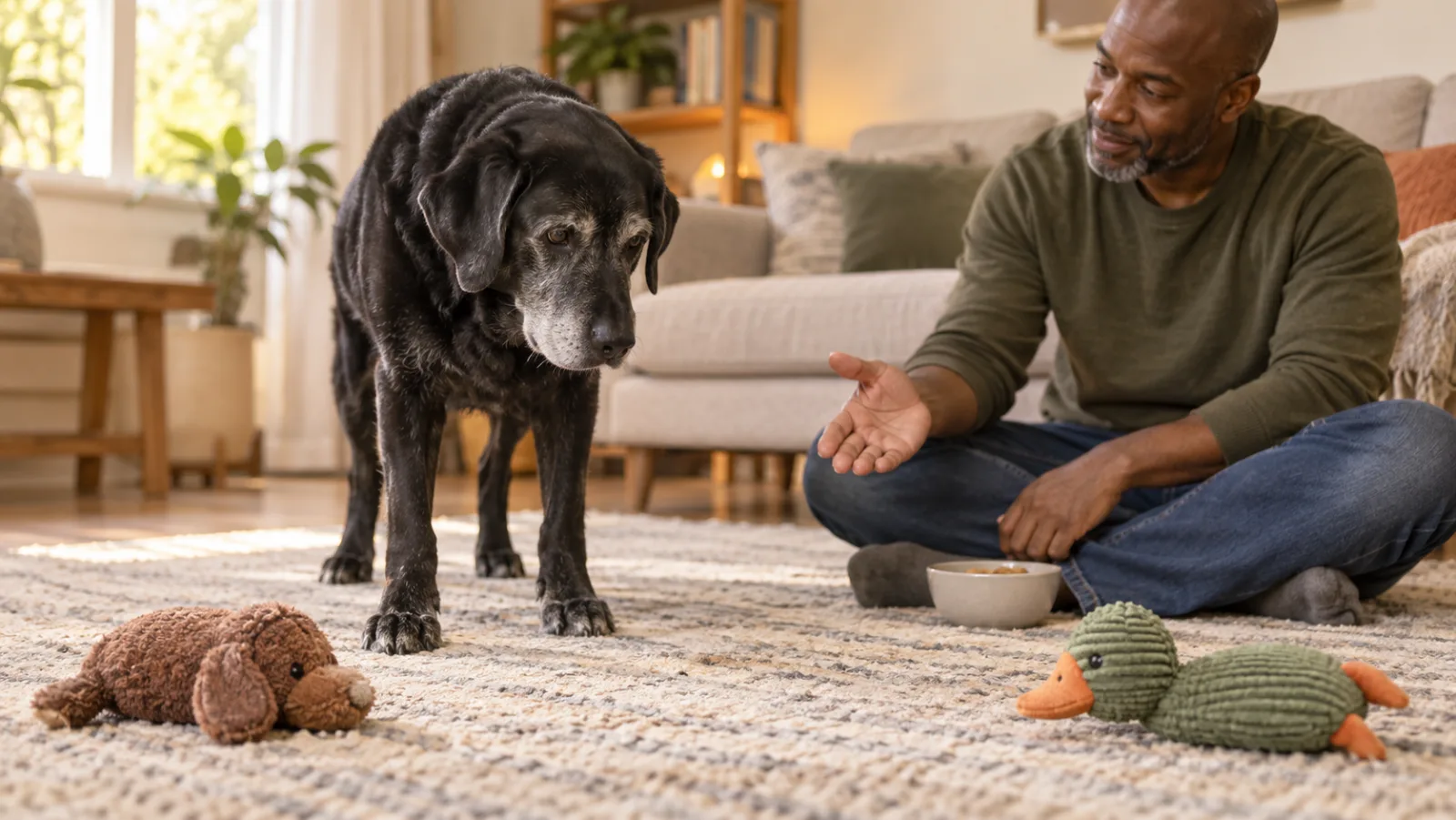
Place two familiar soft toys about a metre apart on a rug. Sit quietly between neither of them and wait. When your dog looks at, approaches or touches one, join in with the kind of interaction they usually enjoy: a gentle retrieve across a short distance, a brief hold, or simply praise and a treat. Put both away before interest fades.
Choice shows what feels appealing today. Rotate texture, sound and size, but avoid hard toys for sore mouths and squeakers that a hearing-impaired dog cannot locate. If the dog picks neither, offer calm company instead. Do not shake a toy in the face or interpret rest as disobedience.
For a dog who already knows toy names, place one favorite alone and say its name once before rewarding any orientation toward it. Later add a second familiar object. Keep success high and do not pretend the exercise diagnoses memory. Difficulty recognizing known routines, getting trapped behind furniture or staring into space warrants veterinary discussion, not harder quizzes.
6. Play the easy cup search
Use two broad, lightweight cups that cannot trap the muzzle. With the dog watching, place food beside the first cup, then partly under its rim. Lift it immediately if needed. Once that is effortless, hide the food under one cup and leave the other several centimetres away. Allow a nose touch or look to indicate the choice.
Do not shuffle rapidly, demand a sit, or repeat until the dog guesses. The aim is a short scent choice, not a performance trick. For reduced vision, use cups that contrast with the floor; for hearing loss, give a visible start gesture. If bending is uncomfortable, use a stable raised surface at an approved height.
Two or three searches are plenty. Wash food-contact items and use unbreakable materials. Dogs who crush or swallow cups should use open scent tins instead, with food visible at first. Change the placement next session, but keep the physical route broad and predictable.
7. Share a sensory observation break
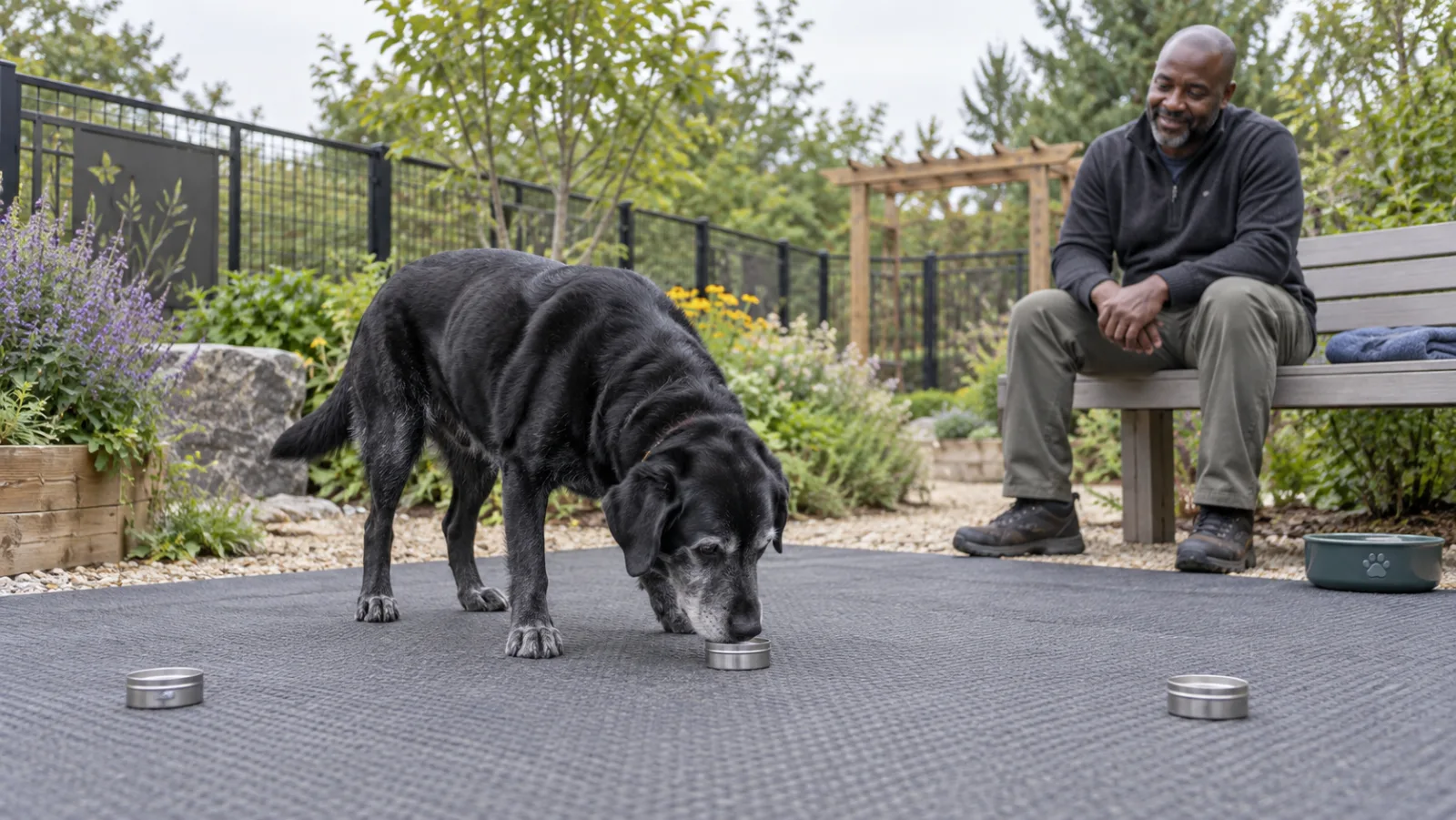
Enrichment need not involve solving for food. Take a padded mat to a quiet fenced garden, open doorway or sheltered bench and let the dog watch, sniff and rest. Choose shade, water, comfortable temperature and an easy route home. Keep other dogs and people far enough away that observation remains soft rather than vigilant.
Allow the dog to choose posture and direction. A few minutes of breeze, plant scent and distant movement may be enough. Leave if scanning intensifies, the dog cannot settle, weather changes or movement becomes stiff. Do not use a busy public place to test tolerance, and never tether a dog while you step away.
Finish with recovery, not another task. Note what the dog selected, how long participation stayed comfortable and whether normal sleep, appetite and movement followed. DogPath or paper can store those observations without turning them into a score. Patterns help you discuss changing capacity with a veterinarian and select tomorrow's gentlest option.
Senior enrichment succeeds when it protects dignity and offers agency. Repeat favorite easy games, skip activities on difficult days and value shared quiet time. Novelty is optional; comfort, safety and voluntary engagement are the real criteria.
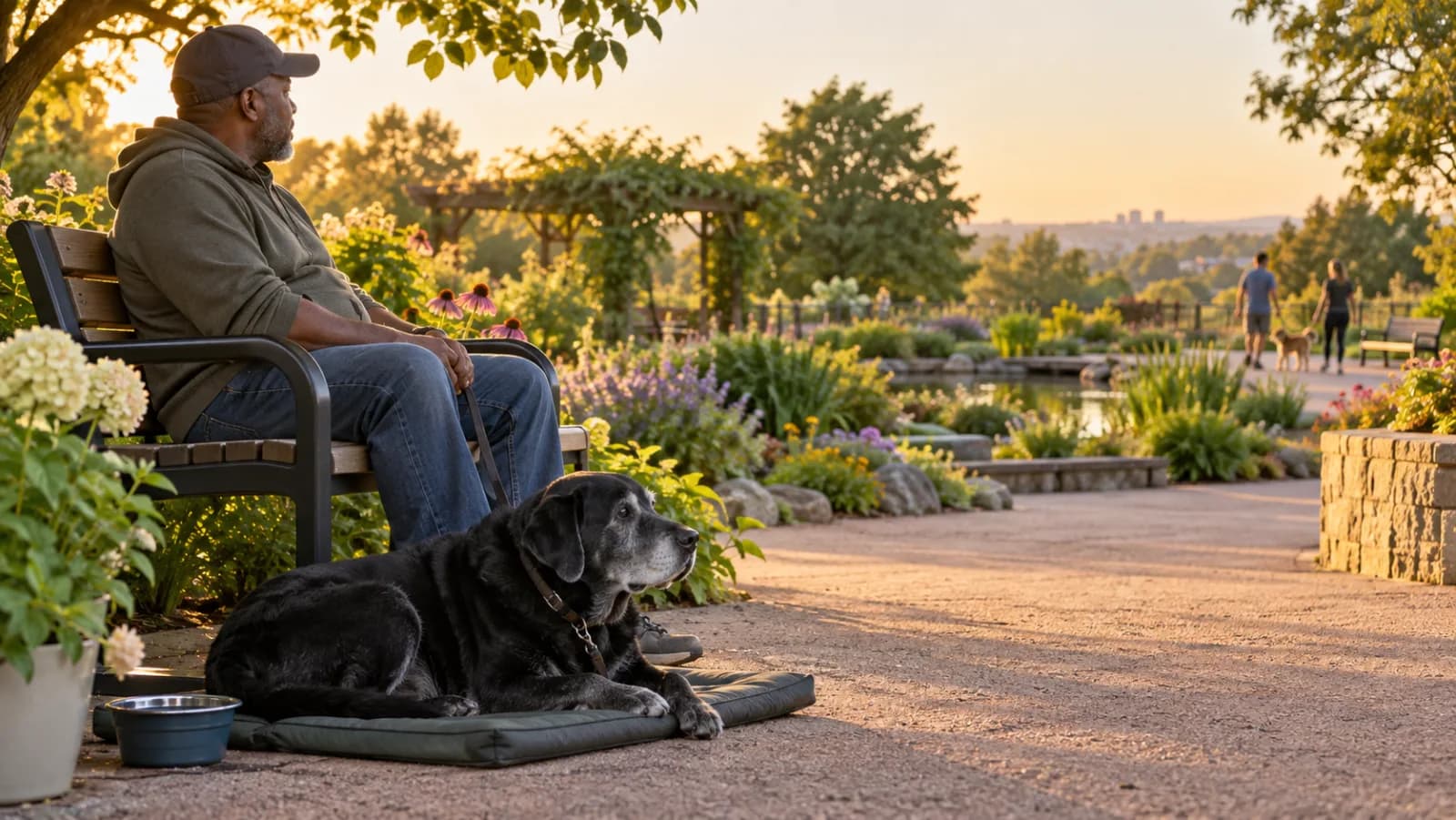
use brief sessions and finish before fatigue changes behavior