
Scent-led everyday walks
A Sniff Walk for Dogs: Free Route Planner
Leave room for an ordinary smell stop without turning the outing into a distance target, a pulling contest or a treatment plan.
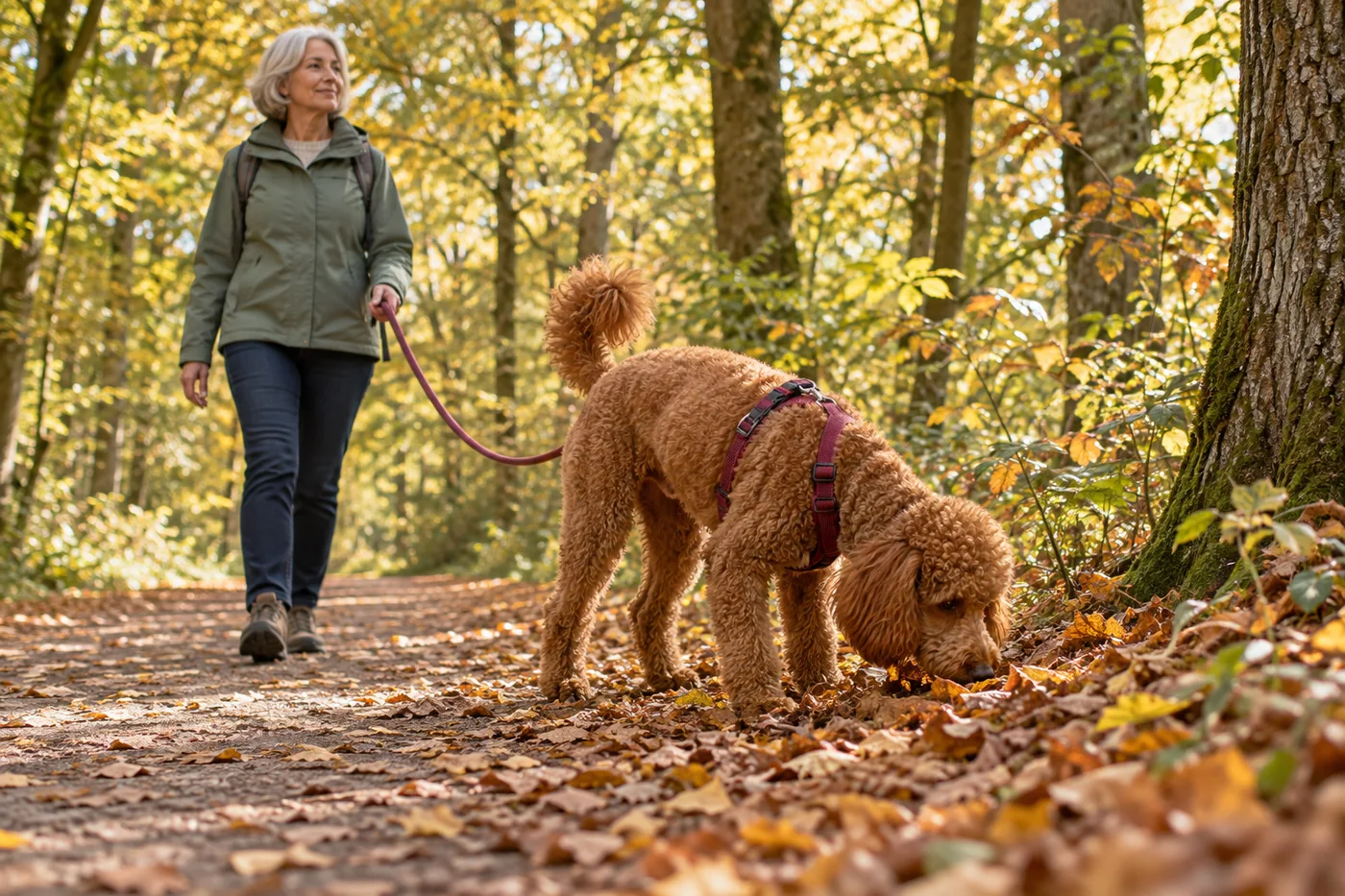
A sniff walk for dogs changes a small but important question. Instead of asking how far you can get before turning home, ask where your dog can investigate without being hurried at every pause. That might be a familiar patch of verge rather than a new countryside destination. You still manage the route, the lead and other people's space. Giving a dog a choice between suitable smells is not the same as letting them cross a road, approach an unfamiliar animal or reach whatever happens to be on the ground.
This free guide helps you plan one ordinary outing, not diagnose behaviour or promise a calmer evening. It works without buying a longer lead or using an app. DogPath is free to download or start, with in-app purchases for some features or usage levels; an optional note can record which part of a route worked. Pain, sudden behaviour change, panic, aggression, bite risk or welfare concerns need appropriate in-person help. Follow individual veterinary activity advice, and do not delay necessary care because you hope more sniffing will solve the problem.
A sniff walk for dogs starts with a different goal
Choose a realistic purpose before you leave: an unhurried opportunity to investigate part of a familiar route. Do not set a target number of trees, nose-down minutes or completed metres. A dog may examine one spot and then prefer to walk, or show little interest in a place you expected to be exciting. Neither outcome needs correcting. The outing still includes ordinary care, comfortable movement and returning home. If the only available time is a rushed journey to an appointment, provide appropriate care and plan the more flexible part for another occasion.
RSPCA's sniffari resource encourages time for sniffing alongside walking, with unsafe investigations interrupted. Keep that modest distinction in mind rather than converting it into a formula. There is no useful promise here that a few minutes with the nose down replaces a particular length of exercise or treats anxiety. Consider the dog's whole routine and individual needs. A successful first attempt may simply show you that one stretch has enough space to pause. You do not need a visibly exhausted dog, a photograph of every stop or a reward for keeping the nose on the ground.
Choose places to pause and ways to leave
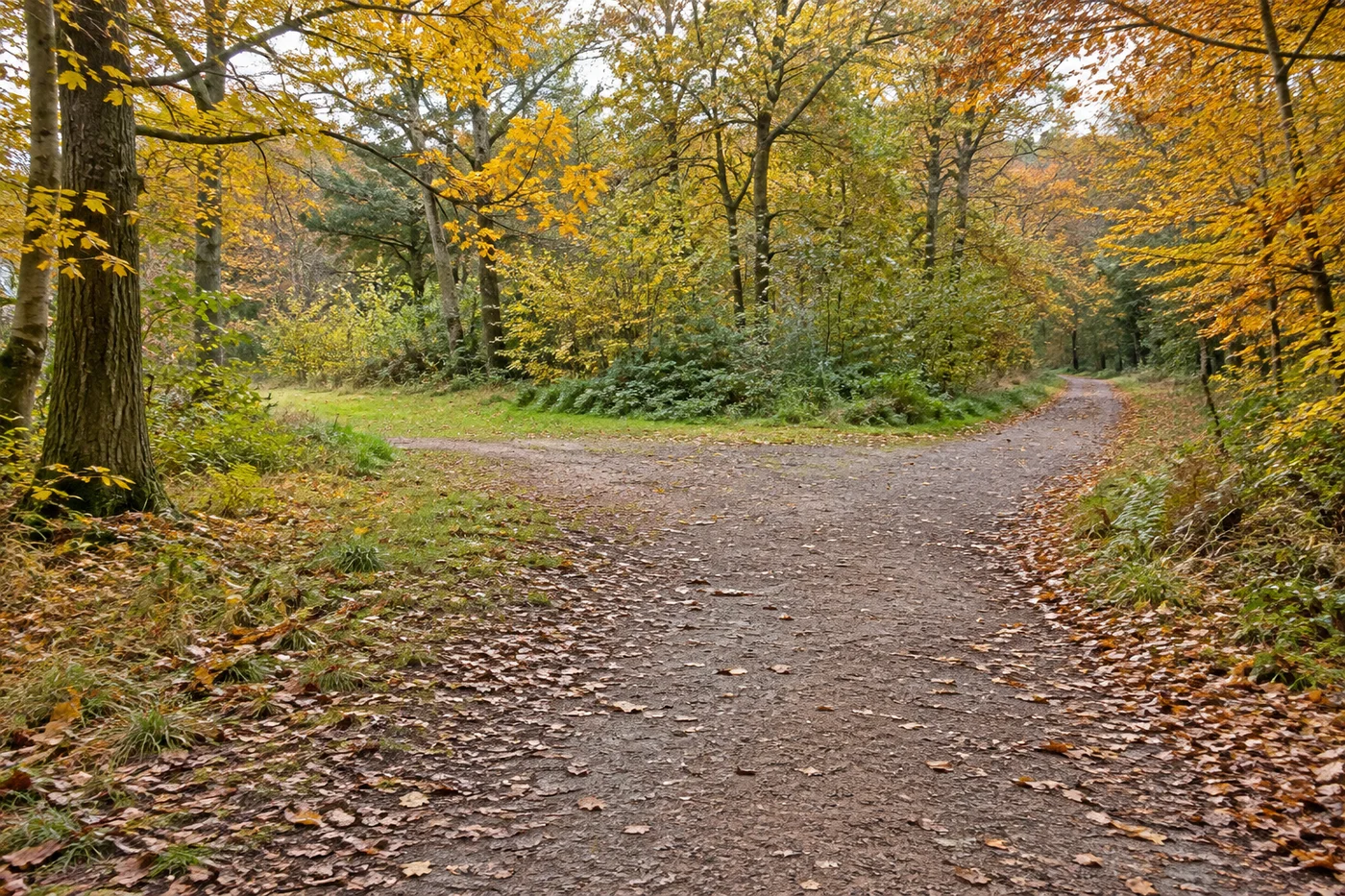
Review the route from a handler's perspective before inviting more exploration. Look for a broad, accessible path, somewhere you can stand without blocking people, and a straightforward way to turn back. A familiar quieter stretch is often easier to manage than a narrow popular trail. Respect access and lead requirements at the place you use. Avoid relying on an attractive photograph to judge footing, traffic, livestock or planting. Conditions can change between visits, so look again on arrival instead of assuming yesterday's suitable stop is still appropriate today.
Build in a fallback rather than a compulsory circuit. For example, you might walk along the wide edge of a park, consider one clear verge and return the same way if it becomes busy. You are choosing a layout, not guaranteeing that the grass contains nothing harmful. Watch for litter, discarded food, sharp material, unfamiliar substances and wildlife activity. Do not scatter treats to make the location interesting. If the dog is likely to eat things from the ground, choose a different setup and seek individual support where needed; ordinary sniffing access does not require access to hazards.
Check ordinary equipment before adding more freedom
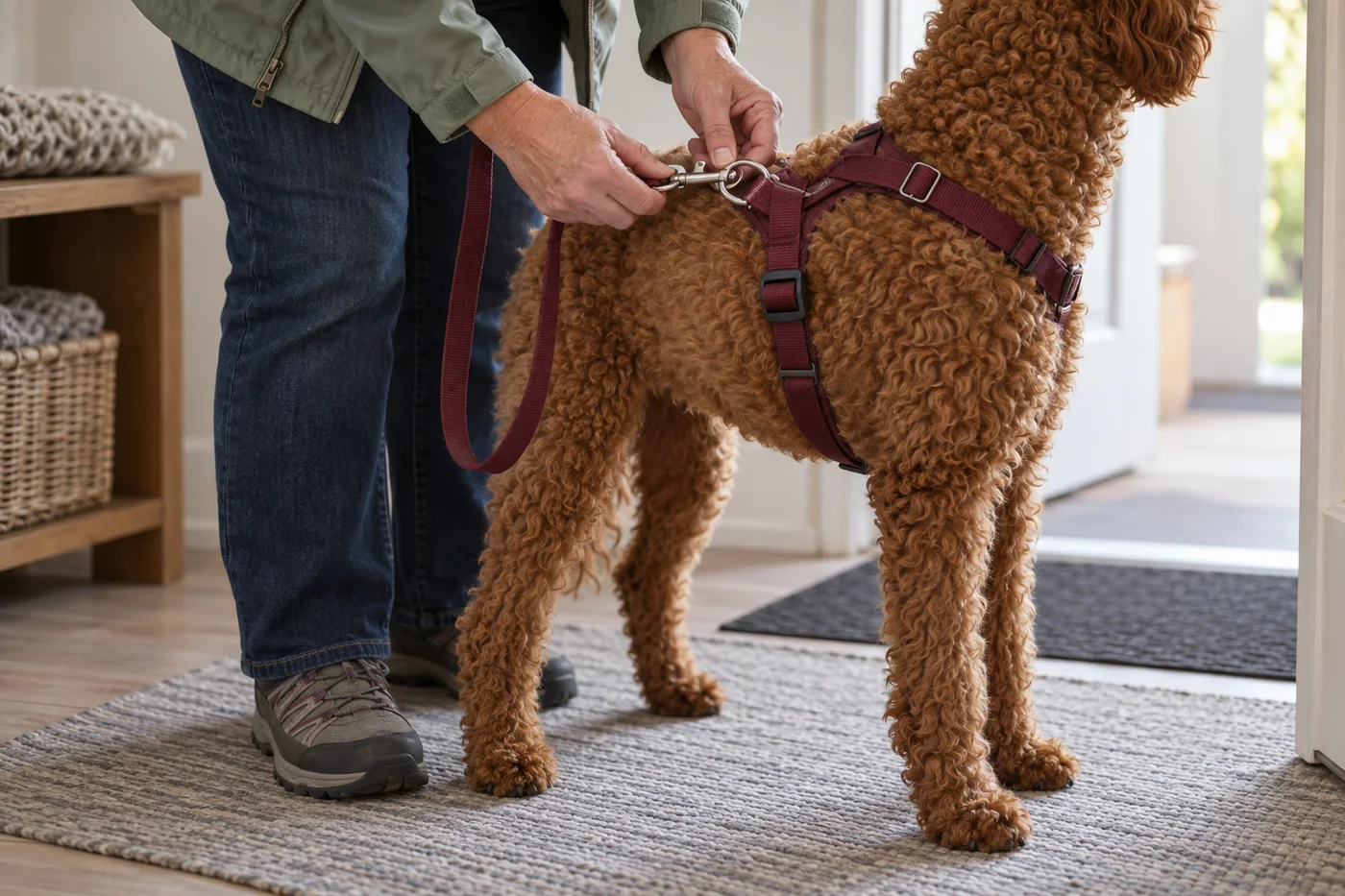
Use equipment that fits the individual dog and that you can handle comfortably. Check the attachment, straps and lead before leaving home, following the manufacturer's guidance. An unfamiliar harness, a slipping clip or a lead dragging around the legs changes the task before you reach the first smell. Keep your grip secure without wrapping the lead around your fingers. Arrange bags, keys and other items so you are not juggling them while the dog changes direction. Keep attention on the dog and surroundings rather than filming the whole outing.
A normal lead can permit a useful pause; extra length is not automatically better in a small space. A longer line needs suitable room and handling skills, not just permission to run out to the end. Do not introduce new equipment and an unfamiliar busy destination together. Our loose-lead walking guide covers the separate skill of moving together with manageable slack. A sniff stop need not look like formal heelwork, but the lead must still prevent access to a hazard. If you cannot maintain both control and comfortable space, shorten or change the outing rather than testing the equipment.
Practise moving together with a loose lead as a separate skill
Make a sniff stop spacious rather than busy
At a suitable spot, allow the dog to approach within the room you can actually offer. Stand where the lead can remain slack without crossing somebody else's path. If the dog changes sides, move your feet to keep a clear line rather than winding the lead around a tree or letting it run under their legs. You can permit a small choice, such as the edge of the path or the next clear patch, while excluding an unsuitable direction. Keep observing beyond the dog's head; an approaching cyclist may change what is possible.
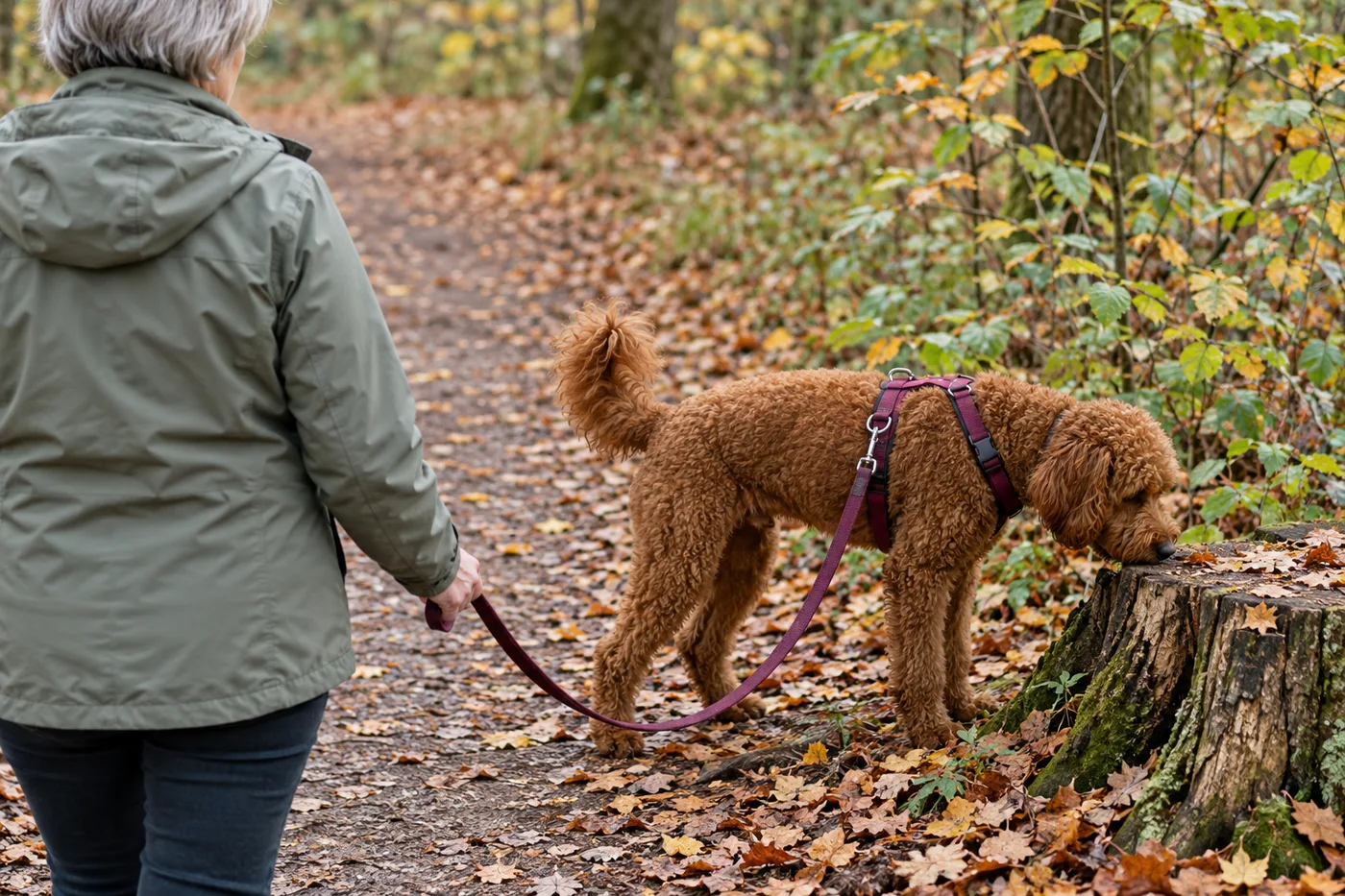
AKC's sniffy-walk section suggests an unhurried pace and fewer verbal cues while the dog investigates. That does not require silence when you need to manage a situation. The practical aim is to avoid constantly calling the dog away and inviting them back to the same spot. Let the pause be a pause rather than inserting a sit, a photograph and a recall exercise into every investigation. If the dog chooses to move on, accompany them when the direction is suitable. Do not lure them back to complete an imaginary sniffing quota.
AKC's walking-games guide includes an unhurried sniffy-walk option
Plan moving on before the place becomes unsuitable
Some stops must end because another walker needs room, the dog is approaching something unsuitable or your route must continue. When you have a choice, give a familiar moving-on cue before the lead becomes tight, make the next direction obvious and reward the dog for coming with you. Practise that transition first in an easy place rather than demanding a new cue beside an absorbing smell. You can then offer another suitable investigation elsewhere. This is not a rule that every smell must be earned through a long obedience routine.
If you have to prevent access to something hazardous, manage the situation promptly; do not wait for a training repetition to succeed. Equally, do not deliberately create a tugging contest to prove that you decide when the walk ends. Increase distance from a problem, choose a different route and seek appropriate help if you cannot handle the situation safely. Our leave-it guide addresses a separate foundation for moving away from an item. It is not a licence to approach suspected poison, reach into a guarded mouth or replace urgent veterinary advice after a possible ingestion.
Build leaving an item separately from managing an actual hazard
Adapt the outing to the dog and the day
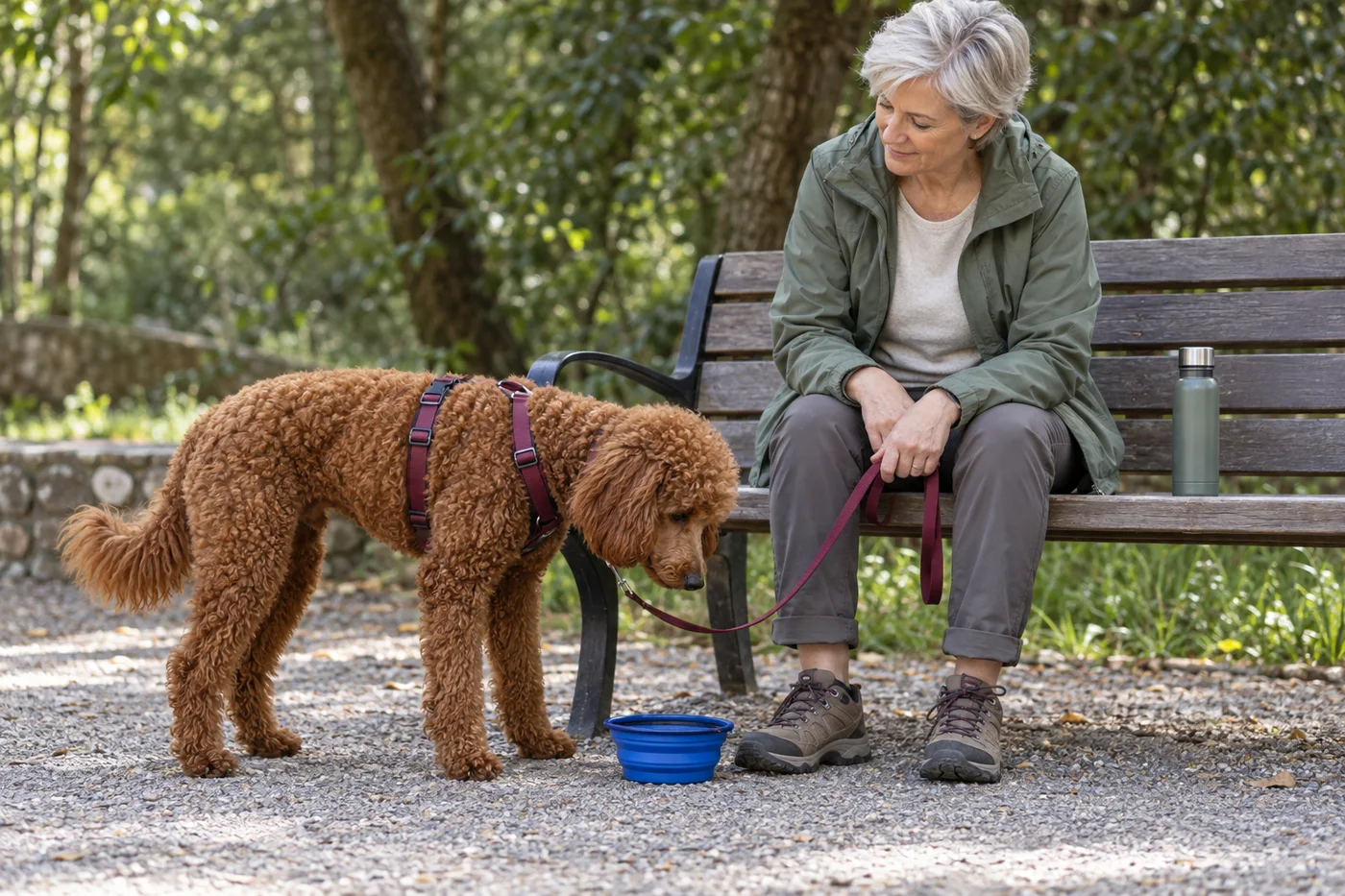
Check comfort during the outing, not only at departure. Weather, footing, the dog's current health and the journey home all matter. Offer normal opportunities for water and rest according to individual needs; do not withhold them to finish a route. A shaded pause or a shorter return can be a sensible decision. Puppies, older dogs and dogs under an activity restriction need plans appropriate to them, not an adult dog's distance target. Ask your veterinary team where you need guidance about health, activity or introducing a puppy to outdoor places.
Do not use nose position as a simple wellbeing score. A dog sniffing does not automatically mean they are comfortable, and a dog who stops sniffing is not automatically ill. Notice the whole situation and changes from their usual behaviour without assigning a diagnosis. If you see difficulty moving, distress or a concerning change, stop increasing the challenge and seek appropriate help. Do not continue into a crowded place because a sniffing walk is supposedly therapeutic. Leaving earlier preserves the option of trying a more suitable setting another day.
Finish with a useful observation, not a score
After you return and ordinary care is settled, note what you would repeat or change. A specific sentence is more useful than declaring the walk good or bad: the wide entrance allowed a pause, but the narrow path was busy, so we turned back. Include whether your own time pressure affected the choices. You do not need to count every sniff or interpret a particular scent. The observation should help you select a manageable setting next time, not turn a flexible outing into another daily performance target.
Paper is enough. If you already use DogPath, an optional factual note can sit beside your normal practice record; the app does not analyse smells or certify a route. Keep it brief and put the phone away while walking. Change one practical feature on the next outing, such as the route or departure time, rather than buying equipment and extending the distance together. Keep appropriate movement, care and rest in the wider routine. The aim is a workable opportunity to explore, including the freedom to leave when the place no longer suits either of you.