
Everyday manners
How to Teach a Dog to Leave It: A Calm Step-by-Step Plan
Teach your dog to turn away from food and everyday objects with a closed-hand setup, precise rewards, and safe progressions.
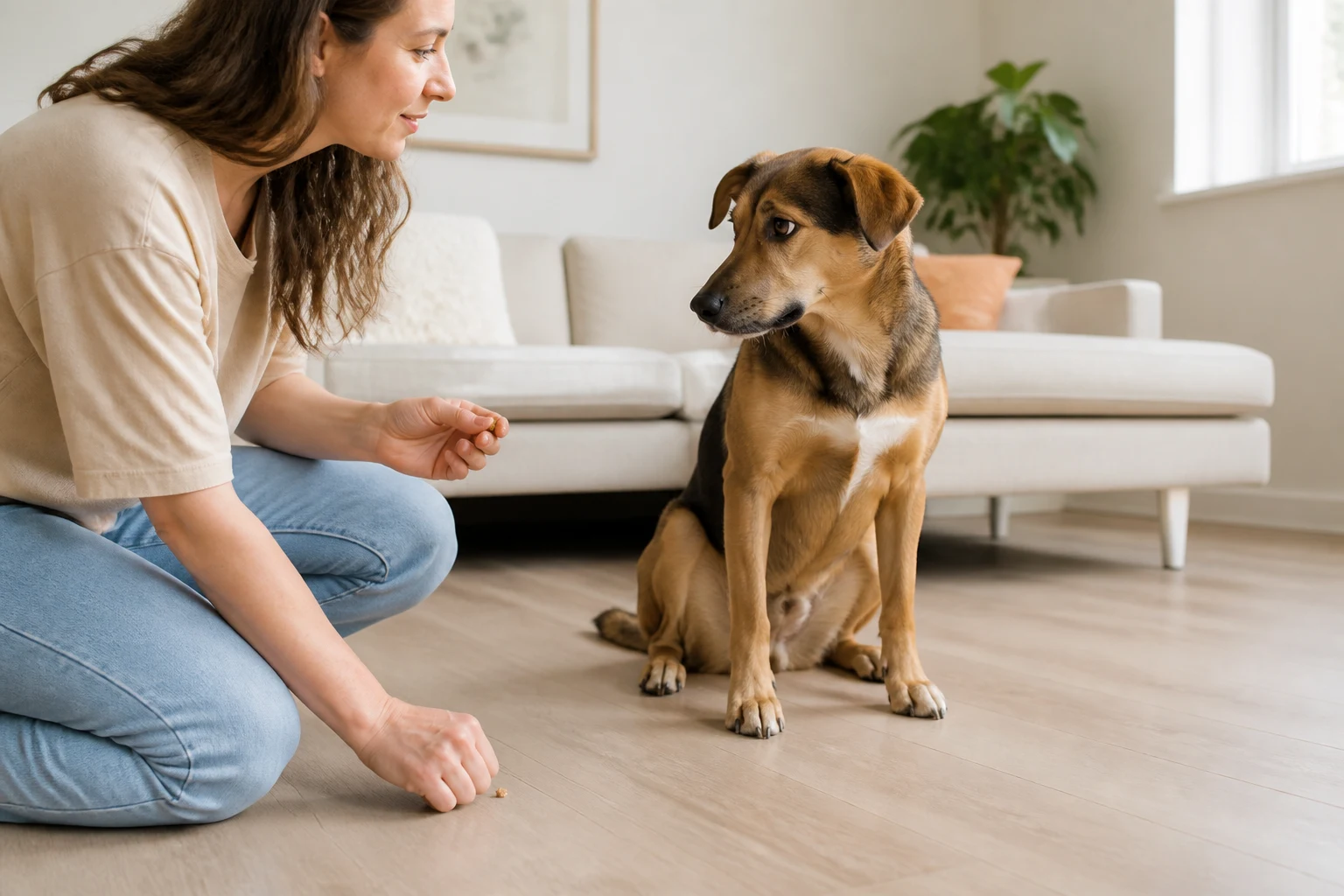
Leave it means disengage before taking something. That makes it different from drop it, which asks a dog to release an object already in the mouth. Keeping those jobs separate gives each cue a clear, useful meaning.
Start with a treat safely enclosed in your fist and reward the first moment your dog moves its nose away. There is no need to repeat the cue, push the dog back, or make access to forbidden food a test of willpower.
DogPath can turn the skill into short daily lessons, mark the exact disengagement with the built-in clicker, and track whether a closed fist, open hand, floor item, or real-world distraction is currently comfortable. Its AI coach can suggest an easier next step when your dog gets stuck. DogPath is available on iOS and Android; some features or usage levels may require an in-app purchase.
Separate leave it from drop it
Use leave it while the item is still out of reach. If your dog already has it, use a trained drop cue or make a calm trade instead of repeating leave it.
Management comes first around medication, toxic food, sharp objects, and traffic. Block access and move your dog away; a training cue is never an emergency barrier.
Begin with one treat inside a closed fist
Sit beside your dog and place a low-value treat in a firmly closed fist. Present it near the floor and stay still. Let your dog investigate without moving the fist toward or away from the nose.
The instant your dog pauses, turns the head, or shifts weight away, mark that choice and deliver a different treat from your other hand. The protected treat stays protected.
- Keep the fist closed and quiet
- Reward from the opposite hand
- Mark the first tiny movement away
- Stop after five successful repetitions
Wait for a clear turn before adding the cue
Across repetitions, wait for a slightly clearer head turn or eye contact before marking. If licking, pawing, or vocalising increases, the setup is too difficult or the session has gone on too long.
Add the words “leave it” only when the head turn happens predictably. Say the cue once just before presenting the closed fist, then mark and reward the familiar response.
The cue should predict an easy choice, not arrive as repeated background noise while the dog struggles.
Progress from an open palm to the floor
Open your palm only after the closed fist is easy. Be ready to close it if the dog moves in. Mark the turn away and reward from the other hand. Never let rushing make the displayed treat available.
For floor practice, cover the item with your hand or shoe. Begin far enough away for success, reward disengagement, and increase either visibility or closeness—not both at once.
Build a practical response for walks
Practise with safe, boring objects at home, then in the garden or a quiet pavement area. Reward the dog for turning toward you and moving away together. A short lead and planned distance prevent rehearsal without jerking the collar.
On real walks, scan ahead and create distance early. DogPath notes can show which item, distance, and environment worked, so the next lesson changes only one variable.
- Change one difficulty at a time
- Use a separate high-value reward
- Move away after the successful turn
- Keep dangerous items physically inaccessible
Know when training is not the immediate answer
Do not pry open the mouth, chase, punish, or deliberately plant dangerous food to test the cue. Those choices can increase swallowing, guarding, or avoidance.
If your dog guards found items, swallows objects, freezes, growls, or has eaten something harmful, use secure management and contact a qualified reward-based professional. Suspected poisoning or a swallowed object needs urgent veterinary advice.