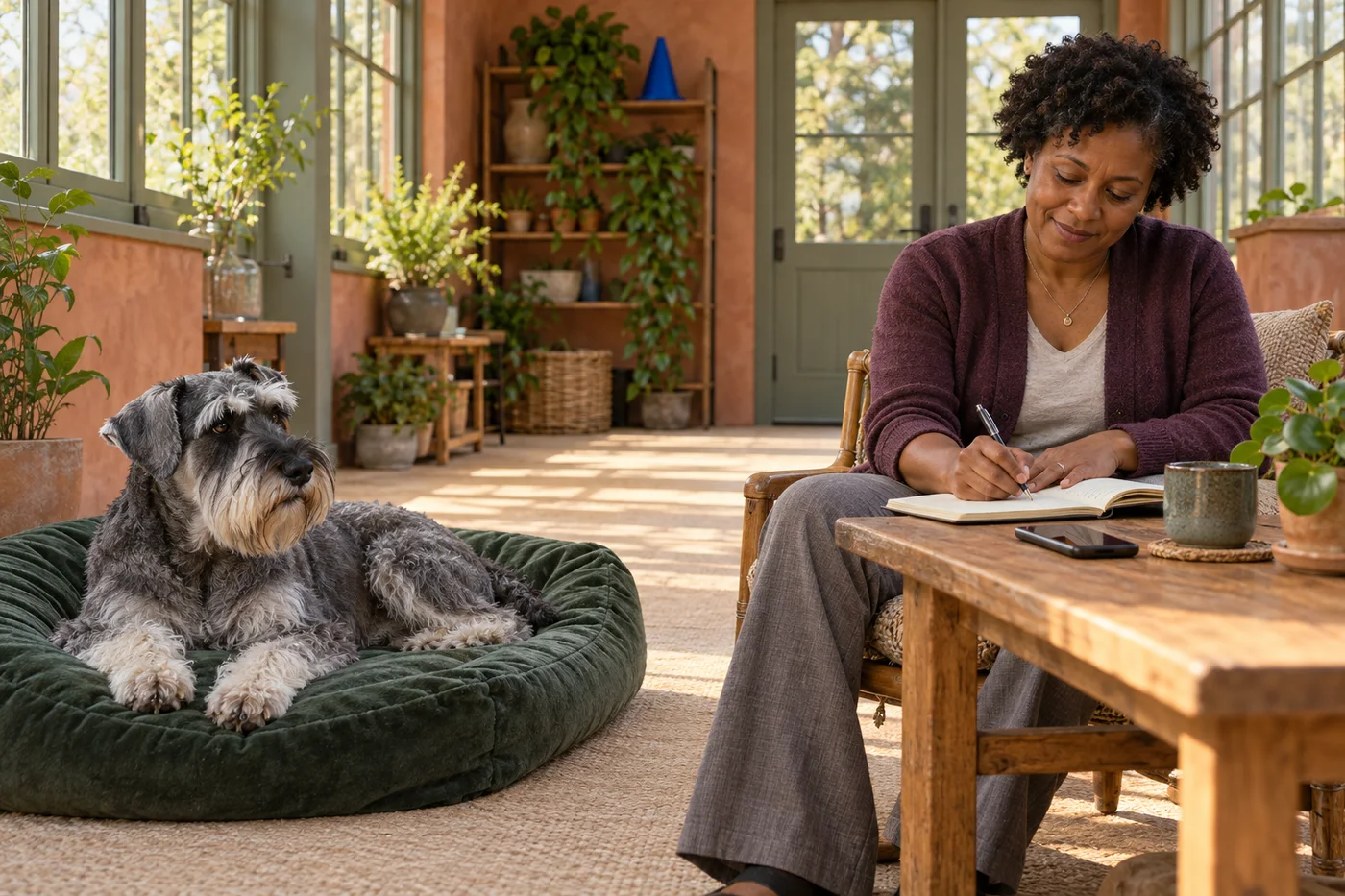
Object navigation and clear gestures
Go Around Training: Free Steps Around One Cone
Your dog cuts in front of the cone instead of walking behind it. Make the route clearer, reward a small part and keep the curve wide.
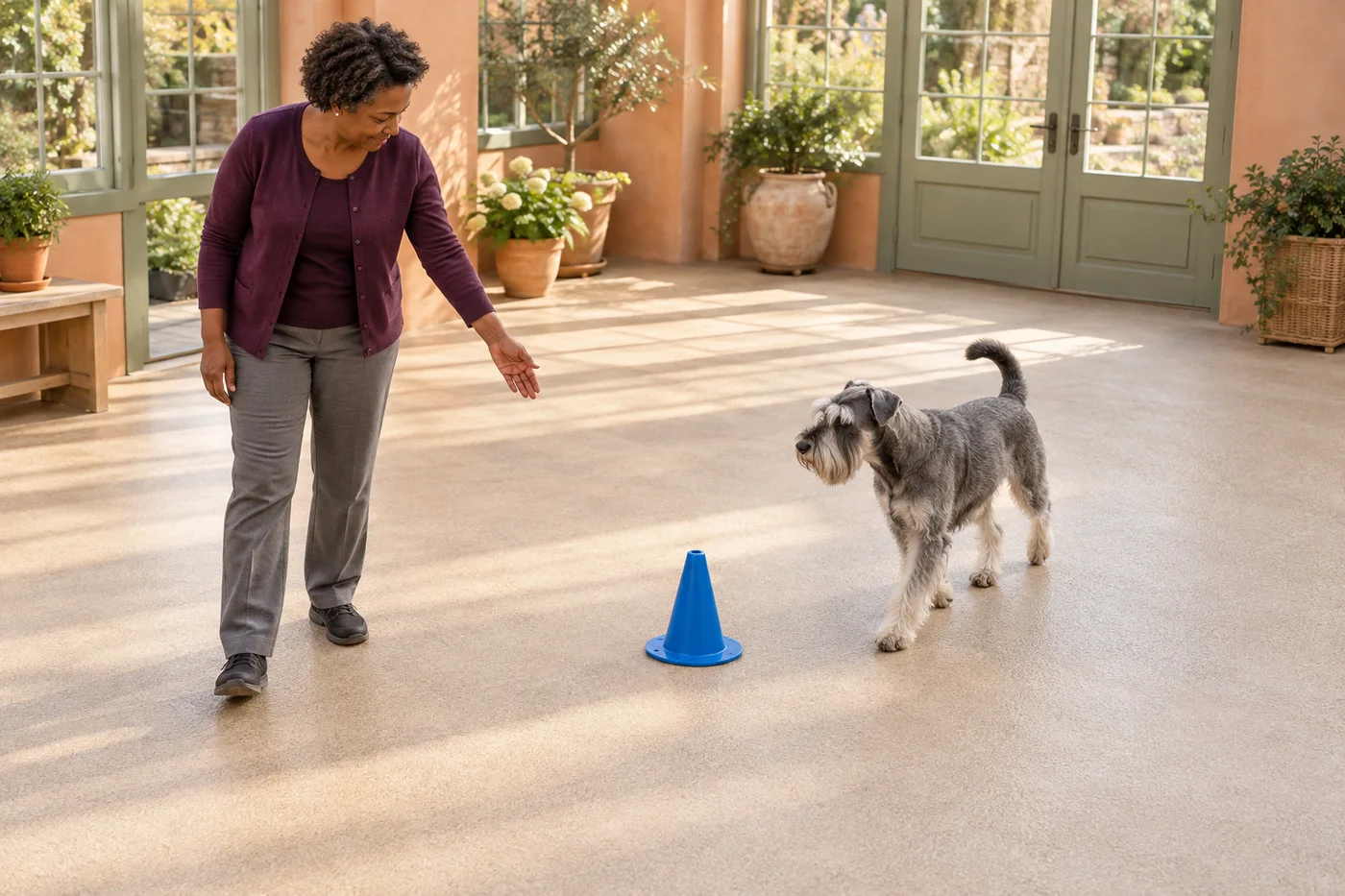
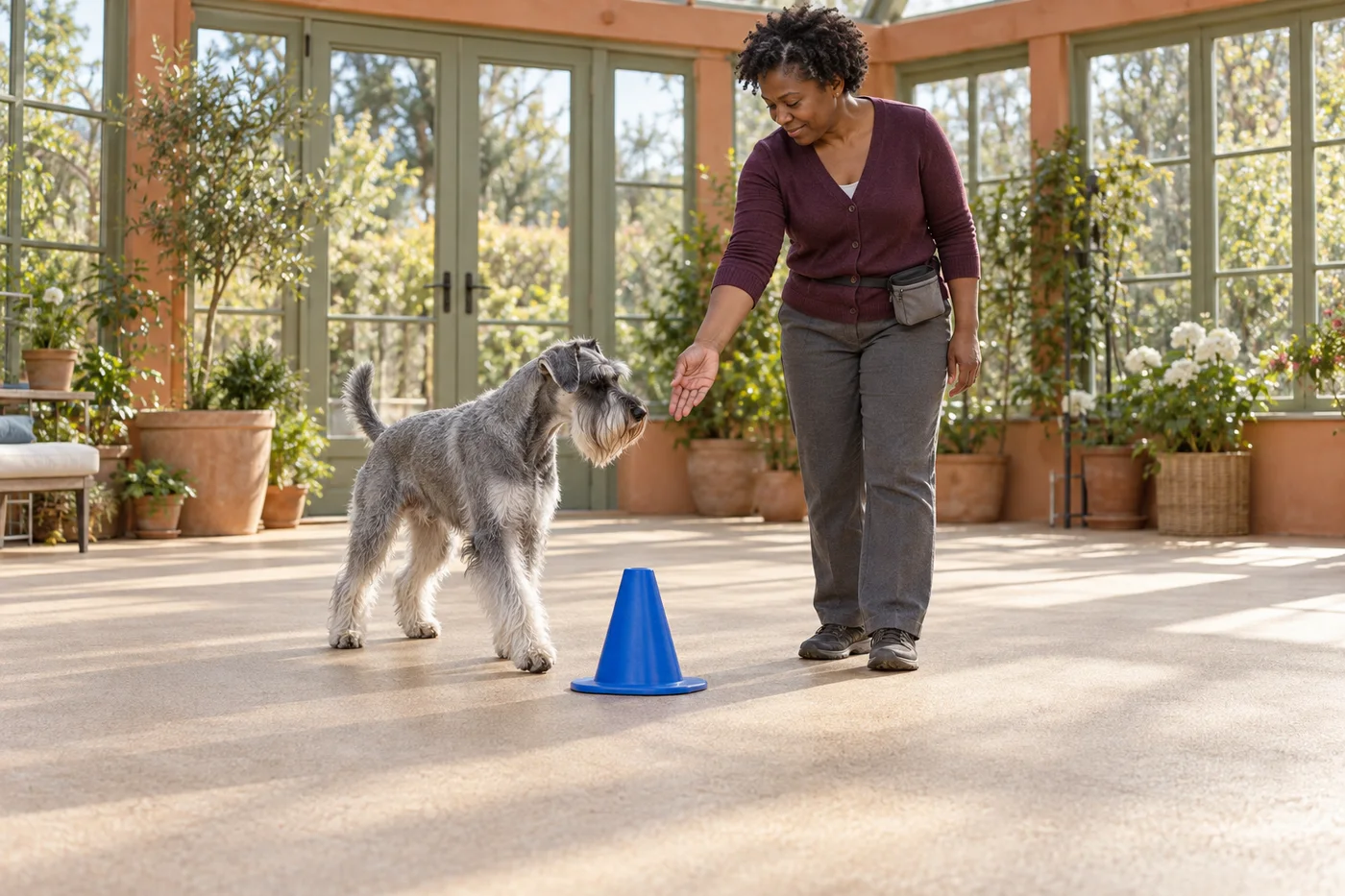
Go around training can look simple until your dog takes the shortcut between you and the cone. You point again, move your hand faster and end up walking in circles together. The problem may be the picture you have created, not a refusal to listen. A dog following food does not automatically understand that the object belongs inside the route. Start with a small piece of that route and an obvious place for the reward, rather than asking for a complete independent circuit immediately.
This free guide teaches one broad walking arc around a stable object in a quiet enclosed space. It is not the spin trick, an agility send, rehabilitation or a fitness prescription. DogPath is free to download or start, with in-app purchases for some features or use levels. Use it to organise a visible goal and record what happened; no dedicated cone course or automatic movement assessment is implied. Pain, sudden behaviour change, panic, aggression, bite risk or welfare concerns require appropriate in-person help. Skip this optional exercise if ordinary turning is uncomfortable or its suitability is uncertain.
Give go around training a route you can actually see
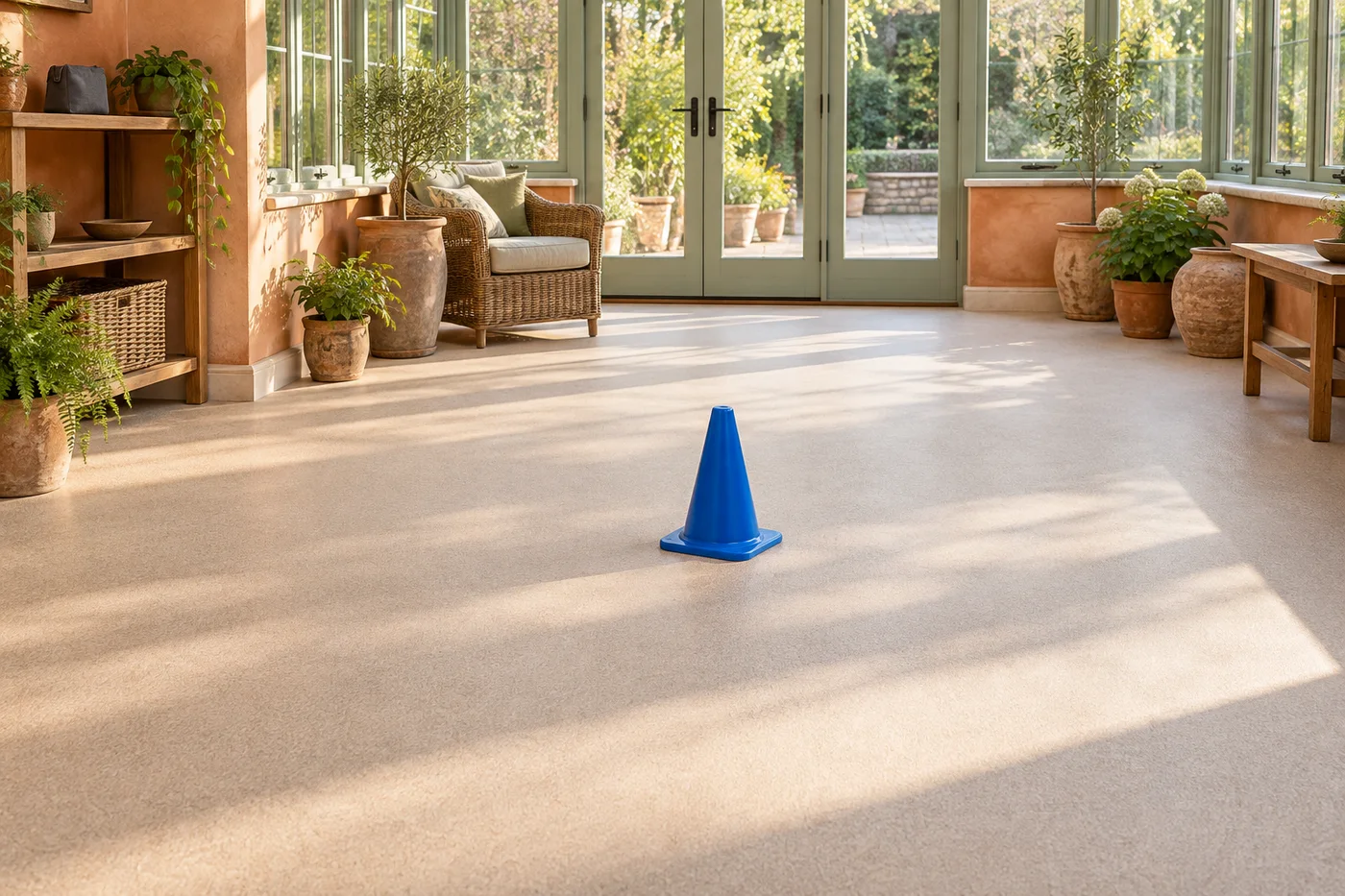
Choose one plain, stable cone with a broad base and no sharp edges, loose pieces or openings that could catch a paw. Place it on level, reliable footing, well away from walls and furniture. There must be room for the whole dog to walk a wide curve without brushing the object or your legs. Close access to stairs and outside doors. Keep other animals and children out of the practice area. This is a supervised activity, not an object left out for chewing. If the cone slides when lightly checked, change the setup before inviting the dog.
Look from the dog's starting position. Can they see an open way past one side and back towards you? You should not need to squeeze them through a gap to obtain the movement. Rehearse your own hand path without the dog, keeping it at a comfortable nose height. Remove loose rugs and trailing leads that could tangle around the base. Work indoors or in a genuinely secure enclosure; an untrained go-around cue is not permission for off-lead practice beside traffic or strangers. When secure free movement is unavailable, choose another activity rather than improvising a tether around the cone.
Pick a small visible goal before opening the rewards
Today's goal might be walking past the near side of the cone, not completing a whole circle. State it in observable terms: the dog's shoulders pass the side while their feet continue walking. Choose a starting side and keep that picture consistent for this short session. There is no need for a sit, a formal heel position or a long wait first. Have small suitable rewards ready before inviting participation. Include them in the dog's normal food allowance as appropriate, and follow any individual dietary advice. Do not delay meals to make an optional trick more compelling.
If using DogPath, select a relevant familiar foundation and write the actual goal in your practice note. For example, record near side, handler beside cone, walking pace. The lesson explanation helps separate setup from the behaviour you want to observe. Then put the phone aside. Watching a screen while moving a hand around the dog's head makes timing harder. A paper note is equally workable. The point is to remember which small part you taught, not to earn a completion label that suggests the entire route is already understood.
Reward part of the arc instead of dragging through a circle
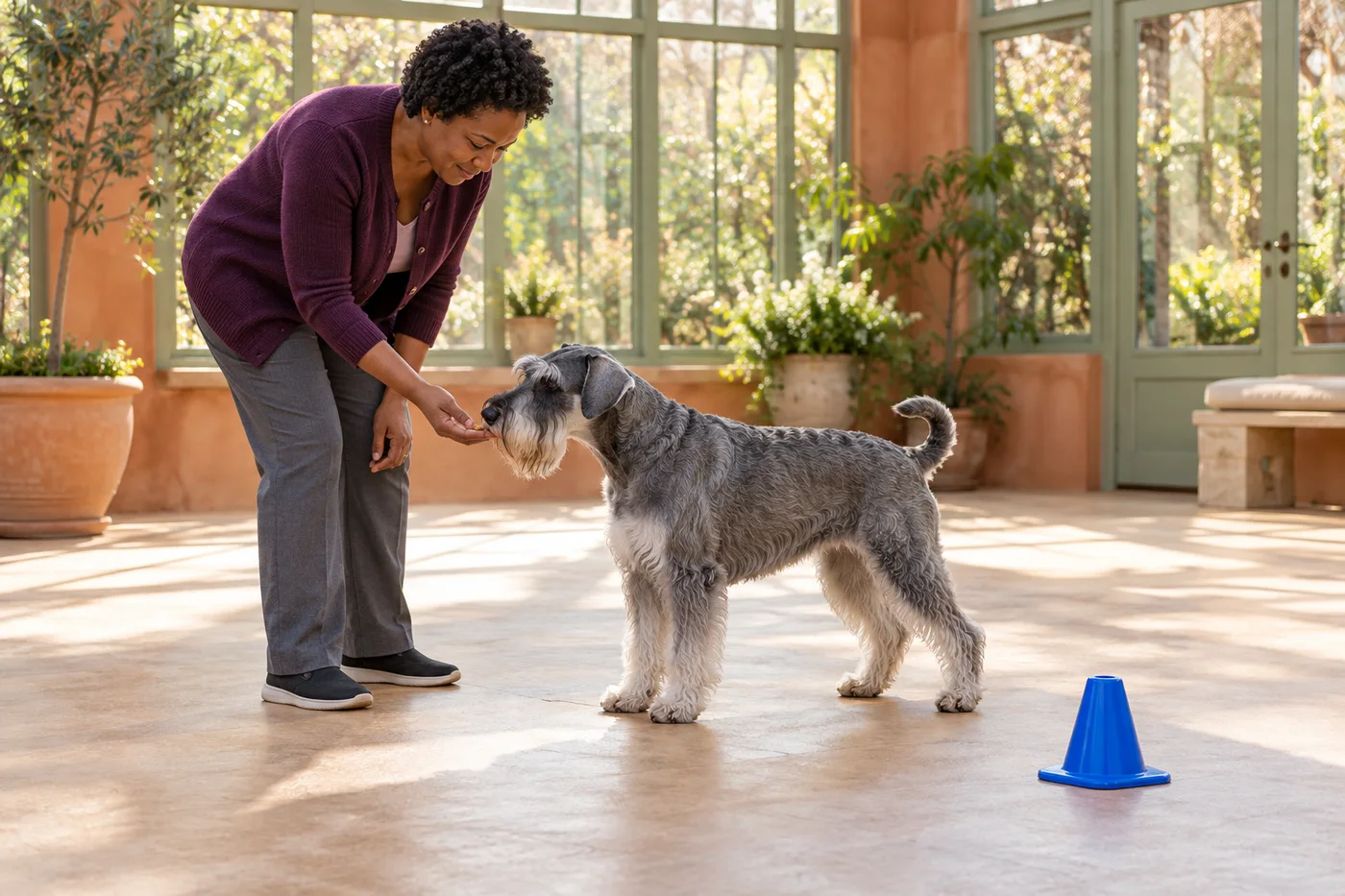
Invite the dog to follow a low, slow hand for a short step along the open side. A small food lure can help initially, but keep it comfortably in reach without pulling the nose against the cone. Reward the first useful movement, even if that is only one step beyond the starting line. Deliver where the dog has arrived rather than whisking the food back across the front. Stop the hand and let them eat. Reset in open space after each attempt; do not immediately wind into another lap while the dog is still chewing.
As that portion becomes easy, reward a slightly longer arc towards the far side. The cone-wrap article by trainer Jasey Day on AKC Pet Insurance describes building the route in pieces and considering where the reward arrives. Here the aim remains a broad ordinary walk, not that article's fitness applications. Do not adopt a tight turn, racing reset or prescribed exercise quota. Your own movement can remain small and unhurried. If the dog needs you to walk a little alongside at first, that is a starting support to reduce later, not an error to correct physically.
Make the hand empty without making the reward disappear
When the short route is familiar, try the same slow hand movement without food in that hand. Keep rewards accessible elsewhere and give one promptly after the movement. You are removing the visible lure, not asking the dog to work without reinforcement. If the empty hand means nothing, return to an easier partial route and make the change smaller. Do not wave repeatedly, speed up or rub food over your fingers to create a hidden lure. An empty gesture should gradually become understandable on its own.
Introduce a short word only when the route is reasonably predictable. Say it once just before your familiar gesture, then reward the completed portion. Avoid borrowing the spin cue: moving around an outside object and turning on the spot are different pictures. Agree on the word with other people before they practise. Our shared-cue guide explains why changing everyone's wording and gestures at once makes a record difficult to interpret. One person should teach this early version while others watch from outside the dog's route, without adding competing instructions.
Change distance, duration and distraction separately
Distance means your position relative to the object, not suddenly sending the dog across the room. After an easy full route, you might stand a small step farther away while keeping the same cone, starting side and gesture. If a shortcut returns, move closer and simplify. Do not block the shortcut with your leg or furniture. A broad route is preferable to a tight wrap even when a sports demonstration shows otherwise. The opposite direction is a separate new picture; return to an early partial arc rather than expecting an immediate mirrored performance.
This is a moving behaviour, so duration does not mean holding a bend or walking repeated laps. Keep active practice brief and stop before movement becomes rushed or tired. Do not extend the session while also moving farther away. Distraction can remain absent; there is no obligation to add one. If later trying another quiet enclosed room, reduce distance and return to a helpful gesture. Changing room, cone, handler and distance together makes it impossible to know what became difficult. More complexity is not automatically more useful for an optional household game.
Use the shortcut, chewing or hesitation as information
A shortcut usually calls for a clearer smaller task. Check whether your reward hand is drawing the dog across the front, whether you are standing too far away or whether the cone is hard to distinguish from the floor. Reward the first useful side step again. Sniffing or touching the cone is not defiance, but it is not today's route criterion either. Calmly reset without scolding. If the dog repeatedly mouths or paws the object, put it away while the dog is elsewhere and choose a different suitable activity. Do not wrestle a guarded object from their mouth.
Hesitation, slipping, unusual gait, repeated tight bending, frantic food pursuit or attempts to leave mean stop and reassess. Do not use more exciting food to override a movement concern. AVSAB recommends reward-based methods and rejects aversive corrections; that supports simplifying or ending the exercise rather than pulling the dog through it. Obtain veterinary advice for pain or a new movement change, and individual professional support for panic, guarding or aggression. A successful note may say no practice today. An optional trick never takes priority over comfort or safe handling.
Write down what changed after putting the cone away
Finish with room to leave, put the cone out of reach and allow ordinary rest. Record the starting side, part of the route reached, your position and the help you used. A useful DogPath note could say: left start, half arc, empty gesture, reward by far side; next time keep the same setup. Another might say: shortcut after handler stepped back; return closer. These descriptions are more useful than stubborn or perfect. They let the next session begin from a known picture rather than from an impression of overall progress.
Compare like with like. A partial route with a different handler is not proof that yesterday's full circuit has disappeared. Keep the earlier version available and choose one modest next change only when it remains comfortable. You need not train daily, reach a set distance or turn this into a sequence of obstacles. If you want a formal sport skill, seek instruction suited to that activity and your dog. For this household version, one clearly understood route and an unhurried finish are enough; there is no reason to keep circling for a better-looking record.