
Training technique
Teach a dog to back up: a free practice guide
One voluntary step can create useful space. Build it with clear rewards while giving your dog room to move away.
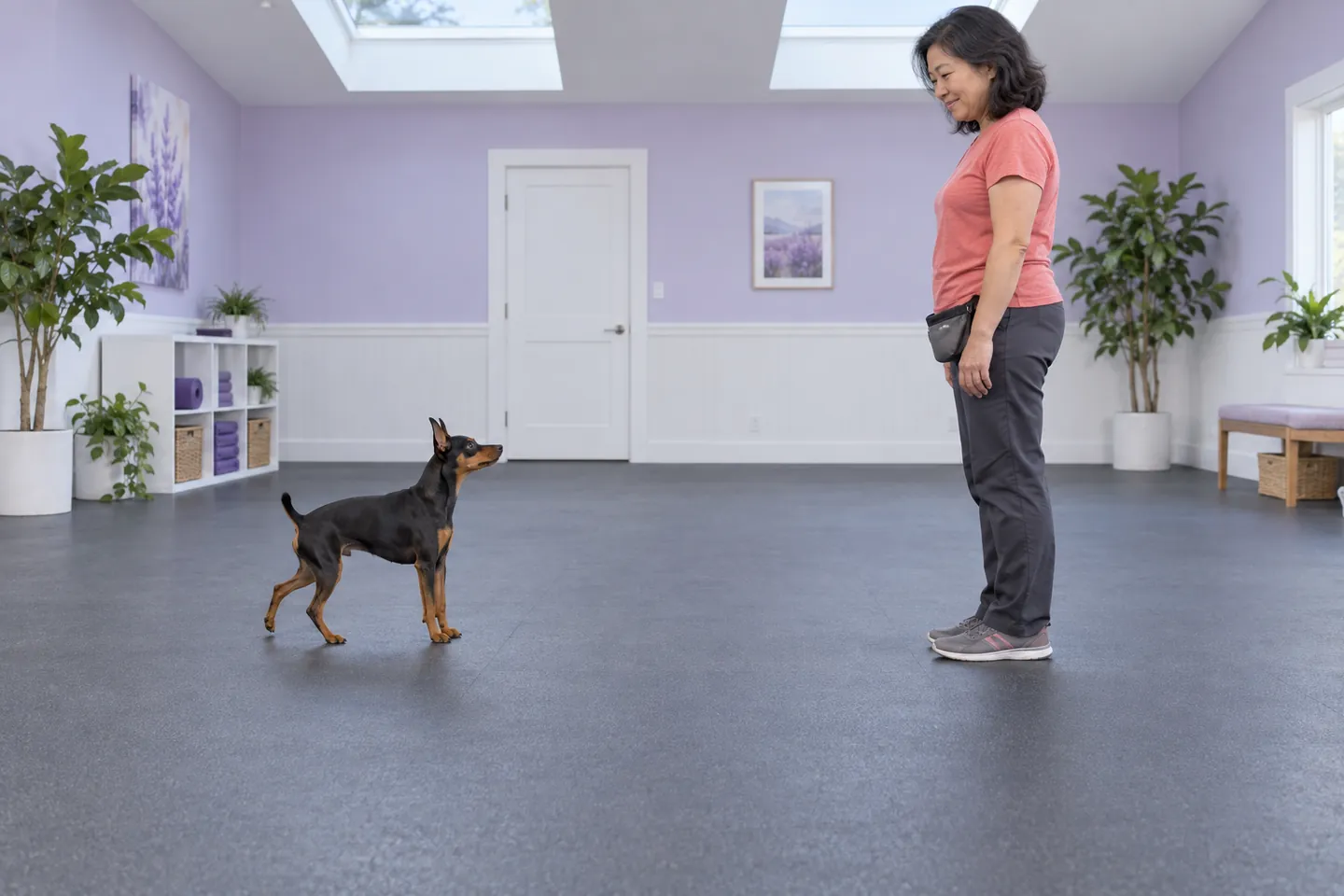
You want to open a cupboard, but your dog is standing in front of it. A small step backward would help. Instead of nudging with your knee or walking into their space, you can teach a dog to back up as a voluntary movement worth offering. Start without expecting several feet of travel, a straight sports exercise or a dog who automatically yields to every person. One comfortable step on a clear floor is a sufficiently specific goal.
This plan separates the first movement, reward delivery, later cue and change of setting. DogPath can support relevant reward-based foundations, short practice and progress notes. Choose a visible goal, prepare rewards and change one condition at a time. The app is free to download or start; some features or usage levels may require in-app purchases. No dedicated backing-up program or automatic movement assessment is assumed. Keep the task small enough to observe rather than relying on a general impression of success.
Teach a dog to back up without crowding them
The movement you want begins with the dog. Stay in place and reward a small backward step. If you walk toward them instead, they may simply move away from your body. The result can look similar without demonstrating that a new cue has been understood. Stand far enough away for a relaxed posture and leave a side exit available. Avoid leaning over the dog while waiting for the movement.
Decide what counts today, such as one paw moving behind its previous position. A weight shift can be an early approximation, but it is not yet a complete step. Do not require perfect straightness or a particular head position. Watch the actual movement and whether it looks comfortable. An optional practical skill does not need to become the most impressive trick in the room.
The veterinary behavior organization AVSAB recommends reward-based training and advises against aversive methods. Here that means no leash pulling, pushing the chest or hindquarters, crowding or holding the dog in a narrow passage. They may stop. Turning away or leaving is a reason to pause, rather than close the gap behind them. The ability to opt out remains part of the setup after the first successful step.
Prepare flooring, space and rewards together
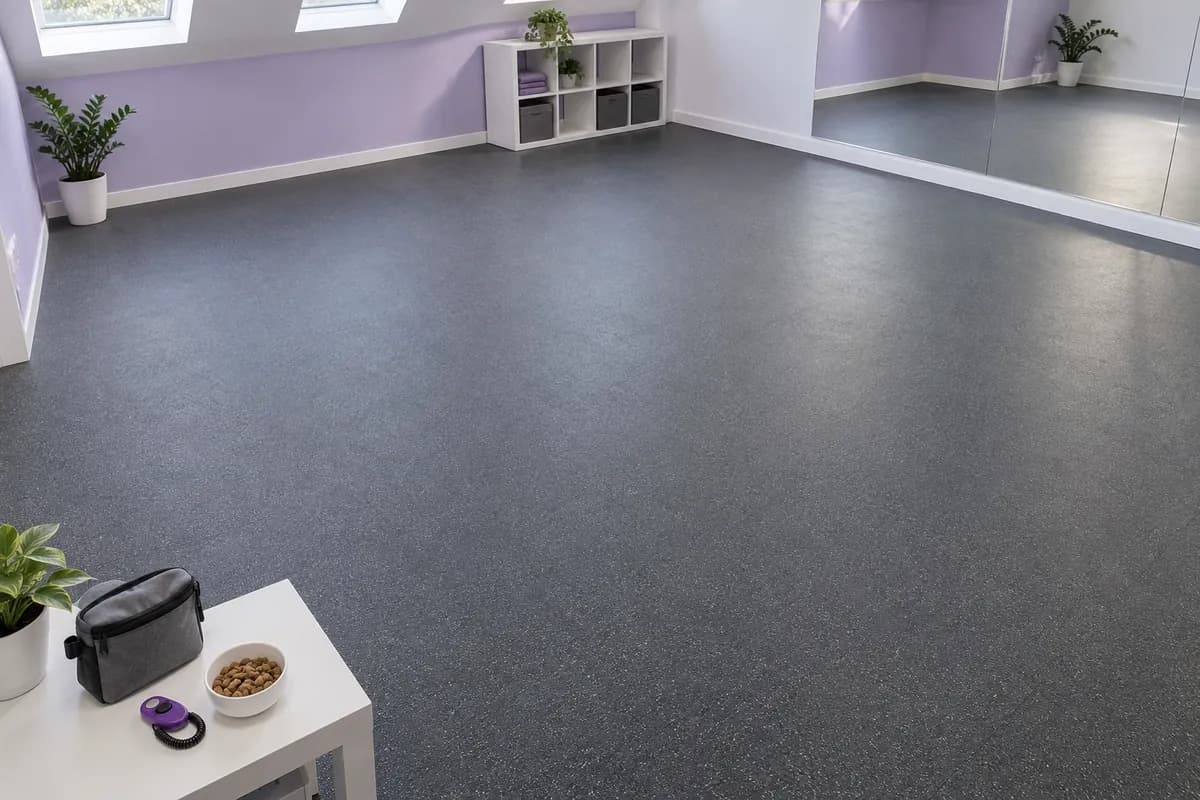
Choose a quiet indoor area with flat, grippy flooring. A rug should lie flat and stay in place. Even the first few inches behind the dog need to be clear, with no stairs, open doors, sharp furniture edges or other animals in the path. Remove loose objects. A narrow corridor does not replace clear teaching; confinement prevents another way of moving away and changes the meaning of the exercise.
Prepare small rewards your dog can comfortably eat and enjoys in this setting. Account for them within the day's food allowance. A familiar friendly marker word is enough. A clicker can also work if its sound already predicts a reward pleasantly. Rehearse your delivery without the dog first, so you can respond to the step without searching in a bag. The reward should be ready before the observation begins.
Stand slightly to the side rather than bending over your dog. Keep your hands calm and treats accessible instead of continually pressed near the nose. Let them find an ordinary standing position. If they are tired, have just played intensely or are unsettled in the room, choose another time. An optional skill does not have to fit between urgent household tasks.
Capture a small movement the dog offers
Observe whether your dog offers a small backward step while normally repositioning in this easy setting. Stay still with relaxed hands. When a paw clearly moves backward, mark that moment and deliver a reward. You do not need to wait for several paws to follow. At this stage, discovering the direction matters more than distance. Keep the criterion consistent within the short session so the reward identifies something observable.
Reset calmly after the reward. You can change your own position sideways while the dog freely reorients; do not walk into them to produce the next backward step. If every repetition depends on driving them away, change the setup. Avoid waiting indefinitely for a lucky movement. A few quiet observation opportunities can end without a step, and that does not make the session a failure requiring more pressure.
Some dogs rarely offer backward movement in this arrangement. Personal guidance from a qualified reward-based trainer is more useful than tighter barriers or stronger food pressure. The trainer can help identify an appropriate small starting point. DogPath's existing marker foundations can support timing, but they do not promise that every dog will offer the same movement immediately. Our marker guide provides a separate foundation when that part is unfamiliar.
Deliver the reward without immediately undoing the step
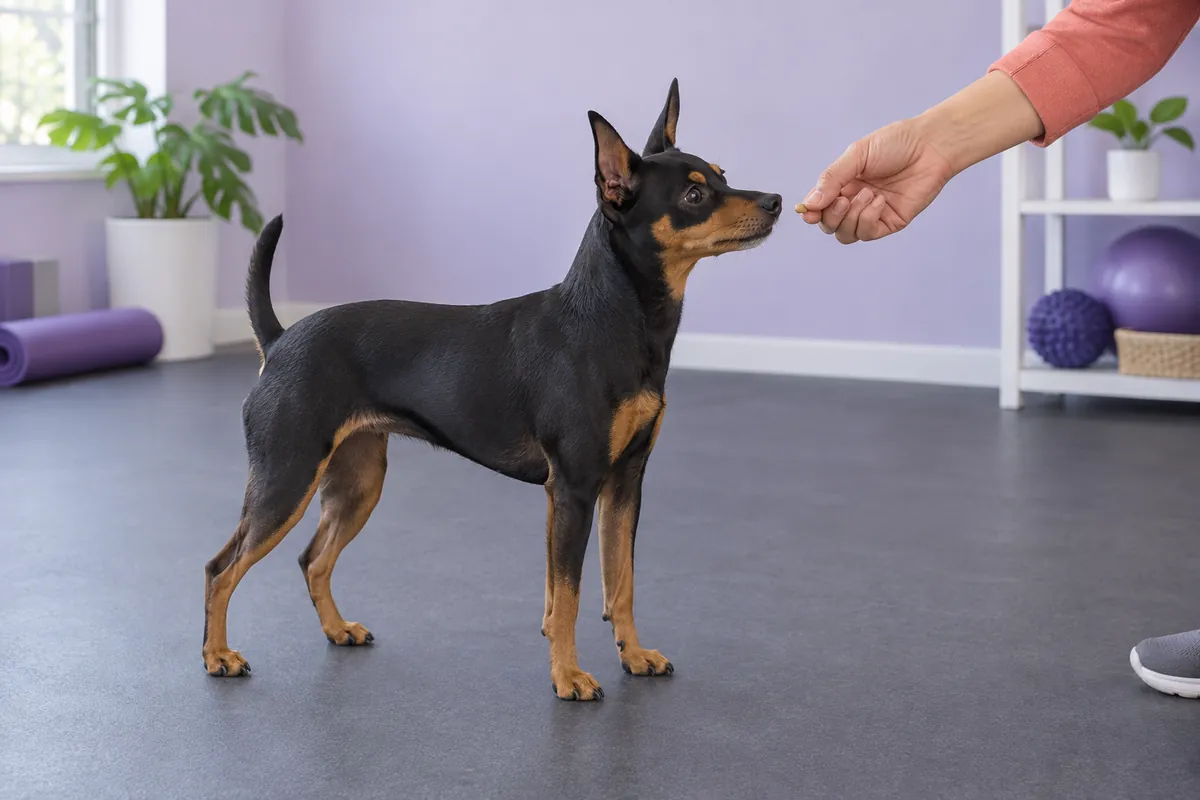
After marking, bring the reward to the dog rather than drawing them forward toward you. Deliver near a comfortable muzzle height at the new position. Do not push the hand into their face or hold food high enough to encourage a sit or an exaggerated head lift. Withdraw calmly after they eat. A relaxed pause separates attempts and gives you time to assess the next setup.
The marker and food delivery do different jobs: the marker identifies the movement, while the reward keeps the experience pleasant. If the dog repeatedly moves forward during delivery, your hand may be too far away. Adjust the hand rather than correcting their feet. If they grab at the hand urgently, pause and simplify rather than rushing. You can practice a quieter delivery before returning to the backward movement.
Add the cue after the movement becomes familiar
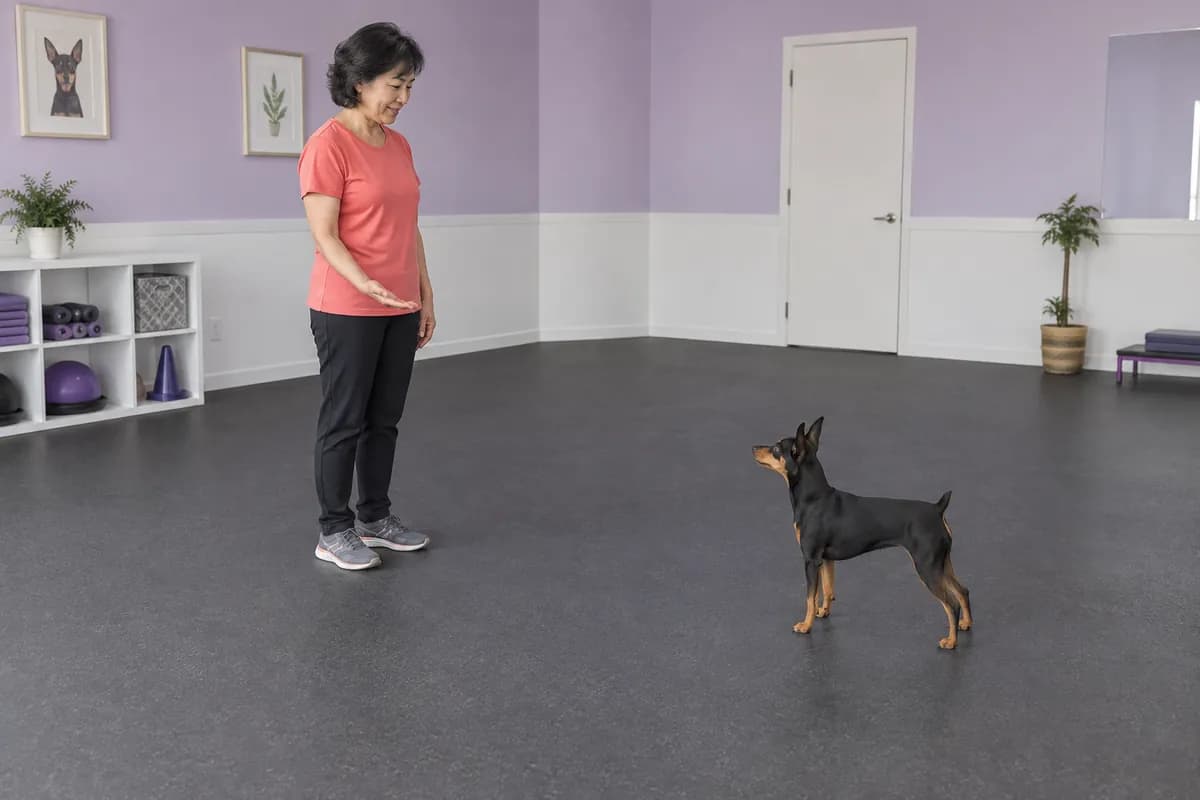
When the small step recurs in several easy repetitions, choose a brief word such as back. Say it once immediately before the movement you can already anticipate, then mark and reward. A new word does not create an unfamiliar action by itself. Repeating it while the dog waits uncertainly can make the association less clear. Begin in the same calm arrangement where you have observed the movement.
The American Kennel Club's backing-up article builds small movements before adding a verbal cue. This plan takes that sequence, rather than its suggestions to walk toward the dog or use narrow boundaries. Stay calm and preserve voluntary movement. If you add a hand signal, keep it small and distinguishable without moving threateningly toward the face. A clear signal is useful information, rather than a demand to yield to your body.
Check what your dog actually uses in an easy repetition. Can you say the word while remaining still? If no step follows, do not repeat louder. Return to an easier previous stage. A chance step after many repetitions does not demonstrate a stable cue association. The goal remains a calm, understandable invitation. Record uncertainty plainly so the next session addresses it instead of assuming the cue has been learned.
Change one condition and keep the session brief
One step may already be enough for everyday space. More distance is not necessary because it looks impressive. If another step would be useful, continue rewarding the familiar easy movement first. In a suitable repetition, observe briefly whether a second small step follows. If it does not, simplify the next attempt rather than withholding food for a long time. Increase expectations only while the sequence remains clear and comfortable.
Distance here means the gap between you and your dog, separately from the backward travel. Do not change that gap at the same time as the step count. Duration initially concerns session length; avoid extending it while also changing the room. Distraction might later be a small movement by a familiar person. Keep practice separate from real doorway openings and busy household traffic so those conditions do not arrive together.
Use a few repetitions you can observe carefully and stop earlier if unsettled behavior appears. In DogPath, choose the visible goal, prepare rewards, practice briefly and record the outcome. Note the single condition changed. A new room therefore begins with one step again. Our short-session guide can help plan the practice; your dog's response matters more than maintaining a streak or reaching a calendar target.
Practice near the everyday situation before using it there
For a hallway cupboard, start near its closed door without retrieving anything. Recheck the floor and space behind your dog. Use a familiar cue in an easy moment, reward the small step and end the attempt. Opening the cupboard later becomes a separate small change once practice is understood there. The door should never become the object that pressures the dog to move away.
If the skill is not ready during an ordinary household moment, arrange that moment differently: wait, take another route or invite the dog to a clear place. Do not swing a door toward them or pull them backward. A backing cue does not replace management near roads, open exterior doors or stairs. Those are unsuitable places to test this optional trick. Keep the practical use as modest as the training goal.
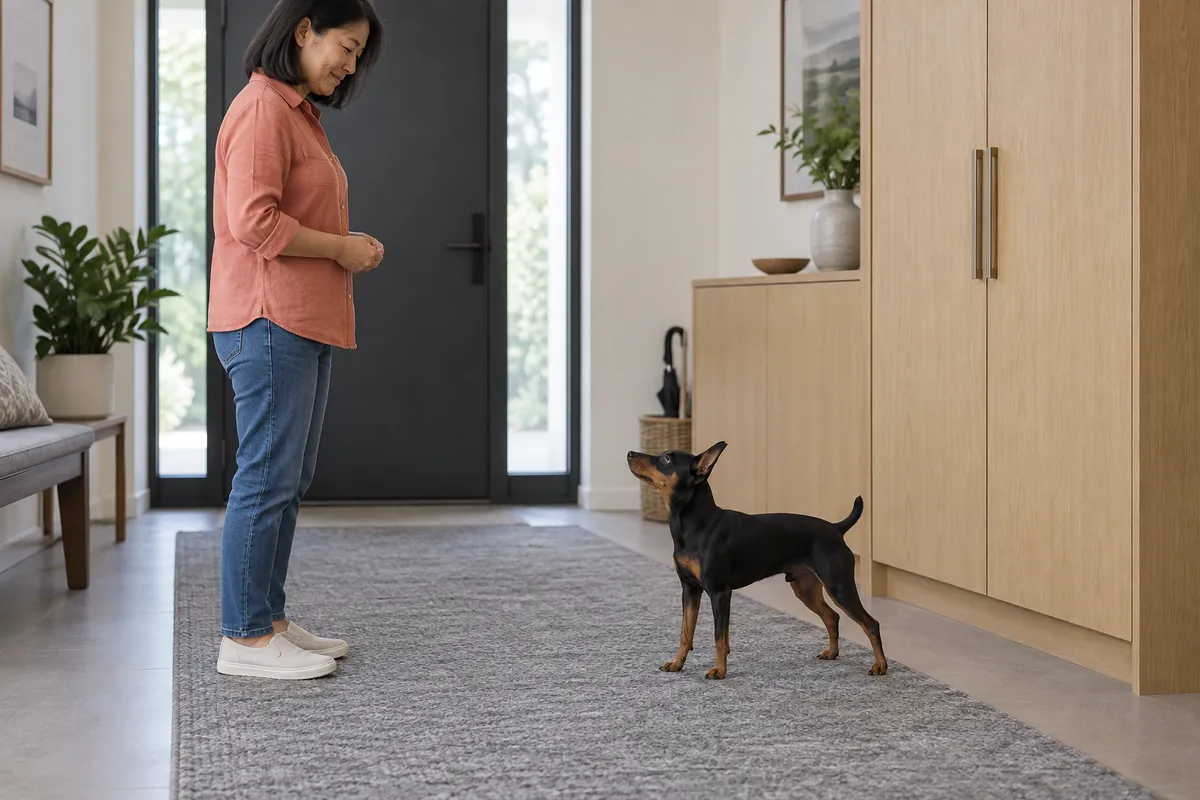
Sitting, turning and discomfort call for different responses
If your dog sits, check whether your food hand rises or your posture resembles a familiar sit signal. Shorten practice and look for an ordinary standing start without pulling them upright. If they turn aside, allow the option. An angled step is not a reason to trap them between furniture. Straightness can be considered later; it is not a condition for the first comfortable movement.
If they remain still, the goal may be unclear or no suitable movement may arise. More pressure is not the answer. Pause, simplify or seek individual instruction. Avoid regularly rewarding several unrelated actions and then expecting the dog to identify the single backward step. A small consistent criterion makes the session more understandable and lets you describe the difficulty accurately to a trainer.
Stop trick practice for limping, signs of pain, unusual stiffness or a sudden movement change, and seek veterinary advice. Panic, aggression, bite risk or other welfare and safety concerns need appropriate personal help. DogPath cannot diagnose the cause, assess movement medically or guarantee safety. One optional step remains optional. Comfort takes priority over completing a training target, regardless of what happened in yesterday's session.