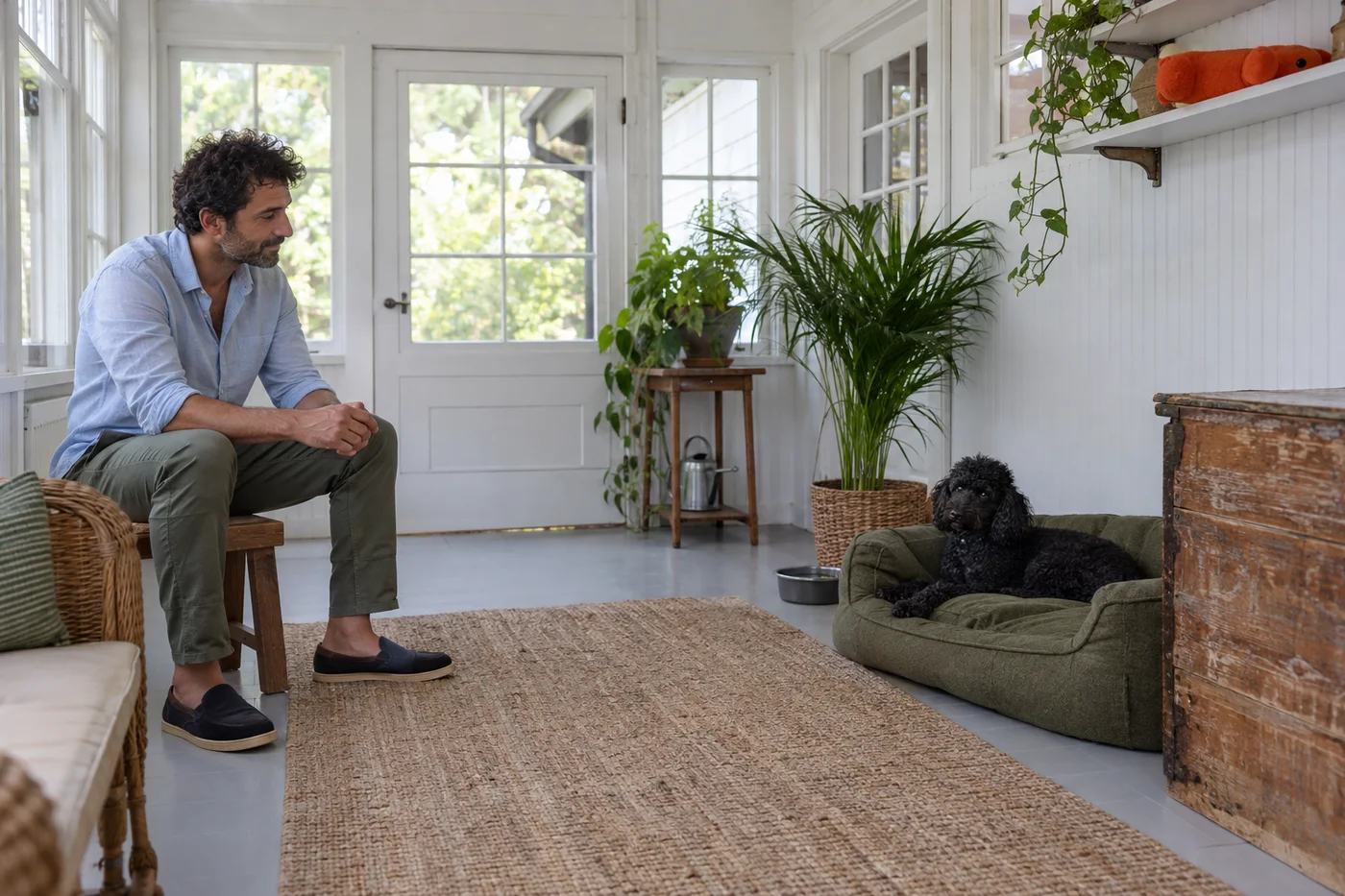
Play and training technique
Teach a Dog to Fetch: A Free, Gentle Guide
Start with a toy beside your feet, a voluntary pickup and a comfortable return. A long throw is not the first lesson.
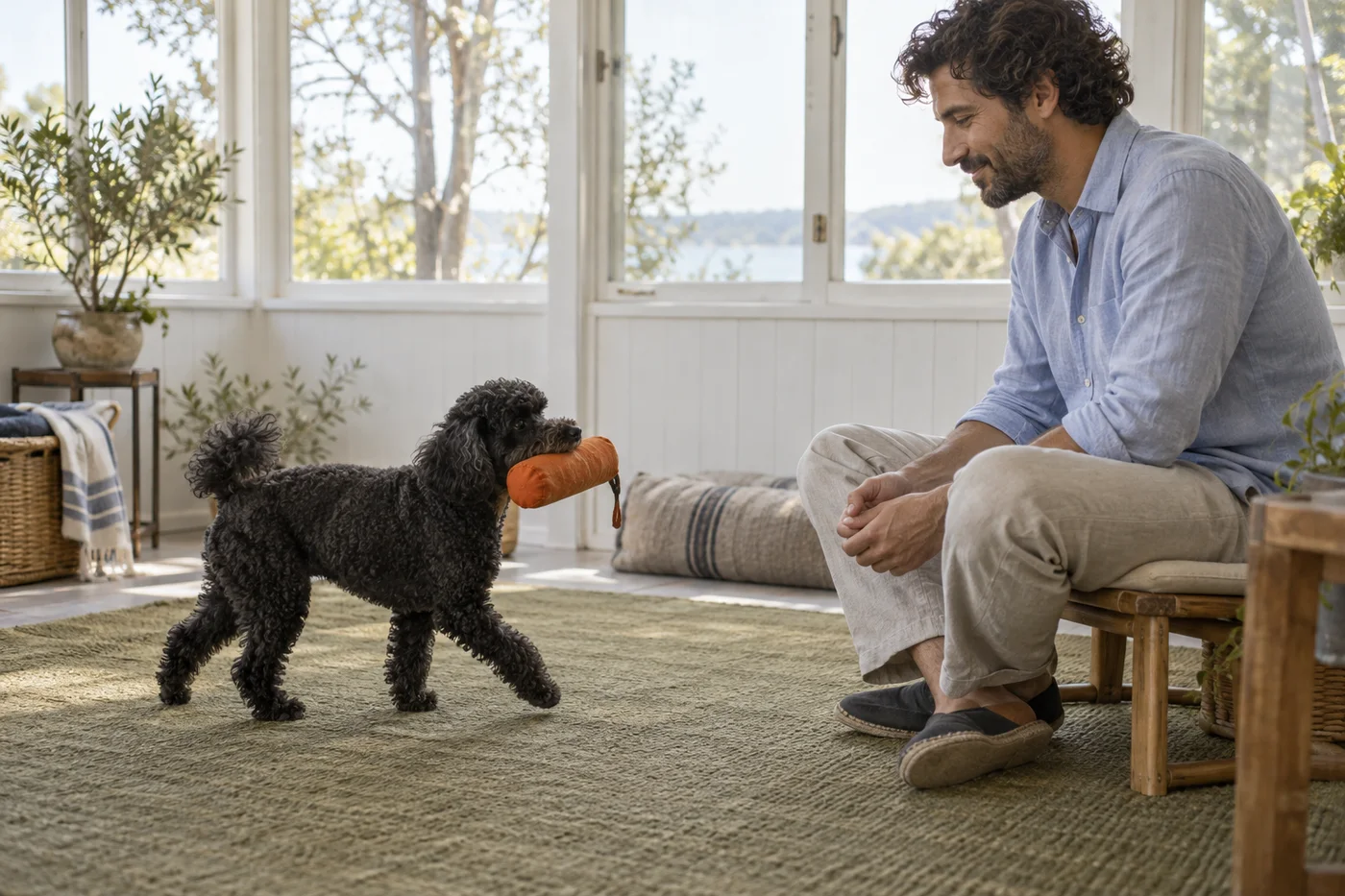
To teach a dog to fetch, separate the game into parts before throwing anything across the room. Looking at a toy, taking it into the mouth, carrying it toward you and letting it go are different actions. A dog can enjoy chasing yet have no reason to return, or bring the toy close while finding an approaching hand uncomfortable. Neither pattern tells you that the dog is stubborn. It tells you which part needs a clearer, easier invitation.
This free guide builds a modest household game, not a sport retrieve, a fitness programme or a promise that every dog will enjoy fetch. You need a suitable toy, rewards the dog values and a quiet place with reliable footing. No app is required. Start with the dog already comfortable around you and the object. Where pain, guarding, panic or biting is a concern, obtain appropriate individual help rather than turning possession into a contest.
Teach a dog to fetch one small result first
Decide what a useful first success would look like. For a dog that already carries toys, it might be one step toward you followed by a relaxed release near your shoes. For a dog that never picks anything up, it might be investigating the toy without backing away. Do not ask for a distant chase, precise hand delivery and a long wait together. Those are separate criteria. Choose one adult handler and one clear practice area so another person does not accidentally start a competing game behind you.
Watch an ordinary play moment before arranging a lesson. Does the dog select a fabric toy, chew it in place, carry it elsewhere or offer it to someone? Notice without testing by reaching into their mouth. An object they value for chewing may not be suitable for shared play. A dog that prefers sniffing can have a rewarding activity without retrieving at all. Treat the first goal as an invitation you can revise. If the dog leaves, end the attempt without following them around the room with the toy.
Prepare the object, floor and reward position
Choose an intact dog toy appropriate to the individual's size and play style. It must be easy to pick up and too large to be swallowed. Avoid sticks, damaged items, loose stuffing and objects that break into pieces. Supervise throughout; an image or product label cannot certify suitability for your dog. Remove other toys from the immediate practice area so choosing an object does not become another task. Put water within ordinary reach and arrange a comfortable place where the dog can rest when play finishes.
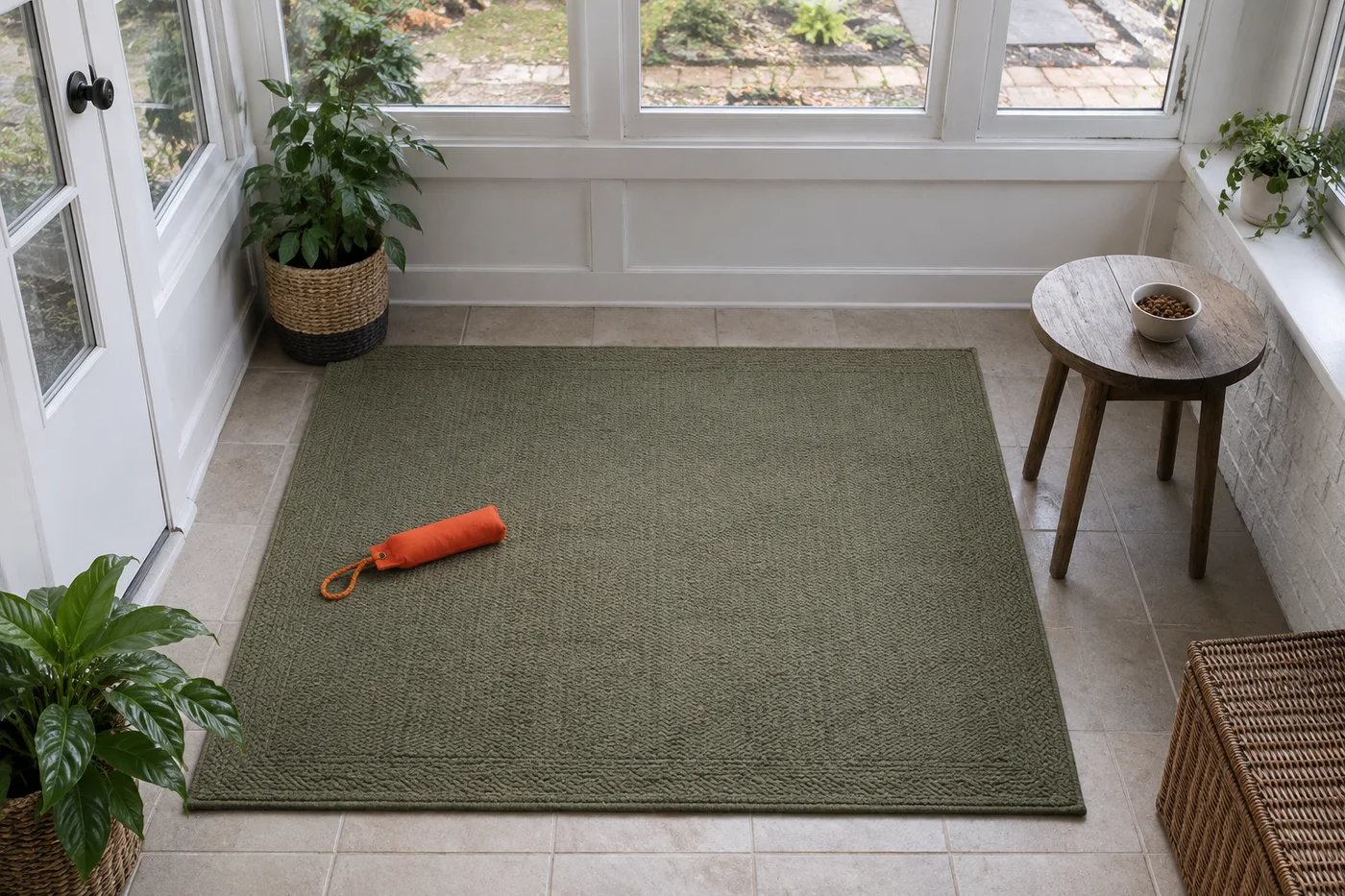
Use a flat nonslip surface with space for an unhurried turn. A clear indoor room is a useful starting point; stairs, busy entrances and furniture corners are not. Have small suitable food rewards available before presenting the toy, rather than searching a pocket while the dog is carrying it. Position yourself sideways at a comfortable height. Keep rewards separate from the toy: do not stuff food into an object the dog might tear apart. Work alone with the dog, away from children and other animals that could compete for the object or food.
Reward interest without putting the toy in the mouth
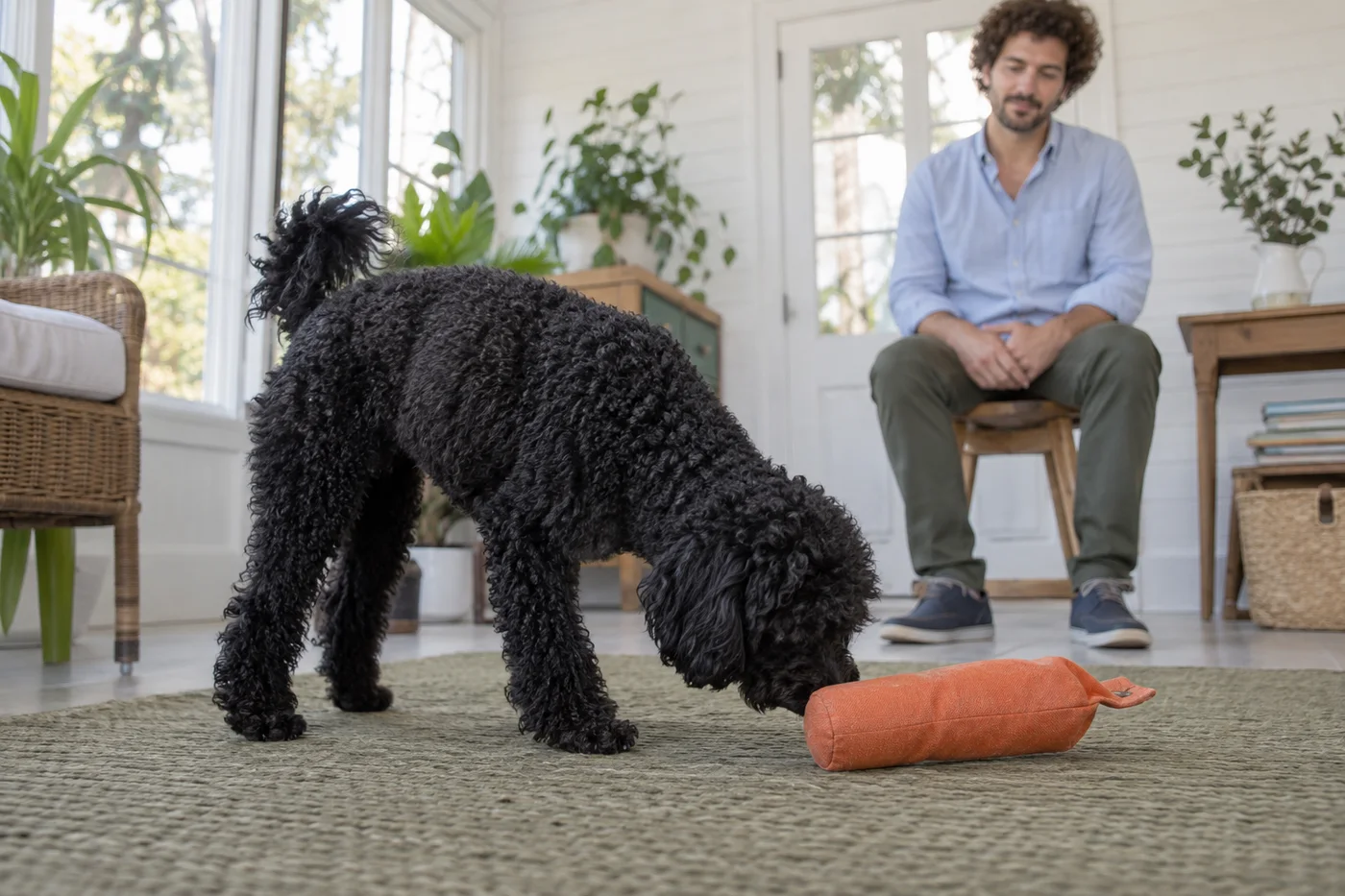
Place the toy close enough to investigate without leaning into the dog. Begin with the response they offer comfortably: a look, a sniff or voluntary mouth contact. Mark that moment with a familiar quiet word, then deliver a reward. If you use a clicker, establish what it means separately; a novel noise is not automatically helpful. Avoid waving the toy higher whenever the dog approaches. That can turn a simple pickup into jumping for an object you keep removing. Keep your hands still and leave the dog room to choose.
Once the current action is recurring easily, wait for a little more rather than rewarding every glance forever. Move from investigation to taking the object, not immediately to holding it for many seconds. The American Kennel Club describes rewarding toy interest and building the hold gradually. That principle supports small criteria, not forcing the jaw open or holding it closed. If the dog drops the toy immediately, recognise that brief pickup as information. Reward an achievable moment and rebuild from there instead of demanding a longer grip after several failed attempts.
AKC guidance on rewarding toy interest and gradual holds · Introduce a clear reward marker separately
Make releasing the toy worth doing
Practise the exchange near you before adding a journey. When the dog has the toy comfortably, offer an appropriate reward without touching the object. Wait for a voluntary release, mark it and give the reward. Pick up the toy only after the dog's mouth is clear and they are comfortable with your movement. Return it for another brief invitation when appropriate, so release does not always predict the end of everything enjoyable. If the dog avoids your hand, make more space and remove the expectation of hand delivery.
Use a release cue the dog already understands, once, at the relevant moment. If the cue is not learned, work on that skill separately rather than repeating it louder during fetch. Do not pull, prise the mouth open or show a reward and then withhold it because the object landed slightly away from your palm. Your first criterion is letting go comfortably near you. The separate drop-it guide explains the underlying exchange in more detail. Freezing, growling or snapping calls for distance and qualified help, not proving ownership of the toy.
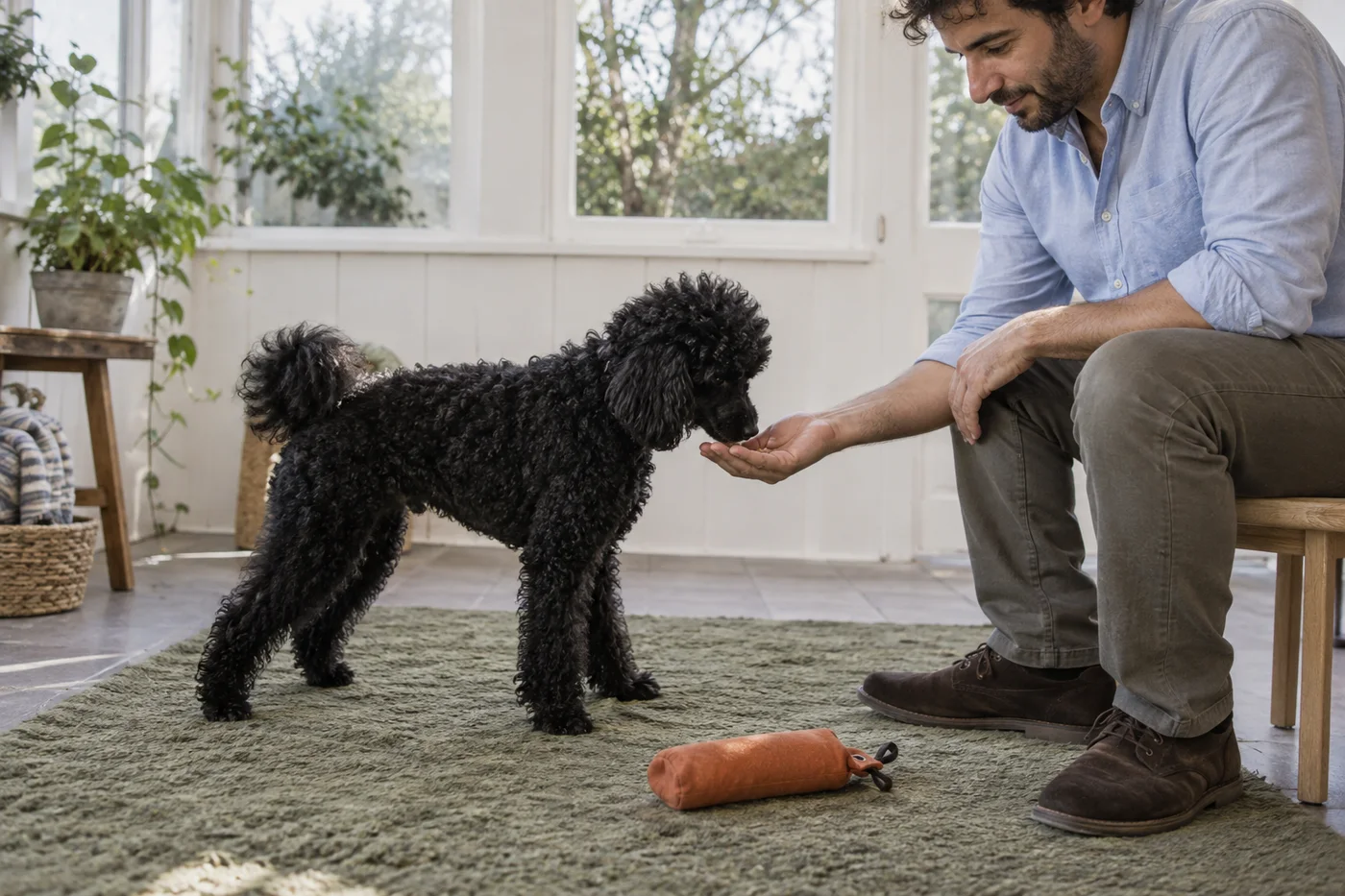
Connect carrying with one step back toward you
When picking up and releasing are comfortable, arrange the toy close to your feet. Let the dog take it, then offer a little space for movement toward you. A small backward step can be useful if the dog already enjoys following you, but do not race away or make them chase your body. Mark the first forward movement with the toy and reward near your position. If they release while taking the reward, that is fine. You are teaching a connection between carrying toward the person and something worthwhile happening there.
The University of Florida shelter-medicine retrieve sheet advises against chasing a dog that has the toy and against grabbing before release. Apply those boundaries even when the return is imperfect. Stay approachable rather than looming over the dog as they arrive. Accept a nearby floor delivery initially; exact placement can wait. A returning dog should not discover that every approach produces a tug over possession. If they pass you, shorten the setup and reward an earlier step next time instead of pursuing them to complete the sequence.
University of Florida retrieve guidance on returns without chasing
Place the toy nearby before adding a gentle roll
Move the starting object a small amount farther away only after the short return is understandable. Put it down rather than launching it. The dog can see where it is and practise the return without a fast chase becoming the most valuable part. Choose a distance at which you can remain still and reward near you. Add your chosen fetch word just before a familiar pickup opportunity, not repeatedly while the dog is already wandering with the toy. A new word does not replace the missing carrying or release skill.
Once a placed toy leads to an easy return, a small low roll may be another version to try. Do not introduce longer distance, a new toy and a busy location simultaneously. If the dog accelerates, slips, jumps or becomes frantic, return to placement or stop. Fetch should not become an endurance session intended to exhaust the dog into calmness. Puppies, older dogs and dogs with health limitations need individually appropriate activity advice. Avoid forced repetitions and never use this guide as clearance for exercise after injury or illness.
Troubleshoot the missing link, not the dog's character
If the dog watches without picking up, review the object and criterion. Perhaps a lighter familiar toy or a simple sniff is a better start. If they drop it halfway, reduce the gap and reward carrying a shorter distance. If they carry it away, ask whether your approach or previous grabbing has made arriving less appealing. Do not fix that by cornering them. A second suitable toy can help some dogs exchange, but two objects can also increase excitement. Introduce that option only when possession is already relaxed, never as a guarding treatment.
When the dog repeatedly looks away, chews the object instead or walks to their bed, stop and choose another activity. A successful lesson includes recognising that the current invitation does not fit. Record one specific obstacle rather than adding five new techniques at once. For example, 'picked up twice, dropped before taking a step' points to carrying, not a recall problem. A sudden change in willingness to use the mouth, movement or normal play deserves veterinary attention. Pain, panic, aggression, bite risk and welfare concerns require appropriate in-person support.
End a small game and preserve the next invitation
Finish while you can still offer an easy exchange. Give the earned reward, allow an ordinary pause and store the toy only when the dog has released it comfortably. Do not interrupt their rest to obtain a final impressive repetition. Note the toy, approximate gap and part that worked; 'three nearby pickups, one comfortable return' is more useful than 'fetch mastered'. The next session can begin with that same manageable arrangement. Our short-session guide helps organise a brief practice window without making the number of throws the measure of success.
Paper notes are enough. DogPath is optional for organising everyday reward-based practice and factual progress notes; it is free to download or start, with in-app purchases for some functions or use levels. It is not a possession assessment, veterinary diagnosis, exercise prescription or guarantee of a reliable retrieve. Keep the game independent of the phone. Your useful next decision is simply whether to repeat the short return, practise release separately or select another enjoyable activity. Comfortable participation matters more than adding metres to a throw that already outruns the learning.