
Everyday manners
How to Teach a Dog to Drop It: A Safe Trade Game
Turn releasing a toy into a predictable exchange, then build the cue without chasing, grabbing, or starting a tug-of-war.
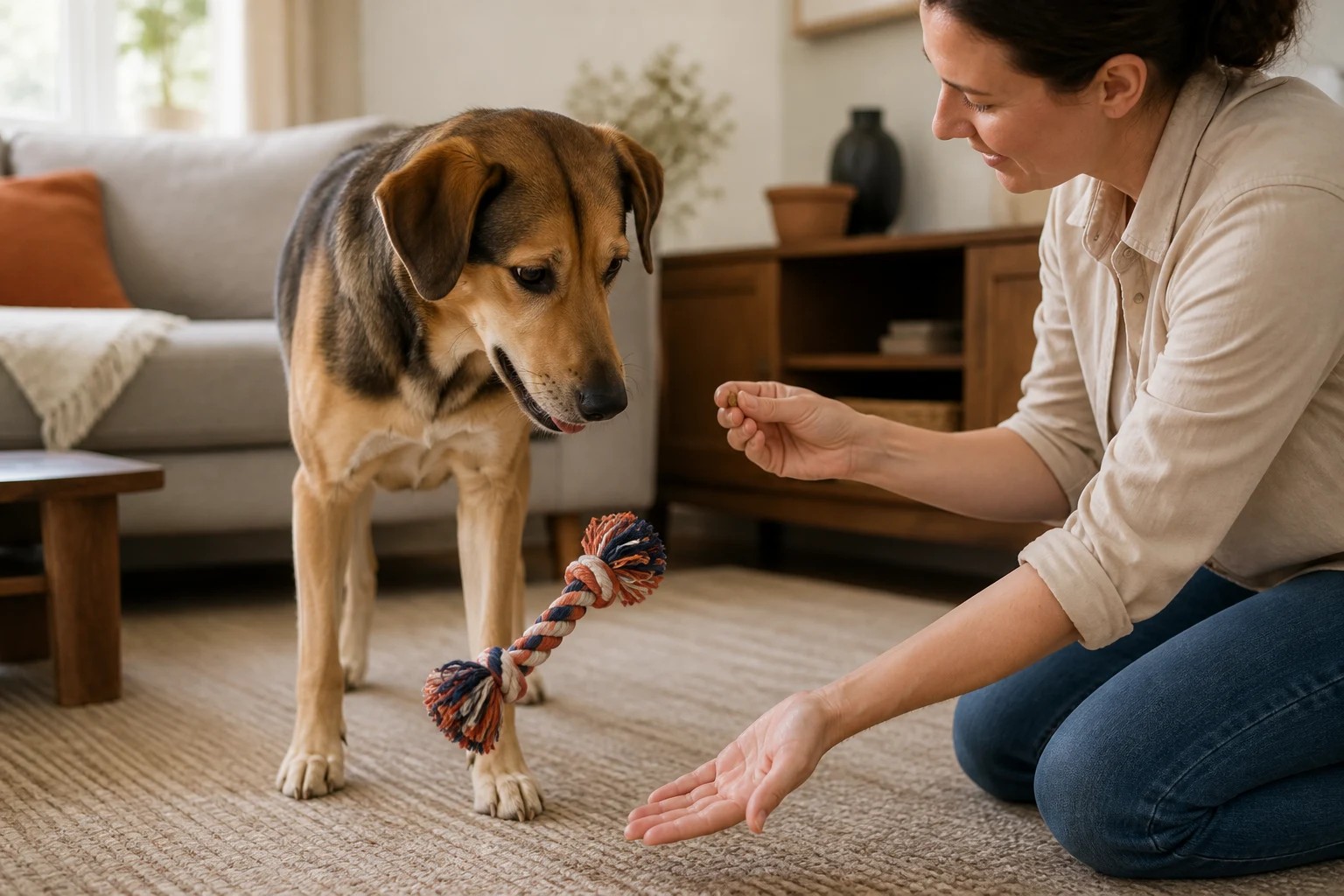
A useful drop-it cue does not begin with prying an object from a dog’s mouth. It begins with a voluntary exchange: releasing one safe item makes another worthwhile outcome appear. When that pattern is predictable, letting go stops feeling like a loss.
Start with a low-value toy your dog enjoys but does not guard. Practise in a quiet room and manage socks, rubbish, medication, cooked bones, and other hazards so the new skill is not tested in an emergency before it is ready.
DogPath can organise the exercise into short daily steps, provide a clicker for precise marking, and help you record which objects and distractions are easy. The AI coach can suggest a smaller next step when training stalls. DogPath is free to download; some features or usage levels may require an in-app purchase.
Know the difference between drop it and leave it
Drop it means release something already in the mouth. Leave it means move away from something before taking it. Keeping separate cues makes the requested action clear and prevents you from repeating one phrase in every situation.
For early drop-it practice, choose a soft toy that is safe to hold. Avoid prized chews, stolen items, or anything your dog grips intensely. The lesson should feel like an easy exchange, not a confrontation.
Build the trade before saying the cue
Let your dog take the toy, then become still. Present a treat close enough to smell without pushing it into the dog’s face. The instant the mouth opens, mark the release and deliver the treat. Pick up the toy only while the dog eats.
After the reward, offer the toy again on most repetitions. Returning it is powerful: releasing does not always end the game. Repeat three to five times, then stop while the exchange is smooth.
- Use a safe, low-value toy
- Keep hands away from the dog’s mouth
- Mark the instant the object leaves the mouth
- Give the toy back after many successful trades
Add ‘drop it’ only when release is predictable
When the treat reliably causes the dog to release, say ‘drop it’ once just before presenting the trade. Mark, reward, and return the toy. Over several sessions, pause briefly after the cue before showing the treat so the words begin to predict the action.
If the dog does not release, do not chant the cue or grab. Show the trade, complete an easier repetition, and improve the reward. A cue becomes strong through successful pairings, not louder repetition.
Never chase a dog to recover an ordinary object. Chasing can turn stealing into a rewarding game and may increase defensive swallowing.
Fade the visible treat without removing the reward
Once the dog responds consistently, keep treats in a pocket instead of in the presenting hand. Give the cue, wait one second, mark the release, and then reach for the reward. This prevents the food from becoming a required visual bribe.
Sometimes reward with another toy, a resumed tug game, or permission to take the same toy again. Continue using food for harder objects and new locations. Fading the lure does not mean stopping reinforcement.
Generalise from toys to ordinary safe objects
Practise with different approved toys one at a time: rope, ball, rubber toy, or soft dummy. Change only one detail per session. When those are easy, use a boring safe household object specifically prepared for training—not something the dog has stolen.
Add mild movement and new rooms before practising outdoors. If value rises, raise the quality of the trade and lower every other difficulty. Keep the environment managed so failure does not produce a dangerous chase.
Handle emergencies and guarding differently
If your dog has a dangerous item, avoid sudden grabbing when possible. Scatter several high-value treats away from the object, calmly secure the dog in another space, and remove the hazard. Contact a veterinarian promptly if something toxic, sharp, or obstructive may have been swallowed.
Freezing, hard staring, hovering over the item, growling, snapping, or swallowing faster when approached can indicate resource guarding. Stop rehearsing close trades and seek qualified reward-based behaviour support. Punishing warnings can remove communication without changing the underlying concern.