
Walking around a marker
Teach a dog to go around a cone: free guide
Help your dog take a wide curve at a walk and record one change at a time.
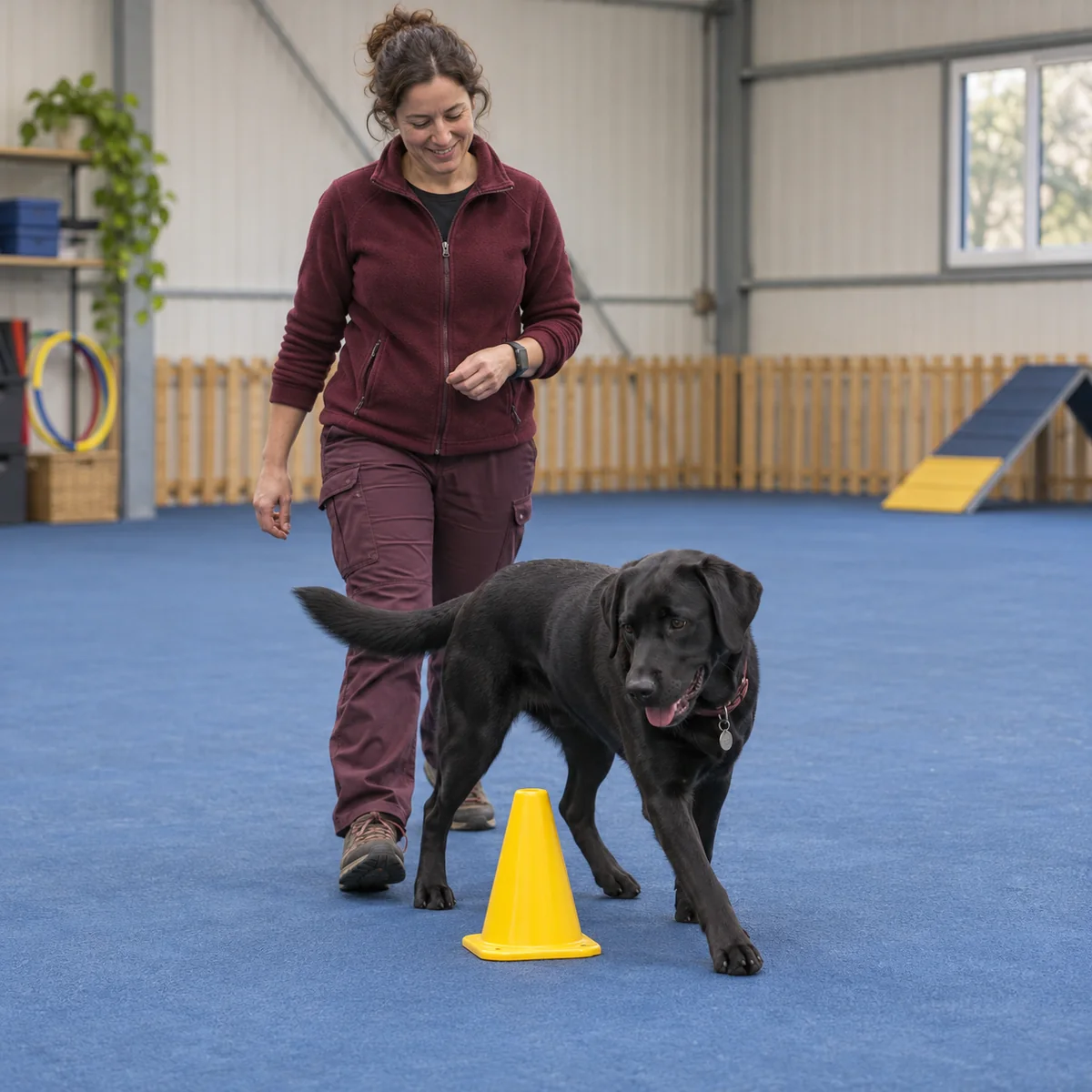
You set out a cone and your dog sniffs it, walks straight past it, or follows your hand back before finishing the curve. Each response gives you a different starting point. To teach a dog to go around a cone, decide where the dog will enter the curve, what counts as going around, and where you can reward without asking for a sharp turn. Begin with a wide path at walking pace and enough space for the dog to step away.
DogPath is free to download or start, with in-app purchases. You can use it to record one small change at a time in this short practice. The app can help you keep track of what you saw and where you rewarded. It does not assess your dog's movement or tell you whether a particular exercise is appropriate. Ask for suitable in-person help if you notice pain, a sudden change, distress, aggression or a bite risk.
Teach a dog to go around a cone by choosing the path first
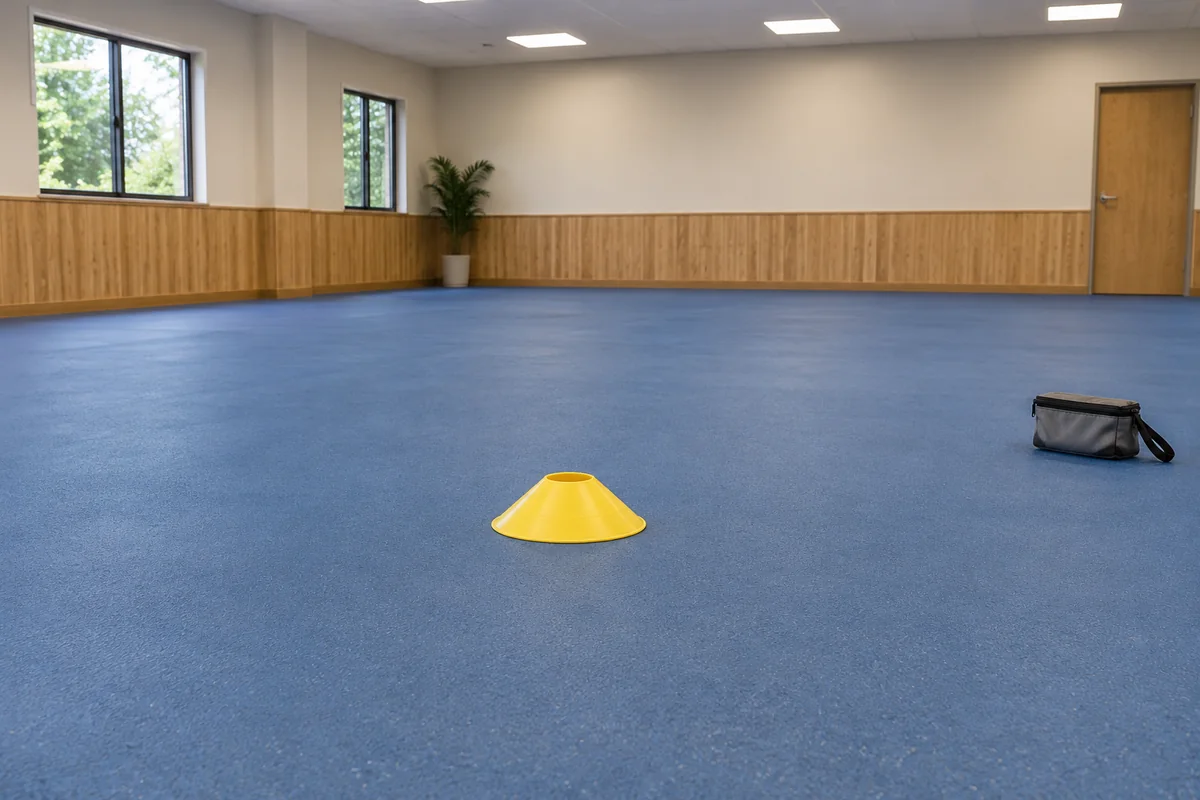
Use one stable, clearly visible cone or a suitable wide-based object without sharp edges. Choose a quiet enclosed space with a firm surface that offers grip. Leave room on both sides and behind it so the dog can take a broad arc instead of squeezing between furniture and the cone. Start with a single path around one side. You can introduce the other side later as its own task.
Walk the route without your dog first. Pick a point to start a step or two from the side of the cone and a point to end on the other side. Your first target might be “one voluntary step past the side” instead of “a full circle and return.” Picture where the dog's shoulders will be at the target. That gives you something observable to reward, including when your own timing feels slow.
The Weimaraner Club of Great Britain uses working around a cone or similar object as a foundation exercise. You can borrow the idea of guiding a clear path and working close to the object at first. This practice stays at a comfortable walk with a broad curve. It does not require the tight wraps, speed or precision of a competition. If you cannot leave enough room for a comfortable arc, use a different activity.
Make the first step easy to offer
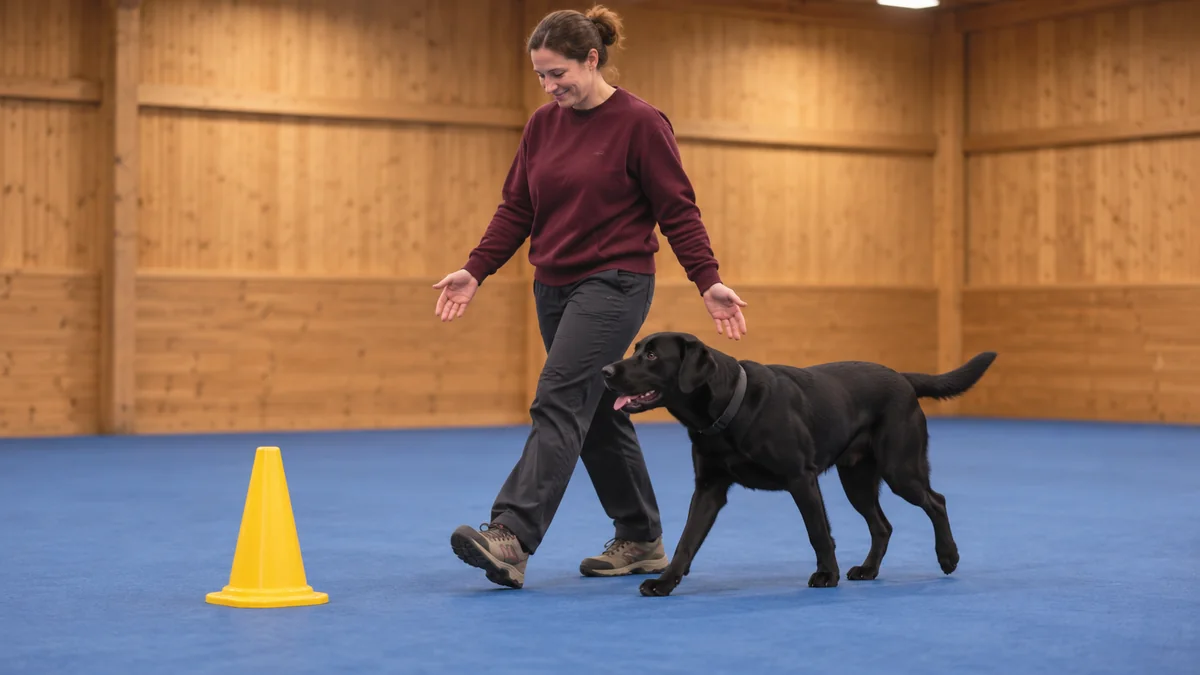
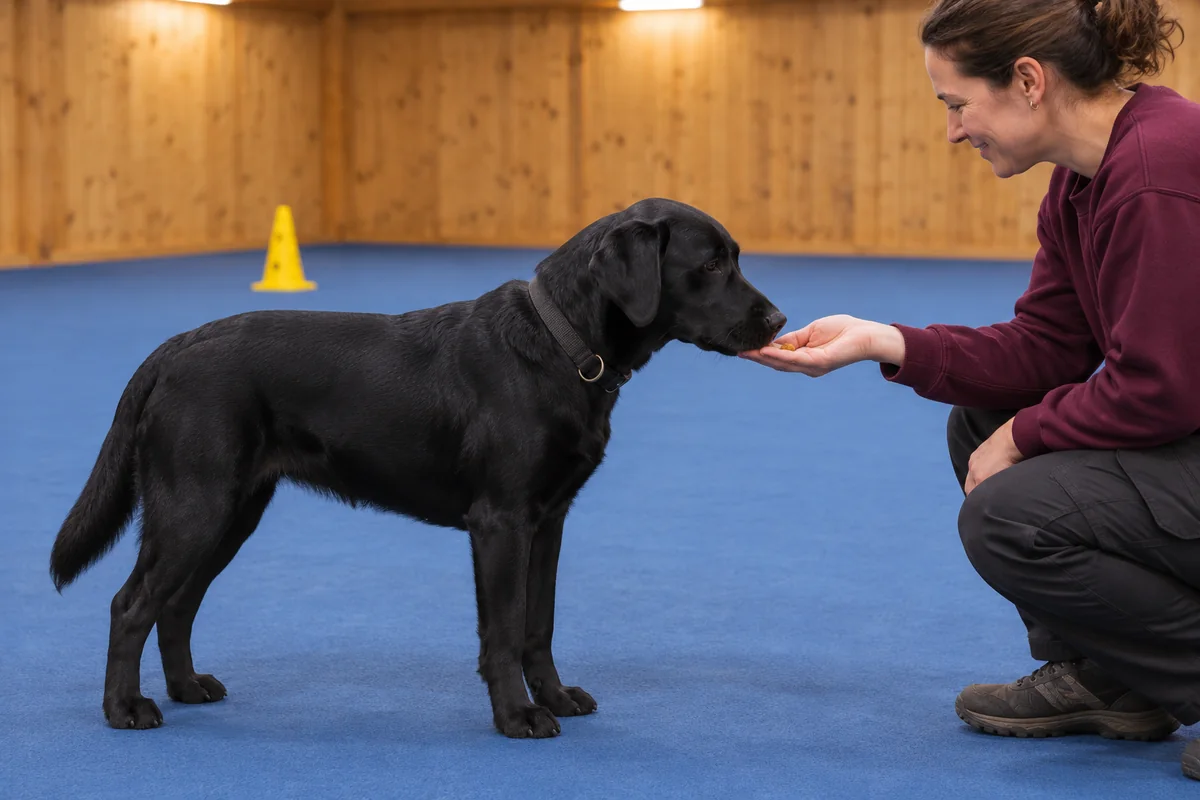
Prepare a few small rewards your dog can eat comfortably. Keep them ready but avoid holding one out against the dog's nose. Stand where your body does not block the path. At first, take a slow step along the outside of the curve with your dog. You can use a familiar open-hand gesture if it helps your dog understand which way to go. Give the dog time to look and decide whether to follow.
Notice the difference between an attempt to go around and ordinary investigation. Sniffing is fine. Let the dog finish rather than repeating a cue that has no meaning yet. If the dog walks to the side and takes even one step in the direction of the curve, mark that step and give the reward where they can collect it comfortably. Leave space for them to stop, turn freely or walk away.
Do not put your leg across the shorter route or tighten a lead to steer. If the dog goes between you and the cone, change where you begin next time. You can stand a little farther from the cone and choose an angle that makes the desired direction easy to see. If your dog keeps stopping at the same point, make that easier approach your first target, or finish with an activity they already enjoy.
Move the reward point as the curve becomes familiar
When the dog readily walks the first few steps at the same setup, you can shift the mark a little farther along the arc. Keep the starting point and your pace the same. Think in pieces: toward the side, past the widest point, then through the last part of the curve. Some dogs naturally follow the whole path when you walk with them, while others pause to check where you are. The reward point should fit the step they can do comfortably today.
After the dog completes a broad curve, reward where they can come to a comfortable stop. Deliver food low enough to avoid encouraging a jump and far enough from the cone that they need not twist back toward it. Do not make the reward depend on an extra sit or a new cue. Finish this repetition before setting up another. If you want to practice a separate end cue, teach it in a familiar position first.
If the dog cuts across before the point you planned, reward an easier target on a new repetition rather than trying to correct the path halfway through. Pay attention to your own body. Turning your chest toward the finish too early may invite a shortcut. A more deliberate walking path and a closer start can make the route clearer than increasing the value of the treat.
Use DogPath to record one condition at a time
Choose an observable goal in your practice notes, such as “passes the left side of the cone while I take two steps alongside.” Before you start, note the cone, the floor and the direction. Prepare the rewards so you can keep your attention on the dog, and record what happened after you have put them away. A short note like “one side step, then sniffed; looked comfortable; stopped there” is more useful than marking the whole trick done.
Change one condition only when the current setup feels easy. If you want to start a little farther away, keep the direction, walking pace and quiet room the same. If you want to leave a slightly longer pause before you help, stay at the familiar distance. If you try a place with a mild distraction, move closer again and simplify the path. Duration here can mean the time you wait before helping, not how long the dog must hold a position.
Note the outcome in ordinary language. For example, “same cone and room, my gesture was smaller; dog followed the full curve once, then turned back on the second try.” That tells you what to keep or restore at the next session. If a note makes you feel obliged to complete more attempts, make the goal smaller. Put the phone away during practice if looking at it distracts you from the dog's movement.
Add a cue after the path is predictable
A word or hand signal is easier to introduce when you can predict what will happen next. Say the cue once just before the familiar motion that already helps the dog begin. Then guide the usual easy route, mark at the planned point and reward. Avoid calling the word repeatedly while the dog is deciding whether to approach. If the path is no longer clear, go back to the setup that made the first step easy.
Try the opposite direction separately. Stand on the other side and give yourself space to walk the new curve without crossing your feet in front of the dog. Start from a familiar distance even if the first direction went well. You might find that the dog finds one route easier or that your own hand gesture is less clear on the other side. A note about which direction you practiced can prevent you from interpreting these as inconsistent responses.
End when you have enough information to choose the next simple step. A dog who takes a short route and then goes to rest has given you a reason to finish, not a reason to ask for more. If you want to move the exercise to another room, recreate the broad clear path and treat the new place as the only change. Keep the reward point and the distance familiar for the first repetition there.