
A short voluntary grip
Teach a dog to hold a toy: free practice
Reward a brief voluntary grip and note one small change for the next session.
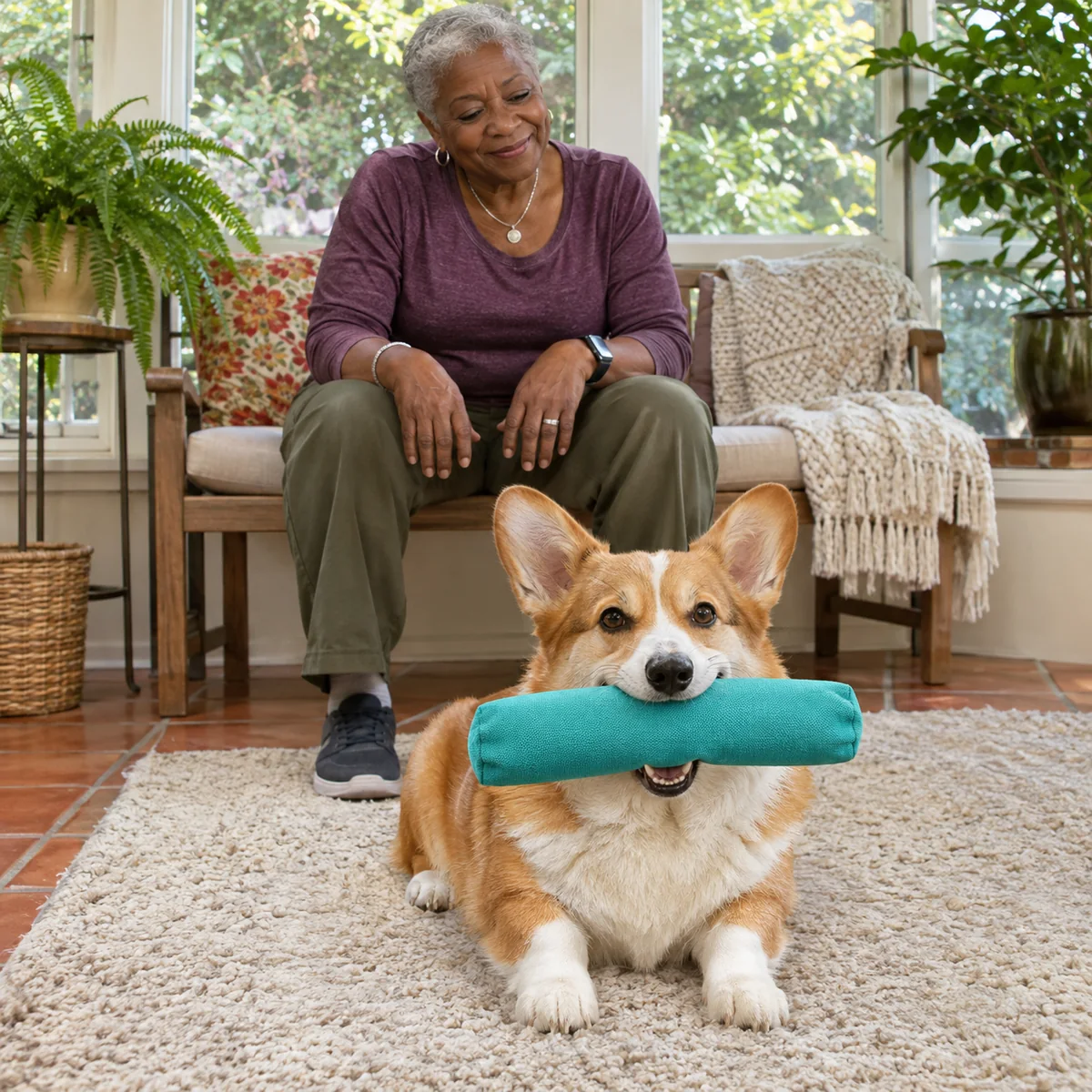
You offer a toy, your dog closes their mouth around it and the toy drops the moment you move your hand. That brief grip is already a starting point. To teach a dog to hold a toy, pick a grip you can see, reward it at an easy moment and leave walking, fetching and handing the toy over for separate practice. You can begin with the dog standing comfortably and the toy close to where they can reach it.
DogPath is free to download or start and offers in-app purchases. You can use it to record which toy you presented, how much support you gave and what the dog chose to do. Put your phone away while handling the toy and reward. Training cannot tell you why a dog suddenly avoids using their mouth. Pain, a change in chewing or appetite, panic, aggression or a bite risk calls for appropriate in-person help.
Teach a dog to hold a toy with a grip you can see
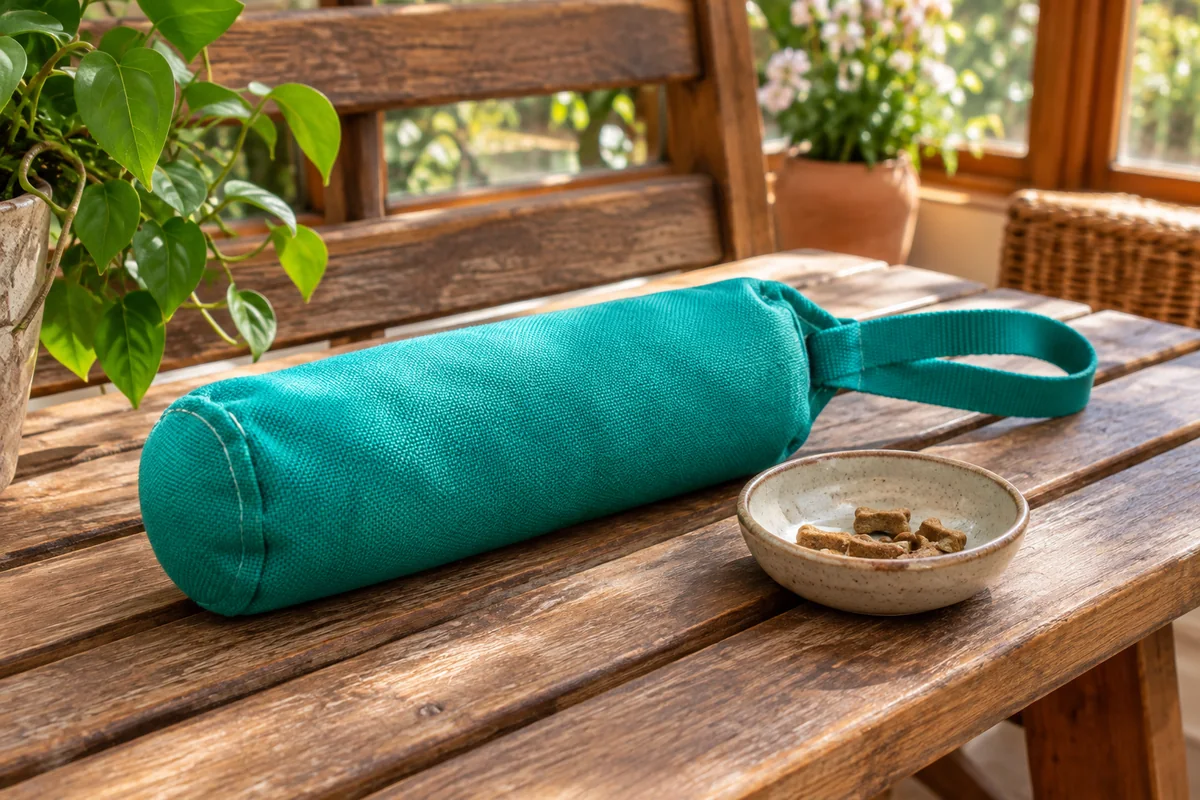
Choose a familiar, intact dog toy that is suitable for your dog's size and can be held without a struggle. A lightweight fabric toy with a clear middle can make it easier to see when the dog takes it. Skip anything that sheds pieces, has sharp edges or is small enough to disappear into the mouth. Avoid choosing an object the dog wants to guard. Work on a stable surface with room for the dog to move away.
Name the first action in plain language. “Closes their mouth gently around the middle while I still support the toy” is a useful starting point. “Holds nicely” gives you less information. If your dog only looks or sniffs, you can reward that smaller approach in a first session. If your dog already takes a toy comfortably during play, start with that voluntary grip and keep the first request easy. You do not need a sit, a straight head position or eye contact.
Battersea's hold guide starts with an appropriate toy and voluntary engagement, then builds the duration in small steps. You can use that idea without trying to turn a first grip into a long hold. Watch how your dog moves in your particular setup. The right starting point is an action the dog can offer again without your having to move the object against their lips or follow them around the room.
Set up the toy and the reward before you offer either
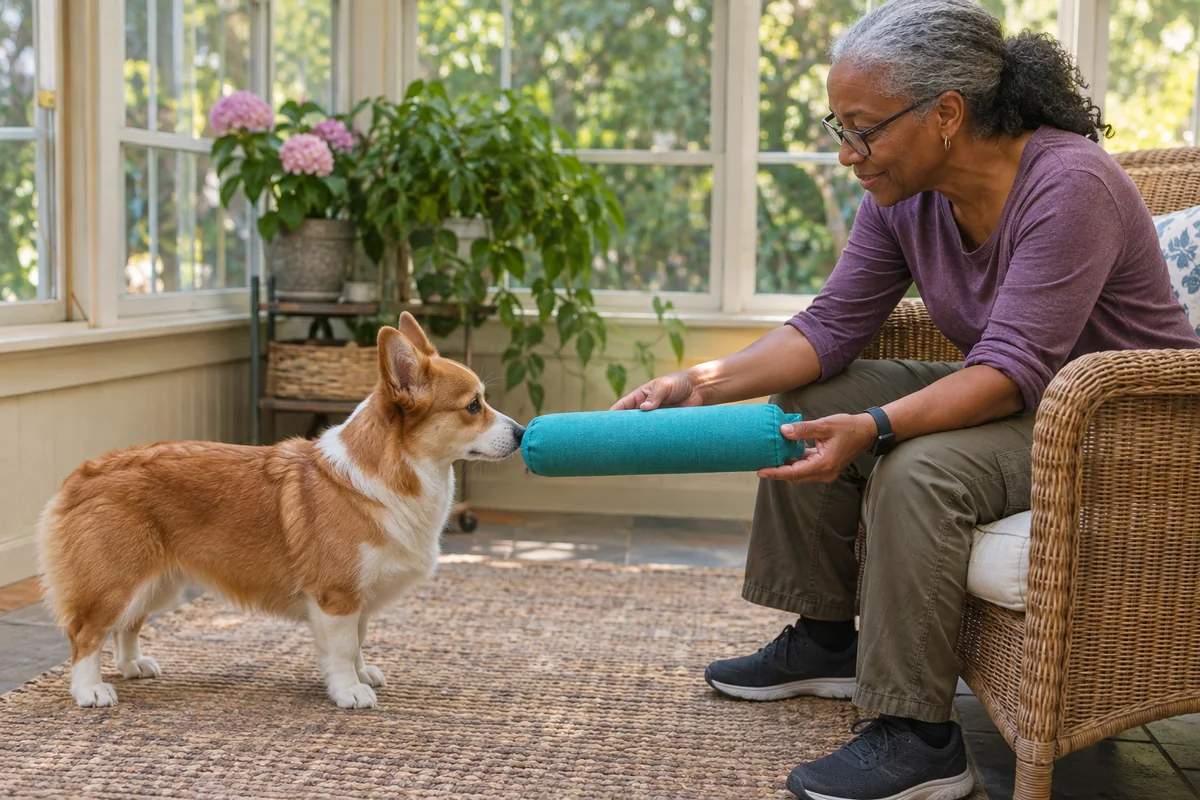
Put a few suitable small rewards where you can reach them without waving food next to the toy. Choose a starting position that leaves space for the dog to approach from the side. Hold the toy still and low enough for the dog to reach it with a comfortable head position. Alternatively, place it on a stable surface your dog already uses for play. Let the dog decide whether to move closer. Keep your fingers away from the part they are likely to take.
If you use a familiar marker, decide what it will mean in this exercise before you begin. For a dog who already knows that a click or a word ends the action and earns a treat, expect them to let go after it. That is compatible with a short hold. Mark while the action is happening, then deliver the reward. You can place the toy down or let it fall safely before giving food. There is no reason to ask the dog to chew a treat while still holding the toy.
If your dog looks back and forth between your hands, simplify the arrangement. Keep the reward out of sight, make the toy available and pause for a moment. Reward an easy step when it happens. Avoid repeatedly calling a word the dog has not learned, pushing the toy closer or reaching toward their mouth to help. If there is no interest, put the toy away and choose a different activity. A clear ending is more useful than five extra offers.
Practice a short grip and a predictable ending
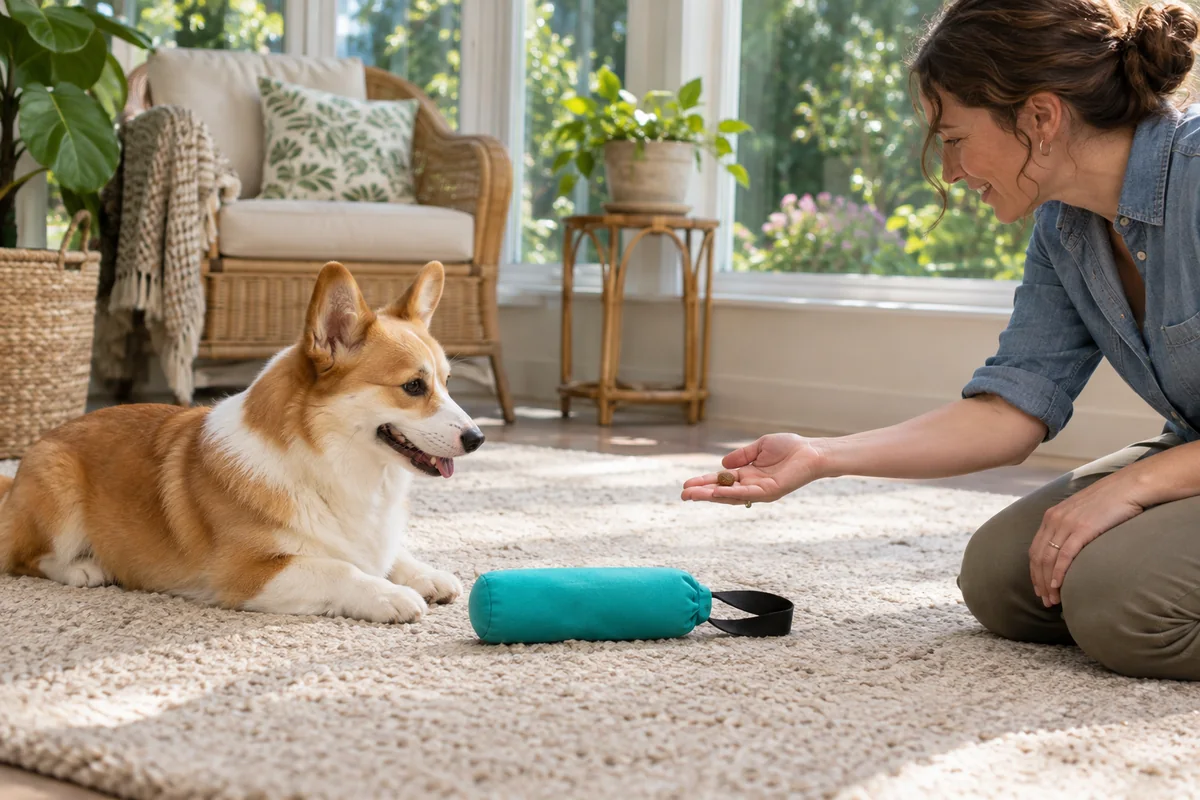
Offer the toy once. When you see the planned grip, mark it and give the reward after the toy is free. If your dog lets go immediately, keep the toy where it can land safely and reset. A drop after the mark can be exactly what you expected. If the drop happened before you could mark, make the next repetition easier by rewarding a smaller or earlier part of the action. There is no need to try to catch the toy at the dog's mouth.
When the dog readily offers the same grip, test a very small change. For example, keep the toy at the same height and pause for a fraction longer before marking. Or keep the same short duration and lighten the support of your hand briefly. Those are different tasks. If you delay the reward at the same time as withdrawing your hand, you cannot tell which change made the grip harder. Return to your familiar setup if the dog stops taking the toy.
Separate holding from handing over. A dog can learn to open their mouth onto a mat or leave a toy on the floor before you consider a hand delivery. If you want an exchange, use the familiar reward and give room for the dog to put the toy down voluntarily. Keep your hands still until the dog moves clear. Avoid tugging or prying an object from the mouth. If your dog stiffens, covers the object, growls or guards it, give space and seek qualified help rather than practising exchanges at close range.
Keep one useful observation in DogPath
Before the session, write a goal you can check by looking: “takes the fabric toy for a moment while I support its weight.” Note the room, toy and starting position. Prepare the reward, offer the toy once or twice with a pause and finish while the task is still easy. After putting the toy away, record the outcome. “Took it twice with support, released at the marker” is enough to help you plan a next step.
Choose one variable to change when the dog is comfortable. For duration, leave your hand and toy position the same and mark slightly later. For distance, keep the duration short and try presenting the toy from a small, easy change in your hand position. For distraction, keep the familiar presentation and try a slightly different quiet setting. If the new setting is harder, return to the shortest familiar hold. You do not have to make any variable harder just because you planned to train that day.
A useful note includes when you stopped. “First grip easy, then dog moved away when I removed support” tells you how to start next time. It also preserves a choice the dog made. The app helps organize that information. It does not assess the dog's teeth, predict how long they should hold or tell you whether to continue around an object they guard. A shorter session or a day off can be the decision you record.
Add the word when the start is predictable
Wait until your dog is likely to take the toy in the familiar arrangement. Say the cue once just before you present it as usual, then mark and reward the action you already know the dog can offer. If they look away or move off, leave the cue alone and let the repetition end. Repeating it while the dog is still deciding makes it harder to know what the word refers to. A few clear repetitions spread across ordinary days are more informative than a long test.
Keep the setting familiar when you first use the word. A different object may feel different against the dog's mouth. A different handler may present it at a different height. If you want to change one of those details later, keep the hold short and check whether your dog still wants to participate. Reward the grip you can actually see. There is no requirement to work up to a particular duration or carry household items.
Finish by placing the toy out of the way after your dog has released it and stepped clear. If they want another kind of play, treat that as a separate activity with its own start. Your next practice can begin with the same toy, support and easy reward point. Once the start and finish are clear, you can decide whether there is any reason to add a new step.